The Rare New Jersey Orchid Found In Just A Handful Of Pine Barrens Bogs And Nowhere Else Nearby
You catch a flash of magenta before your mind can name it. Something that stands barely as tall as a pencil should not command this much attention. Botanists have quietly tracked this bloom for generations across a handful of bogs.
New Jersey hides much of what remains inside acidic, waterlogged pockets. Step outside those pockets and your search can stretch on for hours. Sphagnum moss soaks your boots while the water below runs the color of tea.
Your feet sink slowly deep with each step through that spongy green carpet. Color tricks pollinators into landing, though the flower withholds any reward. Insects gain little from the visit, yet they return to try again.
Habitat loss has squeezed this flower into fewer and smaller refuges each decade. Wetlands across New Jersey keep shrinking under drainage, development, and quiet neglect. Finding out why takes more than curiosity; the story ahead demands it.
Meet Arethusa Bulbosa, The Pine Barrens Showstopper
Botanists gave it the name Arethusa bulbosa, after a nymph from Greek mythology who was turned into a spring of water. Fitting, since the plant grows almost exclusively in consistently saturated soil.
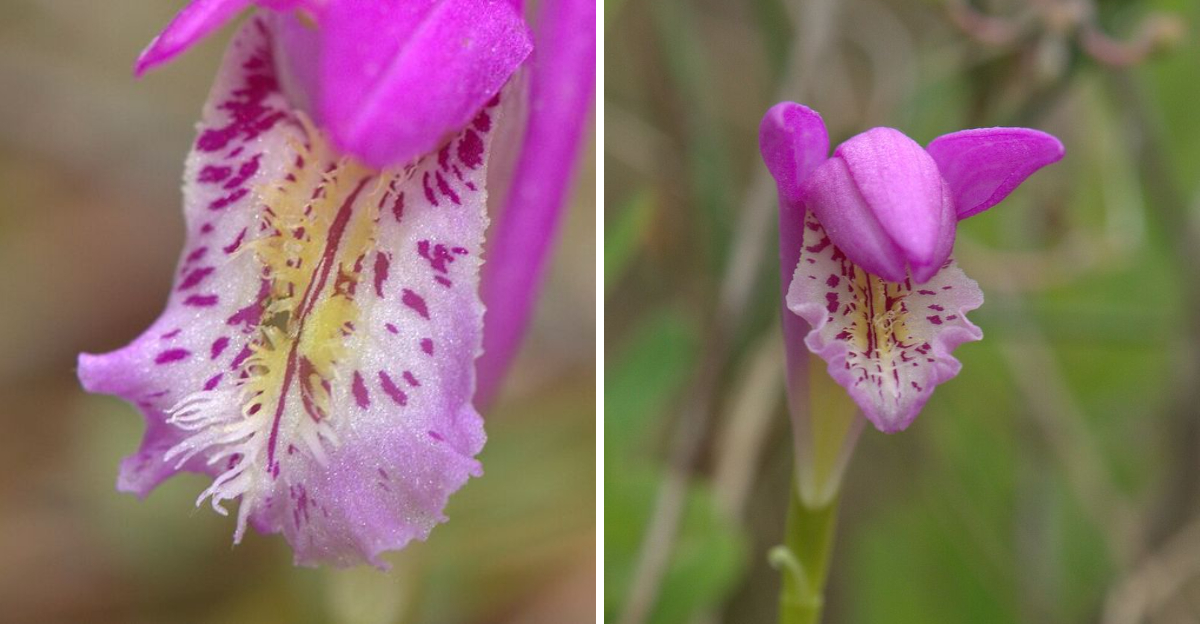
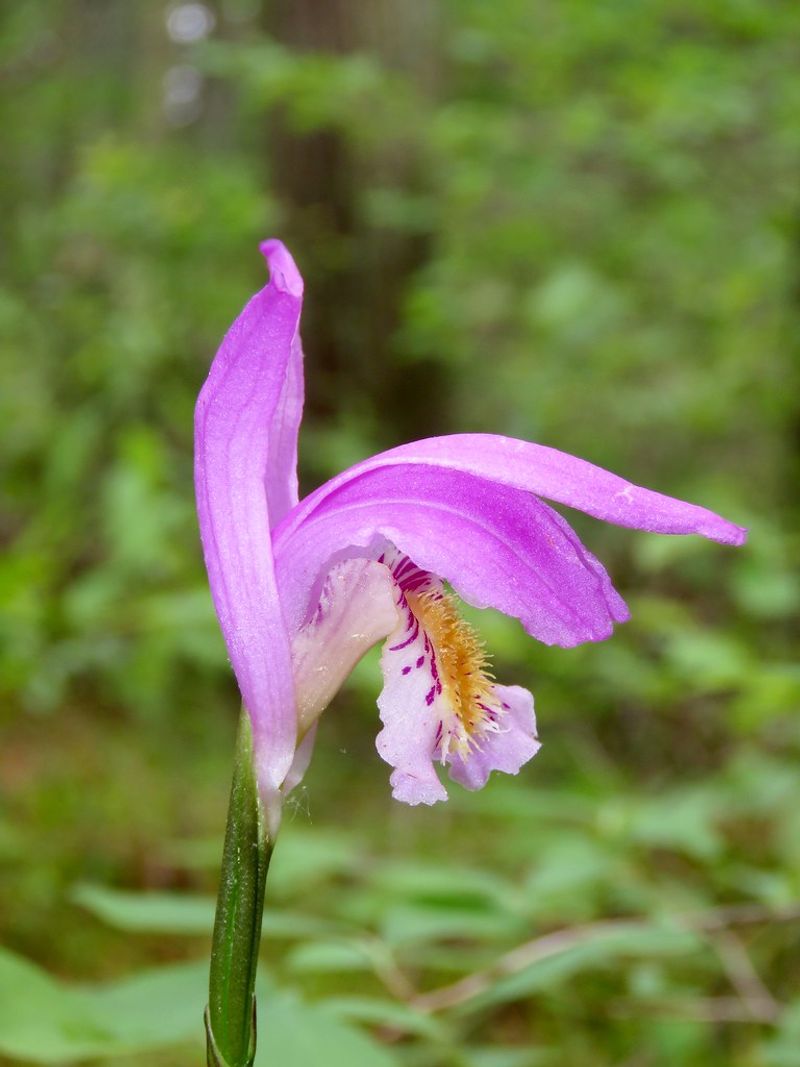
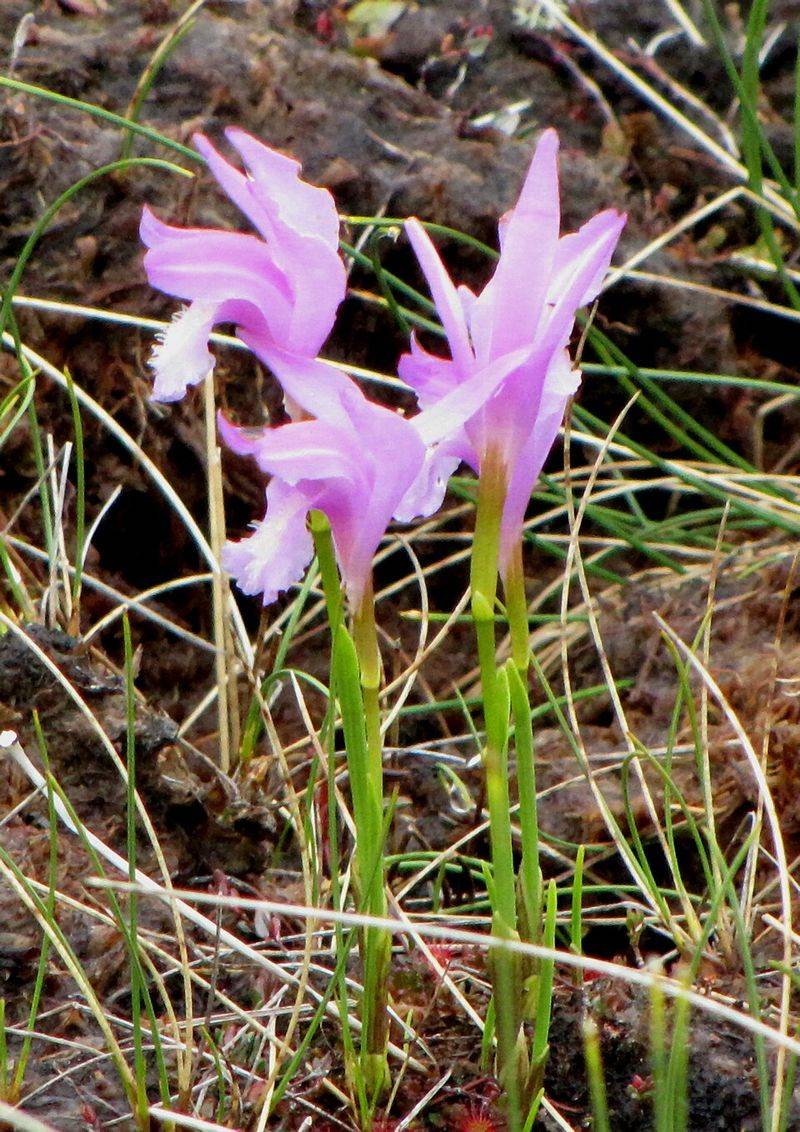
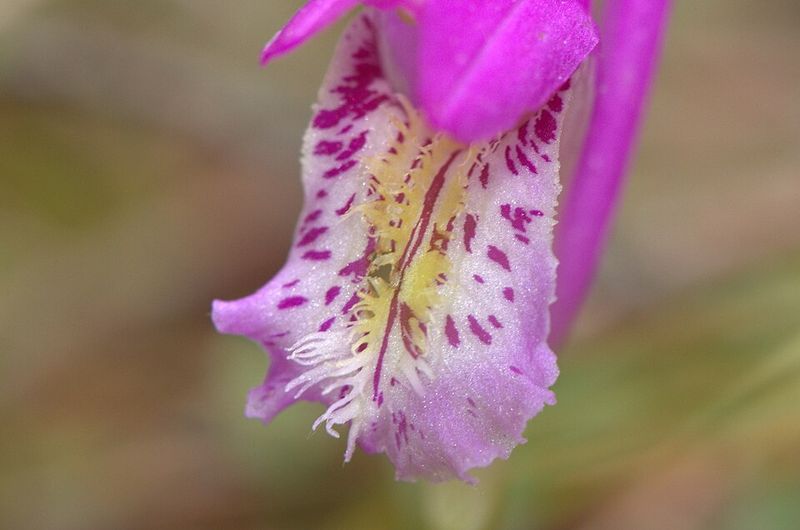
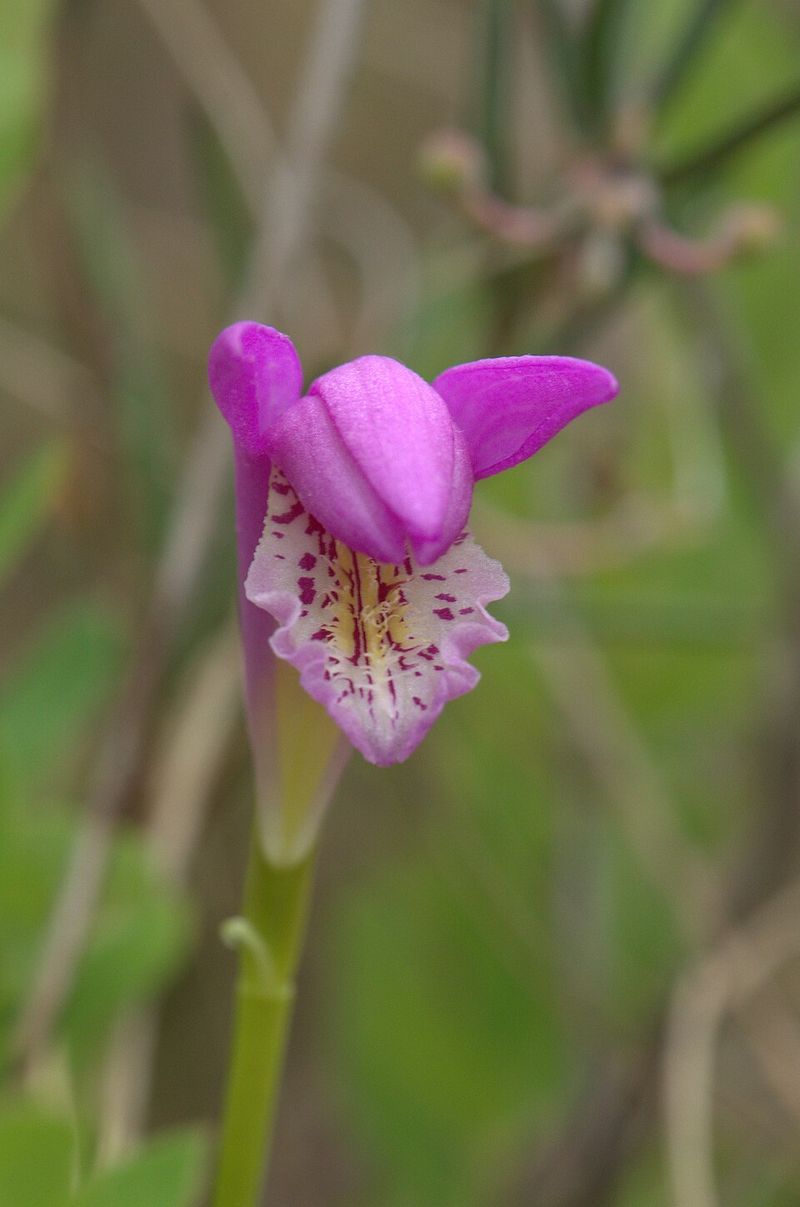
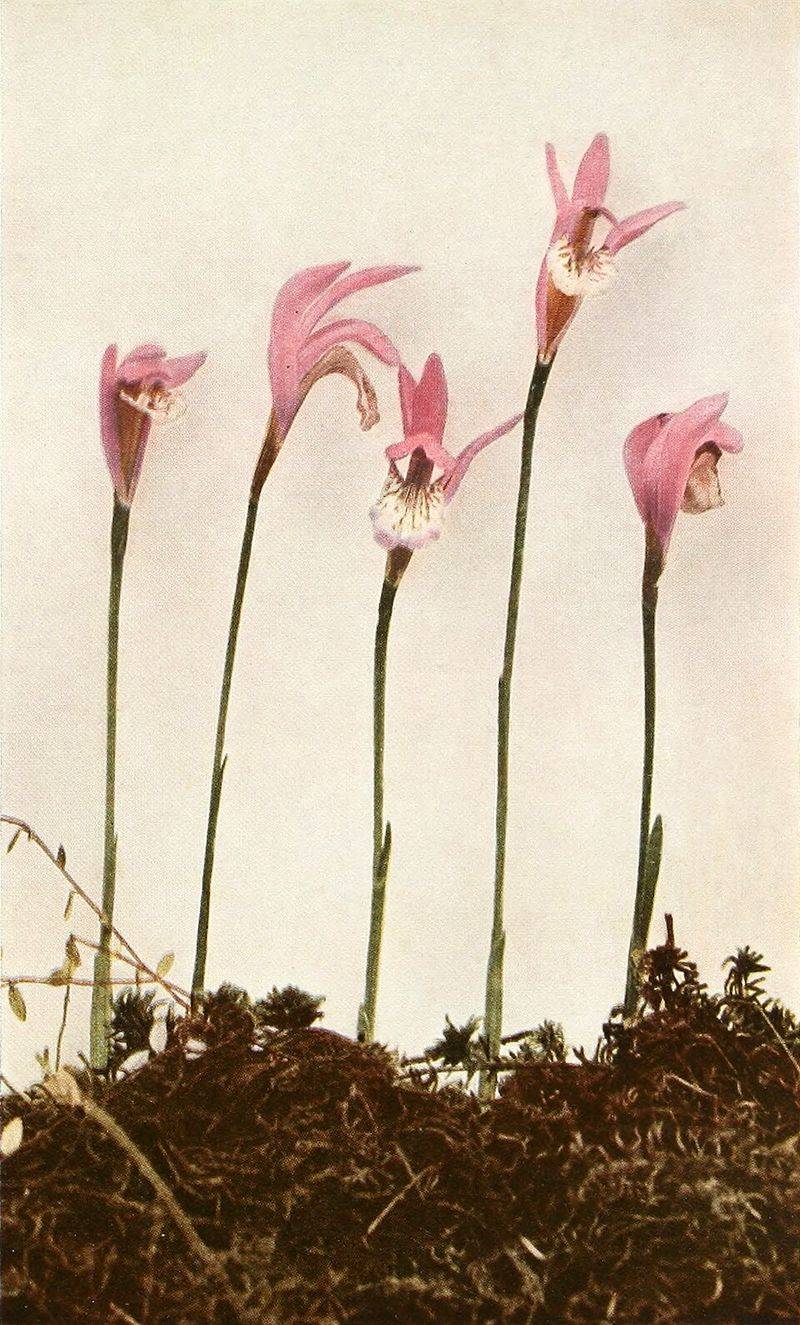
Most people know it as the Dragon’s Mouth Orchid, and one look explains why. The bloom opens with an arched hood above and a fringed, speckled lip below, like a tiny creature caught mid-roar.
Size is where folks get surprised. The whole plant usually stands between four and ten inches tall, topped by a single flower roughly an inch and a half across.
Color does the heavy lifting here. The petals glow a hot pink-magenta that seems almost artificial against the muted greens and browns of a bog, and the lip carries yellow bristles plus purple spotting.
Here is a quirk worth remembering: the leaf shows up late. A single grass-like blade pushes out after the flower has already faded, which means the orchid blooms looking almost leafless.
Bloom time in New Jersey runs roughly from mid-May into June, depending on the spring. Miss that window and the plant essentially disappears into the moss.
The scent is faint but sweet, noticeable mainly when you kneel close to the flower. You have to kneel down and get close to catch it, which is part of the charm.
For anyone who loves wild plants, spotting one in person feels like finding a jewel dropped in a swamp.
Why Only A Few Soggy Bogs Will Do
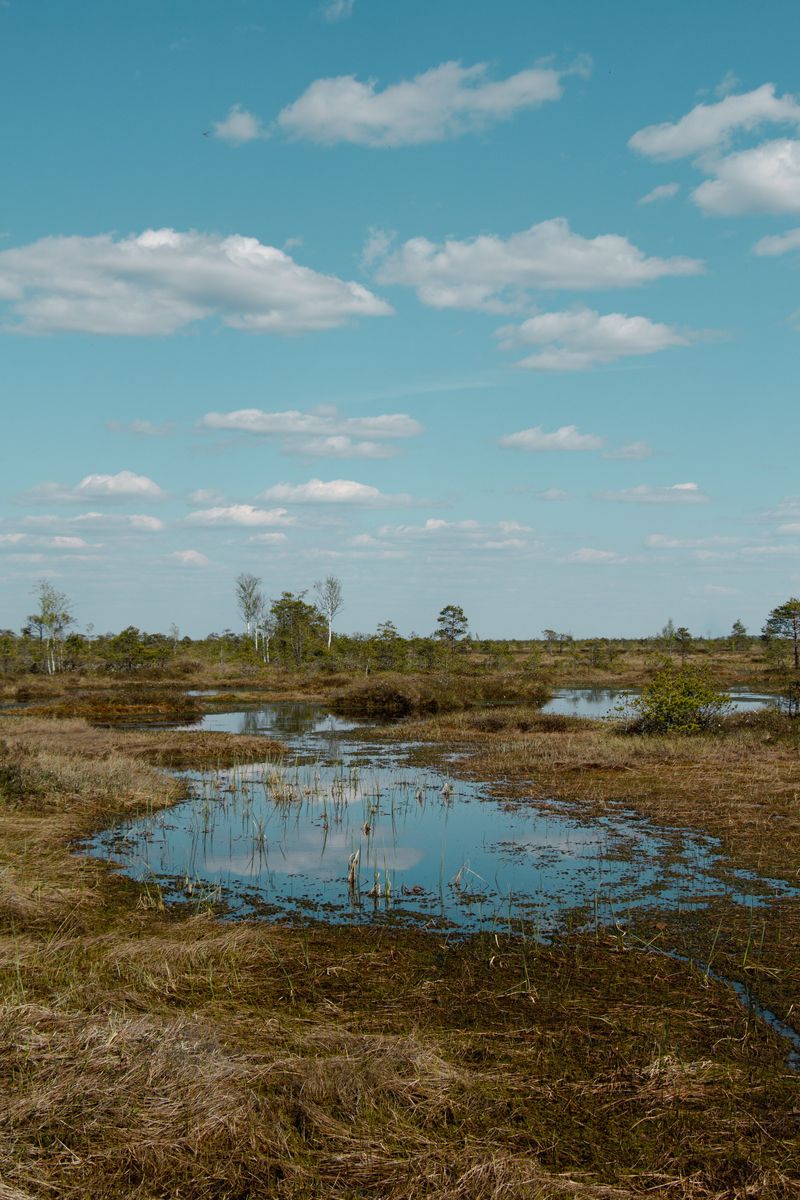
Fussy does not begin to cover it. Dragon’s Mouth needs acidic, nutrient-poor, permanently wet ground with an open canopy overhead, and that combination is rare even inside the Pine Barrens.
Sphagnum moss is the key ingredient. The moss holds water like a sponge, keeps the pH low, and creates a soft mat where the orchid’s small corm can sit without rotting.
Sunlight matters just as much. If shrubs like leatherleaf or highbush blueberry grow tall and shade the mat, the orchid fades out within a few seasons.
Your New Jersey Garden Changes Every Week. Your Plan Should Too.
Gardening in New Jersey changes quickly throughout the season. Every Friday you’ll receive a simple weekly plan showing exactly what to plant, prune, fertilize, harvest, and protect so you never miss the right timing.
That is why you find it in specific spots: sphagnum bogs, old cranberry bog edges, spring-fed seeps, and the sunny margins of slow blackwater streams. Miles of surrounding pine forest offer nothing it can use.
Water chemistry adds another filter. Runoff carrying lawn fertilizer or road salt raises nutrient levels, which lets faster-growing plants crowd the orchid out of its own neighborhood.
Because the requirements stack up, populations end up isolated. A bog five miles away may look similar to us while missing one detail the plant depends on.
Cranberry farming may have helped in odd ways. Abandoned bogs can revert to sphagnum, creating habitat the orchid could potentially use.
Understanding those needs makes the scarcity feel less mysterious. The orchid is not hiding from us, it simply has a very short list of acceptable addresses.
The Bumblebee Bluff That Keeps It Going
This orchid relies on deception rather than reward. Dragon’s Mouth offers no nectar reward at all, yet it still convinces bumblebee queens to come visit.
The trick is advertising. Bright magenta petals, a sweet scent, and a landing pad covered in yellow bristles all mimic the look of a flower loaded with food.
A queen bumblebee, fresh out of winter and hunting hard, drops onto the lip. Her weight tips the lip downward and slides her under the hood.
As she backs out, pollen packets stick to her thorax. She leaves without reward, and this learned avoidance can reduce pollination success.
Bees learn quickly. After one or two fruitless visits, they start ignoring the flowers, which means pollination rates in a given bog can be surprisingly low.
Researchers have noted that seed set often depends on naive bees, meaning young queens that have not yet learned the bluff. Timing the bloom to early spring emergence is part of the strategy.
When pollination does succeed, the payoff is enormous. A single seed capsule can release a large number of dust-fine seeds that drift on wind and water.
Those seeds carry almost no food supply though. Each one needs to land on the right fungus in the right wet moss before it can grow, and the odds are slim.
Between selective bees and demanding seeds, every new plant in a bog depends on a narrow set of favorable conditions.
A Secret Partnership Underground
Underground, a fungal partnership governs the seed’s early growth. Dragon’s Mouth seeds contain almost no stored energy, so they cannot sprout on their own the way a bean or sunflower seed does.
Instead, each seed waits for a specific soil fungus to find it. The fungus grows into the seed and starts feeding it sugars and minerals, essentially acting as a nurse.
Scientists call this arrangement mycorrhizal, and orchids around the world rely on it. What sets Dragon’s Mouth apart is how narrow its fungal preferences appear to be.
Years can pass underground before a shoot ever appears. During that stretch, the young plant is entirely dependent on its fungal partner for survival.
Even mature plants keep the relationship going. The tiny corm and its few roots stay woven into a fungal network that helps move nutrients through the nutrient-poor peat.
Knowing this explains something important for gardeners: transplanting wild specimens rarely works. Pull the orchid from its bog and you leave the fungus behind, which is like moving someone away from their kitchen.
It also explains why bog restoration takes patience. Rebuilding the water table is step one, but the fungal community needs time to reestablish before orchids can return.
Anyone tempted to buy a wild-collected plant should think twice. Nursery-propagated stock grown in sterile flasks with the right fungi is generally considered the more sustainable option.
Pressures Facing The Remaining Colonies
The list of pressures is long and mostly quiet. No single event wiped out Dragon’s Mouth in New Jersey, but a steady drip of changes has trimmed its range to a handful of sites.
Water withdrawal ranks near the top. Pumping groundwater for homes, farms, and industry lowers the water table, and a bog that dries even slightly stops being a bog.
Succession does damage too. Without occasional fire or flooding, shrubs and red maples move in, shade the sphagnum, and the orchid quietly drops out.
Nutrient pollution flips the whole system. Bogs work because they are poor in nutrients, so runoff from lawns and septic systems gives an unfair advantage to aggressive plants.
Then there is collecting. Because the flower is so striking, people have dug plants for generations, and almost none of those transplants survive in a backyard.
Foot traffic adds insult. Sphagnum mats compress easily, and repeated trampling near a known colony can flatten the very surface seedlings need.
Deer browsing and off-road vehicle ruts show up in site reports as well. Both hit small populations hard because there is no buffer of extra plants.
New Jersey’s Natural Heritage Program ranks the species as imperiled within the state, and land managers often keep exact locations confidential. That secrecy frustrates some plant lovers, and land managers believe it helps protect vulnerable colonies.
Recovery is possible where water levels are restored and shrubs are cut back, suggesting these colonies can rebound under the right conditions.
How To Look Without Leaving A Mark
Good news for curious folks: you can enjoy this orchid without harming a thing. The rules are simple, and they mostly involve staying on solid ground and using your camera instead of your hands.
Boardwalks are your best friend. Several Pine Barrens preserves have raised walkways through wet areas, and those platforms let you view bog plants without crushing the moss.
Stick to trails and existing edges when boardwalks are not available. A sphagnum mat can take years to bounce back from a single afternoon of wandering.
Timing helps enormously. Late May through mid-June is the sweet spot in southern New Jersey, and a cool morning gives the best light for photos.
Bring a macro lens or use your phone’s close-up mode. Kneel on a trail surface, not the moss, and let the flower fill the frame.
Skip posting exact coordinates online. Sharing a general park name is plenty, and vague locations have kept sensitive populations safer for years.
Consider reporting sightings to a state natural heritage program instead. Verified records help biologists track how colonies are doing over time.
Want one in your own yard? Look for nursery-propagated bog plants and build a proper peat and sand bog garden with rainwater, then be patient.
Volunteering with a local land trust is another route. Shrub removal days in the Pine Barrens directly help these small orchids hold their ground.