Wrap These Young Wisconsin Trees Before The Deer Rut Or You’ll Lose The Bark By Spring
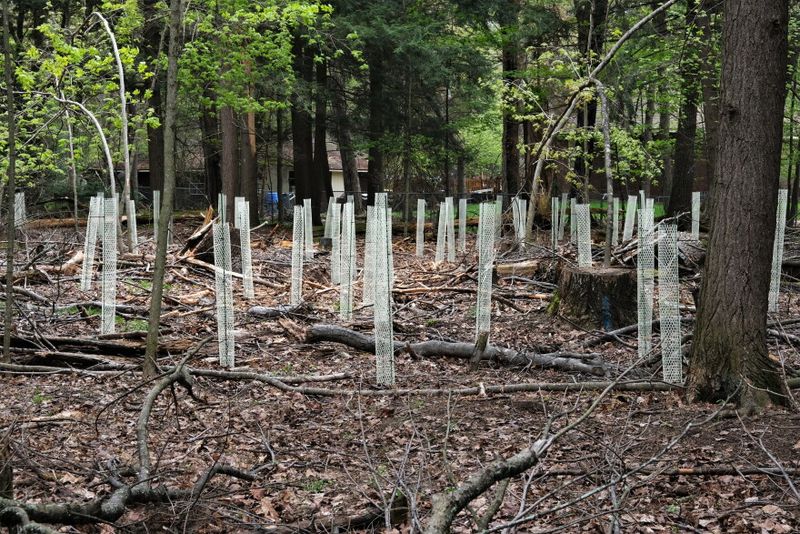
Every fall in Wisconsin, white-tailed bucks start rubbing their antlers against tree trunks, and young trees with thin, smooth bark can pay a serious price. A severe rub can strip bark, expose the living tissue underneath, and in the worst cases girdle a trunk so completely that the tree slowly dies.
Not every unprotected tree will lose its bark by spring, but the risk is real enough that waiting to act is a gamble most homeowners regret. Installing a sturdy physical guard before noticeable rubbing begins is the single most reliable way to keep a vulnerable Wisconsin tree safe through the season.
Young Wisconsin trees face a real but avoidable fall risk
The headline on this article uses strong language for a reason, but a small correction is worth making upfront. Vulnerable young Wisconsin trees could lose bark or suffer fatal damage from buck rubbing this fall, but not every unprotected tree will be stripped bare by spring.
The outcome depends on local deer pressure, how often bucks move through your property, the tree’s size and bark characteristics, and whether a physical guard is in place before rubbing begins.
The trees most at risk in Wisconsin are young, small-diameter specimens with thin, smooth, flexible bark. Maples, fruit trees, ornamental cherries, serviceberries, and newly planted native trees often fit this profile.
Wisconsin Extension guidance on winter tree damage specifically identifies fall antler rubbing as a source of large bark wounds, confirming that the threat is well-documented in the state.
Bucks rub antlers against trunks for several reasons tied to fall behavior, including marking territory and removing velvet, and they do not show a strong preference for specific tree species when choosing a rubbing spot. A supposedly deer-resistant Wisconsin tree is not automatically safe from antler contact.
The practical answer for Wisconsin homeowners is straightforward: install a physical guard that prevents the deer from reaching the bark at all, and do it before noticeable rubbing begins rather than after the first wound appears.
How Wisconsin buck rubbing can damage a trunk
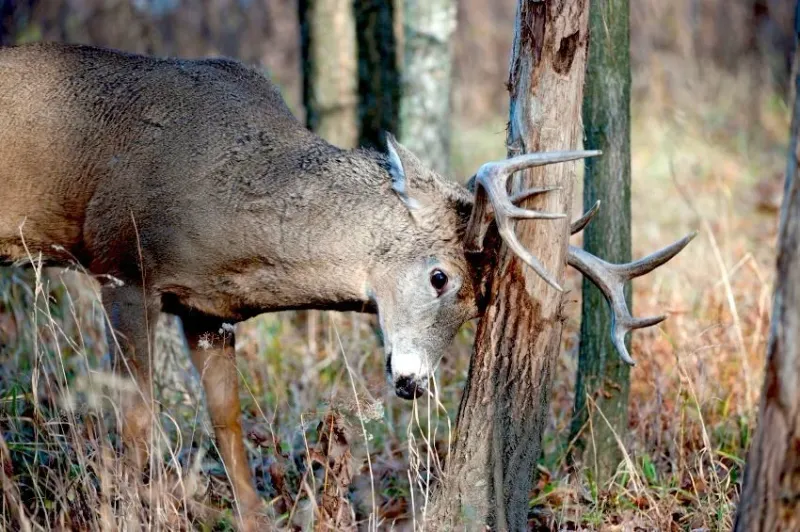
When a Wisconsin buck rubs his antlers against a young tree, the motion is forceful and repeated. Antler tines press into the bark and drag downward, shredding or peeling strips away from the trunk and exposing the cambium and phloem layers underneath.
These living vascular tissues move water and nutrients between roots and canopy, so losing them is not a cosmetic problem.
An open wound on a Wisconsin tree trunk creates an entry point for fungal pathogens, wood-boring insects, and bacteria that would otherwise have no way past intact bark. Penn State Extension research on young tree mortality notes that bark damage from deer activity can set off a chain of secondary stressors that weaken or kill a tree over one or more seasons, even when the initial wound looks manageable.
Partial wounds may allow the tree to compartmentalize damage and survive, but there are no guarantees.
The most serious outcome is girdling, which happens when damage completely encircles the trunk. A fully girdled Wisconsin tree cannot move resources past the wound, and it will eventually die even if the injury happened in a single fall season.
Your Wisconsin Garden Changes Every Week. Your Plan Should Too.
Gardening in Wisconsin changes quickly throughout the season. Every Friday you’ll receive a simple weekly plan showing exactly what to plant, prune, fertilize, harvest, and protect so you never miss the right timing.
Distinguishing rub damage from other winter injuries helps Wisconsin homeowners respond correctly. Buck-rub wounds typically appear as long vertical strips of shredded or peeled bark and polished-looking exposed wood roughly one to four feet above the ground.
University of Minnesota Extension diagnostic guidance contrasts this with rabbit or vole feeding, which tends to produce chewing marks or gnawed surfaces near the soil or snow line rather than higher shredded strips.
Protect Wisconsin trunks before fall rubbing becomes obvious
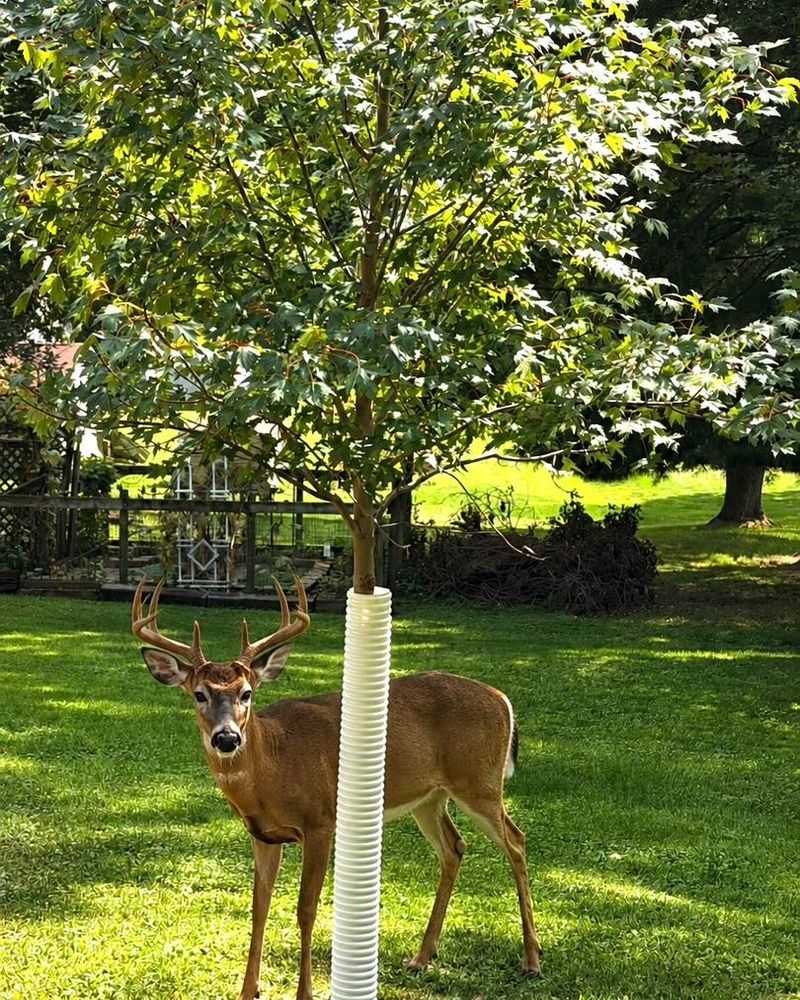
Waiting for the first rub mark before acting leaves a Wisconsin tree exposed during the exact period when damage is most likely. Buck rubbing in Wisconsin is not confined to a single date or one dramatic week.
Antler rubbing can begin in early fall, sometimes as soon as September, and continue through November as bucks cycle through territory.
Wisconsin DNR research on deer movement patterns identifies peak rut-related buck activity in southwest Wisconsin from approximately October 23 through November 12, with the highest movement concentrated around November 1 through 7. Those peak dates are a useful reference, but rubbing activity outside that window is still possible across different parts of Wisconsin, and the first rub on a given property can happen before or after the peak period.
Iowa State Extension recommends having barriers in place by mid-August as an early preparation target. That date reflects the logic of getting ahead of the behavior rather than reacting to it.
For Wisconsin homeowners, the practical takeaway is to treat guard installation as a pre-fall task rather than something to schedule after spotting damage. USDA Forest Service research on wildlife damage in hardwood plantations reinforces that preventive exclusion consistently outperforms reactive repair.
A guard installed in late summer or early fall protects a Wisconsin tree through the entire risk window without requiring a homeowner to monitor for the first sign of antler contact.
Which Wisconsin trees should receive protection first?
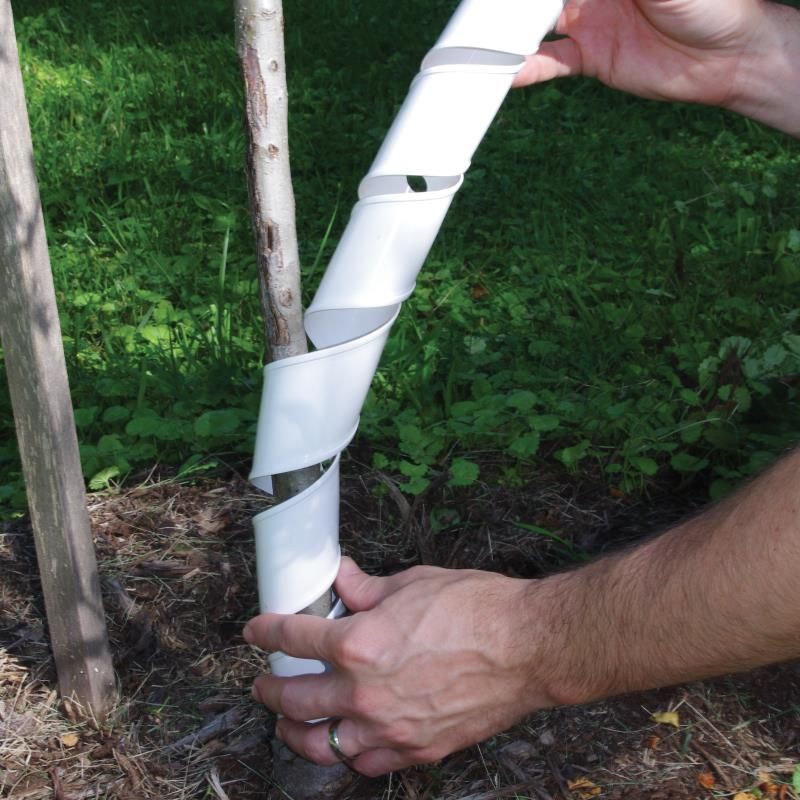
Prioritizing which Wisconsin trees to protect comes down to trunk characteristics more than species name. Young trees with thin, smooth, flexible bark and small-diameter trunks are the most likely targets for antler rubbing.
Older, thick-barked trees with rigid trunks are less appealing to bucks and less likely to suffer severe damage from a rub, though they are not completely immune.
Iowa State Extension guidance on protecting gardens from deer notes that buck-rub damage commonly occurs roughly 1.5 to 3.5 feet above the ground and that vulnerability generally decreases once a trunk reaches approximately 3 to 4 inches in diameter. Treat those numbers as approximate indicators drawn from general extension guidance, not as precise Wisconsin standards.
A trunk just over 3 inches in diameter is not automatically safe, and local deer pressure matters alongside trunk size.
Wisconsin homeowners sometimes assume that planting species from a deer-resistant list will spare those trees from antler contact. Wisconsin Extension’s plant preference research makes clear that bucks show no consistent species preference when choosing a rubbing spot.
A tree that deer rarely browse for foliage can still attract antler rubbing. For Wisconsin properties with active deer, prioritize any young tree with a smooth, thin trunk under roughly 3 to 4 inches in diameter, whether it is a fruit tree, a native serviceberry, a young maple, or an ornamental cherry, and work outward from there based on how much deer activity you observe.
Build a rigid Wisconsin barrier around the trunk
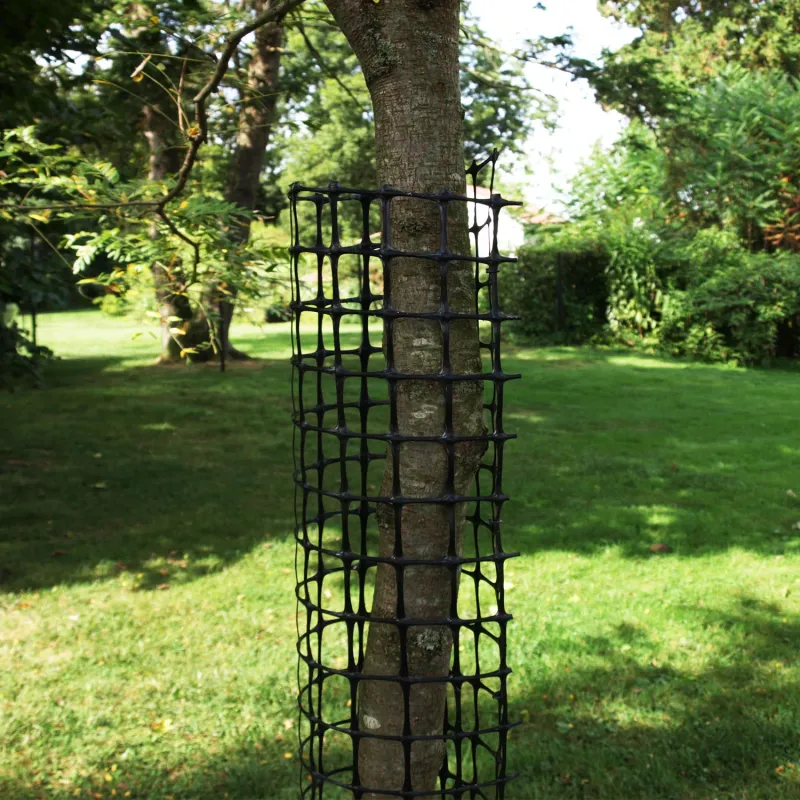
Physical exclusion is the most dependable protection available for Wisconsin trees facing buck-rub risk. A barrier works by preventing antler contact with the bark entirely, which is something no spray or scent product can guarantee.
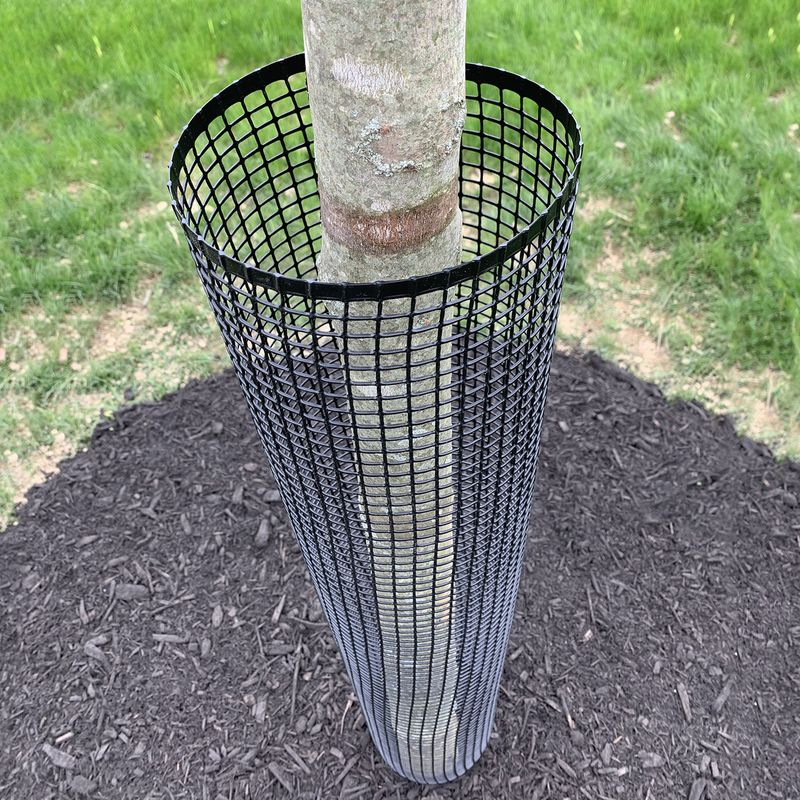
Wisconsin Extension’s guide to controlling deer damage lists tree trunk guards and several types of fencing as recommended barriers, and the options range from commercial tree guards and rigid tree shelters to welded-wire fencing and sturdy wire cylinders formed from hardware cloth or woven wire.
The cylinder approach is practical for individual Wisconsin trees. Form a ring of rigid wire mesh around the trunk with enough clearance that the bark is never touching the material and the trunk has room to expand over the season.
Secure the cylinder to two or three wooden or metal stakes driven firmly into the ground, spacing them so the structure stays upright even if a deer leans against it. Dane County Extension’s guidance on protecting Wisconsin trees from winter critter damage recommends 36-inch or 48-inch mesh as a practical option that provides snow clearance and buck-rub coverage.
Those heights work well for many Wisconsin sites, but the right choice for your property also depends on typical snow depth, how tall bucks stand in your area, and how much pressure your trees face.
Height matters more than many Wisconsin homeowners expect. Snow accumulation effectively raises the level from which a deer can reach the trunk, so a barrier that looked adequate in October can leave the upper trunk exposed by January if snowpack builds against it.
Extend the guard above the anticipated snow depth for your Wisconsin location, and anchor the base securely against the soil so deer cannot push under it or small animals cannot tunnel through. Wisconsin Extension’s winter tree damage guidance confirms that protection should account for expected snow depth when planning barrier height.
Install Wisconsin tree guards without creating new hazards
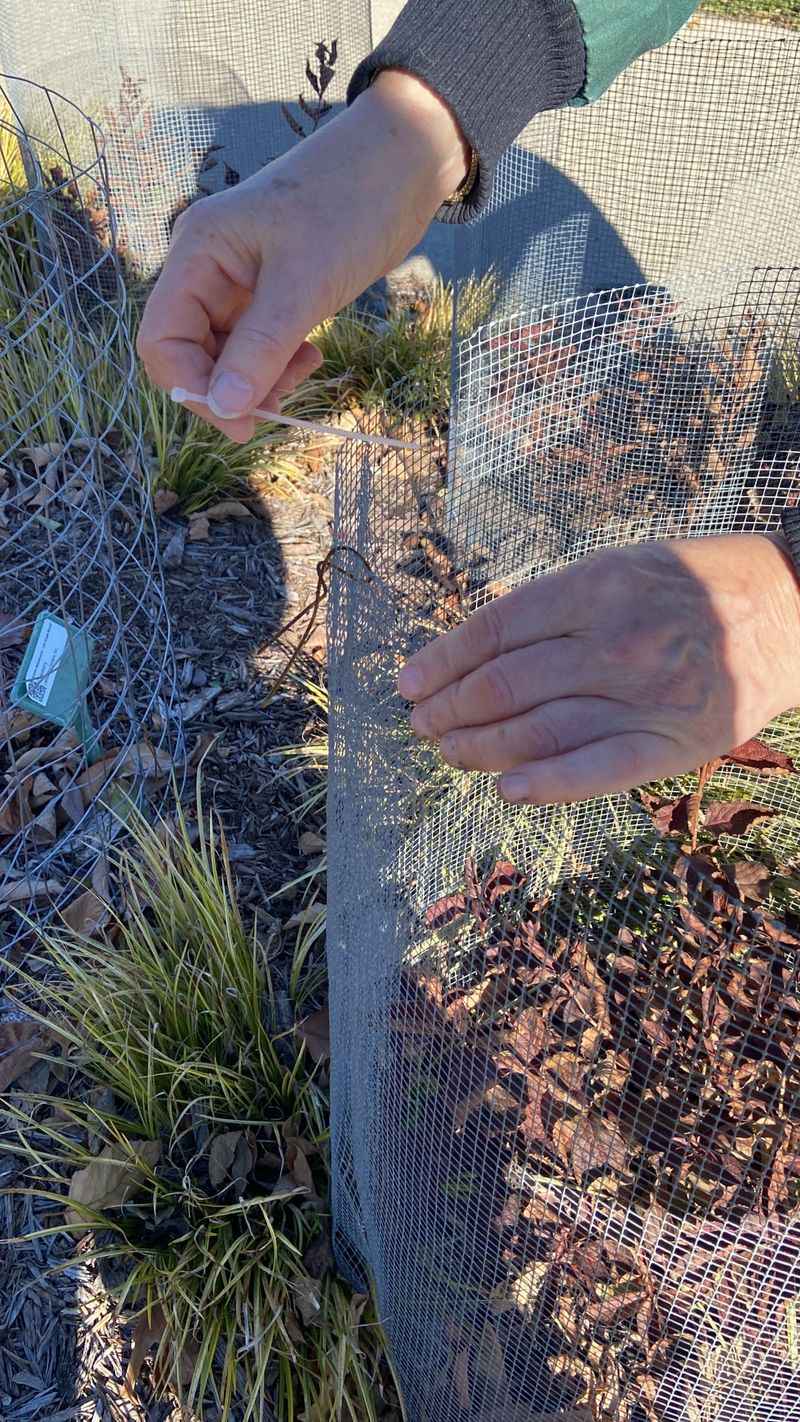
Hardware cloth and welded wire are effective materials for Wisconsin tree guards, but they require careful handling. Dane County Extension warns that cut wire edges are sharp and that rolls can spring back into a coil after cutting.
Wear heavy work gloves and eye protection before making any cuts, and keep bystanders clear of the area while unrolling wire.
After cutting, fold or bend any exposed wire ends inward so they cannot snag bark, wildlife, or a homeowner reaching in to inspect the trunk. The barrier should surround the Wisconsin tree with enough interior space that the trunk never presses against the mesh as it grows through the season.
A guard that starts loose in fall can become constrictive by the following summer if the tree adds diameter quickly, so leave generous clearance and plan to check fit at each inspection.
Ordinary white tree wrap, the kind sold in rolls for winter application, is primarily discussed by Wisconsin Extension as protection against winter sunscald on young tree trunks. It is not a substitute for a rigid physical barrier that prevents antler contact.
Wrapping a Wisconsin trunk with paper or plastic material will not stop a buck from pressing antlers against it. Use a sturdy, free-standing guard for deer exclusion and consider sunscald wrap separately if your Wisconsin site and tree species call for it.
Iowa State Extension also cautions against tight wrapping of any kind that could constrict growth or trap moisture against the bark.
Inspect Wisconsin guards through winter and remove them in spring
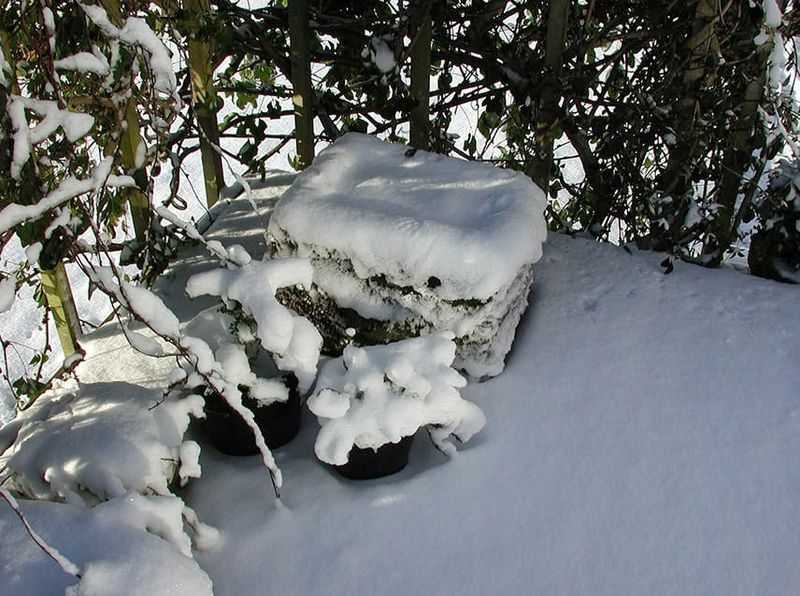
Getting a guard in place before fall rubbing begins is only part of the job. Wisconsin winters create conditions that can compromise even a well-built barrier over a few months.
Snow accumulation can pile against the base of the guard, filling the gap between the mesh and the soil and giving small animals a path inside. Heavy snowfall can also lean stakes, shift the cylinder, or raise the effective height from which a deer can reach the trunk above the top of the guard.
Check each Wisconsin tree guard at least once a month through the fall and winter. Look for gaps where the cylinder has separated from a stake, spots where the base has lifted from the ground, sections where the trunk is pressing against the mesh, and any opening large enough for an animal to push or tunnel under.
Dane County Extension recommends removing winter cages around mid-April in Wisconsin, when alternative vegetation becomes more available and deer pressure typically shifts. That date is a practical guideline rather than a fixed rule, and the right timing for your Wisconsin property depends on local deer activity, how quickly spring vegetation fills in, and whether your barrier design needs seasonal removal or can stay in place year-round.
Iowa State Extension similarly advises removing seasonal barriers in spring to prevent interference with tree growth. A guard left tightly against a Wisconsin trunk through the growing season can restrict diameter growth, trap moisture, and create new problems that the barrier was never meant to cause.
Spring removal, followed by reassessment and reinstallation before the next fall, keeps the protection cycle working without harming the tree it is meant to save.
Read Wisconsin rub marks and respond realistically
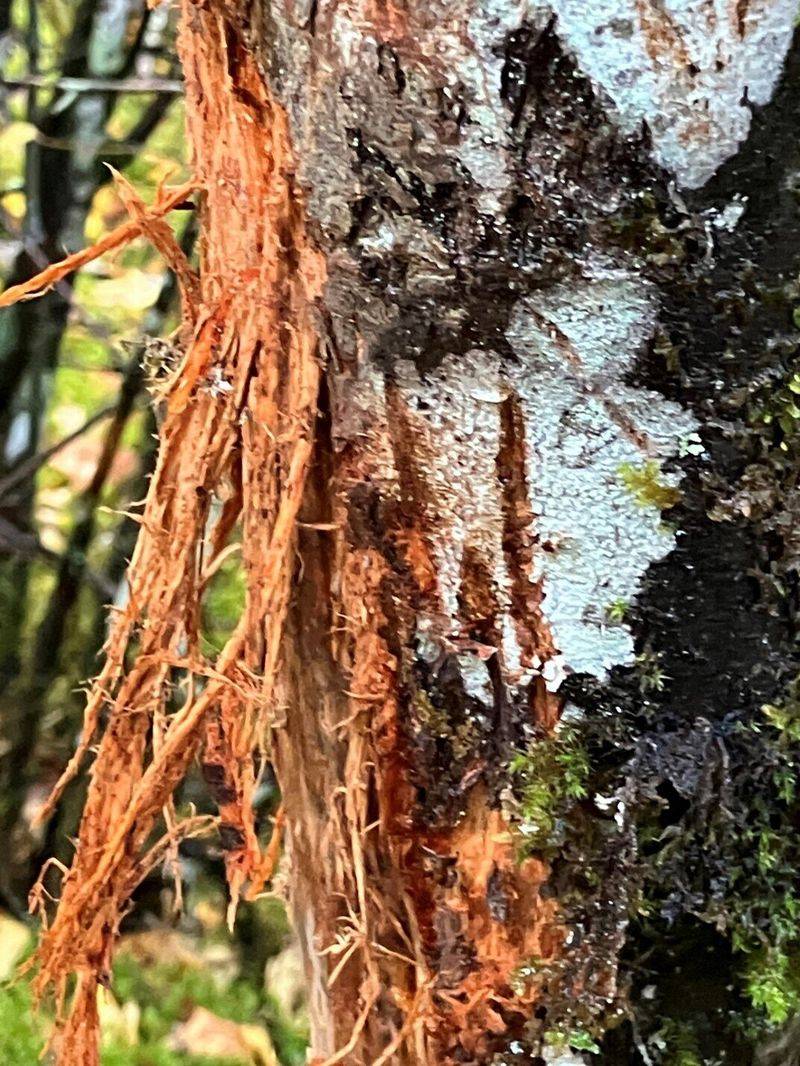
Knowing what Wisconsin buck-rub damage looks like helps homeowners act quickly and accurately. Fresh rub marks appear as long vertical strips of shredded or peeled bark, often with polished or smooth exposed wood visible underneath, typically located roughly one to four feet above the ground.
Penn State Extension and University of Minnesota Extension diagnostic resources both contrast this pattern with rabbit or vole damage, which tends to appear as chewed or gnawed surfaces close to the soil or snow line rather than higher shredded strips.
If a Wisconsin tree has already been rubbed, assess how much of the trunk circumference is affected. Partial damage may allow the tree to recover over one or more growing seasons, but a trunk that has been stripped all the way around faces a much harder road.
Wisconsin Extension notes that repellents can supplement exclusion but reduce rather than eliminate damage, require reapplication, and perform inconsistently between locations and years. Do not rely on a spray alone after discovering a fresh rub on a Wisconsin tree.
Iowa State Extension specifically advises against applying wound dressings, pruning paints, latex paint, or similar coatings to severe deer damage, noting that no such product can save a severely girdled tree. For Wisconsin homeowners, the clearest takeaway is this: guard vulnerable trunks before fall rubbing begins, because a physical barrier is the one intervention that consistently works.
Bark loss is not inevitable, but it is far easier to prevent than to undo.