Simple Habits That May Bring Hummingbirds Back To Your Arizona Garden Year After Year
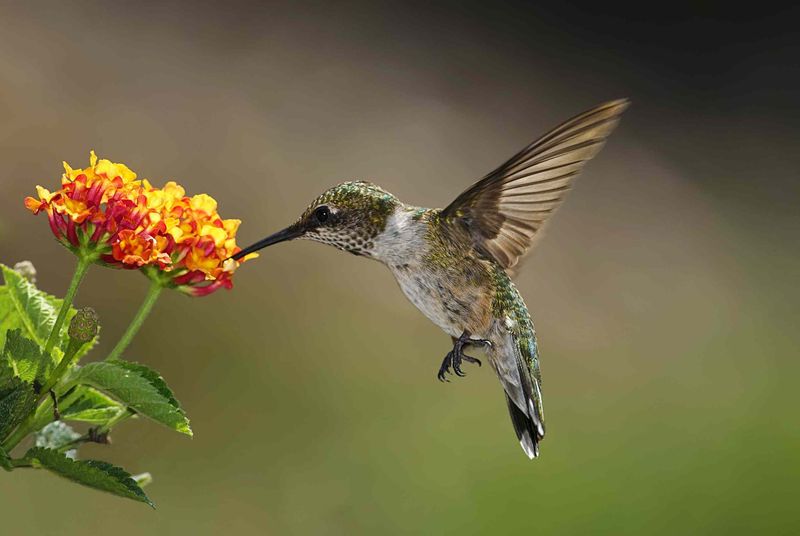
Hummingbirds are some of the most exciting visitors an Arizona yard can attract, but getting them to show up reliably takes more than luck. In the low desert around Phoenix and Tucson, the right combination of plants, water, shelter, and safe food can make your yard a dependable stop along their routes.
These habits won’t guarantee the same birds on the same date every spring, but they can meaningfully improve your odds of repeat visits season after season.
What Arizona Homeowners Can Realistically Expect
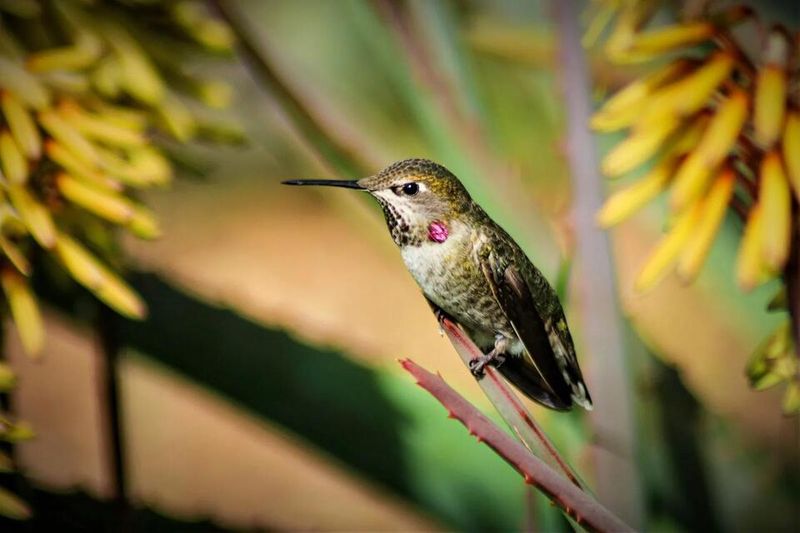
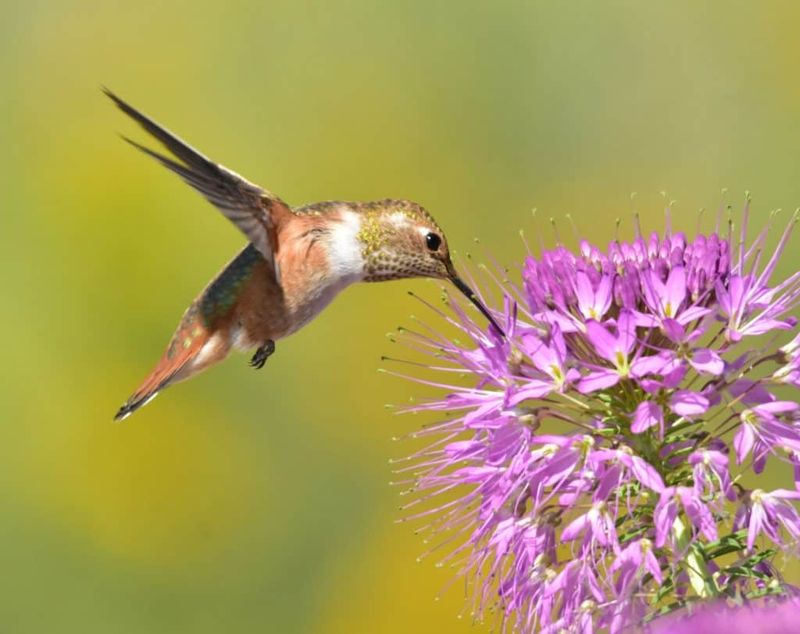
Hummingbirds in Arizona are not a single predictable crowd. National Park Service guidance on hummingbirds identifies Anna’s Hummingbird as a year-round resident in parts of the northern Sonoran Desert, while other Arizona species, including Costa’s, Black-chinned, and Rufous, may appear seasonally or follow specific elevation and migration corridors.
A yard in Phoenix or Tucson sits in the low desert, which is a different growing and wildlife environment than the higher-elevation southeast or the Colorado Plateau in the north, and plant choices that work in one zone can fail badly in another.
Research does show that some hummingbirds return to the same locations. A ten-year banding study found meaningful site fidelity in Broad-tailed Hummingbirds, though that study tracked one species at a Colorado breeding site, not a mix of Arizona species in a suburban yard.
Return rates varied by sex and year even in that controlled setting. That evidence tells us site fidelity can happen, not that any particular Phoenix or Tucson yard will see the same individual birds on a reliable annual schedule.
Without banding or another long-term identification method, a hummingbird seen in your Arizona yard this spring could be a returning individual, a different adult of the same species, a locally produced young bird, or a migrant passing through the same corridor. The honest starting point is this: the habits in this article can make your yard more useful and may improve the odds of repeat visits, but they cannot promise annual returns or clock-precise arrival dates.
Focused on the low desert around Phoenix and Tucson, the sections ahead cover flowering plants, insect habitat, perches, shade, water, and feeder care as connected pieces of a stronger Arizona habitat.
Build an Arizona Garden Around Staggered Blooms
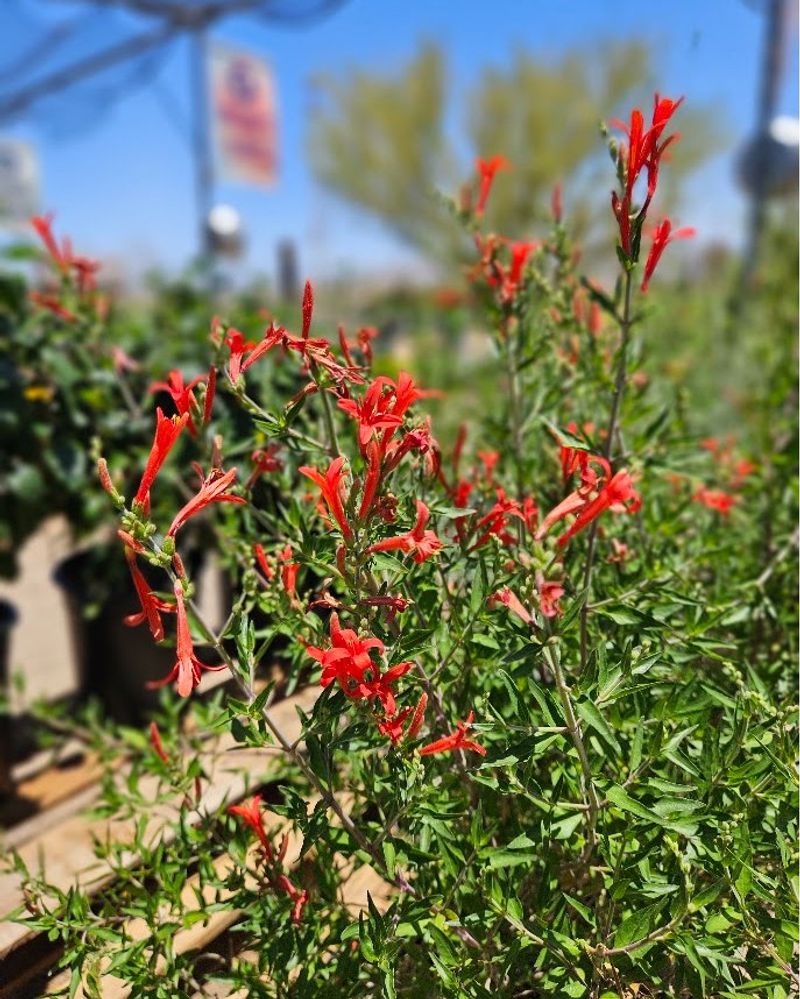
Flowering plants are the single most important foundation for any Arizona yard trying to attract hummingbirds, and the key is variety across bloom periods rather than one spectacular plant that flowers for three weeks and goes quiet. Combining plants that flower in different seasons is a practical management strategy, not a proven guarantee of annual returns, but a yard with more dependable nectar is simply a more useful stop.
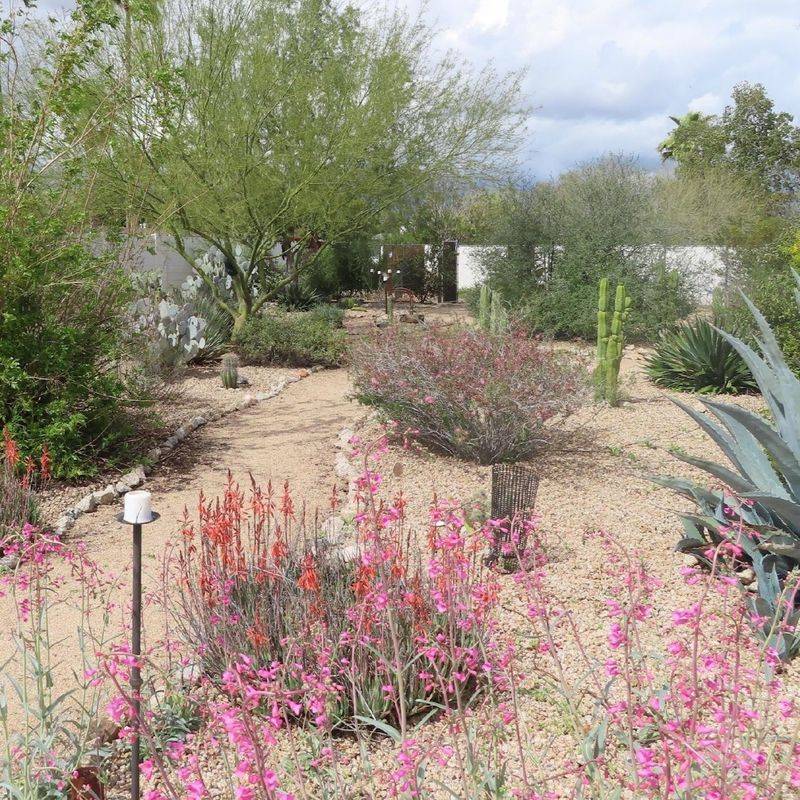
For the low desert around Phoenix and Tucson, strong Arizona native options include chuparosa (Justicia californica), which is a Sonoran Desert native that blooms heavily in late winter and spring; fairy duster (Calliandra eriophylla), another true Arizona native; ocotillo (Fouquieria splendens), whose red tubular flowers open after rain and in spring; and red yucca (Hesperaloe parviflora), which is actually a desert-adapted nonnative ornamental from Texas rather than an Arizona native, though it thrives in the low desert and produces tall spikes of coral-red flowers attractive to hummingbirds. Desert willow (Chilopsis linearis) is an Arizona native small tree that blooms from late spring through summer.
Your Arizona Garden Changes Every Week. Your Plan Should Too.
Gardening in Arizona changes quickly throughout the season. Every Friday you’ll receive a simple weekly plan showing exactly what to plant, prune, fertilize, harvest, and protect so you never miss the right timing.
Tubular flowers and brightly colored blooms may help attract hummingbirds because of how their vision works, but flower color alone is not a controlling factor. Audubon’s review of hummingbird color attraction notes that nectar quality and feeder design matter more than color, and that hummingbirds visit flowers of many colors, not just red.
When selecting plants, match species to your specific Arizona microclimate, soil drainage, and sun exposure, since even drought-adapted plants can fail in the wrong spot in the low desert.
Protect Arizona Insects, Cover, and Perches
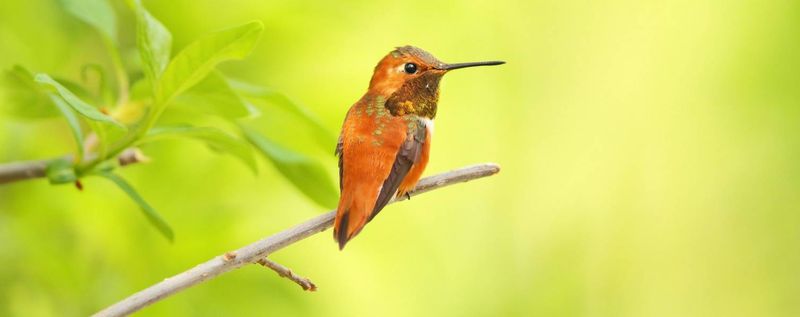
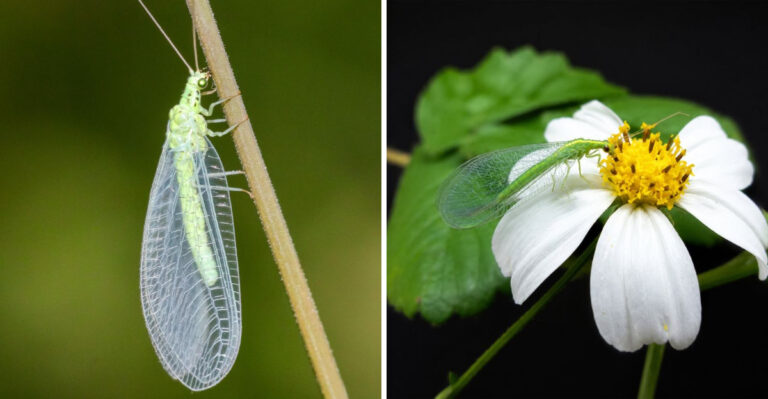
Nectar fuels hummingbirds, but protein keeps them alive. National Park Service hummingbird biology guidance explains that hummingbirds regularly eat small insects and spiders, and during nesting season insect prey becomes especially critical for feeding developing chicks.
An Arizona yard that offers flowers but eliminates every insect through broad-spectrum spraying is providing an incomplete habitat, one that may attract a hummingbird briefly but cannot support extended use or nesting.
The practical shift is moving from automatic pesticide schedules to identification-first integrated pest management. Arizona Cooperative Extension’s IPM guide for home gardens recommends identifying a pest and its population level before choosing any control method, starting with the least disruptive options and reserving chemical controls for situations where they are genuinely necessary.
Tolerating minor non-damaging insects, aphids on one shrub or small caterpillars on a plant that can handle them, means preserving a food source that hummingbirds and other insectivorous birds actively hunt. Broad-spectrum insecticides applied on a calendar schedule remove that prey and can affect hummingbirds indirectly through the food chain.
Hummingbirds in Arizona need perches, particularly bare or open branches where they can rest, scan their territory, and watch for rivals or threats. Planting a mix of shrubs with dense inner structure alongside small trees with open outer branches gives birds both hiding spots and lookout points.
These are habitat improvements that make a yard more functional, not a formula that guarantees hummingbird occupancy.
Use an Arizona Hummingbird Feeder Only If You Can Maintain It
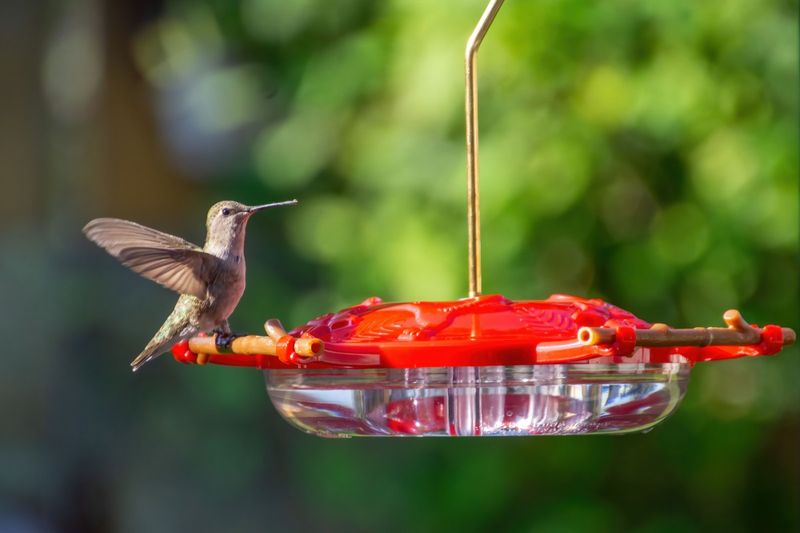
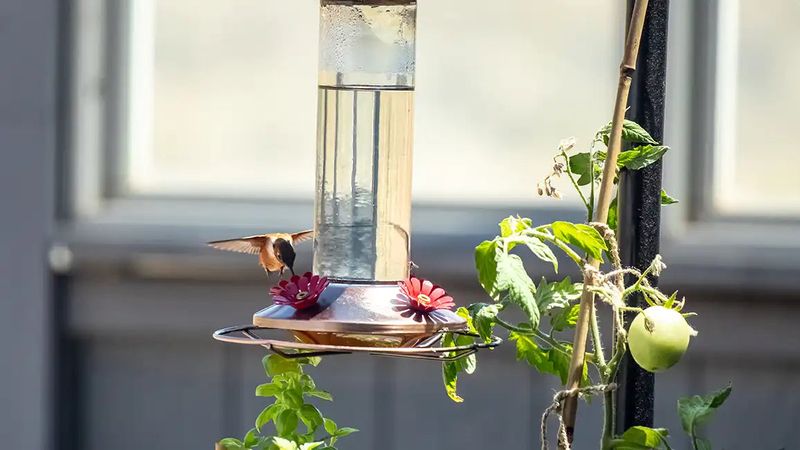
A hummingbird feeder in an Arizona summer is not a set-it-and-forget-it convenience. Arizona heat turns neglected nectar into a health hazard for birds faster than most gardeners expect, and a feeder that goes uncleaned can do more harm than good.
Treat a feeder as optional supplemental food, a useful addition only when you can maintain it consistently through triple-digit temperatures, not as a substitute for flowers, insects, shelter, or water.
Honey ferments quickly and can cause fungal infections; artificial sweeteners provide no usable calories; red dye is unnecessary and its safety for hummingbirds is not established. Red feeder components may aid initial visibility, but the nectar itself should be clear.
In very hot Arizona weather, replace nectar daily and discard any nectar that looks cloudy or smells off without waiting for a scheduled change.
Hang feeders in shade or filtered shade to slow fermentation. If you already have multiple hummingbirds visiting, placing additional feeders out of sight from each other may reduce territorial domination by one aggressive bird, but adding feeders does not pull in hummingbirds that are not already using your Arizona yard.
A well-maintained single feeder in the shade, paired with good plant and insect habitat, outperforms a cluster of neglected ones every time.
Add Arizona Shade and Clean Moving Water
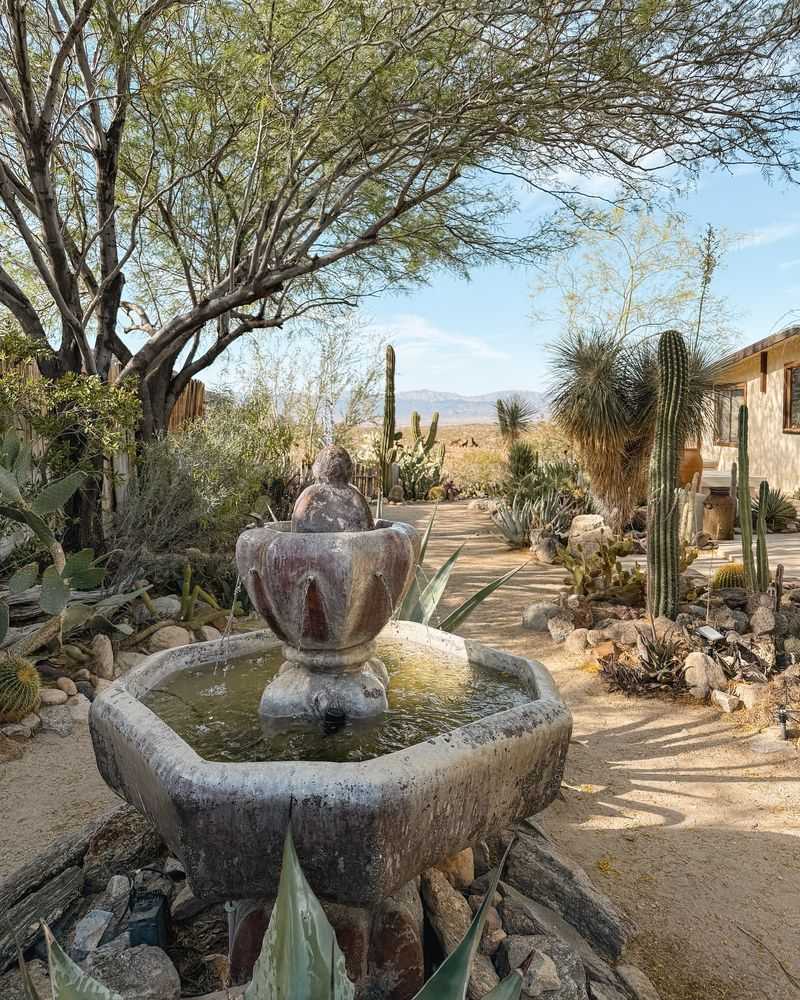
Shade is an underrated habitat element in the Arizona low desert, where afternoon temperatures regularly exceed 110 degrees Fahrenheit. Dense shrubs and small trees that create filtered light give hummingbirds a place to rest and thermoregulate between feeding bouts, and they also support the insect populations that hummingbirds hunt.
Positioning shade structures, patio covers, or large native shrubs on the west side of a garden can meaningfully reduce heat stress on both plants and wildlife during the hottest part of the day.
Water features designed for hummingbirds look different from a standard deep birdbath. Audubon’s hummingbird habitat recommendations specifically suggest a drip fountain attachment or fine misting device because hummingbirds often bathe in droplets on leaves rather than wading into standing water.
A shallow basin with moving water, a drip line aimed at a flat rock, or a fine mist sprayer near low vegetation all work better than a deep bowl. Every water feature needs regular cleaning to prevent algae, mosquito breeding, and bacterial growth, which is a non-negotiable step in the Arizona heat.
Water-conscious Arizona landscaping is not the same as water-free landscaping. University of Arizona Extension guidance on rainwater harvesting and plant health makes clear that even drought-adapted species need consistent irrigation during establishment, and that low-desert conditions, high evaporation rates, alkaline soils, and limited rainfall, can require supplemental water even for native plants in difficult urban sites.
Once established, desert-adapted plants generally shift to deeper, less frequent watering, but the right schedule depends on your specific soil type, sun exposure, plant species, and irrigation equipment. Avoid applying watering advice developed for higher-elevation Arizona regions, such as Sierra Vista or Flagstaff, directly to a Phoenix or Tucson yard.
Time Arizona Planting and Prevent Common Bird Hazards
Getting the planting calendar right is one of the most Arizona-specific things a low-desert homeowner can do. Fall, roughly October through November, and early spring are generally favorable windows for establishing many trees and shrubs in the Phoenix and Tucson areas.
Window collisions are a serious and preventable hazard for hummingbirds in Arizona yards. U.S.
Fish and Wildlife Service guidance on bird-window collisions recommends exterior patterns, screens, or films applied to glass that break up the reflection and help birds recognize a solid surface. For feeders placed near windows, the USFWS notes that positioning within 3 feet of a window generally prevents birds from building dangerous collision speed before impact, which is a counterintuitive but practical placement option.
Patterns must be on the outside surface of the glass to be effective.
Free-roaming cats are another serious predation risk for Arizona hummingbirds, particularly juveniles and birds that perch low in shrubs. Keeping cats indoors or in enclosed outdoor spaces removes a significant and controllable threat.
Combine safe window treatments, responsible cat management, and smart feeder placement as a routine part of Arizona yard maintenance rather than treating them as optional extras. A yard that provides good habitat but exposes hummingbirds to avoidable hazards is an incomplete one.
Interpret Changing Arizona Hummingbird Activity Carefully
Before adding more feeders or redesigning the garden, run through a practical checklist. Check whether your Arizona-adapted plants are in bloom and providing natural nectar.
Confirm the feeder nectar is fresh and the feeder itself is clean and mold-free. Verify that the feeder is in shade and not heating the nectar to the point of rapid fermentation.
Look at whether insect habitat has been disrupted by recent spraying.
Local conditions in the low desert around Phoenix and Tucson shift from year to year based on monsoon timing, heat intensity, and how neighboring properties are managed. A yard that saw regular visits one summer may be quieter the next if a neighbor’s garden added a competing nectar source, or busier if a nearby lot was cleared and your yard became the best remaining habitat on the block.
Keeping realistic expectations and a habit of observation, rather than a fixed count of arrivals, is the most useful way to track your Arizona yard’s value over time.
Measure Success by a Healthier Arizona Habitat
The most honest measure of a successful Arizona hummingbird yard is not a bird count or an arrival date. National Park Service hummingbird ecology guidance frames good habitat as the foundation of wildlife support, and that framing fits the low desert well.
A yard with varied Arizona-adapted blooms across multiple seasons, preserved insect prey, sheltered vegetation, perches, shade, and clean moving water is doing the real work, whether or not a hummingbird shows up on a particular afternoon.
Use a feeder only when you can maintain it safely through Arizona heat. University of Arizona Extension’s low-desert pollinator plant resource consistently emphasizes plant-based habitat over supplemental feeding, which is the right priority order for a sustainable Arizona yard.
These connected habits may improve the odds of repeat hummingbird visits, but they cannot guarantee the same individuals return every year.
A yard that supports hummingbirds in the Arizona low desert is also a yard that works better for native bees, butterflies, and the full web of desert life. That broader payoff, a functional, water-conscious habitat that holds up through a Phoenix or Tucson summer, is the realistic and lasting measure of success.