What Pennsylvania Gardeners Should Know About The Spotted Lanternfly Egg Mass Removal Window That’s Open Right Now
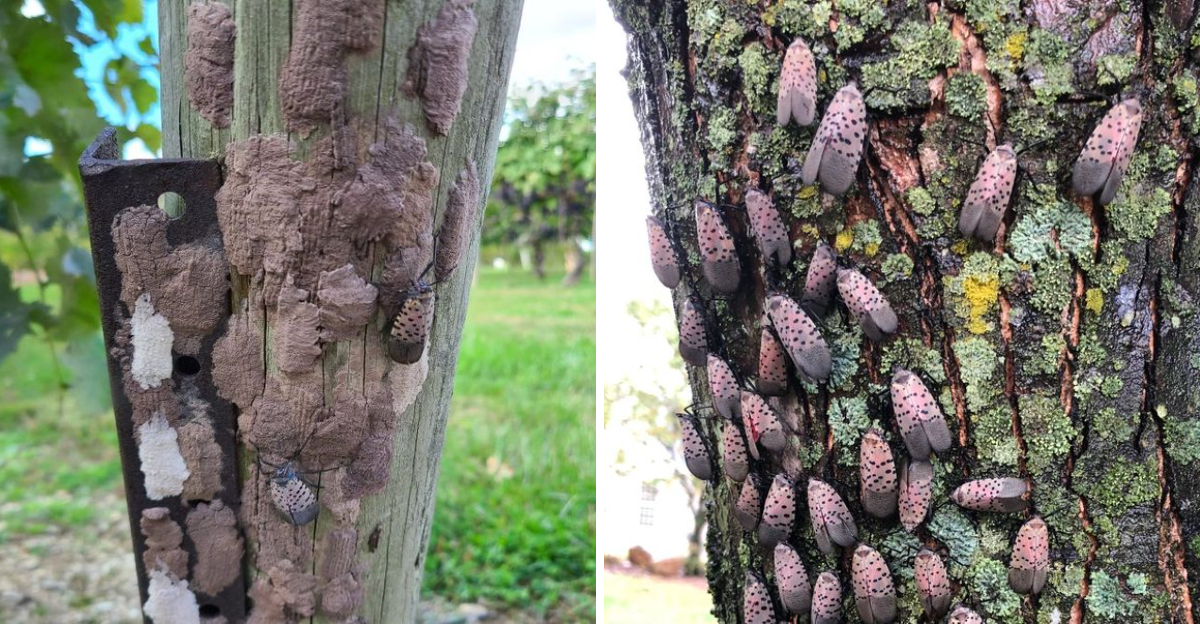
That gray smear on your maple is not dried mud.
It looks like putty someone flicked at the bark and forgot about. Maybe an inch long, dull, slightly cracked, easy to walk past a hundred times.
Underneath sits something considerably more organized. Neat rows. Dozens of them, waiting through winter for a warm week in late April.
Here’s the part Pennsylvania gardeners keep missing. There’s a window open right now that stays open until spring, and during that window one of the state’s most destructive invasive insects sits completely still.
No flying. No jumping. No scattering when you approach.
The tools cost a few dollars. A plastic card and a jar of hand sanitizer handle most of the job. Miss the window and you spend next summer chasing nymphs across every tree you own.
Curious what’s already on your property?
1. Find Lanternfly Egg Masses Before Winter
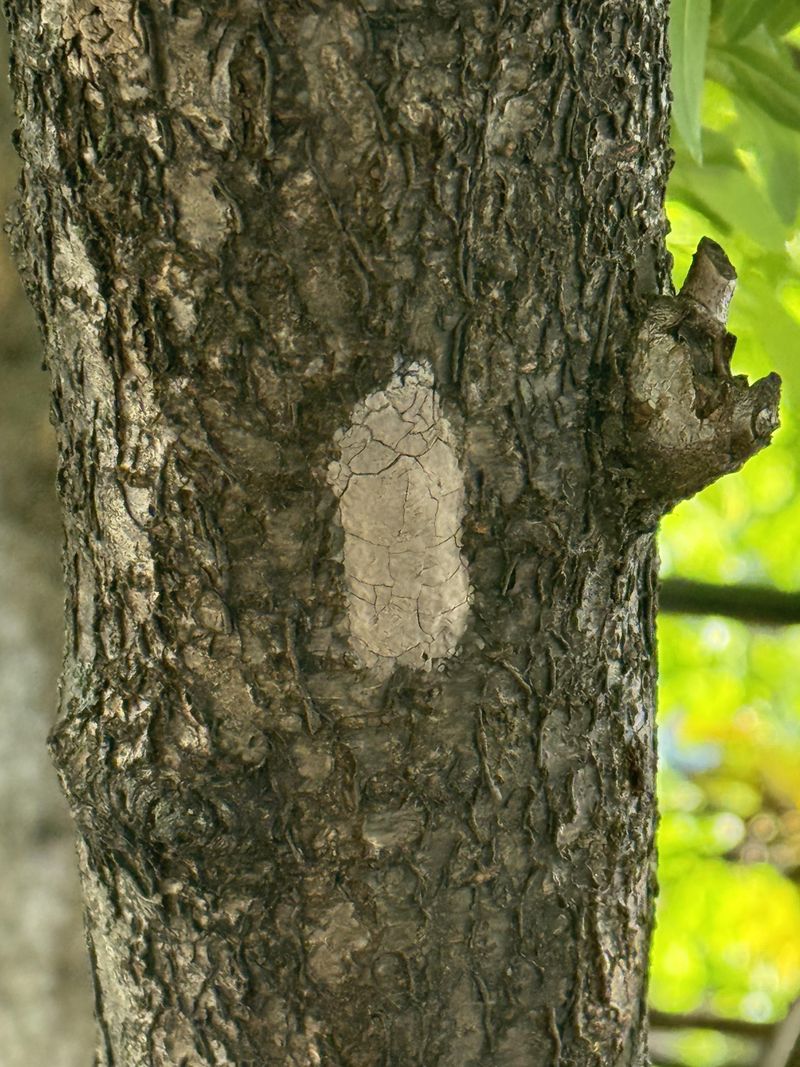
Once the weather cools in September and October, adult spotted lanternflies begin laying eggs on all sorts of surfaces. According to Penn State Extension, a fresh egg mass looks like a smear of gray, mud-like putty covering neat rows of tiny eggs underneath.
The covering has a smooth, waxy feel when new, and it slowly cracks and dries as the weeks pass. Older masses can look tan or brownish and start to resemble a patch of cracked mud or a splash of dried oatmeal stuck to the bark.
Each mass is roughly an inch to an inch and a half long. Inside, you might find thirty to fifty eggs lined up in tidy columns, so a single patch you scrape away could stop dozens of insects from ever hatching.
Tree trunks are a favorite spot, especially smoother-barked trees, but the eggs also show up on rocks, fence posts, and hidden corners you would never expect. Bring a flashlight and check shaded, sheltered areas where the female could hide her eggs from the weather.
Training your eye now pays off all winter long. The masses do not move or crawl, so once you learn to recognize that dull gray smear, you can spot them again and again on quiet inspection walks around your property.
2. Check Outdoor Surfaces Around Your Property
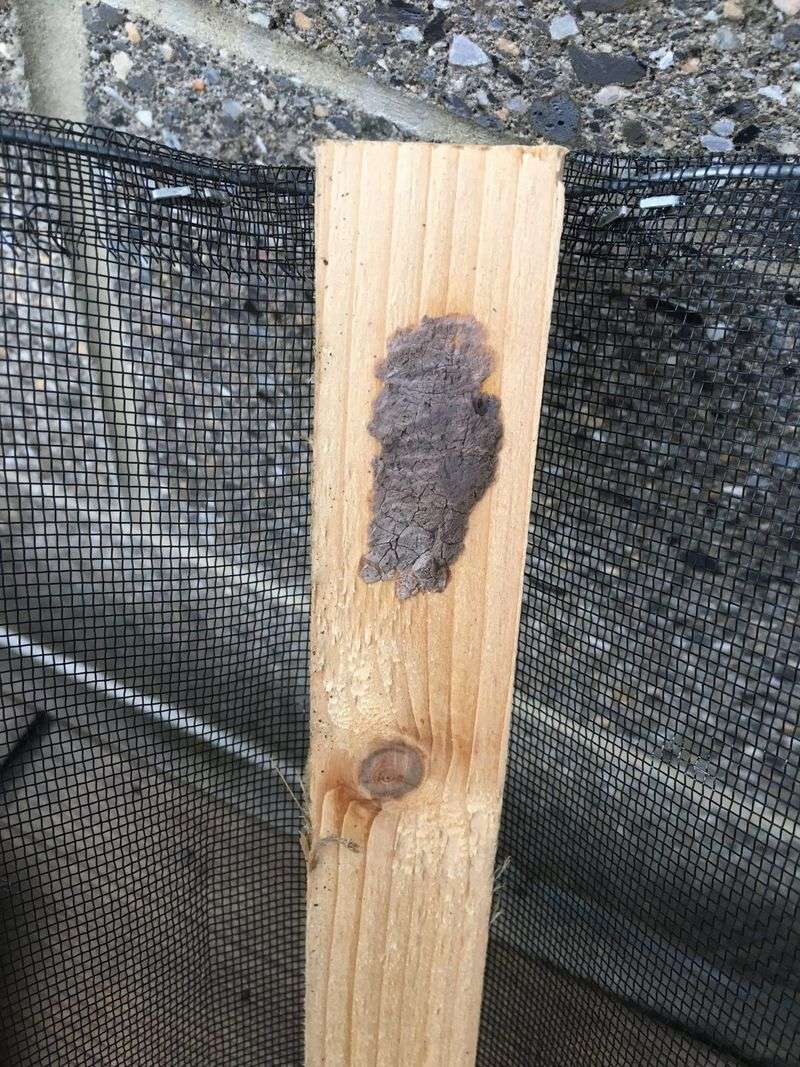
Tree bark gets most of the attention, but spotted lanternflies are not picky about where they lay eggs. Penn State Extension warns that these insects will use almost any flat, sheltered surface they can find outdoors.
Start with the obvious targets like tree trunks and branches, then widen your search. Stacked firewood is a big one, since the rough bark and hidden gaps make perfect hiding spots for egg masses to survive the winter unseen.
Outdoor furniture deserves a careful look too. Flip over chairs and tables, and peek under grills, planters, and the undersides of railings where a smooth gray smear could easily blend in.
Vehicles parked near infested trees are another common landing zone. Check wheel wells, bumpers, truck beds, and trailers, because a mass riding on your car can travel to a whole new town without you knowing.
Your Pennsylvania Garden Changes Every Week. Your Plan Should Too.
Gardening in Pennsylvania changes quickly throughout the season. Every Friday you’ll receive a simple weekly plan showing exactly what to plant, prune, fertilize, harvest, and protect so you never miss the right timing.
Stone walls, bricks, cinder blocks, and even lawn equipment can hold eggs as well. The gray putty coating blends surprisingly well against concrete and rough stone, so run your fingers along the surface if your eyes are not sure.
Make a slow loop around your entire property, working from ground level up to about head height and beyond if you can reach safely. A thorough sweep now means fewer surprises when spring arrives and the nymphs start looking for something to eat.
3. Scrape Egg Masses The Right Way
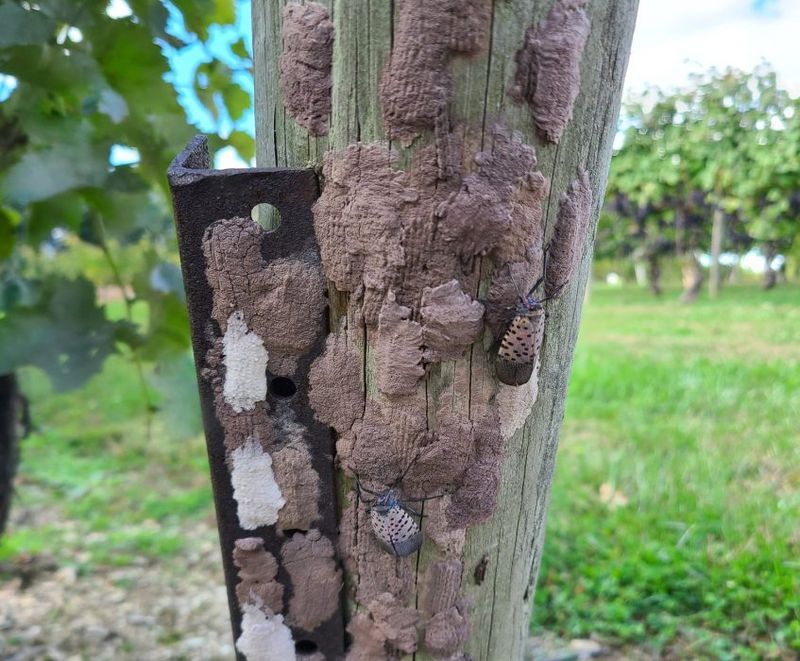
Grab a sturdy scraping tool before you head outside. A plastic card, an old credit card, a putty knife, or a flat stick all work well for this job, according to Penn State Extension guidance.
Hold a bag or container right below the mass, then press the scraper firmly against the surface and push. You want the eggs to pop loose and drop into your container instead of scattering onto the ground.
Getting every bit matters here. Scrape hard enough that you crush and smear the eggs, since a mass left partly intact can still hatch and undo your effort.
Proper disposal is the second half of the task. Extension recommends scraping the eggs directly into a bag or jar filled with hand sanitizer, which can get rid of them quickly and reliably.
If you do not have that nearby, double-bag the eggs in sealed plastic and throw them in the trash. Smashing them thoroughly first adds an extra layer of certainty.
Wear gloves and eye protection, especially when reaching overhead, and use a ladder safely if a mass sits out of comfortable reach. Never try to burn eggs off surfaces.
Keep your scraper and a small container of sanitizer stashed near the door. That way, whenever you spot a fresh mass, you can deal with it on the spot instead of putting it off.
4. Remove Eggs Before Spring Hatch

Timing is everything with egg removal. Female lanternflies lay their eggs in fall, and those eggs sit through winter before hatching sometime around late April into May, depending on how warm the spring turns out.
That long dormant stretch is your golden opportunity. From roughly September or October straight through early spring, every mass you scrape represents a batch of nymphs that will never crawl out to feed on your plants.
Once hatching begins, the game changes fast. The tiny black-and-white nymphs spread out, climb trees, and become much harder to control than a still egg mass stuck to bark.
Penn State Extension points out that a single egg mass can hold thirty to fifty eggs. Multiply that across a few dozen masses on your property and you can see how removal work in winter prevents an army of insects later.
Cold weather actually helps you here. The bugs are not active, the leaves are down, and gray masses stand out clearly against bare branches and empty surfaces.
Plan a few inspection walks between the first frost and the last chilly days of early spring. Repeat visits catch masses you missed the first time and any laid later in the season.
Finishing your removal before the hatch means you break the cycle right at the source instead of chasing crawling pests all summer.
5. Avoid Spreading Lanternflies During Cleanup
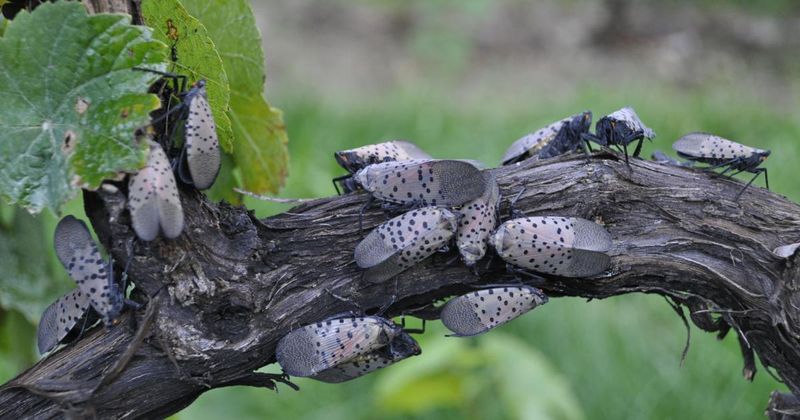
Here is a sneaky problem many gardeners never consider: the very items you move around during yard cleanup can carry hidden egg masses straight to a brand-new location.
Firewood is the biggest culprit by far. Hauling a load of logs to a campground, a friend’s house, or a hunting cabin can drop lanternfly eggs into an area that never had them before.
Pennsylvania sits under a spotted lanternfly quarantine, which asks people to inspect items before moving them out of affected counties. That rule exists precisely because these insects hitchhike so easily.
Before you load up firewood, lawn furniture, potted plants, or landscaping stone, take a minute to look them over. A gray smear tucked into a crack could travel miles inside your trunk or trailer.
The same caution applies to vehicles themselves. Give tires, bumpers, and wheel wells a quick check if you have been parked near infested trees.
Buying and burning firewood locally is one of the simplest ways to help. Skip the temptation to bring wood along on trips, since local sources cut the risk of spreading pests.
Think of yourself as a checkpoint. Every item you inspect and clear is one less chance for lanternflies to leap into a fresh neighborhood, and that small habit protects gardens well beyond your own fence line.
6. Monitor Trees After Removal Efforts
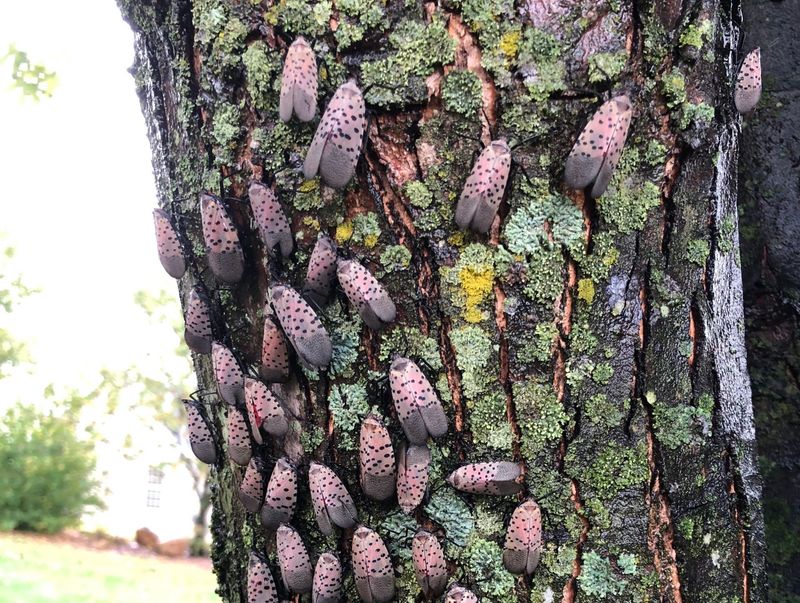
Scraping away every mass you find feels great, but the work does not end there. Lanternflies keep laying eggs into late fall, so a tree you cleared in October might have fresh masses by December.
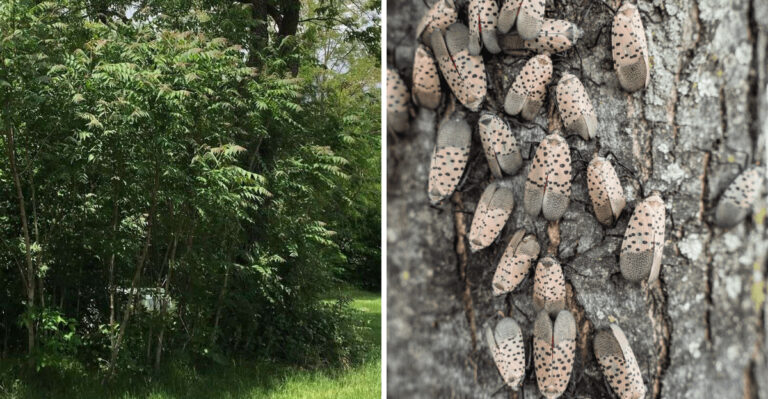
Pay special attention to tree-of-heaven, an invasive plant that spotted lanternflies absolutely love. Penn State Extension notes this species is a favorite host, so any tree-of-heaven on or near your property deserves regular checks.
Other trees earn watchful eyes too. Maples, walnuts, willows, and grapevines all attract these pests, and returning to them every few weeks helps you catch new activity early.
Keep a simple log if it helps you stay organized. Jotting down which trees had masses and when you scraped them makes your next inspection faster and more focused.
Spring monitoring matters just as much. After the hatch, tiny nymphs gather on stems and leaves, giving you another clue about where adults will lay eggs next fall.
Some gardeners choose to have tree-of-heaven removed or treated by professionals, since fewer host trees usually means fewer lanternflies. Check current Extension guidance before taking that step.
Consistency beats a single big cleanup day. Walking your yard on a regular schedule turns pest control into a manageable routine instead of an overwhelming chore, and it keeps small problems from growing into large ones over the seasons.
7. Report Heavy Infestations When Needed
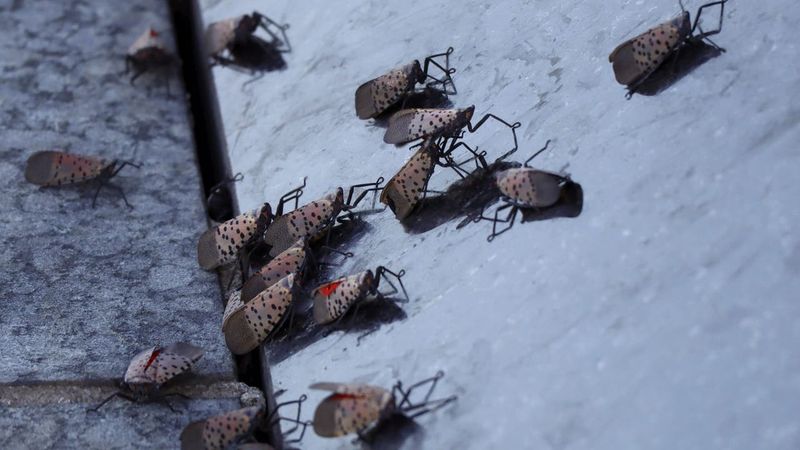
Sometimes a yard has more lanternflies than one person with a scraper can handle. When trees are covered in masses or crawling with insects, reporting the problem helps officials track the spread.
Pennsylvania has official channels built exactly for this. The Pennsylvania Department of Agriculture runs a spotted lanternfly reporting system, and Penn State Extension maintains up-to-date pages with the current phone number and online form.
Reach out to Penn State Extension first if you are unsure where to start. Their website is regularly updated and points you toward the correct, current reporting resources for your county.
When you report, sharing clear details makes your information more useful. Note the location, the type of trees affected, and roughly how many insects or egg masses you are seeing.
Photos can help too. A clear picture of the masses or adults gives experts a better sense of what stage the population has reached in your area.
Skip random social media groups or generic pest websites for official reporting. Those sources may spread outdated advice, while state agencies give you accurate, trustworthy guidance.
Reporting is not about getting in trouble. It gives researchers and agriculture teams real data about where infestations are worst, which helps them target their efforts and protect farms, vineyards, and forests across Pennsylvania. Your single report can add one more useful piece to the bigger statewide picture.
8. Protect Pennsylvania Plants Through Fall

All this scraping and scouting adds up to something bigger than a tidy yard. Every egg mass removed is part of a statewide push to slow an invasive insect that threatens Pennsylvania’s farms, orchards, and forests.
Spotted lanternflies damage plants by feeding on sap and leaving behind a sticky substance called honeydew. That honeydew leads to sooty mold, which can weaken grapevines, fruit trees, and ornamental plants alike.
Fall is the season when your actions matter most for the year ahead. Because egg removal now prevents next spring’s hatch, a few weekend inspections can spare your garden months of trouble later.
Combining tactics gives you the best results. Scrape masses, watch host trees, inspect items before moving them, and report heavy infestations through official channels when things get out of hand.
Pennsylvania’s quarantine exists to keep this pest from spreading faster than it already has. Following the guidelines is a simple way to be a good neighbor to nearby gardeners and growers.
You do not need fancy equipment to make a difference. A scraper, a bag of sanitizer, gloves, and a bit of steady attention are enough to protect your slice of the landscape.
Working together across the state, gardeners chipping away at egg masses through fall and winter help give native plants and local crops a fighting chance against this stubborn invader.