What It Means When Quail Suddenly Return To Your Arizona Yard
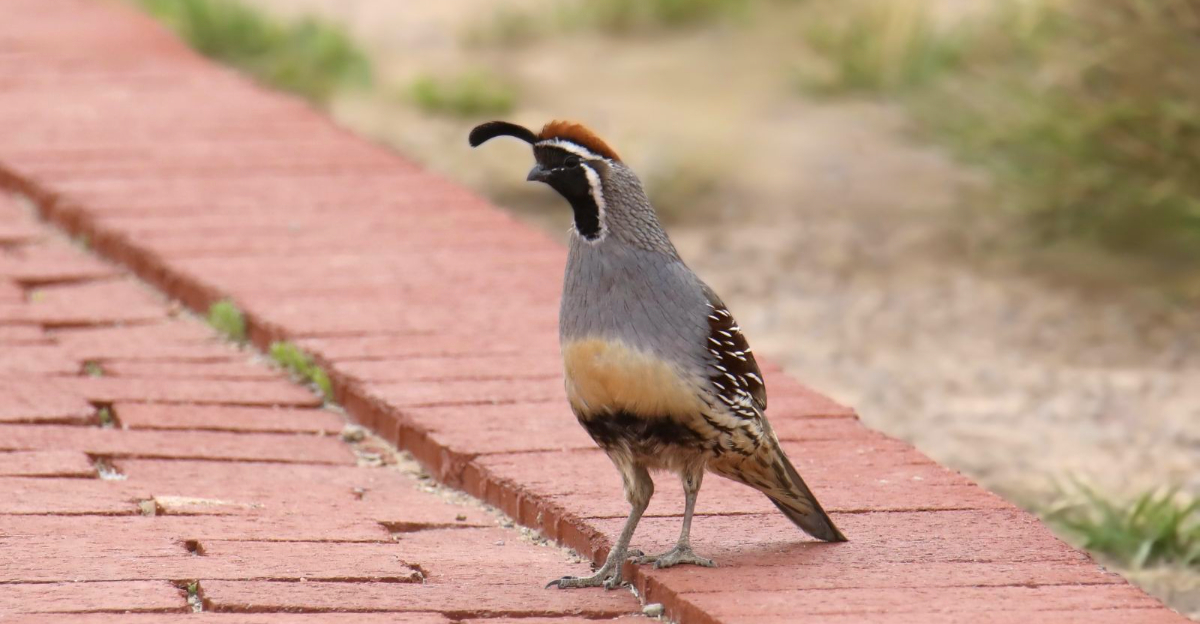
One morning your Arizona yard is completely quiet, and then a few days later a whole convoy of Gambel’s Quail comes marching through like they never left.
Those round little bodies, those ridiculous and completely charming head plumes, that distinctive call echoing across the gravel.
If you’ve been wondering where they went and why they’re suddenly back, you’re in good company. A lot of Arizona homeowners notice this pattern and assume something dramatic happened, but the reality is usually much more straightforward.
Gambel’s Quail are year-round residents across much of their Arizona range, and their movements are almost always tied to very practical things. Food, water, cover, and the way a family group navigates the habitat around your neighborhood.
When they show back up at your place, it generally means your yard just got interesting to them again.
1. They May Be Using Your Yard As A Feeding Area Again
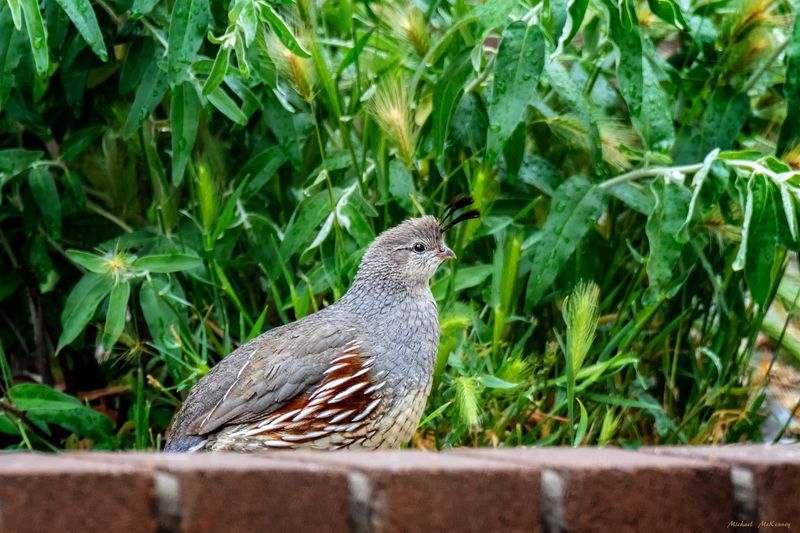
On a quiet Arizona morning, you might look outside and spot a small group of Gambel’s Quail moving steadily across your yard, heads bobbing as they search the ground for something worth eating.
These birds spend a good portion of their day foraging, and residential properties can become useful stops along their daily route when food happens to be available.
Gambel’s Quail forage mostly on the ground, picking up fallen seeds, tender plant material, and occasionally small insects.
When natural food in the surrounding desert shifts with the season, a yard that offers scattered seeds, dropped berries, or low vegetation may draw more attention from a passing covey.
That does not mean your yard caused their visit, but it may have made the stop worthwhile.
Homeowners sometimes notice quail working their way along garden beds, walls, or open gravel areas where seeds have collected. If you recently trimmed plants or had rain that knocked seeds loose, the timing can feel connected.
Keep in mind that quail move through a home range and may use several different spots depending on what each area offers on any given day.
Seeing them forage in your yard again likely means the conditions there lined up with what they needed at that moment rather than signaling any permanent change in their habits.
2. Seasonal Food Sources May Be Making Your Yard More Useful
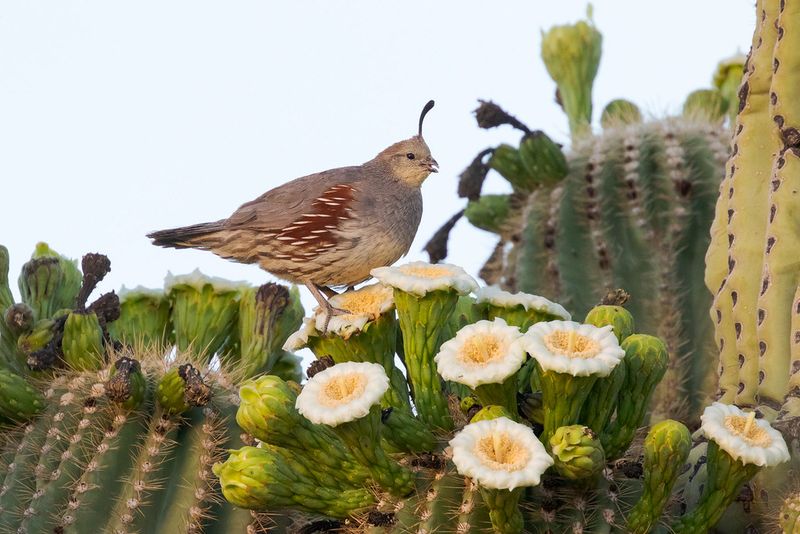
Food availability in the Sonoran Desert shifts noticeably through the year, and those changes influence where Gambel’s Quail spend their time.
Seeds, berries, leafy plant material, grasses, and cactus fruits all come and go with the seasons, and quail tend to follow those cycles rather than sticking to one location regardless of what it offers.
During certain parts of the year, prickly pear fruits ripen and drop, mesquite pods fall to the ground, and native grasses produce seeds that quail find appealing.
If your Arizona yard contains any of these plants, or if neighboring properties do, a covey passing through may linger longer than usual when those resources are at their peak.
Insects also make up a portion of the Gambel’s Quail diet, particularly during warmer months, and a yard with a variety of vegetation may support more insect activity as well.
Your Arizona Garden Changes Every Week. Your Plan Should Too.
Gardening in Arizona changes quickly throughout the season. Every Friday you’ll receive a simple weekly plan showing exactly what to plant, prune, fertilize, harvest, and protect so you never miss the right timing.
Noticing quail in your yard more often during a particular season does not confirm that one specific plant brought them in. Their foraging decisions are shaped by a mix of factors, and the birds are constantly evaluating what the landscape offers.
A yard that happens to have ripe food sources at the right time simply becomes a reasonable place to stop.
Understanding that connection can help Arizona homeowners appreciate why quail activity tends to ebb and flow rather than staying constant throughout the year.
3. Dense Shrubs May Be Giving Them Useful Cover
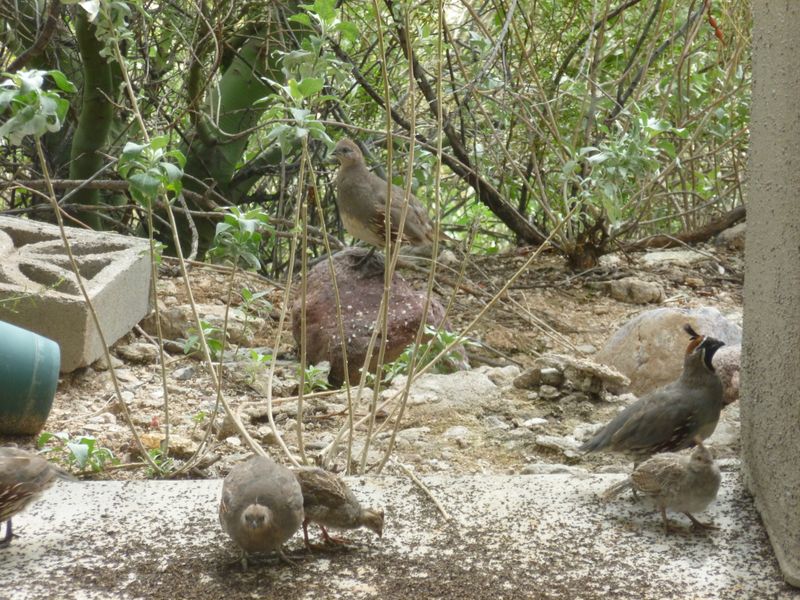
Watch a covey of Gambel’s Quail move through a yard and you will notice they rarely stay in wide-open spaces for long.
They tend to move from one patch of cover to the next, using shrubs, low walls, garden plantings, and dense vegetation as shelter between feeding stops.
Cover is not just a comfort for these birds; it is a practical part of how they stay safe while moving through the landscape.
Brushy, thorny, or low-growing shrubs give quail places to rest, escape from midday heat, and move between areas without being fully exposed. In Arizona yards, plants like desert hackberry, wolfberry, or dense native shrubs can serve this function well.
When a yard has added vegetation or when nearby plants have grown fuller over a season, it may become a more appealing corridor for quail passing through.
Providing cover does not guarantee that quail will nest or take up permanent residence in your yard. These birds make their own decisions based on the full range of conditions available to them.
What denser vegetation can do is make a property feel more navigable and less risky as they travel between feeding areas. If quail seem to be spending more time in your yard, take a look at whether the shrubs and low plantings have filled in recently.
That kind of structural change in the landscape can make a real difference in how frequently the birds pass through.
4. Ground-Level Water May Be Encouraging More Visits
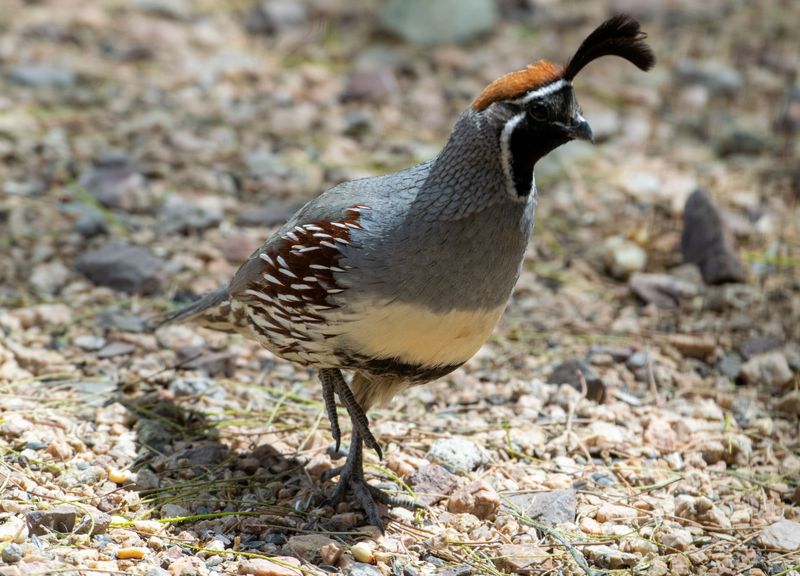
Arizona summers are genuinely tough, and finding water in a dry desert landscape takes real effort for wildlife.
Gambel’s Quail can obtain some moisture from the plant material they eat, which helps them manage during dry stretches, but accessible water sources may still draw them to certain spots more consistently.
A shallow dish, low birdbath, or drip that reaches ground level can make your yard more noticeable to quail moving through the neighborhood.
Because these birds are not strong fliers over long distances and tend to stay close to the ground, water sources that are easy to reach without perching on a tall structure are more likely to be used.
If you have recently added or refilled a water feature at ground level, that change may be part of why quail are appearing more often.
Providing outdoor water in Arizona does come with some considerations worth thinking through. Standing water that is not refreshed regularly can attract mosquitoes and may become a source of concern for bird health if it gets contaminated.
Predators such as hawks and cats are also drawn to areas where birds gather, so placing water near dense cover rather than in a wide-open space may help visiting quail feel more secure.
Keeping the water clean and the surrounding area free of hazards is a reasonable approach for any Arizona homeowner hoping to support local wildlife in a responsible way.
5. Desert Plants May Be Making Your Yard Better Quail Habitat
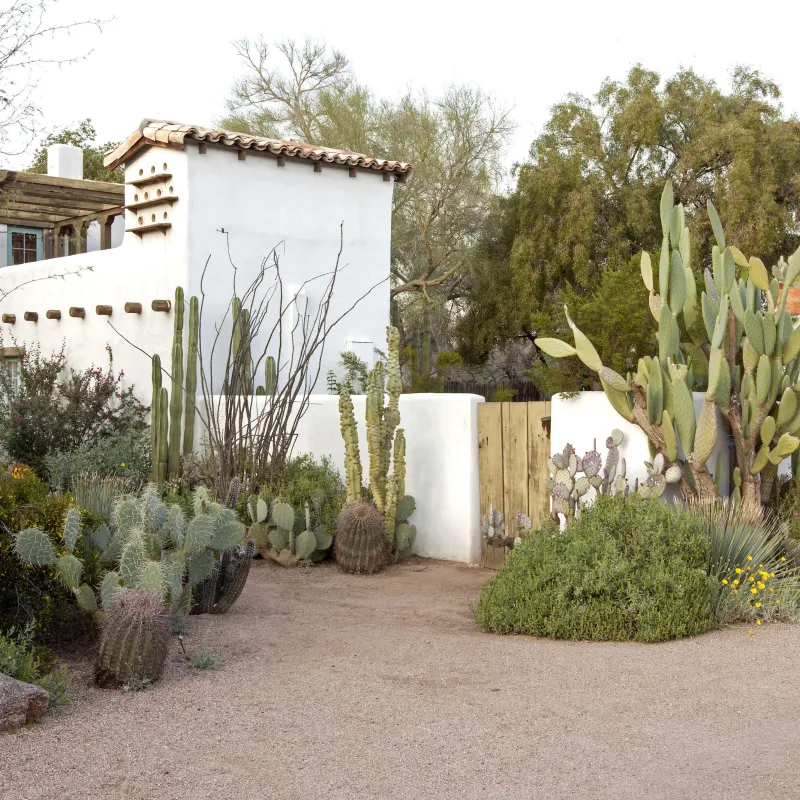
Yards planted with native desert species tend to function more like natural habitat, and that can make a real difference in whether Gambel’s Quail find the space worth visiting.
Plants like mesquite, desert hackberry, prickly pear, saguaro, and wolfberry each contribute something useful, whether that is food in the form of fruit or seeds, structural cover, or a combination of both.
Mesquite trees, for example, produce pods that fall to the ground and provide a food source that quail and many other desert animals rely on during certain parts of the year. Desert hackberry is known to offer both dense, thorny cover and small berries.
Prickly pear produces fruit that quail consume, and the cactus pads themselves create low shelter. Saguaro fruits, when they fall or are dropped by other wildlife, may also be eaten by quail foraging at ground level.
A yard that includes several of these plants is not a guaranteed quail destination, but it does offer a broader range of resources that quail look for as they move through Arizona neighborhoods.
Over time, as native plantings mature and fill in, properties can become more useful to quail and to other desert wildlife as well.
If your yard has recently added native species or if existing plants have grown more productive, that gradual shift in habitat quality may be part of why quail are spending more time there.
6. A Family Covey May Have Started Passing Through
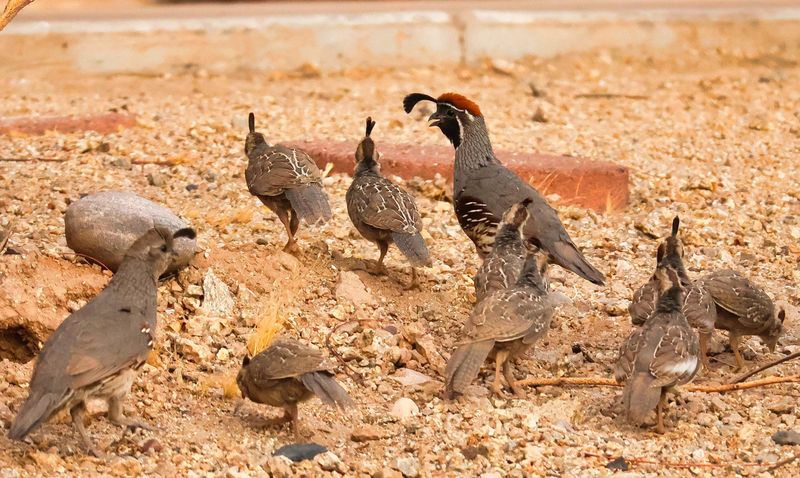
Few things in an Arizona yard feel quite as lively as the moment a Gambel’s Quail family appears out of nowhere, with two adults and a line of tiny chicks moving quickly through the garden.
When a family group starts using your yard, their arrival can feel sudden and surprising, especially if you had gone several weeks seeing little quail activity at all.
Gambel’s Quail pairs typically raise their young together, and the chicks grow quickly during their first weeks of life. As the young birds become more mobile, the whole family unit begins covering more ground in search of food and cover.
A family covey moving through a neighborhood may follow a loose route that takes them through several different yards and patches of desert habitat over the course of a day.
Spotting a full family group in your yard for the first time can make it seem like quail have suddenly returned, when in reality the adults may have been nearby all along while nesting.
Once the chicks are old enough to travel, the family becomes much more visible as they forage together across a wider area.
If you notice a mix of adult birds and smaller juveniles, that is a strong sign you are watching a family covey rather than a group of unrelated adults. Their presence tends to shift the mood of a yard in a way that many Arizona residents find genuinely enjoyable.
7. Seasonal Covey Changes May Make Quail More Noticeable
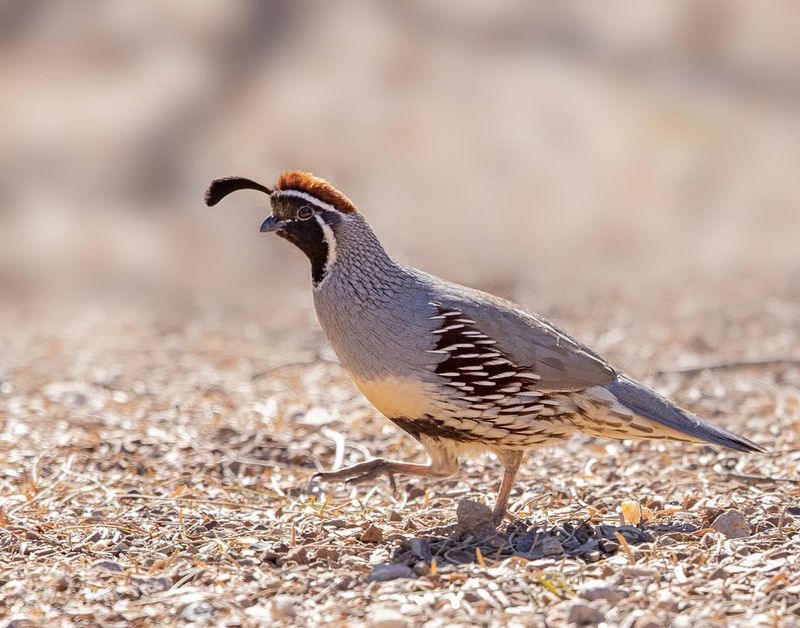
Quail behavior shifts with the seasons in ways that can make the birds seem to appear and disappear from a yard without obvious reason. One of the more interesting patterns involves group size.
During the breeding season, pairs and family groups tend to stay relatively small and focused on raising young. As the year moves on and breeding activity winds down, those smaller family groups often join together with other groups to form larger coveys.
These larger winter gatherings can include dozens of birds, and when a big covey moves through an Arizona yard, the effect is hard to miss.
The sudden presence of many quail at once can feel like a return after a long absence, even if individual birds from that covey had been moving through the area all along in smaller, quieter groups.
Conversely, when breeding season approaches again and coveys break apart into pairs, a yard that seemed full of quail may quickly feel quiet again.
Understanding this seasonal rhythm helps explain why quail activity in a yard can look so different from one month to the next.
The birds are not necessarily coming and going from the region; they are reorganizing into different group structures as the year progresses.
For Arizona homeowners who pay close attention, tracking covey size over time can become a surprisingly informative way to follow the seasonal cycle of quail life in the surrounding desert landscape.
8. Their Return May Not Mean They Went Far Away
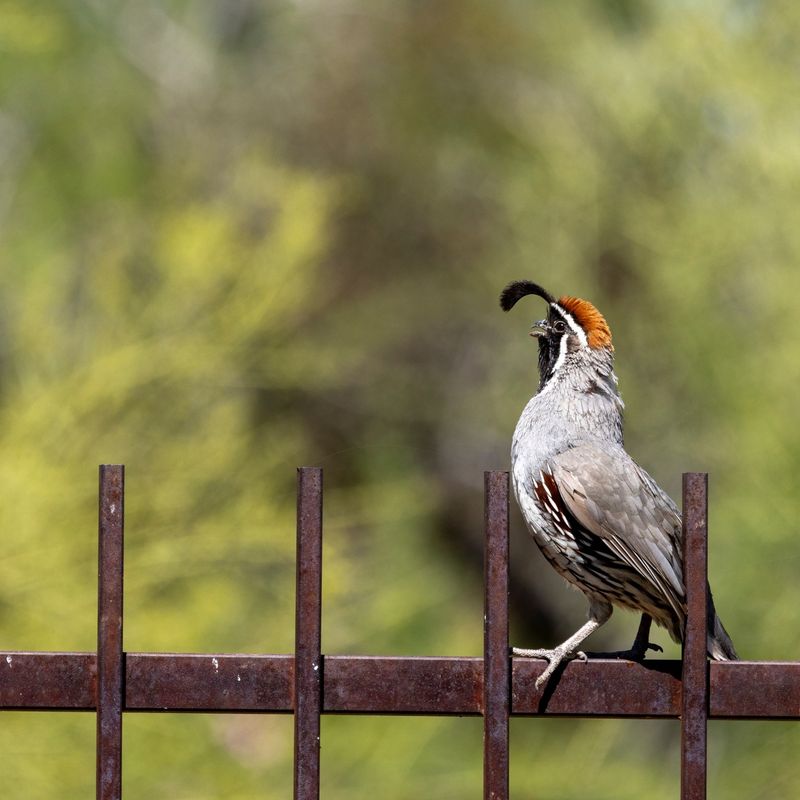
When quail seem to disappear from a yard for weeks and then show up again, the natural assumption is that they went somewhere far off and came back. For Gambel’s Quail in Arizona, that explanation is rarely the accurate one.
These birds are generally considered permanent residents across much of their range in the state, meaning they do not migrate the way many other bird species do.
What actually happens is that quail use a home range, which is a loose area that a covey moves through regularly in search of food, water, and shelter. That range may include several different yards, washes, open desert patches, and brushy corridors.
When conditions in one part of that range are particularly good, the birds may spend more time there. When those conditions shift, they may spend more time somewhere else within the same general area.
A yard that sees little quail activity for a stretch is not necessarily one that has lost its appeal permanently. The covey may simply be spending more time in a different part of their range during that period.
When food, cover, or water conditions shift again, the same birds may start appearing more frequently at your property.
Thinking of quail as neighbors who cycle through different parts of the block rather than visitors who travel from far away is a more accurate way to understand their comings and goings in Arizona desert communities.