Why Louisiana Citrus Trees Are Dropping Fruit Early This September
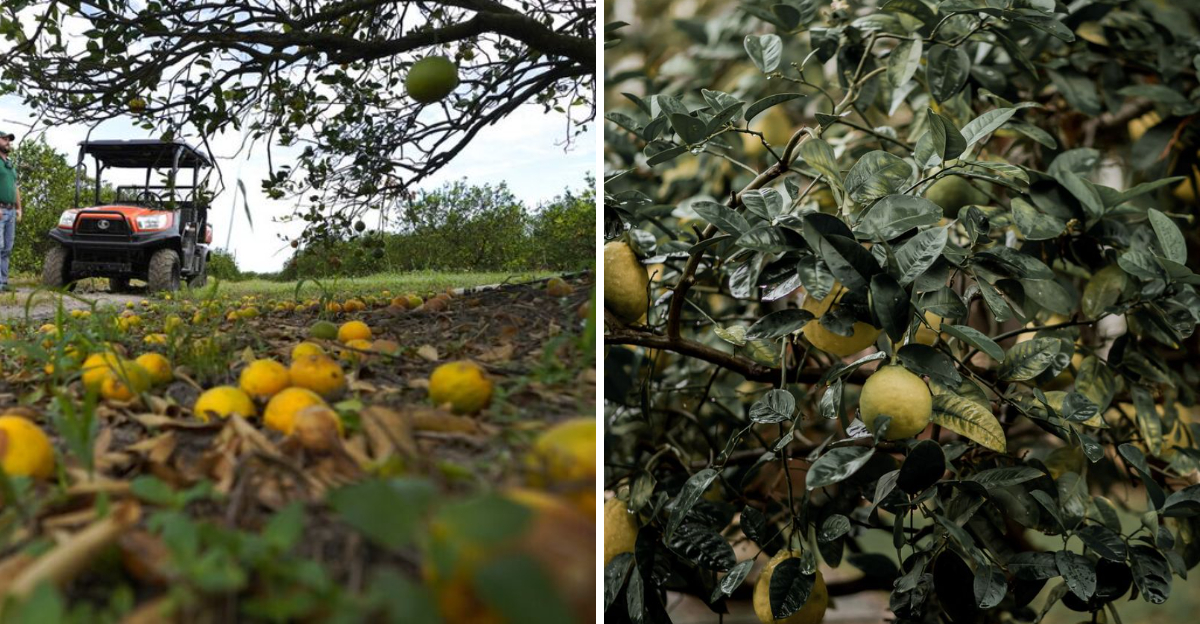
Fruit dropping early signals stress you can still reverse. Green citrus hitting your grass before ripening rattles new growers fast. Louisiana heat pushes your trees into prolonged stress during long, sticky afternoons.
Storms roll through and turn your soil from swamp to hard-packed rock. Roots feel that shift before you ever notice wilting leaves. Heat like this rarely lets your citrus tree rest.
Nutrient gaps and watering swings hit your Louisiana yard hard this month. Pest pressure adds another reason your fruit lets go early. Timing matters because your citrus season runs on a strict clock.
Growers who catch these signs now save more of your fruit. Small corrections today change what stays on your branches by Thanksgiving. Waiting costs you ripe, sweet fruit later this year.
Real fixes stand between you and a stronger, fuller harvest this fall. Ignore this and you will watch more fruit hit the ground.
1. Thirsty Roots After A Long, Dry Stretch
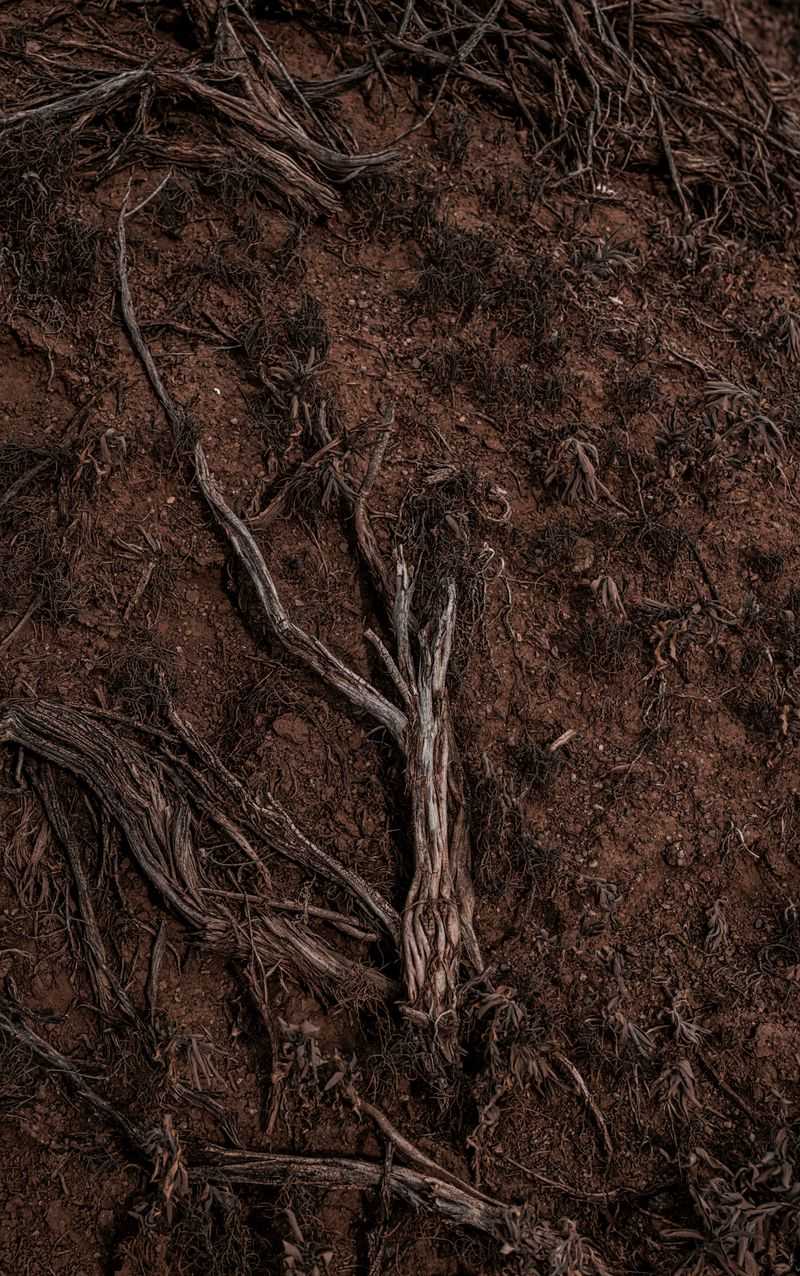
Water stress tops the list of culprits nearly every September along the Gulf Coast. A citrus tree carrying a heavy crop needs steady moisture, and when the soil dries out, the tree responds to water stress by releasing fruit to reduce demand.
Those little green drops in your yard show the tree responding to reduced water availability. Fewer fruit means less water demand during the dry spell.
Louisiana Septembers can be sneaky. Afternoon showers wet the top inch of ground and evaporate by lunch the next day, leaving roots eighteen inches down still parched.
Push a screwdriver into the soil near the drip line. If it stops after two inches, your tree is drier than it looks.
Aim for a deep soak once or twice a week rather than a daily sprinkle. Roughly fifteen to twenty gallons is a reasonable starting point for a mature backyard tree, though actual needs shift with soil type and canopy size.
Apply it slowly with a soaker hose or a trickling garden hose left in place for thirty minutes to get moisture where it counts.
Consistency matters more than volume. Wild swings between bone dry and soggy trigger more drop than steady moderate moisture ever will.
Mulch helps enormously here. Three inches of pine straw or shredded bark spread out to the drip line, kept a few inches away from the trunk, slows evaporation and keeps soil temperatures friendlier for feeder roots.
Check your tree twice a week through October. Fruit sizing happens fast in fall, and thirsty trees simply cannot fill out what they are holding.
2. Too Much Rain And Roots That Cannot Breathe
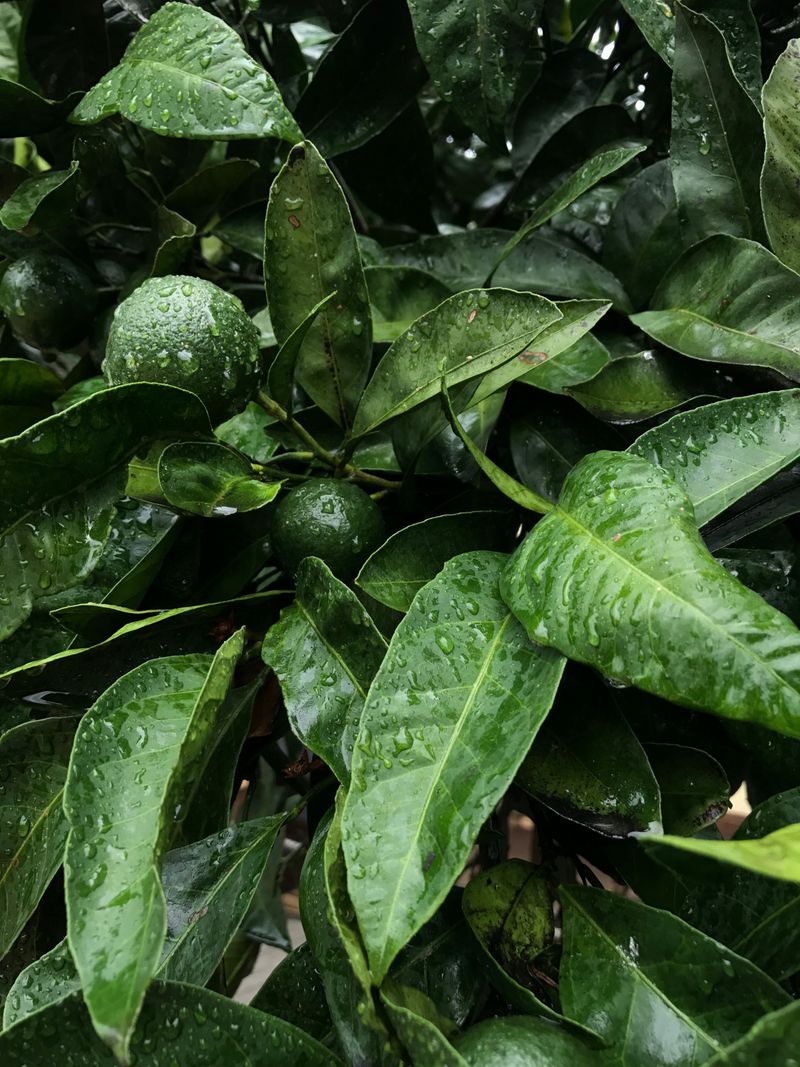
Flip the coin and you find the opposite problem, which shows up just as often here. Louisiana clay holds water like a dinner plate, and after a tropical downpour the root zone can stay saturated for days.
Roots need oxygen the same way leaves need sunlight. When soil pores fill with water, feeder roots lose access to oxygen and stop moving nutrients upward.
Your Louisiana Garden Changes Every Week. Your Plan Should Too.
Gardening in Louisiana changes quickly throughout the season. Every Friday you’ll receive a simple weekly plan showing exactly what to plant, prune, fertilize, harvest, and protect so you never miss the right timing.
The tree responds predictably. Leaves yellow, and immature fruit releases from the stem within about a week of the flooding.
Watch for a telltale clue. If leaves look wilted but the soil is squishy, you are dealing with drowned roots rather than drought, and adding water makes things worse.
Drainage fixes take a little sweat but pay off for years. Planting on a raised berm eight to twelve inches high is standard practice across the parishes for a reason.
For trees already in the ground, dig a shallow swale to guide runoff away from the trunk. Even a gentle slope moves surprising amounts of water.
Skip the temptation to fill low spots with pure topsoil. Mixing coarse material like pine bark fines into the surrounding bed improves structure far better than layering.
Hold off on fertilizer while soil is soaked. Damaged roots cannot absorb it, and the salts just sit there adding stress.
Give the tree two or three weeks of dry-down before judging recovery. Many bounce back once air returns to the root zone.
3. Citrus Leafminer Squiggles Damaging New Growth
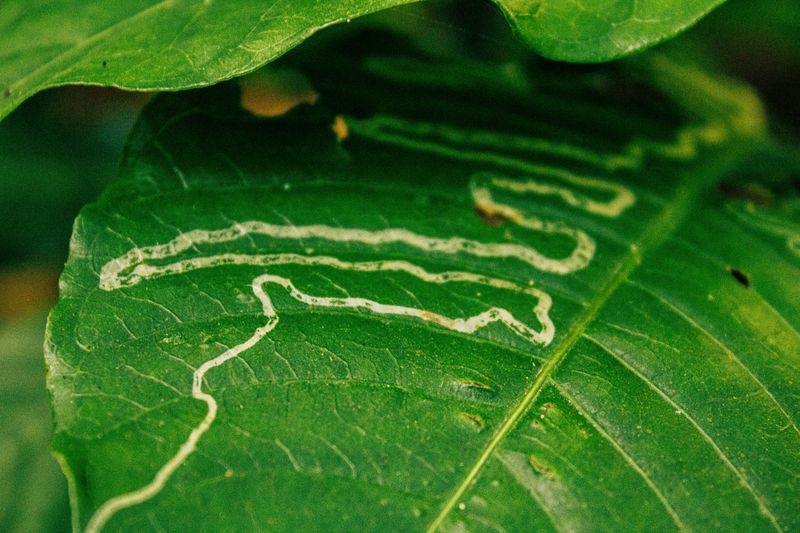
Look at the newest leaves on your tree and you may spot silvery squiggles winding across them like tiny snail trails. That is leafminer damage, and late summer is prime time for it in Louisiana.
The larvae tunnel between the leaf layers, curling and shriveling tender flush growth. Damaged leaves photosynthesize poorly, which means less sugar heading toward developing fruit.
A tree short on energy sheds fruit to conserve resources. Fruit drop follows within a few weeks of a heavy infestation.
Mature trees usually shrug off moderate damage, so do not panic over a few marked leaves. Young trees under four years old, however, can lose serious growth momentum.
Timing your response beats spraying blindly. Leafminers only target brand new flush, so treatment matters when soft growth appears, not after leaves harden off.
Horticultural oil applied to new flush every ten to fourteen days makes leaves slippery and unattractive to egg-laying moths. Spray in the early morning when temperatures sit below the mid-eighties to avoid leaf burn.
Resist the urge to prune off damaged leaves. Even curled ones still feed the tree, and removing them prompts another round of vulnerable flush.
Cut back on late-summer nitrogen too. Pushing tender growth in September encourages vulnerable new flush that pests target.
Beneficial wasps handle a good share of the population naturally. Going easy on broad-spectrum insecticides keeps those little allies working your yard for free.
4. Nitrogen Running On Empty By Late Season
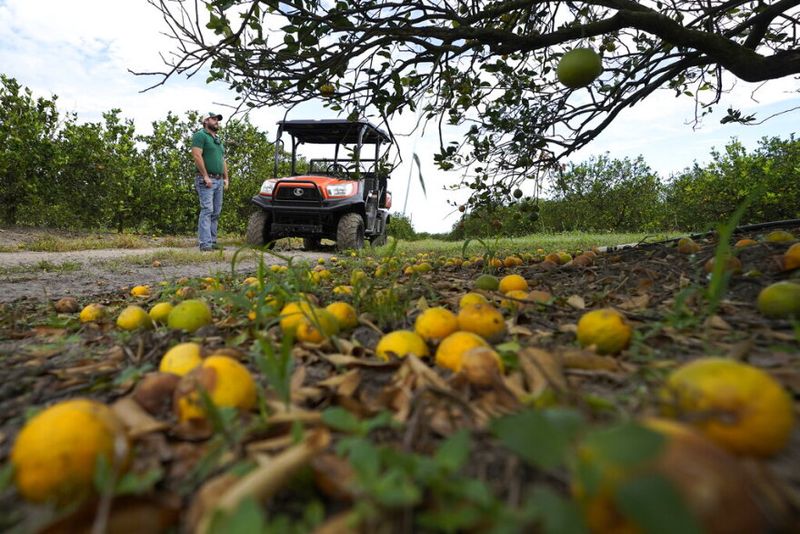
Trees carry a lot of fruit on borrowed energy, and by September nitrogen reserves can run low. If your satsuma or navel fed heavily all summer without a refill, nitrogen reserves may be running low.
Older leaves turning pale green or yellow from the tip inward is the classic signal. The tree pulls nutrients from mature leaves to feed fruit, and when that supply runs short, fruit gets dropped.
Soil type plays a role along the Gulf. Sandy river-bottom soils leach nutrients quickly, and heavy rains flush them past the root zone.
Here is where timing gets tricky. Big shots of nitrogen in September push soft growth that gets nipped by the first cold snap, so heavy feeding now is a mistake.
A light application works better than a heavy one. A cup of balanced citrus fertilizer scattered under the canopy of a mature tree in early September is plenty, and skip it entirely after the middle of the month.
Save the real feeding for late winter. February through March, split into two or three applications, matches the tree’s natural growth cycle.
Consider a soil test through your parish LSU AgCenter office. Pricing varies by parish, but a test tells you what your tree actually needs instead of guessing.
Magnesium and zinc deficiencies mimic nitrogen shortage and are common in south Louisiana. A foliar micronutrient spray corrects those quickly without pushing risky new growth.
5. A Tree Holding More Fruit Than It Can Finish
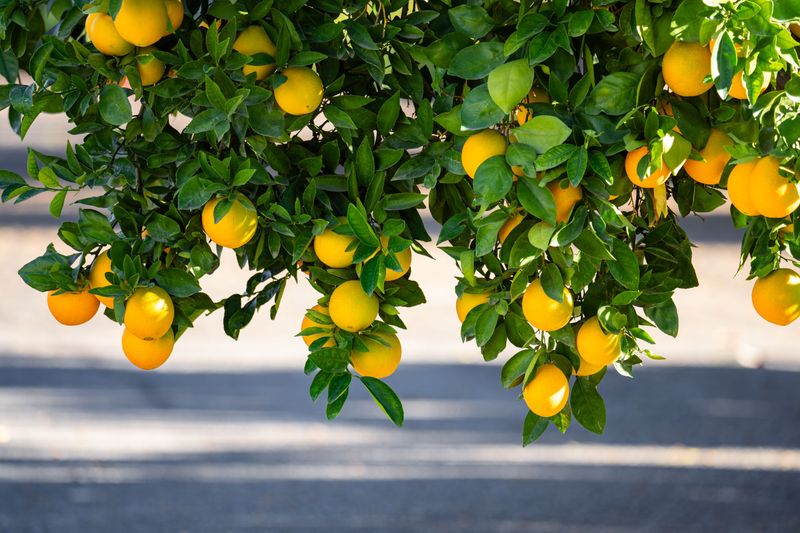
Sometimes early drop is not a problem at all. Citrus trees routinely set far more fruit than they can ripen, then shed the extras across summer and into fall.
Orchardists call it June drop, though in Louisiana the shedding often stretches well past that month. A tree with hundreds of tiny fruit will thin itself down to a load it can actually finish.
Look at the fruit on the ground. If the dropped pieces are small, evenly green, and the remaining fruit looks healthy and sizing up, your tree is simply self-regulating.
Satsumas are especially notorious for this. A heavy alternate-bearing year can produce so much set that branches bend toward the ground by August.
You can help the process along. Hand-thinning clusters down to one fruit every four to six inches gives the survivors room to size up and reduces limb breakage.
Thin before fruit reaches golf-ball size for the best results. Later thinning still helps prevent broken branches but does less for fruit quality.
Prop heavy limbs with a forked stake or a length of two-by-four padded with old garden hose. Split branches take years to recover and open the door to disease.
Heavy bearing this year often means a lighter crop next year. Thinning evens out that seesaw and keeps production steadier season to season.
6. Heat Waves That Stress Fruit Loose From The Branch
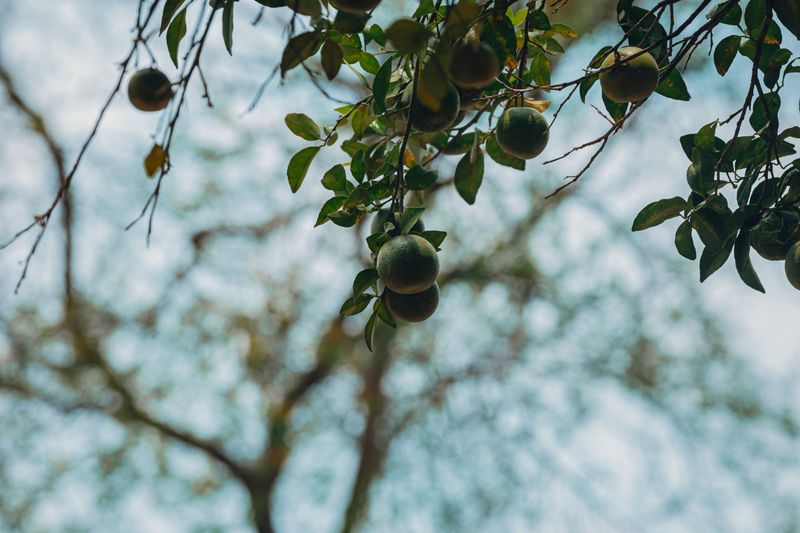
Ninety-eight degrees with humidity to match creates significant physiological stress for a citrus tree. When temperatures climb past the mid-nineties for days on end, photosynthesis slows way down even though the sun is blazing.
Leaves close their pores to conserve moisture, which halts sugar production. Fruit that stops receiving sugar loosens at the stem and falls.
Sunscald compounds the damage. Exposed fruit on the south and west sides develops bleached, leathery patches that weaken the connection to the branch.
Shade is your friend during these stretches. Trees with dense canopies protect their own fruit, which is one reason aggressive summer pruning backfires in the Deep South.
For young or thinly leafed trees, a shade cloth rated at thirty percent draped over a simple frame takes the edge off intense afternoons. Remove it once highs settle into the eighties.
Watering in the early morning helps the tree face the heat with a full tank. Midday watering wastes much of what you apply to evaporation.
White latex paint diluted half and half with water, brushed on exposed trunks and major limbs, reflects sun and prevents bark damage. This is a longstanding practice among Gulf Coast citrus growers.
7. Fungal Issues Linked To Humid Air
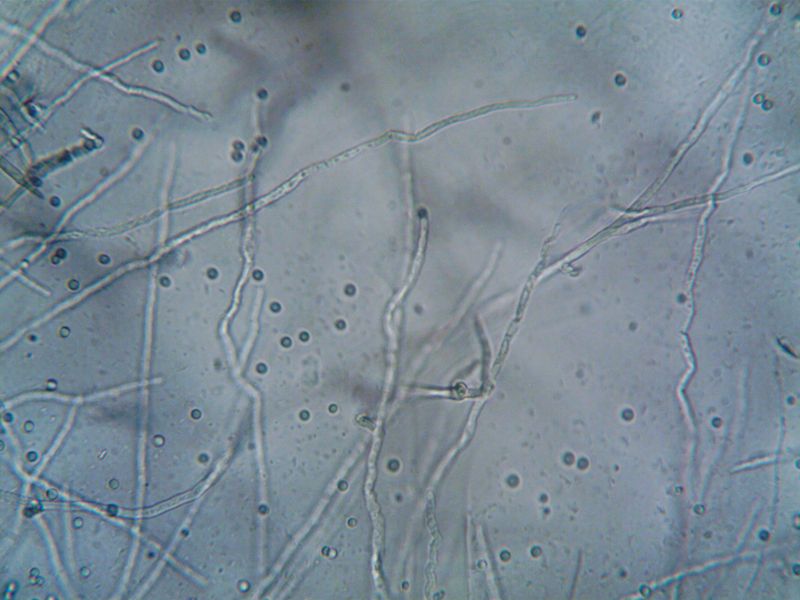
Warm nights plus soaking humidity create conditions favorable for fungal growth, and few places do humidity like Louisiana in September. Brown rot, anthracnose, and stem-end issues all thrive when leaves stay damp for hours.
Infected fruit develops soft brown patches, often near the button where it attaches. The connection weakens and the fruit lets go, sometimes still looking mostly fine on the sunny side.
Fruit hanging low, within two feet of the ground, gets hit hardest. Rain splashes spores up from the soil directly onto that lower canopy.
Cleanup is your cheapest defense. Raking up fallen fruit and old leaves weekly removes the spore bank that keeps reinfecting the tree.
Prune the skirt of the tree so no branches hang below knee height. Better airflow underneath dries foliage faster after storms.
Copper fungicide applied before extended wet periods gives solid protection. Follow the label rate carefully, since copper builds up in soil over time and too much stresses roots.
Water at the base rather than overhead. Sprinklers that hit the canopy at dusk create favorable conditions for fungal spread.
Space matters too. Trees crowded against fences or other plantings stay wet longer, so give new plantings at least twelve feet of breathing room.
Most fungal problems are manageable once airflow and sanitation improve. Give it one full season of good habits and you will see the difference in fruit set.
8. Storm Winds And The Bruises You Cannot See
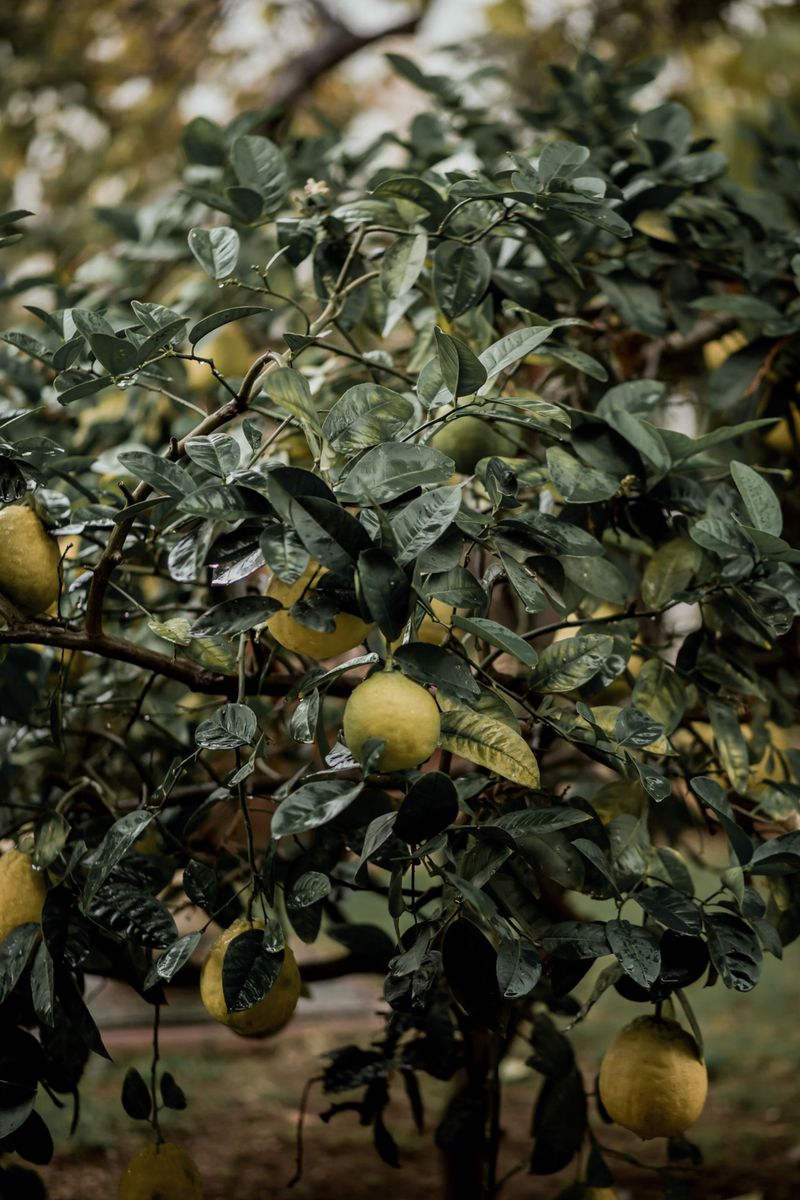
Hurricane season peaks the second week of September, and even a passing squall line can rattle a fruit crop loose. Wind does damage in two ways, one obvious and one that shows up later.
The obvious part is fruit knocked straight to the ground. The sneaky part is fruit that bangs against branches, bruising the rind and weakening the stem connection.
Those bruised fruit often hang on for another ten days before falling. This confuses many homeowners when drop happens during a calm, sunny week.
Windbreaks make a real difference over time. A row of shrubs or a solid fence on the south and east sides cuts wind speed considerably across a small yard.
Staking helps young trees stay upright, but keep ties loose enough for slight movement. Trees that sway a little develop stronger trunks than rigidly braced ones.
Before a named storm arrives, harvest anything close to usable. Slightly early satsumas still make decent juice, and that beats losing them to the grass.
After winds pass, walk the tree and check for cracked limbs and torn bark. Clean cuts on damaged branches heal far better than ragged breaks left hanging.
Pick up downed fruit promptly. Rotting citrus on the ground draws ants, rodents, and fungal spores you would rather not host.
Trees recover from wind events better than most gardeners expect. Patience through October usually rewards you with a decent crop.