The Native Arizona Perennial Every Desert Gardener Should Grow – And Here’s Why
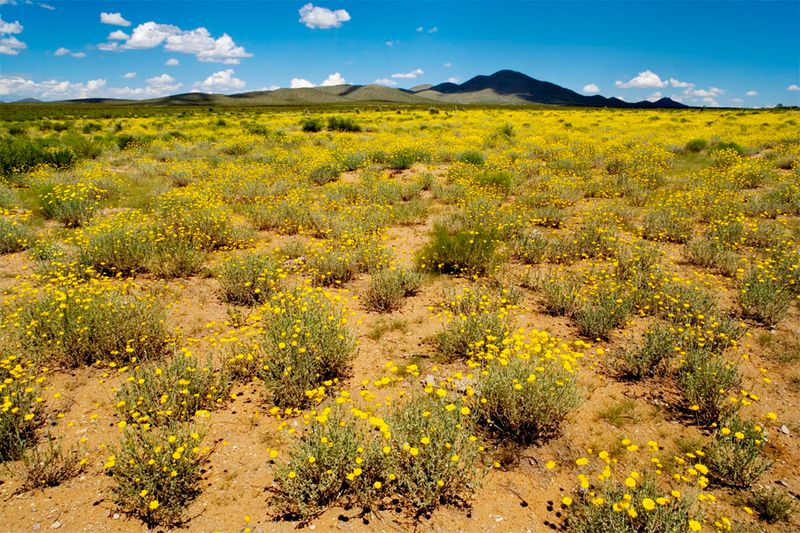
Desert marigold (Baileya multiradiata) is a native Arizona wildflower worth knowing if you garden in the low desert around Phoenix or Tucson. It handles brutal summer heat, alkaline soil, and dry spells better than most non-native plants, and it can bring pollinators and wildlife to your yard with far less fuss.
That said, no single plant does everything, and this article treats desert marigold as one strong option among several, not the one plant every Arizona gardener must have. Read on to find out what it actually delivers, where it works best, and how to give it a fair start.
A Strong Low-Desert Choice, Not Arizona’s Only Answer
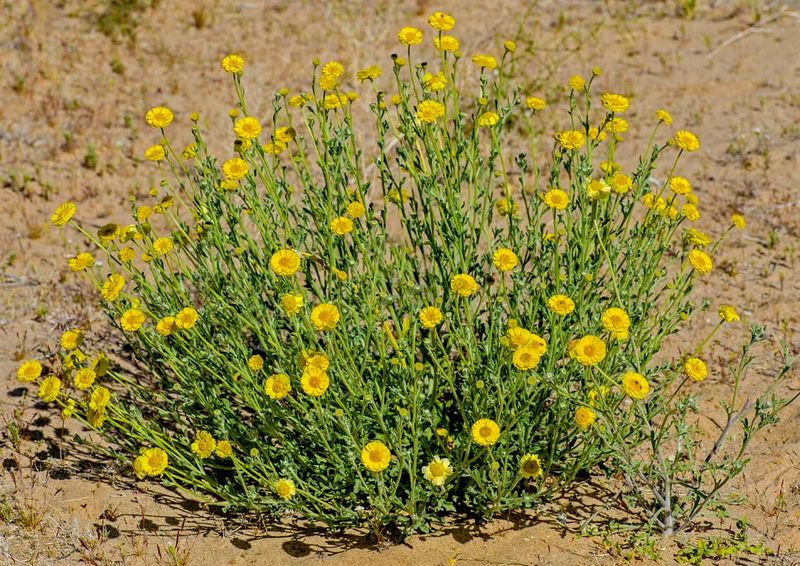
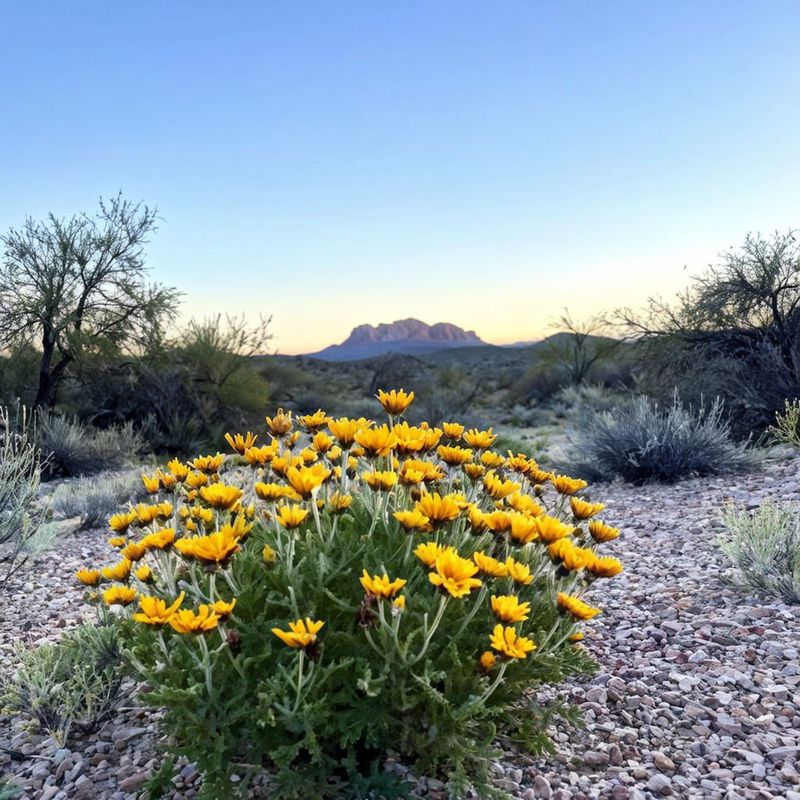
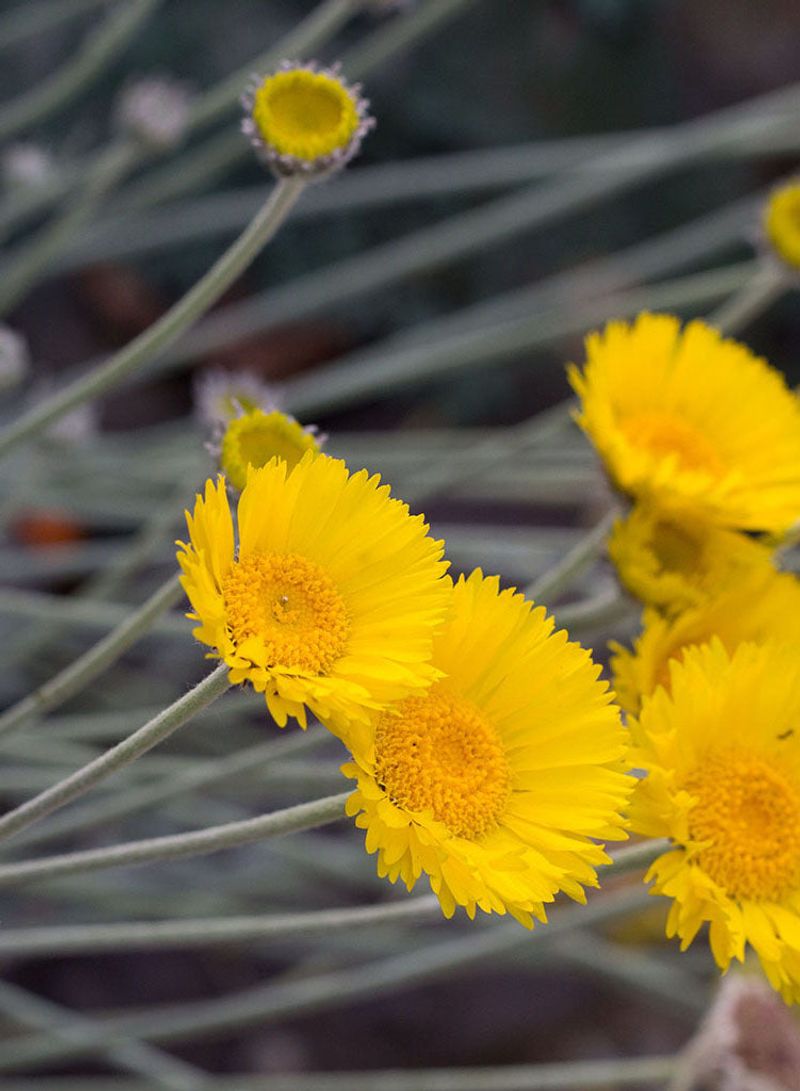
Desert marigold, known botanically as Baileya multiradiata and sometimes called wild marigold or paper daisy, is a native Arizona wildflower that grows across rocky slopes, sandy plains, desert washes, and disturbed roadsides throughout the low desert. In a typical Arizona yard, it reaches roughly 8 to 21 inches tall and forms a mounded clump of gray-green, woolly foliage topped by cheerful yellow daisy-like flower heads.
The USDA plant guide for desert marigold identifies it as adapted to sandy, gravelly, alkaline, poor, clay, loamy, and caliche-associated soils in Arizona, provided that drainage is adequate.
One thing to understand before planting: USDA classifies Baileya multiradiata as a biennial or short-lived perennial, not a guaranteed long-lived perennial. A single planting may last two to four years rather than decades.
The plant does self-sow, and a patch can persist through successive seedlings, but germination and survival vary by site and season, so indefinite continuity is not assured.
Arizona gardeners who choose this species can reasonably expect lower irrigation frequency after establishment, possible support for pollinators and seed-eating wildlife, and solid tolerance of low-desert conditions. Those are genuine benefits.
Still, the University of Arizona and Arizona Native Plant Society list many other native and desert-adapted flowering plants that also perform well in the low desert, and a diverse mix will generally serve Arizona yards better than any single species.
What Helps Desert Marigold Handle Arizona Heat
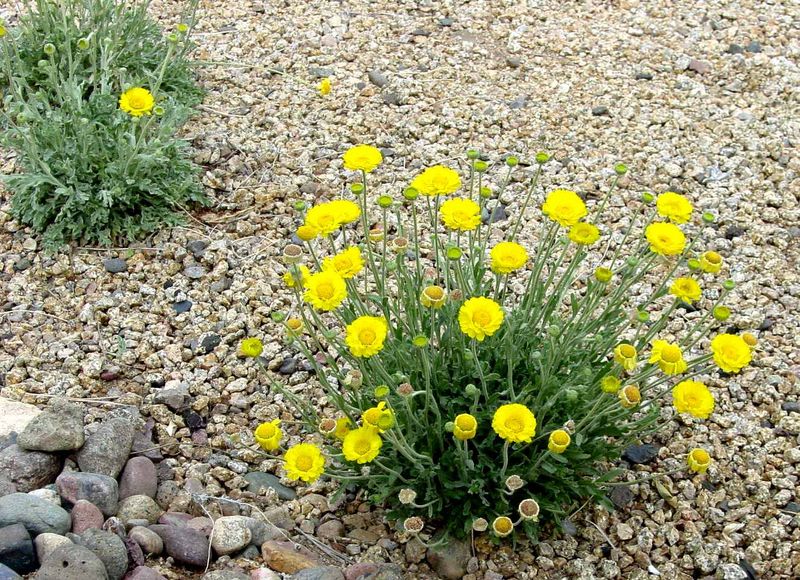
Surviving a Phoenix or Tucson summer takes more than toughness on paper. Desert marigold has several physical traits that help it cope with Arizona’s punishing low-desert conditions.
The leaves, stems, and flower stalks are covered in fine hairs that slow moisture loss, which is one reason the plant can keep growing when temperatures climb well past 100 degrees Fahrenheit.
USDA describes desert marigold as heat-, drought-, and frost-resistant, and those traits are real. But resistance is not immunity.
A plant sitting in a west-facing gravel strip beside a block wall absorbs far more reflected heat than the same species growing in a slightly sheltered bed with morning sun and afternoon shade. Arizona microclimates vary enormously, and a plant stressed by reflected masonry heat, compacted dry soil, or inadequate moisture can drop leaves, stop flowering, or suffer serious damage even if it would thrive in a more forgiving spot nearby.
Prolonged drought is another factor that can interrupt growth and flowering regardless of the plant’s general toughness. University of Arizona guidance on drought and extreme heat notes that Arizona’s high evapotranspiration rates mean even native plants can be damaged or killed when heat and dry conditions persist long enough.
Your Arizona Garden Changes Every Week. Your Plan Should Too.
Gardening in Arizona changes quickly throughout the season. Every Friday you’ll receive a simple weekly plan showing exactly what to plant, prune, fertilize, harvest, and protect so you never miss the right timing.
Choosing a spot with good air circulation, avoiding south- or west-facing walls, and maintaining adequate soil moisture during extreme heat events all improve the odds for desert marigold in an Arizona yard.
How Its Flowers and Seeds Support Wildlife
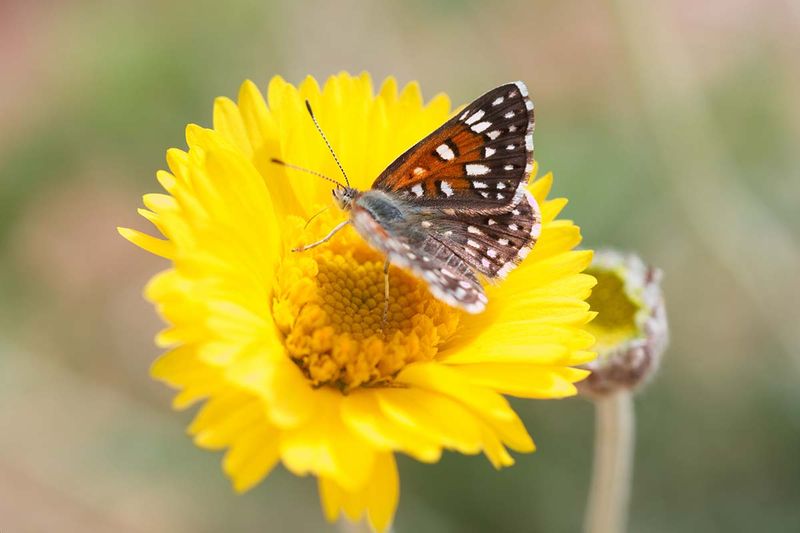
One of the most practical reasons Arizona gardeners plant desert marigold is the wildlife activity it can bring to a yard. The flower heads produce nectar and pollen that attract native bees, and the USDA reports that native bees may gather in notably large numbers around desert marigold, especially during Arizona’s monsoon season when the plant often hits peak bloom.
Butterflies also visit, with documented examples including the Leanira checkerspot, desert orangetip, and Pima orangetip.
Beyond pollinators, the seeds provide food for birds and other wildlife. Black-throated sparrows are noted fall visitors to seed-bearing plants in the Arizona desert, and desert grassland whiptail lizards have been observed sheltering beneath the low foliage.
Each of these is a documented possibility tied to the plant’s real characteristics, not a promise that every Arizona yard will attract every species on that list. Local pollinator populations, nearby nesting habitat, pesticide use, and plant density all influence which visitors actually show up.
The University of Arizona’s resource on plants for pollinators in the low desert of Arizona includes desert marigold as a useful species for supporting native bees and butterflies. Treating each visit as a habitat opportunity rather than a guaranteed outcome keeps expectations realistic while still recognizing that this plant offers meaningful food and cover resources for Arizona wildlife that many non-native landscape plants simply cannot match.
Treat Water Savings as a Site-Dependent Possibility
One reason Arizona gardeners reach for desert marigold is the promise of lower water bills. That promise has real substance, but it comes with conditions worth understanding before you turn off the drip system.
Newly planted desert marigold needs supplemental irrigation while its roots establish in Arizona soil, just like any other transplant. Skipping water during that first season can kill the plant before it ever gets a chance to prove its drought tolerance.
Establishment typically takes one to two growing seasons in Arizona’s low desert. During that period, the University of Arizona recommends watering new native and desert-adapted plants more frequently at first, then gradually reducing irrigation frequency as roots spread and the plant becomes self-supporting.
Once established, desert marigold may get by largely on Arizona’s seasonal rainfall plus occasional supplemental watering, but actual needs shift with soil type, sun exposure, plant size, and weather. A prolonged dry spell or an unusually hot stretch can push even an established plant past its comfort zone.
Overwatering is a serious risk with this species in Arizona. The USDA warns that desert marigold is sensitive to crown rot in overly wet soil, and an overwatered plant can die faster than a drought-stressed one.
Planting this species also does not automatically reduce your total Arizona landscape water use. Savings depend on what it replaces, how your irrigation system is configured, and whether you actually adjust run times after the plant establishes.
Treat lower water use as a realistic goal, not a guaranteed outcome.
Give the Roots Drainage Before Rich Soil
Arizona soil surprises a lot of gardeners. The instinct to dig a hole, mix in a bag of compost, and call it ready works fine in many parts of the country, but it can actually work against you when planting natives in the low desert.
Desert marigold is adapted to poor, alkaline, low-organic-matter soils, and heavy soil amendment can hold too much moisture around the crown, which is exactly what leads to rot.
University of Arizona xeriscape guidance is clear on this point: compost and forest mulch are generally unnecessary when planting native and arid-climate species because those plants evolved without them. The more pressing concern in Arizona yards is drainage.
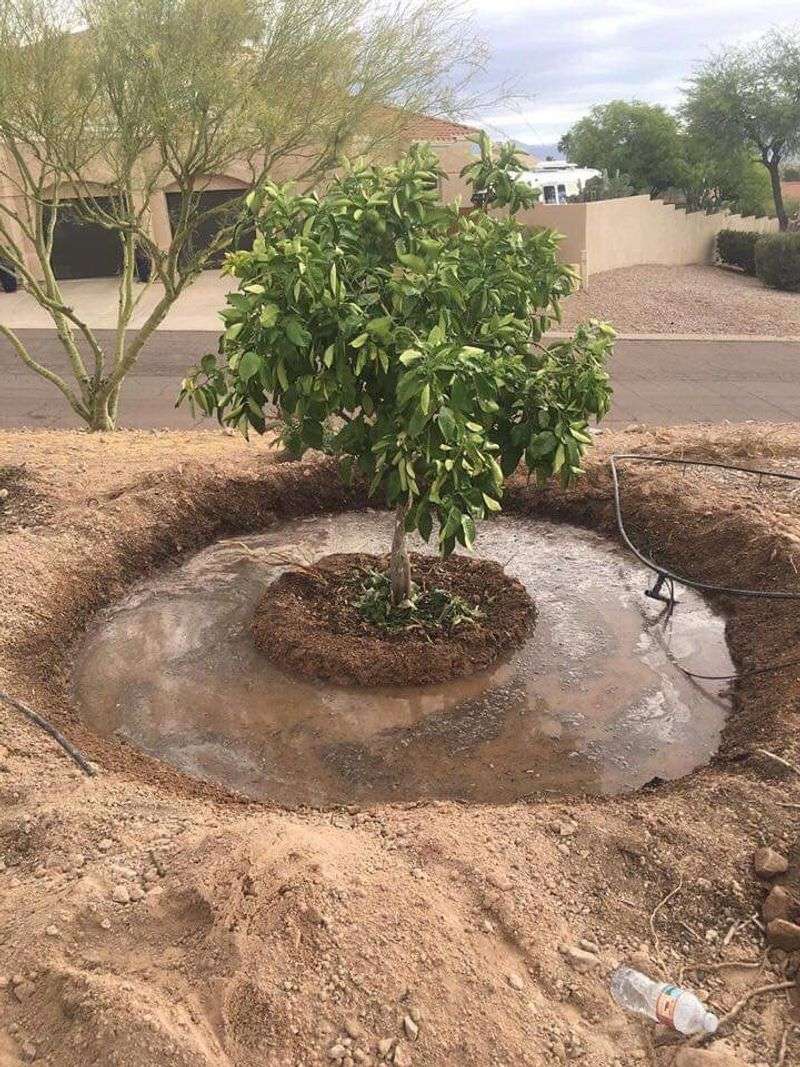
Caliche, a hardpan layer of calcium carbonate common in low-desert soils, can block water movement and leave roots sitting in a flooded pocket even when the surface looks dry. Before planting desert marigold in any Arizona yard, fill the planting hole with water and check whether the level drops at least 4 inches within 4 hours.
If it stalls, drainage is inadequate.
When drainage is blocked in an Arizona yard, there are several workable fixes. You can break through or remove the caliche layer with a digging bar or rented equipment, create a drainage channel that directs water away from the root zone, or mound the planting area so roots sit above the restrictive layer.
Any of those approaches protects the crown from prolonged wetness. Getting drainage right before planting matters far more than enriching Arizona soil that the plant was never designed to need.
Use the Right Arizona Planting Window
Timing a planting correctly makes an enormous difference in the low desert, and desert marigold is no exception to that Arizona rule. The USDA recommends sowing seed on a weed-free, firmed seedbed at a depth of approximately 1/8 to 1/4 inch, with fall through early winter as the preferred window for low-desert Arizona conditions.
That timing lets seeds germinate during cooler, moister months and gives young plants time to build roots before summer heat arrives.
That advice aligns well with University of Arizona October gardening guidance for Pima County, which identifies fall as a key planting period for perennials in the low desert around Tucson and the broader Phoenix metro area. Starting in October or November gives desert marigold the longest possible runway before the following summer.
Spring sowing can work, but it compresses the establishment window and forces young plants to face Arizona heat sooner.
New plants need support after going in the ground. Water consistently during establishment and reduce irrigation gradually over the first season or two rather than cutting off supplemental water all at once.
Flowering is typically intermittent from roughly March through November in Arizona, though the actual range varies with elevation, microclimate, plant age, rainfall, and temperature. Year-round bloom is possible under favorable low-desert conditions but is not the norm every season or in every Arizona yard.
Expect variability and plan your planting mix accordingly so something is always flowering for pollinators even when desert marigold takes a break.
Maintain It Lightly Without Expecting Pest Control
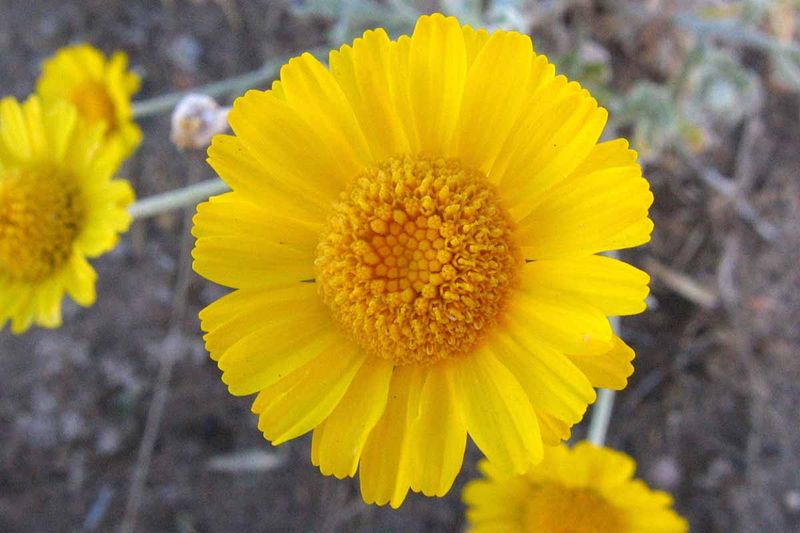
Maintenance for desert marigold in an Arizona yard is refreshingly straightforward, but a few habits protect the plant from its main vulnerabilities. Soil moisture is the key variable to watch.
Check the soil around the crown before watering rather than running on a fixed schedule, and let the surface dry between waterings once the plant is established. Wet crowns in Arizona’s warm soil are the fastest path to crown rot and plant loss.
The plant self-sows and can form clusters over time. The USDA describes these clusters as nonintrusive and not invasive, so they generally do not require aggressive management in an Arizona yard.
Reseeding rates vary by site, and not every seed will germinate successfully, so a patch may thin out over time and benefit from occasional overseeding to stay dense.
A common misconception worth addressing directly: desert marigold does not repel, prevent, or eliminate scorpions, mosquitoes, or ticks in an Arizona yard. No reliable evidence supports those claims for this species.
If household pests are the concern, the right approach in Arizona is integrated pest management, which means scouting for problems, correcting conditions that attract pests (standing water, harborage sites, entry points), using targeted treatments when needed, and avoiding broad-spectrum insecticides that harm beneficial insects alongside the ones you want to control. Spraying a pollinator planting with a broad insecticide defeats the wildlife value the plant provides and should be avoided in any Arizona native garden.
Build a Diverse Low-Desert Habitat Garden
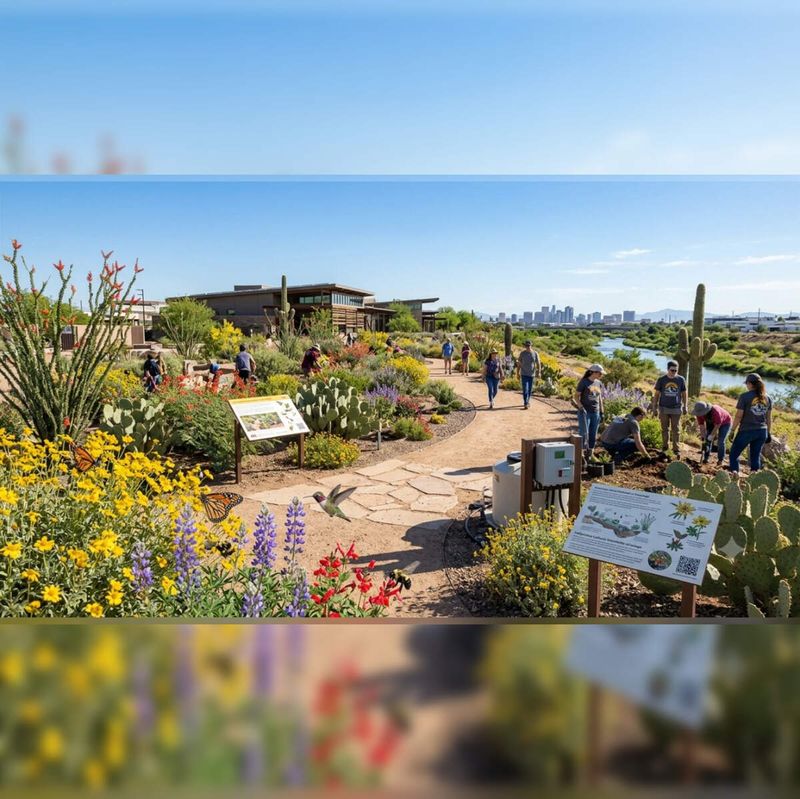
Desert marigold earns a place in a low-desert Arizona yard, but it works best as part of a plant community rather than a standalone solution. A single species cannot provide continuous bloom across all seasons, every type of pollen and nectar that Arizona’s diverse native bees require, nesting habitat for ground- and stem-nesting pollinators, or guaranteed activity from birds, butterflies, or lizards.
Combining desert marigold with other Arizona natives such as desert globemallow, penstemons, blackfoot daisy, desert senna, buckwheat, and native milkweeds creates a succession of blooms that supports a wider range of wildlife through more of the year.
Reducing pesticide exposure in and around the planting is equally important. Even a well-planted Arizona pollinator garden loses much of its value if broad-spectrum insecticides are applied nearby.
Targeted treatments, applied only when scouting confirms a real problem, protect the beneficial insects that make the garden function.
The practical decision rule for Arizona gardeners is this: choose desert marigold for a well-drained low-desert site, provide consistent water during establishment, and treat its flowers, seeds, and low foliage as habitat contributions rather than a complete wildlife program. One more safety note before planting: the USDA documents toxins in desert marigold, including compounds that can irritate eyes, nose, and the gastrointestinal tract.
The plant is also documented as toxic to sheep and goats, particularly when other forage is scarce. Do not eat or use it medicinally, and do not assume it is safe for pets without asking a veterinarian.
In the right Arizona spot, desert marigold rewards you with color, wildlife activity, and lower maintenance. Pair it well, and your yard does the rest.