Split your overgrown hostas this fall and fill every shady corner of your Wisconsin yard
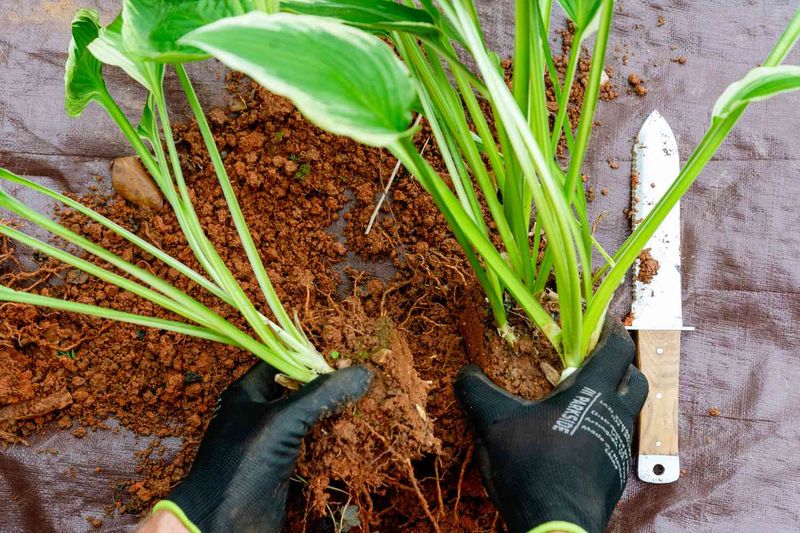
If your hostas have grown into a crowded, floppy mass that barely leaves room for neighboring plants, early fall is a good time to do something about it. Wisconsin gardeners can split an established, overcrowded hosta into several new plants and place them in suitable shady beds without buying a single new plant from the nursery.
The catch is that timing, site quality, and plant health all matter, and not every shady corner or every fall date will give your new divisions a fair start.
Wisconsin’s fall window determines whether hosta divisions establish
Timing is the single most important variable when dividing hostas in Wisconsin, and the statewide calendar cannot give you one reliable deadline. Ground freeze arrives weeks earlier in Ashland or Vilas County than it does in Kenosha or Rock County, so the practical rule is to finish dividing roughly four to six weeks before your local ground freezes.
Early fall in Wisconsin, typically late August through mid-September depending on where you live, is meaningfully different from late fall. Soil is still warm, moisture is often adequate, and the plant still has metabolic energy to push new root growth.
Wait until October in northern Wisconsin and that window may already be closed, with nighttime temperatures dropping fast and the soil losing workability within days of a hard frost.
If you are gardening in a frost pocket, on a windswept ridge, or anywhere that routinely sees early hard freezes, build in that extra cushion or plan to divide in spring instead.
Spring division is a fully acceptable choice for Wisconsin gardeners who missed the early fall window or who simply want to give new plants the longest possible recovery period. UW-Madison Horticulture materials recognize hostas as cold-hardy perennials suited to Wisconsin conditions, and dividing them just as the eyes emerge in spring lets you see exactly where the buds are before you cut.
Neither season is universally better; the right choice depends on your Wisconsin location and how much time remains before the ground closes for winter.
Which Wisconsin hostas deserve division?
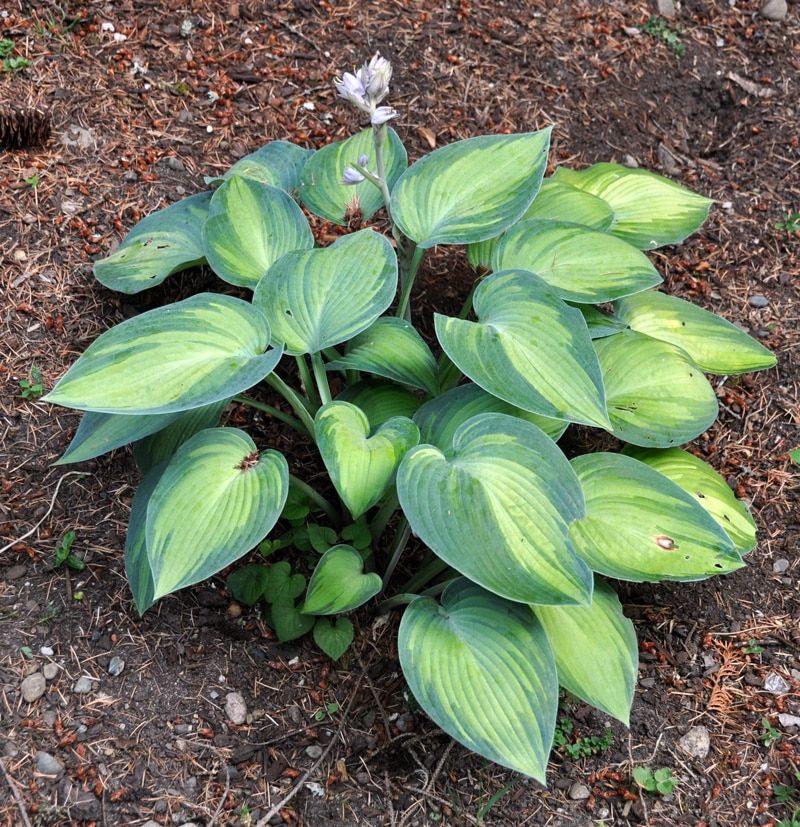
Not every hosta in a Wisconsin yard needs to be divided, and dividing a plant that is performing well can set it back unnecessarily. The clearest candidates are established clumps that have outgrown their allotted space, developed a dead or bare center where the crown has split apart, become so crowded that individual shoots are competing for light and moisture, or simply lost the vigor and leaf quality they once showed.
University of Minnesota Extension perennial division guidance frames these performance signals, rather than a fixed calendar interval, as the appropriate trigger for dividing.
Wisconsin gardeners sometimes hear that hostas should be divided every three to five years as a routine maintenance step. That interval is a rough general guideline for perennials, not a prescription for hostas specifically.
A hosta that still looks full, produces good foliage, and fits its space comfortably does not need to be disturbed just because a few years have passed.
Your Wisconsin Garden Changes Every Week. Your Plan Should Too.
Gardening in Wisconsin changes quickly throughout the season. Every Friday you’ll receive a simple weekly plan showing exactly what to plant, prune, fertilize, harvest, and protect so you never miss the right timing.
Before you reach for a spade, examine each plant carefully for symptoms that suggest Hosta Virus X. Look for unusual mottling, puckering, vein discoloration, ringspots, or color bleeding that does not match the cultivar’s normal variegation pattern.
Hosta Virus X can be symptomless early in infection, which is one more reason to divide only plants that look genuinely healthy and vigorous. A suspicious plant is not a candidate for dividing or sharing, regardless of how crowded it has become in your Wisconsin garden bed.
Wisconsin shade must provide moisture and drainage
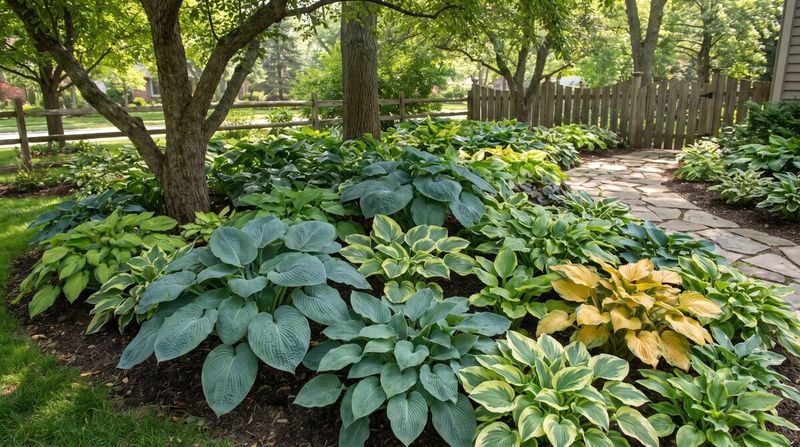
Shade is not a single condition, and treating every dim corner of a Wisconsin yard as equally suitable for hostas leads to disappointing results. Hostas prefer partial to full shade combined with moist but well-drained soil that has been enriched with organic matter.
Dry shade under mature trees is one of the most common problem sites Wisconsin gardeners encounter. Large maples, beeches, and oaks intercept both light and rainfall, and their roots compete aggressively for soil moisture.
Hostas planted in these spots may survive, but leaf-edge browning, reduced size, and sluggish establishment are common outcomes without supplemental watering. Thick-leaved cultivars tend to handle drier conditions better than thin-leaved types, but no hosta thrives on consistent drought regardless of cultivar.
Excessively wet and poorly drained shade creates a different set of problems. Standing water or persistently saturated soil encourages slug activity and can cause root and crown rot.
Sun tolerance varies considerably among hosta cultivars. Some thick-leaved, gold, or chartreuse types can handle more direct morning sun in Wisconsin, while blue-leaved cultivars with thin leaf coatings tend to bleach or scorch quickly.
Missouri Botanical Garden’s profile of the large-leaved cultivar Sum and Substance notes that deer and rabbits may browse hosta foliage, and Wisconsin gardeners in areas with heavy wildlife pressure should factor that into site selection as well. Salt exposure near Wisconsin roads or driveways and heavy slug pressure in moist, mulched beds are additional site factors worth considering before placing new divisions.
Wisconsin hosta divisions need viable eyes, roots, and clean tools
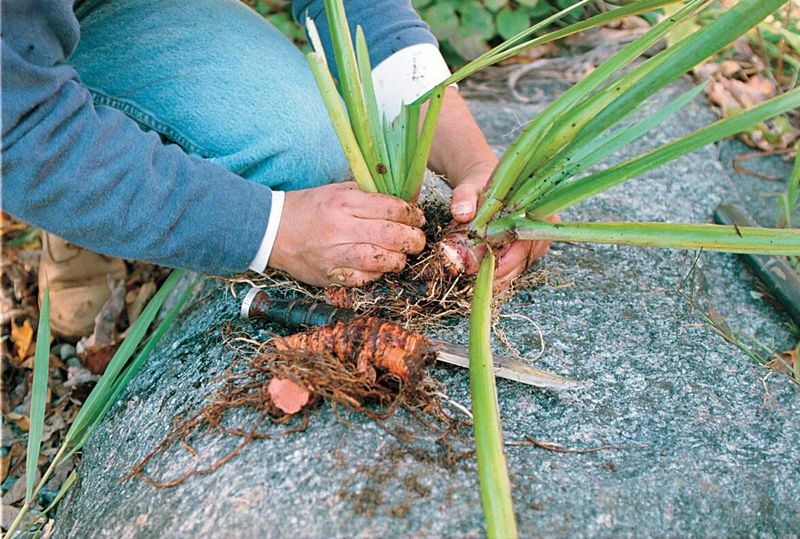
Getting your tools and workspace ready before you dig saves the divisions from sitting exposed while you scramble for equipment. For Wisconsin fall divisions, gather a sharp spade or garden fork for lifting, a sturdy knife or second spade for separating the crown, a bucket or tray to hold divisions in shade, and enough water to keep the pieces from drying out.
Choose a cool, overcast day if possible; dividing in full sun and heat stresses both you and the plant.
If Wisconsin soil around the clump is dry, water it thoroughly the day before you plan to dig. Moist soil clings to roots better, makes lifting easier, and reduces the shock of having the root mass disturbed.
University of Minnesota Extension’s perennial division guidance recommends watering dry soil ahead of the work for exactly these reasons.
A viable Wisconsin hosta division must have at least one growing bud, called an eye, and a healthy amount of attached roots. For late-season Wisconsin planting, larger divisions are a safer choice than very small pieces because they carry more stored energy and a bigger root system to anchor quickly before freeze-up.
Tool sanitation matters whenever you are working around multiple Wisconsin hostas, and it becomes critical if any plant shows suspicious symptoms. UW-Madison Horticulture’s Hosta Virus X guidance recommends washing hands and decontaminating tools that contact hosta sap when disease is suspected; follow the university’s current sanitation instructions and product-label precautions rather than improvising chemical concentrations.
Even when plants look healthy, rinsing your knife between clumps is a sensible habit in any Wisconsin garden.
How Wisconsin gardeners separate an overgrown hosta
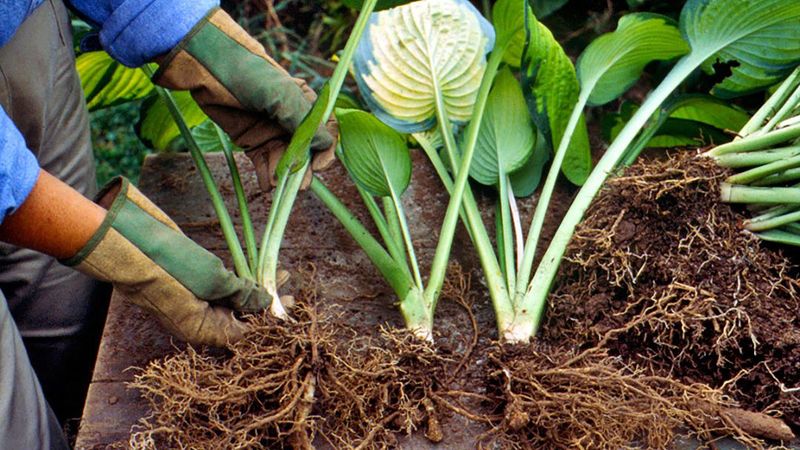
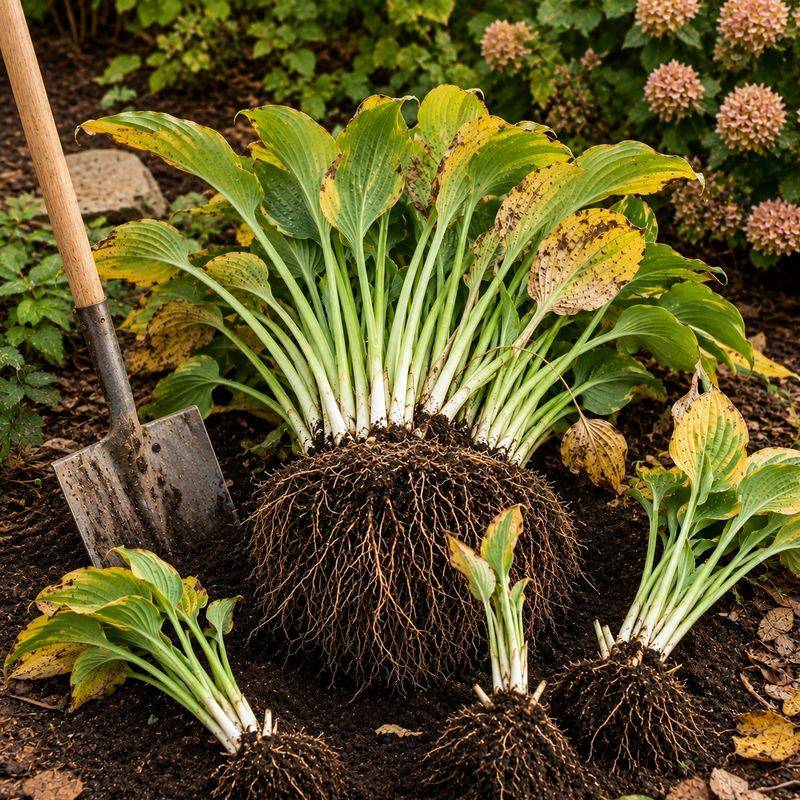
Start by digging a circle around the entire clump, working your spade or fork well outside the outermost leaves to avoid slicing through more roots than necessary. Push the tool deep enough to get beneath the main root mass, then pry upward from several angles before attempting to lift.
Large, long-established Wisconsin hostas can be surprisingly heavy, and working around the perimeter a second time often loosens the clump enough to lift it cleanly.
Once the clump is out of the ground, set it on a flat surface and shake or brush away enough loose soil to see the crown clearly. You need to identify where the individual growing points are clustered before you start cutting.
University of Minnesota Extension perennial guidance recommends removing enough soil to expose the crown and roots so you can make informed cuts rather than guessing at the structure beneath.
Dense hosta roots often resist being pulled apart by hand. A sharp knife, a spade driven straight down through the crown, or two garden forks placed back-to-back and levered apart are all practical options for Wisconsin gardeners working with a tough clump.
The goal is to produce divisions that each contain at least one viable eye and a generous portion of the root system. Penn State Extension’s division guidance reinforces that each piece needs a healthy bud and roots to establish well, so resist the temptation to cut the clump into the smallest possible pieces just to maximize the number of plants.
As soon as each division is separated, move it into shade and keep the roots covered or moist. Wisconsin fall air can be dry and breezy, and exposed roots that dry out even briefly before replanting are roots that cannot anchor the new division.
Work through the clump efficiently and have your planting sites ready before you lift the parent plant, so the time between separation and replanting stays as short as possible.
Replant Wisconsin hostas at the right depth before freeze-up
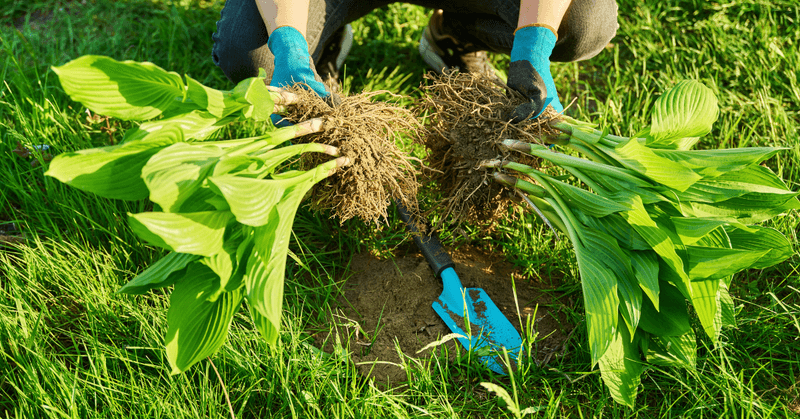
Planting depth matters more than many Wisconsin gardeners expect. Set each division so that the crown sits at roughly the same level it occupied in the original clump.
Burying the crown too deeply can encourage rot, while setting it too high leaves roots exposed to drying and temperature swings before the ground freezes. Penn State Extension’s perennial division guide advises replanting at approximately the original depth, firming the soil gently around the roots to eliminate large air pockets.
Water each division thoroughly immediately after planting, then continue watering during any dry weather until the Wisconsin ground freezes. Fall precipitation in Wisconsin is variable; some seasons are wet enough that supplemental watering is rarely needed, while others bring extended dry stretches that can desiccate new roots before they anchor.
Consistent moisture is the single most controllable factor in fall establishment, so check the soil around new divisions every few days and water when the top inch or two feels dry.
Space your new Wisconsin hostas according to their expected mature width rather than their current size as small divisions. University of Minnesota Extension notes that overcrowding reduces airflow and increases competition, which can contribute to pest and disease problems over time.
Planting at the correct spacing feels like too much open ground at first, but it saves you from repeating the division process sooner than necessary.
A light layer of mulch helps Wisconsin fall divisions in two practical ways: it slows moisture loss from the soil surface and moderates the freeze-thaw cycles that can heave newly planted divisions out of the ground. Keep mulch pulled back from the crown itself; piling it directly against the growing point traps moisture and can cause rotting before the plant even has a chance to establish in its new Wisconsin location.
Wisconsin’s new hosta divisions need a realistic first season
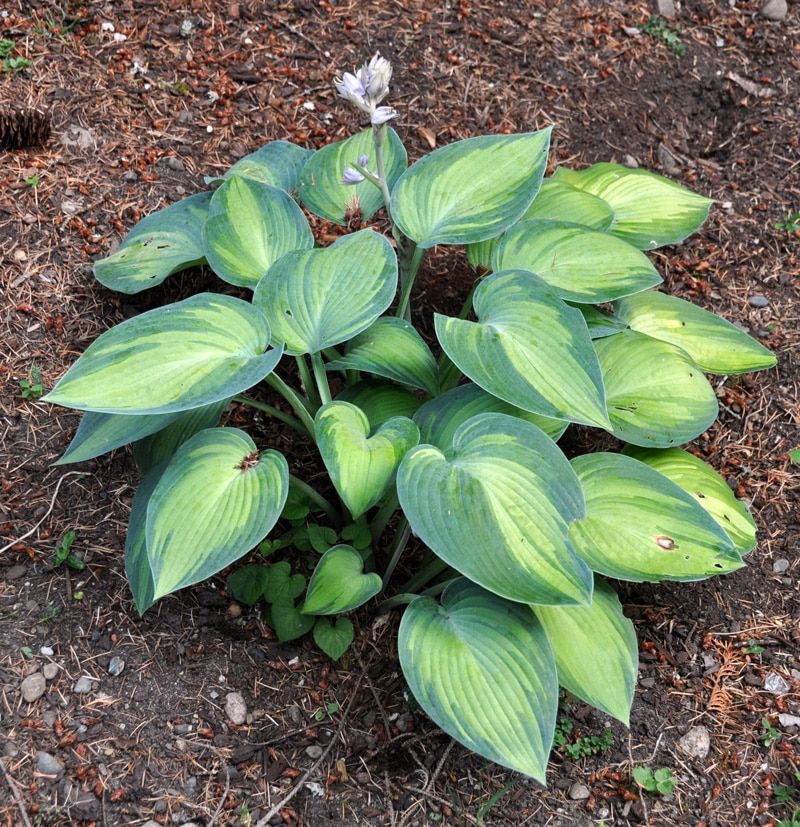
Freshly divided hostas in Wisconsin often look worse before they look better. Leaves may droop, brown at the edges, or collapse entirely after the root system is disturbed in fall.
That ragged appearance is not necessarily a sign of failure. UW-Madison Extension Florence County division notes acknowledge that disturbed fall foliage can look rough, and that spring emergence provides the more meaningful test of whether the division has successfully established in its Wisconsin garden bed.
Growth rate and recovery time both vary with cultivar and growing conditions, so Wisconsin gardeners should resist measuring success by a single season’s appearance. Large-leaved giants like Sum and Substance may take several years to approach their mature spread even under good conditions, while some compact cultivars fill in more quickly.
UW-Madison Horticulture’s groundcover alternatives guide identifies only dwarf stoloniferous hosta varieties as suitable for groundcover use, which means expecting newly divided standard cultivars to quickly blanket a large Wisconsin area sets an unrealistic bar.
Heavy flowering the first season after fall division is also unlikely for most Wisconsin plants. New divisions spend their early energy on root establishment rather than bloom production, and a plant that puts up modest foliage and few or no scapes in its first spring is still doing the right thing.
Give it a full growing season before judging whether it belongs in that spot.
Wisconsin hostas also face real pest pressure that does not disappear just because the plants are newly planted. Young divisions with limited leaf area can be set back more severely by feeding damage than a mature, established clump, so Wisconsin gardeners in areas with slug or wildlife pressure should plan accordingly from the start.
Wisconsin gardeners can add plants without buying more hostas
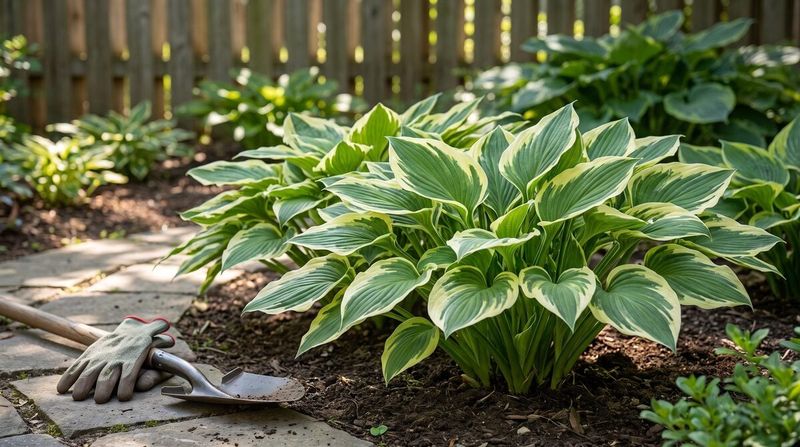
Dividing an established, crowded hosta gives Wisconsin gardeners a practical way to add plants to suitable shady beds without purchasing new ones from a nursery. The process requires real labor, and depending on your Wisconsin yard’s conditions, you may also need materials such as soil amendments, mulch, or a new tool.
The decision checklist for Wisconsin gardeners comes down to a few clear conditions. The parent plant should be healthy, established, and genuinely crowded.
The timing should leave roughly four to six weeks before your local ground freezes, with an earlier window for northern or exposed Wisconsin sites. University of Minnesota Extension supports spring division as an equally valid choice when the fall window is too short.
Each division needs viable eyes and healthy roots, and each destination site needs adequate moisture and drainage rather than just shade.
What Wisconsin gardeners get in return is a bed that fills in gradually with plants they already own, placed in spots that might otherwise stay bare or weedy. The foliage may look rough after fall planting, the plants will not cover ground quickly, and slugs or wildlife may still visit.
The payoff comes the following spring, when new growth confirms that the divisions made it through a Wisconsin winter and have started the slow, steady work of becoming something worth looking at.