The One Thing Michigan Gardeners Should Do To Mower Blades Before Fall
As mowing season winds down in Michigan, most gardeners focus on raking and cleanup. But the mower itself often gets overlooked before it’s put away for the year.
A dull blade doesn’t just make cutting harder, it actually tears grass instead of slicing it cleanly, leaving ragged edges that are more vulnerable to disease and stress heading into winter.
This becomes especially important during the lawn’s final mows of the season, since grass needs to go into dormancy as healthy as possible.
A ragged cut at this stage can leave the lawn weaker than it needs to be when spring arrives. A few extra minutes of blade care now can make a real difference in how the lawn bounces back next year.
Here’s the one thing Michigan gardeners should do to their mower blades before fall mowing wraps up for good.
1. Sharpen The Blade Before Leaf Season
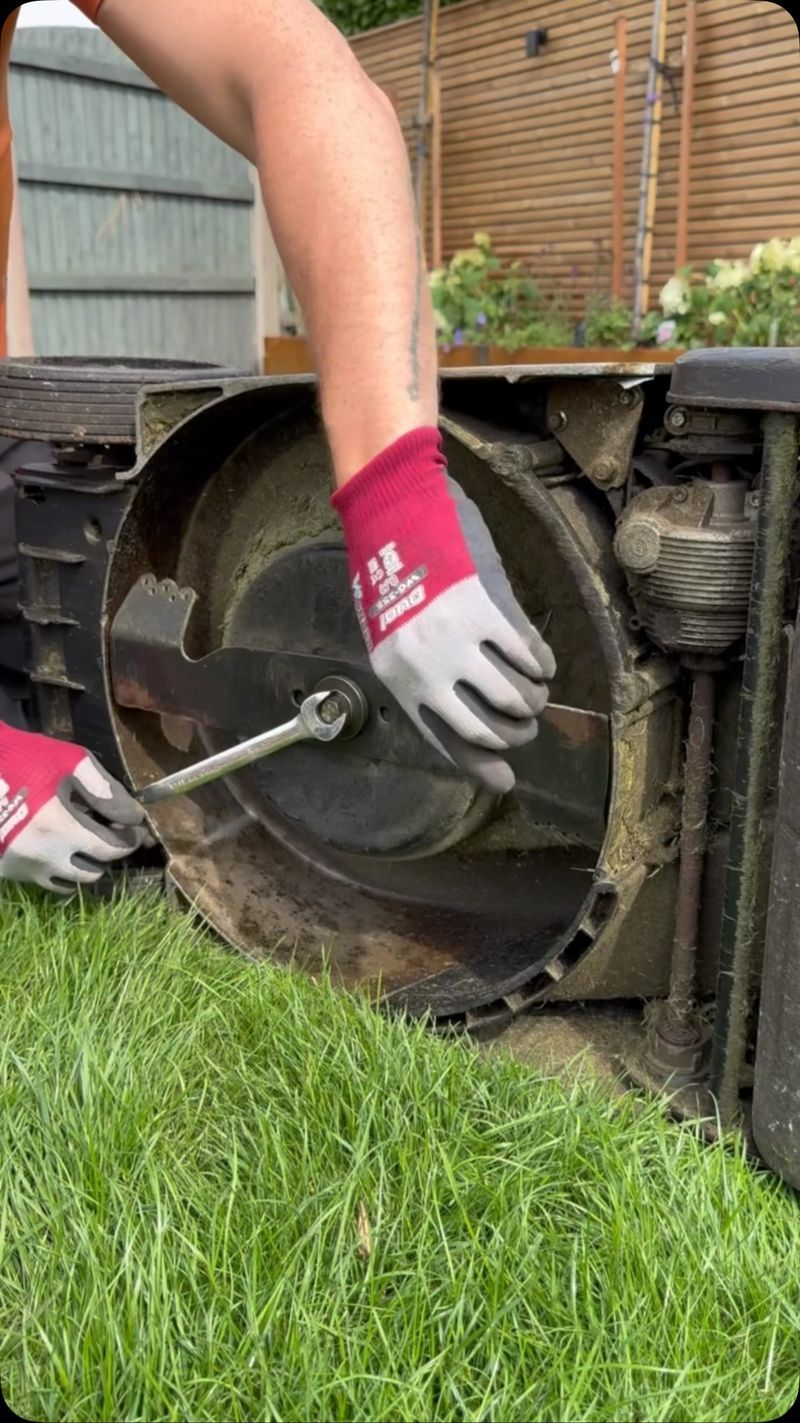
Autumn always sneaks up fast in Michigan, and one moment your grass is green, the next your yard is buried under maple and oak leaves. Getting your mower blade sharp before all those leaves fall gives you a real head start.
A sharp edge slices cleanly through both grass and leaves. When you mow over fallen leaves, a keen blade chops them into tiny bits instead of pushing them around in soggy clumps.
Those small pieces settle down between the grass and break down into food for your soil.
MSU Extension points out that fall is a smart time to mulch leaves right back into the lawn. That only works well when your blade can cut them small enough. A worn edge just batters the leaves and leaves messy piles behind.
You can sharpen the blade yourself with a metal file or a bench grinder, or take it to a hardware store for a quick tune-up. Always disconnect the spark plug first so the mower stays still while you work.
Wear thick gloves too, because even a worn blade has rough spots. Aim for a butter-knife edge, not a razor edge.
Too thin and the metal chips easily against sticks and stones. A slightly rounded sharp edge lasts longer and handles Michigan yard debris well.
Sharpening before the leaves pile up means you are ready the moment the trees start dropping. Your first fall mow will feel smoother, and the results will show in a tidy, healthy lawn.
2. A Dull Blade Tears Instead Of Cutting
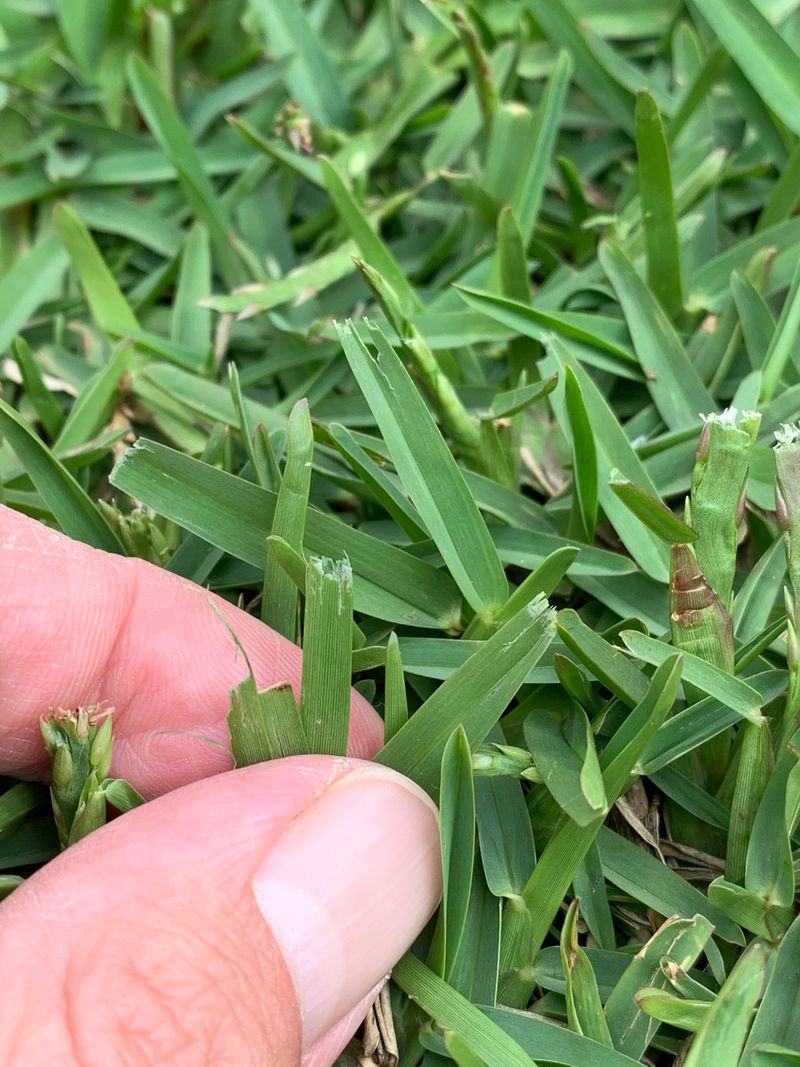
Ever notice your lawn looking a little brown at the tips even after you mow? That ragged look often points straight to a worn blade doing more harm than good.
Instead of slicing grass cleanly, a worn edge grabs and rips each blade. The torn tissue frays like the end of a rope, and those jagged edges turn brown within a day or two. Your whole lawn takes on a dull, unhealthy color.
Torn grass is also weaker grass. MSU Extension notes that ragged cuts create open wounds that let fungus and lawn diseases sneak in more easily.
Your Michigan Garden Changes Every Week. Your Plan Should Too.
Gardening in Michigan changes quickly throughout the season. Every Friday you’ll receive a simple weekly plan showing exactly what to plant, prune, fertilize, harvest, and protect so you never miss the right timing.
A clean cut heals quickly, while a shredded one stays vulnerable much longer, especially in cool, damp Michigan fall weather.
You can spot the difference with a simple look. Kneel down and check the grass tips after mowing.
Smooth, even cuts mean your blade is doing its job. Frayed, whitish, or brown tips mean it is time to sharpen.
Another clue is how the mower sounds and feels. A worn blade often forces the engine to work harder, and you may need to go over the same spot twice. That wastes gas and your time.
Keeping the edge sharp protects your grass through the tricky fall months when diseases love to spread. A clean cut helps the lawn stay strong and green as it prepares for winter rest.
Give your blade a quick check now, and your grass will thank you with a healthier, better-looking finish.
3. Leaf Mulching Depends On A Good Cut
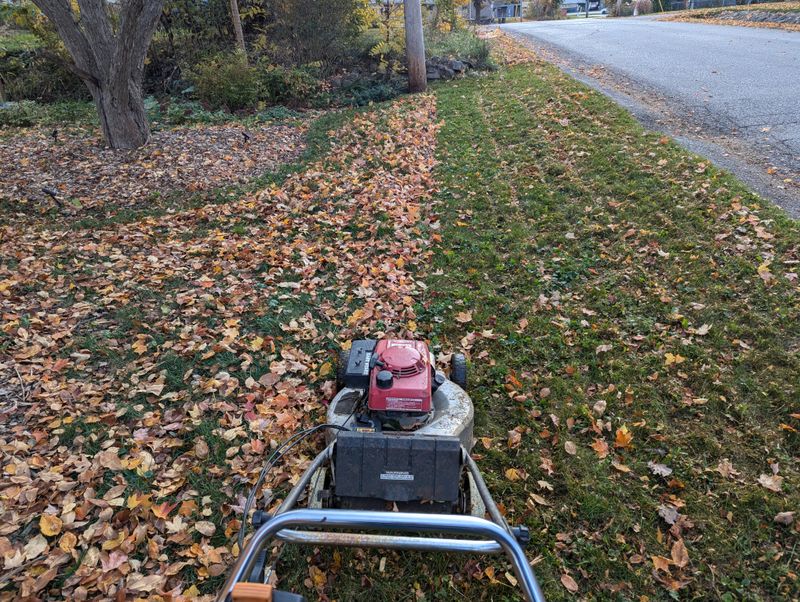
Raking leaves for hours is nobody’s idea of a fun weekend. The good news is that a sharp blade lets you skip much of that chore by mulching leaves right where they land.
Mulching works by cutting leaves into confetti-sized pieces. When the bits are small enough, they slip down between the grass blades and reach the soil below. There they slowly break down and feed your lawn free of charge.
MSU Extension recommends this method for Michigan yards because it saves work and improves the soil at the same time. But the whole idea only works when your blade cuts small and clean.
A worn edge leaves big chunks that sit on top and smother the grass. Thick mats of soggy leaves block sunlight and trap moisture. That can lead to bare patches and disease by spring.
Tiny chopped pieces, on the other hand, disappear into the turf and cause no trouble at all. For the best results, mow when leaves are dry. Wet leaves clump together and clog the mower deck.
You may also need to make a few passes if the layer is really deep, letting the blade chop everything down to size.
A sharp blade turns a messy job into an easy one. Instead of bagging pile after pile, you let your mower do the work and give your grass a natural boost.
Michigan lawns that get mulched each fall often green up faster and stronger once spring arrives.
4. Check The Blade For Damage Too
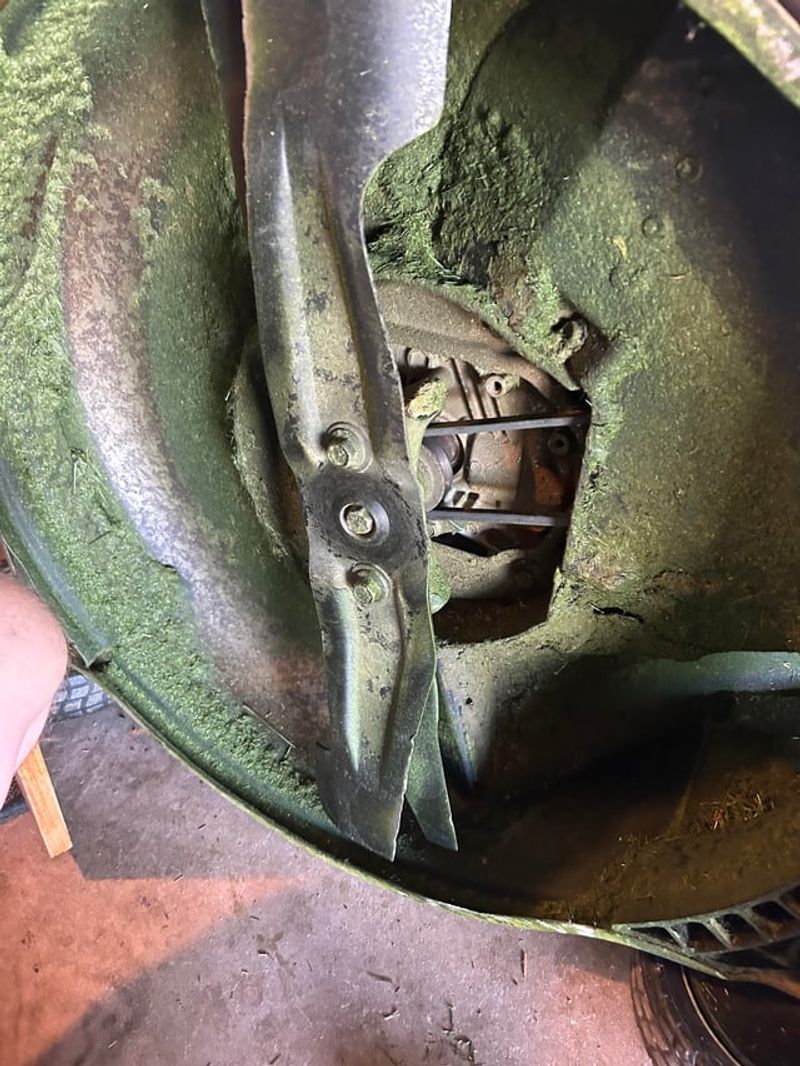
Sharpening is great, but sometimes a blade needs more than a fresh edge. Before you spend time filing away, give the whole thing a careful once-over.
Look for bends first. A blade that has smacked a rock or thick root can warp slightly, and even a small twist throws off your cut. Lay it on a flat surface to see if both ends touch evenly.
Cracks are a bigger worry. Any crack, even a tiny one, weakens the metal and can cause the blade to break apart while spinning fast.
That is dangerous, so a cracked blade always needs replacing, not sharpening. Watch for heavy wear as well. Over the years, the cutting edge slowly wears back and the metal gets thin.
If the blade looks noticeably narrower than a new one, or has deep gouges, its useful life is over.
Take a good look at the center hole too. If it has become stretched or misshapen, the blade may not sit tightly and could wobble during use.
Replacing a blade is usually cheap and quick. Most home stores carry blades that match common mower models, and swapping one in takes just a few minutes with a wrench.
Always disconnect the spark plug before you start. Trying to sharpen a damaged blade wastes your effort and puts you at risk.
When the metal is bent, cracked, or worn thin, a fresh replacement is the smart choice. A solid blade keeps your fall mowing safe, smooth, and effective.
5. Keep The Blade Properly Balanced
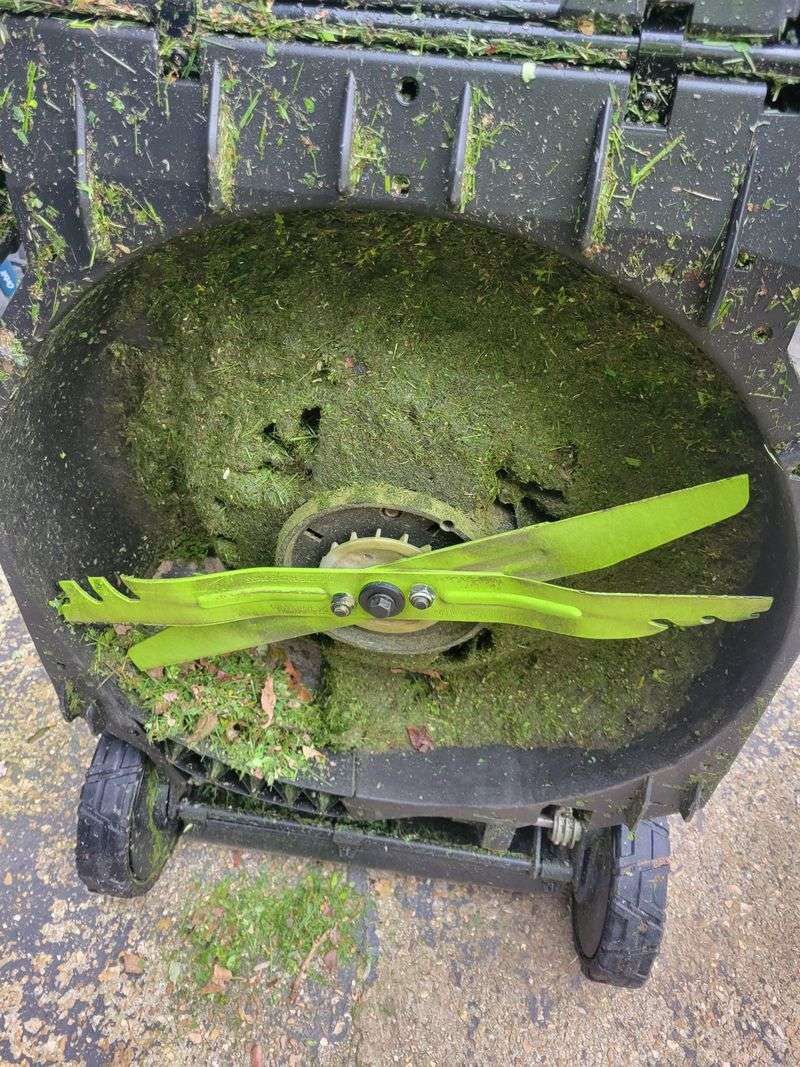
Here is something many people forget after sharpening: a blade needs to stay balanced. Balance means both sides weigh the same, so the blade spins smoothly without any wobble.
When you file one side more than the other, you can accidentally make it lopsided. A heavy side pulls harder as it spins, and that creates shaking you can feel right through the mower handle.
Checking balance is easy. Hang the blade on a nail through its center hole, or use a small cone-shaped balancer from the store.
If one end dips down, that side is heavier and needs a little more grinding until the blade sits level.
Vibration might seem like a minor annoyance, but it causes real problems. Constant shaking loosens bolts, wears out bearings, and puts extra stress on the engine. Over time it can lead to costly repairs.
A wobbly blade also cuts unevenly, leaving your lawn looking bumpy and messy. Since fall is all about clean cuts and good mulching, balance really matters during this season.
Once the blade is sharp and balanced, put it back on tightly. Line it up the right way, since blades have a correct facing direction, and snug the bolt down firmly with a wrench. A loose blade can slip or rattle while you mow.
Taking a couple of extra minutes to balance and secure the blade protects your mower and your lawn. Smooth spinning means smooth cutting, less noise, and equipment that keeps running well through many Michigan autumns.
6. Do Not Sharpen Only Once A Year By Rule
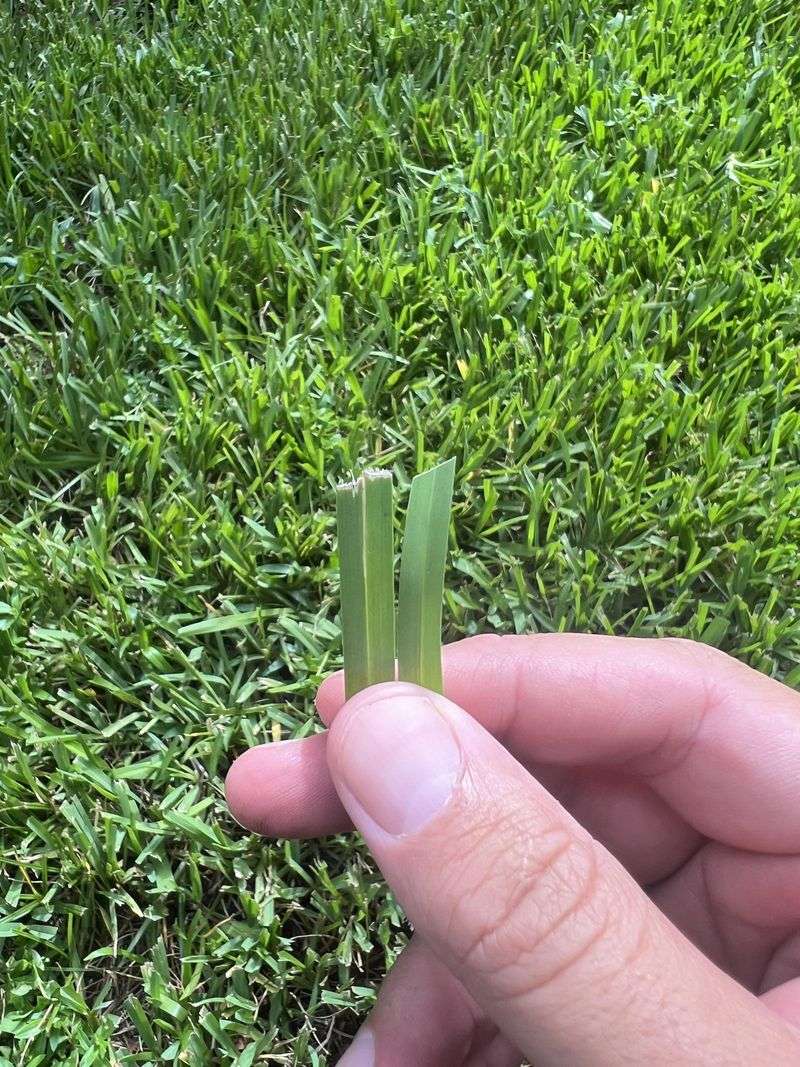
Some folks believe you sharpen your blade exactly once a year and call it done. The truth is that your lawn, not the calendar, should decide when the blade needs attention.
How often you mow makes a big difference. Someone cutting a large lawn every week wears down the edge much faster than someone with a small yard mowed twice a month. More mowing means more sharpening.
Lawn conditions matter too. If your yard hides sticks, acorns, pinecones, or small stones, the blade takes a beating and turns worn quickly. Smooth, clear lawns are gentler on the edge and let it last longer.
The type of grass and how tall you cut it also play a part. Tough, thick turf dulls a blade faster than soft, thin grass. Sandy soil that kicks up grit can wear down metal surprisingly fast.
Instead of guessing, inspect the edge every few weeks during busy mowing periods. Run a gloved finger along it and look for nicks, rounding, or a worn shine. Watch your grass for those telltale ragged, brown tips.
A good rule of thumb is to sharpen after about every 20 to 25 hours of mowing. For many Michigan yards, that means a couple of times each season rather than just once.
Paying attention to real wear beats following a strict yearly schedule. Your blade stays sharp when it counts, your grass gets clean cuts, and you avoid the frustration of mowing with a worn edge during peak leaf season.
7. Keep The Mower Deck Clean
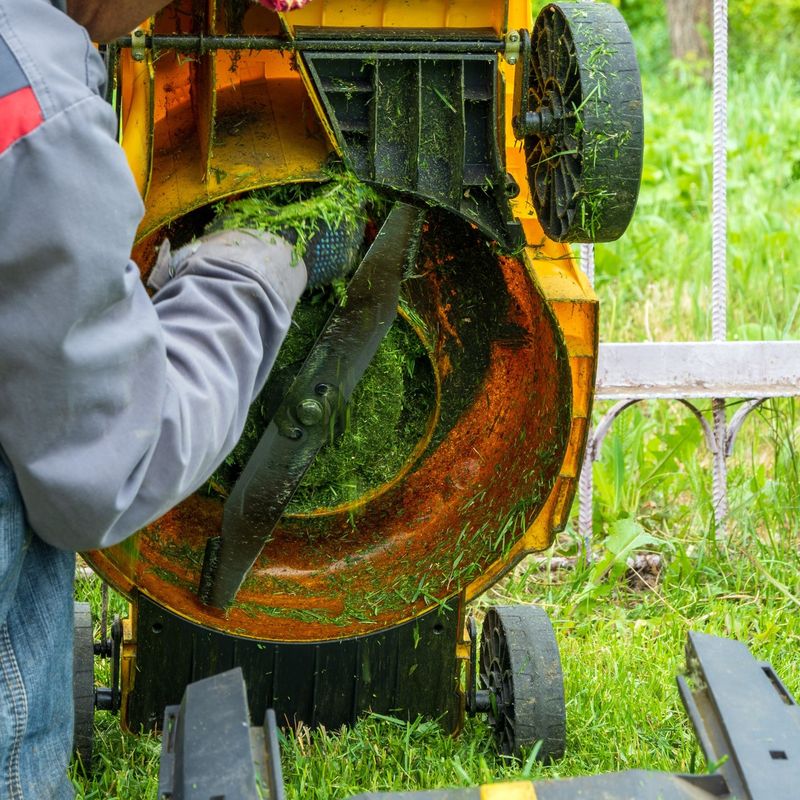
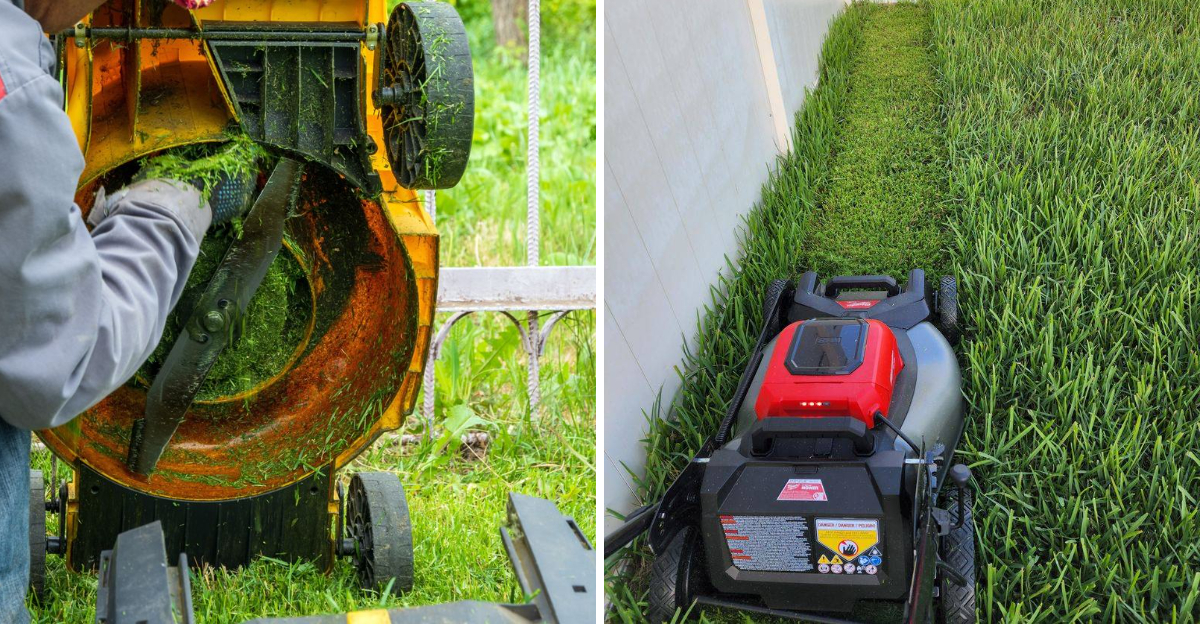
Flip your mower over sometime and take a peek underneath. If you spot thick, caked-on grass and leaf gunk stuck to the deck, your mower is not working as well as it could.
That crusty buildup blocks airflow inside the deck. Good airflow is what lifts grass and leaves up so the blade can cut them cleanly. When the space is clogged, cutting and mulching both suffer.
A packed deck also weighs the mower down and traps moisture against the metal, which leads to rust over time. Damp grass and leaves are the worst offenders, sticking like glue and building up fast in fall.
Cleaning the deck is simple. Disconnect the spark plug first, then tip the mower on its side with the air filter facing up so oil does not leak. Use a plastic scraper or an old putty knife to loosen the debris, then brush or hose it away.
A little cooking spray or silicone spray on the clean deck helps clippings slide off instead of sticking next time. That trick saves you scrubbing later on.
Try to clean the underside every few mows during heavy leaf season. It only takes a few minutes but keeps your mower running like new.
A clean deck lets air move freely, so your sharp blade can chop leaves into fine mulch that feeds the lawn. Pair a spotless deck with a fresh edge, and your fall mowing becomes faster, smoother, and far more effective across the whole yard.
8. Finish Fall With The Blade Still Sharp
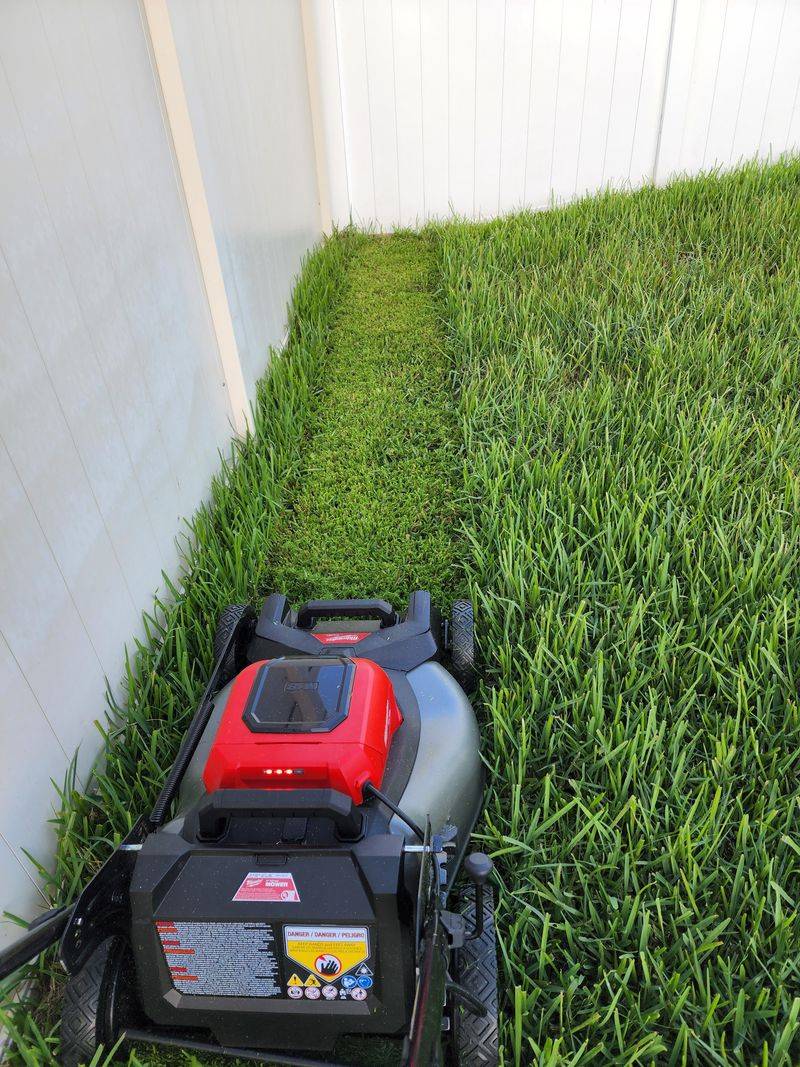
The final mow of the season is a big one, and you want your blade in top shape when you make it. A sharp edge helps you close out fall with a lawn that looks tidy and healthy.
Those last few mows in Michigan often deal with the heaviest leaf drop. Oaks especially hang onto their leaves late, dumping tough, leathery ones that need real cutting power to mulch properly. A worn blade just cannot keep up.
Keeping the edge sharp all the way through means every leaf gets chopped small and settles into the turf. Your grass heads into winter with a clean cut instead of ragged, torn tips that struggle in the cold.
Before that last mow, give the blade a quick check and a touch-up if needed. It is much nicer to sharpen now than to fight a worn blade in chilly November wind.
After the season wraps up, take care of the blade so it is ready for spring. Wipe it down, remove any leftover debris, and store the mower somewhere dry.
Some people sharpen right before storage so there is one less task come warmer days. A well-kept blade also protects the mower over the long winter months in the garage or shed.
Ending the season with a sharp, balanced, clean setup means your lawn looks its best right into the cold months. Come spring, both your grass and your mower will be primed and ready to go, saving you time and effort next year.