Before You Clear Every Spider Web From Your Arizona Yard, Here’s Why You Should Leave Some

Most Arizona homeowners see a spider web and immediately reach for a broom. But clearing every web you spot outside could actually work against you, especially when those webs belong to spiders quietly catching the insects you dislike most.
Learning which webs to leave alone and which ones to remove can make your yard smarter, safer, and more wildlife-friendly without extra effort. The answer comes down to location, identification, and a little patience.
Arizona Yards Can Benefit From Some Spider Webs
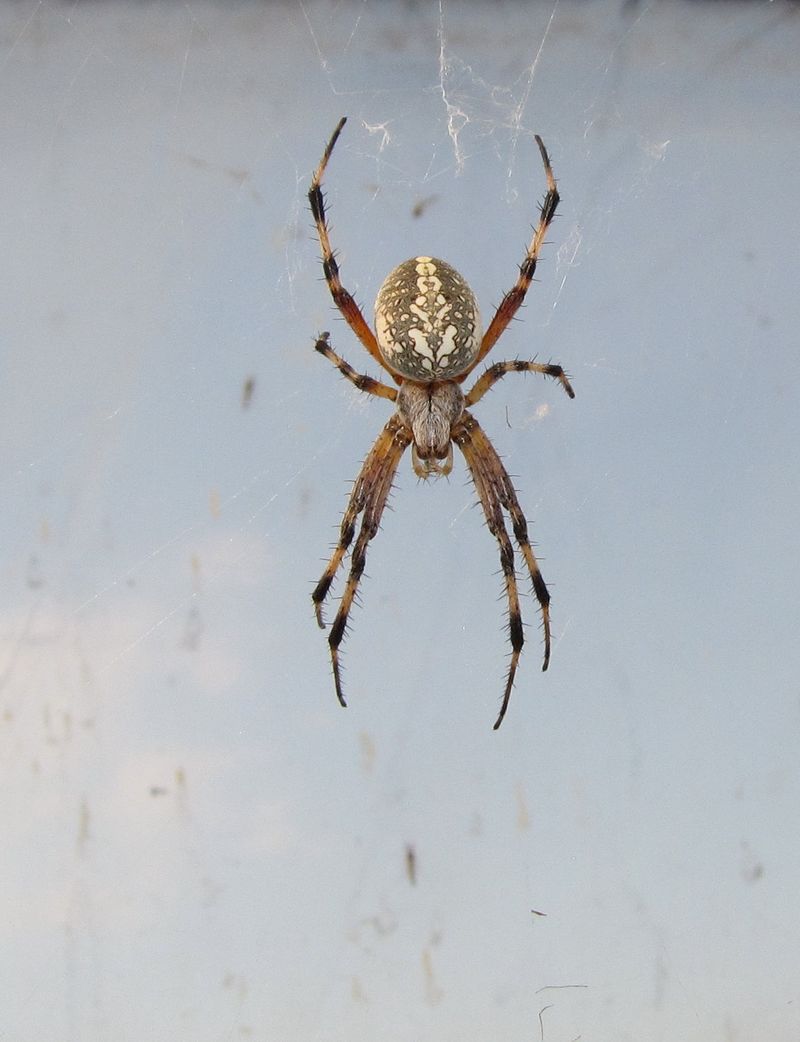
Removing every outdoor web can eliminate some of the most effective natural insect catchers already living in your yard.
In Arizona, the case for selective tolerance is practical rather than sentimental. Spider communities can contribute to pest suppression under the right conditions, though the results depend on species, prey availability, web location, weather, and the broader mix of predators present.
No single web or spider will prevent a pest outbreak on its own, and that is not the goal here.
The goal is simply to avoid discarding something useful out of habit. Leaving intact webs in low-traffic shrubs, trees, and garden edges can preserve natural predation without requiring Arizona homeowners to accept webs across walkways, doors, or seating areas.
Selective tolerance fits a wildlife-friendly Arizona yard as long as homeowners continue to monitor conditions, clean up webs near people and structures, and treat spiders as one part of a broader approach rather than a guaranteed fix.
Which Arizona Spiders May Earn a Pass?
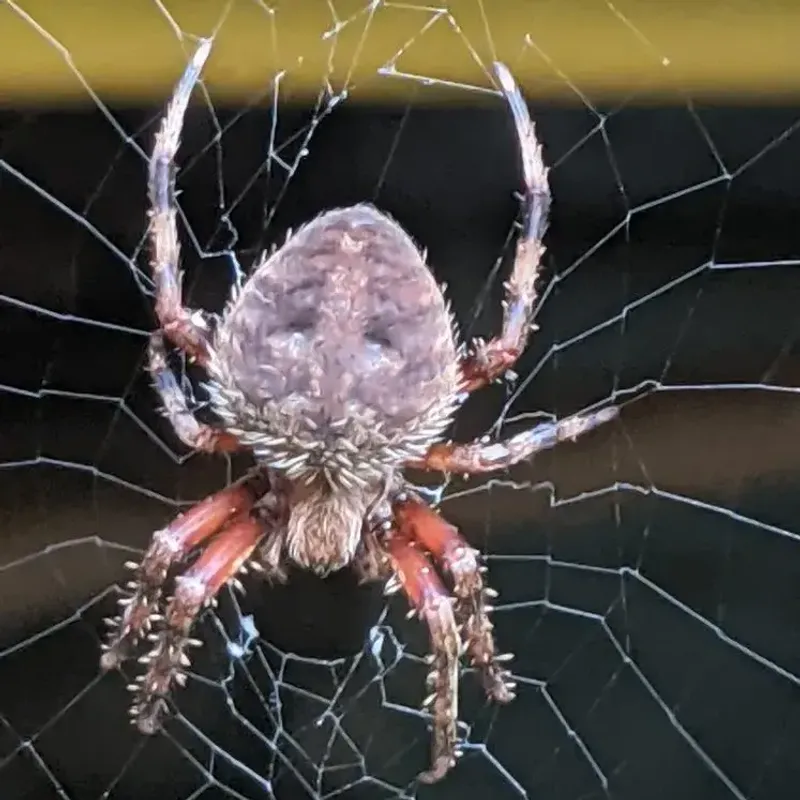
Outdoor orb-weavers are the strongest candidates for selective tolerance in Arizona yards. Several Neoscona orb-weaver species are recorded across Arizona vegetation, including gardens, citrus, mesquite, and desert shrubs, and their large, circular webs are designed to intercept flying insects.
The University of Arizona specifically identifies Neoscona crucifera in its Arizona spider materials and notes that orb-weavers are especially notable for their conspicuous webs and hunting behavior.
Beyond orb-weavers, some wolf spiders, jumping spiders, and other hunting spiders found in Arizona yards are generally considered low-risk to people and actively pursue insects on the ground and on foliage. Describing any of these as nonvenomous or harmless would be inaccurate, so the better framing is that they are not known to be medically significant under normal outdoor conditions.
Even so, identification matters before you make any decision about a web or its occupant.
“Garden spider” is not a precise identification, and that is exactly the problem with treating every large, colorful, or web-building spider as safe. If you cannot identify a spider confidently, treat it as unidentified and use appropriate precautions rather than assuming it belongs in the low-risk category.
Where Arizona Homeowners Should Leave Webs
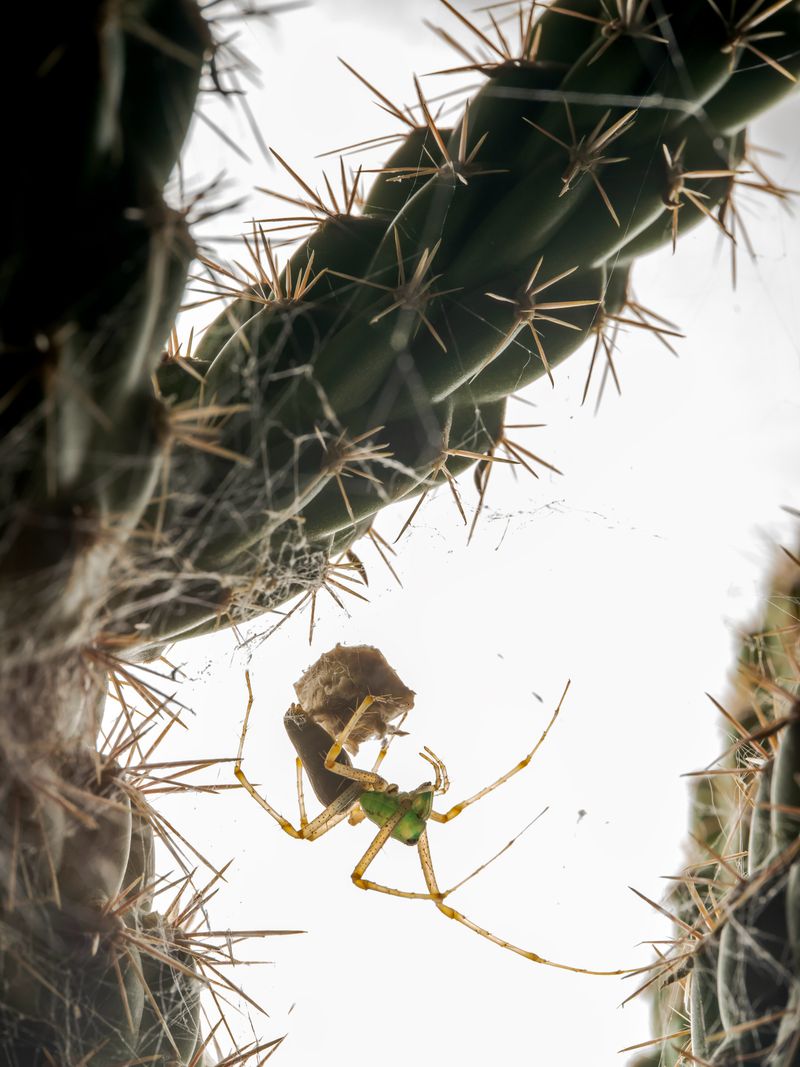
Location is the most useful filter Arizona homeowners can apply when deciding whether to leave or remove a web. Intact webs tucked into shrubs, trees, citrus canopies, mesquite branches, cactus clusters, and garden edges are good candidates for selective tolerance because people and pets are unlikely to walk through them or brush against them during normal yard use.
Your Arizona Garden Changes Every Week. Your Plan Should Too.
Gardening in Arizona changes quickly throughout the season. Every Friday you’ll receive a simple weekly plan showing exactly what to plant, prune, fertilize, harvest, and protect so you never miss the right timing.
The spider keeps its hunting station, the insects it catches stay out of your plants, and the web stays out of your way.
Contrast those quiet garden spots with the areas where removal is straightforward and sensible: door frames, window screens, porch ceilings, walkways, outdoor seating, children’s play equipment, and pet areas. Webs in those locations create realistic contact opportunities, and clearing them is a reasonable part of routine yard maintenance in Arizona.
Removing the web does not require removing the spider, and a displaced orb-weaver will typically rebuild in a more sheltered location within a day or two.
Selective web tolerance connects directly to Arizona integrated pest management principles, which recommend monitoring first and preserving useful organisms where practical rather than automatically eliminating every arthropod present. The University of Arizona’s guidance on integrated pest management for the home garden emphasizes identifying what is actually in your yard before deciding whether intervention is necessary.
In Arizona, that means taking a moment to look before you sweep, especially in the low-traffic edges and planted areas where orb-weavers and other beneficial spiders tend to set up.
When an Arizona Web Becomes a Safety Problem
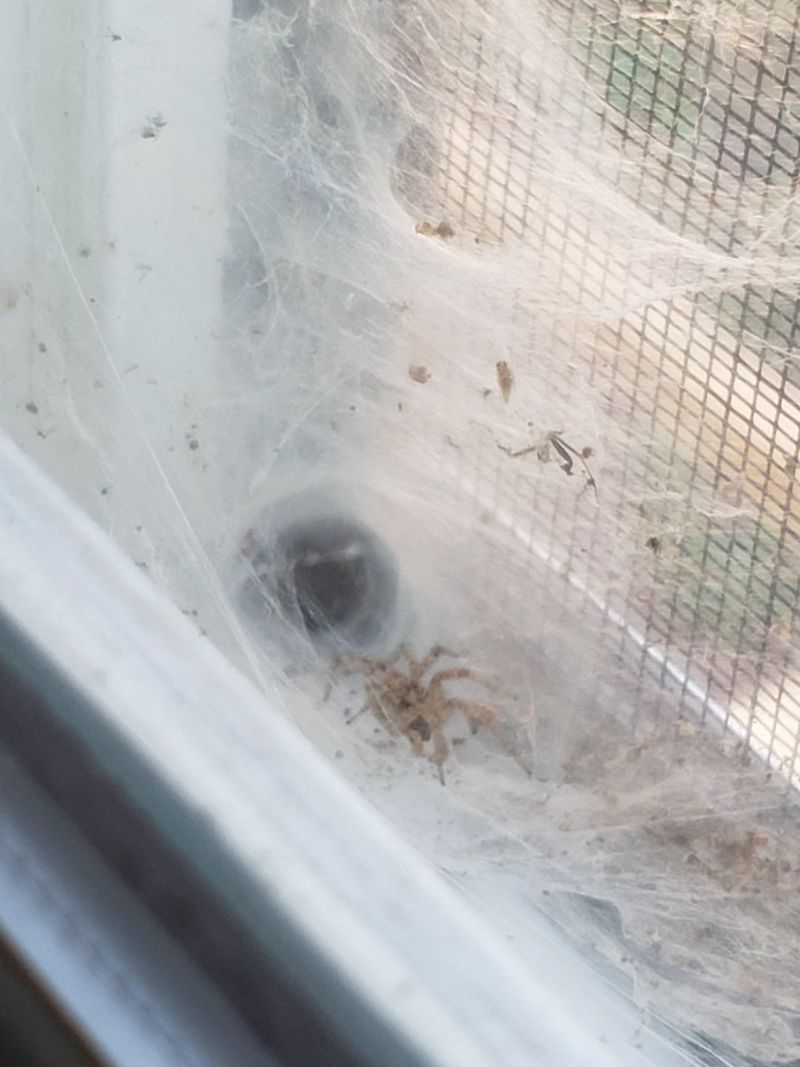
Some locations in an Arizona yard make web removal non-negotiable. Webs stretched across door frames, window screens, porch ceilings, outdoor furniture, children’s play equipment, pet feeding areas, and frequently used paths all create realistic contact hazards and should be cleared as part of regular maintenance.
Arizona’s warm climate means spiders can be active year-round, so these spots deserve periodic checks rather than a single seasonal sweep.
Before disturbing any web in a dark, sheltered, cluttered, or rarely used space, take a moment to inspect it from a safe distance. Firewood stacks, storage sheds, garage corners, crawlspaces, and attics are exactly the kinds of spots where medically significant spiders, including western black widows and Arizona recluse spiders, are more likely to be present.
Wearing gloves and long sleeves when working around these materials is a simple precaution that Arizona Cooperative Extension consistently recommends.
Unknown egg sacs should never be handled bare-handed. Arizona Extension materials identify western black widows and Arizona recluse spiders as the state’s principal medically significant species, and their egg sacs can be difficult to distinguish from those of less concerning spiders without close examination.
When in doubt, remove the web and egg sac using a long-handled tool or vacuum rather than direct contact.
For webs appearing inside the home or along the building’s exterior, structural exclusion is the most durable solution. University of Arizona pest-proofing guidance recommends repairing damaged screens, sealing cracks around doors and utility penetrations, reducing clutter inside and near the foundation, removing debris from around the building’s perimeter, and vacuuming unwanted webs and egg sacs.
Addressing the structural gaps that let spiders enter is more effective in Arizona than repeatedly removing webs without fixing the underlying access points.
Is That Arizona Web Actually Spider-Mite Damage?
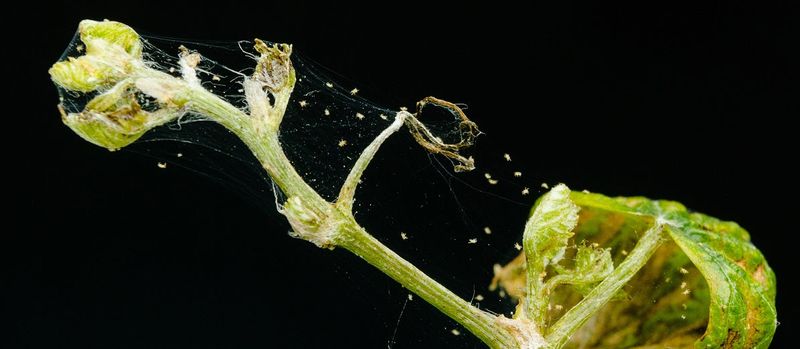
Not every web you find on an Arizona plant comes from a spider. Spider mites are tiny arachnids that feed directly on plant tissue, and they produce fine, silky webbing on foliage that can look similar to a small spider’s work at first glance.
The difference matters because the right response to a spider mite problem is almost the opposite of leaving a web alone.
Spider mite damage usually appears alongside other plant symptoms: stippling or tiny pale dots on leaf surfaces, yellowing or bronzing of foliage, and leaf drop in more severe cases. The webbing itself tends to be dusty, matted, and concentrated on the undersides of leaves or in the joints between stems, rather than the open, geometric structure of an orb-weaver’s web stretched between branches.
In Arizona, spider mites can become especially active during hot, dry periods, so checking stressed plants carefully during summer is worthwhile.
Identifying the organism before treating anything is the practical rule here. Broad-spectrum insecticides can kill predatory mites and other beneficial organisms that naturally keep spider mite populations in check, which can make an existing mite problem worse rather than better.
The University of Arizona’s integrated pest management guidance for home gardens, which also addresses spider mite issues in crops like strawberries, consistently recommends confirming the pest and choosing the least disruptive effective treatment rather than reaching for a general-purpose spray. In Arizona yards, that habit protects both your plants and the spiders you may actually want to keep.
Arizona Spiders Will Not Solve Every Pest Problem
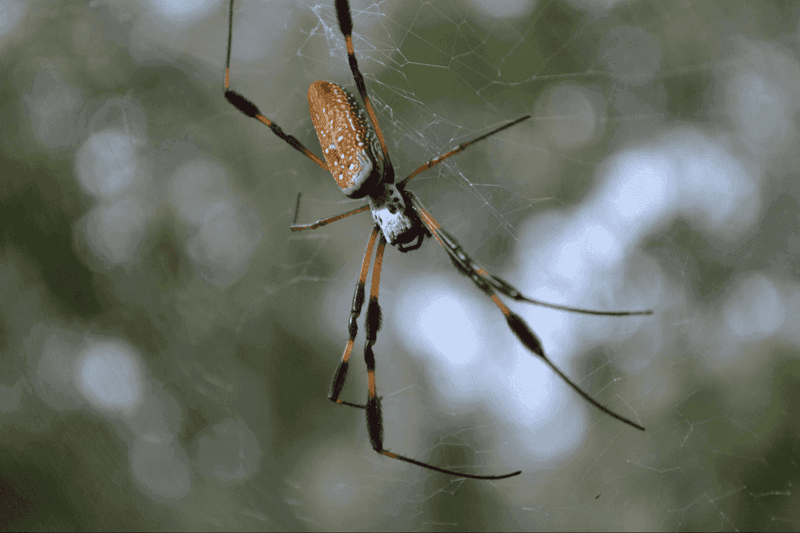
Spiders are generalist predators, and that quality is both their strength and their limitation. They catch what flies or crawls into their webs or crosses their path, which means their diet shifts with what is available rather than targeting a specific pest you want controlled.
Two pest problems that Arizona homeowners frequently hope spiders will address, mosquitoes and scorpions, fall well outside what outdoor spiders can reliably deliver.
Mosquito management in Arizona depends on eliminating the standing water where mosquitoes breed. University of Arizona mosquito management guidance emphasizes breeding-site reduction and targeted larvicides as the foundation of effective control, not outdoor predators.
Spiders may occasionally catch an adult mosquito, but that kind of incidental predation does not translate into meaningful population reduction in a yard with available water sources.
Scorpion management is similarly grounded in exclusion and habitat changes rather than biological predators. Arizona Extension materials on pest-proofing recommend sealing entry points, installing door sweeps, clearing debris near foundations, and trimming vegetation away from exterior walls as the core scorpion strategy.
Solpugids, which are sometimes called sun spiders or wind scorpions, are arachnid relatives of spiders rather than true spiders, and they do occasionally kill a scorpion. However, an occasional kill does not establish reliable scorpion suppression, and solpugids should not be marketed as a scorpion-control strategy for Arizona yards.
Arizona’s monsoon season adds another layer of complexity. As University of Arizona Extension notes, monsoon conditions can increase pest activity and push arthropods toward structures in search of shelter.
That seasonal pressure makes exclusion and habitat management important even in yards where selective web tolerance is already part of the routine. Preserving a few orb-weaver webs in the garden does not reduce the need for sealed doors and cleared perimeter debris when monsoon season arrives.
Arizona Integrated Pest Management Makes the Rule Work
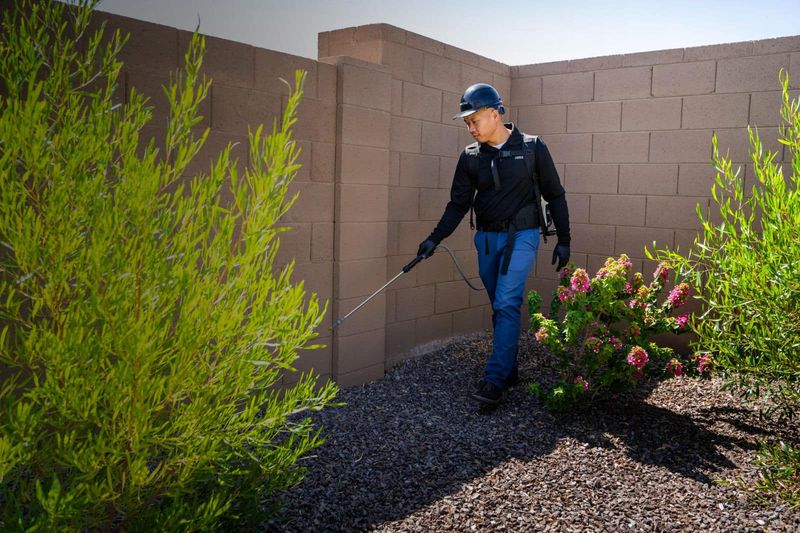
Selective web tolerance works best as part of a decision sequence rather than a standalone habit. Start by identifying what you are looking at: is it a free-standing web built by a spider, or fine webbing on plant foliage that suggests mites or another plant pest?
Knowing what you have determines every step that follows, and skipping identification wastes time and can make the underlying problem worse.
Once you have identified the web and its likely occupant, assess the location. A web in a low-traffic shrub, citrus tree, or garden edge in an Arizona yard presents very different risk than one stretched across a doorway or near a child’s play area.
Preserve useful webs where contact risk is low, and remove hazardous ones using gloves and a long-handled tool or vacuum rather than bare hands.
From there, the Arizona integrated pest management framework takes over: monitor plants and structures regularly, address the conditions that attract pests in the first place, and use exclusion or the least disruptive effective treatment when intervention becomes necessary. University of Arizona guidance on integrated pest management for schools and public buildings reinforces the same sequence: monitor, identify, use targeted control, and avoid preventive broad-spectrum spraying that harms beneficial organisms.
Selective web tolerance works alongside debris management, screen repair, crack sealing, and targeted pest control rather than replacing any of those steps. Treating spiders as a useful part of your yard’s predator community is compatible with a well-managed Arizona property when all the other pieces are in place.
The Arizona Yard Rule: Leave Useful Webs, Clear Real Hazards
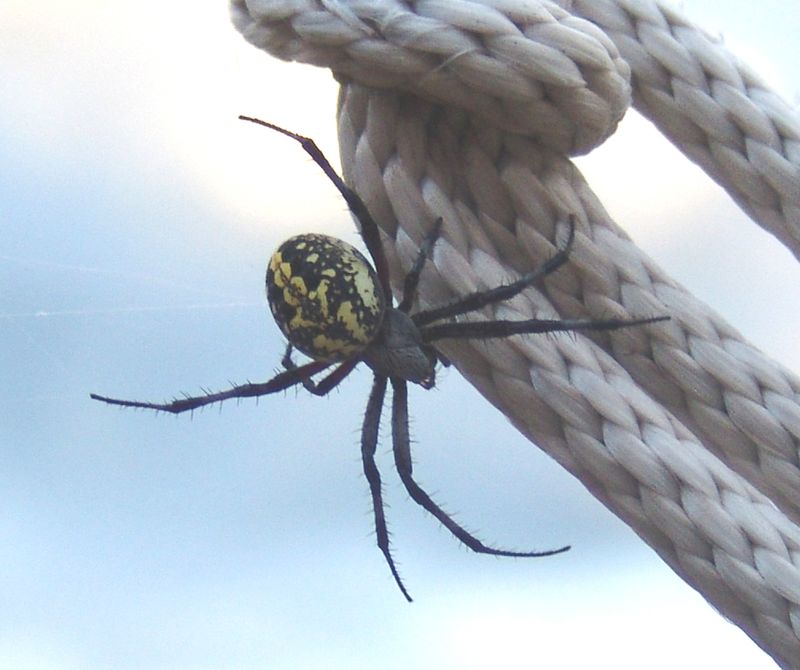
The practical rule for Arizona homeowners is straightforward: preserve webs in quiet garden habitat where contact is unlikely, clear them from doors, walkways, seating, and any area where people or pets regularly pass through. Before treating anything, identify the actual pest or spider rather than reacting to the web alone.
Some Arizona spiders, particularly outdoor orb-weavers, can contribute to natural pest suppression, but they cannot replace standing-water reduction for mosquitoes, structural exclusion for scorpions, or the broader work of integrated pest management.
Never handle an unidentified spider or egg sac bare-handed, and stay alert to the fact that not every web belongs to a low-risk species. Arizona yards are genuinely diverse, and that diversity is worth working with rather than against.
The homeowners who get the most from their outdoor spaces are the ones who look before they sweep.