The Banana And Grape Rooting Trick Arizona Gardeners Are Trying To Start A Grapevine From Scratch
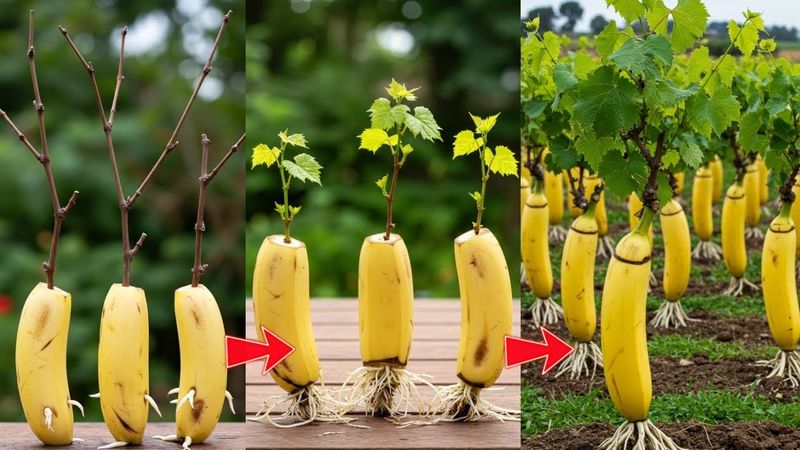
A video pops up online showing someone pushing a grape cutting into a banana, and days later, roots appear. The claim is that the banana somehow triggers the cutting to grow, and the idea has spread fast enough that curious backyard gardeners are wondering whether to raid their fruit bowl before heading outside.
For Arizona homeowners who want to grow their own grapevine, the appeal is obvious, but the reality is more complicated than a 30-second clip suggests. This article looks at what the evidence actually says, corrects the viral premise, and gives you a practical path that works in the low desert.
The viral experiment is not a proven rooting trick
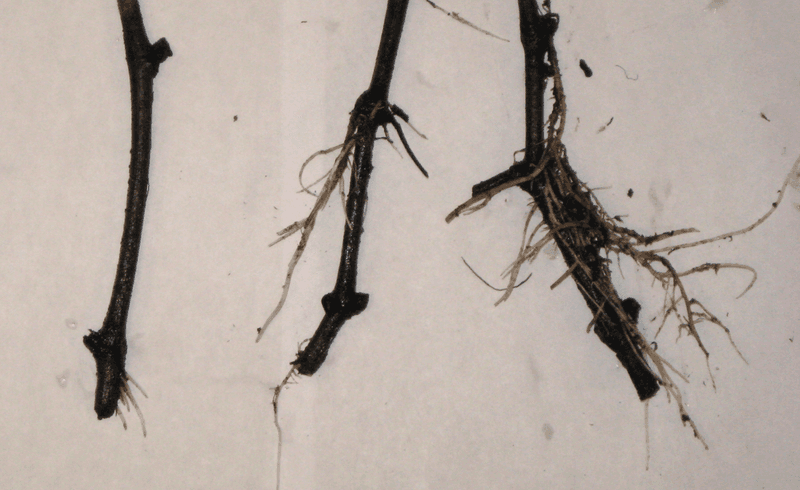
Somewhere between gardening forums and short-form video feeds, the idea took hold: push a grape cutting into a banana, wait a few days, and watch roots emerge. The experiment looks convincing on screen, but calling it a proven rooting trick overstates what anyone has actually demonstrated.
Reliable grape-propagation guidance from university extension programs focuses on dormant hardwood cuttings, healthy nodes, proper moisture, and clean materials. None of it points to banana tissue as a rooting aid.
University of Arizona Cooperative Extension guidance on growing grapes states that grapes root very easily from dormant wood and does not recommend any additional root stimulators. That is a meaningful detail: if grapes already root readily on their own, adding a banana to the equation does not fill a demonstrated gap.
A banana might hold some moisture around the cut end of a cane, and that temporary contact could keep the tissue from drying out for a short window. But moisture retention is not the same as biological stimulation of root growth.
When a cutting sprouts after sitting in a banana, the cutting’s own buds, stored energy, and viable tissue deserve the credit, not the fruit surrounding it.
Calling this an unproven internet experiment rather than a reliable propagation method is not pessimism. It is an honest starting point, and it matters for Arizona gardeners who have limited time, water, and tolerance for failed plantings.
The rest of this article replaces the viral shortcut with methods that extension research actually supports.
The grape cutting supplies the new vine
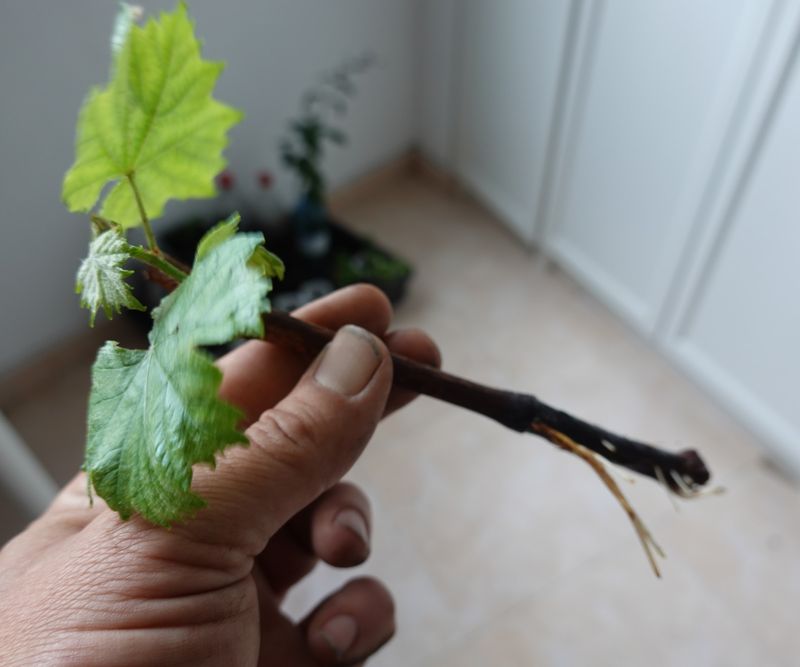
Before crediting any ingredient placed around a cutting, consider what the cutting itself brings to the process. A grape cane contains everything required to produce a new plant: viable buds that can develop into shoots, meristematic tissue capable of forming roots, genetic material identical to the parent vine, and stored carbohydrates that fuel early growth before any root system is in place.
Vegetative propagation from a cutting produces a genetic clone of the source plant, which is why the parent vine’s health and fruit quality matter so much.
Texas A&M AgriLife Extension’s guide to propagating grapevines explains that cuttings carry the parent plant’s traits, including any viruses or diseases present in the source wood. The banana, by contrast, contributes no grape genetics, no grape buds, and no growing points.
Your Arizona Garden Changes Every Week. Your Plan Should Too.
Gardening in Arizona changes quickly throughout the season. Every Friday you’ll receive a simple weekly plan showing exactly what to plant, prune, fertilize, harvest, and protect so you never miss the right timing.
It cannot create a grapevine from its own tissue; only the grape cane can do that.
Healthy one-year-old dormant wood gives a cutting the best internal resources to work with. Canes that are pencil-sized, firm, and free of obvious damage or disease have the stored energy to push a bud and initiate roots before the new plant can sustain itself through photosynthesis.
A cutting from a stressed, diseased, or unidentified vine starts that process at a disadvantage regardless of what surrounds it.
Choosing a strong parent vine is therefore the first and most consequential decision in the whole propagation sequence, well ahead of any discussion about what medium or kitchen ingredient to use.
Use dormant hardwood and a clean rooting medium
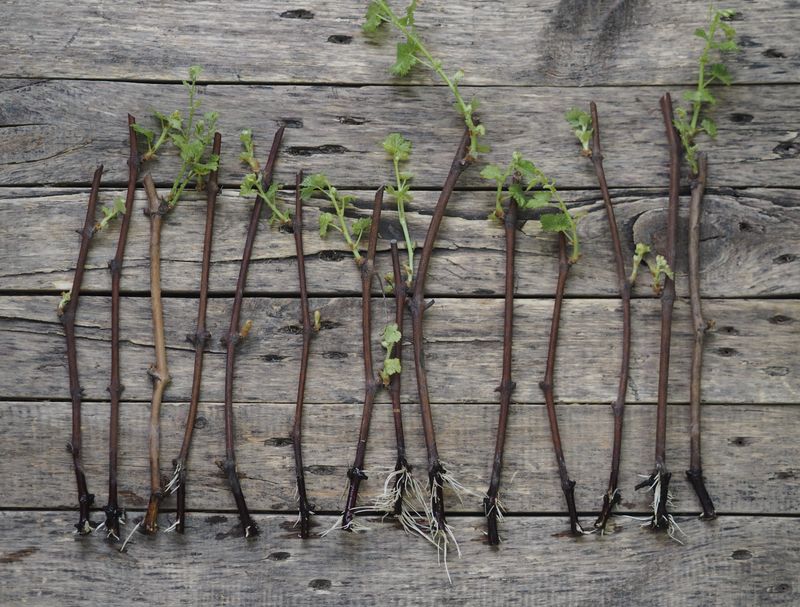
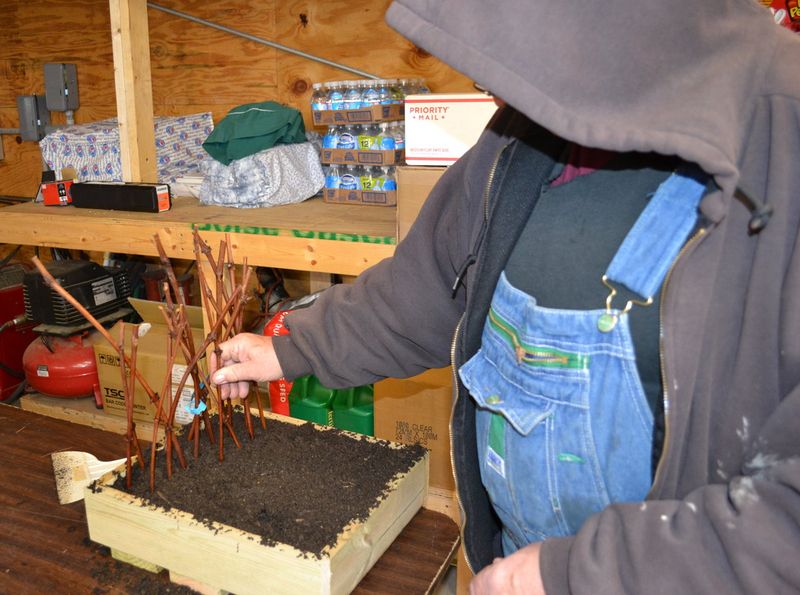
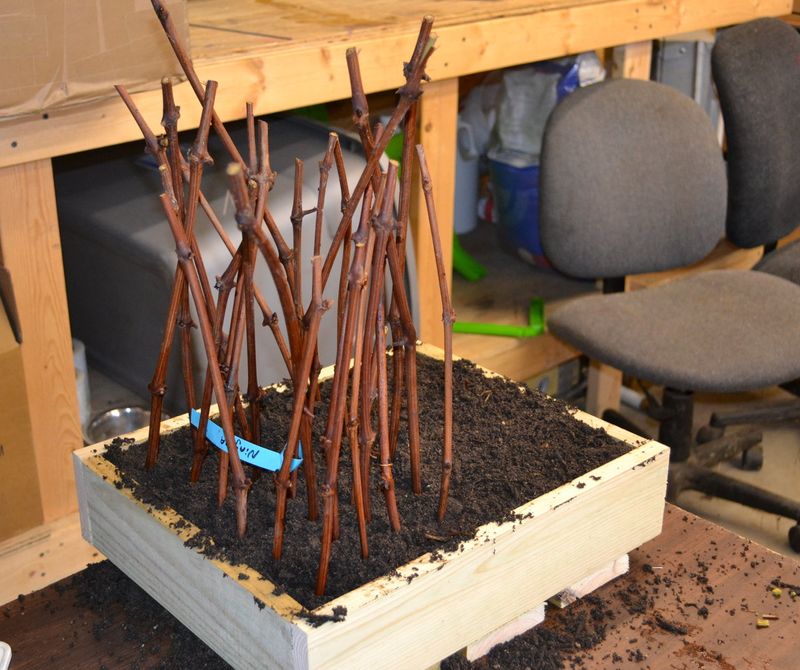
Once you have selected a healthy parent vine, the propagation sequence itself is straightforward. Iowa State University Extension recommends cutting pencil-sized, one-year-old dormant canes into lengths of about 12 inches.
The lower cut should be made just below a bud, and the upper cut should sit 1 to 2 inches above the top bud. Keeping the orientation correct matters: the end that was lower on the vine goes into the medium, and the end that was higher stays above it.
Planting a cutting upside down is an easy mistake that prevents any growth from occurring.
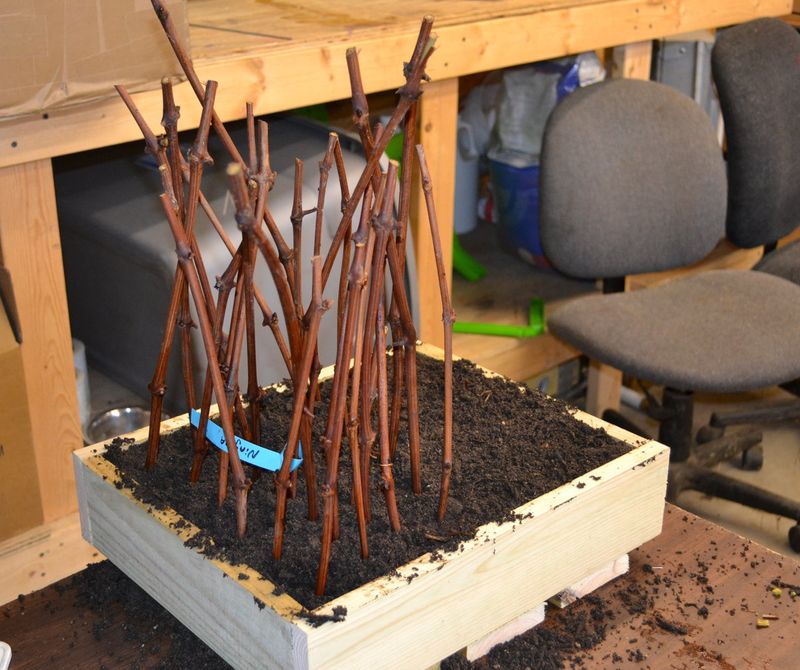
For low-desert Arizona, University of Arizona Cooperative Extension grape-growing guidance recommends placing roughly 6 to 12 inches of dormant wood in the ground while leaving approximately two to three buds above the soil surface. The cutting should stay moist while it roots, but the medium must also allow air to reach the developing root zone.
Sand, perlite, vermiculite, peat, or combinations of those materials make appropriate rooting media because they hold enough moisture without staying waterlogged. A banana is not a substitute for any of these.
It breaks down, it does not drain, and it does not provide the aeration that root initiation requires.
On the question of rooting hormone, New Mexico State University notes that root-promoting substances are unnecessary for grape cuttings and may actually reduce rooting in some cultivars. Grapes that root readily do not benefit from extra hormone applications, so skipping that step is reasonable rather than risky.
A banana adds uncertainty instead of a rooting advantage
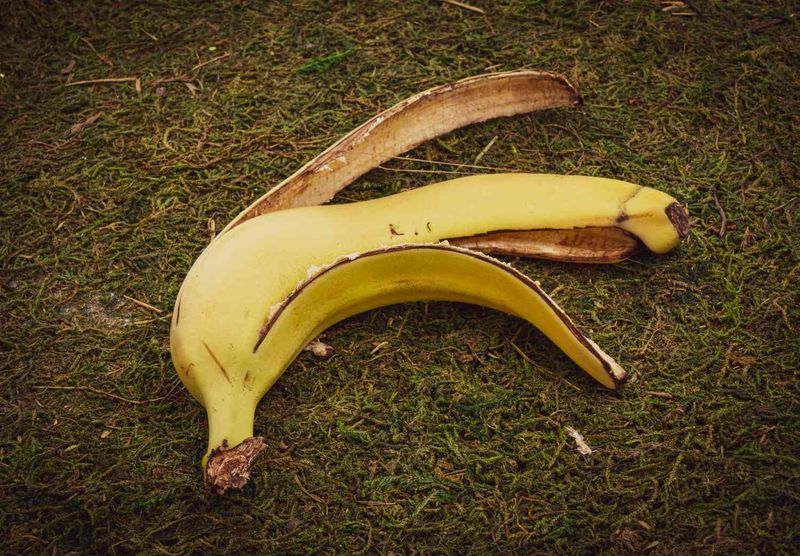
Separating what a banana might do physically from what it has not been shown to do chemically is important for anyone thinking about this method. Fresh banana flesh decomposes quickly, especially in the warm, humid conditions that a propagation setup creates.
That decomposition can encourage bacterial and fungal activity around the cut end of a cutting, which is the opposite of the clean environment that rooting requires.
Washington State University Extension’s guidance on stem-cutting propagation recommends sterilized containers and disease-free media specifically because contamination is a real risk during rooting. A decomposing fruit does not meet that standard.
Beyond microbial concerns, buried or enclosed banana material can attract animals, and a sealed or poorly aerated container left in Arizona’s heat creates low-oxygen conditions that can destroy a cutting before roots ever form.
Banana peel research, including studies on composting and nutrient content, addresses decomposition and potassium release, not improved root initiation in grape cuttings. UF/IFAS Extension notes that banana-based preparations primarily add potassium, can temporarily tie up nitrogen as they decompose, and are better directed to a compost pile than buried directly in the garden.
Banana peel water is not a complete fertilizer, and it has not been studied as a grape-rooting treatment.
Prolonged soaking of cuttings in wet organic material also carries its own risks. University of Georgia viticulture research warns that warm, humid conditions can favor trunk-disease pathogens, and excessive moisture exposure can increase contamination risk rather than improve outcomes.
Fix the Arizona root zone instead of burying a kitchen scrap
Getting a cutting to root is only part of the challenge. After rooting, the young vine has to establish itself in an Arizona root zone that can present serious obstacles no kitchen ingredient will solve.
Full sun, good drainage, adequate rooting depth, and structural support are non-negotiable requirements for a grapevine that will survive and eventually produce fruit in the low desert.
Caliche is the obstacle that catches many Phoenix and Tucson gardeners off guard. This hardened calcium carbonate layer sits at varying depths below the soil surface and can restrict root penetration, impede downward water movement, worsen drainage, and contribute to iron unavailability by raising soil pH.
University of Arizona Cooperative Extension’s caliche resources explain that gardeners should test their drainage before planting and, where practical, break through or remove restrictive caliche rather than planting over it and hoping organic material compensates.
A banana peel does not soften caliche, improve drainage, correct alkalinity, or deepen a root zone. Those problems require physical intervention: digging through the layer, amending backfill, improving drainage channels, or selecting a site that does not have a severe restriction.
Ignoring them and focusing instead on what to wrap around a cutting is a way of addressing the wrong problem.
Arizona’s climate regions are also not interchangeable. Phoenix and Tucson low-desert conditions differ significantly from Prescott or the White Mountains, and advice calibrated for one elevation and heat zone does not automatically apply to another.
University of Arizona extension materials on Arizona climate zones emphasize that variety selection and site conditions should reflect local realities, not a one-size-fits-all approach.
Time propagation around Arizona’s heat
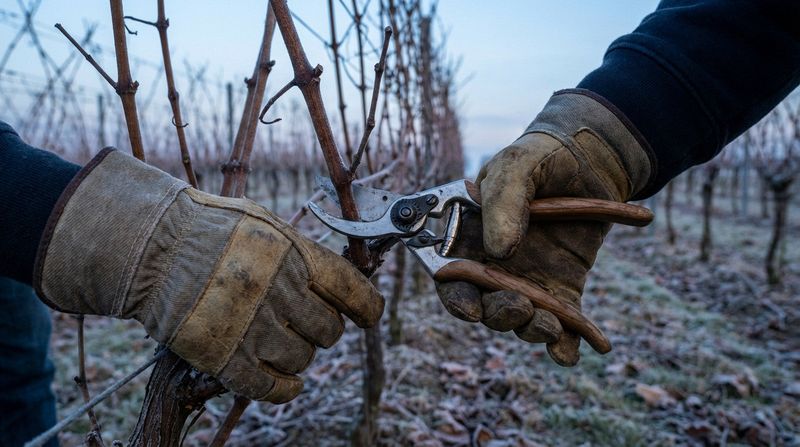
Seasonal timing is one of the most consequential variables in Arizona grape propagation, and it matters far more than the debate over banana use. Dormant cuttings should be collected in late winter, typically during the regular winter pruning that most backyard grape growers already perform between December and February in the low desert.
At that point, the cane has completed its dormancy cycle, stored carbohydrates are at a useful level, and the worst summer heat is still months away.
A newly rooted cutting is fragile. Moving it directly into Phoenix or Tucson summer conditions without a gradual acclimation period exposes it to desiccating heat, rapid soil temperature swings, and water stress that can kill it even after roots have formed.
Rooting indoors or in a protected, shaded location first, then hardening the young plant off before transplanting into the garden, gives it a realistic chance of surviving the transition.
Higher-elevation Arizona locations such as Prescott follow a different schedule because their winters are colder and their summer heat, while still significant, arrives differently. A propagation timeline that works in the Phoenix metro does not translate directly to those regions, and gardeners outside the low desert should consult resources specific to their climate zone rather than following a single statewide calendar.
Protecting young vines from afternoon sun with shade cloth during their first summer in the ground is a practical step that costs little and reduces the risk of losing a plant that took months to develop from a cutting.
Choose healthy source material and realistic goals
Propagating from a cutting preserves the parent vine’s genetics exactly, which is both the strength and the limitation of the method. A cutting taken from a backyard vine that produces reliably, suits the local climate, and shows no signs of disease gives the new plant the best possible starting point.
A cutting from a struggling, unidentified, or visually stressed vine carries whatever problems the parent has, including any viruses or fungal diseases already present in the wood.
Texas A&M AgriLife Extension’s grapevine propagation materials warn specifically that grape viruses and some fungal diseases move through propagation material. That risk is worth taking seriously before sharing cuttings with neighbors or planting material from an unknown source.
A vine that looks productive is not automatically disease-free, but one that shows obvious symptoms of decline, leaf distortion, or unusual dieback is a poor candidate for propagation regardless of other conditions.
Grocery-store grapes present an additional layer of uncertainty. The variety is usually unknown, the fruit may have been treated with post-harvest compounds, and the vine it came from was almost certainly not selected for Arizona conditions.
Rooting a cutting from a locally adapted, named cultivar recommended for the low desert is a more defensible starting point.
Realistic expectations about timeline are equally important. University of Arizona Cooperative Extension notes that grapevines need several years to reach a first harvest and may take five to six years to reach full production.
A cutting that roots successfully in spring is not a fruiting vine by summer. Rooting is the first step in a multi-year process, not the finish line.
Skip the banana and give the cutting what it needs
After reviewing the evidence, the banana is easy to set aside. No extension or viticulture source reviewed for this article identifies banana flesh or peel as a rooting aid for grape cuttings, and the risks that come with decomposing organic material in a warm, wet environment outweigh any possible benefit from temporary moisture contact.
What a cutting actually needs is straightforward: healthy dormant wood from a productive parent vine, clean tools and containers, correct cutting orientation, a well-draining and aerated medium kept consistently moist but never waterlogged, and protection from Arizona’s heat during the vulnerable early weeks. University of Arizona and Washington State University extension guidance both point toward those fundamentals, and they hold up across different cultivars and sites far better than any internet shortcut.
Rooting a grape cutting successfully is a real achievement, but the vine that eventually shades your patio or fills a harvest basket is still years away. That patience is part of the deal, and no kitchen trick changes it.