6 Reasons To Plant Desert Hackberry In Your Arizona Yard And How To Start One This Fall
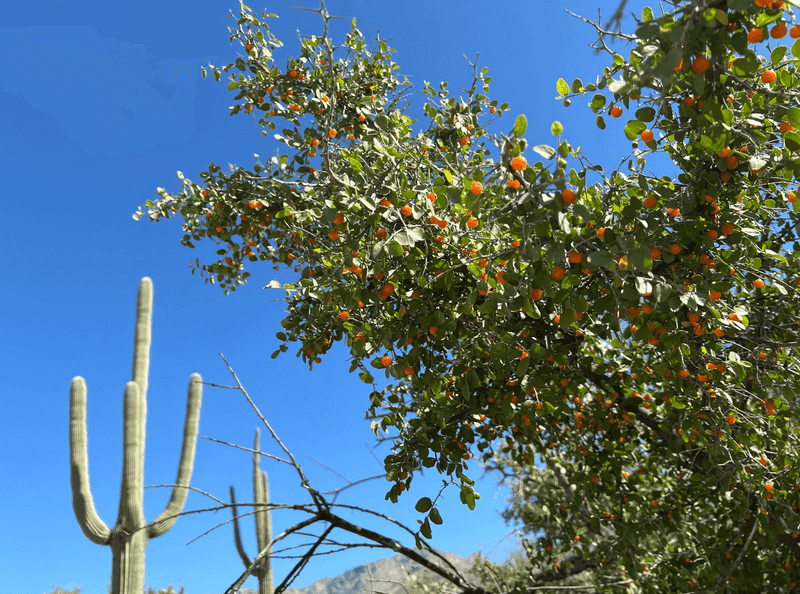
Looking for a tough native plant that does more than just sit pretty in your yard? Desert Hackberry is a hardy Sonoran Desert shrub that feeds birds, shelters wildlife, and shrugs off Arizona’s brutal heat.
Even better, fall is the perfect time to get one in the ground so its roots can settle before summer hits. Here are six solid reasons to plant it, plus simple steps to start your own this season.
1. Desert Hackberry Feeds Arizona Wildlife Year-Round
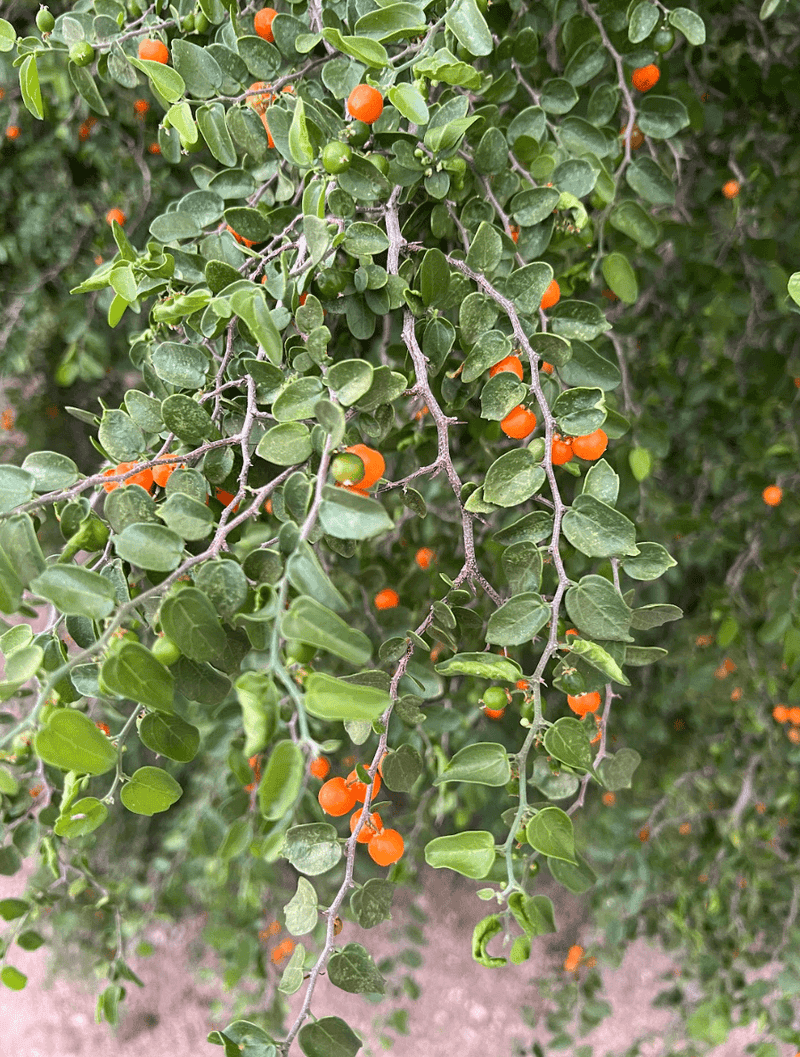
Picture a bird buffet that never closes, and you have got the Desert Hackberry. Its bright red-orange berries feed a long list of Sonoran Desert birds, from Curve-billed Thrashers and Phainopeplas to Gambel’s Quail and Northern Cardinals.
The small greenish-yellow flowers pull in bees and other pollinators when they bloom, adding another layer of life to your Arizona yard. Hungry visitors like House Finches, Cedar Waxwings, and White-crowned Sparrows show up too, turning your space into a busy habitat hub.
There is a butterfly bonus as well. The shrub acts as a host plant for the caterpillars of the Leilia Hackberry and American Snout butterflies, giving them a place to complete their life cycles right in your Arizona landscape.
Because the berries linger across seasons, wildlife can count on a steady food source rather than a short-lived one. If you want a yard that works like real habitat instead of just decoration, this native shrub delivers a concrete payoff.
Planting one is a quiet way to support the local food web while enjoying the daily show right outside your window.
2. Desert Hackberry Builds Natural Security For Arizona Homes
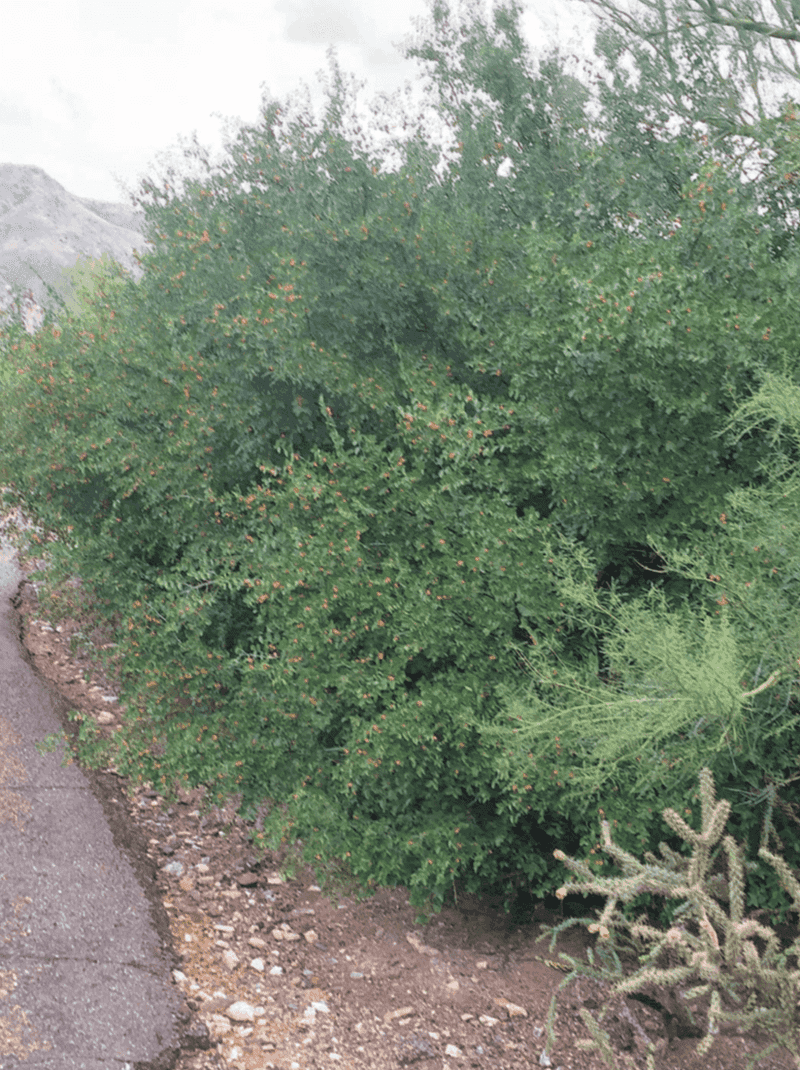
Thorns might sound like a drawback, but for a security-minded homeowner they are a feature. Desert Hackberry grows a dense, tangled canopy studded with small sharp thorns, some reaching an inch or two long, which can discourage unwanted foot traffic near your Arizona home.
Planted as a hedge, that thorny wall doubles as a privacy screen. It blocks sightlines and creates a natural barrier that is far more attractive than a bare fence, all while fitting right into the desert landscape.
Wildlife benefits from the same prickly protection. Those dense branches give birds and small desert animals safe nesting sites and cover from hawks, cats, and other predators prowling your Arizona yard.
Think of it as a two-in-one job: a deterrent for people you would rather keep out and a refuge for the creatures you want to welcome. Because it forms this shelter without any special upkeep, you get the security benefit as the plant naturally matures.
For anyone wanting a functional boundary that pulls double duty as habitat, this thorny native earns its spot along a property line.
3. Desert Hackberry Shrugs Off Arizona Heat And Adds Shade
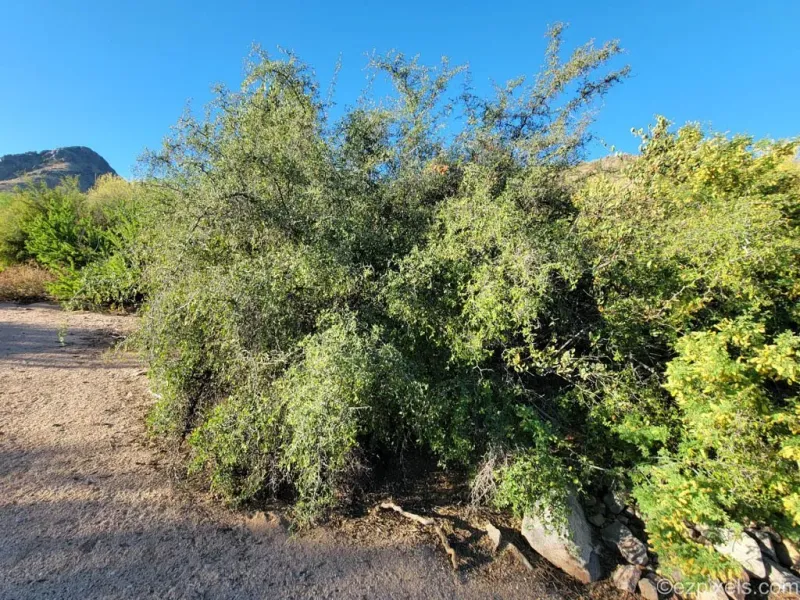
While tender plants wilt in a 110-degree afternoon, Desert Hackberry just keeps going. It thrives in brutal full sun and even tolerates the reflected heat that bounces off walls and pavement, making it one of the toughest picks for a low-desert Arizona yard.
Your Arizona Garden Changes Every Week. Your Plan Should Too.
Gardening in Arizona changes quickly throughout the season. Every Friday you’ll receive a simple weekly plan showing exactly what to plant, prune, fertilize, harvest, and protect so you never miss the right timing.
Size matters here too. Reaching a mature height of 6 to 15 feet and a width of 6 to 12 feet, it grows large enough to throw real shade over a patio corner, a walkway, or a spot where you want relief from the sun.
That shade helps you and the wildlife alike. Birds tuck into the dense growth to escape the scorching summer, using the cool interior as a refuge during the hottest stretch of the Arizona year.
Placing one near a hot wall or seating area can knock down the surrounding temperature and make outdoor time more bearable. In a climate where beating the heat is a daily battle, a plant that handles the worst of it and shares its shade is a genuine ally for any Arizona homeowner.
4. Desert Hackberry Slashes Water Use In Arizona Yards
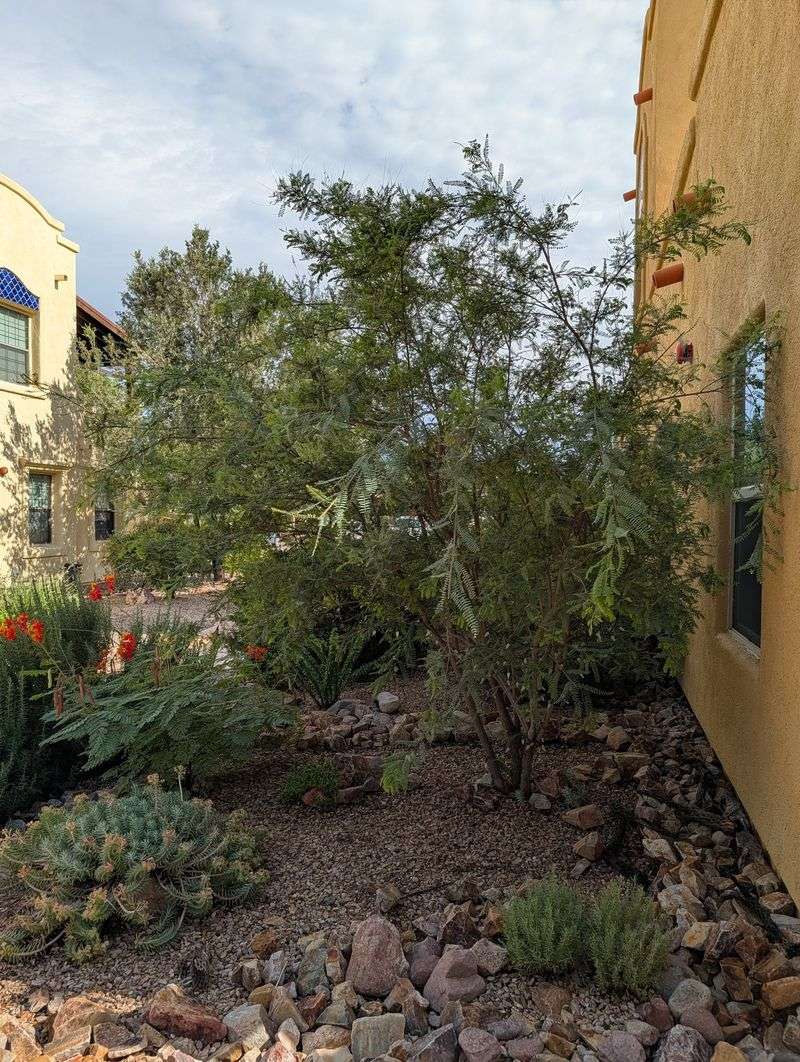
Water bills climb fast in Arizona, so a plant that barely sips is worth its weight in gravel. Once established, Desert Hackberry is extremely drought tolerant, which makes it a natural fit for water-wise landscaping, or xeriscaping.
The numbers tell the story. A mature plant can get by on a deep soak every two to three weeks during summer and often needs little to no supplemental water through the cooler Arizona winter months.
Its secret is underground. An extensive root system adapted to dry conditions lets it survive largely on rainfall alone after that first establishment period, so you are not tethered to constant irrigation.
Compared to thirsty non-native shrubs, the savings add up season after season, both in dollars and in your time. For a homeowner trying to keep a green yard without draining the meter, this native shrub proves you can have both.
Pair it with other desert-adapted plants and you build a landscape that mostly takes care of its own watering needs, freeing you to enjoy the yard rather than babysit a hose all summer long.
5. Desert Hackberry Keeps Maintenance Low For Arizona Gardeners
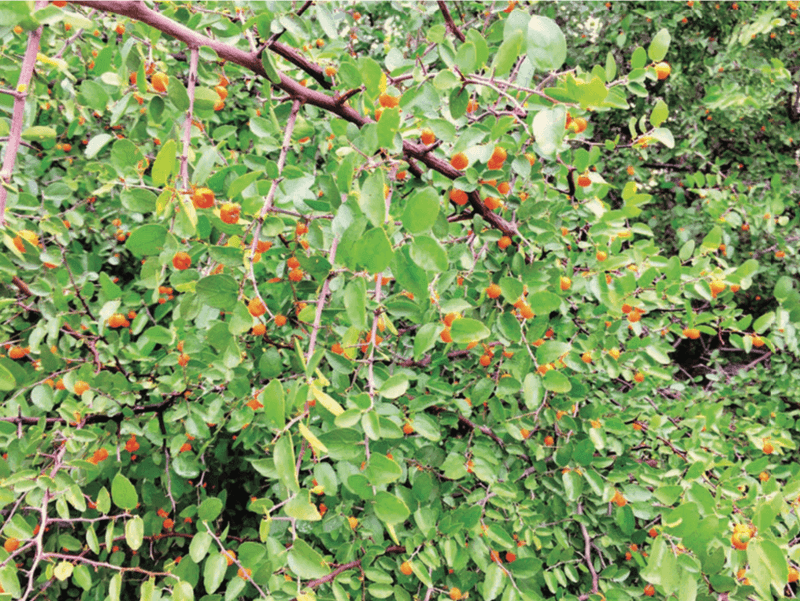
If your idea of a great plant is one you can mostly forget about, meet your match. Desert Hackberry asks for very little once it settles into an Arizona yard, staying tough even under a bit of neglect.
Soil is rarely a dealbreaker either. It tolerates nutritionally poor ground and adapts to the rocky, sandy, and caliche soils common across the region, as long as drainage is decent.
Cleanup is refreshingly easy. The shrub drops little litter, so you are not constantly raking or sweeping, and a mature plant is largely self-sustaining without fussy feeding schedules.
You can prune it lightly to shape a hedge or let it grow into a looser natural form, whichever suits your style. Either way, it does not demand the pampering that many ornamental imports insist on.
For busy homeowners who want a yard that looks cared for without eating up weekends, this low-fuss native is a smart anchor plant. Set it up right in the beginning, give it time to establish, and it largely runs on autopilot from there, quietly doing its job in the background of your Arizona landscape.
6. Desert Hackberry Is Native And Built For Arizona’s Climate
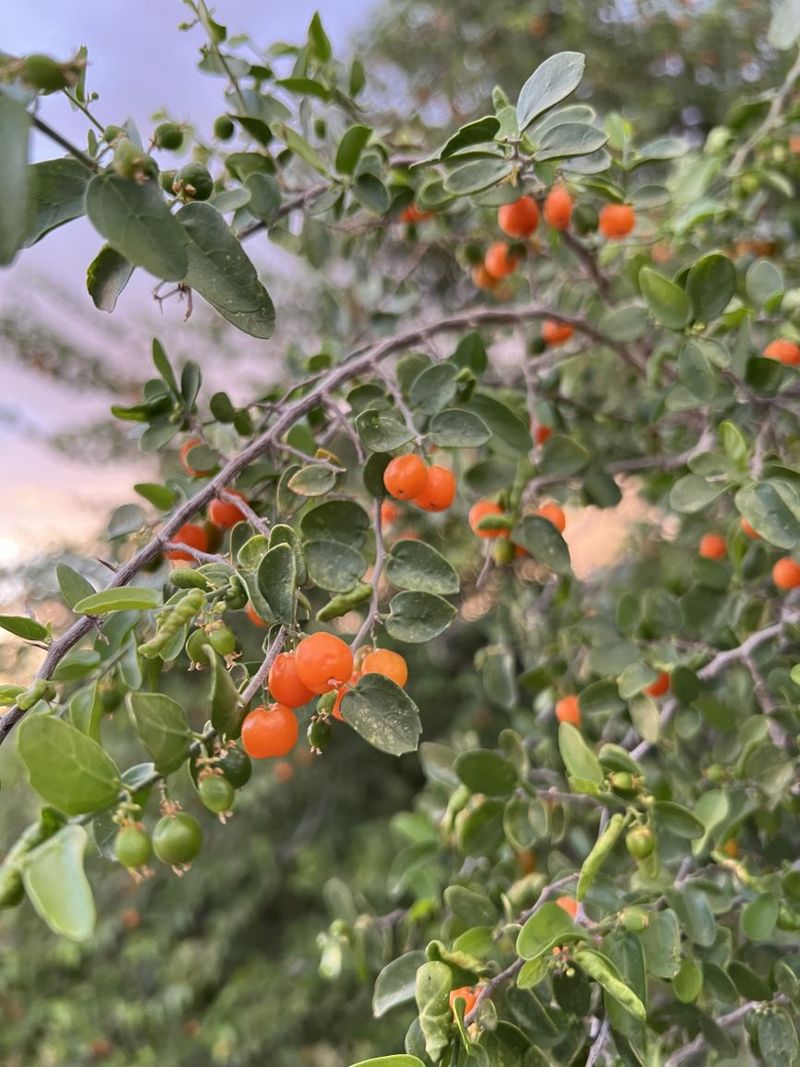
Some plants fight the desert, and some plants come from it. Desert Hackberry belongs to the second group, a true native of Arizona and the broader Sonoran Desert that is already wired for the region’s harsh conditions.
Being native means it handles arid air and high temperatures with ease, no coddling required. It has evolved alongside local wildlife and weather patterns, so it fits into your yard like a puzzle piece rather than an outsider.
There is a green bonus most desert plants cannot match. Unlike some of its relatives, Desert Hackberry is evergreen to semi-deciduous, holding onto most of its leaves through the year and giving you consistent greenery and screening even in winter.
Choosing a native over a temperate-climate transplant means fewer surprises, less water waste, and better support for the ecosystem right outside your door. It is a plant that belongs here, and it acts like it.
For Arizona homeowners who want a landscape that works with the desert instead of against it, this hardy shrub is about as at-home as a plant can be.