7 Arizona Desert Blooms With Crimson-Edged Petals That Shrug Off Full Sun
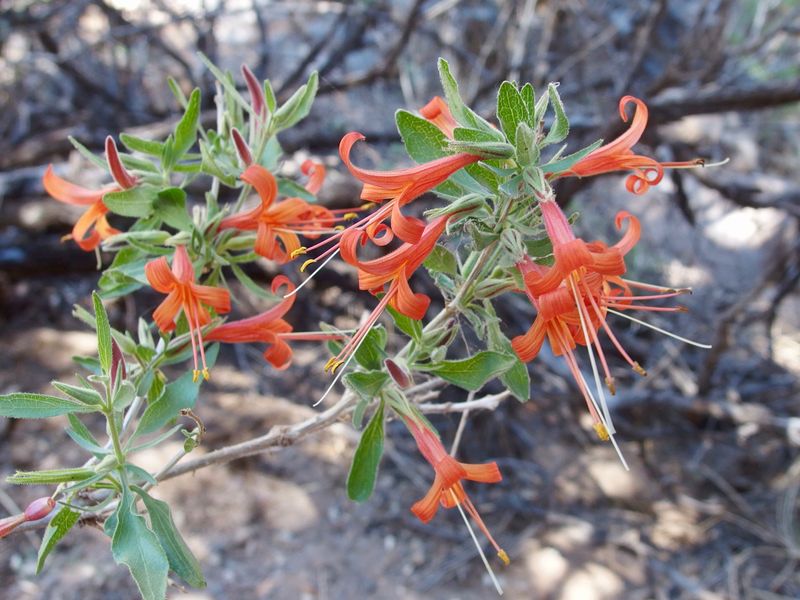
When the thermometer climbs past 110 and the west wall of your house turns into an oven, most flowers simply give up. A handful of tough desert plants do the opposite, pushing out bright red blooms right when the sun is at its fiercest.
These plants sip very little water, feed hummingbirds and butterflies, and turn a baking yard into a busy little habitat. Here are seven red-flowered bloomers that low-desert Arizona gardeners can count on.
1. Firecracker Penstemon
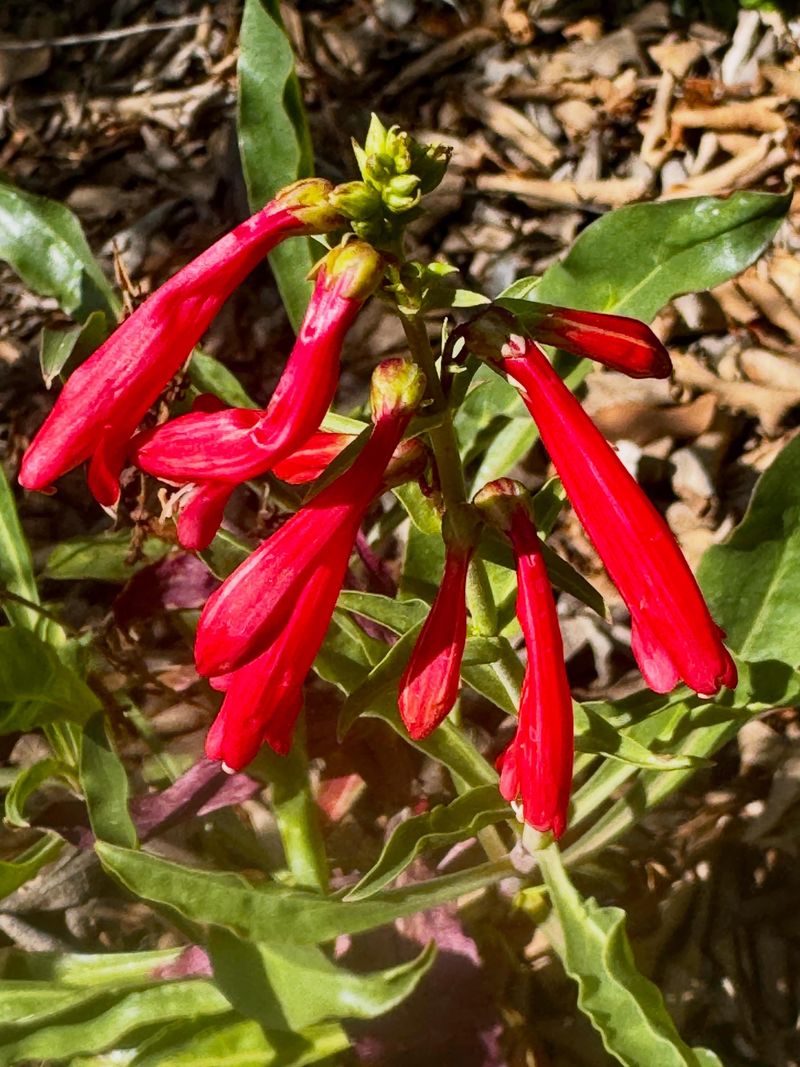
Picture a hummingbird hovering over a spike of scarlet tubes in late February, while the rest of your yard is still waking up. Firecracker penstemon (Penstemon eatonii) is often the first red show of the year, and the hummers know exactly where to find it.
Its flowers run in neat rows up stems that can reach two to three feet tall. Each bloom is a slim, glowing tube, shaped perfectly for long beaks.
Blooming usually runs from February through May, filling the gap before summer bloomers kick in.
Here is the best part for busy homeowners. Once established, this plant needs almost no extra water, and it handles reflected heat from driveways and walls without complaint.
Rich soil and frequent watering actually shorten its life, so lean, rocky ground suits it best.
Plant it in fall, around October or November, so roots settle in during the mild months. Tuck several near a patio window and you get a front-row seat to the action.
After flowering, leave a few stalks to drop seed. New plants often pop up nearby, giving you a free patch of red without lifting a finger.
Clip the rest back to the low rosette of leaves.
2. Ocotillo
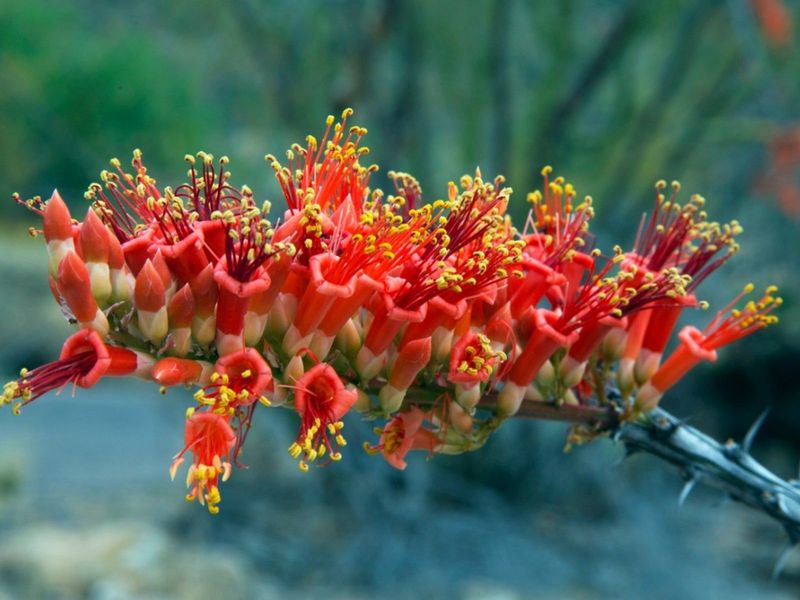
Most of the year, an ocotillo looks like a bundle of gray sticks someone forgot to throw away. Then a spring rain arrives, tiny leaves pop out, and every cane tip bursts into a flaming red-orange plume.
Fouquieria splendens is pure Sonoran Desert drama. Canes can stretch 15 feet or more, and the flower clusters at the top act like beacons for hummingbirds, orioles, and butterflies heading north in spring.
Bloom time usually falls between March and May, and a good monsoon can coax out a second round.
Heat is simply not an issue. Plant it in the most blasted, exposed corner of your lot and it will look right at home.
Established plants can live on natural rainfall, no fertilizer needed and very little pruning ever.
Fun fact: old-time ranchers planted cut ocotillo canes in a row to build living fences, and many of those canes rooted and bloomed. You can do the same along a property line for a thorny barrier that also feeds wildlife.
One tip from nurseries: buy salvaged plants with tags, set them at the same depth they grew before, and water sparingly the first summer. Patience pays, since leaves can take months to show.
3. Chuparosa
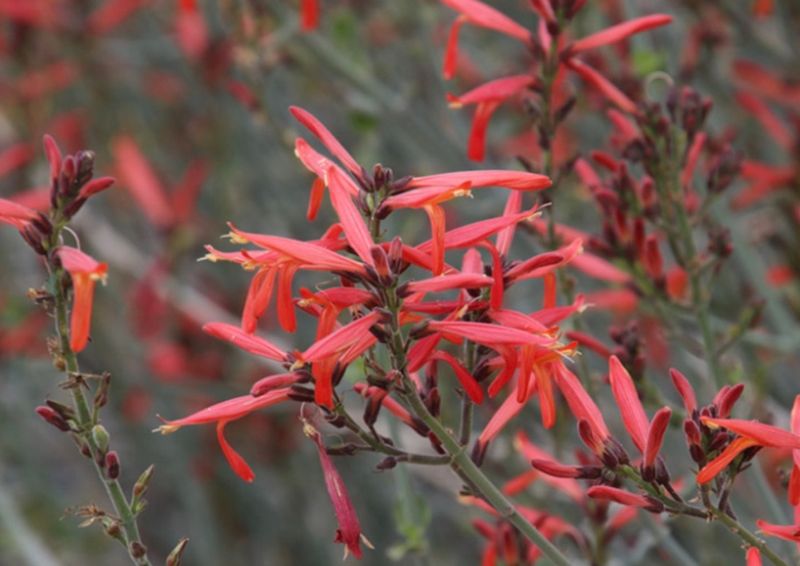
Ask a desert gardener which plant the hummingbirds fight over, and many will point straight at chuparosa. The name even comes from the Spanish word for hummingbird, which tells you everything about its fan club.
Your Arizona Garden Changes Every Week. Your Plan Should Too.
Gardening in Arizona changes quickly throughout the season. Every Friday you’ll receive a simple weekly plan showing exactly what to plant, prune, fertilize, harvest, and protect so you never miss the right timing.
Justicia californica forms a loose, rounded mound of gray-green stems about three to four feet tall. From late winter into spring, those stems get crowded with red tubular flowers, and blooms often return after a good rain at other times of the year.
Even when leaves drop during drought or a cold snap, the stems stay green and tidy.
Full sun and reflected heat? No problem.
Once its roots are settled, it needs only an occasional deep soak during long dry stretches. Too much water can make it floppy, so hold back.
Beyond hummingbirds, chuparosa serves as a host plant for several native butterflies, so a few chewed leaves are a sign your yard is doing its job. Verdins and other small birds also enjoy poking around its dense branches.
Set it along a hot south-facing bed or near a seating area where you can watch the winter visitors. A light trim in late spring keeps it compact, but heavy shaping is never needed.
4. Red Yucca
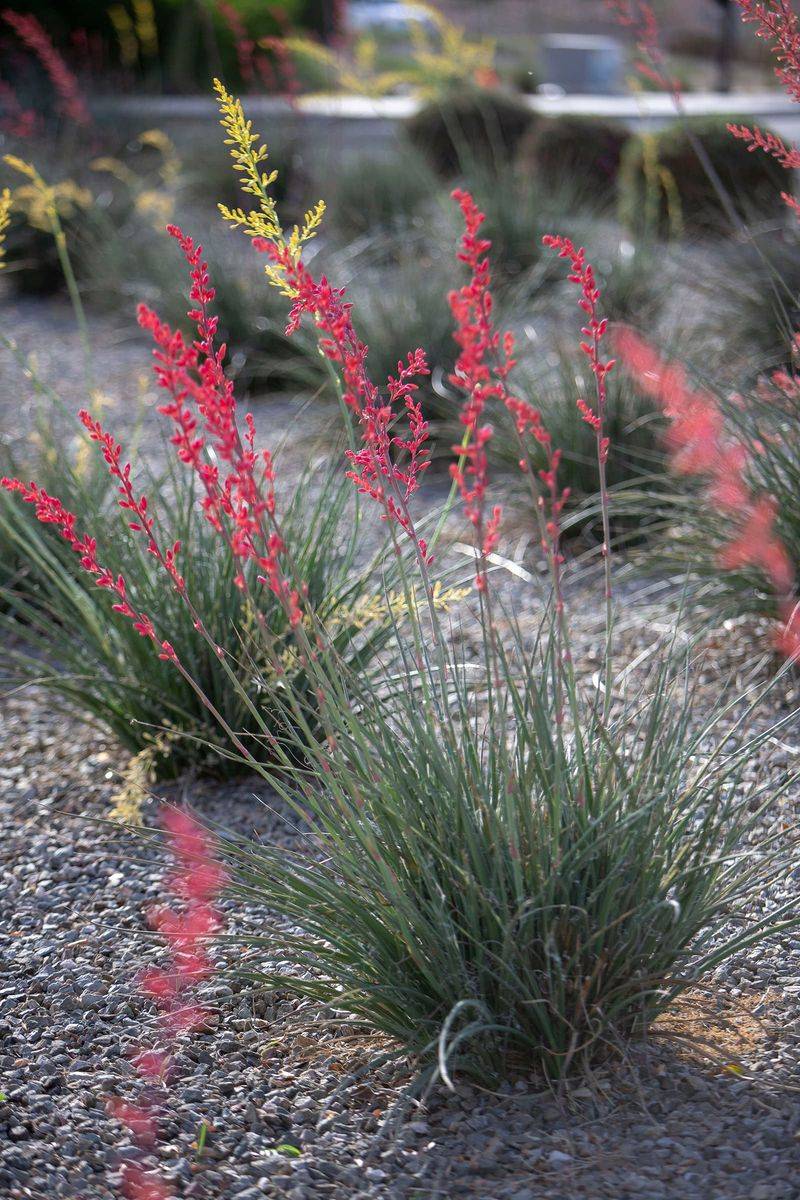
Got a scorching pool deck or a parking strip where nothing survives? Red yucca was practically made for spots like that.
Hesperaloe parviflora is not a true yucca, but it looks the part with its fountain of slim blue-green leaves. From spring into fall, arching stalks rise four to five feet and carry dozens of coral-red tubular blooms.
Oddly enough, it often flowers hardest in the peak of summer heat, just when other plants are hanging on.
Care is close to zero. Water deeply now and then during the first year, then mostly leave it be.
No spines on the leaf tips makes it a friendly choice near walkways where kids and pets play.
Hummingbirds keep returning to the long-lasting spikes, and bees work the flowers too. Tough, fibrous leaves tend to be less appealing to rabbits and javelina, a real plus in Tucson-area yards.
Group three or five together for a bold, rhythmic look along a wall. Snip spent stalks at the base when they turn brown, and that is about all the grooming it asks for.
A ‘Brakelights’ variety stays smaller and offers deeper red flowers for tight spaces.
5. Desert Honeysuckle
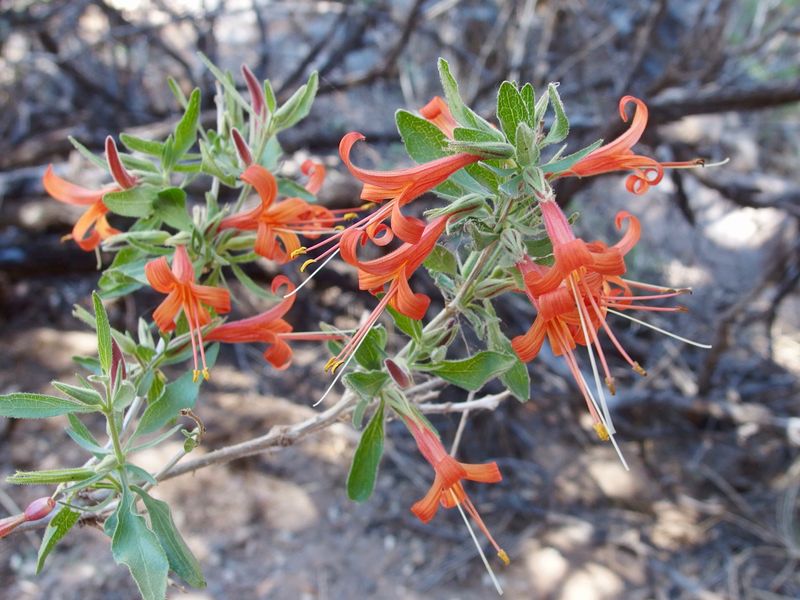
Some shrubs shout, but desert honeysuckle hums along quietly and then surprises you with a flush of fiery color after a spring shower.
Anisacanthus thurberi grows into an airy, upright shrub around three to five feet tall. Its slender tubular flowers vary from plant to plant, ranging from burnt orange to coppery tones to near-vermilion red.
Spring brings the heaviest show, and fall often delivers a second, lighter round.
Native to southern Arizona, it laughs at full sun and reflected heat. After it settles in, a deep drink about once a month in the driest summer weeks usually keeps it happy.
Skip the fertilizer, since lean soil suits it fine.
Wildlife lovers will appreciate its double duty. Hummingbirds sip the nectar, and the leaves feed caterpillars of the elada checkerspot and Arizona checkerspot butterflies.
More caterpillars also means more food for nesting birds in spring.
Every few years in late winter, cut it back hard to about a foot tall. New growth comes back fuller and loaded with buds.
Mix it with chuparosa and penstemon for a hummingbird buffet that stretches across many months instead of just a few weeks.
6. ‘Arizona Red Shades’ Blanket Flower
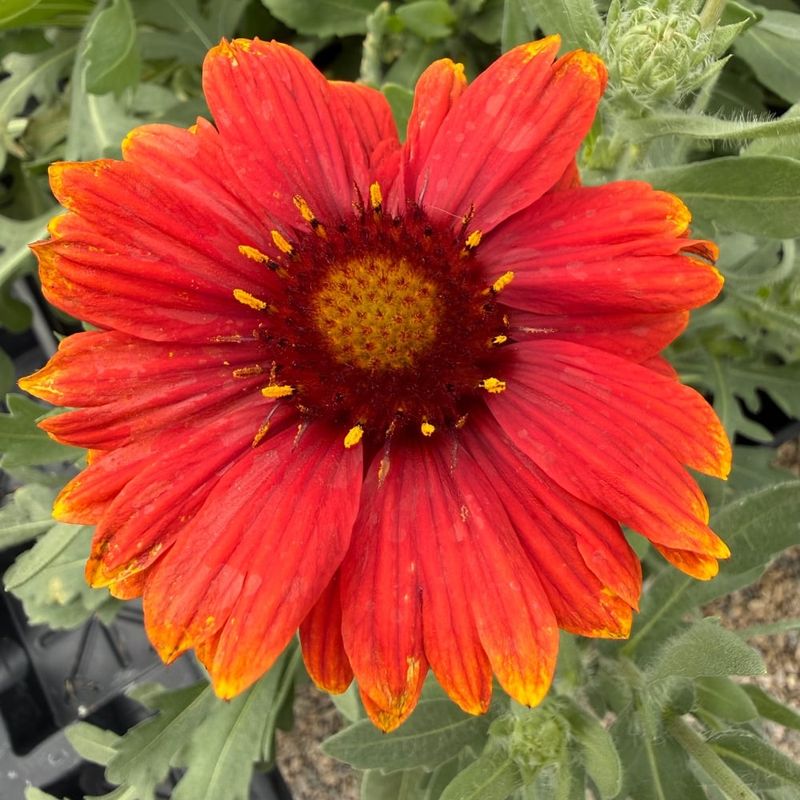
If the title of this list had a poster child, it would be this one. ‘Arizona Red Shades’ blanket flower opens rich crimson daisies, and many petals finish with tiny yellow tips, giving that edged look that pops in bright light.
This Gaillardia stays low and mounding, usually about a foot tall and wide. Flowering starts in early summer and can roll on into fall, which is impressive for a plant sitting in full Phoenix sun.
Few perennials pack this much color into such a small footprint.
Bees and butterflies treat the flat, open blooms like landing pads. Leave some spent heads in place late in the season, and finches may stop by to pick at the seeds.
It also tends to be ignored by deer.
Care is easy, though a little afternoon break from sun in the hottest spots helps flowers last longer. Water every week or so in summer once established, and less in cooler months.
Well-drained soil matters most, since soggy roots cause trouble.
Use it along the front edge of borders, in containers on a sunny porch, or between boulders. Snip faded blooms if you want a tidier look and even more flowers.
7. Red Desert Globemallow
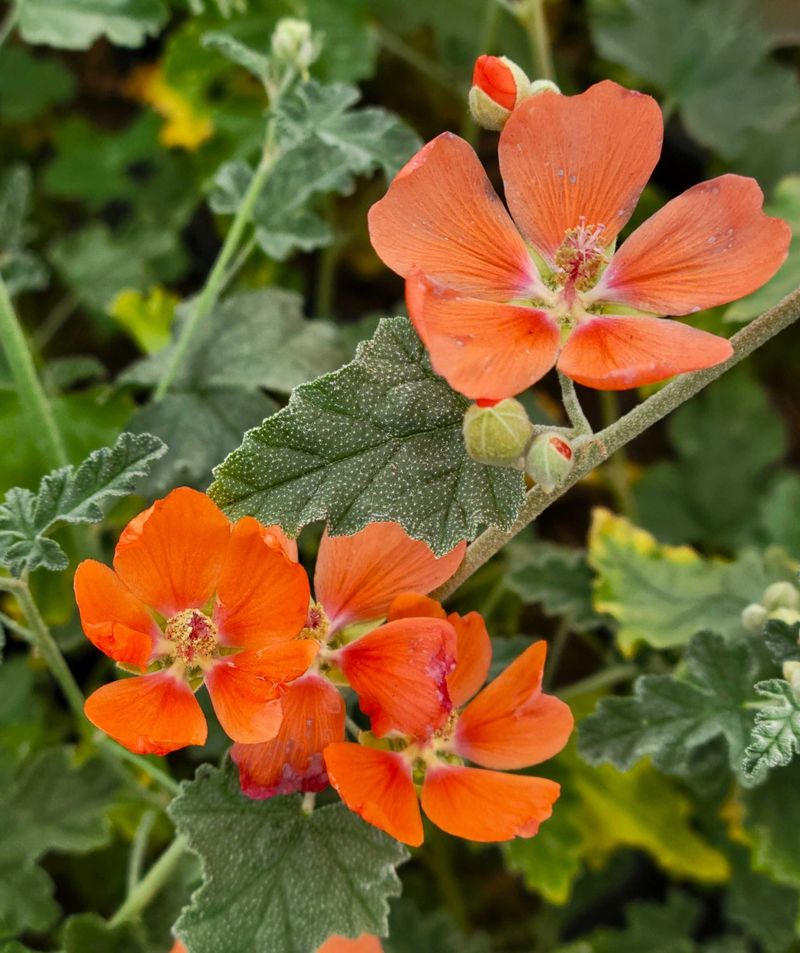
Hikers usually spot globemallow in its classic apricot orange, but nurseries now carry red-flowered forms that bring a deeper glow to the garden.
Sphaeralcea ambigua grows into a bushy clump about three feet tall, with fuzzy silver-green leaves that reflect harsh light. Little bowl-shaped flowers cover the stems most heavily in spring, then pop up here and there through summer and fall.
The effect feels almost like a cottage garden, just tougher.
Full sun is a must, and reflected heat from walls doesn’t bother it. Established plants are very drought tolerant, though an occasional deep watering keeps them fuller and greener.
Fertilizer is unnecessary in Arizona’s native soils.
Native bees, butterflies, and hummingbirds all visit the blooms, making it a solid pick for a pollinator strip. A heads-up for tidy gardeners: the fine leaf hairs can irritate skin, so wear gloves when pruning.
After the big spring flush, cut stems back by about a third to refresh the plant. Globemallow also reseeds, so new little plants may appear around the yard.
Keep the ones you like, pull the rest, and enjoy a steady supply of red without buying more.