8 Easy Ways To Set Up Your Arizona Agaves And Aloes To Come Back Stronger Next Spring
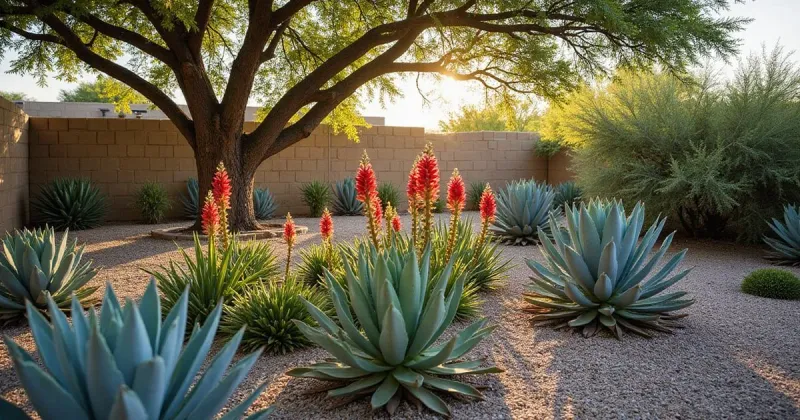
Agaves and aloes are some of the toughest plants in any Arizona yard, but even tough plants need a little help after a long, blazing summer and a wild monsoon. What you do in the cooler months can decide whether they bounce back fat and healthy or limp into spring with soft spots and scorched leaves.
The good news is that most of the work is simple and takes very little water or time. Here are eight easy moves that can set your spiky friends up for their best season yet.
1. Fix Drainage Before Anything Else
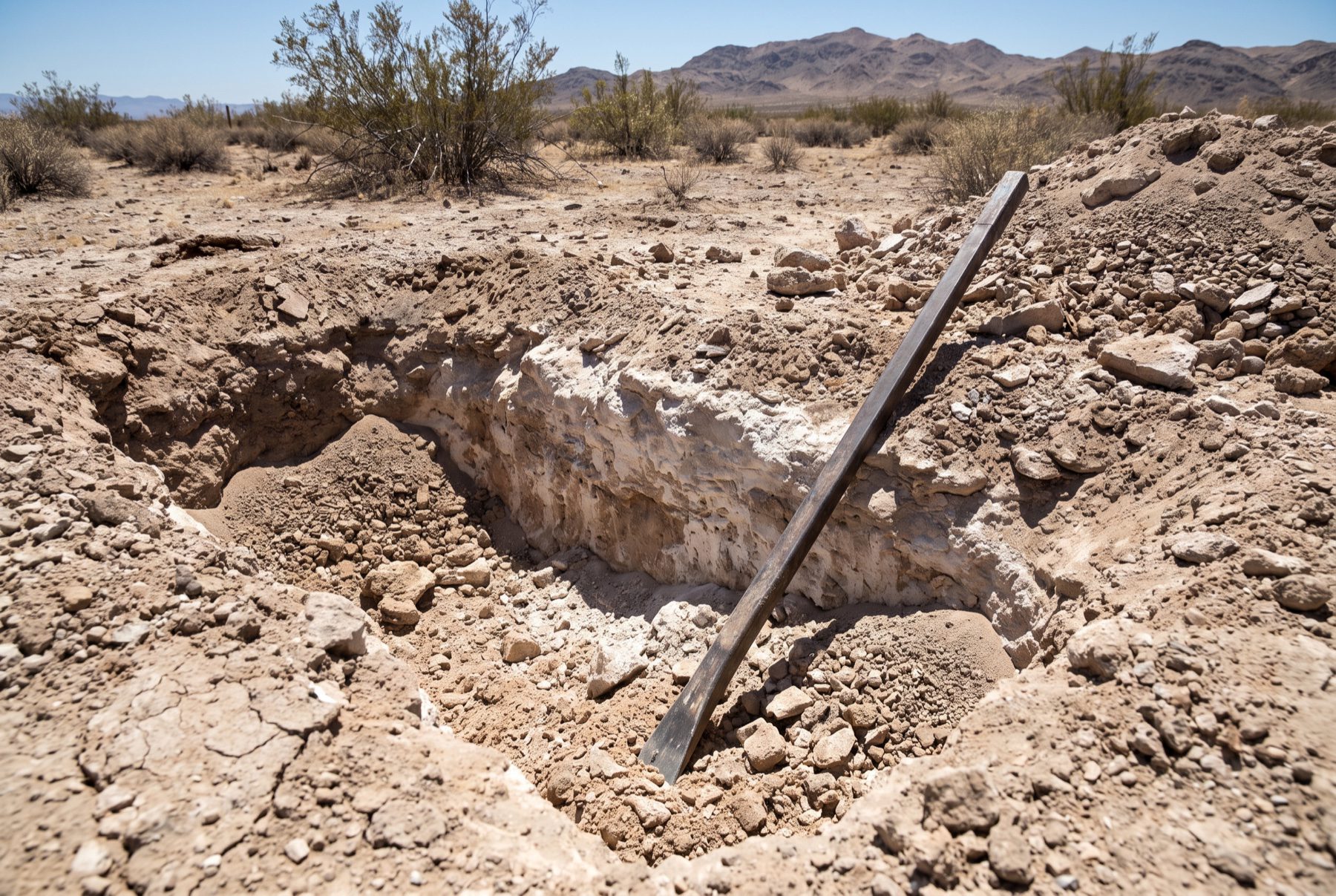
Picture a sponge sitting in a puddle. That is what heavy clay or caliche soil can feel like to an agave root, and it is the number one reason these plants struggle in Arizona yards.
Agaves and aloes evolved on rocky slopes where water rushes past their roots instead of lingering. When soil stays soggy, especially after monsoon storms or during a rare wet winter, roots can rot quietly underground long before you see trouble up top.
Loose, fast-draining ground lets roots stretch deep and stay firm, which gives the plant a strong base for spring growth.
Improving drainage is easier than it sounds. Mix coarse materials like pumice, decomposed granite, or small pebbles into the planting area, aiming for a gritty texture that crumbles in your hand.
If you hit a caliche layer, break through it with a digging bar or plant on a slight mound so water runs away from the crown.
Container plants need the same care. Use a cactus mix blended with extra pumice and make sure every pot has an open drainage hole.
Healthy, well-drained roots may also make plants less inviting to agave snout weevils, which tend to target stressed, struggling rosettes first.
2. Water Deep, Then Walk Away
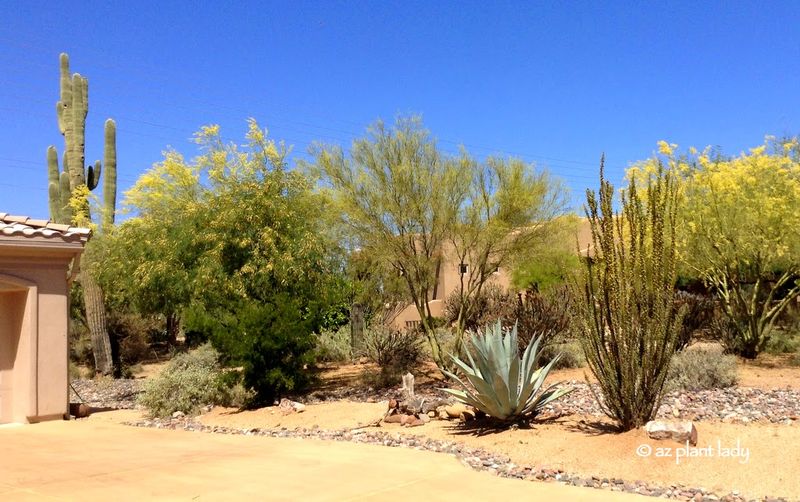
Here is a secret many Arizona gardeners learn the hard way: loving your succulents too much with the hose can do more harm than a dry spell. Agaves and aloes store water in their thick leaves, so they are built to wait.
The trick is deep, infrequent watering. During the warm growing months, soak the soil slowly every two to four weeks so moisture reaches well below the surface.
Roots follow that water downward, and deeper roots mean better heat and drought tolerance. Then let the soil dry out completely before the next drink.
As temperatures cool in late fall and winter, most plants slow down. Cutting back to roughly once a month, or even less after good rains, helps keep roots from sitting in cold, wet ground.
Timing matters in summer too. Water left in a hose baking in the sun can get shockingly hot, so run it clear first and water in the evening, around 5 to 7 PM.
Roots can then soak up moisture during the cooler night.
A simple drip line on a timer makes this routine almost automatic, and it can cut your water bill while your plants grow tougher.
3. Match Each Plant to the Right Light
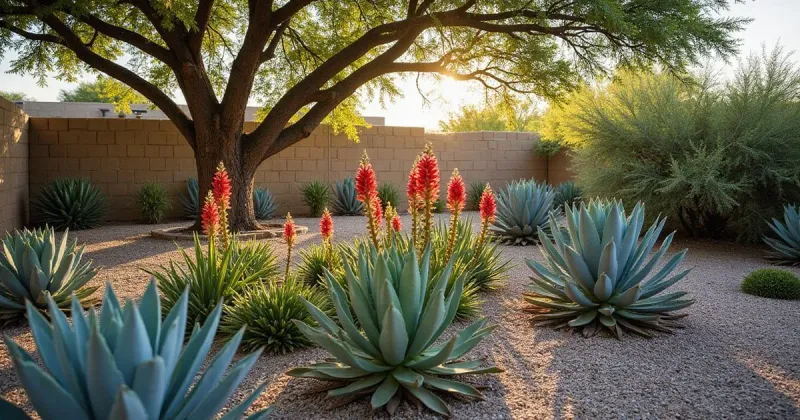
Not every spiky plant wants the same seat in the yard. Think of agaves as sunbathers and many aloes as folks who prefer a patio umbrella by mid-afternoon.
Your Arizona Garden Changes Every Week. Your Plan Should Too.
Gardening in Arizona changes quickly throughout the season. Every Friday you’ll receive a simple weekly plan showing exactly what to plant, prune, fertilize, harvest, and protect so you never miss the right timing.
Most agaves, like Parry’s agave and Queen Victoria agave, love full sun and need at least six hours of it daily. Plenty of light keeps their rosettes tight and compact, while too much shade can make them stretch and lean.
Aloes are a different story in the low desert. Many varieties, including coral aloe and tiger aloe, appreciate filtered light during the harsh afternoon hours.
Without it, leaves can turn reddish, crispy, or bleached, which drains energy the plant would rather save for spring.
A great solution is pairing aloes with native trees. The lacy canopy of a palo verde or mesquite offers dappled shade, and those trees also bring in birds and beneficial insects.
East-facing spots with morning sun work well too.
If a plant looks stressed, watch where the sun hits it through the day before moving anything. Fall, from October into November, is the ideal window to relocate a struggling aloe so it can settle in before warmth returns.
4. Trim Only What Is Truly Spent
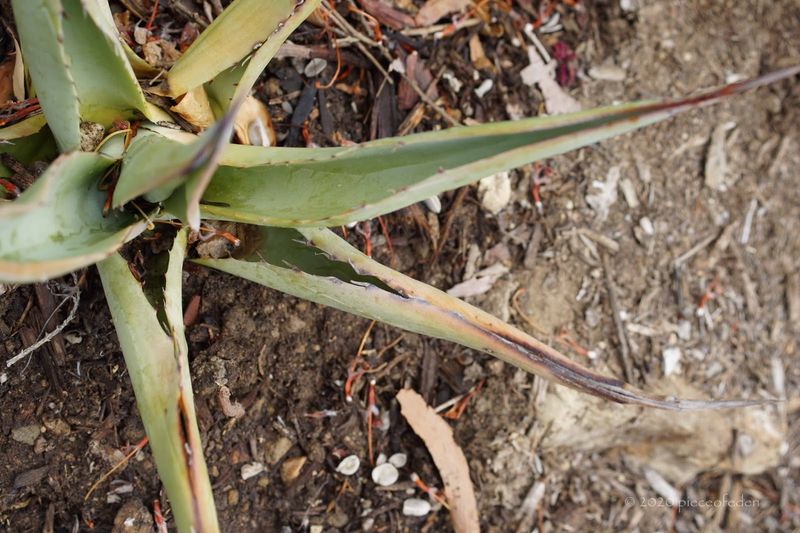
Ever seen an agave shaved down to a tall stump with a tuft on top? Folks call that pineappling, and while it looks tidy, it often leaves the plant weaker.
Agaves and aloes need very little pruning. Every green leaf is a water tank and a solar panel, so removing living foliage takes away stored moisture and energy the plant needs to push out fresh growth next spring.
Open cuts can also invite pests and disease, and trimmed plants may handle cold snaps poorly.
Stick to leaves that are fully brown, dry, or clearly damaged. Use a clean, sharp knife or pruning saw and cut close to the base.
With agaves, wear thick gloves and eye protection, because those terminal spines are no joke.
Good timing makes the job easier. Late summer to early fall works well for cleanup after monsoon season.
Early spring is the other window, when you can remove any winter-scarred leaves before new growth starts.
Spent aloe flower stalks can be cut once blooms fade, but consider leaving them a little longer. Hummingbirds and verdins often keep visiting the last few flowers, turning a chore into free backyard entertainment.
5. Go Light on Fertilizer
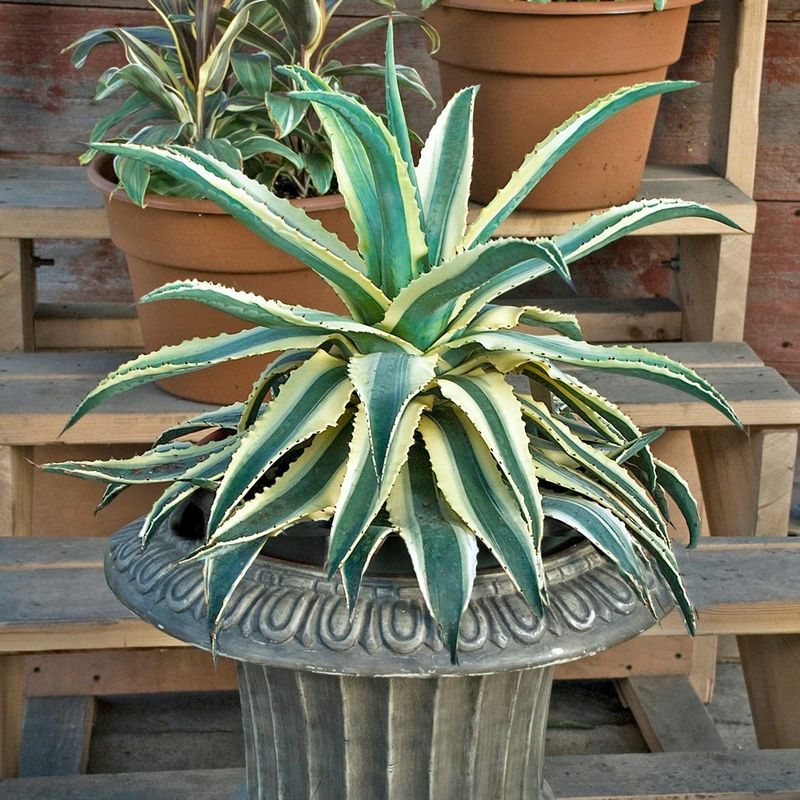
Desert plants are a bit like marathon runners. They do best on a lean diet, and piling on rich food can actually slow them down.
Agaves and aloes grow naturally in poor, rocky soil, so they rarely need much feeding. Too much fertilizer, especially anything high in nitrogen, can push soft, floppy growth.
That tender tissue tends to scorch in summer, flop under its own weight, and rot more easily when monsoon humidity rolls in.
A single light meal each year is usually plenty. In spring, as the weather warms and plants wake up, apply a cactus-specific or balanced water-soluble fertilizer mixed at half strength.
Something with lower nitrogen, like a 5-10-5 formula, supports roots and blooms without forcing weak leaves.
Skip feeding in late fall and winter. Plants are resting then, and extra nutrients may simply sit in cool soil or encourage growth that frost can damage.
Potted plants are the exception worth watching. Frequent watering flushes nutrients out of containers faster, so a potted aloe may appreciate a second diluted feeding in early summer.
Fun fact: many aloes bloom best after a lean, slightly dry winter, so holding back now may mean more flowers later.
6. Cover Tender Plants on Frosty Nights
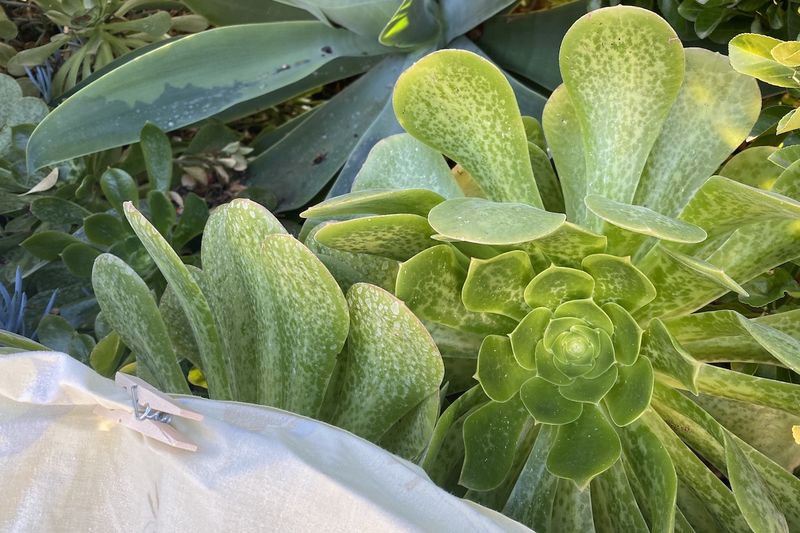
Yes, it really does freeze in Phoenix and Tucson. A few chilly January nights can turn a gorgeous aloe into mush if you are caught off guard.
Many agaves shrug off light frost, but tender aloes, young plants, and anything in a pot are more at risk. Keep an eye on the forecast from December through February, and when temperatures dip near freezing, drape plants with frost cloth, burlap, or an old sheet in the late afternoon.
Let the cover reach the ground so it traps warmth rising from the soil.
Skip plastic, which can hold moisture against leaves and make cold damage worse. Pull covers off in the morning once the sun is up so plants can breathe.
Dry soil is a hidden ally. Wet roots are much more likely to suffer in the cold, so easing up on winter watering gives plants a natural boost.
Placement helps too. Large boulders soak up daytime heat and release it at night, creating a cozy pocket for nearby plants.
Those same rock piles can shelter lizards that snack on insects, though it is wise to check around rocks for scorpions when working nearby.
7. Prep Beds for the Monsoon Swing

Monsoon season is a wild ride. From mid-June through September, bone-dry heat can flip into sticky humidity and flash downpours within an hour.
Those sudden storms are a big test for agaves and aloes. Water that pools around the crown can lead to rot, and heavy humidity gives fungal problems a head start.
Plants that make it through summer without soggy damage enter fall with healthier tissue and more stored energy, which pays off when spring arrives.
Start by checking how water moves across your yard during the first storm. If puddles form near your plants, create shallow swales or gravel channels to steer runoff away, or send it toward thirsty native trees instead.
Next, spread a layer of gravel or crushed granite around the base of each plant. Rock mulch keeps soil cooler, holds a little moisture, and lets excess water drain quickly.
Keep organic mulch like bark away from succulent crowns, since it stays damp too long.
One bonus worth noticing: directing rain away from low spots can mean fewer standing puddles, which may make your yard less inviting to mosquitoes during those humid months.
8. Place Them to Welcome Wildlife
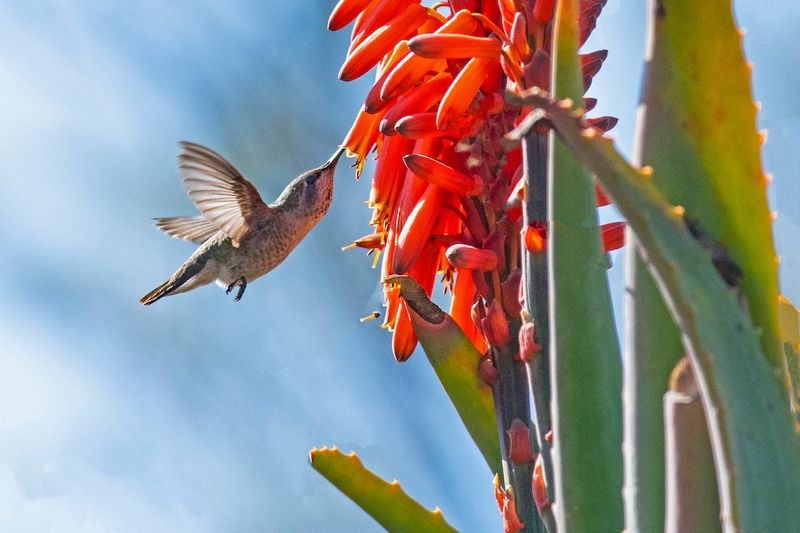
A blooming aloe in February is like a neon sign for hummingbirds. Anna’s and Costa’s hummingbirds zip in from across the neighborhood for that sweet nectar when few other flowers are open.
Thinking about wildlife when you place plants can make your whole yard work harder. Group aloes where you can see them from a window, and mix in natives like penstemon and desert willow to keep blooms going through the year.
Bees, orioles, and verdins will often join the party.
Agaves bring their own gifts. Their dense, spiny rosettes offer cover for lizards and small birds escaping hawks or heat.
Some agaves send up towering flower stalks that feed bats at night, and those bats may help reduce mosquito numbers around your home.
A yard buzzing with birds and lizards can also be less inviting to pests. Lizards and birds like roadrunners snack on insects, which may mean fewer of the bugs scorpions rely on for food.
Leave some open space between plants for air flow, and avoid spraying pesticides that could harm visiting pollinators. Healthy plants surrounded by active wildlife tend to settle into a natural balance, setting everything up for a lively spring.