Wisconsin Gardeners Can Plant Garlic This October for a Useful Summer Harvest
Garlic is one of those crops that rewards a little fall effort with a satisfying summer payoff, and Wisconsin gardeners are in a good position to make that happen right now. Planting in autumn gives each clove time to settle in, grow roots, and experience the cold period it needs to form a proper bulb by next July.
The window is open across most of Wisconsin, though the right planting date depends on where you live and when your soil is likely to freeze solid. Get the timing and a few basics right, and you stand a solid chance of pulling full, well-formed bulbs from your own backyard garden next summer.
Choose Wisconsin’s planting window by region and soil temperature
Across Wisconsin, fall is the right season to get garlic in the ground, but “plant in October” is a broad shorthand rather than a single statewide deadline. Because Wisconsin stretches across several hardiness zones, that frost date can shift by several weeks depending on where you garden.
In southern Wisconsin, October through early November often works well, giving cloves enough time to root before the ground freezes. Northern Wisconsin gardeners typically aim for the second or third week of October, while those in far northern Wisconsin may need to plant in late September or early October to beat the earlier freeze.
The most reliable guide is not the calendar but your local soil. The goal is to plant early enough for roots to develop before the ground freezes solid, yet not so early that heavy top growth pushes up and sits exposed through the coldest months.
Limited sprouting before winter is not automatically a problem in Wisconsin. A short green shoot emerging before hard frost can survive, especially when properly mulched.
Excessive exposed growth is the concern, not a modest bit of early green. Getting the timing right improves your chance of producing a useful, well-formed summer crop, though local weather, drainage and year-to-year conditions mean no planting date comes with a guarantee.
Select Wisconsin planting stock that can support a strong crop
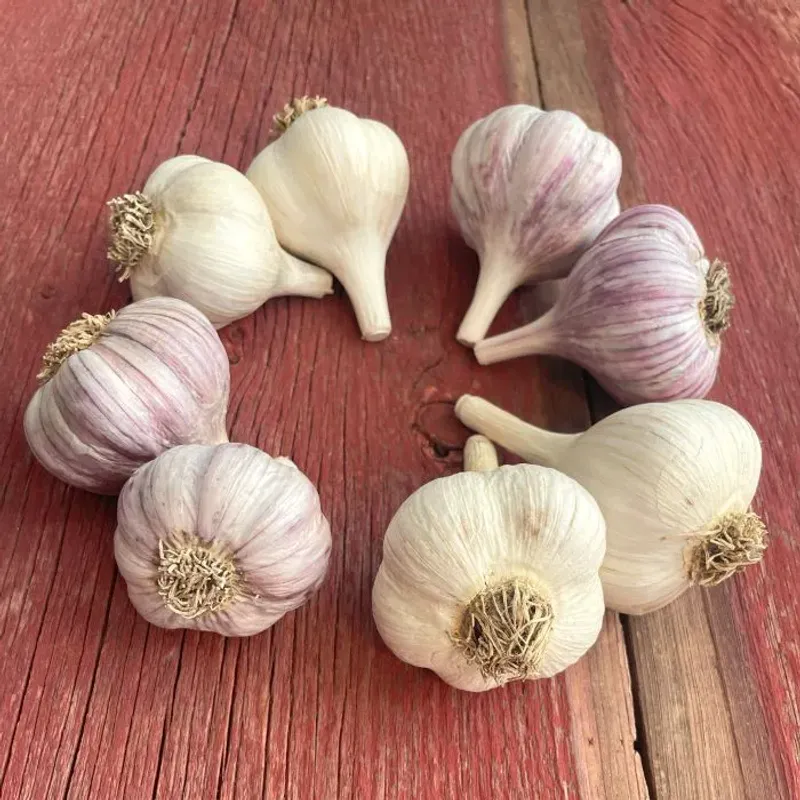
What you plant matters as much as when you plant it. Wisconsin gardeners should look for sound, disease-free seed garlic from a reputable local grower, nursery, garden center or mail-order catalog rather than grabbing a bulb from the grocery store.
UW-Madison Extension’s garlic page cautions that grocery-store garlic may have been treated with sprout inhibitors, may be poorly adapted to Wisconsin’s climate, or may carry diseases that certified seed garlic avoids.
Choosing between hardneck and softneck types is worth a moment of thought before you buy. Hardneck varieties generally handle cold winters well, which makes them a practical choice for northern Wisconsin and other areas with prolonged freezes.
Softneck types tend to store longer and can perform well in the milder parts of southern Wisconsin. Think of these as tendencies rather than firm rules, since performance varies by cultivar and specific site conditions.
Once you have your seed garlic, select the largest, firmest cloves for planting. Penn State Extension’s fall garlic planting guidance notes that larger cloves generally produce larger, more productive bulbs.
Your Wisconsin Garden Changes Every Week. Your Plan Should Too.
Gardening in Wisconsin changes quickly throughout the season. Every Friday you’ll receive a simple weekly plan showing exactly what to plant, prune, fertilize, harvest, and protect so you never miss the right timing.
Separate the cloves from the bulb shortly before you plant, not days in advance, to keep the cut basal plate from drying out or picking up soil pathogens before it even reaches your Wisconsin garden bed.
Prepare a sunny, well-drained Wisconsin garlic bed
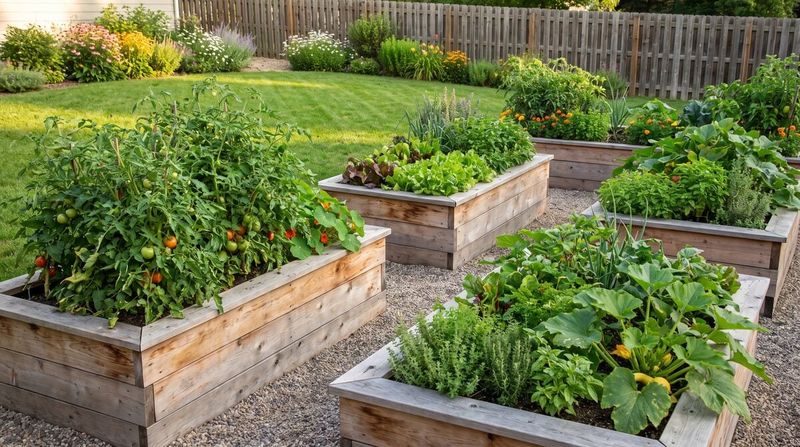
Before a single clove goes into the ground, the bed itself needs to be ready. Garlic grown in Wisconsin performs best in full sun, and that means at least six hours of direct sunlight per day through the growing season.
A shady spot might produce green tops, but the bulbs underneath will likely stay small and underdeveloped no matter how well you time the planting.
Soil texture and drainage are just as important as sunlight in a Wisconsin garlic bed. Loose, well-drained soil with a good amount of organic matter gives developing bulbs room to expand and roots room to establish before winter arrives.
UW-Madison Extension points out that poor drainage and heavy clay can restrict bulb expansion and raise the risk of rot, two outcomes that undermine any chance of a useful harvest.
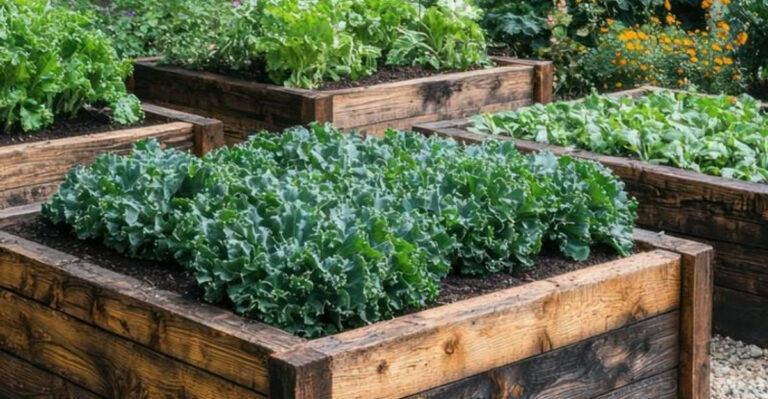
Wisconsin gardeners dealing with compacted or clay-heavy soil have a practical option: raised beds. Building even a modest raised bed filled with amended soil can transform a waterlogged corner of a Wisconsin yard into a workable planting site.
Working compost or other organic matter into the top several inches of soil before planting improves both drainage and fertility in a Wisconsin bed. Avoid leaving large clods or compacted layers that could redirect water toward the cloves after planting.
A well-prepared bed is the foundation that every other step, from planting depth to mulching, builds on through the Wisconsin growing season.
Plant Wisconsin garlic cloves at practical depth and spacing
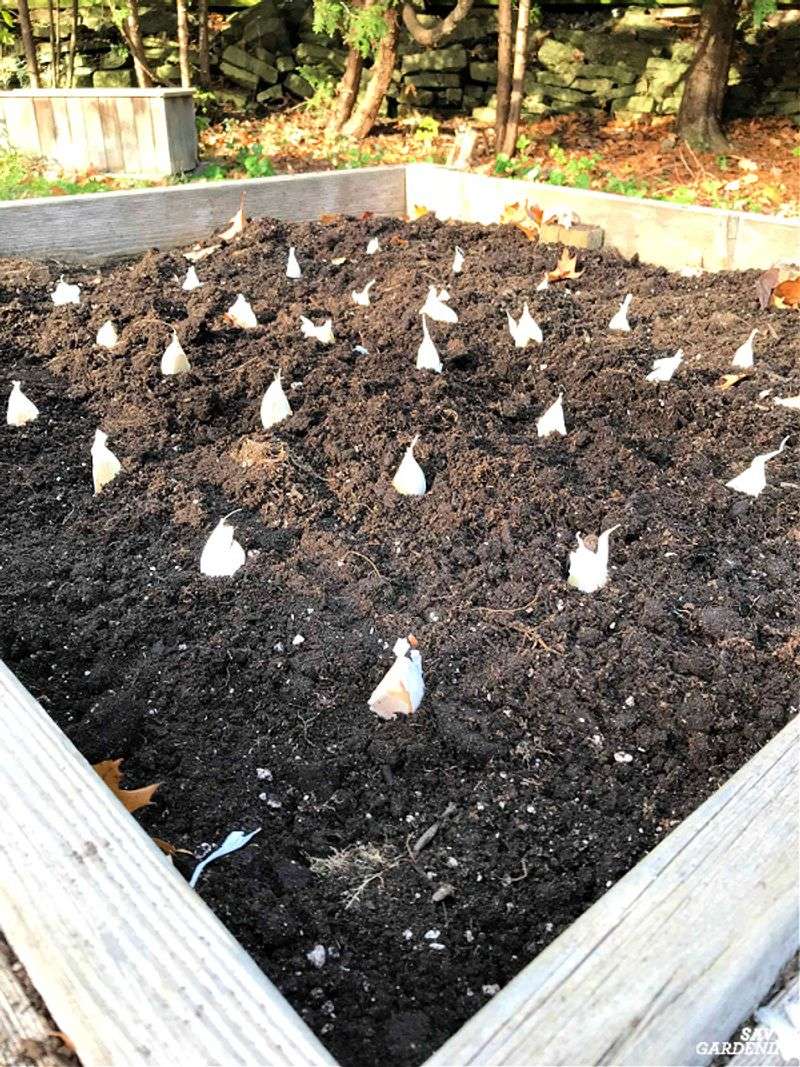
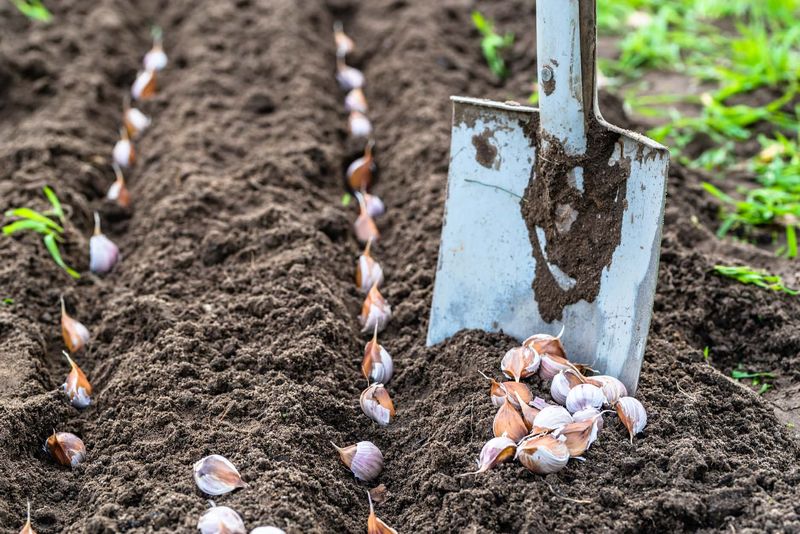
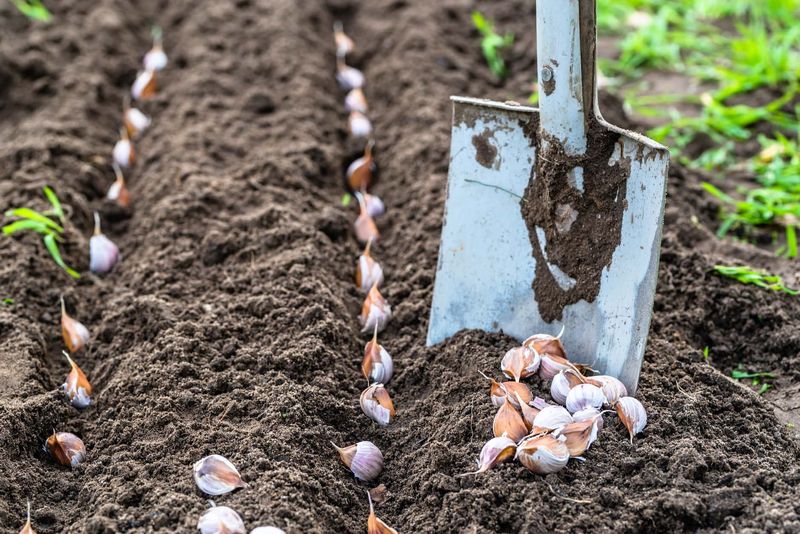
Planting garlic correctly takes only a few minutes per row, but the details matter. Each clove goes into the Wisconsin soil with the pointed tip facing up and the flatter basal plate facing down.
The basal plate is where the roots emerge, so reversing the orientation slows establishment and can reduce your chances of a well-formed bulb by next summer.
Depth and spacing recommendations from Wisconsin Extension sources fall within practical ranges rather than a single universal measurement. UW-Madison Extension Dane County commonly suggests about 2 to 3 inches of depth and roughly 6 inches between cloves, while UW-Madison Extension Bayfield County references a range of 2 to 4 inches deep and 5 to 8 inches apart.
Use these as a practical guide, not an exact formula, since Wisconsin soil types and bed conditions vary across the state.
Deeper planting, toward the upper end of that range, can offer slightly more insulation in colder parts of Wisconsin, while shallower planting in well-drained sandy soil can still work fine. The key is consistent coverage so that each clove has enough soil above it to stay anchored and protected through freeze-thaw cycles.
Crowding cloves too close together limits airflow and may restrict bulb expansion as Wisconsin summer approaches.
Fall planting connects directly to how garlic bulbs develop. When cloves go into Wisconsin soil in autumn, they establish roots before the ground freezes and then experience the extended cold period that triggers normal bulb formation the following spring.
UW-Madison Extension’s garlic guide explains that spring planting often results in smaller or poorly developed bulbs because the plant misses that essential cold exposure. Some artichoke-type softneck garlic can tolerate spring planting better than most, but fall is still the preferred window across Wisconsin for the most reliable outcome.
That said, fall planting improves the odds of a full-sized crop rather than guaranteeing one.
Use Wisconsin mulch to moderate winter temperature swings
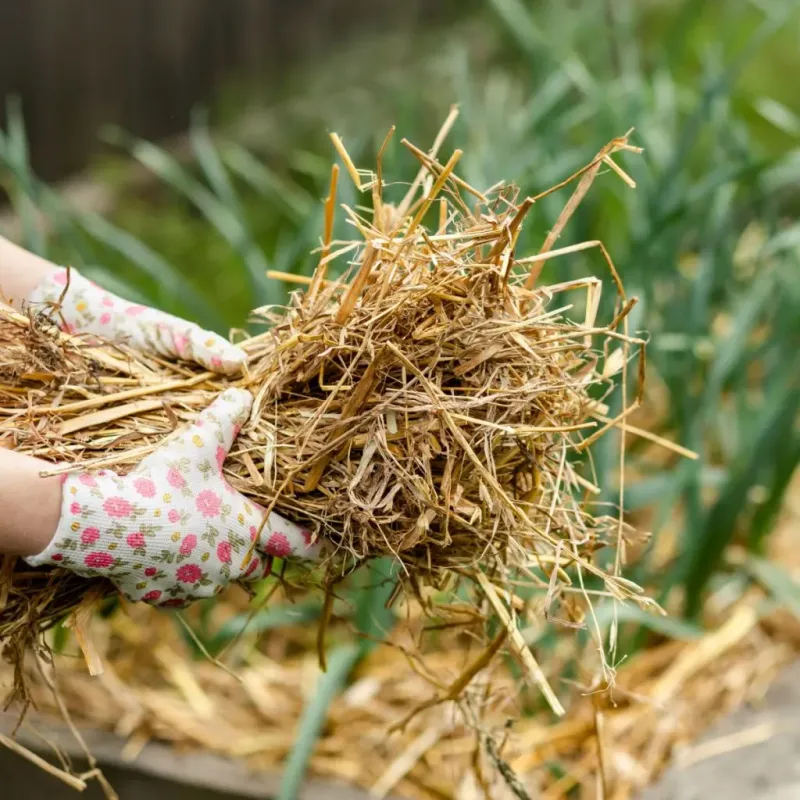
After the cloves are in the ground, mulch is the most important thing a Wisconsin gardener can add before winter sets in. A layer of clean straw spread over the bed after planting, or after the first hard freeze, insulates the soil and buffers the repeated freeze-thaw cycles that are common across Wisconsin from late fall through early spring.
Those cycles can heave cloves right out of the ground if the bed is left bare.
UW-Madison Extension Dane County recommends about 3 to 4 inches of clean straw for southern Wisconsin beds, while UW-Madison Extension Bayfield County suggests 4 to 6 inches for northern Wisconsin, where winters are longer and colder. Beyond frost protection, mulch conserves soil moisture and suppresses weeds that would otherwise compete with your garlic through the shoulder seasons.
A common concern among Wisconsin gardeners is whether any fall sprouting means the planting is ruined. Short green shoots emerging before deep winter are not automatically a sign of failure.
Some fall emergence can survive quite well under a proper mulch layer, and UW-Madison Extension reports that earlier fall planting may actually improve establishment. The situation to avoid is excessive exposed top growth heading into the coldest months, not a modest green tip that pushes up before the straw goes down.
Leaves can mat and restrict airflow, so straw remains the most practical choice for winter protection across most Wisconsin growing conditions.
Manage Wisconsin garlic through spring growth and scapes
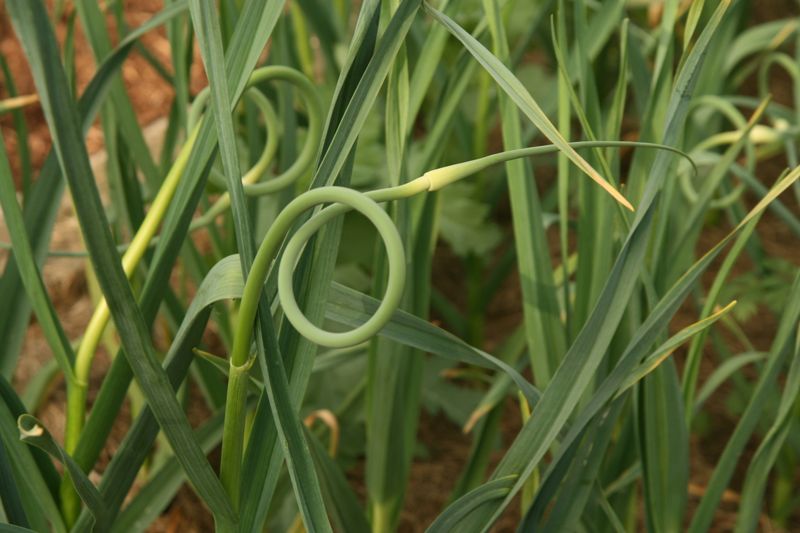
Spring arrives gradually across Wisconsin, and garlic beds need a little attention as temperatures begin to climb. Once the soil starts warming and green shoots push through the mulch, pull back or remove the heavier straw layer so the ground can warm more quickly.
Leaving a thick blanket of mulch in place too long can slow that process and delay the active growth your Wisconsin garlic needs to build a full bulb before summer.
After the shoots are a few inches tall and the soil has warmed, re-spread a thinner layer of mulch around the plants rather than removing it entirely. UW-Madison Extension Dane County recommends this approach to keep weeds down and hold soil moisture through the drier stretches that Wisconsin springs sometimes bring.
A light mulch layer also reduces the risk of soil crusting, which can stress shallow roots.
Hardneck garlic grown across Wisconsin will send up a scape, a curling flowering stalk, in late spring or early summer. Harvest the scape while it is still curled if you want to use it in the kitchen.
Scapes are edible and have a mild garlic flavor that works well in many recipes. Cutting them while curled is practical for Wisconsin gardeners who want to enjoy a bonus harvest before the main bulbs are ready.
Whether scape removal actually increases bulb size is a nuanced question. UW-Madison Extension’s garlic guide notes that the effect on yield can be small in well-fertilized Wisconsin plants, so removing scapes is an option rather than a required step.
If you skip removal, the scape will straighten and eventually flower, which does not ruin the bulb but may redirect some of the plant’s energy away from it. Either way, consistent moisture and weed control through late spring will do more for your Wisconsin garlic than scape management alone.
Read Wisconsin garlic leaves before harvesting the bulbs
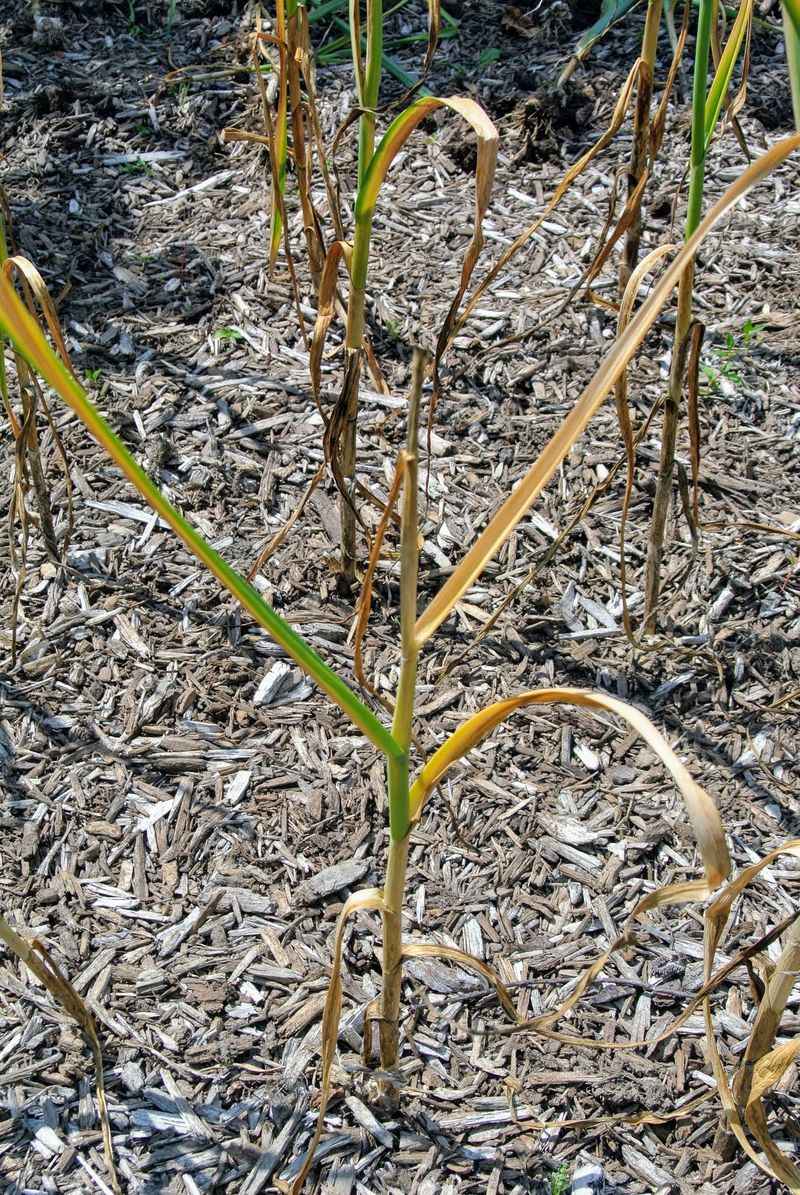
Knowing when to harvest is one of the trickier judgment calls in a Wisconsin garlic bed, and the calendar is not a reliable guide on its own. Varieties mature at different rates, and summer weather across Wisconsin can push or delay that timing from one year to the next.
Learning to read the plant itself is the most dependable approach.
UW-Madison Extension’s garlic guide uses approximately half of the leaves turning brown as a harvest signal, while UW-Madison Extension’s home garden storage guide references roughly two-thirds of the leaves dried as a harvest indicator. Both figures reflect the same underlying idea: each green leaf above ground corresponds to a wrapper layer around the bulb below, and Wisconsin gardeners need enough intact wrappers to protect the bulb through curing and storage.
Before pulling the whole bed, dig one test bulb and examine it closely. Check whether the cloves have filled out their individual wrappers and whether the outer skin looks intact and papery rather than thin and fragile.
A bulb that looks full and well-wrapped is ready. One with cloves that still feel loose inside their skins needs more time in the Wisconsin soil.
Waiting too long carries its own risk. Once most leaves have dried and the wrappers begin to deteriorate in the ground, the bulb loses its protective layers and becomes harder to store well.
Harvesting a few days early is generally safer than leaving mature Wisconsin garlic in warm, moist summer soil where the outer wrappers can break down. Use the leaf count as your starting signal, then let the test bulb make the final call.
Cure Wisconsin garlic carefully and store it safely
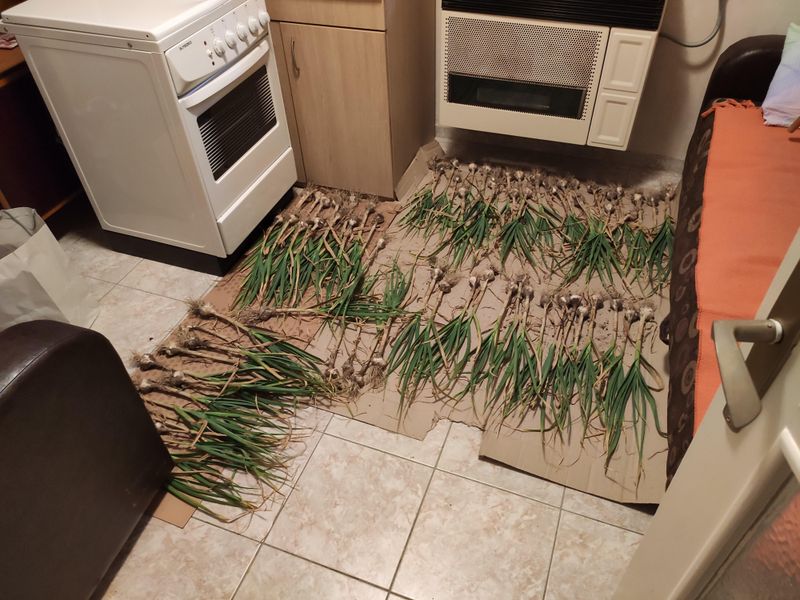
Pulling garlic from a Wisconsin garden bed is satisfying, but the work is not finished at harvest. Freshly dug bulbs need several weeks of curing before they are ready for long-term storage.
Cure them in a warm, dry, shaded location with good airflow, such as a garage, barn or covered porch that stays out of direct rain and strong sun. Hanging the plants in loose bundles or spreading them on a screen both work well for Wisconsin conditions.
Skip washing the bulbs entirely. Added moisture on a freshly dug Wisconsin garlic bulb can encourage mold and disease during the curing period.
UW-Madison Extension and the UW-Madison Master Gardener garlic fact sheet both recommend keeping bulbs dry through the curing process. Once curing is complete, trim the roots and tops, then store whole bulbs rather than separated cloves, since individual cloves dry out much faster than intact bulbs.
For ordinary cured-bulb storage, a cool, dry, well-ventilated spot works well in most Wisconsin homes. Avoid conditions that are too humid, which can cause rot, or too warm, which can trigger sprouting.
Refrigerating whole cured bulbs is not always ideal, since ordinary refrigerator conditions can promote sprouting in some Wisconsin garlic varieties.
The harvest may not be enormous, but garlic grown from sound cloves, timed to local Wisconsin conditions, mulched well and carefully followed through to the table is a genuinely rewarding return on a few hours of fall work.