Strange Egg Masses Appearing On New York Trees Have A Hidden Threat
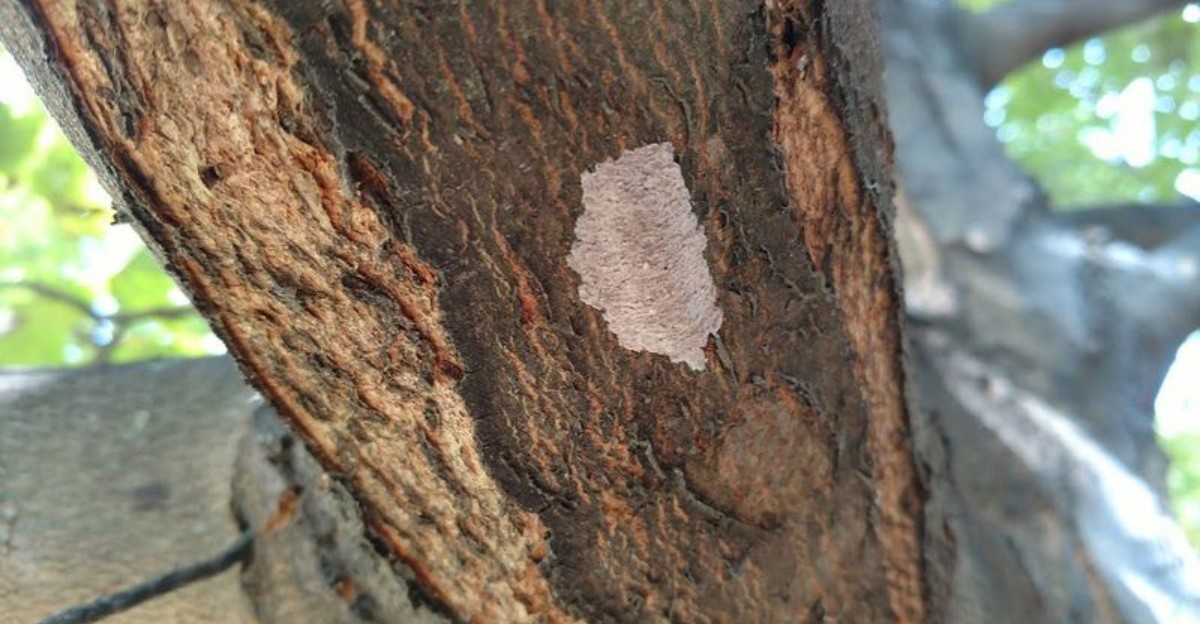
That strange patch stuck to your tree might look like dried mud, but it could be hiding a much bigger problem.
Fall is when many homeowners notice unusual egg masses on trees, fences, outdoor furniture, and other surfaces. In New York, these hidden clusters may belong to an invasive insect spreading across the state and preparing its next generation.
The tricky part is that the egg masses are easy to overlook because they blend in with bark, dirt, and outdoor debris. Spotting them early gives you a chance to take action before spring arrives and new insects emerge.
Knowing what to look for, where to check, and how to handle these strange markings can help protect the plants and landscapes around your home.
The Strange Spots Showing Up On Trees
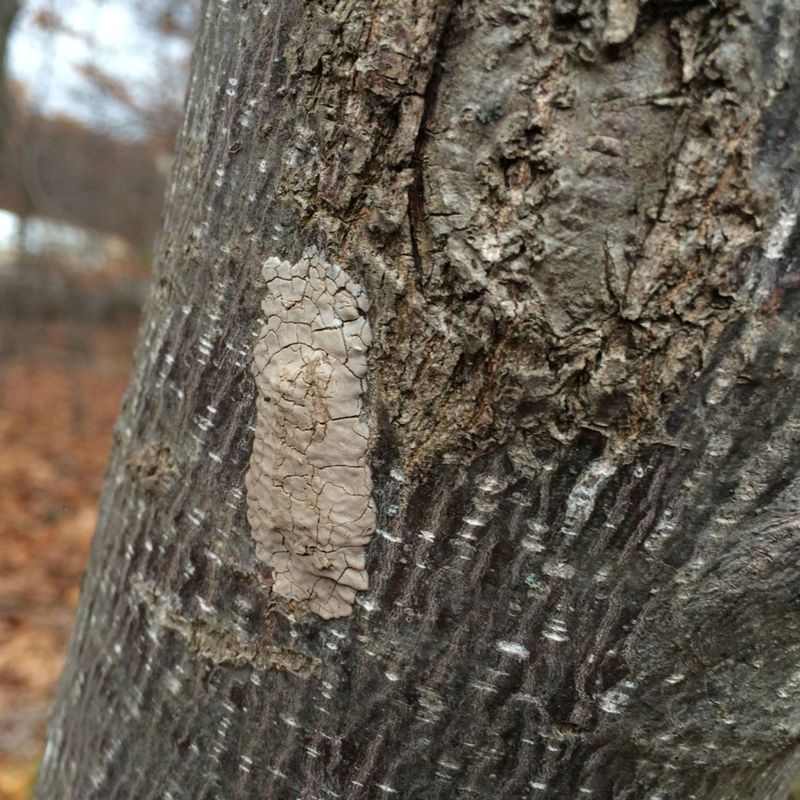
Have you ever glanced at a tree trunk and noticed a smudge that looked like dried mud someone flicked against the bark?
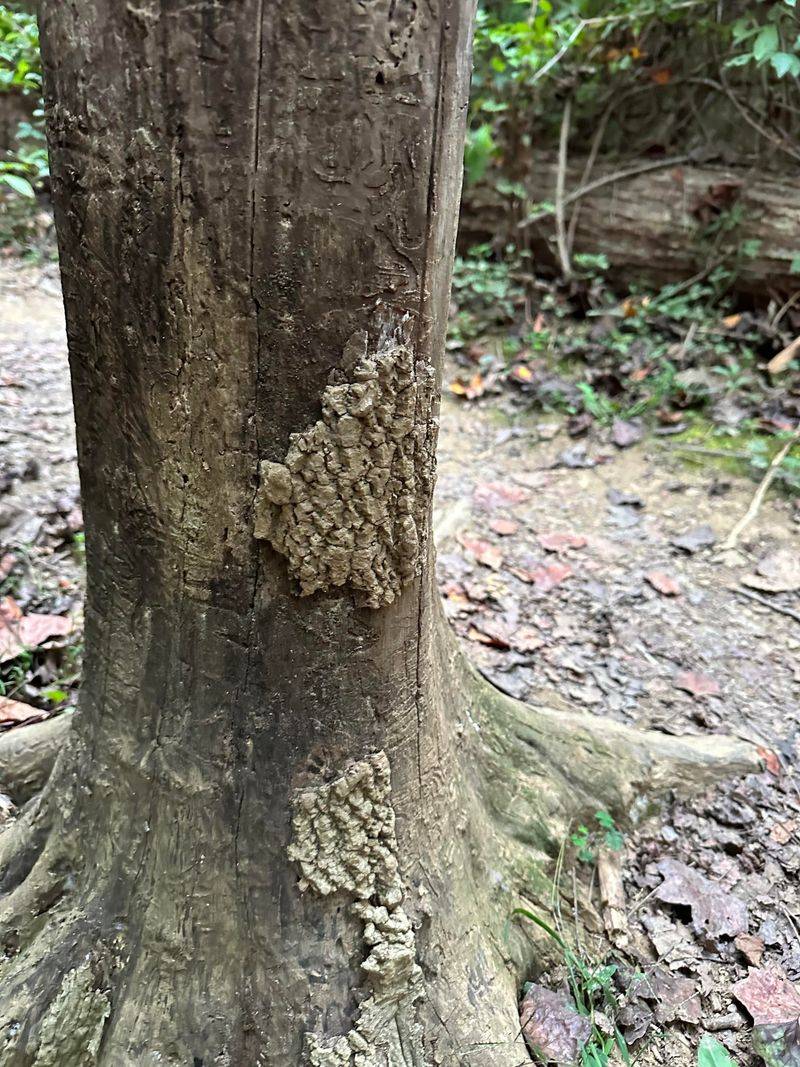
Across New York, homeowners are stumbling onto these odd patches and assuming a bird or a muddy shoe left them behind. In reality, they may be spotted lanternfly egg masses.
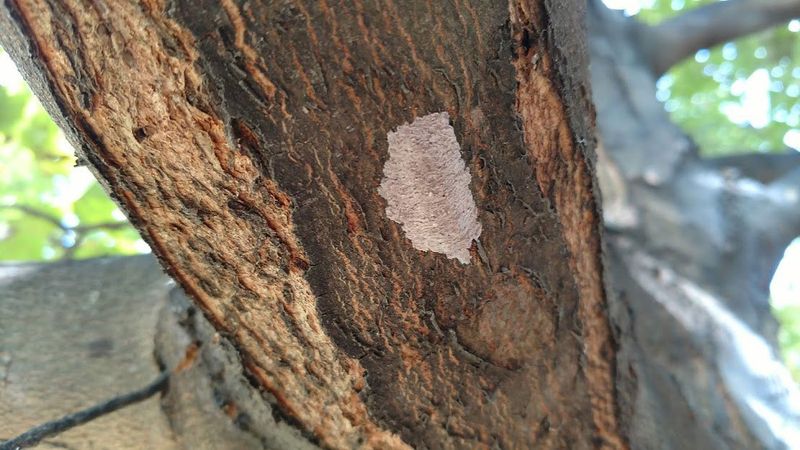
Freshly laid masses show up as light gray or brownish-gray smears with a smooth, waxy coating. Each one stretches about an inch long and roughly three-quarters of an inch wide, packing 30 to 50 eggs inside.
Over time that waxy shell cracks and darkens, blending right into bark, stone, and other rough surfaces.
That camouflage is exactly why they fool so many people. What looks like ordinary grime is really a hidden nursery waiting for spring.
You might find them on tree trunks, along branches, or tucked into sheltered spots protected from wind.
Fall is the perfect season to hunt for them. Adult lanternflies lay eggs from September through November, right up until the first hard freeze.
The eggs then wait quietly through winter before hatching around April or May.
Because the masses are so easy to overlook, a slow, careful walk around your property pays off. Bring a flashlight and check shady areas, low branches, and the undersides of limbs.
Spotting these patches early gives you a real shot at stopping trouble before it starts next spring.
The Invasive Pest Hiding Behind The Egg Masses
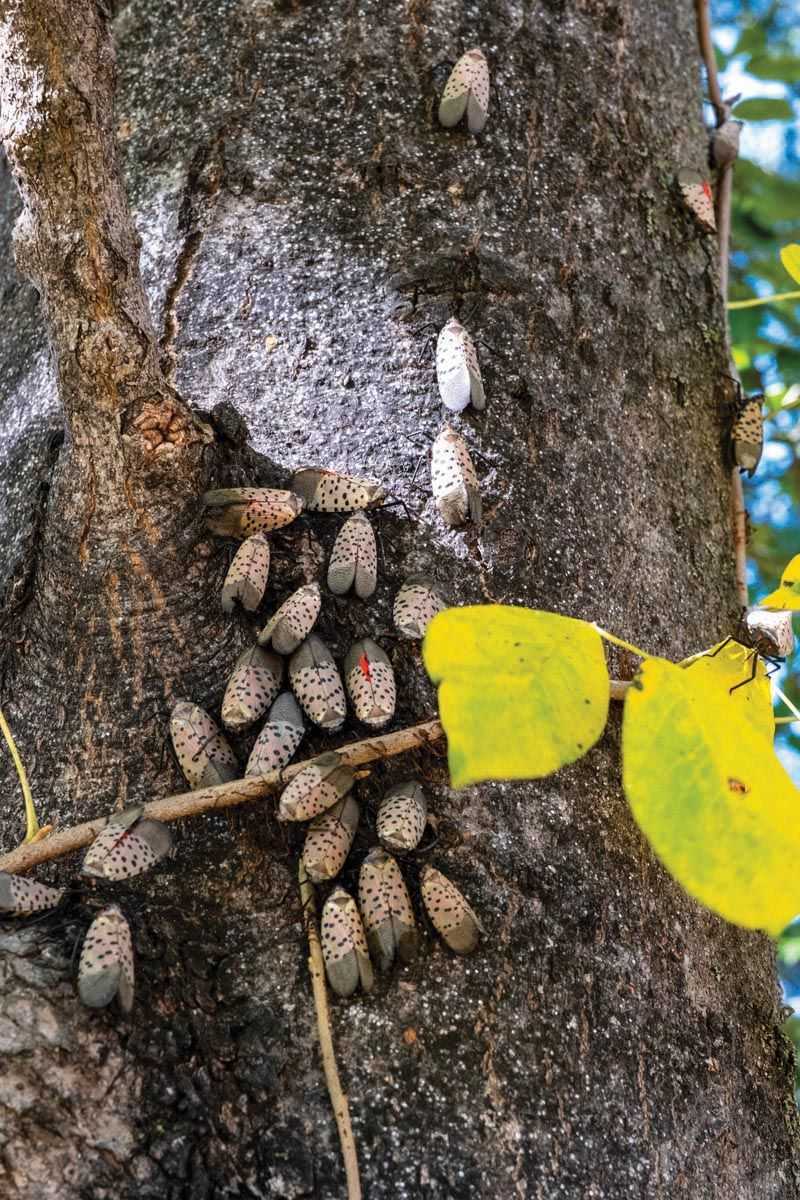
Meet the culprit behind those muddy smears: the spotted lanternfly, scientifically known as Lycorma delicatula. This showy planthopper traveled all the way from Asia, with roots in China and southern regions like India, before hitching a ride to the United States.
Scientists first caught sight of it in Pennsylvania back in 2014. It took a few years to reach the Empire State, where the first established population turned up on Staten Island in August 2020.
Since then, it has fanned out to Long Island, New York City, the Hudson Valley, the Capital Region, the Finger Lakes, and Western New York.
What makes this insect so troublesome is that native predators have not yet been enough to keep its populations under control. It feeds on the sap of more than 70 plant species, including grapevines, hops, maple, walnut, and fruit trees.
Your New York Garden Changes Every Week. Your Plan Should Too.
Gardening in New York changes quickly throughout the season. Every Friday you’ll receive a simple weekly plan showing exactly what to plant, prune, fertilize, harvest, and protect so you never miss the right timing.
Those happen to be plants that matter a lot to the state’s farms, orchards, and forests.
The bug spreads mostly thanks to people, not its own wings. Females glue their egg masses onto vehicles, firewood, outdoor gear, and more, and those items get hauled to fresh territory without anyone realizing it.
Paying attention is worth the effort. This pest can weaken beloved shade trees, mess up backyard fun, and even lower property value in heavily affected neighborhoods.
Knowing your enemy is the first step toward protecting your little corner of the state.
Fall Is When The Next Generation Gets Left Behind
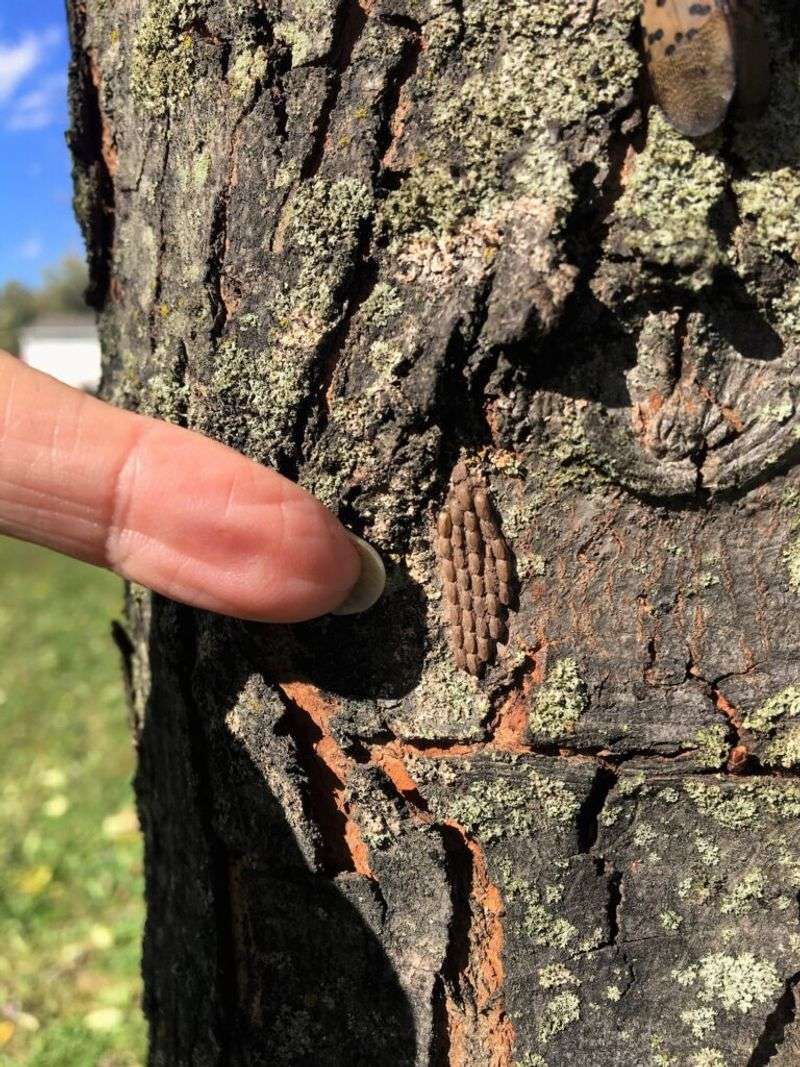
Timing is everything with this insect, and fall marks the moment the next wave gets set in motion. Understanding the lanternfly’s calendar helps homeowners strike at just the right time.
Adults start appearing in July and remain active into fall. Mating and egg-laying usually peak from September through November, ending as colder weather arrives.
During this stretch, each female drops one or two egg masses, and every mass can hold 30 to 60 eggs.
She then coats the cluster with that protective, mud-like, waxy layer. That covering isn’t just for looks; it shields the eggs from cold, wind, and moisture so they can ride out the harsh months ahead.
Here’s the good news for anyone hoping to fight back. The adults and nymphs do not survive the winter in New York, leaving the egg masses as the stage that carries the population into spring.
The eggs, however, are remarkably tough and overwinter without a problem.
That single fact turns fall and winter into your best window for action. Every egg mass you find and remove before spring means dozens of insects that will never hatch in April or May.
Think of it like weeding a garden before the seeds sprout. A little effort now saves a much bigger headache later.
By clearing away masses during the colder months, you directly shrink next year’s population and slow this pest’s march across the region.
Your Trees May Reveal The First Warning Signs
Your trees often act like early alarm systems, showing signs of trouble before you ever spot the bug itself. Learning these clues can help homeowners catch an infestation while it’s still small.
Both adult and young lanternflies carry piercing, straw-like mouthparts. They jab into the phloem, the tissue that carries sap, and drink from more than 70 kinds of plants.
All that feeding drains a tree’s energy and leaves it stressed and vulnerable to disease.
One telltale sign is sap oozing or weeping from tiny wounds on the trunk. You might even catch a slightly sour, fermented smell drifting from the bark near these spots.
Another giveaway is honeydew, a sticky, sugary liquid the insects leave behind as waste. It coats leaves, branches, and anything sitting underneath, and it draws in ants, wasps, and other curious visitors.
Where honeydew builds up, black sooty mold usually follows. This dark, powdery fungus spreads over leaves and surfaces, blocking sunlight the plant needs to make food.
That slows growth and can cut down on fruit.
Sooty mold also coats patios, cars, and outdoor furniture, turning them grimy and unpleasant. If you notice sticky decks or blackened lawn chairs under a tree, take a closer look.
Spotting these warning signs early gives you time to inspect for egg masses and take action before the problem grows across your yard.
The Tree That Helps This Pest Spread Faster
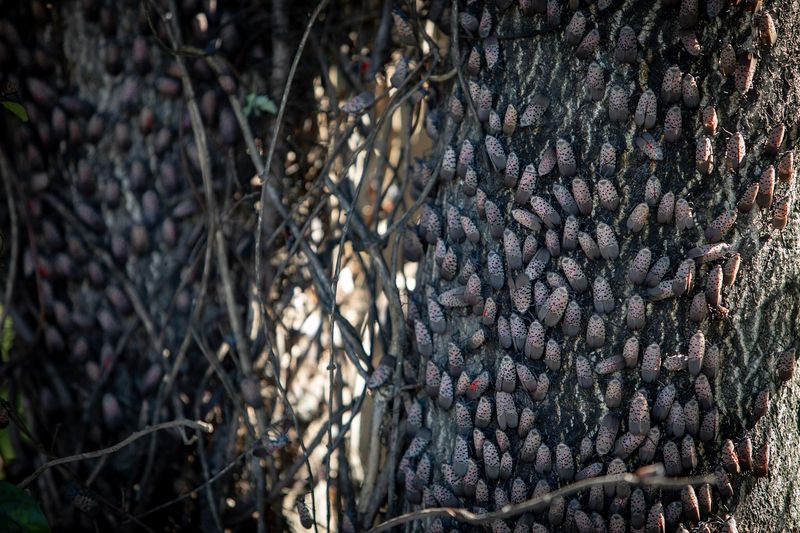
Among all the plants this pest enjoys, one tree stands out as its favorite hangout: the tree-of-heaven, or Ailanthus altissima. Oddly enough, this tree is also an invader from Asia, so the two make quite a pair.
Adult lanternflies flock to tree-of-heaven for both feeding and egg-laying. Something about this particular plant draws them in far more than most others, especially once the insects reach adulthood.
Tree-of-heaven grows all over the state, popping up along highways, in vacant lots, and at the edges of yards and woods. Because it’s so common, it hands the lanternfly an easy, plentiful buffet that helps its numbers climb.
Young nymphs will nibble on many different plants as they grow, but adults tend to gather on tree-of-heaven like guests at a party. That means neighborhoods packed with these trees often become lanternfly hotspots.
This connection matters for anyone trying to slow the pest’s spread. Areas with tree-of-heaven can provide an important food source for spotted lanternflies and may support larger populations, especially where other favorable conditions are present.
Knowing how to identify tree-of-heaven can help you understand your own property’s risk. Its long, compound leaves and fast, weedy growth give it away, and crushed leaves give off an unpleasant smell.
Managing or removing this invasive tree, ideally with guidance from local experts, is one smart piece of the bigger effort to keep spotted lanternfly populations under control.
Those Egg Masses May Be Hiding Everywhere
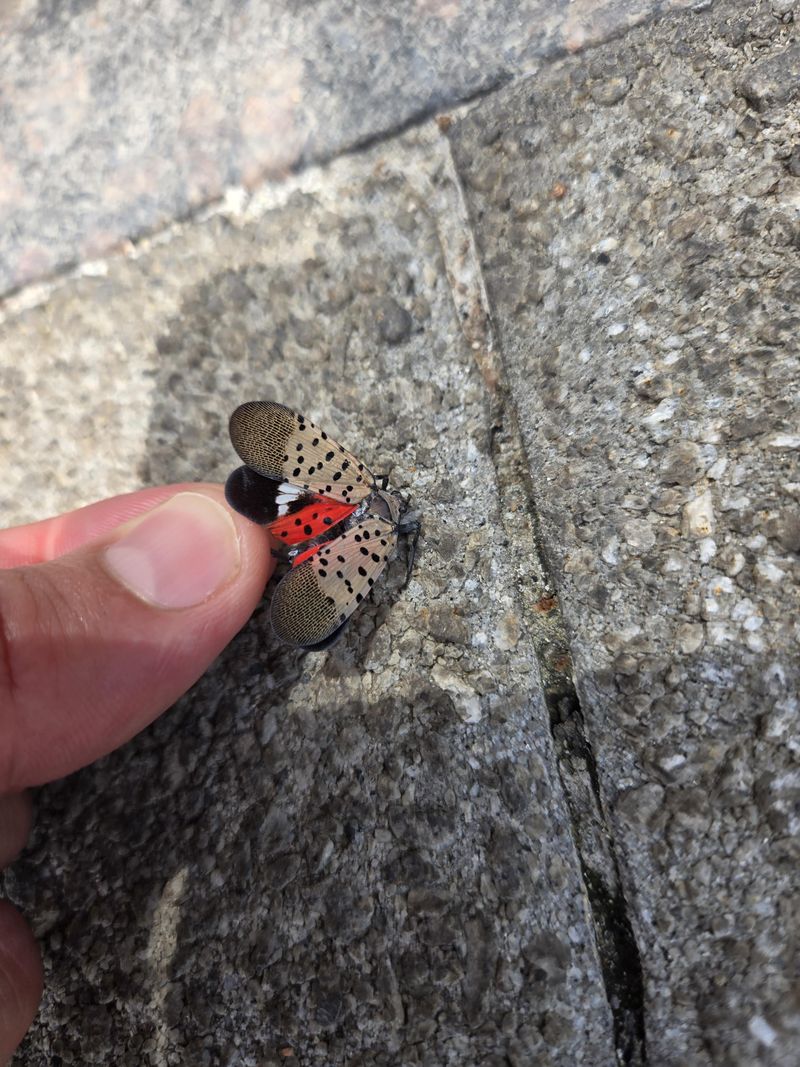
Trees might be the obvious place to look, but they are far from the only spot where these egg masses turn up. Homeowners who check only their trees could easily miss half the story.
Female lanternflies aren’t picky. They’ll glue their egg clusters onto nearly any hard, smooth outdoor surface, especially sheltered ones tucked away from wind and rough winter weather.
That means you should scan fences, decks, outdoor furniture, rocks, grills, sheds, and stacks of landscaping supplies. Flat, quiet surfaces are prime real estate for a female looking to protect her eggs.
Vehicles deserve extra attention. Cars, trucks, trailers, and campers can carry hidden egg masses for miles, moving the pest into fresh areas across the state and beyond without the driver ever knowing.
Firewood is another sneaky culprit. Egg masses blend right into logs, so a bundle of wood moved from one property to another can quietly deliver a whole new generation of insects.
Because of this, experts strongly urge people to buy and burn firewood locally rather than hauling it around. It’s a small habit that blocks a major travel route for the pest.
When you do your fall check, treat every hard surface as a possible hiding place. Peek under railings, behind wheel wells, and along the undersides of patio tables.
A thorough sweep of your whole property, not just the trees, gives you the best chance of catching these masses before they hatch.
The Fall Check Homeowners Should Make
With fall being peak egg-laying season, New Yorkers have a golden chance to push back against this pest. A simple yard inspection can go a long way toward protecting your property and your neighbors’.
Start by walking your whole property and giving everything a careful look. Check tree trunks and branches, especially the undersides, along with fences, decks, furniture, rocks, vehicles, and firewood piles.
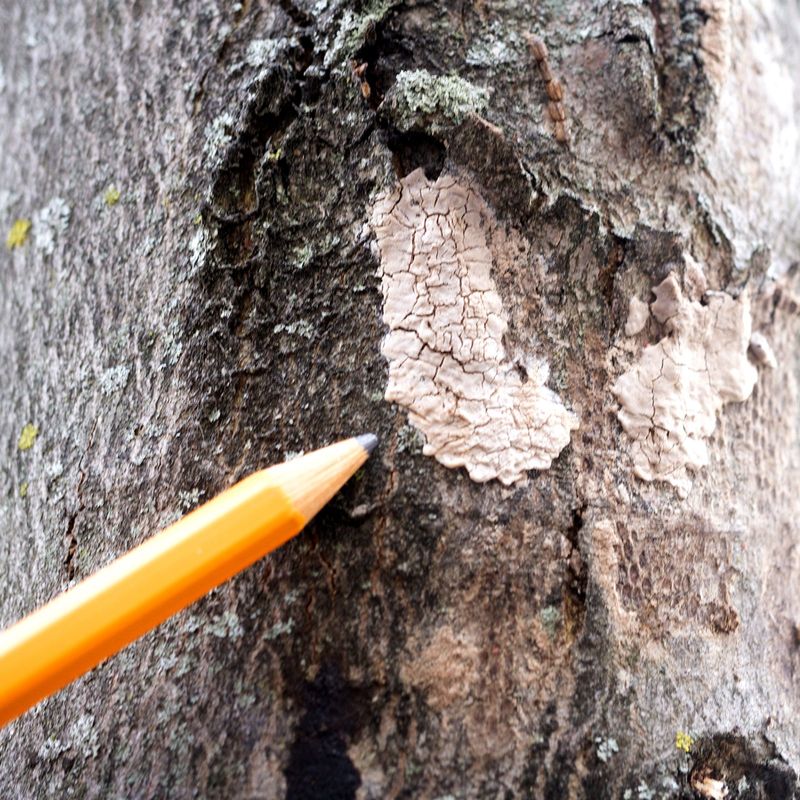
Keep in mind that the masses are brownish-gray and mud-like, so they blend in easily. A patient eye and a good flashlight make all the difference when scanning shaded or hidden spots.
Once you find a mass, removing it correctly matters just as much as spotting it. Grab a rigid tool like an old credit card, a putty knife, or a metal spatula.
Press firmly and scrape the entire mass into a container or bag. Removing the cluster completely is important because loose egg masses may still contain viable eggs.
Sweep the eggs into a sealed bag or container and dispose of them properly. Some guidance also recommends placing them in alcohol or hand sanitizer to ensure the eggs are destroyed.
This step makes sure the eggs are completely finished for good.
Then seal the bag tightly and toss it in the trash so nothing survives to hatch later. Doing this a few times each fall and winter, especially on a mild weekend afternoon, turns a quick chore into a powerful way to shrink next spring’s lanternfly numbers around your home.
One Simple Step Can Help Slow The Spread
If all of this feels overwhelming, take a breath, because one easy habit can make a huge impact: early detection and reporting. Since this pest travels mainly by human activity, everyday residents are its biggest obstacle.
By checking your property each fall and winter and clearing away egg masses, you become a genuine line of defense for your neighborhood. Every mass you handle is a small win for local trees and farms.
Reporting sightings adds even more muscle to the effort. If you spot what looks like an egg mass or any life stage of the insect, snap a few clear photos first.
Jot down the location too, whether that’s an address, the nearest cross streets, or GPS coordinates from your phone. That little bit of detail helps experts track exactly where the pest is showing up.
Reporting sightings can help state agencies track the insect’s spread, especially in areas where populations are still becoming established. You can contact the New York State Department of Agriculture and Markets or log your find on tools like iMapInvasives.
These reports help state agencies follow the insect’s movement, aim their resources wisely, and build smarter management plans. Your quick photo could guide decisions that protect entire communities.
By finding masses, removing them, and speaking up when you see something, you join thousands of New Yorkers working to safeguard the region’s forests, farms, and backyards. Small actions, repeated by many hands, add up to real protection for the years ahead.