Why Georgia Lawns Turn Brown In Late Summer And What Actually Revives Them
September in Georgia has a smell to it. Warm clay, cut grass, and the faint metal tang of a sprinkler that has been running too long.
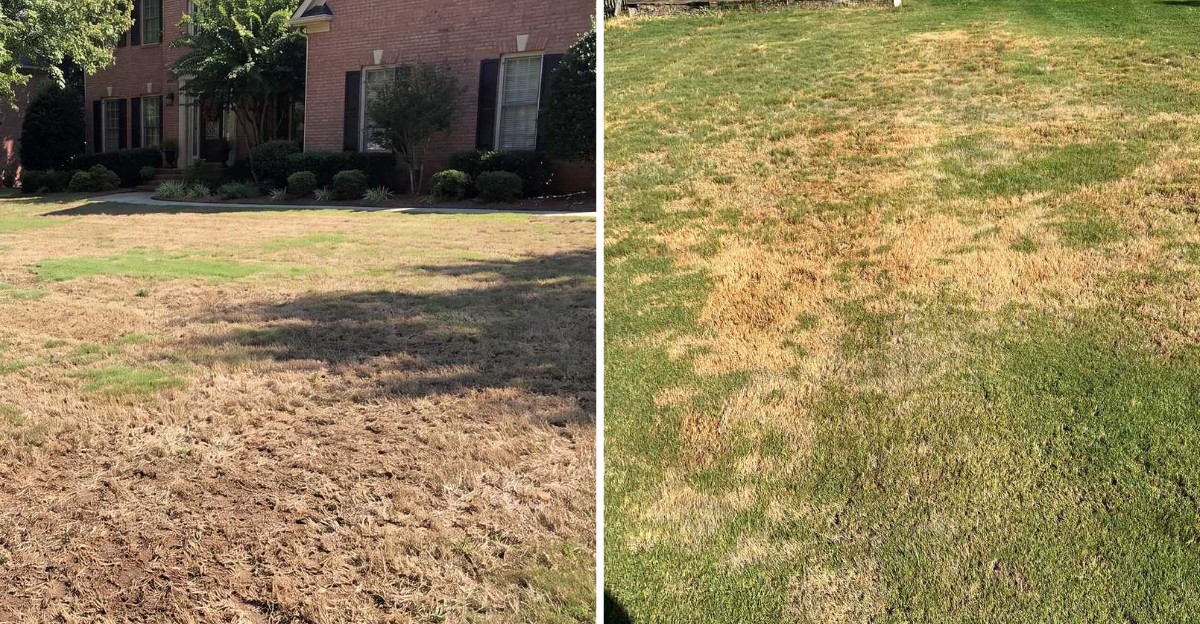
Then one morning you step outside barefoot and something feels off. The blades crunch instead of bending, and patches of tan are creeping across the yard like spilled coffee.
Most folks blame the heat and crank the hose. That reaction is understandable, and it is also the thing that keeps many yards looking rough well into September.
Grass does not just give up in September. It sends signals, and most of them get ignored.
Months Of Heat And Uneven Rain Wear Grass Down
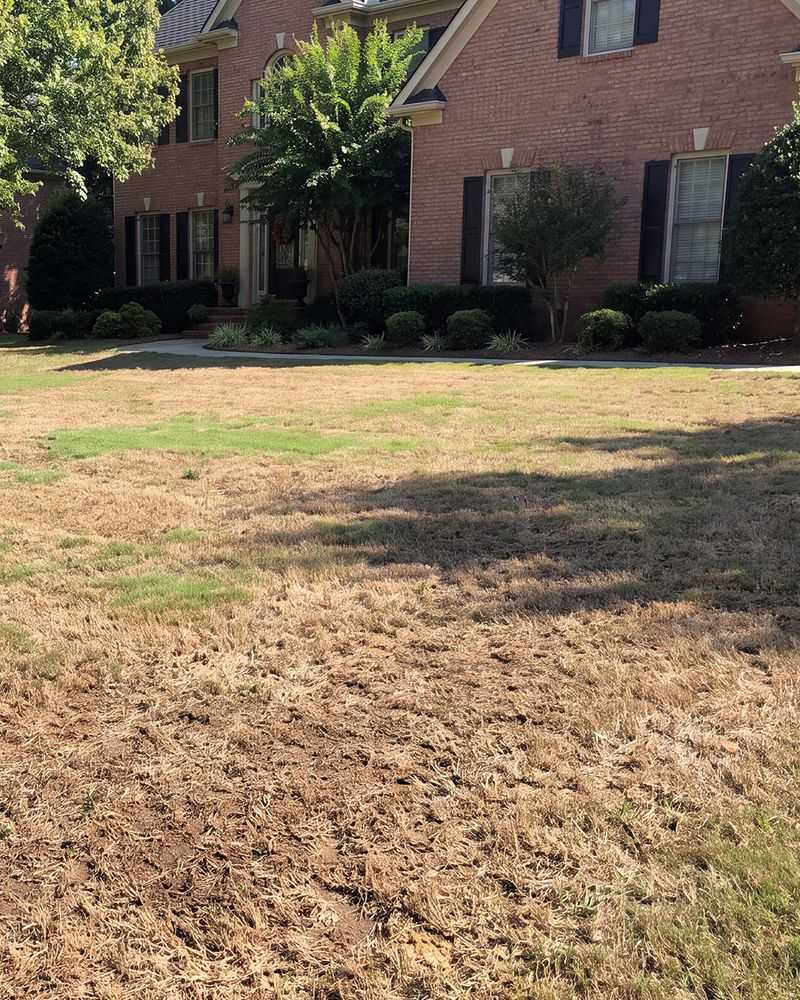
Ask ten neighbors in Marietta why their yard went tan in September and you will get ten confident answers. Heat, dogs, the lawn guy, bad luck.
The truth is that Georgia sits in a tricky transition zone where summer stress piles up over time. Warm-season grasses like Bermuda, zoysia, and centipede love the heat, but by mid-September they have been pushing growth for months.
Fuel tanks run low. Root reserves that were built in spring get spent on constant regrowth, and the plant starts protecting itself by shutting down the parts it can spare, which means color.
Meanwhile, our summer rain pattern gets moody. June may drop six inches, then three weeks pass with nothing but a teasing afternoon sprinkle that wets the top half inch and evaporates by lunch.
Add Georgia clay, which bakes into something close to pottery, and roots simply cannot reach moisture sitting deeper down. What looks like a watering problem is often an access problem.
Tall fescue lawns in North Georgia have the opposite issue. Cool-season grass genuinely struggles above ninety degrees and browns out as a survival tactic, not a complaint.
Knowing which grass you have changes everything about your response. Bermuda that browns in September usually bounces back with the right care, while stressed fescue needs shade, patience, and a fall reseeding plan.
Guessing wastes money. Identifying your turf type first saves an entire season of frustration.
Georgia Red Clay Quietly Starves Your Grass Roots
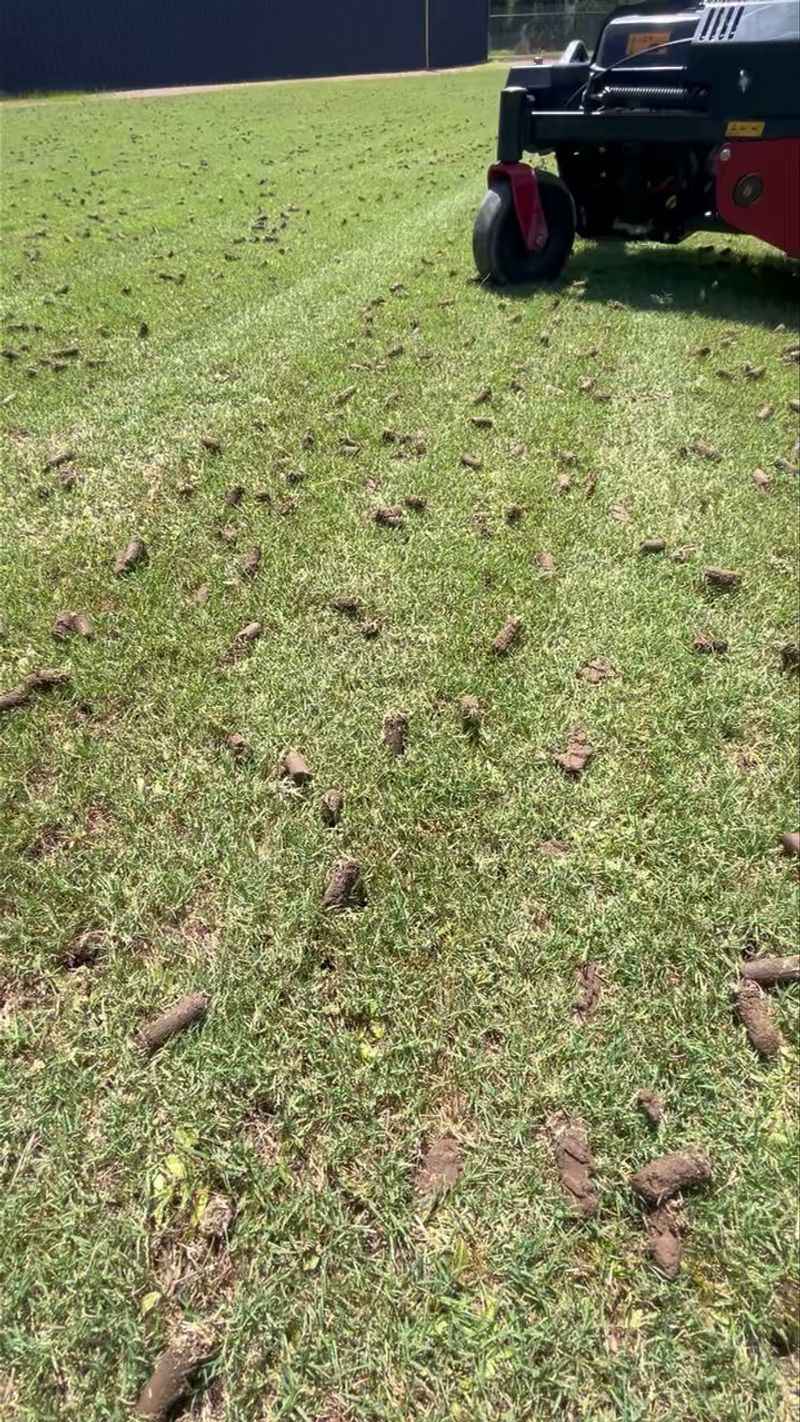
Grab a screwdriver and try pushing it into your yard in September. If it stops after two inches, you have just diagnosed the most common lawn problem in the state.
Georgia red clay is packed with fine particles that squeeze together under foot traffic, mower weight, and heavy rain. Once compacted, that soil holds water at the surface and blocks it from soaking down where roots want to live.
Grass responds by growing a shallow root system, maybe an inch or two deep. Shallow roots are fine in May and miserable in September because the top inch of clay dries out within hours of a hot afternoon.
Builders make it worse. In many subdivisions, the good topsoil was scraped off during construction and a thin layer of sod was laid over subsoil that was compressed by heavy equipment.
Core aeration is the honest fix. Pulling finger-sized plugs of soil out of the ground in June or July creates channels for air, water, and roots, and warm-season grass fills those holes fast during its growing season.
Your Georgia Garden Changes Every Week. Your Plan Should Too.
Gardening in Georgia changes quickly throughout the season. Every Friday you’ll receive a simple weekly plan showing exactly what to plant, prune, fertilize, harvest, and protect so you never miss the right timing.
Topdressing after aeration multiplies the benefit. A quarter inch of compost or sand worked into the holes gradually loosens the clay structure over two or three seasons.
Results are not instant, and anyone promising overnight change is selling something. Yards that get aerated yearly, though, tend to hold green three or four weeks longer than their neighbors when the rain stops coming.
The Watering Habit That Backfires In September Heat
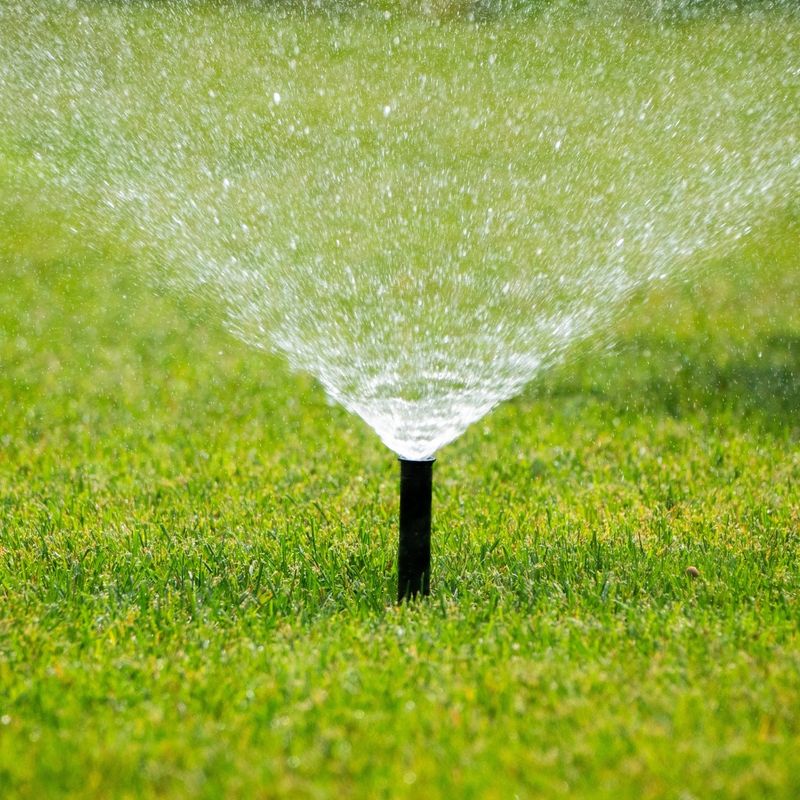
Here is an uncomfortable truth: the sprinkler running every evening at seven is probably part of the problem.
Light, frequent watering trains grass to keep its roots near the surface, because that is where the water shows up. When a genuine dry spell arrives, those pampered roots have nothing to fall back on.
Deep and infrequent beats shallow and daily. Most Georgia lawns want about one inch of water per week total, delivered in one or two long soakings rather than seven quick sips.
Measuring it is easy and slightly fun. Set three tuna cans around the yard, run the sprinkler, and time how long it takes to collect an inch, then use that number all summer.
Timing matters as much as volume. Watering between four and nine in the morning lets moisture soak in before the sun climbs, and it lets blades dry quickly, which discourages fungus.
Evening watering leaves grass damp all night. In Georgia humidity, that is an open invitation for brown patch and dollar spot to spread through the turf.
Watch for footprints too. When your steps stay visible in the grass for more than a minute, the blades have lost their bounce and the lawn is telling you it needs a drink soon.
Local watering restrictions apply in much of metro Atlanta, so check your county schedule. Working within those windows is entirely doable once you shift to the longer, less frequent rhythm.
Fungus And Insects Get Blamed On The Weather
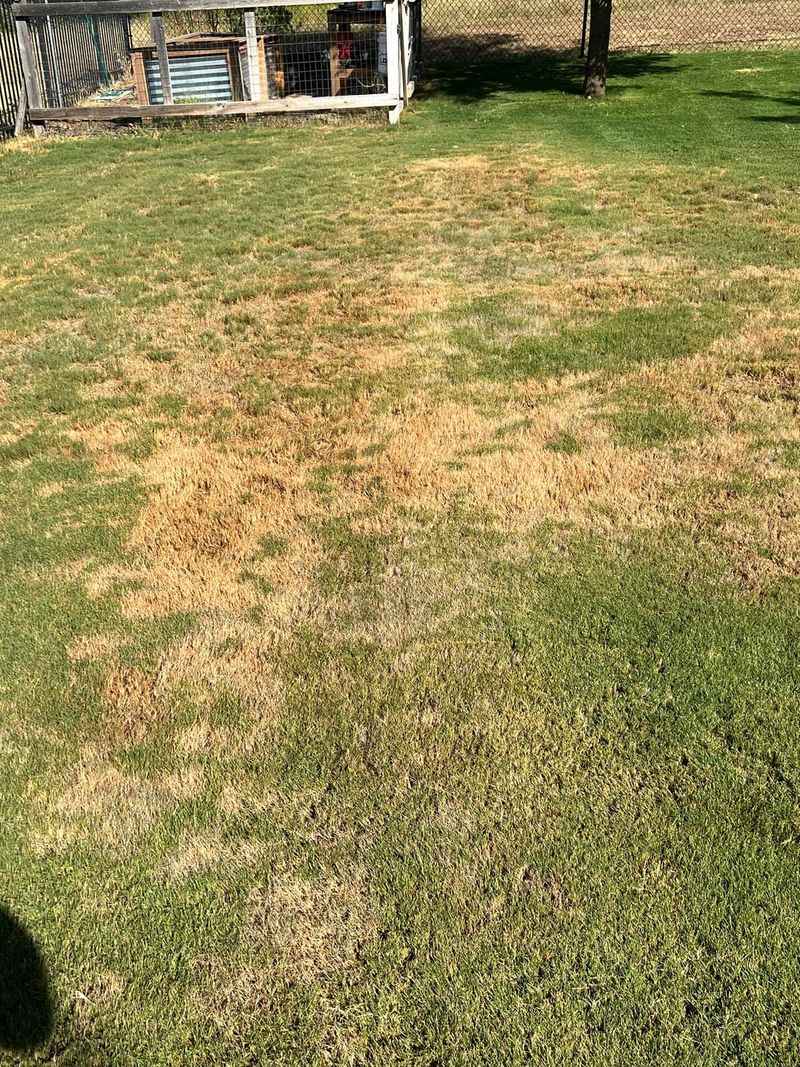
Not every tan patch is thirsty. Some of them are infected, and watering alone rarely brings them back.
Georgia summers are basically a greenhouse: eighty-degree nights, heavy dew, and humidity that never quite lets go. Brown patch and large patch fungi thrive in exactly those conditions and spread in rough circles or irregular blotches across the turf.
A telltale sign is the shape. Drought browning follows the pattern of sun exposure and slopes, while disease often shows smoke-colored edges in early morning or lesions right on individual blades.
Insects leave their own signature. Chinch bugs feed in the sunniest, driest strips near driveways, and grubs make turf feel spongy underfoot because roots have been chewed away below.
The pull test settles the grub question fast. If a section of turf lifts up like loose carpet with no root anchoring it, something has been snacking down there.
Fungicide only helps if fungus is actually present, and grub control works best when applied in early summer before the larvae get large. Spraying blindly in September often means spending money on the wrong month.
Cutting back on nitrogen during peak humidity also helps, since lush new growth is exactly what fungal spores prefer. Improving airflow by thinning nearby shrubs makes a surprising difference too.
When you are unsure, county extension offices across Georgia will test a soil or turf sample for a small fee. That report beats guesswork in nearly every case.
Mowing Mistakes That Turn Green Grass Tan Overnight
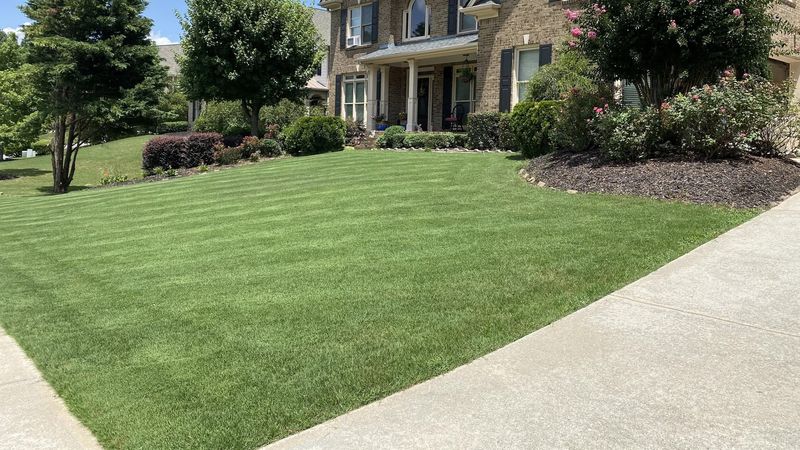
A dull mower blade does not cut grass. It tears it, leaving frayed white tips that turn tan within two days and make an entire yard look scorched from the street.
Sharpening blades twice a season takes twenty minutes and changes how a lawn looks more than most fertilizer ever will. Clean cuts seal quickly and lose less moisture.
Scalping is the other big offender. Removing more than a third of the blade height at once shocks the plant, exposes soil to blazing sun, and burns through the energy reserves the grass needs to recover.
Raise the deck in September. Bermuda does well around one and a half to two inches, zoysia near two, centipede close to two, and fescue should climb to three and a half or even four inches during heat.
Taller blades shade the soil surface. Cooler soil holds moisture longer and gives roots a fighting chance during a two-week dry stretch.
Mowing during the hottest part of the day adds insult to injury. Late afternoon or early evening cuts let the turf recover overnight instead of baking with fresh wounds.
Leave the clippings behind unless they are clumping. Grass clippings return nitrogen and moisture to the soil, and they break down within a couple of weeks rather than building thatch.
One more thing worth trying: change your mowing direction each week. Rotating patterns keeps the grass from leaning permanently and reduces wheel ruts in soft clay.
Reading Your Soil Test Before Buying Another Bag Of Fertilizer
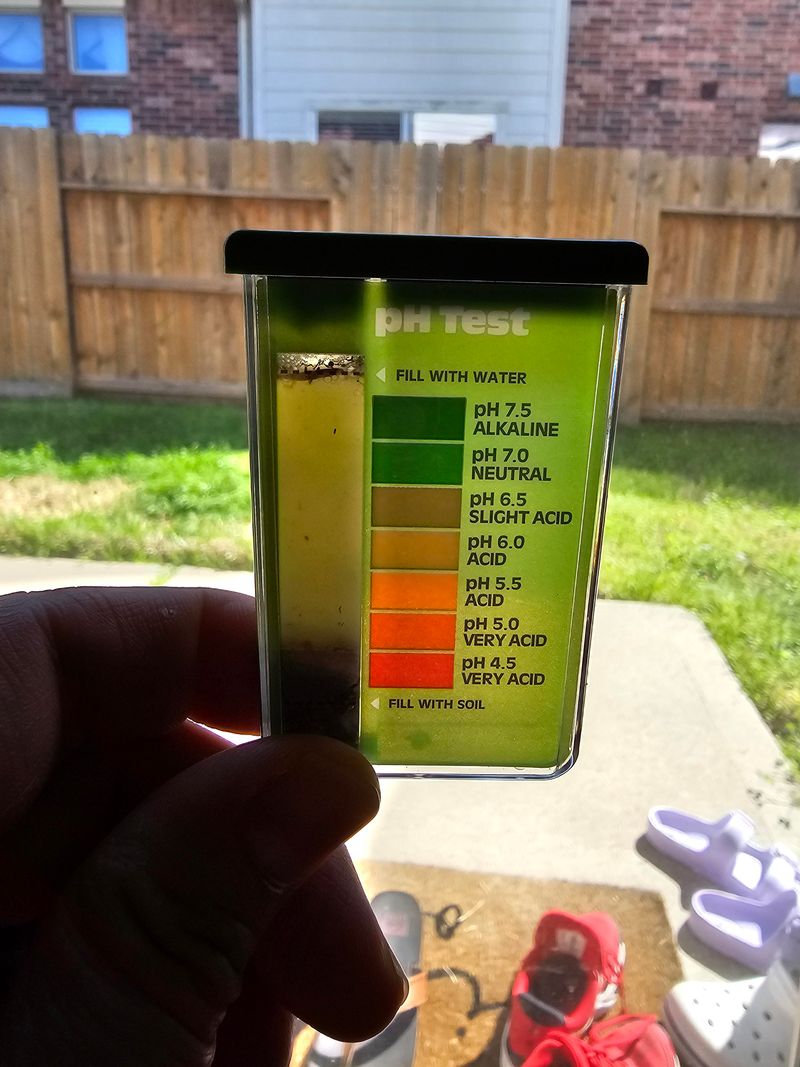
A lot of the fertilizer spread in Georgia yards each year does little good, and some of it actively hurts.
The reason is pH. Our clay soils tend to run acidic, often between 4.8 and 5.5, and at those levels grass cannot absorb nutrients even when the nutrients are sitting right there.
Bermuda and zoysia prefer a pH near 6.0 to 6.5, while centipede is happy lower, around 5.0 to 5.5. Dumping lime on a centipede lawn without testing can cause yellowing that looks a lot like drought stress.
A soil test through your local UGA extension office runs about ten to fifteen dollars. The report tells you pH, phosphorus, potassium, and exactly how much lime or nutrient to apply per thousand square feet.
Timing the feeding matters just as much. Heavy nitrogen in late August pushes tender growth right when disease pressure peaks and right before the season winds down.
Potassium is the underrated hero of late summer. It strengthens cell walls, improves drought tolerance, and helps turf handle stress without forcing a growth spurt.
Slow-release products spread the benefit over six to eight weeks instead of dumping everything at once. Quick-release nitrogen on stressed September turf can literally scorch the blades.
Keep a simple notebook of what you applied and when. After two seasons, patterns emerge and you stop repeating the expensive experiments that did not work.