The Plants California Fire Officials Want Gone Before Fall Winds Return
Something changes in California yards every fall, and most homeowners never see it coming.
The wind shifts. The air dries out. And a handful of plants sitting quietly in the landscape start acting completely different than they did all summer.
You’ve probably walked past one today.
Maybe it’s the hedge by your driveway. Maybe it’s that grass clump nobody’s touched in three years.
These plants aren’t rare or exotic. They’re the popular ones. The reliable ones. The plants people chose specifically because they were easy.
That’s exactly the problem nobody warns you about.
Fire officials have quietly flagged certain landscape favorites for years, and the reasons come down to small details most gardeners never check. What’s hiding inside that shrub. What’s built up under that canopy.
Before the season turns, it’s worth taking a real look at what’s growing near your home. Some of these plants can stay. A few might need to go.
Let’s start with the one that looks like it belongs on a postcard.
1. Italian Cypress Burns Fast And Hot
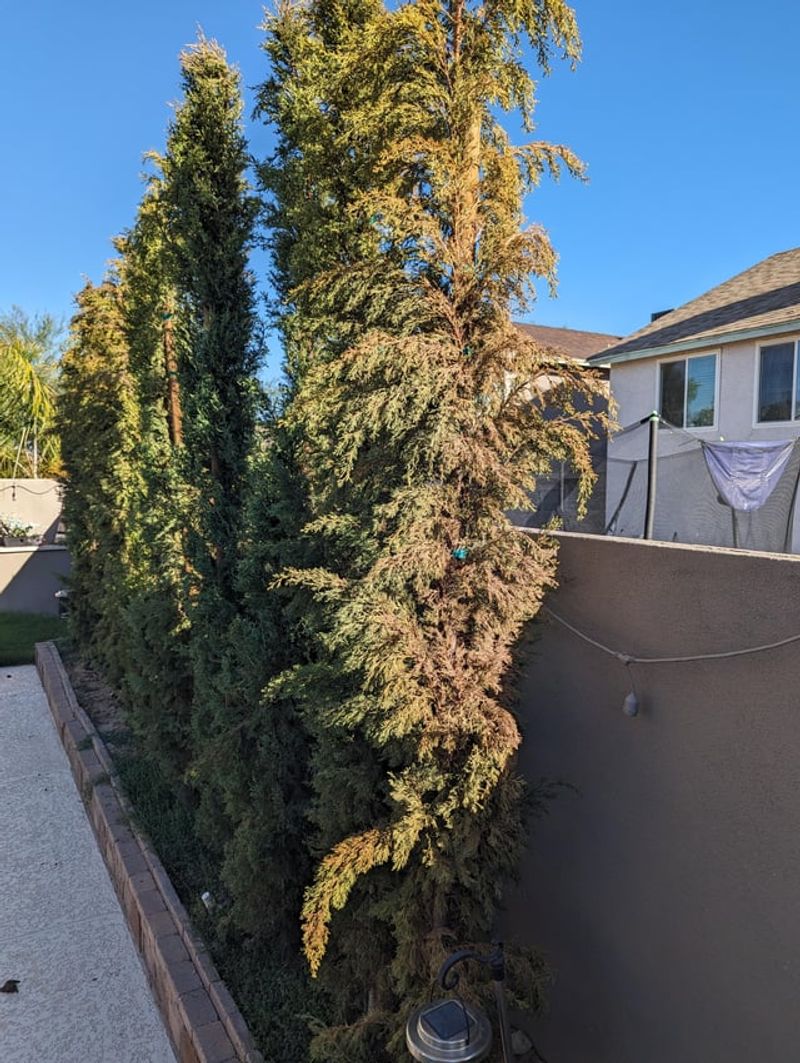
Italian cypress has main character energy in any California yard. Tall, narrow, perfectly lined up like it’s posing for a magazine spread.
That elegant shape is hiding something less photogenic.
Those tight, columnar branches pack foliage in close together with almost no airflow moving through the middle. Dry conditions turn that structure into a concern, especially when fall winds start pushing through.
Here’s the part that catches people off guard. A row of cypress planted close together can let flames travel from tree to tree like they’re passing a note in class. Dry needles trapped deep inside just add fuel nobody can see from the sidewalk.
Location changes everything here. One cypress standing off by itself is a completely different situation than five of them lined up against a fence or pressed against a wall.
Walk your yard this week. Check where plants touch structures. Those tight corners are usually where the real risk hides.
A little maintenance goes a long way. Clear out spent material inside the canopy. Rake debris from the base. Keep branches from brushing against the house.
Some gardeners are swapping old cypress rows for something with similar height but less baggage. Others keep a few trees, spaced out, and just stay on top of upkeep.
You don’t have to give up the look. You just might need to edit the guest list a little before the wind shows up uninvited.
2. Juniper Holds Onto Flammable Resin
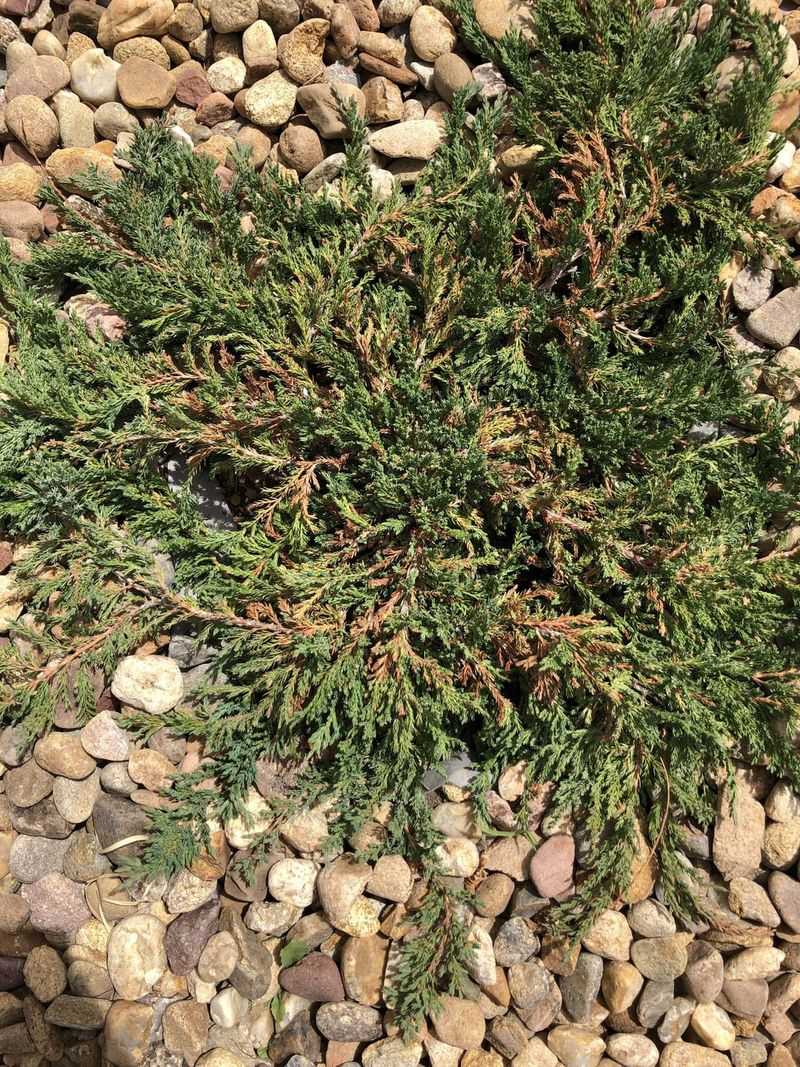
Every yard has that one plant nobody thinks about until someone points at it. Low, spreading, evergreen, and famously low maintenance, juniper has been the default filler in California landscapes for decades.
That reputation for needing nothing is exactly why older plantings turn into a hidden problem.
The foliage holds natural oils, and older shrubs build up a hidden layer of dry, brittle twigs deep inside the branches. The outside looks perfectly green. The inside is basically kindling wearing a disguise.
Your California Garden Changes Every Week. Your Plan Should Too.
Gardening in California changes quickly throughout the season. Every Friday you’ll receive a simple weekly plan showing exactly what to plant, prune, fertilize, harvest, and protect so you never miss the right timing.
Go check yours. Actually push the outer branches aside and look. Most people are surprised by what’s been building up in there for years.
Placement matters just as much as what’s inside. A shrub near a walkway is one story. A shrub pressed against a window or a wooden fence is a completely different one.
Regular pruning clears out that old interior buildup before it becomes a real issue. Clearing space around the base gives the plant some breathing room from anything nearby.
Long, continuous hedges deserve a second look too. Breaking them into shorter, separated sections opens up the landscape and slows down how easily fire could move across it.
Age and upkeep tell the real story here, more than the plant itself. A trimmed shrub with room to breathe is nothing like an overgrown one hiding a decade of dry buildup underneath.
Sometimes the biggest surprise in your garden is the stuff you can’t see from the porch.
3. Pampas Grass Ignites Like A Torch
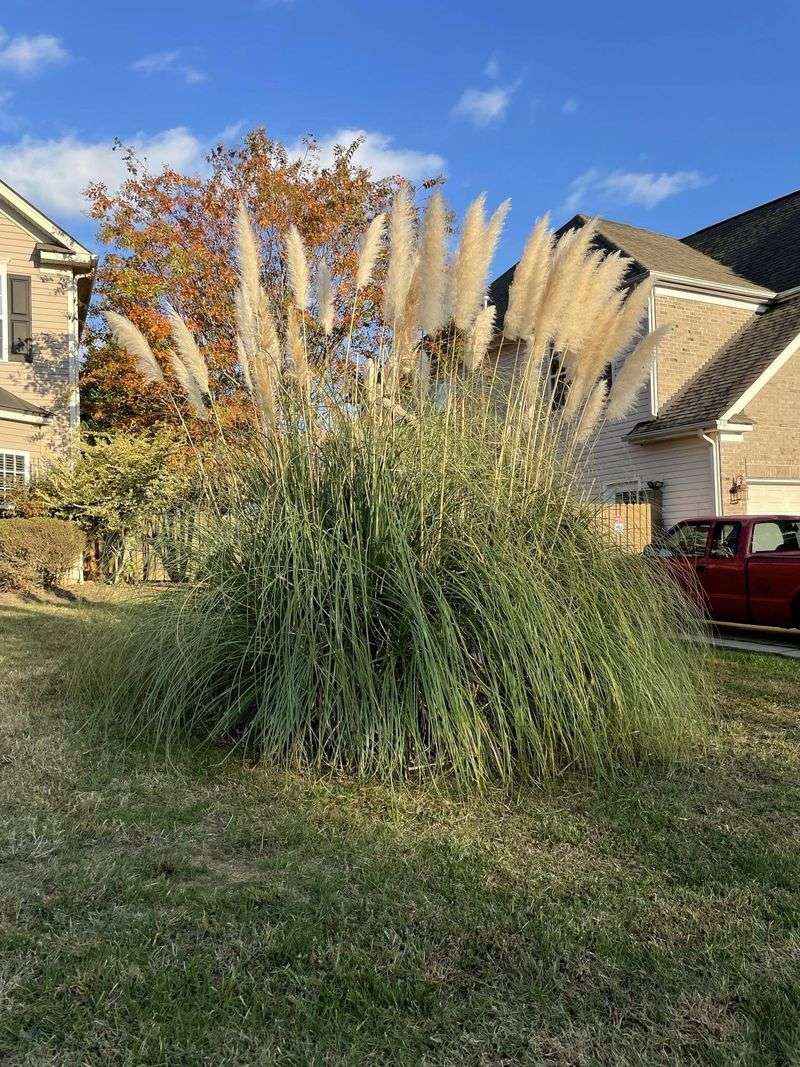
Fast growth and dramatic plumes make this one a favorite for privacy screening. It also hides a serious catch most people never think about.
Each mature clump holds years of dry, cured blades packed into a mound that can stand taller than you. Fine, dry material like that catches fast, and once it goes, it throws sparks in every direction.
There’s a second reason officials keep an eye on it too. Pampas grass and its cousin jubata grass are considered invasive in California, spreading along highways and coastal slopes where they add fuel nobody planted on purpose.
Homeowners usually grow it for privacy, then discover the maintenance nightmare later. The leaf edges are sharp enough to cut skin, so trimming means long sleeves and thick gloves every single time.
Skip a couple seasons of cleanup, and the center turns into exactly the kind of thing you don’t want near a fence line.
Want to actually reduce the risk before wind season ramps up? Dig out the whole crown instead of just trimming the top.
Roots left in the ground will happily grow back, and seed heads spread themselves without asking permission.
Bag the plumes when you cut them. Dragging them across the yard just scatters seeds everywhere you walk.
Deergrass and other native bunchgrasses give you similar height without the drama.
Your local fire department or a native plant nursery can point you toward what actually thrives in your specific zone, since coastal, valley, and foothill yards all play by different rules.
4. Eucalyptus Drops Oily Flammable Litter
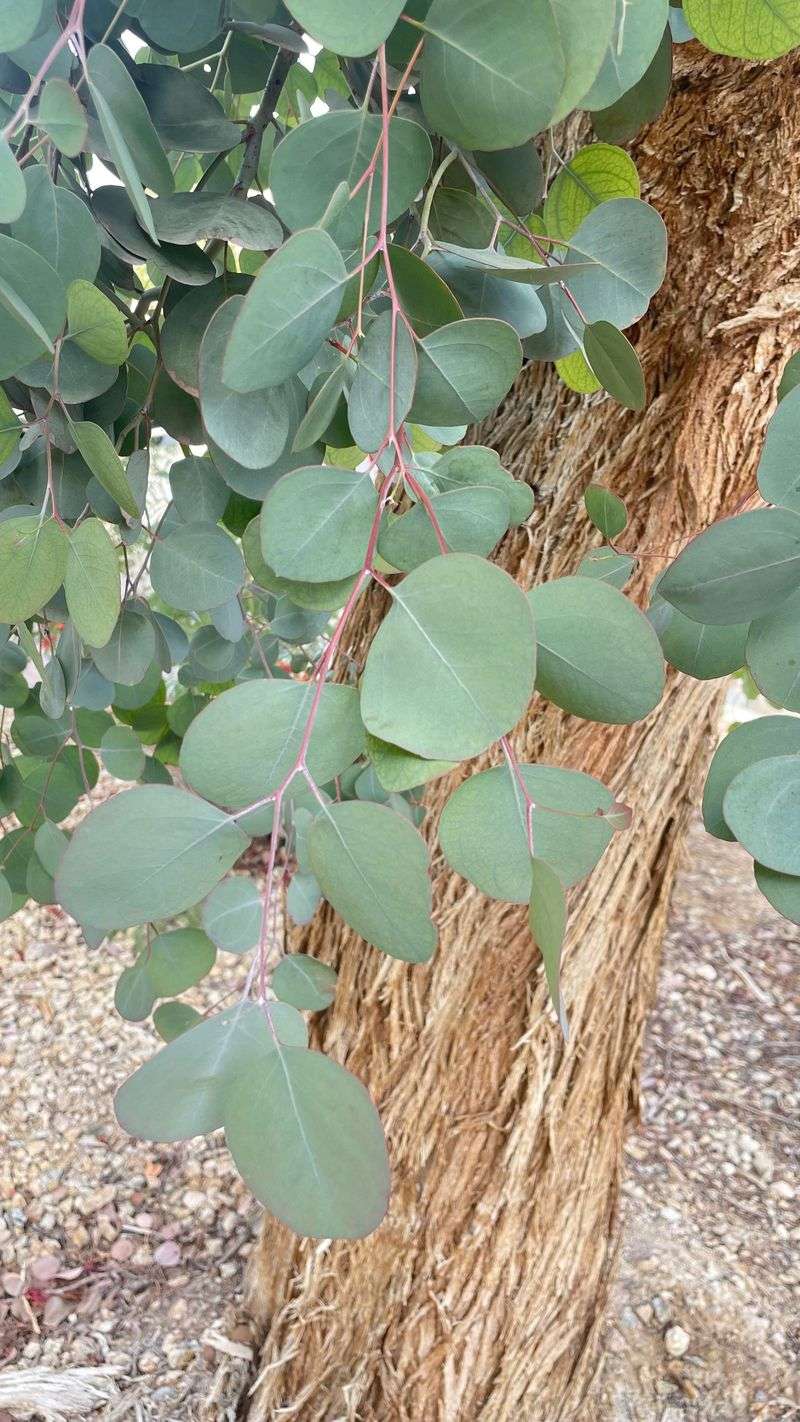
A Gold Rush-era import that never quite delivered on its original purpose still shapes California fire conversations today. These trees were planted by the millions for lumber that, plot twist, never really worked out.
What California got instead were towering giants that shed long ribbons of bark and drop oily leaf litter that takes forever to break down. Both habits keep showing up in fire safety discussions decades later.
The tree itself isn’t the only concern. Loose bark peels off in long strips, catches fire, and can lift on the wind, traveling well ahead of the actual flames like it’s got somewhere to be.
Meanwhile the litter piling up underneath forms a thick, resin-scented layer that burns hot right at ground level.
Anyone who’s raked under one of these trees knows the debris comes back embarrassingly fast. Leaves, bark, twigs, and hard seed pods pile up weekly, filling gutters and gathering against fences and decks.
Those exact spots are where embers love to settle during a windy October evening.
Full removal gets expensive fast, and some cities regulate it with tree ordinances, so check before calling a crew.
If the tree stays, keep the area underneath clear, remove low branches, and give the canopy some real distance from the roofline and chimney.
Gutter guards and regular sweeping genuinely help here. Rules shift depending on your fire hazard zone, so treat your local fire department and CAL FIRE guidance as the final word, not a suggestion.
5. Rosemary Hedges Carry Fire Surprisingly Well
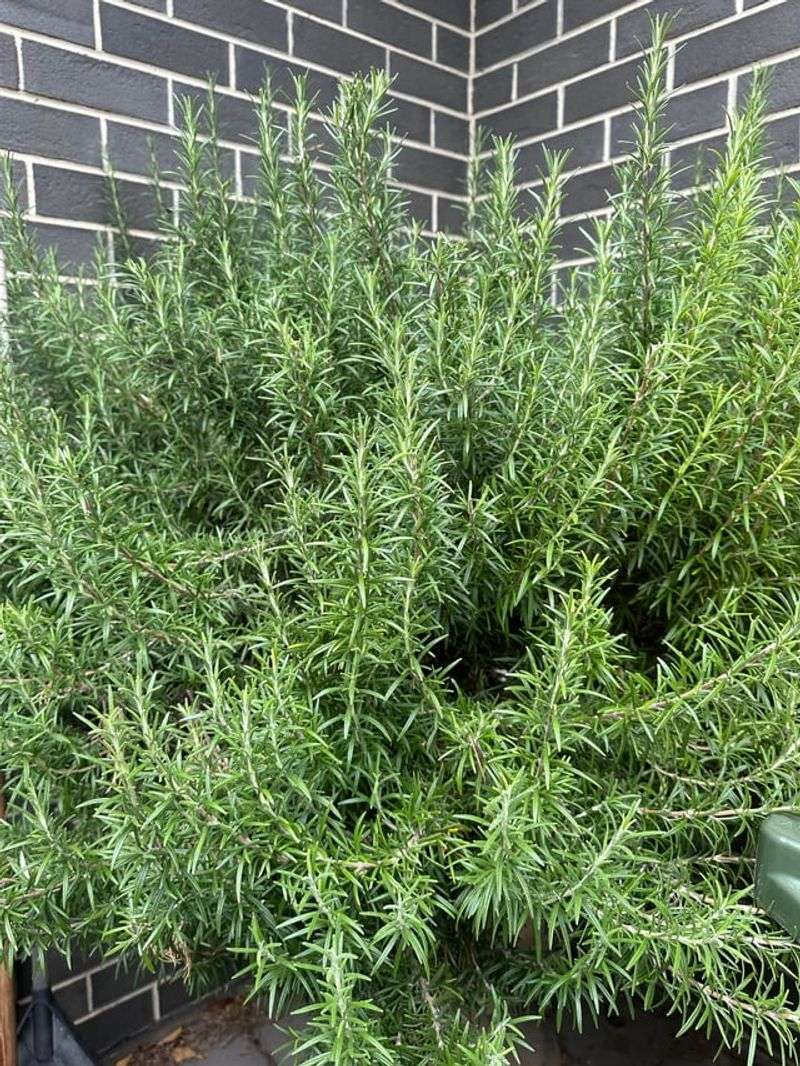
Here’s the one that catches people off guard every time.
A reputation as a tough, low-water hedge that asks for basically nothing is well earned in this case. The plot twist is chemistry. The same aromatic oils that make it smell incredible on roast potatoes also burn readily.
Older hedges get woody at the base and collect dry stems tangled up inside. That combination, oily foliage plus retained wood, is exactly the pairing officials watch for.
A dense, unpruned row running along a wall creates a continuous strip of fuel in the worst possible spot.
Nobody’s saying rip every herb out of the garden. Scale and placement do the heavy lifting here. A few plants in containers, kept trimmed and green, live in a totally different category than a three-foot hedge hugging the siding for forty feet straight.
Fire officials generally recommend keeping the first five feet around a home nearly free of burnable material. Gravel, pavers, bare soil, or well-spaced, well-watered plants all work. Moving this shrub past that zone solves most of the concern on its own.
Worth knowing, the same oils that make your patio smell amazing on a warm evening are drifting into the air around the plant right now.
Enjoy the scent. Just keep it a respectful distance from the house, and check local rules before your fall cleanup begins.
6. Dry Palm Fronds Add Serious Fuel
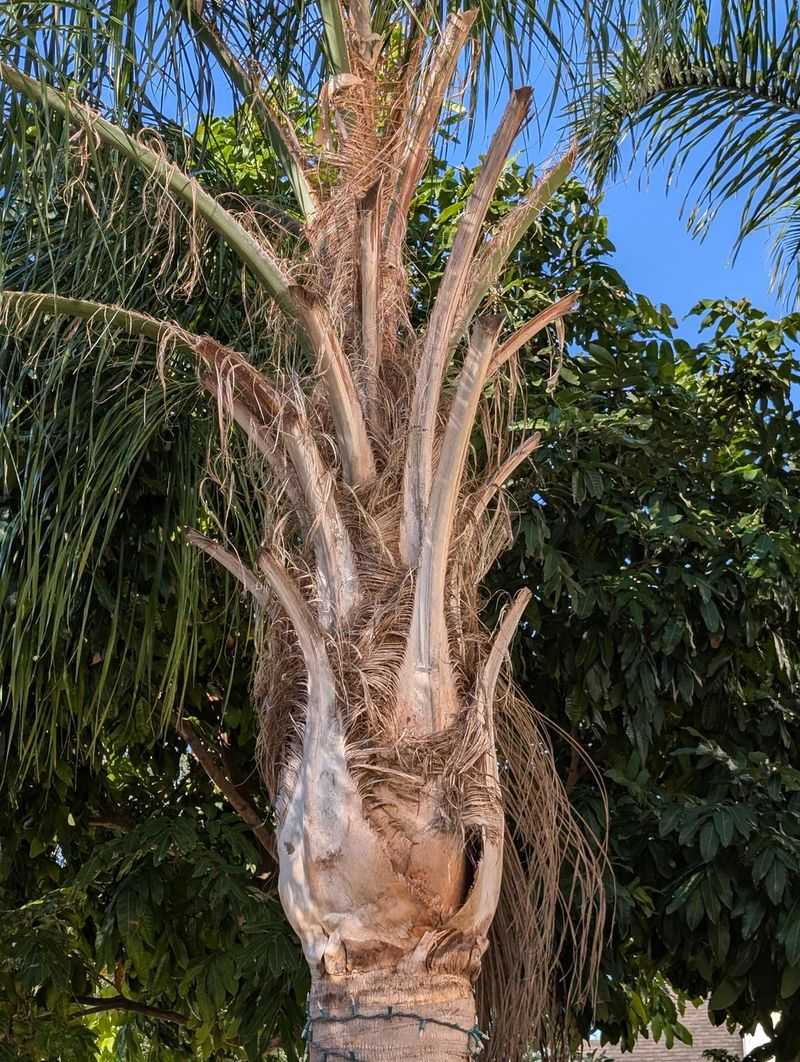
The tree itself isn’t really the problem. That skirt of dry fronds hanging under the crown is doing all the damage.
Dry fronds are light, papery, and full of air pockets, which makes them catch fast and send burning fragments drifting well beyond the tree itself. A single untrimmed specimen can throw flames above roofline height without much effort at all.
Southern California crews respond to fires involving these trees on a regular basis, often triggered by fireworks, electrical issues, or wind-carried embers landing where they shouldn’t.
Once that skirt catches, fire climbs straight to the top and starts raining embers onto whatever’s nearby.
Annual trimming solves this, and it’s genuinely best left to an insured professional with proper climbing gear rather than a ladder and good intentions.
Clear fallen fronds, seed stalks, and fruit off the ground too, along with anything collecting against fences, sheds, or decks.
Better options exist for that same space in your yard. Fire-resistant landscaping leans on well-watered, low-growing plants with clean interiors, natives like coffeeberry and toyon, pruned sages, succulents, or simple gravel in that first five-foot zone.
No plant earns a completely fireproof label, though. Maintenance still does most of the real work.
Before any fall trimming begins, check with your local fire department or current CAL FIRE defensible space guidance.
Rules shift by county and hazard zone, and some tree removals need permits. Getting the details right up front saves both money and headaches later.
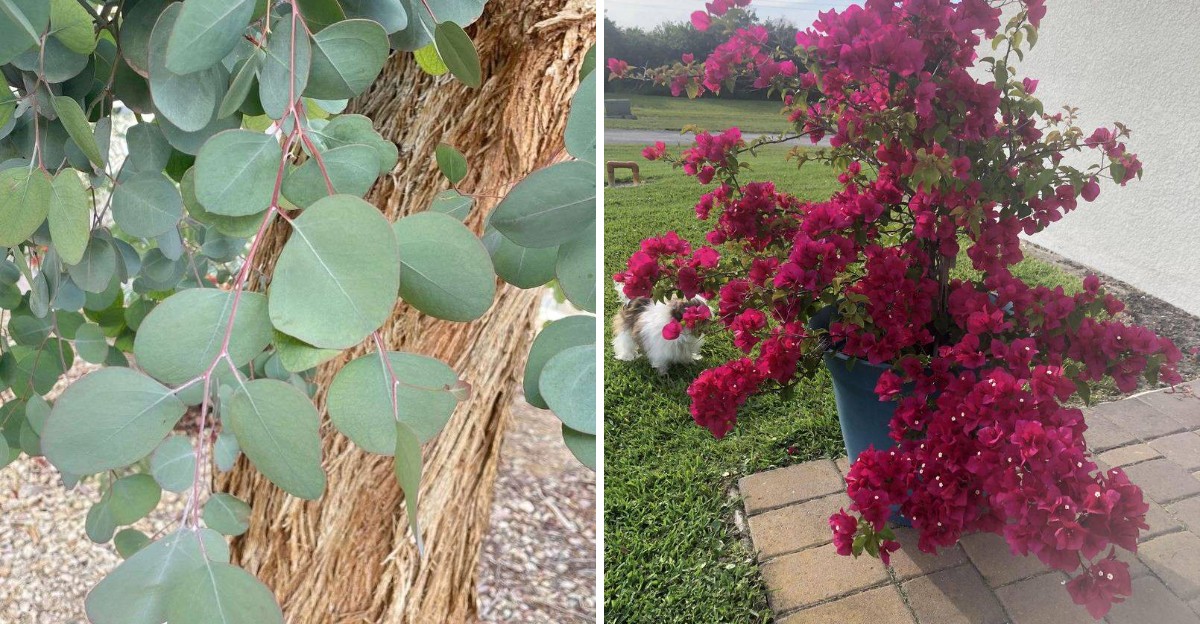
7. Bougainvillea Traps Dry Leaves Against Your Walls
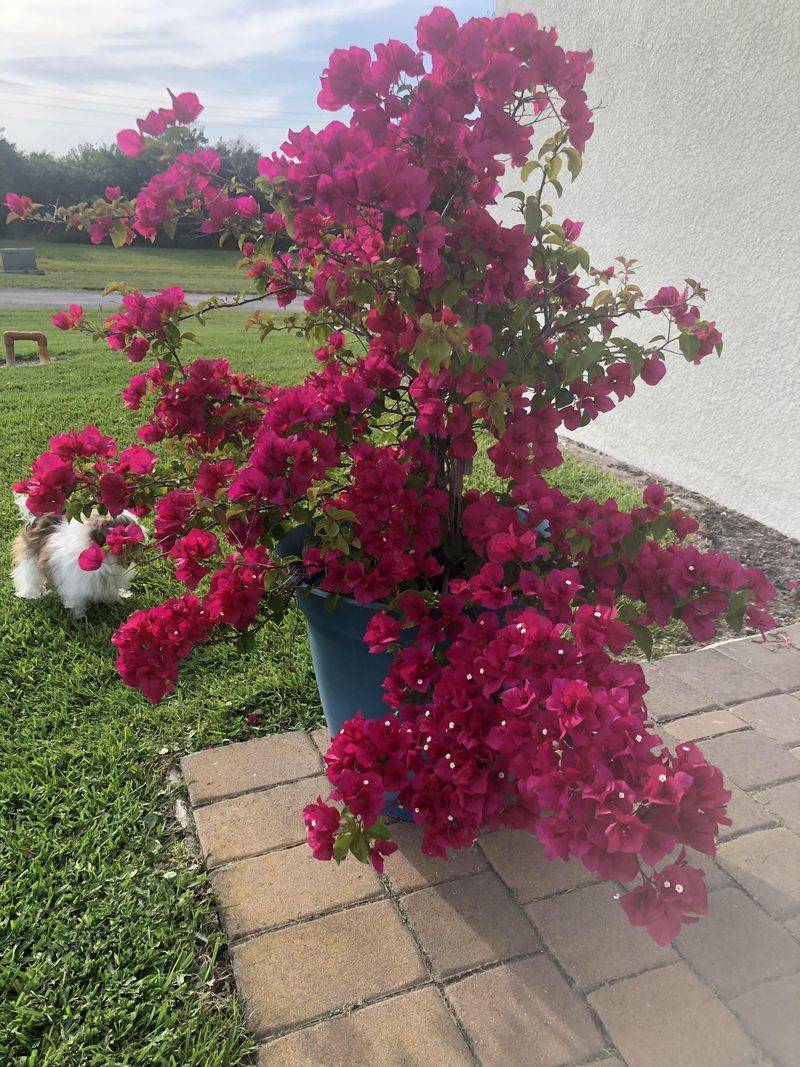
That explosion of pink or purple climbing up a wall looks like something out of a postcard from Santa Barbara. It also does something most people never notice until it’s a problem.
Bougainvillea grows fast, climbs aggressively, and builds up thick, woody stems as it matures.
Underneath all those colorful bracts, dry leaves and debris get trapped in the tangle, sometimes for years, especially in spots the plant hasn’t been touched by a hose or pruning shears in a while.
The real issue is location. This vine is almost always planted right against a house, climbing up stucco, wrapping around porch posts, or spreading across an eave.
That means the exact spot collecting dry fuel is also the exact spot touching your roofline.
Wind makes it worse. A strong gust can shake loose leaves and dry bracts, and those often land in gutters or against the base of the very wall the plant is climbing.
Add a spark from a downed power line or a neighbor’s yard, and that vine becomes a wick leading straight to your home.
Pruning twice a year keeps the interior from turning into a dry, tangled mess. Pull dry material out from the base and wherever the vine touches the structure, not just the parts you can see from the sidewalk.
If your bougainvillea is planted directly against the house, consider training it onto a freestanding trellis a few feet away instead. Same color, same drama, less contact with your siding.
Gutters near a mature vine deserve extra attention every fall. Clear them before the wind picks up, not after.