8 Reasons Zinnias And Cosmos Fade Fast In The State Of Iowa
Color drains fast from flower beds that dazzled you in July. Weather often takes credit, though your garden hides other causes. Iowa mornings sharpen fast, and you feel it settle in.
Blooms react to shifts you might not have caught. Undersides of leaves quietly hide pests you rarely spot there. Humidity climbs steadily overnight, and mildew spreads before you notice.
Roots crammed into tight containers cannot draw water you need. Watering by your clock ignores what soil actually needs. Fertilizer you poured into soil in spring stopped feeding by July.
Heat above certain thresholds forces blooms you love to pause temporarily. Aging plants hit a peak, then fade while you watch. Pests, mildew, heat, and hunger affect your garden together.
Gardeners across Iowa assume your watering routine solves lingering problems. Fixes for what you’re facing stay fast, cheap, and specific. You need to see exactly what’s happening beneath those petals.
1. Powdery Mildew Settles In Fast

Chalky white smudges show up on the lowest leaves first, usually after a stretch of sticky nights in late August. Spores travel on the breeze, and Iowa humidity rolls out the welcome mat for them.
Once that coating spreads, leaves lose their ability to soak up sunlight, so flower color turns dull and buds shrink. Zinnias take the worst of it, though cosmos foliage can get dusty too.
Airflow is your best defense here. Thin crowded stems, pull weeds hugging the base, and aim water at the soil instead of the foliage.
Some gardeners around Des Moines and Ames try mixing one tablespoon of baking soda with a teaspoon of horticultural oil in a gallon of water, then spraying early in the morning, though results can vary.
Store-bought products with sulfur or potassium bicarbonate work well when applied before the problem takes over a bed.
Snip the worst leaves and bag them rather than tossing them on the compost pile. Spores can overwinter on plant scraps left sitting in beds through fall.
Resistant zinnia types such as the Profusion and Zahara series shrug off mildew far better than old-fashioned tall varieties. Planting a few of those next spring can stretch your color show well into October.
A quick tip: give each plant elbow room of at least 12 inches, and pick a spot with morning sun so leaves dry quickly.
Fun fact, powdery mildew does not require standing water to spread like many garden fungi do, which is why it flares during dry spells paired with humid nights.
2. Muggy Nights And Shifting Temperatures

Ask any gardener in Cedar Rapids about September weather and you will hear the same story: 88 degrees on Tuesday, 55 degrees on Thursday. Annual flowers feel those swings far more sharply than we do.
Zinnias and cosmos trace their roots to Mexico, where nights stay mild and steady. When Iowa nights slide into the 40s, growth slows and petals lose that crisp, freshly opened look.
Hot, humid stretches cause their own trouble. Blooms open faster, fade faster, and stems stretch as the plant races through its cycle.
Your Iowa Garden Changes Every Week. Your Plan Should Too.
Gardening in Iowa changes quickly throughout the season. Every Friday you’ll receive a simple weekly plan showing exactly what to plant, prune, fertilize, harvest, and protect so you never miss the right timing.
Two inches of mulch steadies soil temperature so roots are not riding a roller coaster. Shredded leaves, straw, or fine bark all work, just keep the mulch an inch away from the stems.
When a chilly night is forecast, an old bedsheet draped over the bed traps enough warmth to protect open flowers. Pull it off in the morning so plants get full light again.
Container plantings ride the biggest swings because pot soil heats and cools quickly. Grouping pots together or sliding them near a south-facing brick wall softens the change.
According to garden lore, cosmos earned its name from Spanish priests who admired the orderly, balanced petals, and the plant still favors the gentle autumn conditions of its homeland.
Iowa’s first light frost usually arrives in early to mid October up north and a few weeks later down south. Knowing your date helps you plan one last round of blooms instead of being caught off guard.
3. Spent Blooms Left Sitting On The Stem
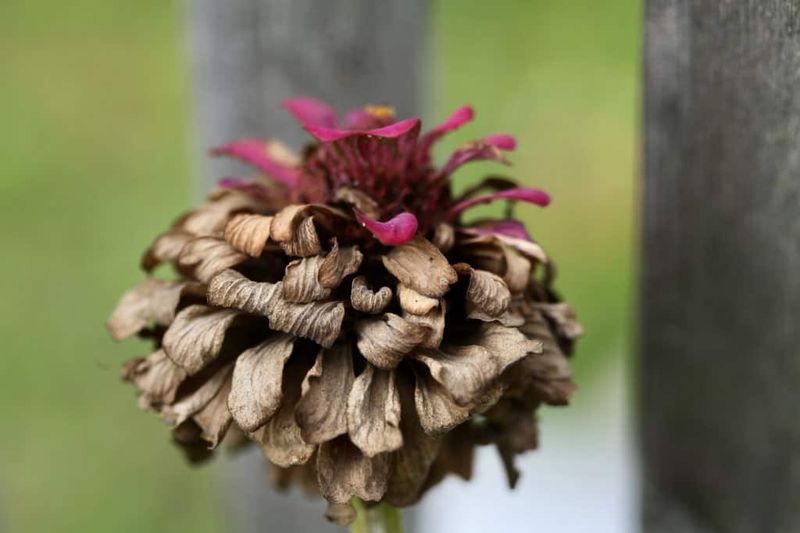
Here is the deal each annual makes with you: it flowers in order to make seed. Once seed heads form, the plant eases up on new buds because its work feels finished.
Snipping faded flowers tricks it into starting over, and both zinnias and cosmos respond within days. Cut back to the next set of leaves or a side bud rather than simply pinching petals off the top.
A pair of clean snips and ten minutes twice a week keeps a bed producing into October. Cutting stems long is generally recommended, since deeper cuts encourage stronger branching.
Cosmos turns leggy and floppy without regular trimming, and old brown blooms mixed among fresh ones drag down the whole display.
Bonus: those cut stems belong in a vase. Zinnias hold up a week indoors if you strip the lower leaves and change the water every two days.
Leave a handful of seed heads at the tail end of the season for goldfinches, which flock to Iowa gardens in fall and pick zinnia centers clean.
Save some seed while you are at it. Zinnia seeds dry easily in a paper envelope on a windowsill, and cosmos self-sows so freely you may find volunteers next June.
Timing matters more than technique. Skipping two weeks in August is usually enough to slow the flower show, so park the snips by the back door where you will actually see them.
4. Crowded Beds Limit Air And Light

Seed packets tell you to thin seedlings, and honestly, that step gets skipped in plenty of gardens. Come September, the bill arrives as small blooms and bare lower stems.
Zinnias want 9 to 18 inches between plants depending on the variety, and cosmos asks for a full 12 to 18. Anything tighter and roots wrestle for water while leaves elbow each other for light.
Packed plants also hold moisture on their foliage long after sunrise, which invites fungal leaf spots. Airflow is basically free medicine for a flower bed.
Thinning in September feels tough, but you can still help. Remove the weakest plants, clip leaves off the bottom six inches of each stem, and yank weeds crowding the base.
Stake taller varieties like Benary’s Giant so they are not leaning on their neighbors. A few bamboo stakes and soft twine cost less than replanting an entire bed.
Next spring, sow thinly and thin twice: once at two inches tall, again at four. Extra seedlings transplant fine on a cloudy morning if you lift them with soil attached.
Watch for volunteer cosmos too. Iowa gardens often sprout dozens of surprise seedlings that quietly steal space from the plants you meant to grow.
Try a simple test. Part the foliage with your hand, and if leaves stay damp at midday or you cannot spot bare soil anywhere, the planting is too tight for strong late-season performance.
5. Heavy Nitrogen Pushes Leaves Over Flowers
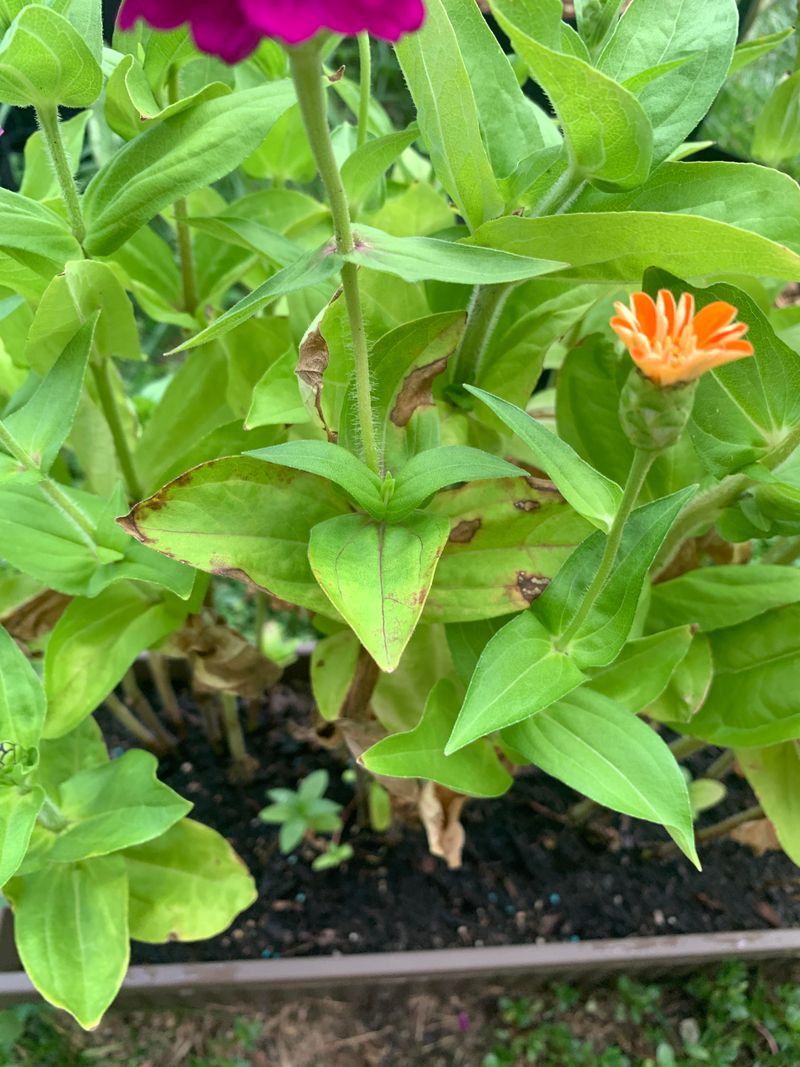
Lawn fertilizer drifting into a flower bed can leave a cutting garden overgrown with leaves and short on blooms. Nitrogen builds foliage, while phosphorus and potassium support flowers and sturdy stems.
Zinnias and cosmos genuinely prefer lean soil. Cosmos in particular performs poorly in rich soil, growing chest high with floppy stems and reduced flower production.
If your plants look enormous and green but shy on color, pause the feeding for the rest of the season. Soft, fast growth also attracts aphids, which pile onto tender tips.
A balanced granular fertilizer with numbers like 5-10-5, used once in June, is often enough for typical Iowa soil, though a soil test will confirm what your bed actually needs.
Keep an eye on where lawn spreaders throw granules. A three-foot buffer between turf and flower beds prevents accidental overfeeding in spring.
Overfed plants flop after storms, too. Late-summer Iowa thunderstorms flatten tall, sappy stems that would have stood tall if growth had been slower and firmer.
As the story goes, cosmos brought to Iowa gardens generations ago thrived along gravel drives and neglected fence lines, suggesting these flowers ask for less than we assume.
A soil test through your county extension office costs a few dollars and takes the guesswork out. Once you know your levels, you can feed with purpose instead of habit.
Should growth already be leafy, thin some inner foliage so light reaches the buds, then hold off on liquid feed until spring.
6. Sprinklers Soaking Foliage At The Wrong Hour

Sprinklers running at dinnertime feel efficient, yet wet leaves at sundown stay damp for ten hours straight. That window is exactly what leaf spot fungi are waiting for.
Aim water at the soil with a wand, soaker hose, or drip line, and do it in the morning. Deep soaks once or twice a week beat daily light sprinkles.
Shallow watering trains roots to hover near the surface, where Iowa’s late-summer heat bakes them. Deeper roots ride out dry spells with far less stress.
An inch of water per week, rainfall included, keeps zinnias steady, while cosmos gets by on less and actually blooms better slightly dry. A cheap rain gauge tells you where you stand.
Uneven moisture shows up as stalled buds and small, pale flowers. Mulch smooths those swings and saves you a couple of trips with the hose.
Containers play by different rules. Pots on a sunny Iowa deck may need water daily in September, since roots have nowhere else to reach.
Poke a finger two inches into the soil before you water. If it feels damp, wait a day, because soggy roots fade a plant as quickly as thirst does.
Autumn rains flip the problem overnight. When a wet week rolls through, shut off timers so beds are not getting double what they need.
One habit worth building: check plants in the cool of the morning, when wilting tells the truth. Midday droop is often just heat, and plants perk back up by evening.
7. Japanese Beetles, Spider Mites, And Other Pests Move In
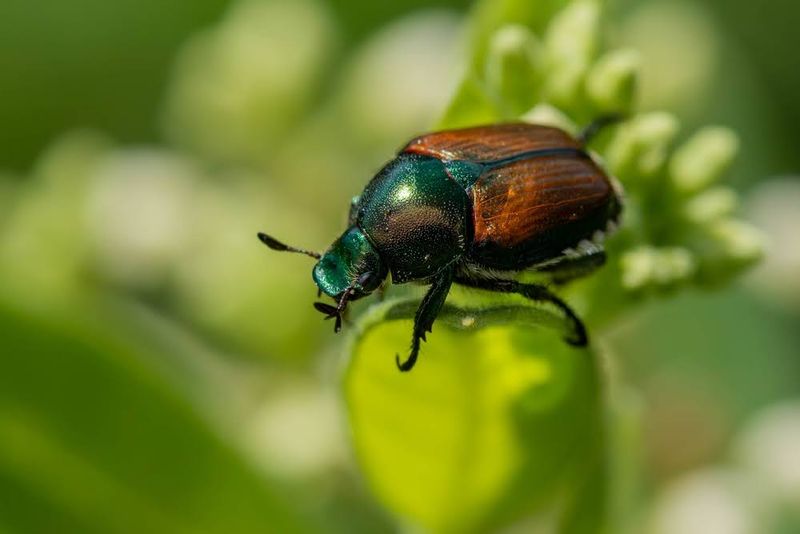
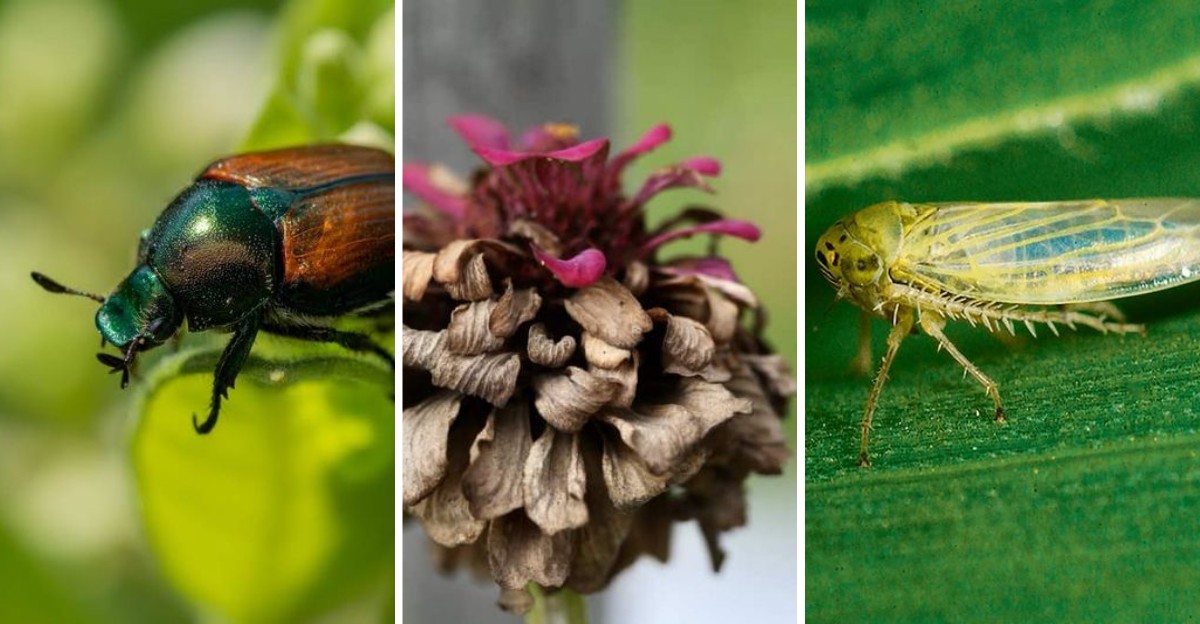
Japanese beetles land in Iowa around late June and linger into September, and zinnia petals are one of several plants they target.
Knock beetles into a bucket of soapy water early in the morning while they are sluggish. Traps tend to invite more beetles onto your property than they capture.
Spider mites are the sneakier issue in a dry summer. Look for fine webbing and stippled, dusty-looking leaves, especially on the undersides.
A firm spray of water aimed under the foliage knocks mites back, and insecticidal soap handles heavier populations. Repeat every few days until the mites are under control.
Aphids cluster on soft new tips and leave a sticky residue that draws ants. Ladybugs and lacewings usually arrive on their own if you skip broad-spectrum sprays.
Earwigs and slugs work the night shift after wet spells, leaving holes with no visible culprit at sunrise. A rolled damp newspaper left out overnight makes an easy trap.
Evenly watered plants with room to breathe shrug off chewing damage better than stressed ones, which is why spacing and watering habits matter here too.
Keep an eye out for tarnished plant bugs as well, since they cause distorted buds that open crooked. Clearing weeds along fence lines cuts down their hiding spots.
Scout twice a week with a hand lens if you own one. Catching a small population early takes five minutes, while waiting two weeks turns it into a weekend project.
8. Aster Yellows Rides In With Leafhoppers
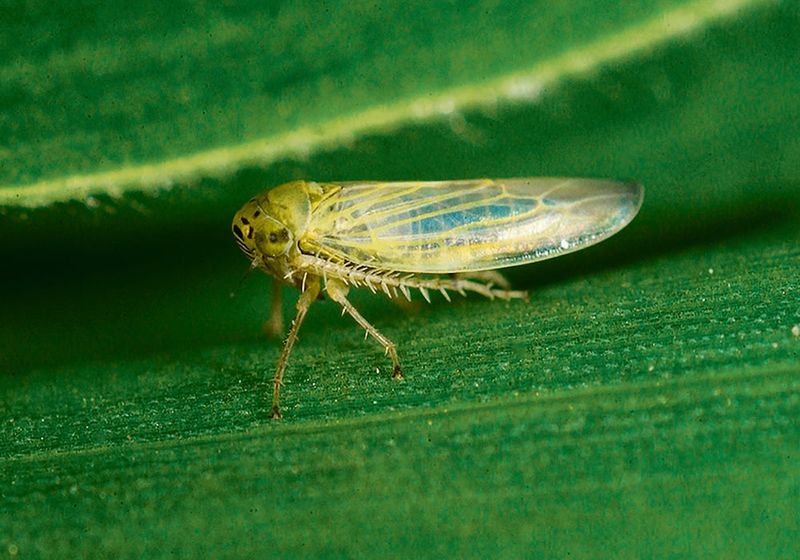
Ever seen a zinnia bloom open green, twisted, and oddly leafy? That strange look points to aster yellows, a disease carried by tiny leafhoppers.
Organisms called phytoplasmas travel in the insect’s saliva and settle into the plant’s food-carrying tissue. Flowers turn stunted, and foliage often yellows along the veins.
No spray cures it once symptoms appear. Affected plants should be pulled and bagged so leafhoppers cannot pick the problem up and carry it down the row.
Leafhoppers ride into Iowa on southern winds each spring and feed on more than 300 plant types, including lettuce, carrots, and coneflowers. Weedy borders full of thistle and plantain give them a comfortable place to hang around.
Mowing field edges and clearing weeds near beds lowers the odds considerably. Floating row cover over young plants in June blocks early feeding, which is when infection usually begins.
Cosmos shows symptoms less often than zinnias, though it can quietly carry the disease along. Mixing species within a bed slows how fast trouble travels.
Keep tools clean and hands washed between plants out of habit, even though this particular problem moves by insect rather than touch.
Watch for stunted growth paired with bunched side shoots, a look gardeners sometimes call witches’ broom. Spotting it early keeps one odd plant from turning into a whole row of them.
September is a fine time to tidy up. Clearing affected plants, old stems, and weedy corners now gives next year’s flower bed a cleaner start.