These Striped Caterpillars Are Suddenly Showing Up On Georgia Oak Trees
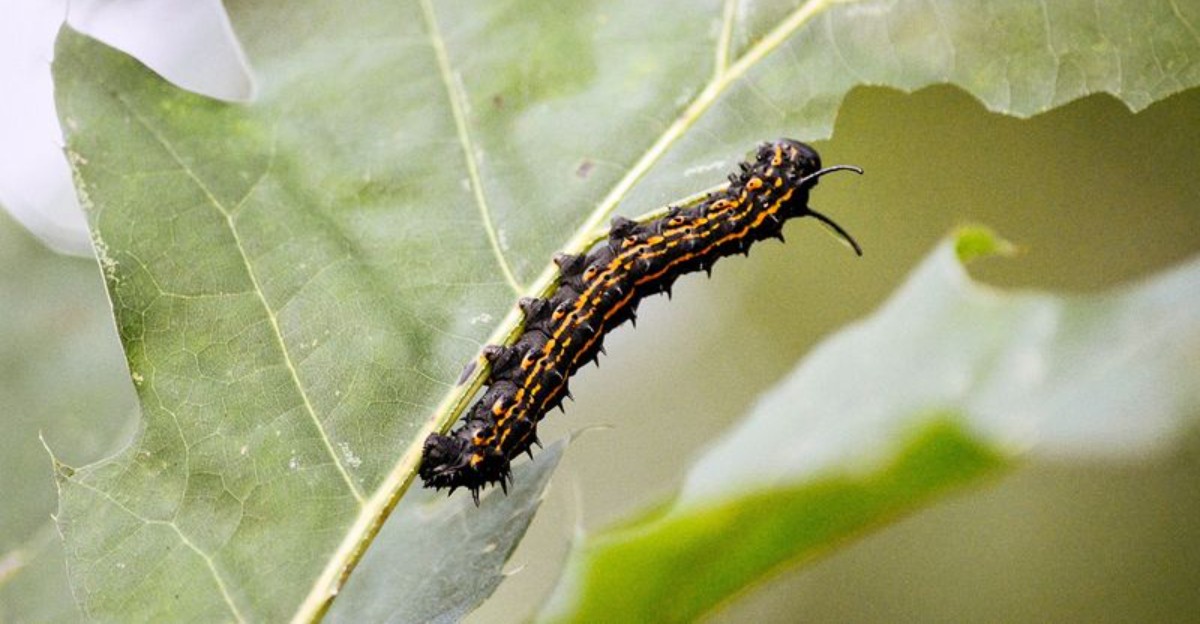
Striped caterpillars clustered on an oak trunk can make you wonder what happened while you were not looking. Their sudden appearance is hard to miss once they gather together.
These caterpillars may spend their earlier stages feeding higher in the canopy, where you are less likely to notice them.
Later, their movement down the tree can make it seem as though they arrived all at once. Georgia oaks host several caterpillar species, so appearance and behavior both matter for identification.
Resist judging the situation by the number of caterpillars alone.
Look at their markings and where they are gathering before deciding whether your tree needs attention. Those details can reveal far more than the crowd itself.
Know what you are seeing first, and the next move becomes much easier to figure out.
1. Those Bold Stripes Make These Caterpillars Hard To Miss
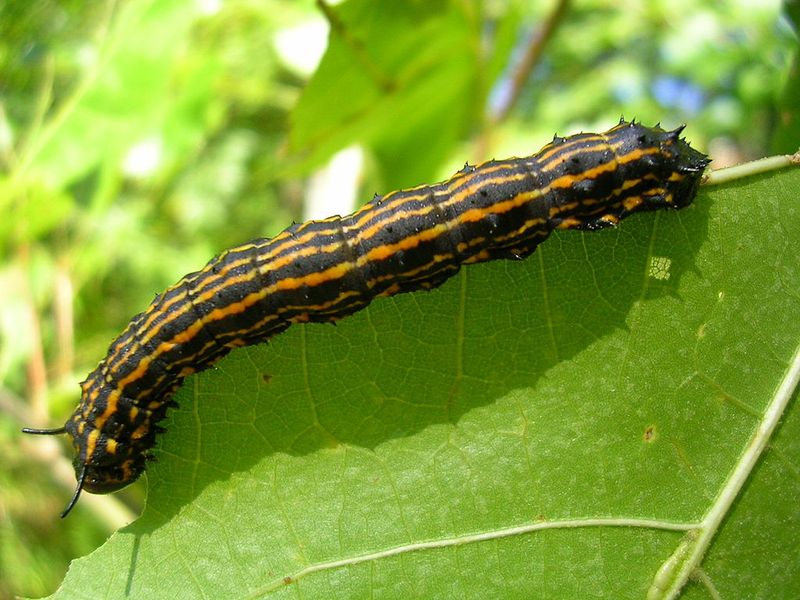
Bright orange lines against a nearly black body: that color combo is the giveaway. Orangestriped oakworms wear about eight thin stripes running the length of their sides, and the contrast makes them stand out on green leaves.
Full-grown ones reach roughly two inches long. Behind the head sit two slender horn-like spines that look tougher than they actually are.
Younger ones look different enough to confuse people. Early on, they appear paler and more yellowish-green, with the stripes darkening as they grow and shed their skins.
Handling generally does not cause problems, though a few people report mild skin irritation from bristly caterpillars. Gloves are an easy precaution if you plan to pick any off by hand.
Around Georgia neighborhoods, folks often mistake them for something more alarming. Unlike stinging caterpillars such as the puss caterpillar, oakworms lack venomous spines and are considered harmless to touch.
Size and stripe count help separate them from lookalikes. Fall webworms build silk tents, and tent caterpillars spin webbing in branch forks, while oakworms leave no webbing at all.
Watch where they gather, too. Feeding groups sitting openly on chewed leaves without silk usually points toward oakworms rather than a web-building species.
Snap a photo if you are unsure, since a county Extension office can confirm the identification quickly and free of charge.
2. Orangestriped Oakworms Gather Together While They Are Young
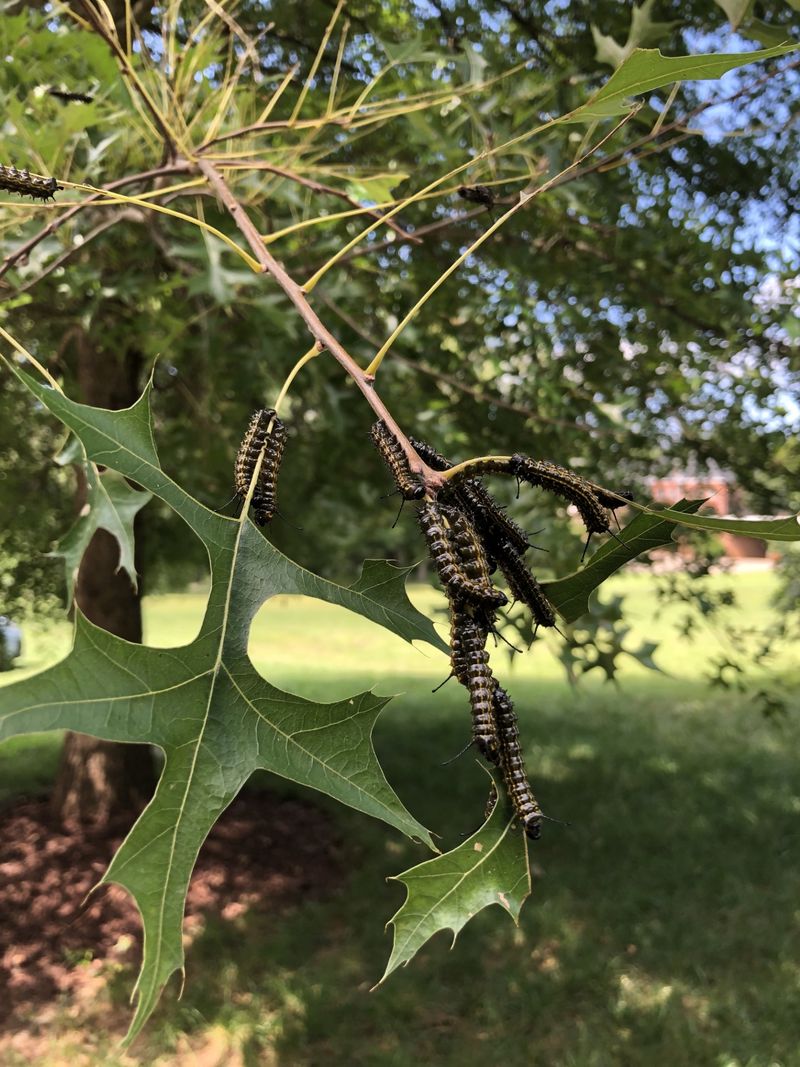
Safety in numbers explains their early behavior. Freshly hatched oakworms stay bunched on a single leaf or small group of leaves, feeding shoulder to shoulder.
Egg masses get laid on the underside of leaves, sometimes with a hundred or more eggs in one batch. Those siblings hatch around the same time, which is why you find dense clumps rather than scattered individuals.
Feeding starts small. Tiny caterpillars skeletonize the leaf surface, leaving thin veins behind and a lacy, see-through look.
As they grow, the group loosens up and spreads across the branch. Older ones wander alone and take bigger bites, chewing through everything except the toughest midribs.
Clustering has a practical upside for homeowners in Georgia. Catching a colony early means you can prune off one infested branch and remove dozens at once.
Your Georgia Garden Changes Every Week. Your Plan Should Too.
Gardening in Georgia changes quickly throughout the season. Every Friday you’ll receive a simple weekly plan showing exactly what to plant, prune, fertilize, harvest, and protect so you never miss the right timing.
Water works too. A hard blast from the hose knocks small groups down, and few make it back up the trunk.
For young caterpillars on small or newly planted oaks, products containing Bacillus thuringiensis subspecies kurstaki can help when applied while they are still tiny. Coverage matters, and larger caterpillars respond poorly.
Tall shade trees rarely justify spraying at all, partly because reaching the canopy safely requires professional equipment.
Timing beats effort here, so a weekly walk under your oaks in midsummer pays off more than any product.
3. Oak Leaves Are Their Favorite Food
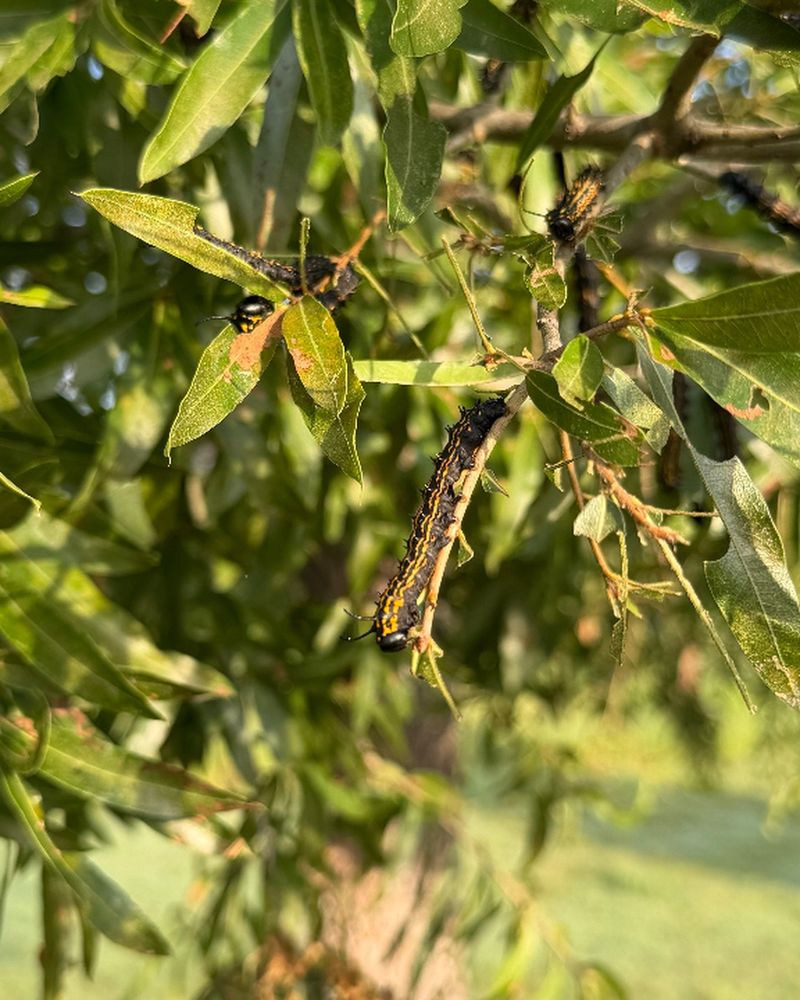
The name says it plainly. Oakworms feed on oak foliage, and in the Southeast that means plenty of hosts to choose from.
Red oak group species tend to take the heaviest hits. Water oak, willow oak, southern red oak, and pin oak all appear regularly on the menu.
White oaks and post oaks get fed on as well, though usually with less enthusiasm. Preference can shift from year to year and yard to yard.
Other hardwoods occasionally get nibbled when a colony runs out of leaves nearby. Hickory and maple have been reported as secondary hosts, but oaks remain the main target.
Across much of Georgia, water oaks and willow oaks were planted heavily in older subdivisions and along streets. Those dense plantings give the caterpillars an easy food supply within short flying distance for egg-laying moths.
Street trees often show damage first for that reason.
Numbers swing widely between seasons. Some years pass with almost no sign of them, then a heavy flight produces noticeable feeding across whole blocks.
Natural controls play a big role in those ups and downs. Parasitic wasps, flies, birds, and diseases keep populations in check most seasons, which is one reason blanket spraying rarely helps long term.
Diversity in your yard helps as well, since mixing tree species reduces how much of your shade depends on oaks alone.
4. Chewed Foliage Can Become Noticeable Surprisingly Fast
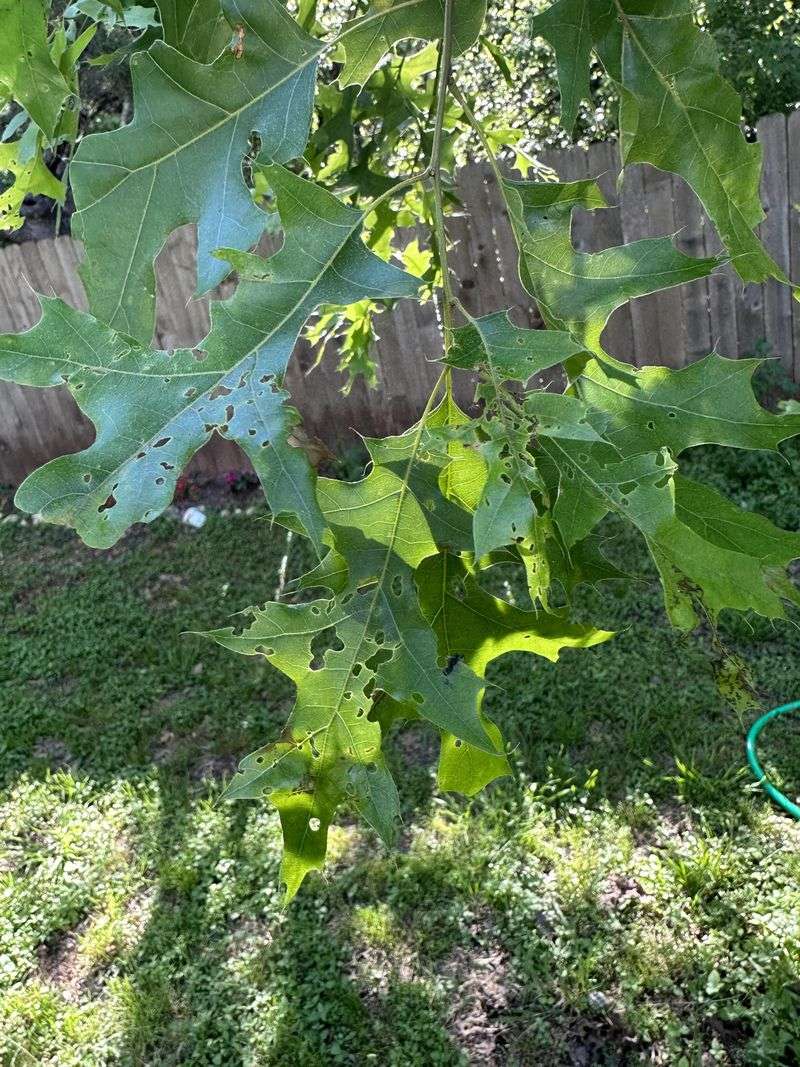
Two weeks is often all it takes. Damage that looked like minor speckling can turn into bare branches once the caterpillars reach their final growth stages.
Appetite climbs sharply near the end. Late-stage larvae eat the large majority of the total foliage a colony consumes, which is why the change feels sudden.
Damage usually starts in one section of the canopy. A single egg mass creates a patch of chewed leaves, and neighboring patches merge as the group spreads outward.
Leaves get stripped down to midribs and larger veins. From the ground, that section looks brown, thin, or almost skeletal against the rest of the tree.
Homeowners across Georgia frequently call about this stage, convinced something struck overnight. In reality, the small caterpillars had been feeding quietly overhead for a couple of weeks.
Checking early makes a real difference.
Look up through the canopy on a bright day and watch for pinholes or lacy patches of light. Binoculars help more than you would expect for spotting trouble on tall trees.
Heavy defoliation on one tree does not automatically mean neighboring oaks will follow, since egg-laying is patchy. Some yards see one tree hit hard while the oak next door stays untouched.
Keep notes on which trees get hit, because repeat patterns help you plan monitoring in later summers.
5. Dark Droppings Below The Canopy Offer Another Clue
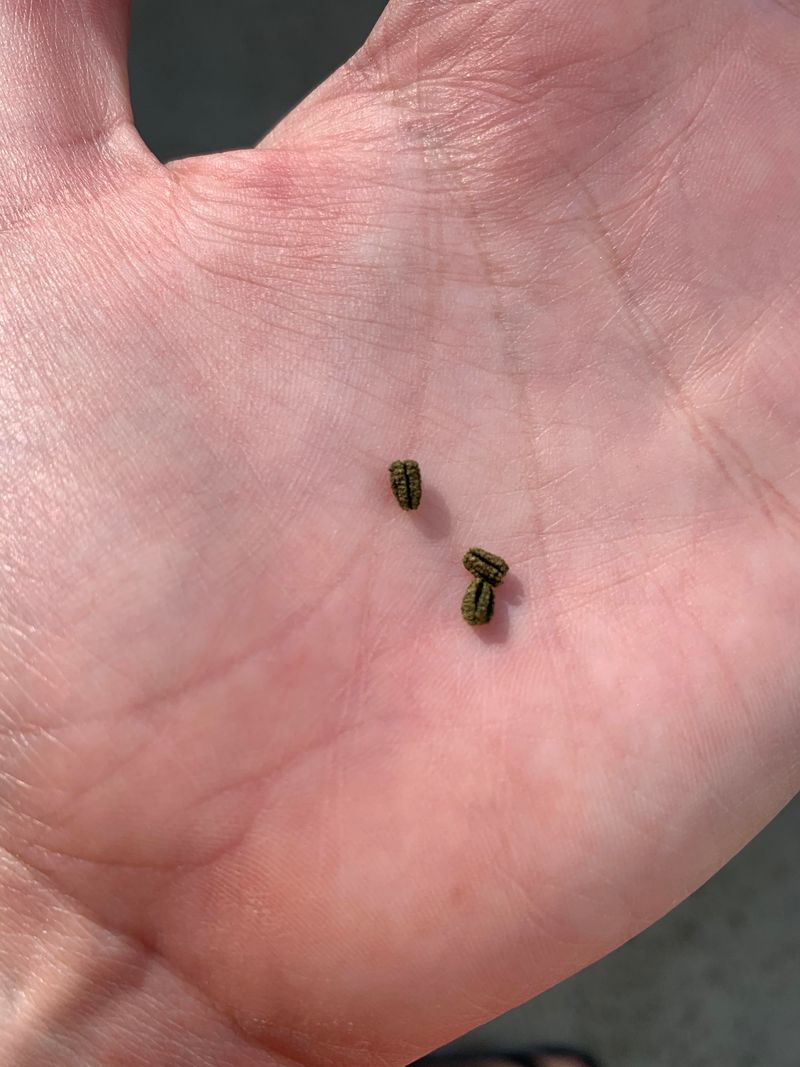
Sometimes you hear them before you see them. On quiet evenings, falling droppings patter against leaves and pavement like light rain.
Frass is the term for caterpillar waste, and oakworms produce a lot of it. The pellets are small, dark, and slightly ridged, piling up on driveways, decks, and parked cars.
Pool owners notice fast. Skimmer baskets fill with pellets, and the water can look dirty within a day or two.
Slick spots develop when the pellets get wet. Sweeping sidewalks and steps regularly keeps walkways from becoming a slipping hazard.
Plenty of Georgia homeowners find the mess more annoying than the leaf damage itself. Outdoor furniture, grills, and mailboxes all end up needing a rinse during a heavy year.
A hose and stiff broom handle most of it.
Droppings do not harm lawns or garden beds, and they break down quickly once rain works them into the soil. Some gardeners just rake them into mulched areas and move on.
Frass also tells you where to look. Trace a heavy pile straight up and you will usually find the busiest part of the canopy above it.
Consider moving cars and covering patio cushions during peak feeding, since a simple tarp saves a lot of scrubbing later in the season.
6. Mature Oaks Usually Handle The Feeding Better Than Expected
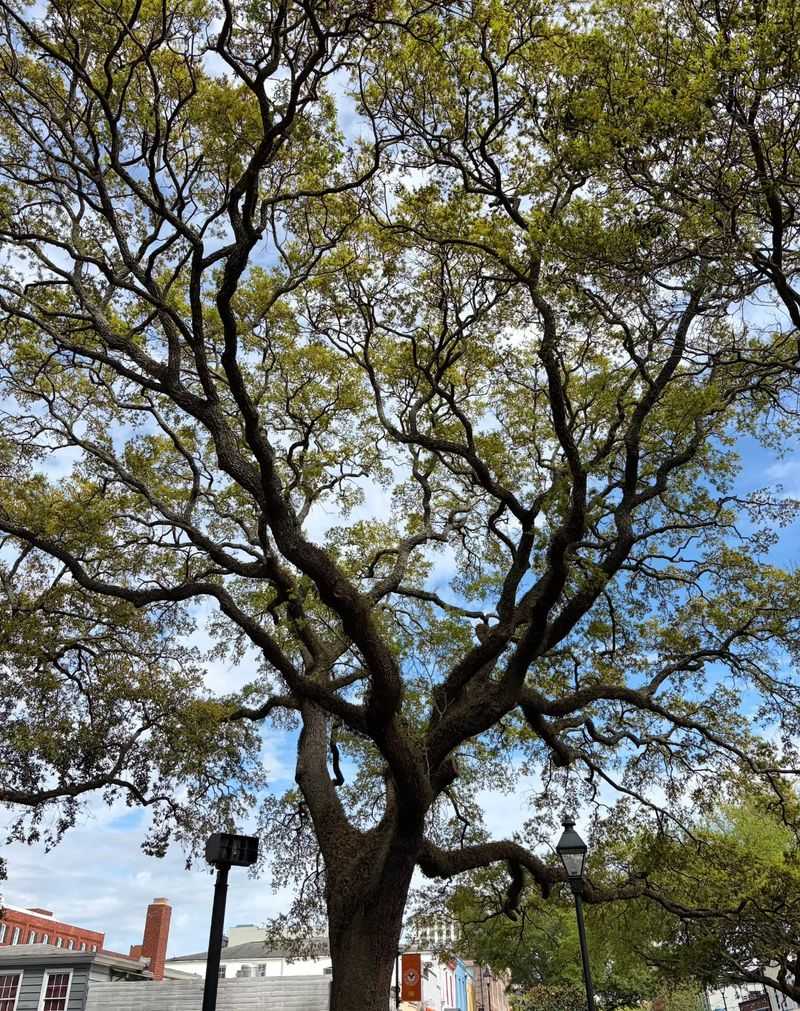
Timing works in the tree’s favor. Oakworm feeding peaks late in the growing season, after oaks have already stored much of the energy they need.
Established trees can lose a good share of their leaves in August and still leaf out normally the following spring. Damage looks worse than it usually is.
Repeated defoliation is a different story. Several rough years in a row, especially combined with drought or root damage, can weaken a tree and open the door to borers and other pests.
Younger and recently transplanted oaks carry less reserve. Those deserve closer attention, and hand-removal is realistic on a small tree.
Supporting tree health beats chasing caterpillars.
Deep watering during dry spells, mulch spread wide instead of piled against the trunk, and no soil compaction over the root zone all help.
Fertilizer is not a fix for defoliation and can sometimes push weak growth at the wrong time.
Georgia summers often bring dry stretches that stress trees more than the insects do. Watering a mature oak slowly during those weeks does more good than any spray.
Call a certified arborist if a tree shows bare or declining upper branches, mushrooms at the base, or thinning that continues into the next season. Those signs point to problems beyond a single year of chewed leaves.
7. Their Time In The Trees Ends As Fall Gets Closer
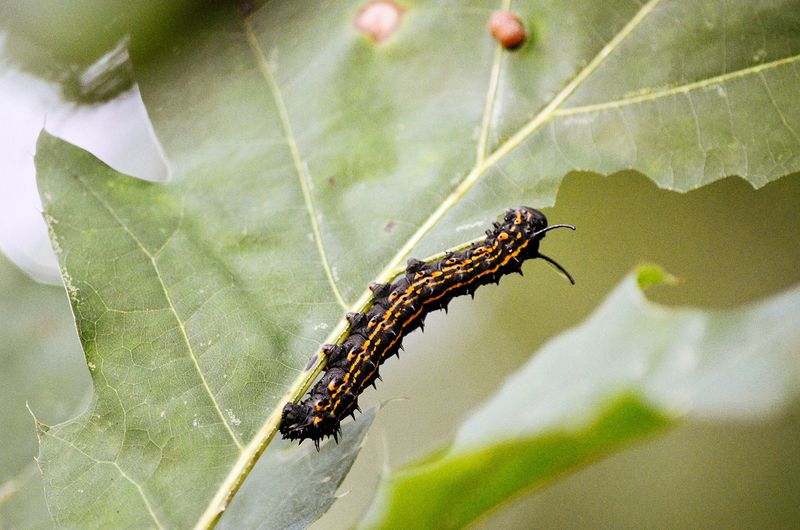
Suddenly they are on the ground. Once full grown, oakworms leave the canopy and crawl down trunks, across driveways, and over patios looking for soil.
That wandering stage catches people off guard. Caterpillars turn up on doorsteps and porch screens, but they are searching for a place to pupate, not looking to come inside.
Pupation happens in the top few inches of soil or leaf litter. Chrysalids overwinter there, tucked under mulch and fallen leaves.
Adults emerge as medium-sized moths with rusty-orange to brownish wings, each forewing marked with a small pale dot. Females lay eggs on oak leaves the following summer.
Much of Georgia sees the heaviest larval activity from midsummer into September, though timing varies with weather and location. Warmer coastal areas may run a little ahead of the mountains.
Cooler nights signal the wind-down.
Raking heavy leaf litter under badly hit oaks may reduce some overwintering pupae, but nearby trees still supply plenty of moths. Do not expect that step to prevent next year’s flight.
Sticky trunk bands rarely help, since caterpillars are heading down rather than up.
Populations tend to collapse on their own after a big year, thanks to parasites and predators building up in response. Patience often solves the problem more reliably than anything you spray.