Stop Pulling This Up In Your Arizona Yard – It’s Not A Weed, It’s Feeding The Pollinators
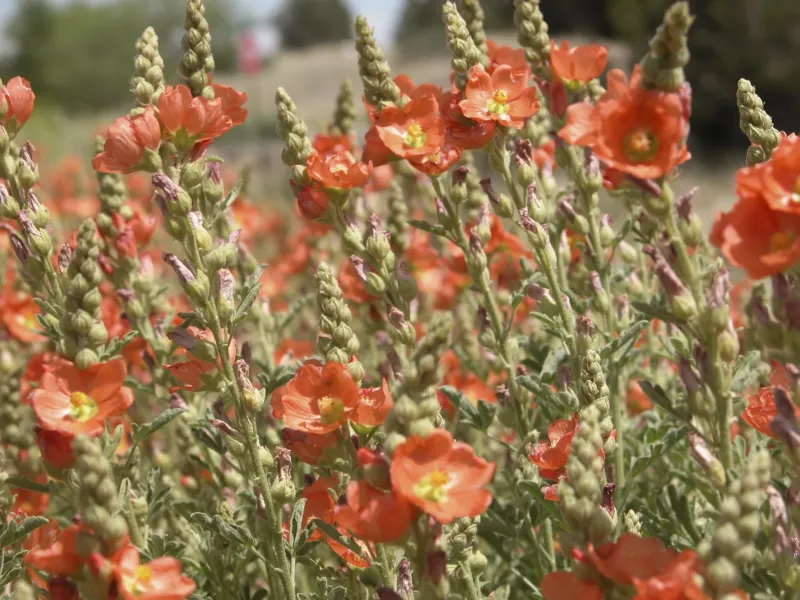
That scraggly, gray-green plant popping up uninvited in your Arizona flower bed might be worth a second look before you grab the trowel. Plenty of low-desert homeowners yank these volunteers on sight, assuming anything that grows on its own must be a weed.
If the plant has fuzzy leaves, woody stems, and cup-shaped orange or pink flowers, it could be desert globemallow – one of the more useful natives that shows up on its own in Phoenix and Tucson yards. Identifying it correctly is the first step, because not every spontaneous volunteer deserves to stay.
Identify the volunteer before you pull it
Spontaneous growth in an Arizona yard does not automatically mean a weed, but it does not automatically mean a keeper either. Before you pull anything, take a close look at what you actually have.
The most useful question is not whether the plant appeared on its own, but whether you can match it to a known species using several physical traits together.
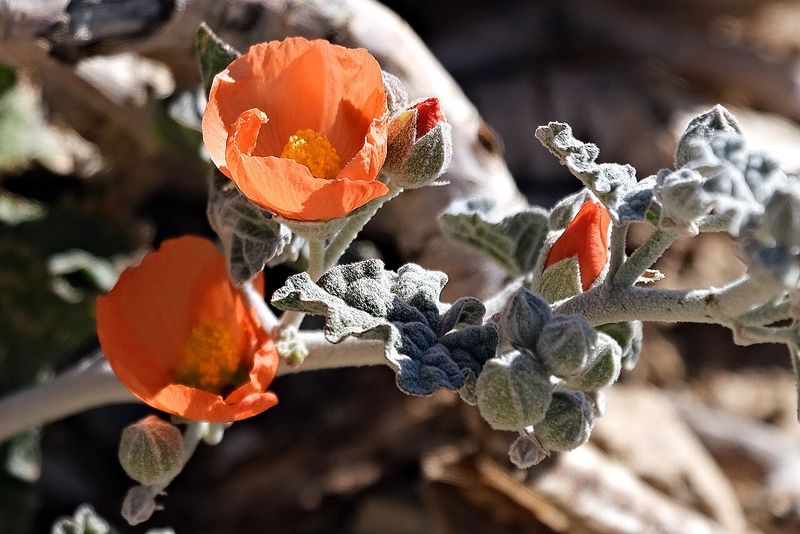
Desert globemallow, Sphaeralcea ambigua, is one of the more plausible volunteers in low-desert Arizona yards. Its leaves are grayish-green, distinctly fuzzy to the touch, and shaped somewhere between triangular and shallowly lobed – almost like a soft, dusty maple leaf.
The stems are woody or semi-woody at the base, not soft and easily snapped the way annual weeds tend to be. Flowers are cup-shaped with five petals and commonly appear in shades of orange or apricot, though related Sphaeralcea species can produce pink, red, or even lavender blooms.
That variation in flower color is exactly why color alone is not a reliable identifier. Match the fuzzy foliage, woody stems, and mallow-style flower shape together before drawing any conclusion, and consider sending a photo to your county cooperative extension office if you are still uncertain.
What globemallow offers pollinators
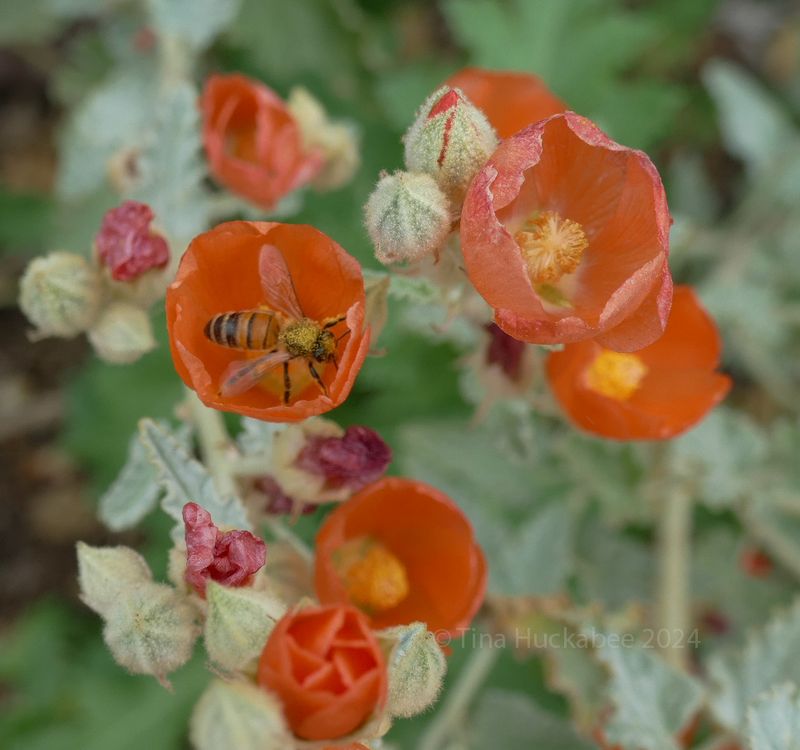
A correctly identified globemallow earns its spot in a low-desert yard partly because of how many different visitors its flowers can attract. The blooms supply both pollen and nectar, making them useful to a wider range of insects than plants that offer only one resource.
Native bees are among the most consistent users. Honeybees, butterflies, and moths also visit the flowers, and hummingbirds have been recorded foraging at globemallow blooms in desert settings.
That is a meaningful list, but it comes with a realistic qualifier: having one globemallow plant in your yard does not guarantee you will see all of these visitors on any given day.
Pollinator activity shifts with the season, the weather, pesticide history in the surrounding area, and what else is blooming nearby.
Where this native performs best
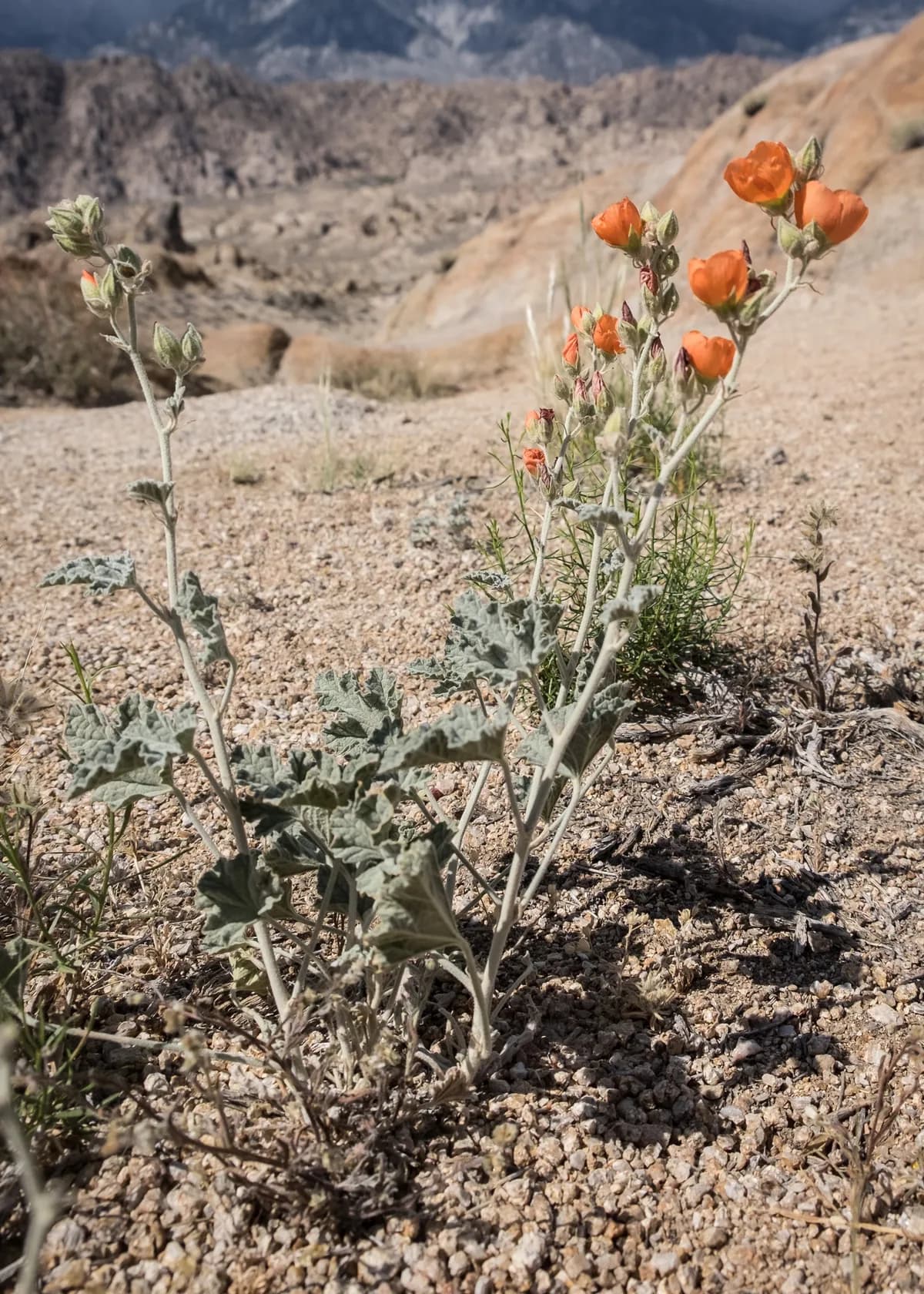
Full sun and fast-draining soil are where globemallow consistently does its best work. In low-desert Arizona, that description fits a lot of yards, which is part of why the plant naturalizes so readily.
Rocky, sandy, or gravelly ground that drains quickly after rain suits it well, and it handles the kind of alkaline soil common across the Phoenix and Tucson metro areas without significant complaint.
Your Arizona Garden Changes Every Week. Your Plan Should Too.
Gardening in Arizona changes quickly throughout the season. Every Friday you’ll receive a simple weekly plan showing exactly what to plant, prune, fertilize, harvest, and protect so you never miss the right timing.
The caveats matter just as much as the strengths. Heavy caliche layers that trap water, compacted soil in older turf conversion areas, and beds that collect irrigation overspray can all reduce performance or cause root problems.
Reflected heat from walls, pavers, or driveways can push stress beyond what even a drought-adapted plant handles comfortably, particularly during prolonged summer stretches above 110 degrees. The label “native” or “drought-tolerant” is not a guarantee that a plant will thrive in every microclimate a yard can produce.
Size is another practical consideration. Some references describe established desert globemallow reaching roughly 3 feet tall and spreading 2 to 4 feet wide, and UC Davis Arboretum’s profile of desert globemallow confirms its open, spreading habit.
That growth pattern makes it a better fit for an open bed or a naturalized border than a tight edging row. Plan for the mature spread when deciding where a volunteer is worth keeping, rather than assuming it will stay compact.
Decide whether to keep, prune, or remove it
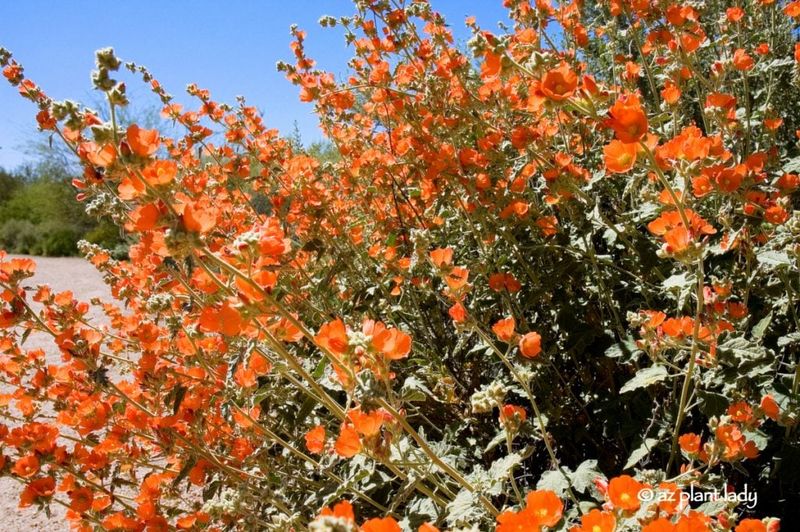
Once you have confirmed the plant is globemallow, the next question is practical: does it work where it landed? A volunteer that sits in an open, sunny bed away from walkways, windows, and irrigation emitters is usually worth keeping.
One that is pushing into a drip line, blocking a path, or crowding a plant you actually want there is a reasonable candidate for removal, regardless of how useful the species might be in a better spot.
Established globemallow can spread through self-seeding and, depending on the species, through rhizomes. The Arizona Native Plant Society notes that some globemallow species produce abundant progeny, so managing spread by removing extra seedlings or cutting back runners is a normal part of living with the plant, not a sign that something has gone wrong.
Pruning can make an established plant look neater after bloom cycles, but it is optional tidying rather than a requirement for plant health.
One caution worth taking seriously: moving a mature volunteer is risky. Established desert-adapted plants develop extensive root systems suited to their exact spot, and the reviewed evidence does not support casual transplanting as a reliable fix when a location is inconvenient.
If the plant is in a workable place, leave it there. If it is genuinely in the wrong spot and too large to move safely, removing it and planting a new specimen in a better location is the more dependable path forward.
Water it according to its stage and site
Drought tolerance is real, but it applies to established plants with developed root systems, not to something you just decided to keep or recently put in the ground. A newly retained volunteer that you have disturbed, or any globemallow planted from a container, needs consistent moisture while its roots extend into the surrounding soil.
Skipping that establishment phase is one of the more common reasons otherwise well-suited natives fail in Arizona yards.
Arizona Cooperative Extension’s watering schedule for newly planted desert-adapted plants lays out a practical progression: water every one to two days during the first two weeks in summer heat, then stretch intervals gradually so that by weeks seven and eight you are watering roughly every seven days. That schedule is a starting framework, not a fixed rule.
Actual frequency needs to respond to your soil type, sun exposure, rainfall, drainage, and whether the plant shows signs of stress like wilting or bleached foliage.
Once established, globemallow can get by on less, but that does not mean rainfall alone will always be enough in Phoenix or Tucson. During extended dry stretches or prolonged heat events, supplemental deep watering helps.
Shallow, frequent watering is counterproductive; it encourages surface roots and wastes water without building the deep root system the plant needs. For timing new plantings, Pima County Cooperative Extension guidance identifies October as favorable for perennials like desert mallow, with early spring around March also working before extreme heat returns.
Those windows reflect generally favorable low-desert conditions, not a guaranteed statewide rule that applies to every soil type, exposure, or weather pattern.
Rule out stinknet before saving a volunteer
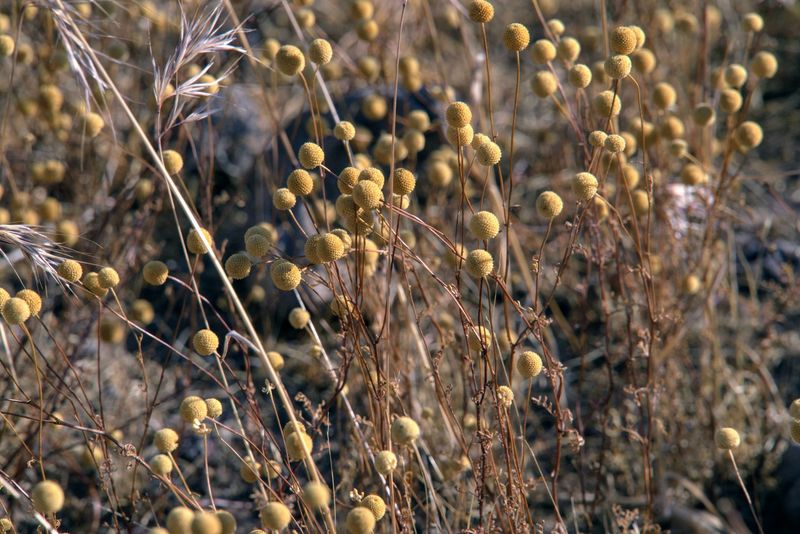
Encouraging homeowners to pause before pulling a volunteer only makes sense if they can tell a useful native from an invasive plant. Stinknet, also called globe chamomile, is exactly the kind of lookalike situation that makes identification non-negotiable before any conservation decision.
The two plants are not actually difficult to confuse at a glance when both are young and leafy, but their details are very different. Globemallow has fuzzy, gray-green leaves with a soft, triangular or lobed shape, woody stems, and five-petaled cup-shaped flowers in shades of orange, apricot, pink, or red.
Stinknet has deeply divided, feathery leaves that look more like carrot or fennel foliage, produces bright yellow button-shaped flower heads made entirely of tiny disk flowers with no visible petals, and releases a strong, distinctive odor when the foliage is crushed. That smell test alone is often enough to settle the question.
University of Arizona Cooperative Extension’s stinknet resource confirms that this introduced invasive annual is spreading through Maricopa, Pinal, and Pima counties, displacing native vegetation as it goes. Keeping it because it appeared spontaneously would be a mistake.
The practical sequence is straightforward: identify the plant using several traits, not just a quick glance at the flower, then decide whether to keep it or pull it. A volunteer that matches globemallow’s fuzzy foliage, mallow-style flower, and woody stems is a candidate worth keeping.
One that matches stinknet should come out.
Keep the useful plant without overpromising
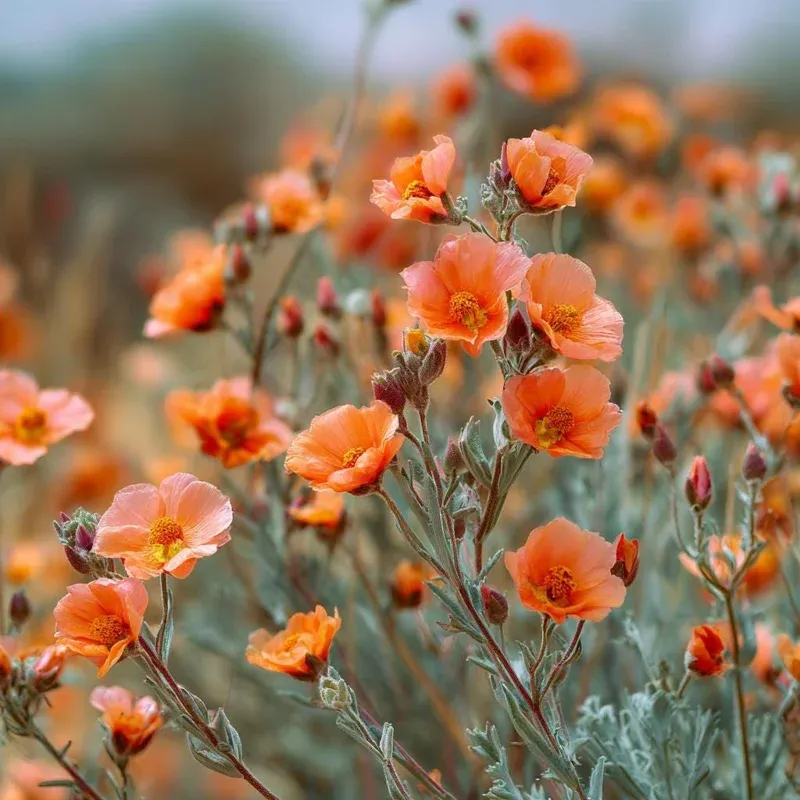
A correctly identified desert globemallow can be a genuine asset in a low-desert yard. It provides pollen and nectar for multiple pollinator groups, handles dry and rocky conditions that defeat less-adapted plants, and asks for relatively little once its roots are settled.
Those are real strengths, and they are worth recognizing.
They are also not a blank check. Globemallow is not the right fit for every site, and it does not function as pest control.
Keeping one plant will not eliminate scorpions, mosquitoes, or ticks from your yard. Pairing it with other Arizona-adapted natives that bloom across different seasons is what builds a yard that actually supports pollinators over time, rather than offering a brief window of activity from a single species.
The bigger lesson from this whole situation is the one the original impulse to pull missed: an unidentified volunteer deserves a closer look before it comes out. If it turns out to be globemallow in a workable spot, let it stay, monitor its spread, and give it the establishment water it needs.
If it is stinknet or another invasive, pull it without hesitation. A yard that works for Arizona wildlife starts with knowing what is growing in it.