Why Goldfinches Are Suddenly Flocking To Arizona Yards As Summer Winds Down
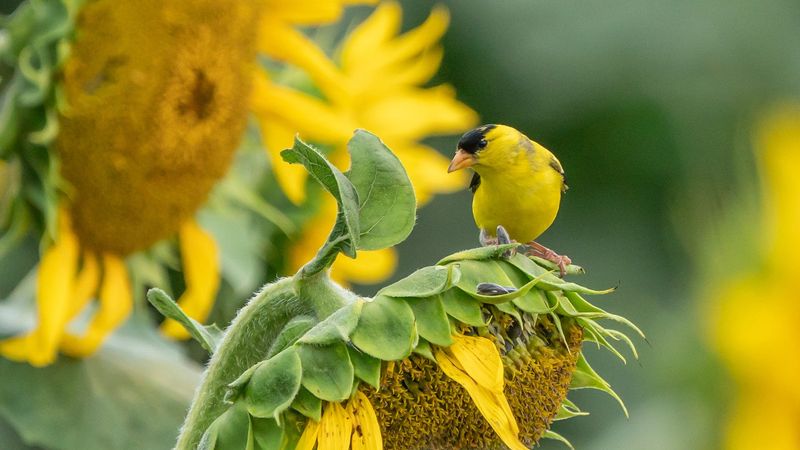
If you have spotted small yellow-and-black birds working their way through your yard as the summer heat begins to ease, you are not alone. Some Arizona homeowners in the Phoenix and Tucson areas have noticed what looks like a bump in goldfinch activity around this time of year, and it raises a fair question about what is drawing them in.
The honest answer is more layered than a simple migration story, and understanding it can help you make your Arizona yard genuinely useful to these birds right now.
Some Arizona Yards May See More Goldfinch Activity
Across Arizona, a handful of homeowners have been noticing more small finches working through their yards as August and September arrive. The pattern is real in some neighborhoods, but it would be a stretch to call it a sudden statewide arrival or one unified migration event.
What is more likely happening is a combination of local movement, shifting food availability, and birds concentrating at yards that offer reliable resources.
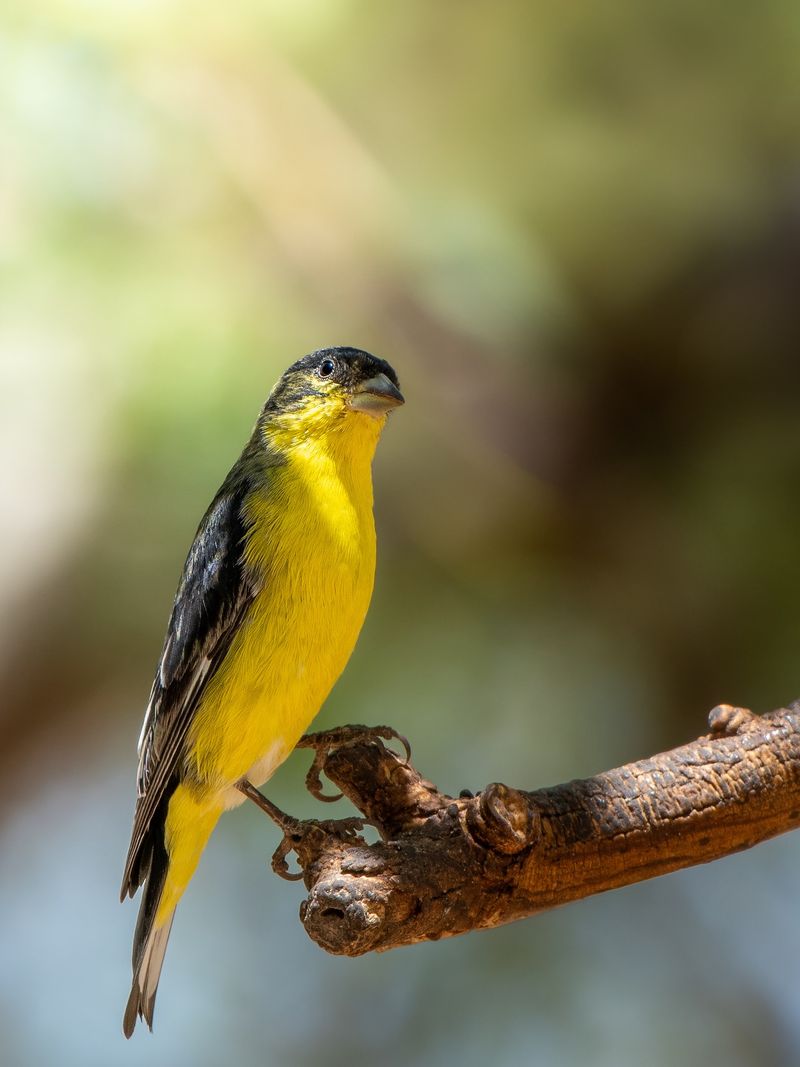
The species behind most of these Arizona sightings is probably the Lesser Goldfinch. According to Cornell Lab’s Lesser Goldfinch range and movement data, this bird is described as a resident to short-distance migrant across much of Arizona, meaning many individuals may already live nearby year-round or move only modest distances between elevations rather than crossing long stretches of the country.
A surge at your Phoenix or Tucson feeder may simply mean that local birds are shifting their foraging routes as nearby seed sources change.
American Goldfinches also occur in Arizona, though they are more strongly associated with fall and winter visits than late-summer activity. Lawrence’s Goldfinch, a third species, appears in Arizona as well, and the Arizona Bird Committee’s state checklist confirms all three as recorded species in the state.
Treating every yellow finch as an American Goldfinch just passing through oversimplifies a genuinely varied picture that rewards closer attention.
Food, Water, and Cover May Concentrate Arizona Birds
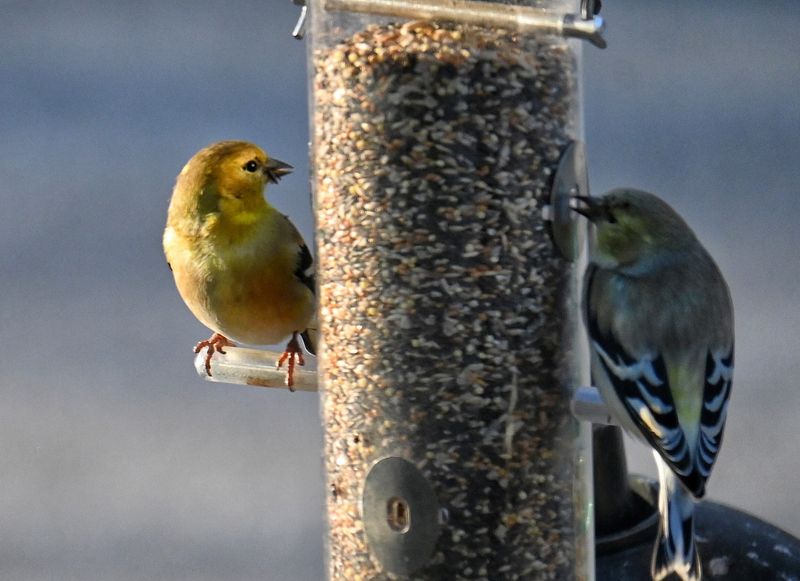
Goldfinches are not randomly scattered across Arizona landscapes. They tend to gather where reliable food, clean water, and protective cover overlap, and a yard that offers all three at once can become noticeably busier than the surrounding neighborhood.
That concentration effect, rather than a wave of new arrivals, may explain what some Arizona residents are seeing right now.
Lesser Goldfinches are seed specialists, favoring small seeds from sunflower-family plants and similar species. When the surrounding Arizona desert dries further after monsoon season, a yard with mature seed heads, a maintained water source, and nearby shrubs can stand out as a dependable stop.
That said, results will vary considerably across Arizona depending on neighborhood, elevation, local bird populations, existing habitat quality, and how consistently the site is maintained. A yard in central Phoenix may attract a different mix than one on the edge of the Tucson foothills, and conditions change week to week as temperatures shift.
Arizona Extension guidance on landscaping for wildlife reinforces that combining food sources, water, and cover produces the most useful habitat, but no single yard element guarantees birds will appear in any particular number.
Your Arizona Garden Changes Every Week. Your Plan Should Too.
Gardening in Arizona changes quickly throughout the season. Every Friday you’ll receive a simple weekly plan showing exactly what to plant, prune, fertilize, harvest, and protect so you never miss the right timing.
Leave Healthy Arizona Seed Heads Standing
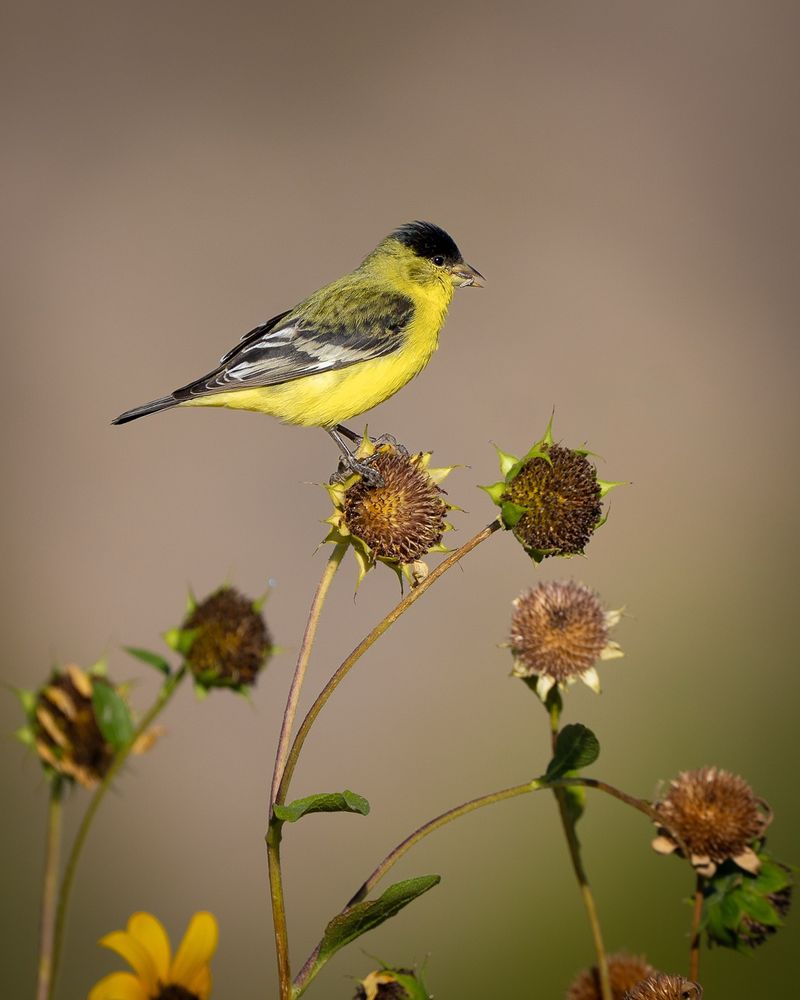
One of the simplest things an Arizona homeowner can do right now costs nothing: stop deadheading. When sunflowers and other seed-bearing plants finish blooming, their dried seed heads become a working pantry for small finches.
Goldfinches are well-adapted to clinging to tall, swaying stems while they extract seeds, and a yard that leaves those structures standing offers something a bare, tidied bed simply cannot.
Sunflowers are specifically listed by Audubon’s Central Arizona native plant program as plants that attract Lesser Goldfinches. Desert marigold is another low-desert option worth considering in Arizona yards; it is drought-tolerant, reseeds readily, and its seeds are used by finches.
However, seed production and bird use depend on Arizona elevation, irrigation, heat exposure, monsoon rainfall, cultivar, and the specific planting site, so no single plant should be treated as a guaranteed draw in every Arizona garden.
Retaining seed heads does not mean leaving everything untouched. Arizona homeowners should still remove invasive plants, diseased or pest-damaged growth, material that creates a fire hazard near structures, and any plants that block windows, paths, or drainage.
The University of Arizona’s resources on plants for pollinators in the low desert of Arizona note that site-specific conditions drive outcomes, so the goal is to keep suitable, healthy seed-bearing plants while continuing to manage the rest of the yard responsibly. Selective retention, not wholesale neglect, is the practical approach for most Arizona properties.
Use Arizona Feeders as an Optional Supplement
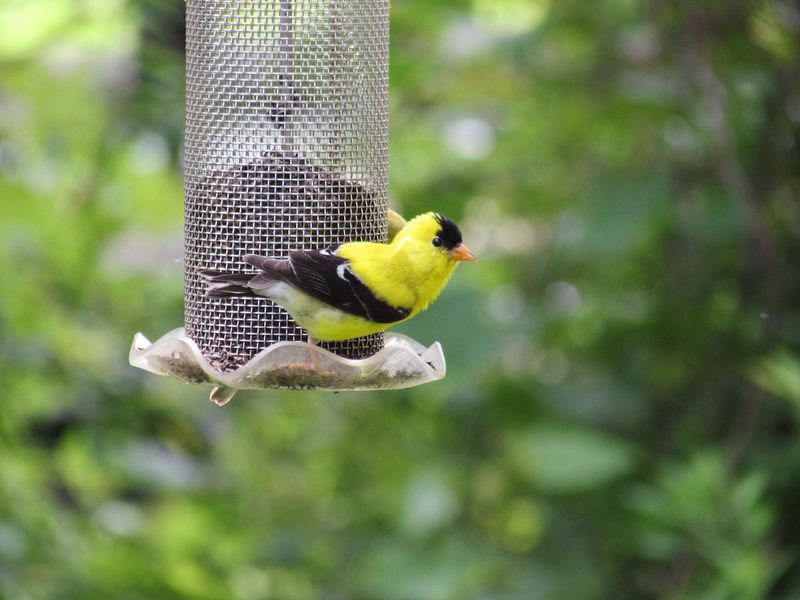
Feeders are not required to attract goldfinches to an Arizona yard, and anyone who sets one up should go in with realistic expectations and a maintenance plan. Native or desert-adapted plants can provide seasonal food and cover without the upkeep a feeder demands.
That said, a well-placed, well-maintained feeder can supplement natural food sources and may help concentrate birds at a spot where you can observe them.
Nyjer is the seed most commonly associated with finch feeders, and it does work well for small finches like Lesser Goldfinches in Arizona. A key detail worth knowing: Nyjer is a commercial seed product, not the same thing as seed from North American thistles that goldfinches also use in the wild.
As Audubon explains in its background on Nyjer, this seed comes from an African plant and is specifically processed and sterilized for the birdseed market. It requires a specialized tube or mesh feeder with small ports because the seed is tiny and falls out of standard feeders quickly.
Black-oil sunflower seed appeals to a broader range of Arizona birds if the goal is variety rather than specifically targeting finches. Arizona’s summer heat creates real feeder hazards: seed spoils faster, mold can develop quickly, and crowded feeders raise disease-transmission risk.
University of Arizona Cooperative Extension guidance on backyard birds recommends placing feeders near trees and shrubs for shade and cover, cleaning them at least twice a month, and removing spilled seed from the ground promptly to avoid attracting rodents, squirrels, and javelina. Window collisions and predator exposure near feeders are additional Arizona-specific concerns worth addressing through thoughtful placement.
Offer Arizona Water Only With Daily Maintenance
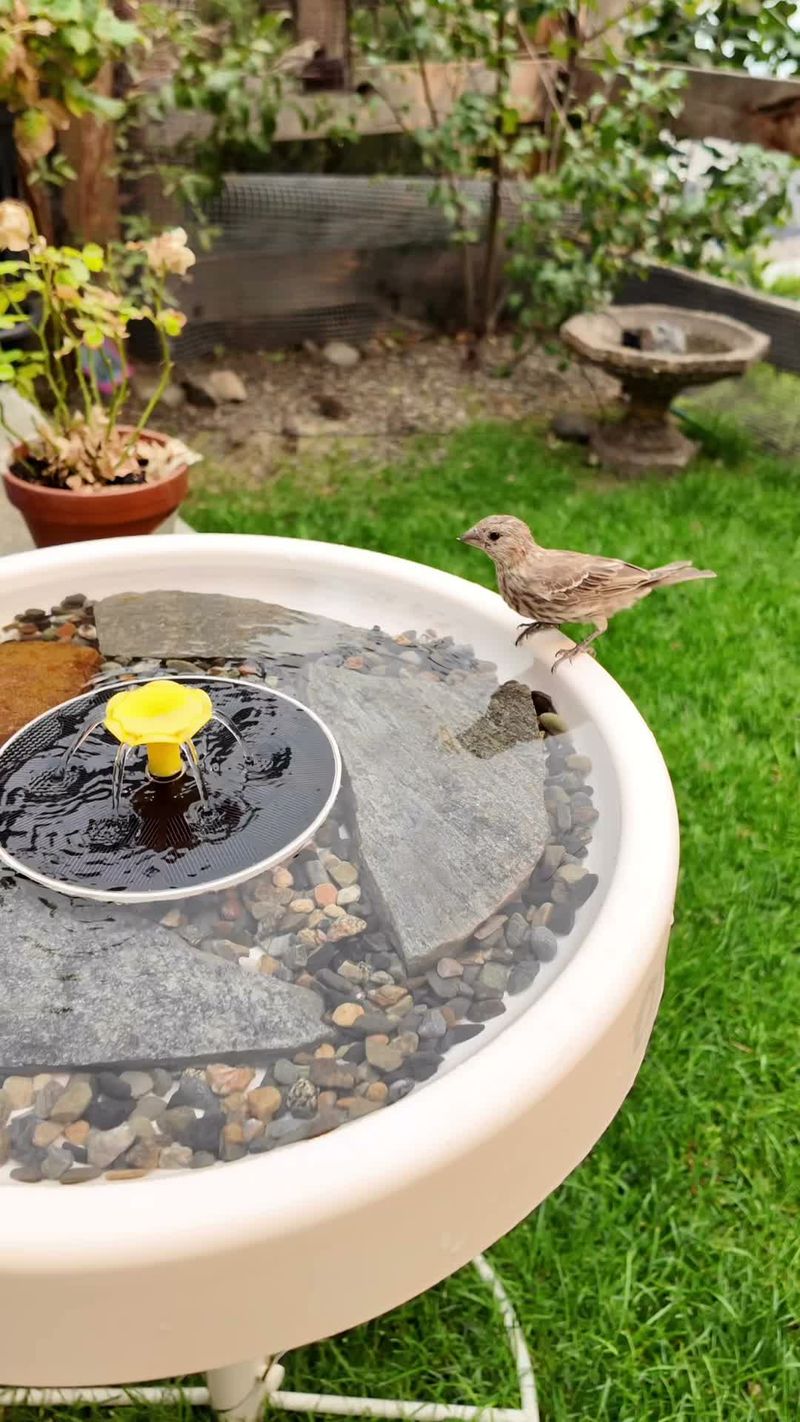
Water can be one of the most effective resources an Arizona yard offers, particularly as late-summer heat lingers and natural water sources dry up or become unreliable. A shallow basin placed in a protected location may draw goldfinches and many other desert birds that would otherwise pass through without stopping.
However, water only helps when it is consistently clean and refreshed.
Arizona’s heat accelerates every problem associated with standing water. Algae, bacteria, and mosquito larvae can establish in a birdbath within days if the water is not changed.
University of Arizona Cooperative Extension guidance on backyard birds in Arizona recommends dumping the basin, brushing out any residue, and refilling it with fresh water every day during hot weather. Stagnant water is not a neutral feature; it can introduce disease risk for birds and create a mosquito breeding site in your Arizona yard.
Shallow depth matters too. A basin no more than two inches deep at its center gives small finches a comfortable footing and reduces drowning risk for lighter birds.
Placement near shrubs or low trees offers birds a quick escape route if a predator approaches, which makes the water source feel safer and more likely to be used. Arizona Extension’s wildlife disease guidance reinforces that any water feature requires active management rather than a set-and-forget approach, so build a daily cleaning habit before adding a bath to your Arizona yard setup.
Add Arizona-Adapted Cover Near Feeding Areas
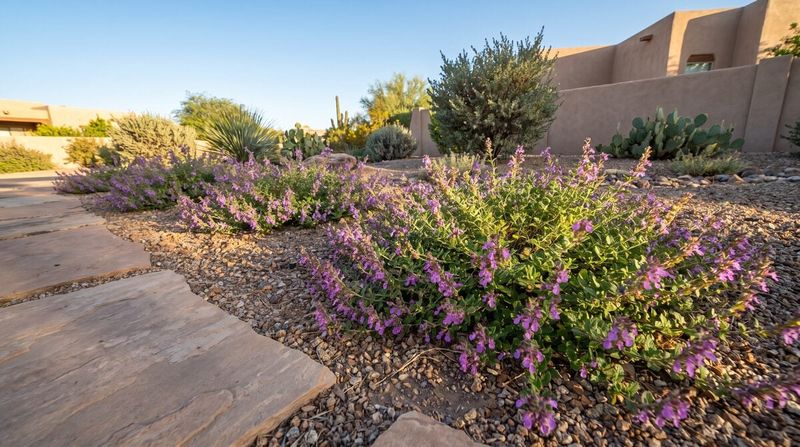
Food and water bring birds in, but cover keeps them comfortable enough to stay. In Arizona yards, nearby shrubs and trees serve as perching spots between feeding bouts, shelter from hawks and other predators, and shade from intense desert sun.
A feeder or seed-bearing plant sitting in the middle of open ground with no surrounding vegetation nearby is a much harder sell for a cautious small finch.
University of Arizona Cooperative Extension’s landscaping for wildlife habitat guidance recommends placing feeders close to trees and bushes so birds have a quick retreat option. For Arizona’s low desert, that means choosing plants suited to Phoenix or Tucson conditions rather than importing a bird-garden plan designed for a cooler, wetter climate.
Velvet mesquite, desert willow, and native shrubs like wolfberry can provide layered cover while using far less water than non-adapted species. Audubon’s Rio Salado native plant resources for central Arizona offer regionally specific guidance on which plants support birds in the Phoenix metro area.
Placement matters as much as plant selection in Arizona. Feeders positioned too close to a dense shrub can give cats or other predators a concealed approach route, while feeders placed directly against a window glass create collision risk.
A middle-ground arrangement, roughly three to ten feet from protective cover and well away from reflective glass, tends to balance safety and bird comfort. Arizona homeowners in the Tucson foothills or at higher elevations will find that different plant species perform better in their conditions than those suited to the lower Phoenix basin.
Identify Arizona Goldfinches Before You Explain Them
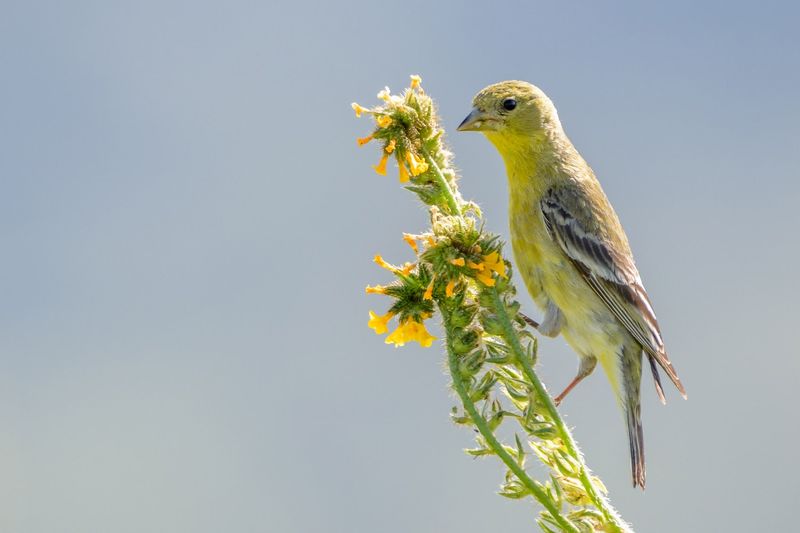
Yellow birds turn up in Arizona yards for all kinds of reasons, and color alone is not enough to make a confident identification. Verdins, warblers, and House Finches in certain plumages can all flash yellow or yellowish tones.
Reaching for a goldfinch explanation before checking the details means you might be building a migration story around the wrong bird entirely.
A more reliable approach focuses on several field marks together. Bill shape is one of the most useful: goldfinches have short, conical seed-cracker bills, while warblers carry thin, pointed insect-hunting bills.
Wing pattern matters too, since goldfinches typically show distinct white wing bars. Back color separates Lesser from American Goldfinch, with Lesser males displaying a green or black back depending on subspecies, while American Goldfinch males in winter plumage are more olive-yellow overall.
Behavior adds another layer: goldfinches often cling to seed heads and feed in small, active groups.
The Arizona Bird Committee’s state checklist confirms that Lesser Goldfinch, American Goldfinch, and Lawrence’s Goldfinch all occur in Arizona, each with different seasonal patterns and geographic tendencies across the state. Snapping a photo before drawing conclusions gives you something to compare against a field guide or a resource like Cornell Lab’s feeder-bird identification tools.
Assigning a migration narrative to a bird you have not yet confirmed is a common and understandable mistake, but a little patience with identification makes whatever you observe in your Arizona yard genuinely more interesting and accurate.
Keep an Arizona Goldfinch Yard Healthy and Realistic
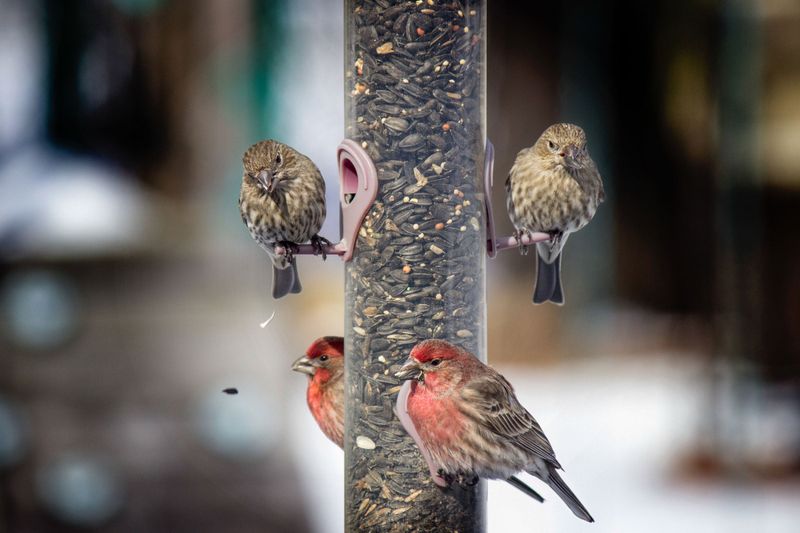
Maintenance is where good intentions either hold up or fall apart. In Arizona’s heat, feeders and birdbaths need more frequent attention than in cooler climates.
University of Arizona Cooperative Extension’s backyard birds guidance recommends cleaning feeders and baths at least twice a month, removing old seed and hulls from the ground below feeders, and refreshing water daily. Letting any of these slide introduces disease risk and can make your Arizona yard less safe for the birds you are trying to support.
Crowded feeders deserve special attention in Arizona. When many birds share a small feeding station, the chance of spreading illness rises, and the stress of competition may actually deter the quieter, smaller finches you most want to see.
Reducing crowding through feeder spacing or temporarily taking a feeder down during peak congestion is a reasonable management step. Monitoring for sick-looking birds and removing a feeder promptly if you notice unusual mortality is also part of responsible Arizona feeder stewardship.
A few things are worth setting aside as motivations for this kind of yard work. Goldfinches, including Lesser Goldfinches common across Arizona, are primarily seed-eaters and are not reliable controllers of mosquitoes, scorpions, ticks, or other household pests.
Expecting a flock to handle your pest pressure will lead to disappointment. What a clean, water-wise Arizona yard can genuinely offer is a better chance that goldfinches passing through or living nearby will find it worth stopping at, which turns out to be reward enough for most Arizona birders who take the time to look up this month.