Virginia Native Shrubs That Are Better Planted In Fall Than Summer
Fall gives gardeners a valuable head start. Cooler air takes the pressure off newly planted shrubs, and soil can stay warm enough for roots to keep settling in before winter.
That makes autumn a much easier time to establish plants than the heat and dryness of summer.
Native shrubs are especially well suited to Virginia yards. They adapt to local conditions, while also bringing more seasonal color and providing food and shelter for wildlife.
If you want new shrubs to settle in before next summer’s heat arrives, fall is the time to make your move.
1. Virginia Sweetspire Gets A Strong Start In Cool Fall Conditions
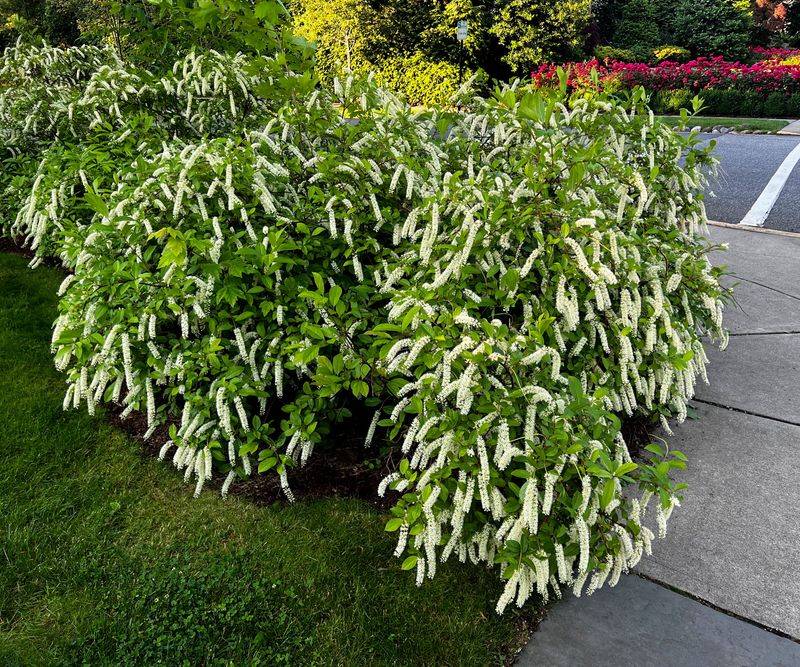
Few shrubs carry a state’s name so proudly, and Itea virginica earns it. Native to moist woods and stream banks across the region, it feels right at home in Virginia yards.
Fall planting suits this one beautifully. Cooler air and steadier rain take the pressure off a young root ball, so the shrub builds a deep root system instead of struggling to stay hydrated.
Expect a mound roughly 3 to 6 feet tall and wide, though older plants sometimes stretch toward 10 feet. Late spring brings drooping white flower spikes shaped like little bottlebrushes, and they smell sweet up close.
Autumn is the real showstopper. Leaves flip to orange, red, gold, and reddish purple, and many hang on deep into winter when most of the garden has gone bare.
Site it where it gets morning sun and afternoon shade for the best color and bloom, though it handles everything from full sun to full shade. Clay soil, damp ground near a downspout, and even drier spots once roots settle are workable, but avoid strongly alkaline soil.
Pollinators love the nectar, birds pick at the seeds, and the suckering habit knits soil together on slopes. Plant several along a bank and you get erosion control plus a fall fireworks display for free.
Water weekly until the ground freezes, then mulch two inches deep and let winter do the rest.
2. American Beautyberry Can Settle In Before Summer Heat Returns
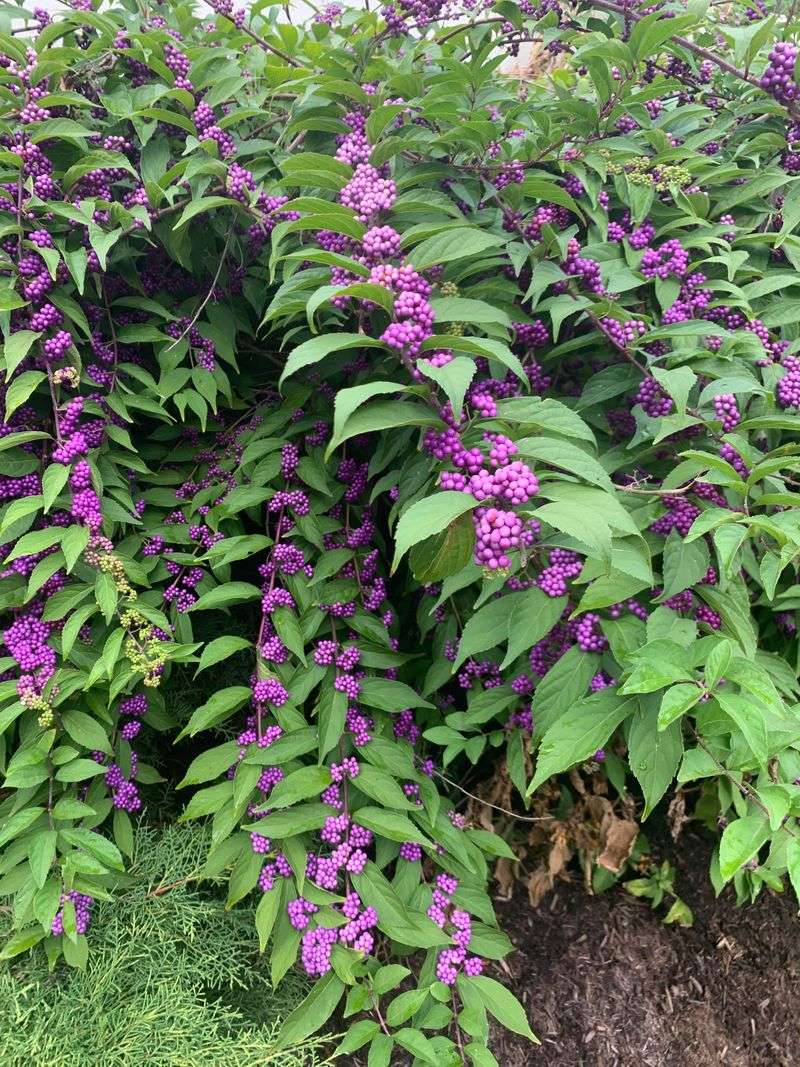
Nothing else in the yard looks quite like it. Callicarpa americana wraps its stems in tight rings of glossy purple berries so bright they seem almost artificial.
Gardeners who set it out in fall give the roots a quiet stretch of cool weather to spread before the next round of heat and dry spells arrives. That head start pays off in a sturdier, more drought-tolerant plant.
Size runs 3 to 8 feet tall and wide, with a loose, arching shape that looks casual rather than clipped. Some selections push toward 10 feet if left alone.
Summer flowers are tiny lavender-pink puffs that barely register. Autumn is when the shrub earns its keep, and those berries often cling to bare branches well past the first hard frosts.
Give it four to six hours of sun for heavy fruiting, plus well-draining soil. Clay, loam, or sand all work, though slightly acidic and rich soil brings the best growth.
More than 40 songbird species feed on the fruit, along with squirrels and other small mammals. Bees and butterflies work the summer blooms, so the plant pulls double duty.
Your Virginia Garden Changes Every Week. Your Plan Should Too.
Gardening in Virginia changes quickly throughout the season. Every Friday you’ll receive a simple weekly plan showing exactly what to plant, prune, fertilize, harvest, and protect so you never miss the right timing.
Here is a fun bit of folklore: farmers once crushed the leaves and tucked them under harness straps to shoo away biting insects. Prune hard in late winter for even heavier berry clusters next season.
3. Blackhaw Viburnum Benefits From A Cooler Fall Start
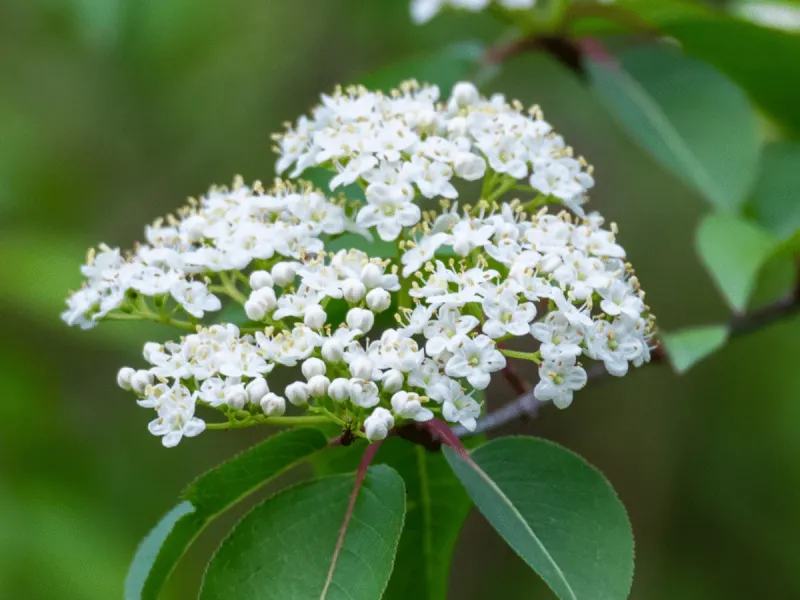
Blackhaw viburnum is one of the state’s widespread and adaptable native shrubs.
Cool autumn soil lets the roots knit in slowly and thoroughly. By spring the plant already has an anchor, which matters a lot when June turns hot and rain gets stingy.
Mature plants reach 10 to 15 feet tall and 6 to 12 feet wide. Trained up with a single trunk, it can become a small tree closer to 30 feet, which makes it handy for tight side yards.
Mid-spring brings flat-topped clusters of creamy white bloom, and the glossy leaves finish the year in red, purple, and burgundy. Berries shift from yellow to red to a deep blue-black by early fall.
Full sun to partial shade works, though four to six hours of direct light gives richer color and heavier fruit. Clay, loam, or sand are all fine, and it copes with alkaline ground and dry stretches once settled.
Its flowers support pollinators, while birds and other wildlife feed on the fruit. Deer tend to walk past it in search of tastier options.
Plant it six feet from walls so those arching branches have breathing room.
4. Common Sweetshrub Can Establish Before Next Summer’s Heat
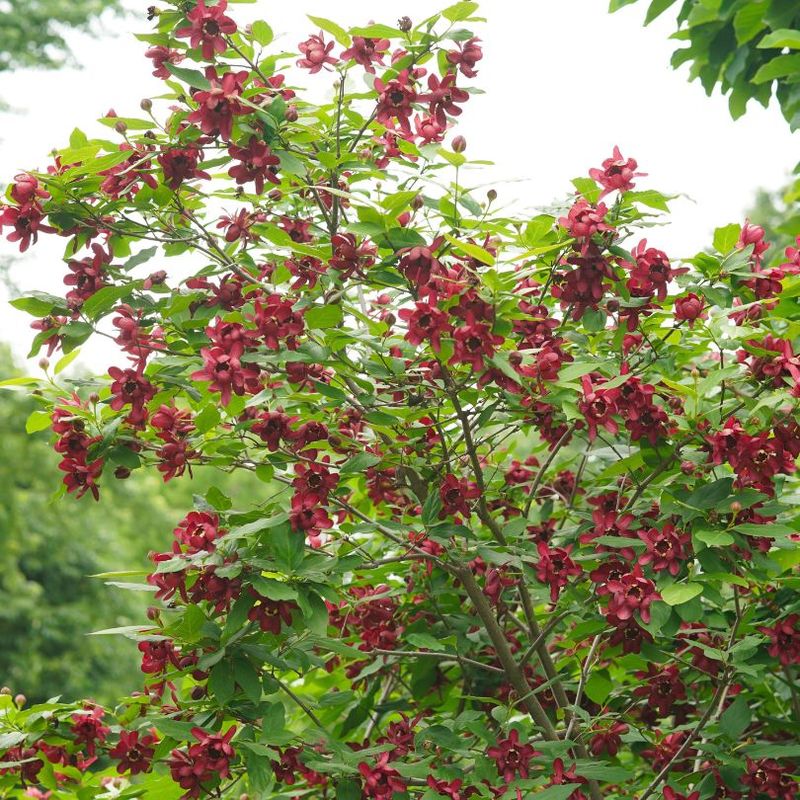
Crush a leaf between your fingers and you will understand the nickname Carolina Allspice. Calycanthus floridus smells spicy from bark to root, which is unusual in a shrub this easygoing.
Transplant shock drops sharply when you plant in fall. Mild weather lets the root system expand quietly instead of fighting heat, so the plant arrives at next summer already settled.
Size lands around 6 to 12 feet in both directions, forming a dense rounded shape. The flowers are strange and wonderful, with strappy petals in wine-red, burgundy, or dark reddish brown that bloom from April into July.
Scent varies plant to plant. Some smell like pineapple, others lean toward strawberry, banana, or clove, so sniff before you buy if fragrance matters to you.
Since it grows naturally as a woodland understory plant, dappled or partial shade suits it best. Full sun works too, as long as the shrub gets relief from harsh afternoon rays.
Rich, moist, well-drained soil loaded with organic matter keeps it happy, and it accepts a wide pH range. Occasional dry spells are no problem once roots run deep.
Beetles, flies, butterflies, and bees visit the blooms, birds nest in the dense branching, and deer usually ignore it. Fall leaves glow golden yellow, a warm bonus before winter arrives.
5. Buttonbush Makes Sense For Moist Garden Areas
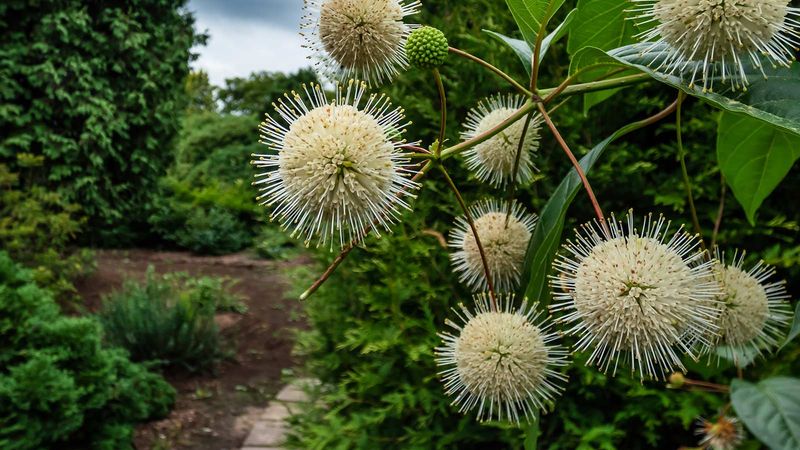
That low corner of the yard where water sits after a storm has a plant waiting for it. Cephalanthus occidentalis grows naturally in swamps and stream edges across nearly all of Virginia.
Autumn soil stays warm long after the air cools, and the shrub is no longer spending energy on flowers or fruit. All that effort goes straight into roots, which sets up strong spring growth.
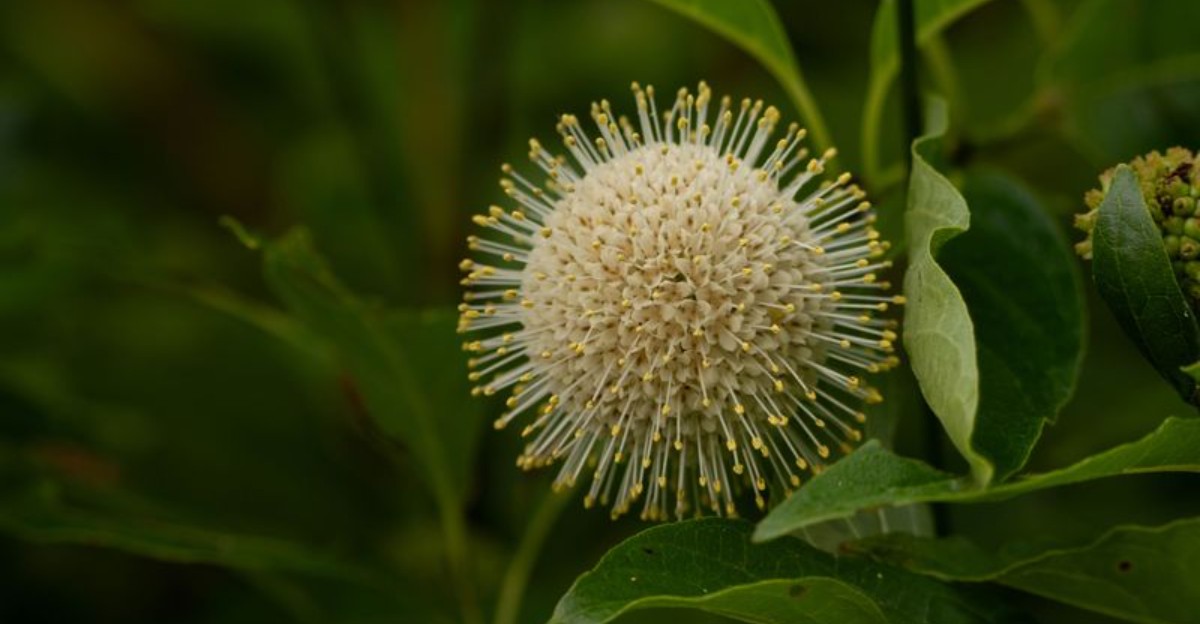
Plants usually reach 4 to 12 feet tall and wide, occasionally topping out near 20. The flowers steal the show: perfectly round white or pale pink globes that look like pincushions and smell faintly of honey.
Butterflies swarm them from late spring through early fall. Hummingbirds and bees join the party, which turns a quiet wet corner into the busiest spot on the property.
Hard button-shaped seed balls follow, fading from reddish brown to brown and hanging on through winter for texture. Glossy green leaves turn a soft yellow-gold before dropping.
Give it six hours of sun and steady moisture. Standing water is fine, making it a smart pick for rain gardens, pond edges, and drainage swales.
Waterfowl and songbirds eat the seeds through the cold months, and deer generally leave it alone. Skip the raised bed and plant it right where the puddles form.
6. Arrowwood Viburnum Offers A Tough, Adaptable Fall Planting Choice
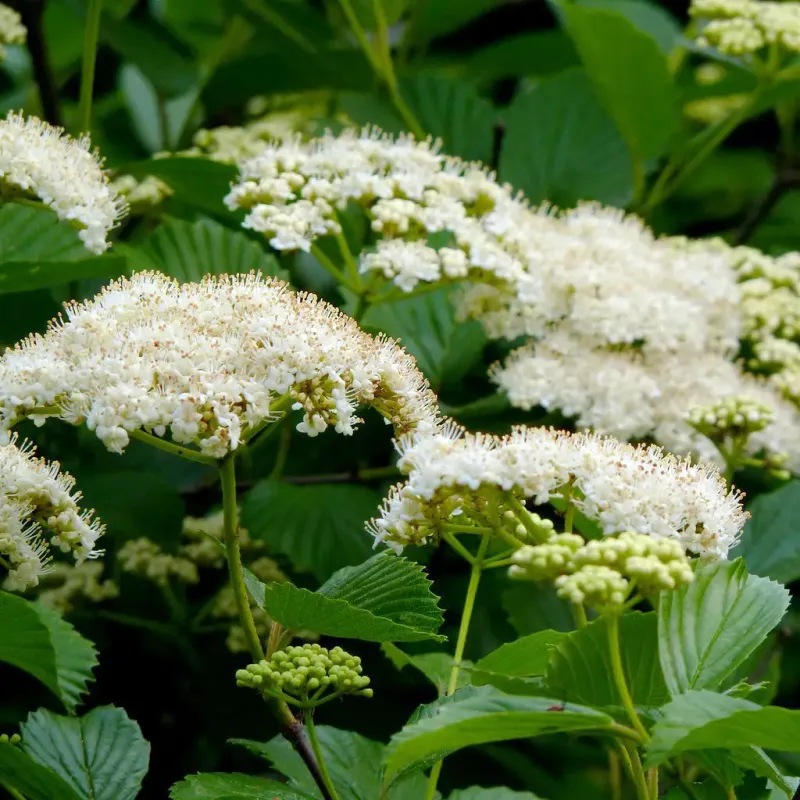
Native peoples once cut the straight young stems of Viburnum dentatum for arrow shafts, and the common name stuck. Strength runs in this shrub’s family.
Toughness shows up in where it grows too. Moist floodplains, dry upland woods, sandy ground, heavy clay, it handles the whole range across central and eastern Virginia.
Planting in fall lets the roots take advantage of cool air and reliable moisture. Come the following summer, the shrub can handle heat that would flatten a freshly planted one.
Plan on 6 to 10 feet tall and wide, sometimes reaching 15, with multiple gently arching stems forming a rounded outline. It makes a fine informal hedge or screen along a property line.
Creamy white flat-topped flower clusters open in late spring. They lack fragrance, but native bees, butterflies, and moths hardly seem to care.
Fall foliage turns yellow, orange, red, or reddish purple depending on the plant and the season. Blue-black fruit clusters ripen alongside it and often hang into winter.
More sun means more flowers and more berries, though partial shade is perfectly acceptable. Songbirds and small mammals rely on the fruit when other food runs short.
Pests and diseases rarely bother it. Water deeply once a week through the first autumn and you are basically done.
7. Winterberry Holly Adds Native Appeal To Moist Garden Beds
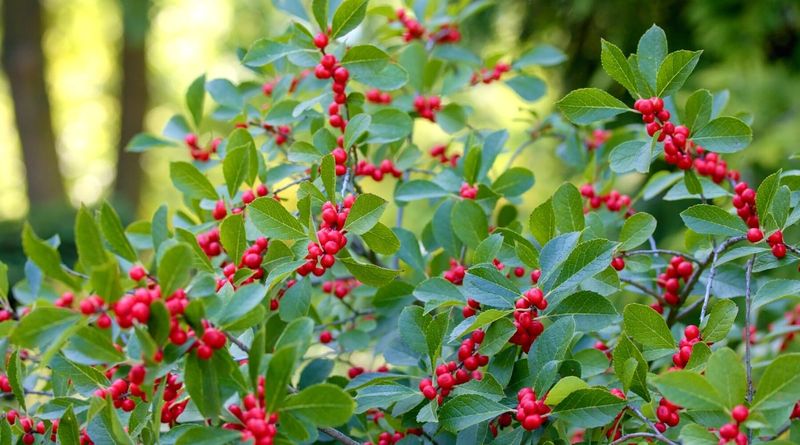
Picture bare gray branches loaded with bright red beads while snow drifts past the kitchen window. Ilex verticillata delivers exactly that scene in gardens every winter.
Unlike its evergreen cousins, this holly drops every leaf in late autumn. Losing the foliage is the whole point, because nothing distracts from the berries afterward.
Early fall planting gives roots cool soil and natural moisture to work with before dormancy. A well-rooted plant produces far more fruit in the seasons ahead.
One rule trips up new gardeners: male and female plants are separate. You need a female for berries and a compatible male nearby, so buy them as a pair and make sure their bloom periods overlap.
Expect 5 to 15 feet in height and spread, with an upright, multi-stemmed, rounded form. Berries come in red, orange, or gold depending on the variety and often last into early spring.
Moist, acidic, organic-rich soil suits it best, and it tolerates wet ground or even standing water. Six hours of sun brings the heaviest fruit set.
Birds feed on the bright fruit through winter when other food sources become scarce. Bees visit the small spring flowers, and deer usually pass it by.
Cut a few branches in December for holiday arrangements.
8. Red Chokeberry Brings Fall Color And Wildlife Value To Yards
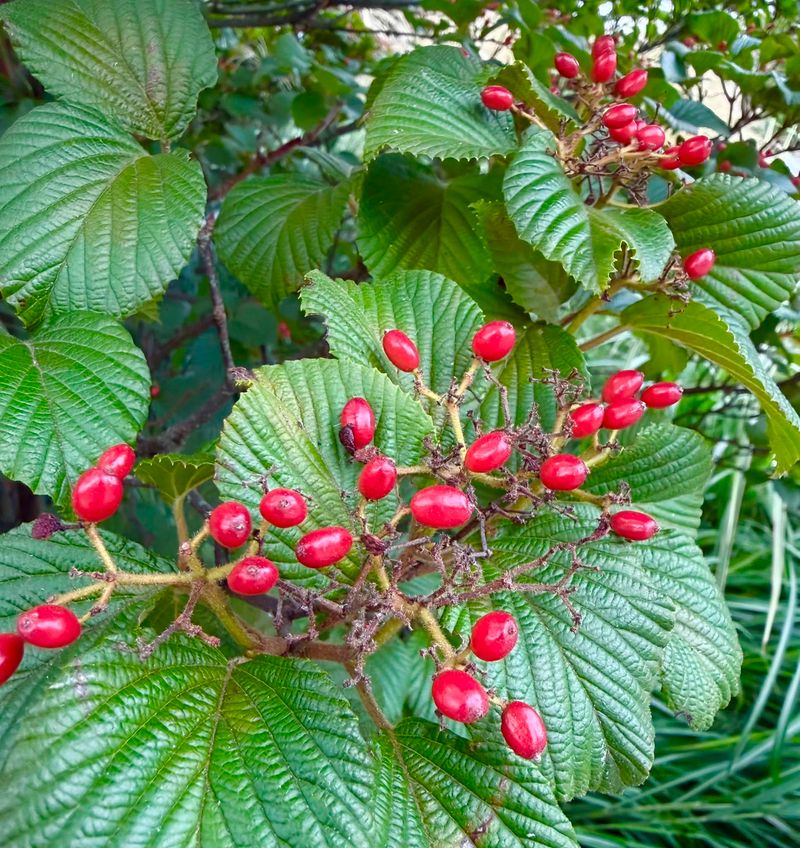
Scarlet leaves, red berries, and a name that sounds like a warning. Aronia arbutifolia tastes puckery raw, which is exactly why birds get to keep the harvest.
Its range stretches from Nova Scotia to Florida, and it grows happily in boggy flatwoods, dry thickets, and everything between. Few shrubs bend to conditions the way this one does.
Moderate fall weather and damp soil ease the move from nursery pot to garden bed. Roots spread without stress, which means stronger growth and heavier fruiting once spring arrives.
Mature plants typically reach about 5 to 10 feet tall, with an upright, spreading shape. Suckers form colonies over time, handy for holding a slope steady.
Mid-spring flowers open white to pale pink with tiny red anthers at the center. Pollinators find them quickly, and the light fragrance is a pleasant surprise.
Autumn is the main event. Foliage shifts to scarlet, orange, deep red, and purple while glossy red pear-shaped fruit clusters ripen and cling into winter.
Four to six hours of daily sun brings the best color and crop. It tolerates a wide range of soils, including wet and dry conditions, making it a versatile choice for yards.
Songbirds and small mammals clean up the berries through the cold months.