Repeated Harvests of Sugar Snap Peas From One Bucket on a Low-Desert Arizona Patio
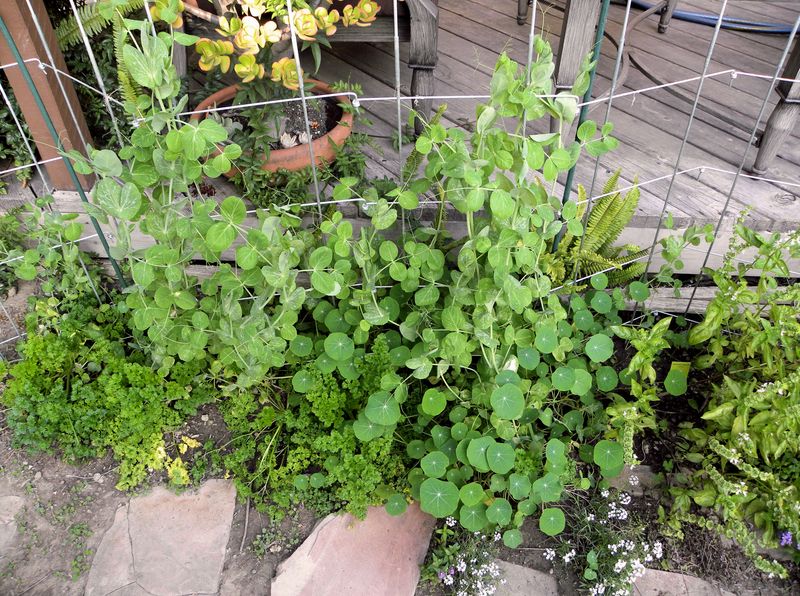
Sugar snap peas are one of the sweetest rewards a low-desert Arizona patio can offer during the cool season, and you do not need a garden bed or a shovel to grow them. A single bucket, properly set up, can hold several plants and deliver multiple pickings of crisp, tender pods for several weeks.
The key is working with Arizona’s climate rather than against it, choosing the right planting window, protecting the root zone from heat, and keeping expectations honest about what one container can realistically do.
Time the bucket for the low desert’s cool window
Peas are cool-season crops, and in low-desert Arizona that fact controls everything. Unlike gardeners in milder climates who plant in a single spring window, Phoenix and Tucson area growers get two chances: an early spring sowing before temperatures climb, and a fall sowing timed as summer heat finally eases off.
The reason timing matters so much comes down to one temperature threshold. Peas perform best below roughly 80 degrees Fahrenheit, and heat above that level can interfere with germination, slow flowering, reduce pod set, and make pods tough or stringy.
A fall planting in the low desert needs to go in while daytime highs are still dropping, so the plants can establish before the mild weeks arrive and flower before any winter cold becomes a concern.
Fall-grown peas may also yield less than a spring planting, so set expectations accordingly. Choosing a quick-maturing variety and checking days-to-maturity on the seed packet can help you squeeze the most out of a short seasonal window.
This guidance applies specifically to Maricopa and Pima County conditions, not to higher-elevation Arizona regions with different frost dates and temperature patterns.
Choose a safe bucket that protects the roots
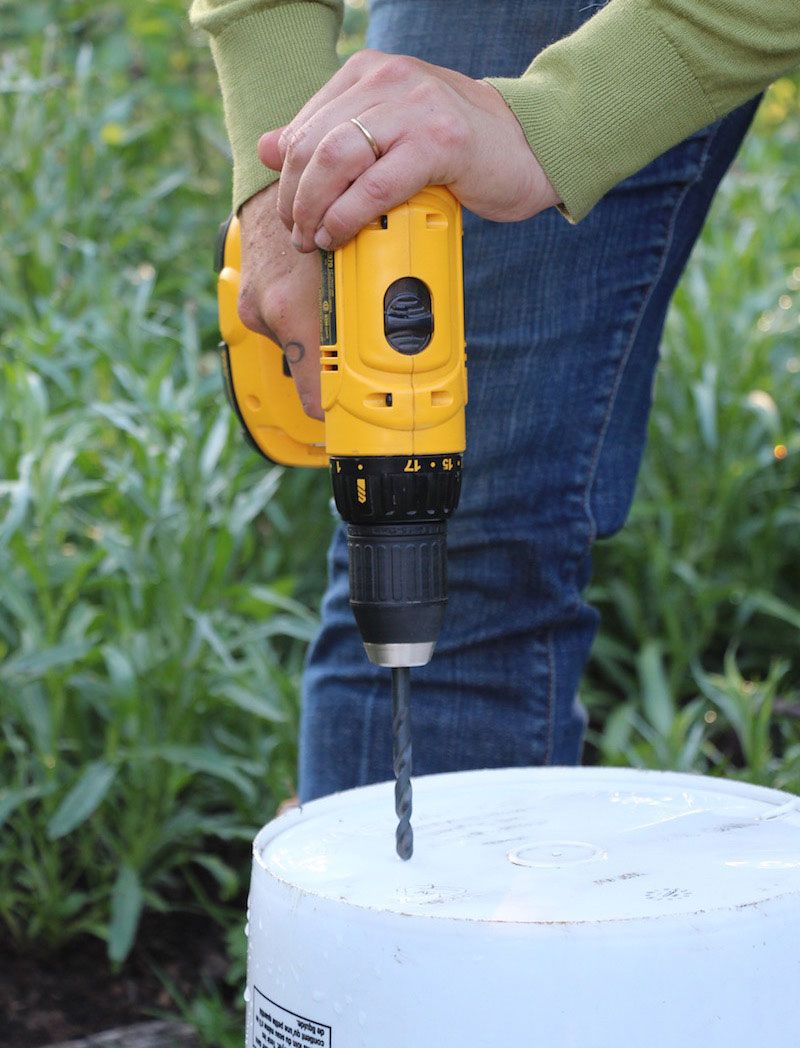
Container size is not just a convenience question in the low desert. A bucket that is too small heats up faster, dries out faster, and gives roots less buffer against Arizona’s intense ambient temperatures.
Before you fill anything, check what the bucket held before. Containers that previously held chemicals, pesticides, household cleaners, or other hazardous materials should never be repurposed for edible crops.
Use a container sold for gardening or one that is certified food-safe and has never held anything harmful. Whatever you choose, drill or confirm multiple drainage holes near the bottom so excess water can escape freely.
One 5-gallon bucket can hold several properly spaced plants rather than just one, depending on the bucket’s shape, the cultivar’s root spread, and how the trellis is arranged. That said, a specific plant count or harvest quantity cannot be promised for every bucket and every patio.
The container is the foundation of the whole setup, so getting it right before planting saves trouble later in the season.
Build a draining root zone without gravel
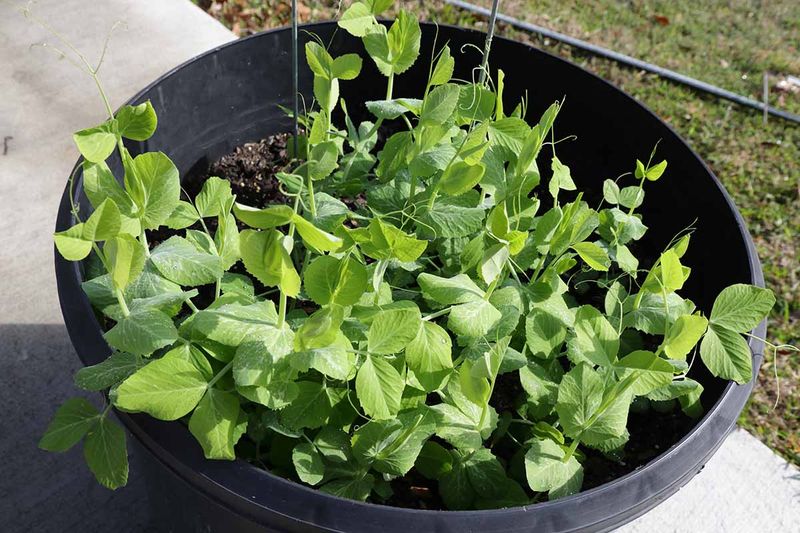
Arizona’s native soil is the wrong starting point for a patio bucket. Caliche layers and heavy clay content make native desert soil drain poorly in a container, and waterlogged roots invite disease fast.
Your Arizona Garden Changes Every Week. Your Plan Should Too.
Gardening in Arizona changes quickly throughout the season. Every Friday you’ll receive a simple weekly plan showing exactly what to plant, prune, fertilize, harvest, and protect so you never miss the right timing.
University of Arizona Cooperative Extension advises using a well-draining container medium rather than native soil, specifically because desert soils can contain substantial clay that performs badly in a confined space.
One shortcut that sounds logical but actually backfires is adding a layer of gravel or stones to the bottom of the bucket. University of Arizona guidance says this practice reduces usable root volume without meaningfully improving drainage, so skip it entirely and fill the container with a quality lightweight potting mix from top to bottom.
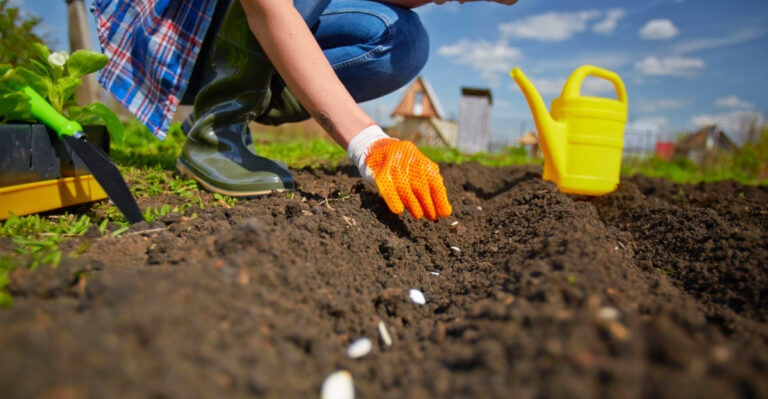
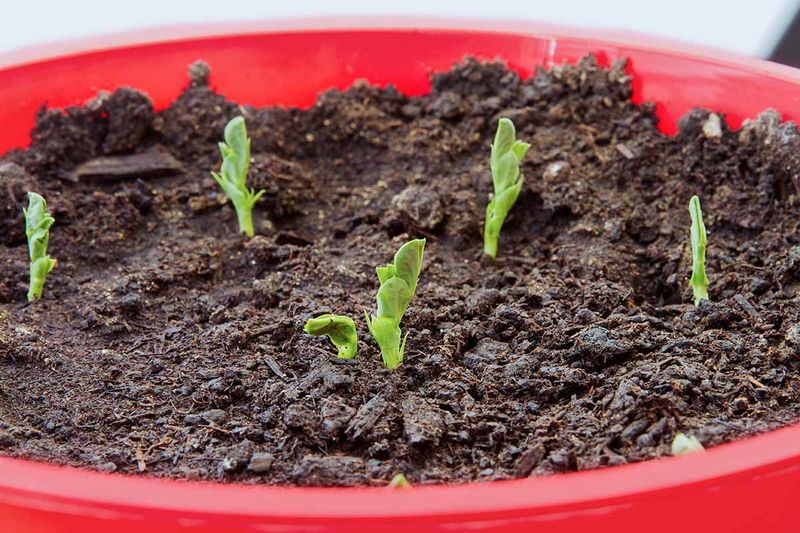
When it comes to planting depth and spacing, Oregon State University Extension recommends planting snap-pea seed about 1 inch deep and spacing plants roughly 2 to 4 inches apart in a container setting. Push each seed in, firm the mix gently around it, and water in lightly after planting.
If the seed packet for your chosen cultivar lists different spacing or depth, follow that instead, since variety matters. Treat the spacing guidance as a practical starting point rather than a formula that guarantees a fixed number of plants or pods from every bucket.
Give the vines light without overheating the bucket
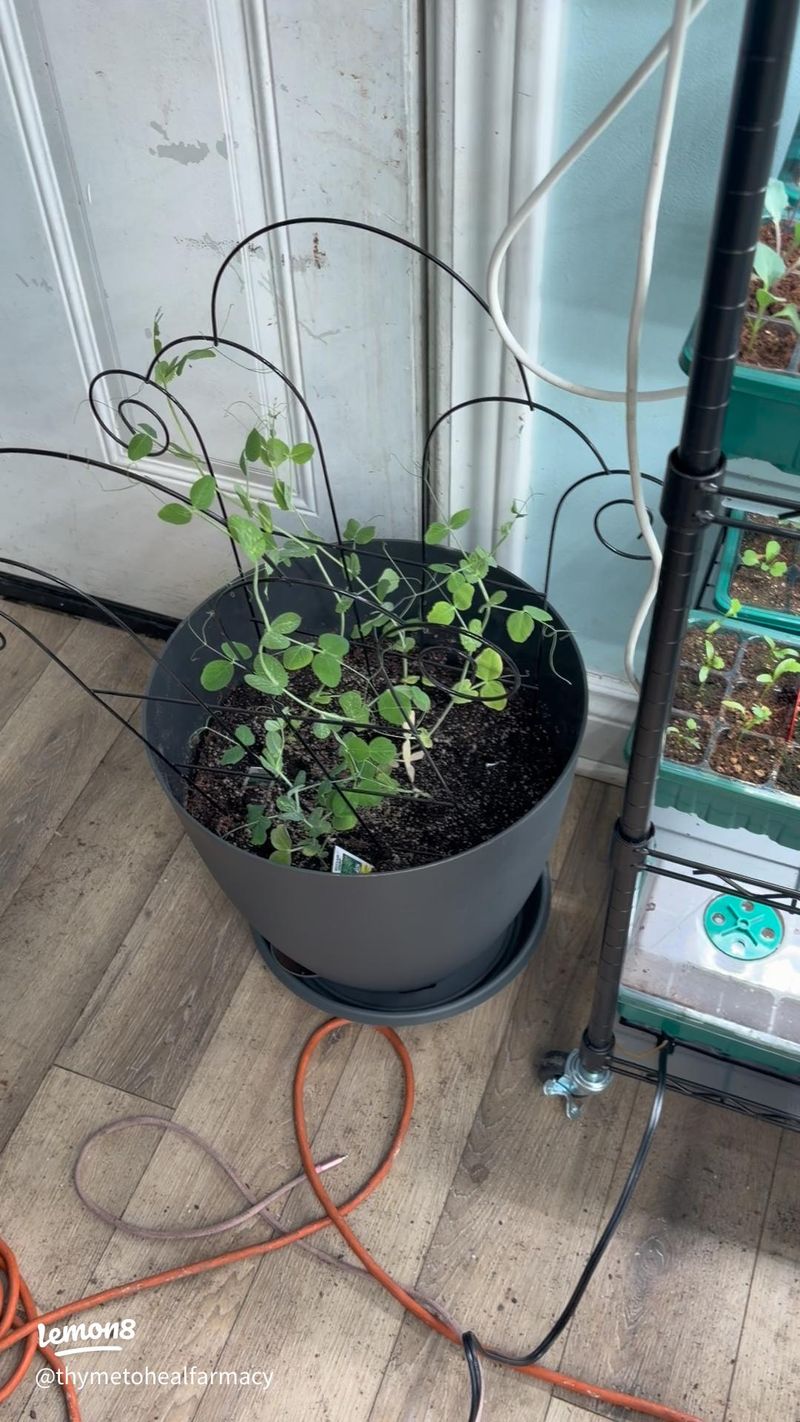
Getting light right on an Arizona patio is a balancing act that does not come up in most gardening guides written for cooler climates. Peas need strong light to flower and set pods, but the same sun that feeds the foliage can push container soil temperatures to levels that damage or kill roots.
University of Arizona Cooperative Extension warns that outdoor containers in direct sun can become dangerously hot at the root zone, even when air temperatures feel manageable to a person standing nearby.
A practical setup for most low-desert patios is bright morning light combined with protection from the harshest afternoon exposure. East-facing spots or locations that catch shade from a wall or overhead structure after midday tend to work better than unshaded west-facing surfaces that bake from early afternoon onward.
Reflected heat from concrete or stucco walls can add to the problem, so keeping the bucket slightly away from heat-absorbing surfaces helps.
Light-colored containers, an outer pot sleeve, or a layer of insulating material between the bucket and hot concrete are all reasonable adaptations worth trying. These steps can reduce root-zone heat, though they are practical strategies rather than tested guarantees for every patio configuration.
The goal is a setup where the foliage gets enough light to produce flowers while the roots stay cool enough to support them.
Maintain steady moisture and limit nitrogen
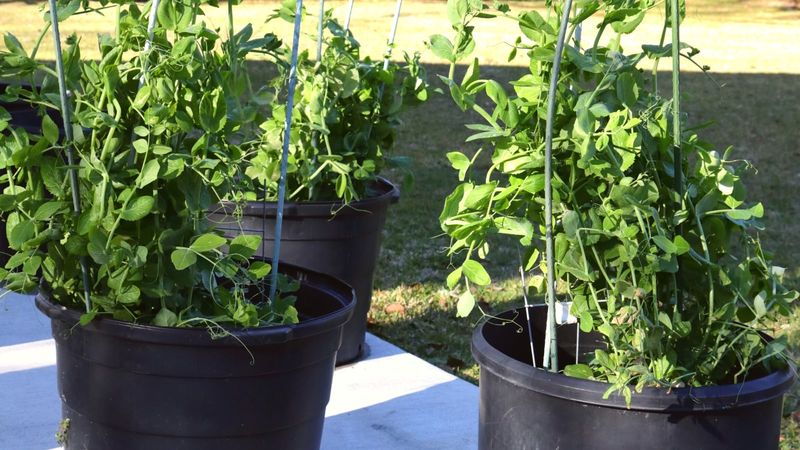
Water management in a container is more demanding than in a garden bed because the mix dries out faster and there is no surrounding soil to buffer against moisture swings. Utah State University Extension guidance on growing peas recommends allowing roughly half of the available soil moisture to be used before watering back to field capacity, rather than watering on a fixed daily schedule.
That approach keeps roots consistently supplied without leaving them sitting in saturated mix, which can cause root disease.
Drought stress during flowering is particularly damaging. When pea plants run short of water after buds form, they can drop flowers, abort developing pods, produce smaller seeds, or grow pods that turn stringy and tough.
Check the bucket’s moisture level regularly, especially during warm or windy days when evaporation speeds up, and water before the mix dries out completely.
Fertilizer needs are modest for peas. University of Arizona guidance notes that fertilizer is generally needed only at planting, and Utah State Extension cautions against adding extra nitrogen unless soil conditions specifically call for it.
Excess nitrogen pushes the plant toward lush foliage at the expense of flowers and pods, which is the opposite of what a patio gardener wants. A balanced starter fertilizer worked into the potting mix before planting is usually sufficient for the season.
Install support before the tendrils tangle
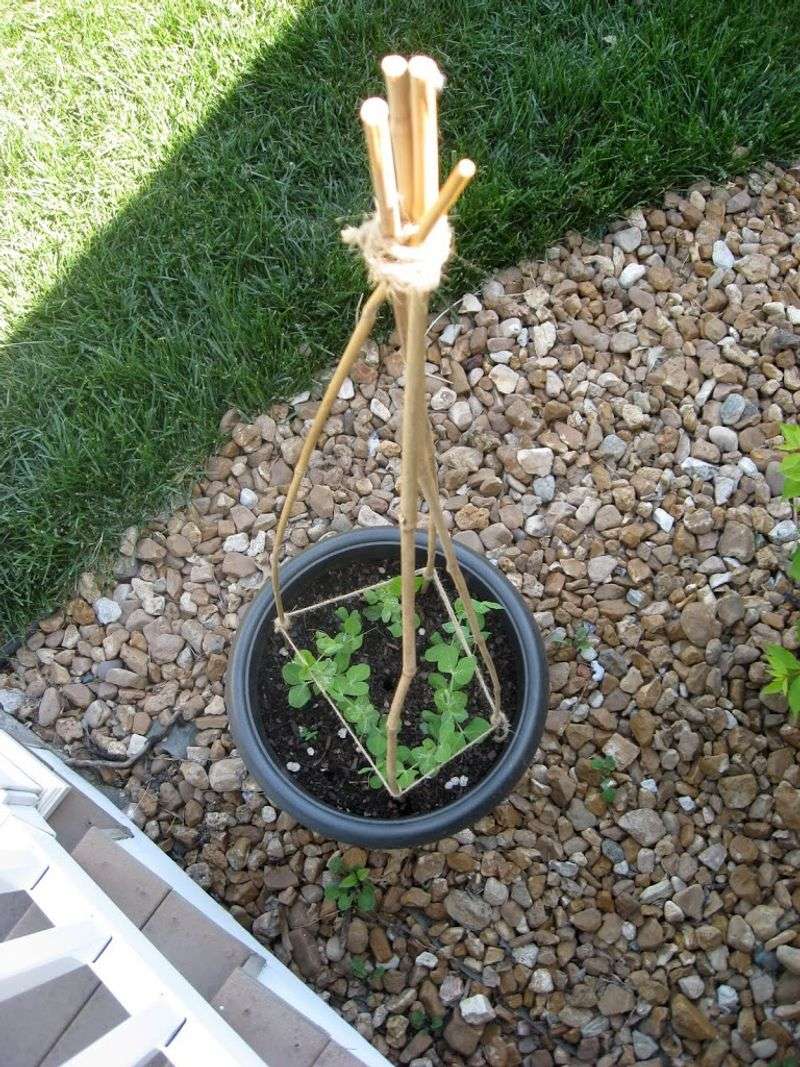
Not all sugar snap pea varieties behave the same way on a trellis. Bush types stay relatively compact and may need only a short support frame, while vining or pole types can reach 6 to 8 feet and will sprawl across anything nearby if not guided upward from the start.
Checking the seed packet before buying is the fastest way to know what you are dealing with, since days to maturity and growth habit vary meaningfully between cultivars.
The timing of trellis installation matters more than most first-time patio growers expect. Once pea tendrils start reaching out and wrapping around each other or the pot’s rim, untangling them without breaking stems becomes a frustrating and damaging task.
Push the support structure into the potting mix at planting time or within the first week, before any climbing has started.
Several named varieties work well in container settings. University of Arizona Cooperative Extension lists Sugar Daddy as a snap-pea option suited to the region, and Oregon State University Extension includes Sugar Daddy alongside Sugar Sprint, Sugar Ann, Super Snappy, Sugar Snap, and Super Sugar Snap as bush or pole choices.
Each has a different mature height and production window, so match the trellis height to the variety on your packet rather than assuming one size fits all. A trellis that is too short for a vining type creates more problems than it solves by mid-season.
Harvest regularly and expect a finite crop
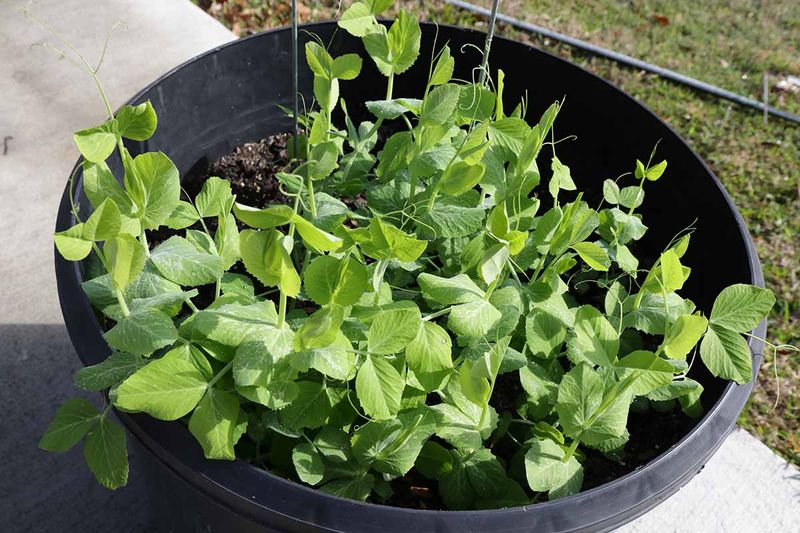
Picking pods at the right moment makes a real difference in both quality and continued production. A snap pea is ready to harvest when the pod is full-sized, crisp, and still tender, with seeds that have filled out but not yet become large and starchy.
Utah State University Extension puts that window at roughly 5 to 8 days after flowering, and the guidance is consistent: pick often, because leaving mature pods on the vine signals the plant to slow down rather than keep producing.
Regular harvesting during the productive period can encourage additional flowers and pods, but this effect has a limit. A pea plant is a cool-season annual with a finite productive life, and no amount of picking extends that life past the point where heat, drought stress, disease, or natural senescence ends the run.
Utah State Extension describes a typical harvest window of roughly three to four weeks after flowering begins, which is the honest expectation for one planting on a low-desert patio.
Succession sowing can extend your overall supply by starting new plants as an earlier batch winds down, but that means new seeds in a fresh container rather than the original bucket continuing to produce. The first planting’s roots and vines will compete with new seedlings for space and nutrients, making the same bucket a poor candidate for re-seeding.
One well-tended bucket of sugar snap peas on a Phoenix or Tucson patio is a genuine seasonal reward, not a permanent fixture, and that honest trade-off is what makes the harvest feel worth the effort.