Plant This Pennsylvania Shrub Now And Harvest Berries For Years
Every spring, a homeowner stands in the garden center holding a flat of petunias that will look great until the first hard frost and then vanish forever without a trace.
A few aisles over sits a leggy little shrub in a black pot that costs three times as much and looks like nothing special at all.
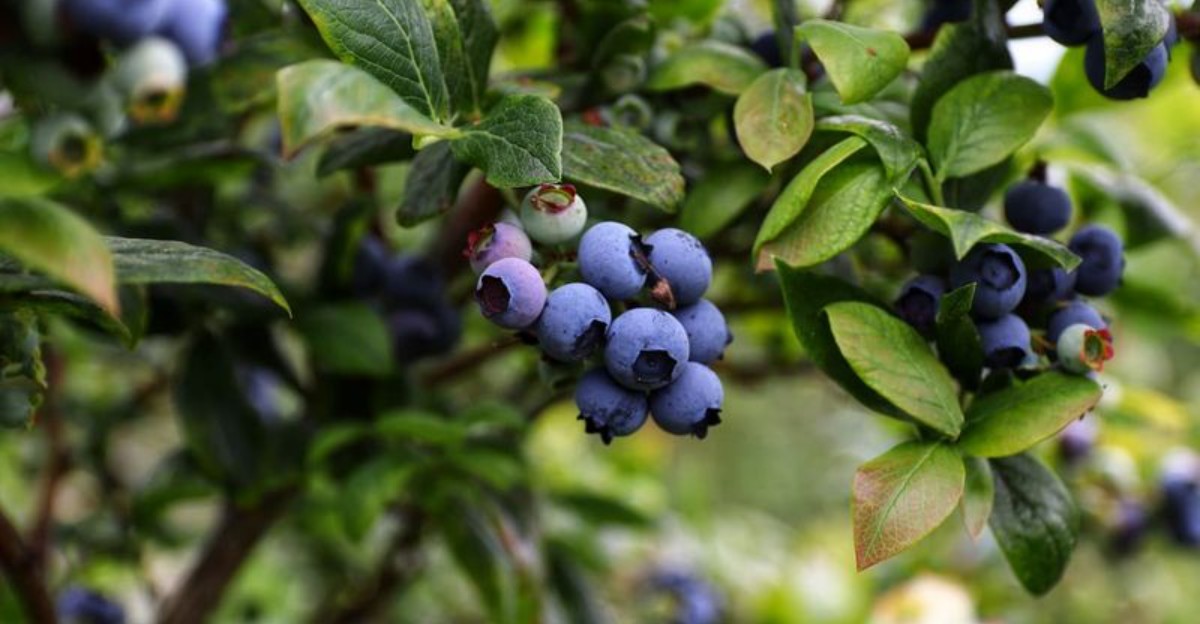
That shrub is highbush blueberry, and if it goes in the ground correctly, it can hand over buckets of fruit every summer for the next thirty years or more.
Most gardeners walk right past it, unwilling to spend more on something that looks so unimpressive sitting there in a plastic pot.
The catch is that Pennsylvania soil almost never comes ready for it, so a little homework now decides whether you get decades of berries or a sad stick.
Meet The Highbush Blueberry Investment
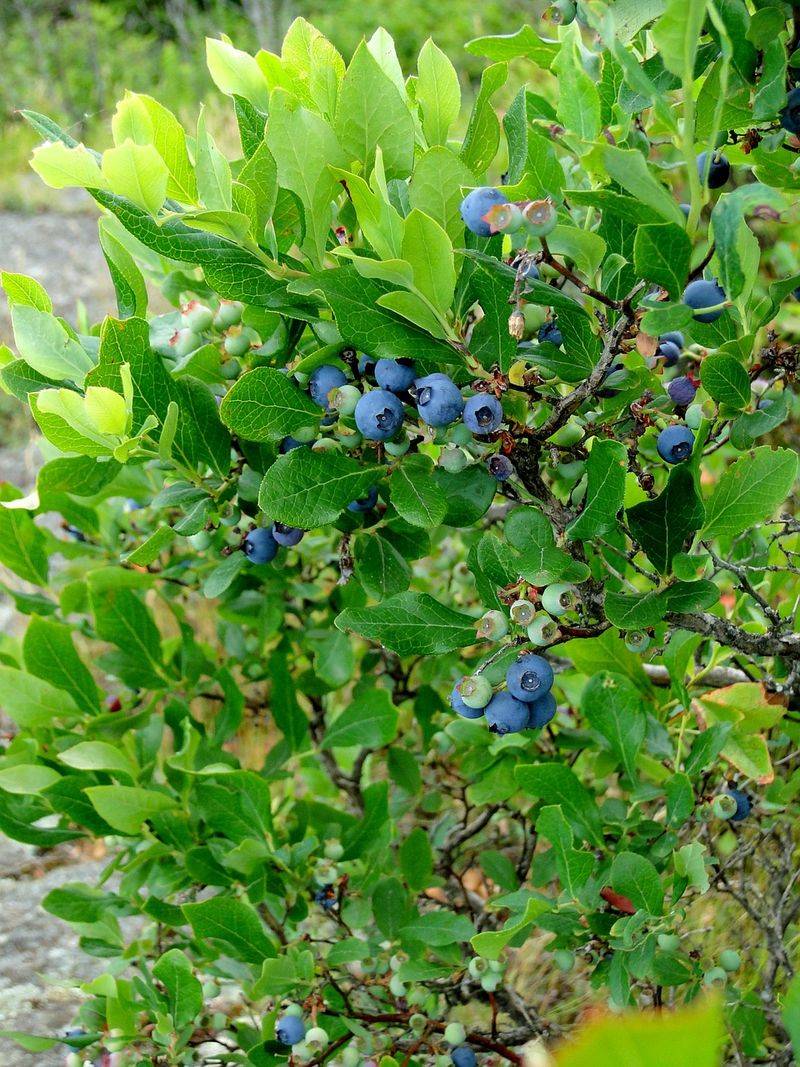
Picture a shrub that outlasts your car, your back fence, and whatever plant happens to be trendy three springs from now. Highbush blueberry is native to eastern North America and settles in nicely across most of Pennsylvania.
Buying one feels less like buying a flower and more like buying a small appliance you intend to keep for years to come.
The trade-off is honest enough here. One bush costs more than a whole flat of annuals, and it will not sag with fruit its first summer at all.
In return you get a woody plant that thickens, widens, and hands over bigger crops as the years pile up steadily.
Nurseries usually sell two-year-old or three-year-old plants, and paying for the older size shortens your wait considerably compared to starting from scratch.
Penn State Extension treats small fruit plantings as long-term investments, since relocating a mature bush later is far harder than choosing the right spot at the start.
Full sun, moving air, and ground that never turns into a puddle are the non-negotiables for this crop. Mature highbush plants often reach five to eight feet tall and nearly as wide.
Treat the first season as construction work, and count every season after that as the return on your effort. Gardeners who think in decades rarely regret planting blueberries.
Fall Planting Gives Roots A Head Start
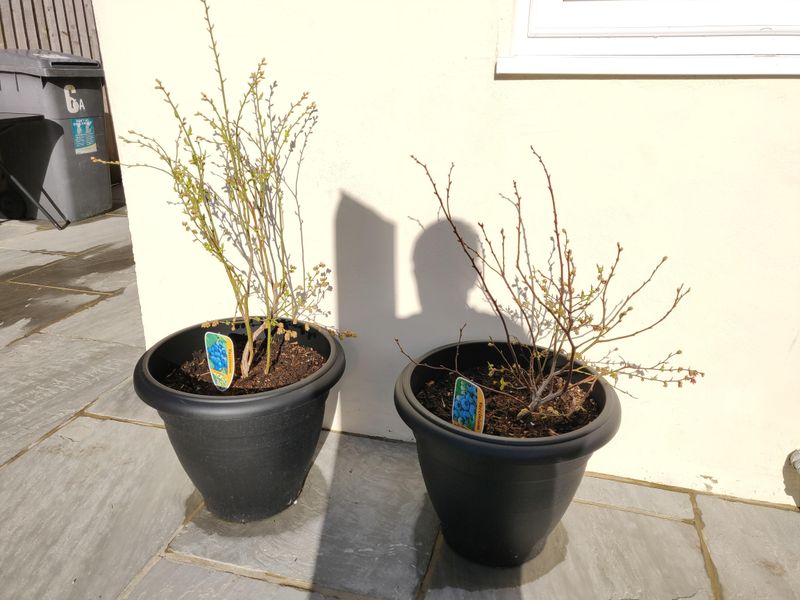
Soil stays warm long after the air turns cool, and roots notice that difference clearly. From roughly mid-October into November across much of Pennsylvania, the ground still holds enough warmth for new roots.
That stillness is the advantage here, because a dormant shrub is not trying to grow leaves and roots at the same time.
Autumn rain helps too during this window. Cooler temperatures slow water loss from the stems, so transplant shock stays mild compared to a spring planting.
Honesty matters here though. Penn State Extension guidance on blueberries commonly points toward early spring planting in Pennsylvania, largely because winter heaving can damage a young plant.
Fall works best for container-grown stock planted early enough to root, in milder parts of the state, and only with real attention to mulch.
Your Pennsylvania Garden Changes Every Week. Your Plan Should Too.
Gardening in Pennsylvania changes quickly throughout the season. Every Friday you’ll receive a simple weekly plan showing exactly what to plant, prune, fertilize, harvest, and protect so you never miss the right timing.
Lay three to four inches of pine bark, wood chips, or sawdust over the root zone after planting, keeping it an inch or two off the stems.
Water deeply once at planting and again before the ground freezes hard for winter. Skip fertilizer until growth starts the following spring.
If your site is windy, exposed, or heavy clay, waiting for April is the smarter call, and your plants will thank you for it later.
Acidic Soil Makes Or Breaks It
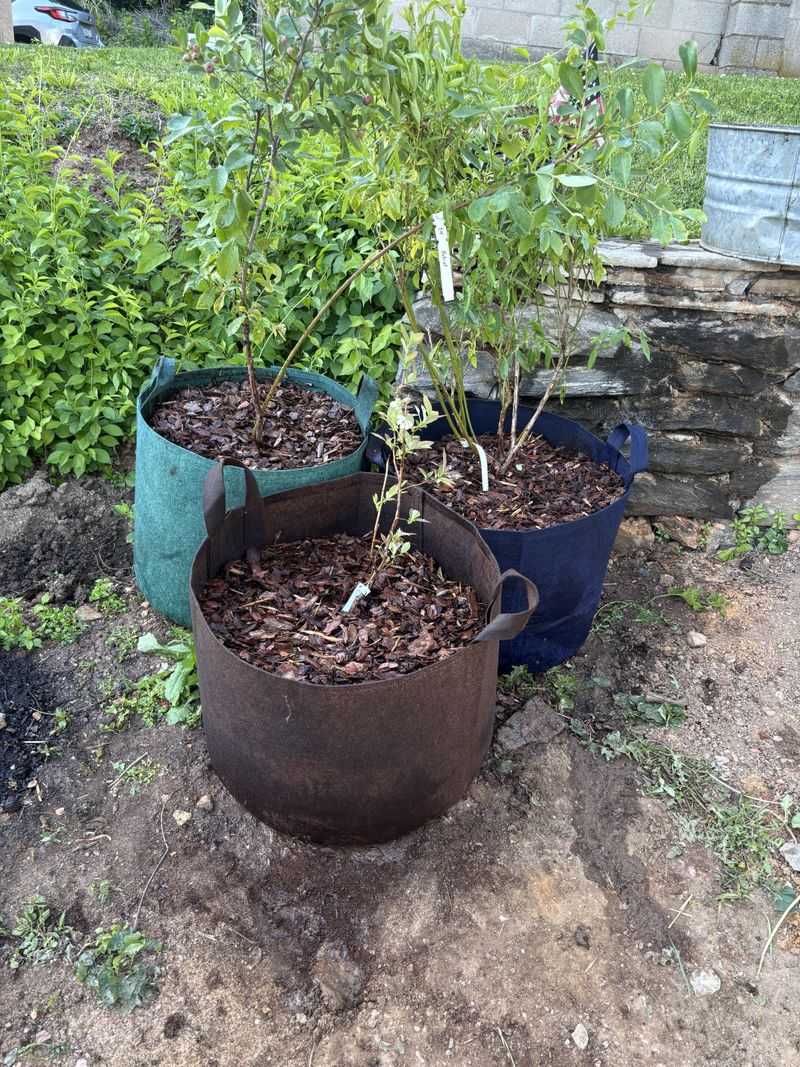
Here is the step most people skip, and it is the one that quietly dooms blueberries every time. Highbush blueberry needs distinctly acidic soil, roughly pH 4.5 to 5.5.
Plenty of soils across the state sit near 6.0 to 7.0, comfortable for tomatoes and lawns and flatly wrong for this particular crop.
Wrong pH does not doom the plant quickly though. Leaves yellow between the veins, growth stalls, and the bush limps along for years while nutrients stay locked up.
Get a soil test before you buy a single plant from the nursery. Penn State Extension offers mail-in soil test kits through county offices for exactly this purpose.
Elemental sulfur is the standard fix, and the amount depends on both your starting pH and your soil texture, so follow the test recommendation.
Sulfur needs warm soil and months of microbial activity to work, which is why gardeners often amend a full season ahead and retest.
Peat moss worked into the planting area helps too, and acidifying fertilizers such as ammonium sulfate maintain the level later on.
Lime, wood ash, and many municipal composts push pH the wrong way, so keep them far from the blueberry row entirely.
Two Varieties Improve Your Harvest
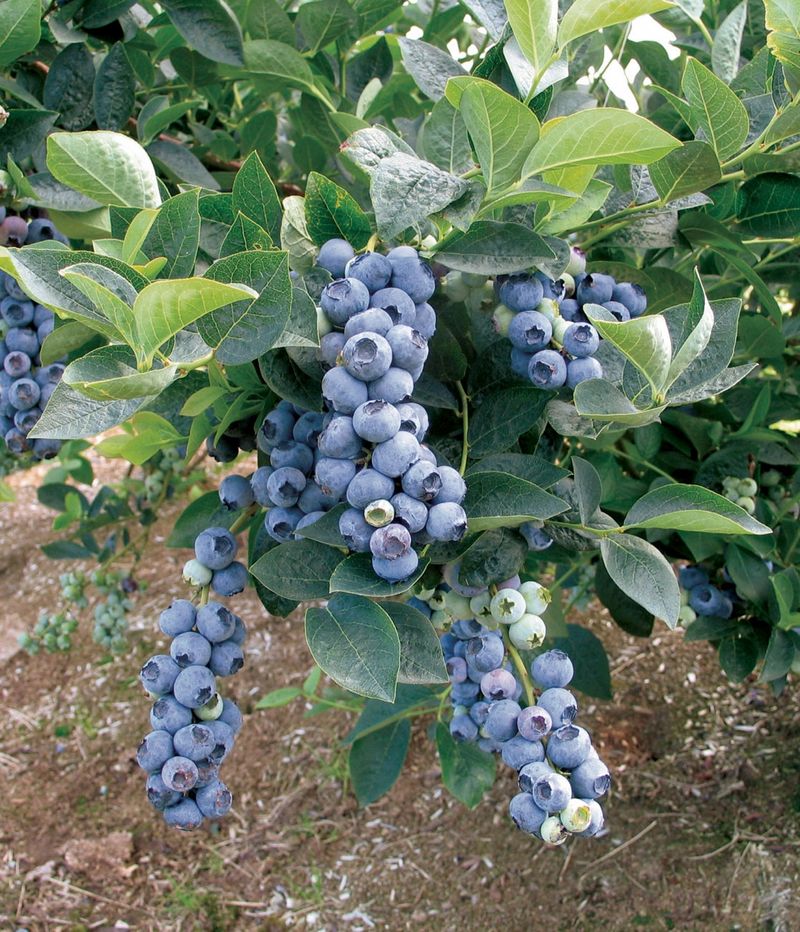
One bush alone will make berries just fine. Two different cultivars will make better ones though. Highbush blueberry counts as self-fertile, yet cross-pollination produces larger fruit and heavier set.
The difference is not small, and it costs you nothing but a second plant sitting in the ground nearby.
Bees do the actual work here, carrying pollen between plants whose bloom periods overlap during the season. That overlap is the detail to check at the nursery.
Pennsylvania gardeners have plenty of proven choices available to them. Duke and Patriot ripen early, Bluecrop and Blueray fill the middle of the season, and Jersey stretches picking into late summer.
Planting one from each window spreads the harvest across six to eight weeks instead of dumping everything into one frantic fortnight of picking.
Space bushes four to six feet apart within the row so pollinators move easily between them throughout bloom season.
Avoid insecticide sprays during bloom entirely, because the bumblebees working those flowers are the whole reason the trick pays off in the first place.
Label your plants the day they arrive at your house. Three years later, while pruning and comparing flavor, you will want to know which cultivar earned its keep.
Established Bushes Produce For Decades
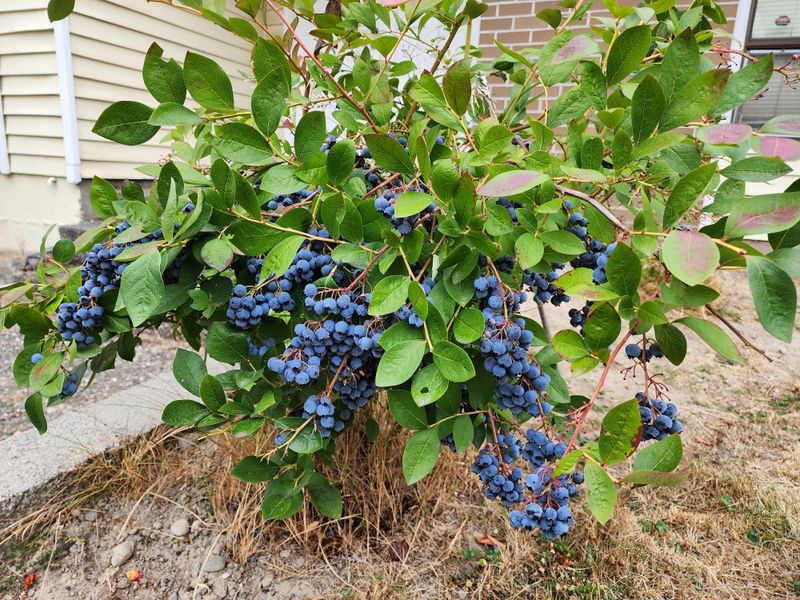
Blueberry patches outlive dogs, mortgages, and sometimes the people who planted them in the first place. A well-sited, well-tended highbush planting can stay productive for twenty to fifty years.
Getting there takes restraint early on though. Most growers pinch off flower buds during the first year, and sometimes the second, so the plant pours energy into canes and roots.
Real production begins around year three and climbs steadily from there onward. By years six through eight, a healthy mature bush can yield roughly five to ten pounds of fruit.
Pruning keeps the clock from running out on productivity. Starting around year six, cut out one or two of the oldest, thickest canes each winter along with anything crossing or sprawling.
Vigorous new canes replace them, and the bush effectively renews itself year after year without much fuss.
Steady moisture matters just as much here, since blueberry roots are shallow and fibrous with no taproot reaching deep water on their own.
One to two inches of water per week during fruiting, plus mulch refreshed every year or two, covers most of what an established planting asks.
Birds Will Compete For The Crop
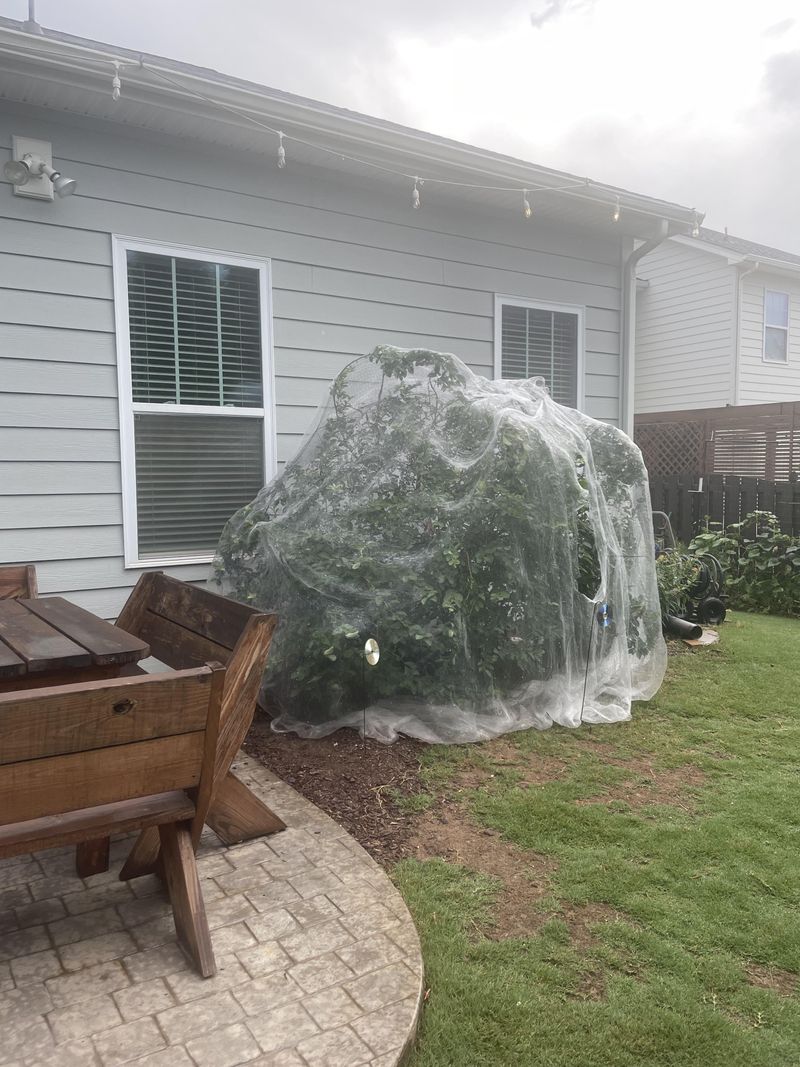
Catbirds have excellent taste, and they know precisely when your berries turn blue on the branch. Robins, cedar waxwings, and starlings follow close behind, and a flock can strip an unprotected bush in a single morning.
Netting remains the only method that works reliably against this problem. Use bird netting with mesh around three-quarters of an inch or smaller, draped over a frame instead of laying it on the leaves.
Netting draped directly on foliage lets birds perch and peck straight through the holes, and it snags branches every time you pull it off later.
Anchor the bottom edge with landscape staples or boards, because birds walk in from underneath far more often than they dive through the top.
Timing is straightforward with this task. Cover the bushes when the first berries begin showing color, not after the flock has already discovered them.
Once birds learn the address, they return daily without fail. A frame tall enough to walk under makes picking far less aggravating for you.
Reflective tape, plastic owls, and shiny pie pans buy a few days at best before the birds call the bluff on the whole setup.
Patience Now Pays Off For Years
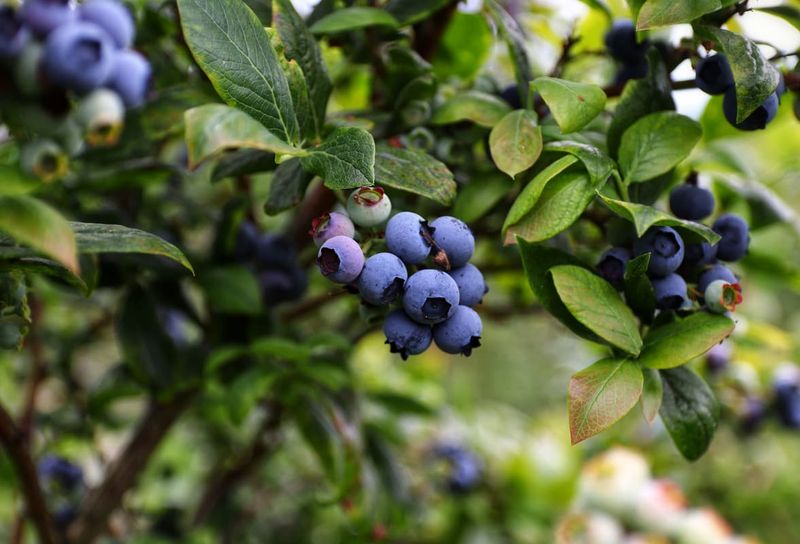
All the front-loading, the soil test, the sulfur, the season of waiting, is the real price of this crop. Pay it once, and the berries keep showing up reliably.
Put the work in a sensible order from the start. Test the soil, amend and retest, pick two or more cultivars with overlapping bloom, plant into a sunny spot.
Nothing on that list is difficult in itself. It simply refuses to be rushed, which is a hard sell in a world of instant results.
Ordering early helps as well here, since popular cultivars sell out at Pennsylvania nurseries by late winter most years.
The reward is easy to picture clearly. A July morning, a coffee cup on the step, and a colander filling with fruit you did not pay four dollars a pint for.
Multiply that by thirty summers, and one afternoon of digging looks like a genuine bargain in hindsight. Freezing the extras takes minutes.
Children who help plant these bushes can pick from them as grown adults, which is not something anyone says about marigolds. Plant now, or wait for early spring if your site is exposed.