The Overlooked Virginia Wildflowers That Keep Blooming When Most Gardens Fade
Walk through a Virginia garden in late September, and you can feel summer slipping away. Tomato vines are fading, annual flowers are slowing down, and many beds look ready for a break.
But the edges of the landscape are still full of life. Along fields, roadsides, and damp spots, native wildflowers are opening with purple blooms, golden sprays, and soft clouds of color.
These late-season plants keep pollinators busy when many other flowers have disappeared. Bees, butterflies, and migrating monarchs rely on them for some of their last meals before colder weather arrives.
Many of these natives are also easy to grow. They handle local conditions, need little fuss, and bring a fresh burst of color when the rest of the garden starts to quiet down.
Autumn is not the end of the garden season. It is a chance to see a whole different side of it.
1. New England Aster Brings Purple Blooms Into Fall
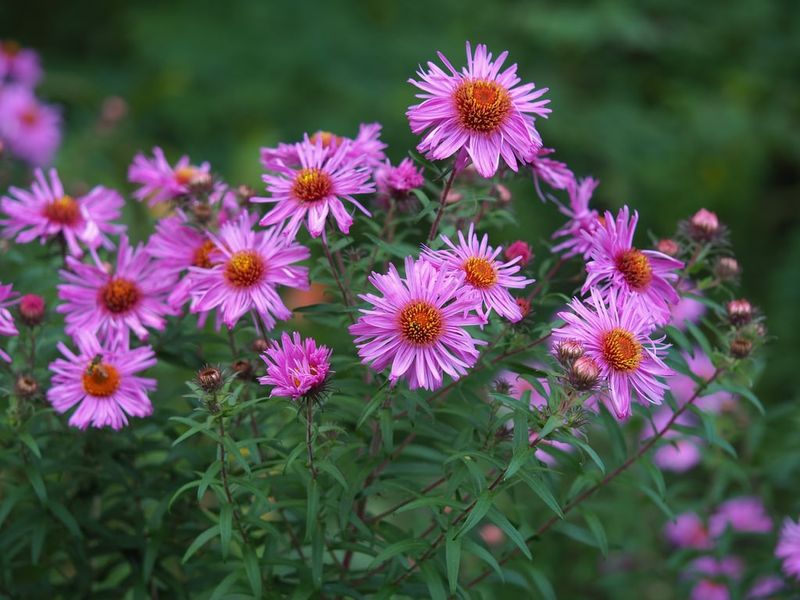
Late September in Virginia can feel like the garden is quietly packing up for the year. Then New England Aster opens, and suddenly there are purple stars everywhere.
Symphyotrichum novae-angliae produces daisy-like blooms in purple to pink shades with sunny yellow centers. Flowering often starts in late summer and keeps going well into October.
Plants usually reach three to five feet tall, with fuzzy stems and leaves that wrap around the stalk. That clasping leaf is an easy way to tell it apart from lookalike asters.
Bees, butterflies, and quick little skippers crowd the flowers when few other nectar sources remain. More than three dozen moth species also use it as a larval host plant.
Full sun or light shade works best, paired with soil that drains instead of staying soggy. Give it room, because it self-seeds freely and can pop up in unexpected corners.
Snipping off spent seed heads in fall keeps volunteer seedlings under control. Pinching stem tips in early June also encourages bushier growth and fewer floppy stalks.
Do not worry if lower leaves brown and shrivel as the season moves along. Older foliage naturally fades while the top of the plant pours energy into flowers.
Pair it with goldenrod for a purple and gold combination that photographs beautifully. The contrast looks intentional even in a casual meadow planting.
Cut stems make a long-lasting bouquet, and the flowers hold color indoors for days. Leaving some standing through winter gives insects shelter until spring warms up.
2. Goldenrod Adds Bright Color For Late Season Pollinators
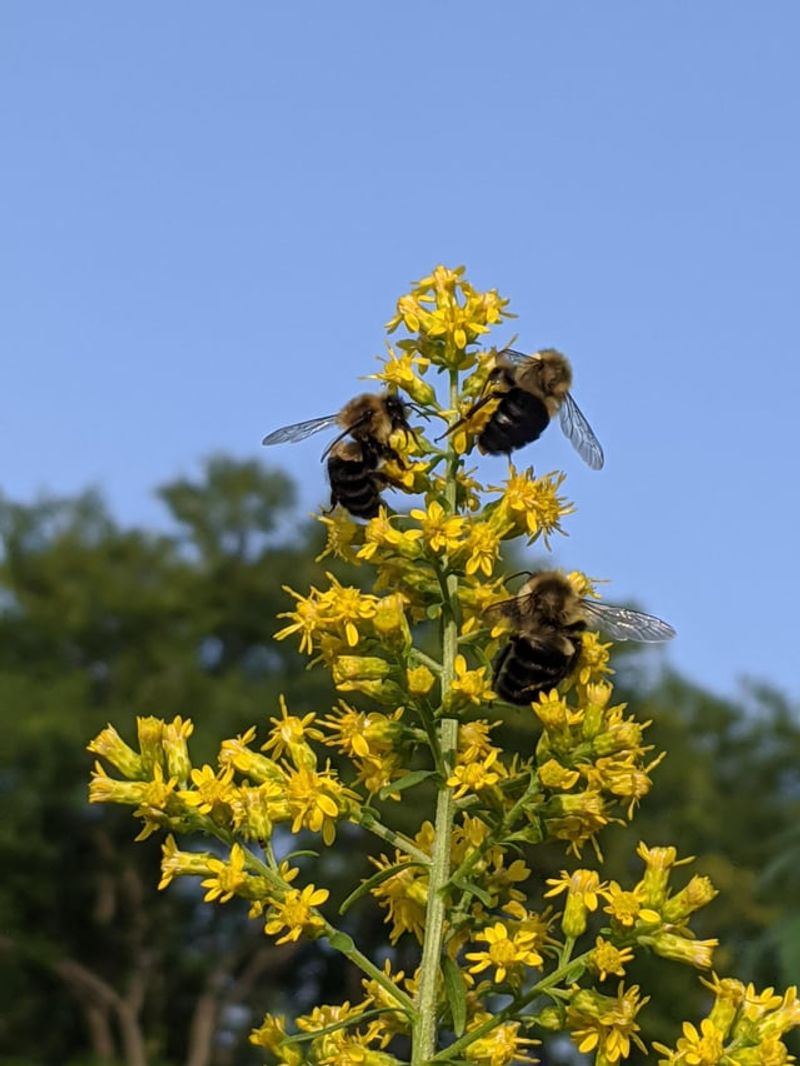
Poor goldenrod takes the blame every autumn for itchy eyes and sneezing fits. The real troublemaker is ragweed, which blooms at the same time and sends pollen drifting on the wind.
Goldenrod pollen is heavy and sticky, so it is mainly moved by insects rather than carried widely by the wind. Once you know that, those golden plumes become a lot easier to love.
Solidago includes more than 100 species, and over 40 of them grow in Virginia. Blue-stemmed Goldenrod even handles shade, which is handy under trees.
Bright yellow sprays light up roadsides from late summer through the peak of fall foliage. The timing lines up with the exact moment pollinators need fuel most.
Your Virginia Garden Changes Every Week. Your Plan Should Too.
Gardening in Virginia changes quickly throughout the season. Every Friday you’ll receive a simple weekly plan showing exactly what to plant, prune, fertilize, harvest, and protect so you never miss the right timing.
Bees, butterflies, moths, wasps, and beetles all pile onto the blossoms. Several specialist bee species depend on goldenrod pollen alone to feed their young.
Migrating monarchs use goldenrod flowers as an important late-season nectar source. Seed heads later feed small birds picking through winter stems.
Deep fibrous roots hold soil in place on slopes and disturbed ground. They also pull up nutrients and improve structure in tired, compacted dirt.
Choose clump-forming types like Showy or Wrinkleleaf Goldenrod if spreading worries you. Canada Goldenrod travels fast by runners and suits a meadow better than a tidy bed.
Full sun and average soil are all most kinds ask for. Skip the fertilizer, since rich ground tends to make stems stretch and lean.
Cut a few stems for a vase and the color lasts surprisingly well. Dried plumes hold their warm tone through the holidays too.
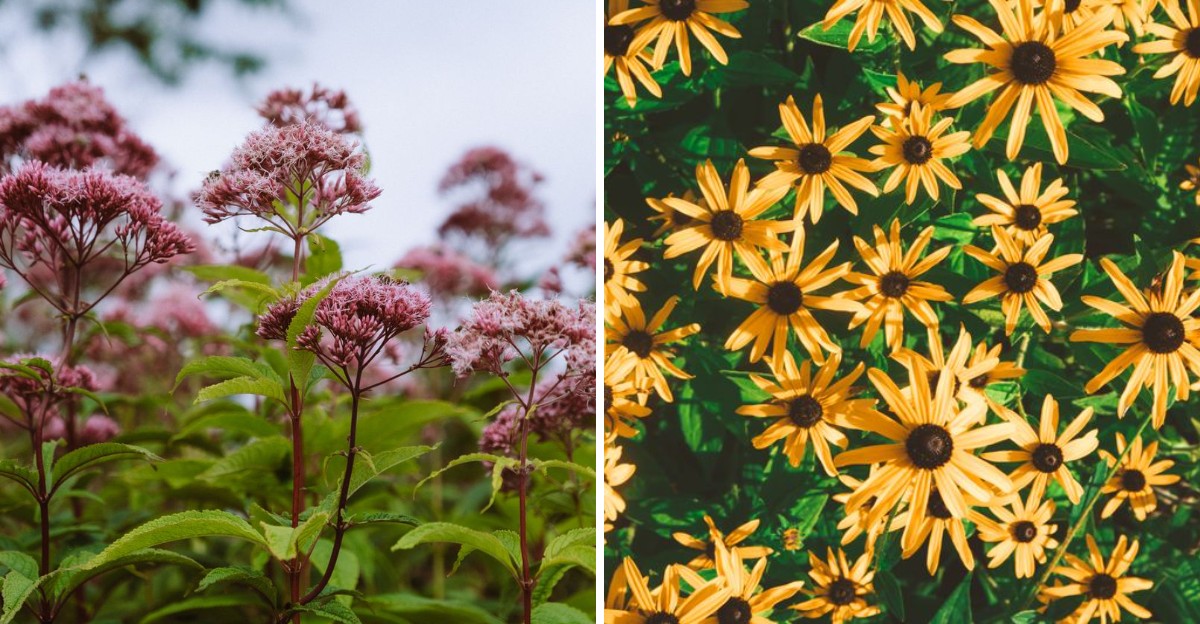
3. Joe Pye Weed Towers Over Late Summer Gardens
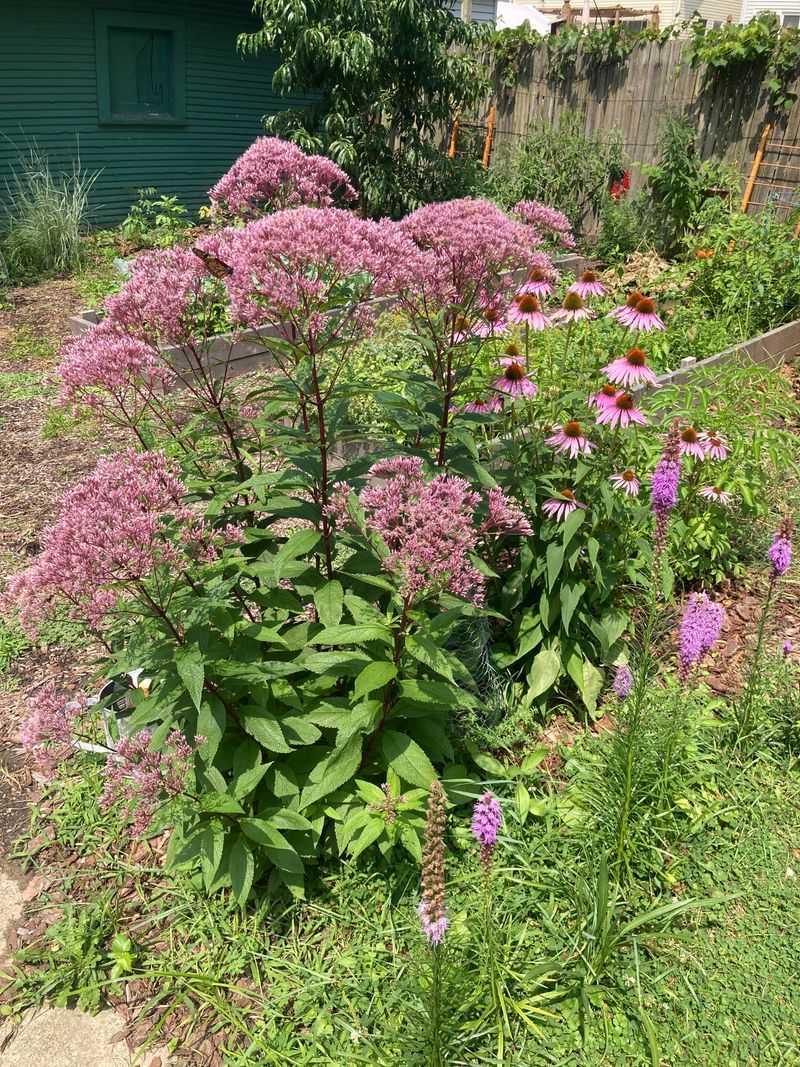
Lean close to Joe Pye Weed on a warm afternoon and you might catch a faint vanilla scent. Swallowtails notice it long before people do.
Eutrochium purpureum and E. fistulosum both bloom from July through September. Dusty pink to mauve flower clusters sit on top like wide, rounded domes.
Height is the headline here, with most plants hitting four to seven feet. In rich, damp ground, some specimens stretch closer to ten.
Hummingbirds, native bees, and a parade of butterflies work the nectar-rich clusters. A single stand can look busy from morning until dusk.
Moist to wet soil suits it best, along with full or partial sun. Rain gardens, meadow edges, pond banks, and stream sides are natural spots.
Clay soil, common across much of the state, rarely bothers it. Deer and rabbits usually walk past without taking a bite.
Place it toward the back of a border so shorter plants are not hidden. Cutting stems back by a third in late May keeps growth sturdier.
The name traces back to a healer who reportedly used the plant in colonial times. Whether or not the story is exact, it stuck for centuries.
Water during long dry spells, especially the first summer after planting. Once roots settle in, care drops to almost nothing.
Leave the dried seed heads standing for winter texture and small bird snacks. They catch frost in a way that makes a chilly garden look alive.
4. Cardinal Flower Adds Bold Red Blooms Near Water
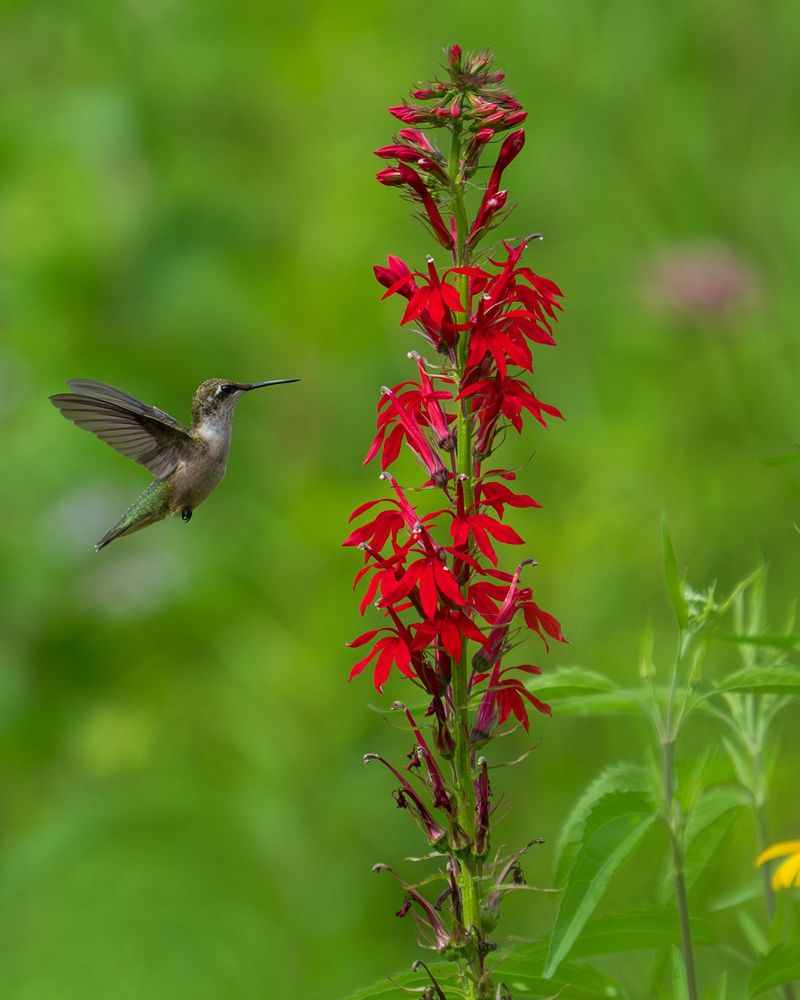
Few native plants stop traffic like Cardinal Flower in full bloom. That red is so saturated it almost looks painted on.
Lobelia cardinalis sends up unbranched stalks of tubular scarlet flowers from late July into early October. Stems range from two to six feet, lined with narrow, finely toothed leaves.
Hummingbirds are the main pollinators, and their bills fit the long flower tubes perfectly. Watching one hover at eye level is worth planting it for that alone.
Bees and butterflies visit too, though the flower shape favors feathered guests. Streambanks, seeps, and low wet spots are where it grows wild.
Soil that stays damp is the secret to keeping plants thriving year after year. Dry summer ground stresses them quickly, so a boggy corner or rain garden is ideal.
Partial shade helps in hotter areas, while full sun works where roots stay moist. Mulch lightly to hold water without burying the crown.
Individual plants can be short-lived, so let a few go to seed each year. Scattered seedlings keep the display going without any replanting.
Every part of the plant is considered potentially harmful if eaten in quantity. Keep that in mind around curious toddlers and nibbling pets.
Skip heavy mulch over the crown in fall, which can smother new growth. A thin layer of leaves is plenty of protection.
Plant it next to blue mistflower and the red practically glows. The pairing is a small trick that looks expensive.
5. Mountain Mint Keeps Supporting Pollinators Into Fall
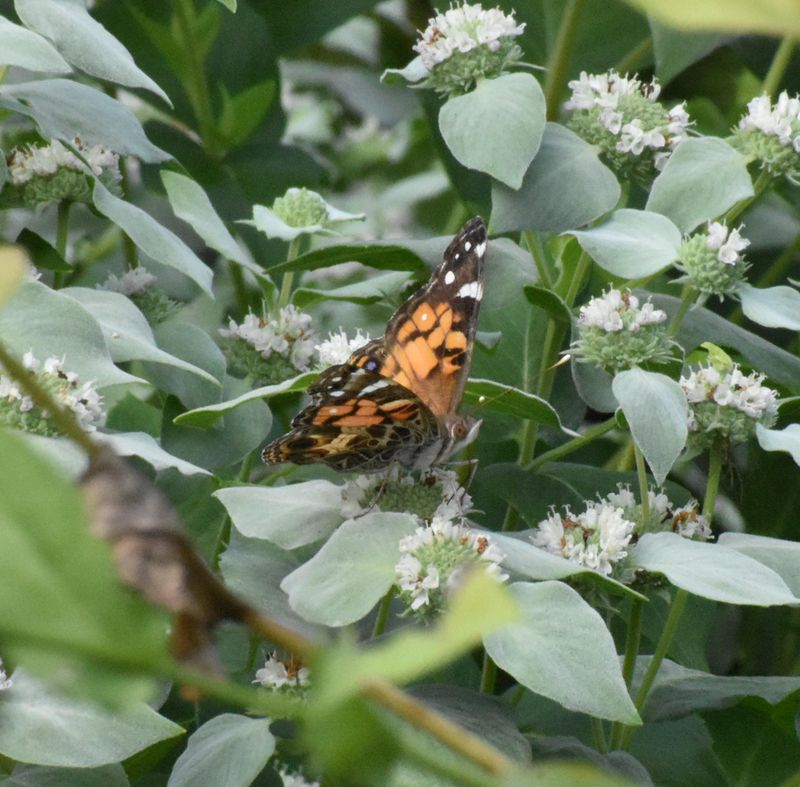
If you want a front-row seat to pollinator chaos, plant Mountain Mint. Researchers rank it among the very best plants for insect diversity.
Pycnanthemum species carry clusters of tiny white or pale lavender tubular flowers. Blooming starts mid-summer and often runs through September.
Crush a leaf between your fingers and the minty smell is unmistakable. Unlike true mints, most species stay reasonably polite in a garden bed.
Bees of many sizes, butterflies, wasps, and flies all visit at once. Counting species on a single clump becomes a genuinely fun afternoon project.
The Wavy-lined Emerald moth uses it as a host plant for caterpillars. That moth larva famously decorates itself with flower petals.
Aromatic foliage can make mountain mint less appealing to some browsers, though hungry animals may still sample it. Gardeners with heavy deer pressure often lean on it for that reason.
Soil preferences are loose, ranging from dry sandy ground to damp clay. Full sun brings the heaviest flowering, though light shade is acceptable.
Slender Mountain Mint has fine needle-like leaves and a tidy shape. Common Mountain Mint spreads more, so give it a spot where roaming is welcome.
Divide clumps every few years in spring to refresh them and share with friends. Seedlings and divisions both establish quickly.
The silvery bracts under the flowers stay attractive after blooms finish. That gives the plant a soft, frosted look into late fall.
Dried leaves make a pleasant tea, which is a nice bonus. Harvest a few sprigs before flowering for the strongest flavor.
6. Blue Mistflower Creates Clouds Of Late Season Color
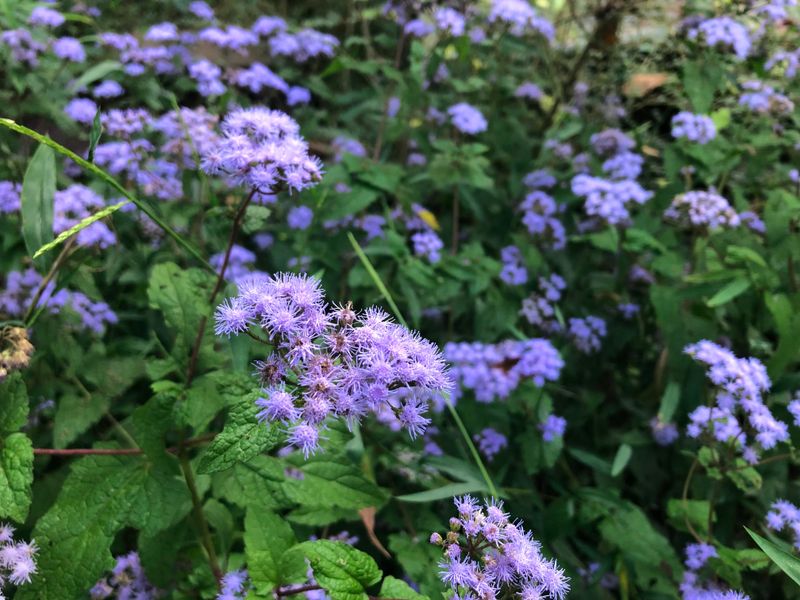
Powder blue is rare in a fall garden, which makes Blue Mistflower feel like a small discovery. The flowers look like fuzzy little clouds resting on green stems.
Conoclinium coelestinum also goes by Wild Ageratum, and the nickname fits its look. Blooming runs from mid-summer straight through autumn.
Height usually lands around three to four feet, sometimes less in leaner soil. Loose, airy flower heads soften stiff plantings nearby.
Butterflies, skippers, and bees swarm the blossoms during migration season. Migrating butterflies, including monarchs, may visit the blossoms for nectar.
Creeping roots help it spread, which some gardeners welcome and others watch closely. The roots sit shallow, so pulling extras in spring takes minutes.
Full sun to light shade works, with moist to average soil preferred. Established clumps shrug off short dry stretches without much fuss.
Use it as a groundcover under taller natives instead of fighting its wandering habit. A border edge or path side shows off the color nicely.
Shear plants by a third in early summer for stockier stems and more flowers. Skipping that step usually means a bit of leaning by September.
Bloom time overlaps with goldenrod, and the blue against yellow is striking. Many gardeners plant them side by side on purpose.
Seedlings appear in unexpected places, which makes sharing easy. Pot a few up and trade them with neighbors.
Leave the spent stems until spring so overwintering insects have cover. Cleanup in March still leaves plenty of time for fresh growth.
7. Ironweed Adds Tall Native Beauty To Open Spaces
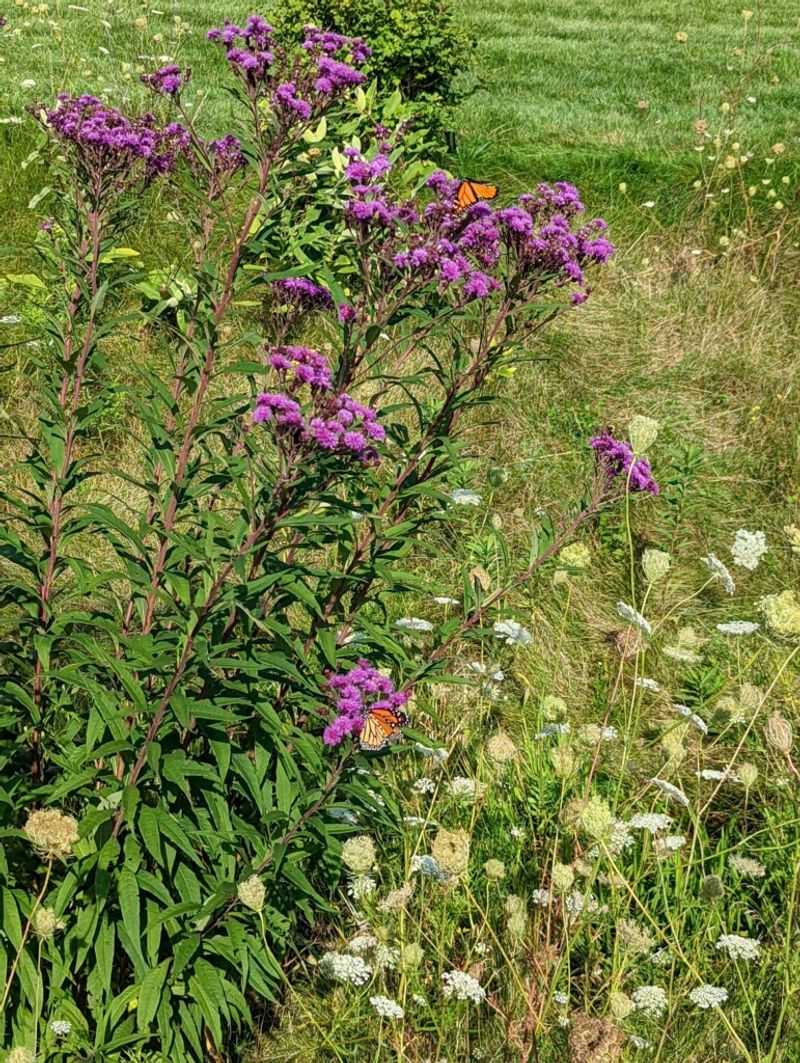
The name sounds tough, and the plant earns it. Stems stay so rigid they often stand upright through snow and winter wind.
Vernonia species bloom from July into early fall with clusters of deep violet-purple flowers. Depending on the species, plants reach three to ten feet.
That height makes ironweed a natural back-row anchor in a meadow or large border. Vertical drama is hard to find this late in the year.
Native bees work the blossoms steadily, and butterflies land in numbers. Several insects use ironweed as part of the food web, while its flowers provide nectar for bees and butterflies.
Full sun and steady moisture bring the strongest performance. Once roots go deep, plants handle drier spells better than expected.
Roadsides, damp meadows, and rain gardens throughout Virginia suit it well. Heavy clay and occasional flooding are both tolerated.
New York Ironweed is the tall one, while Appalachian species stay more compact. Choose based on how much vertical space you can spare.
Cutting stems back by half in June limits flopping without losing flowers. Plants simply branch and bloom a little lower.
Deer generally leave the coarse leaves alone, which helps in rural areas. Rabbits usually skip it as well.
Seed heads turn a soft rusty brown and hold their shape for months. Goldfinches and sparrows pick through them on cold mornings.
Pair it with goldenrod and switchgrass for a prairie feel. The purple reads even brighter beside warm grasses.
8. Black Eyed Susan Extends Color Beyond Summer
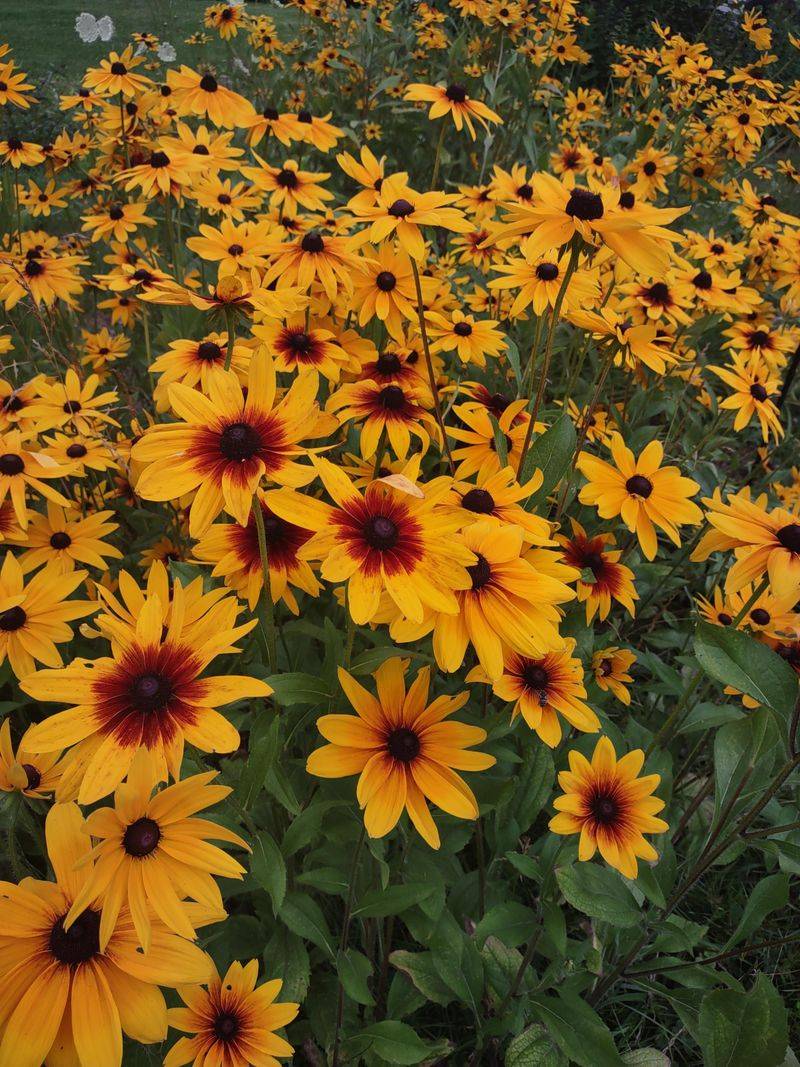
Some plants just refuse to quit, and Black Eyed Susan is one of them. Blooming often starts in June and can continue well into fall, especially with favorable conditions.
Rudbeckia hirta produces bright gold petals around a dark chocolate-brown center cone. Plants usually top out near three feet tall.
Stems and leaves feel slightly rough and bristly to the touch. That texture is a quick field identification clue.
Bees and butterflies gather pollen and nectar from the open, landing-pad flowers. Small native bees especially favor the wide center.
Once petals drop, the seed heads become a buffet for goldfinches and chickadees. Leaving them standing feeds birds well into the cold months.
Full sun and moderately dry soil are all it needs. Roadsides, field edges, and garden borders fill with it every summer.
Removing some spent flowers stretches bloom time even further into fall. Leave the rest for seed if you want volunteers next year.
Many plants behave as short-lived perennials or biennials, reseeding to fill gaps. A patch tends to shift around slightly from season to season.
Good air flow reduces the leaf spotting that shows up in humid Augusts. Thin crowded clumps and water at the base instead of overhead.
Cut flowers hold up for a week or more in a jar. Kids love picking them, and the plant keeps producing.
Sow seed in fall and let winter weather do the chilling work. Sprouts appear on their own once spring warms.