The New York Trees That Change Color First And Last Every Fall
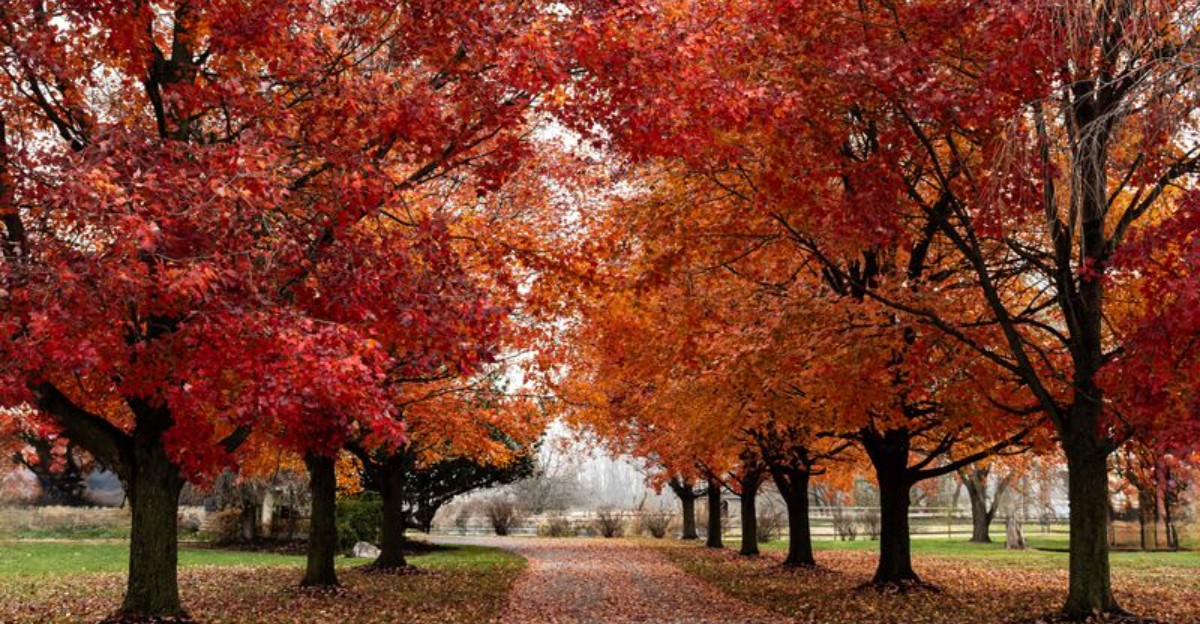
Fall color in New York arrives in waves. One tree may turn bright red while the forest around it still looks green.
A few weeks later, the scene changes again. Maples, oaks, and other native trees take their turn, holding onto shades of gold, orange, and copper as the season moves closer to winter.
That changing order is what makes fall display last so long. From the Adirondacks to the Catskills to a backyard maple, knowing which trees turn first and which ones finish last helps you follow the entire color show.
The timing depends on the tree species, weather, and growing conditions. Once you know what to look for, every stage of autumn becomes easier to spot.
1. Black Tupelo Starts The Fall Color Show Early
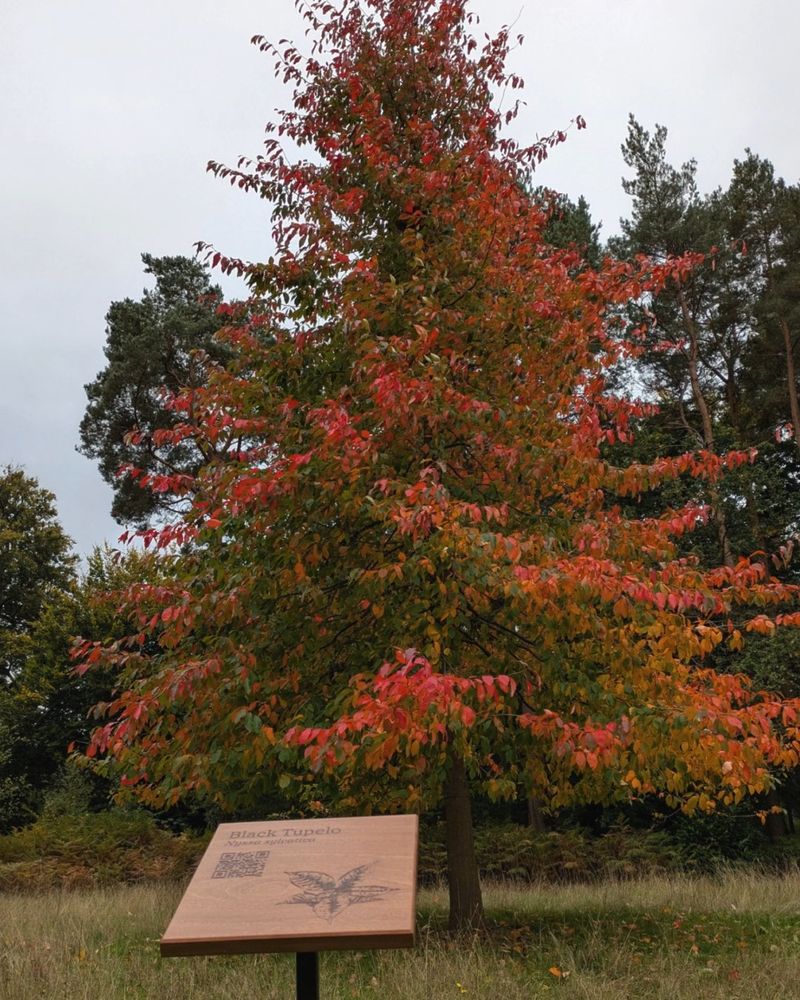
By early fall, while much of the woods still looks green and sleepy, one tree quietly starts to blush. Black tupelo, also called black gum, is an early fall color bird.
Color arrives in patches, sometimes on a single branch first. Within a couple of weeks, leaves shift from yellow to fire-engine red, scarlet, crimson, and even deep purple.
One of the coolest parts is seeing several colors glowing on the same tree at once. Photographers love it because a single leaf can look like a tiny sunset.
Native to eastern and central North America, black tupelo shows up in parks around New York City. Central Park even has a spot called Tupelo Meadow, named for these very trees.
Berries ripen right as the leaves turn, which is handy timing for migrating birds. Robins, thrushes, and woodpeckers all stop by for a quick snack.
Want to catch the early show? Plan a walk during the first two weeks of September, and check low, damp areas first, since tupelos enjoy moist ground.
Homeowners appreciate that the leaves drop cleanly once the display winds down. Raking stays simple, and the bark develops blocky, alligator-style ridges that look sharp all winter.
Fun fact: the wood is so tough and tangled that old-time farmers shaped it into tool handles. Pretty impressive for a tree best known for flashy leaves.
Plant one in full sun for the strongest color and give it room to spread. Young trees appreciate steady watering through their first two summers.
2. Red Maple Brings Bright Shades Across New York
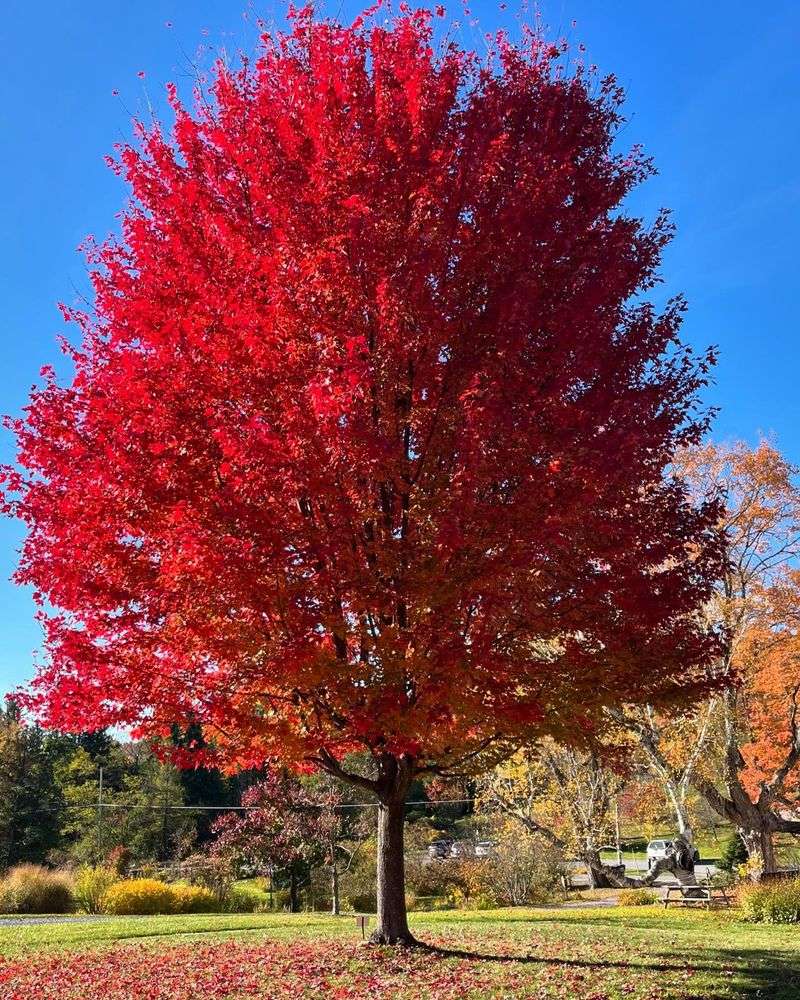
Red maple is one of the trees that often announces fall early, especially in wet areas. Its color often starts in early to mid-September, especially in wet spots.
Swamp edges, stream banks, and soggy roadside ditches turn crimson before the hills do. Damp roots seem to push these trees into an early wardrobe change.
Stress can trigger earlier color change, although early leaf color in drought or poor conditions may signal tree stress rather than a normal fall display.
The fiery shades come from pigments called anthocyanins, which build up as sugar stays trapped in the leaves. Cool nights and bright days make those reds pop.
Not every red maple goes full scarlet, though. Some lean burgundy, while others mix green-yellow with rusty orange on the same branch.
Your New York Garden Changes Every Week. Your Plan Should Too.
Gardening in New York changes quickly throughout the season. Every Friday you’ll receive a simple weekly plan showing exactly what to plant, prune, fertilize, harvest, and protect so you never miss the right timing.
City dwellers see plenty of them, since more than 18,000 red maples line New York City streets. Sidewalk shade plus October color is a hard combination to beat.
Adaptability is the secret to that popularity. Red maples handle swampy ground, dry slopes, and nearly everything between without much fuss.
For the best photos, look for a maple standing alone near water. Reflections double the color and make an ordinary pond look like a painting.
Homeowners planting one should pick a named variety for reliable red. Seedlings can surprise you with dull yellow instead.
Keep the trunk clear of mower damage, and the tree will reward you with decades of shade.
3. Sugar Maple Creates Classic Autumn Gold
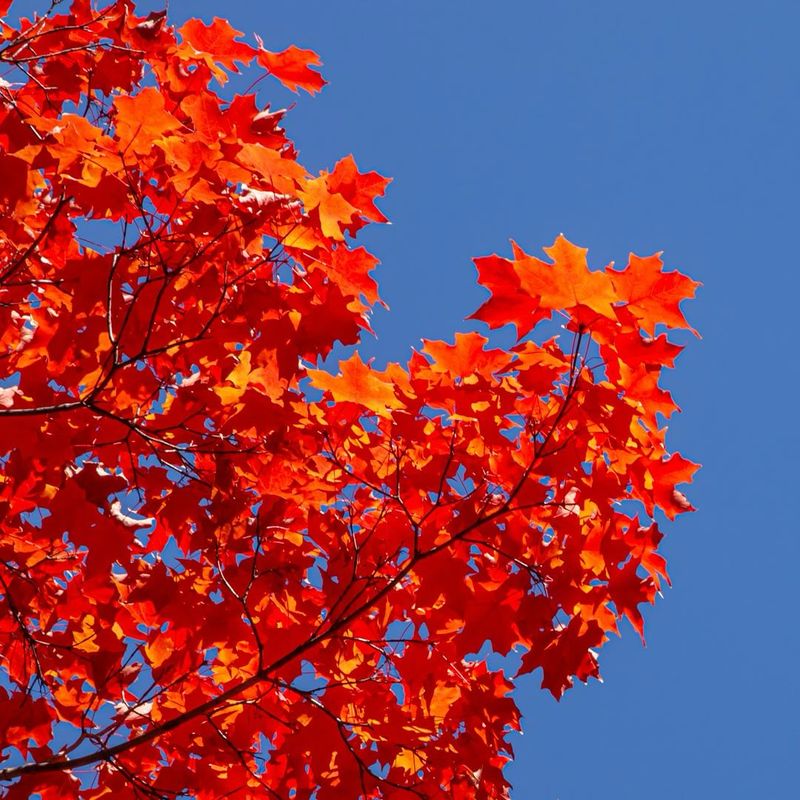
New York’s state tree happens to be the same one that makes breakfast delicious. Sugar maple delivers both syrup and the postcard version of autumn.
Timing shifts with elevation and latitude. In the Adirondacks, sugar maples blaze orange by late September, weeks ahead of trees farther south.
Head to the Finger Lakes National Forest and peak color often arrives in early to mid-October. Central New York often shows its best shades during the third week of October.
Catskills maples begin turning in the final week of September, with the biggest display in early to mid-October. Planning a drive around those dates really pays off.
What makes the species special is range. A single tree can hold bright yellow, burnt orange, and deep red at the same moment.
Sap is the other claim to fame. Sugar maple sap carries the highest sugar content, which is why it becomes syrup and maple candy.
Sugar bush owners tap in late winter, long after the leaves have gone. Roughly 40 gallons of sap boil down into one gallon of syrup.
To identify one quickly, study the leaf edges. Sugar maple lobes are smooth and U-shaped between the points, while red maple lobes look jagged.
For backyard planting, give it deep soil and steady moisture. Road salt and packed clay are its least favorite things.
A mature sugar maple can shade a whole house and trim summer cooling bills. Patience is part of the deal, since growth is steady rather than speedy.
4. Sourwood Adds Deep Red Fall Color
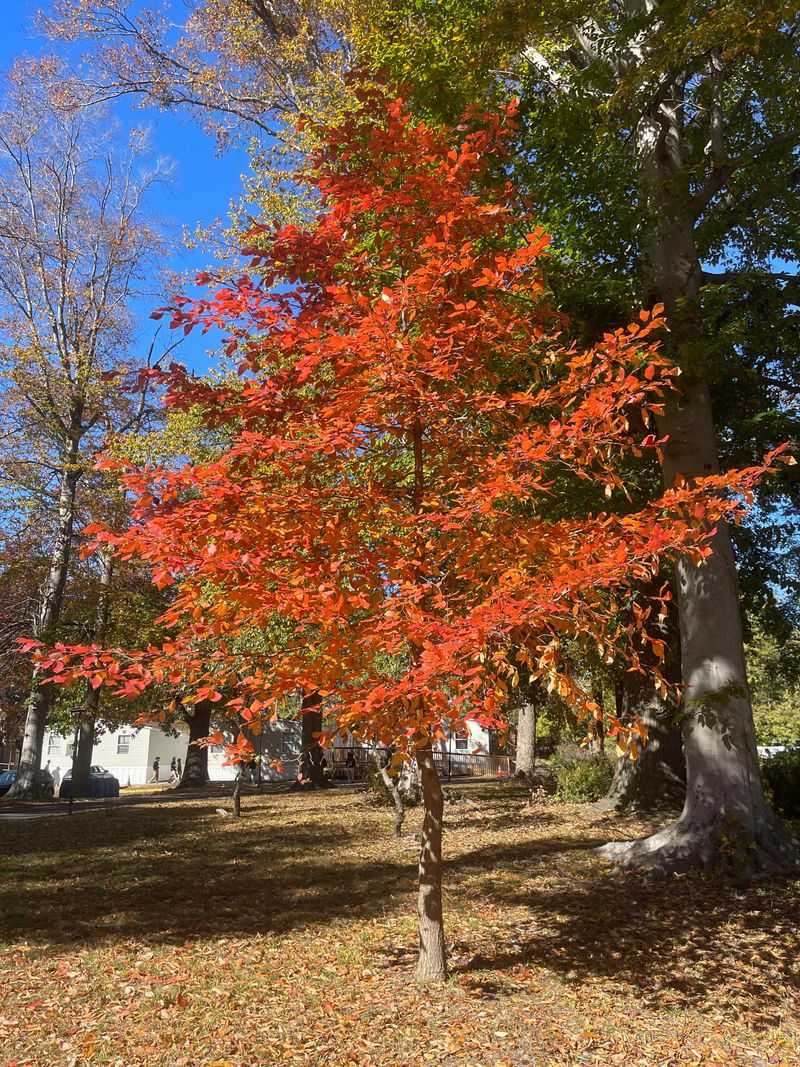
Here is an underrated tree that deserves more fans in yards. Sourwood turns early and turns hard, glowing red while its neighbors stay green.
Leaves shift into vivid red, orange, and purple, sometimes all at once. Cardinal red is the signature shade, and it seems to light up under low autumn sun.
Summer brings a different treat. Small white flowers dangle in sprays and smell sweet enough to stop a walk in its tracks.
Beekeepers chase those blooms for a reason. Sourwood honey is famous, mild, and usually sold out fast at farm stands.
The native range runs through the southeastern United States, reaching into parts of Pennsylvania and nearby areas. It stays fairly uncommon here, which makes spotting one feel like a small victory.
Soil matters a lot with this species. Moist, well-drained, acidic ground keeps it happy, while soggy clay leaves it struggling.
City conditions are a tough fit, since sourwood dislikes pollution and compacted ground. Suburban and rural yards suit it much better.
Size works well in small spaces, usually topping out near 25 to 30 feet. Its slender shape fits beside a patio without crowding the roof.
Give it morning sun and bright afternoon light for the strongest color. Mulch the roots lightly and skip heavy fertilizer, which it does not need.
Nurseries sometimes sell it as sorrel tree. Ask for a container-grown plant, since sourwood dislikes root disturbance, and it will reward you with color before the maples wake up.
5. Birch Trees Bring Yellow Tones Later In The Season
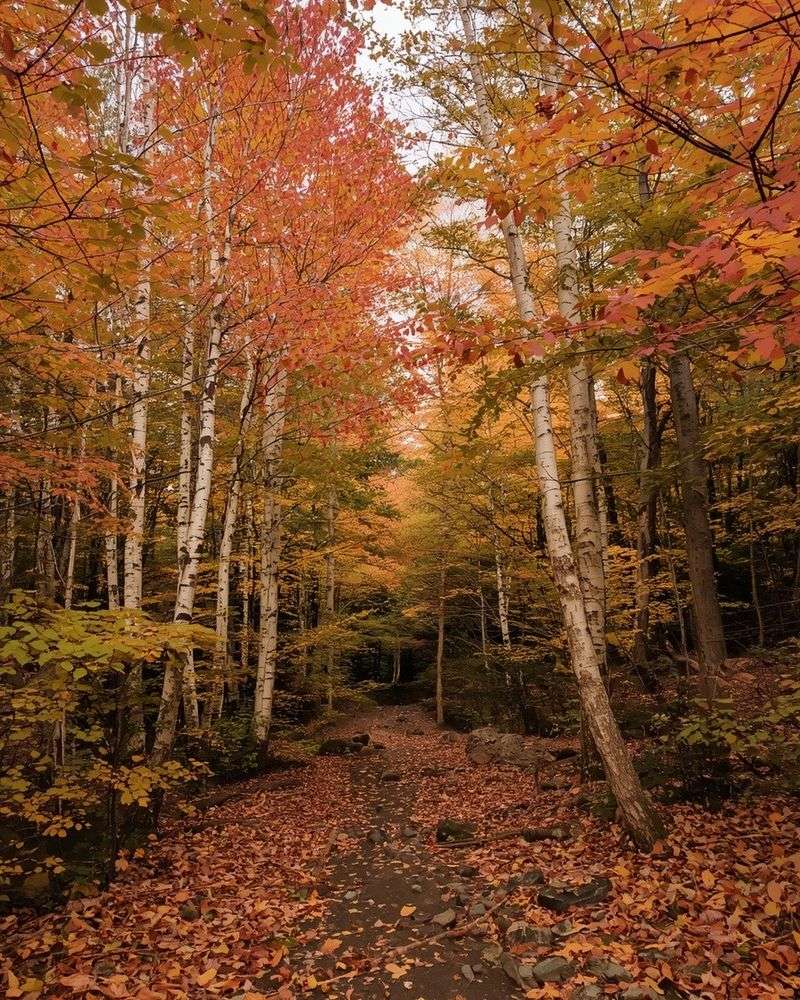
Yellow is the birch signature, and it arrives once the loud reds have had their turn. Golden leaves against white bark is peak Adirondack scenery.
Yellow birch often turns bright gold in early fall. The bark gives it away, peeling in thin, shiny, golden curls.
Paper birch may color later depending on location and weather, with golden yellow leaves often appearing in early to mid-October.
Black birch breaks the pattern by coloring earlier. Scratch a twig and you get a wintergreen scent, an easy field test that kids love.
Chalk-white bark is what makes paper birch famous. Against a gold canopy and a blue sky, the contrast looks almost staged.
Northern New York holds the biggest birch stands, especially throughout the Adirondacks. Lakeshores and old logging roads are reliable hunting grounds for photos.
Timing a trip helps a lot. Visit after the maple crowds thin out and you get quieter trails plus fresh yellow color.
Please resist peeling bark from living trees, since that leaves lasting wounds. Fallen pieces on the ground work fine for crafts.
For planting, birches like cool roots and steady moisture. A thick layer of mulch and a spot with afternoon shade keeps them comfortable.
Fun detail: yellow birch seedlings often sprout on mossy logs and stumps. Their roots later straddle the rotted wood like a set of wooden stilts.
6. Hickories Add Golden Color After Maples
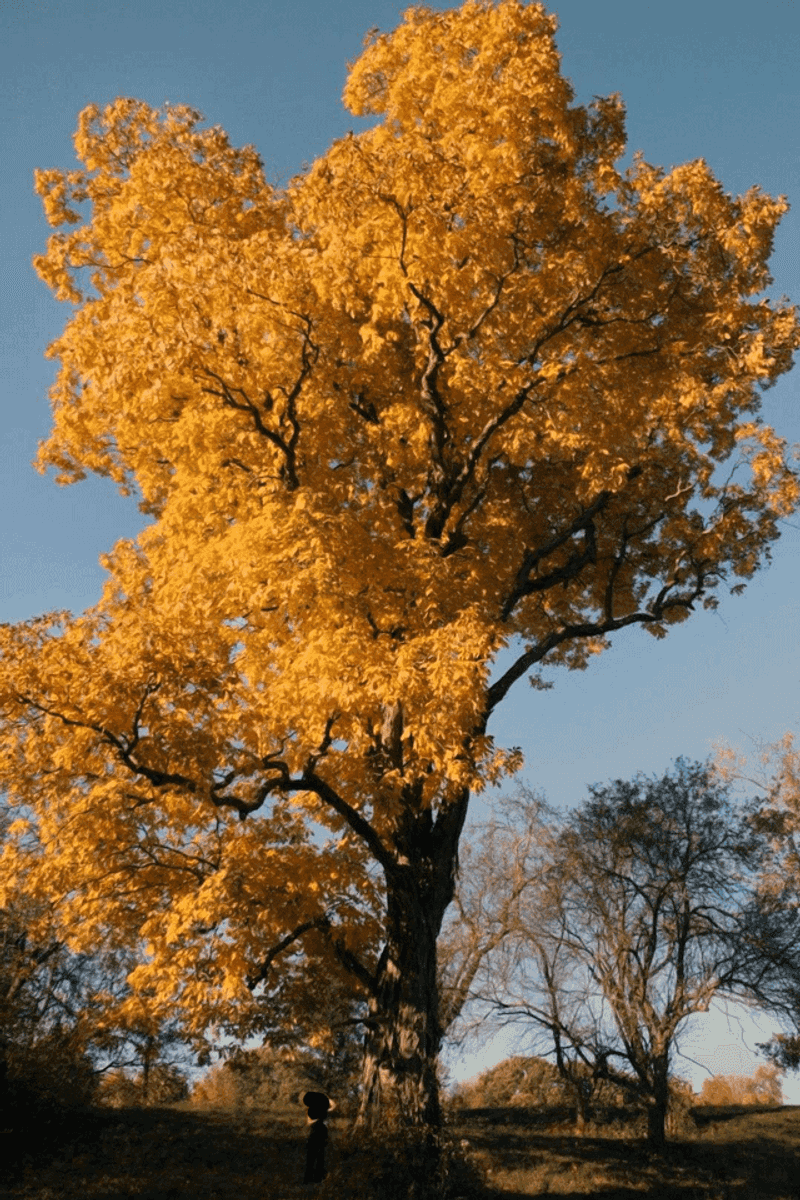
After the maples take their bow, hickories step up with gold. Their timing keeps the woods looking warm deep into October.
Foliage runs yellow to golden brown, with big compound leaves that glow rather than shout. Think polished brass instead of fireworks.
Shagbark hickory brings rich yellow with brown edges. Its bark curls off in long strips, giving the trunk a genuinely shaggy look.
Bitternut hickory leans toward clean sulfur yellow. Even after the leaves drop, its bright yellow buds stay visible through early spring.
Letchworth State Park is a great place to catch them, since hickories can still be vibrant there in late October. Gorge overlooks stack color layer on layer.
Moist, rich soils suit hickories best. They fill valley forests and park edges across much of the state, though they thin out in the higher Catskills and Adirondacks.
Nut hunters pay close attention in fall. Shagbark nuts are sweet and popular with squirrels, while bitternut lives right up to its name.
Yards with hickories need a plan for falling nuts. Park the car elsewhere in September and October unless you enjoy dents.
Patience is required when planting, because hickories build a deep taproot first. Top growth stays slow for several years, then picks up speed.
The payoff is a strong, storm-resistant shade tree that feeds wildlife. Plus late gold when the rest of the block already looks bare.
7. Oak Trees Hold Their Leaves Into Late Fall
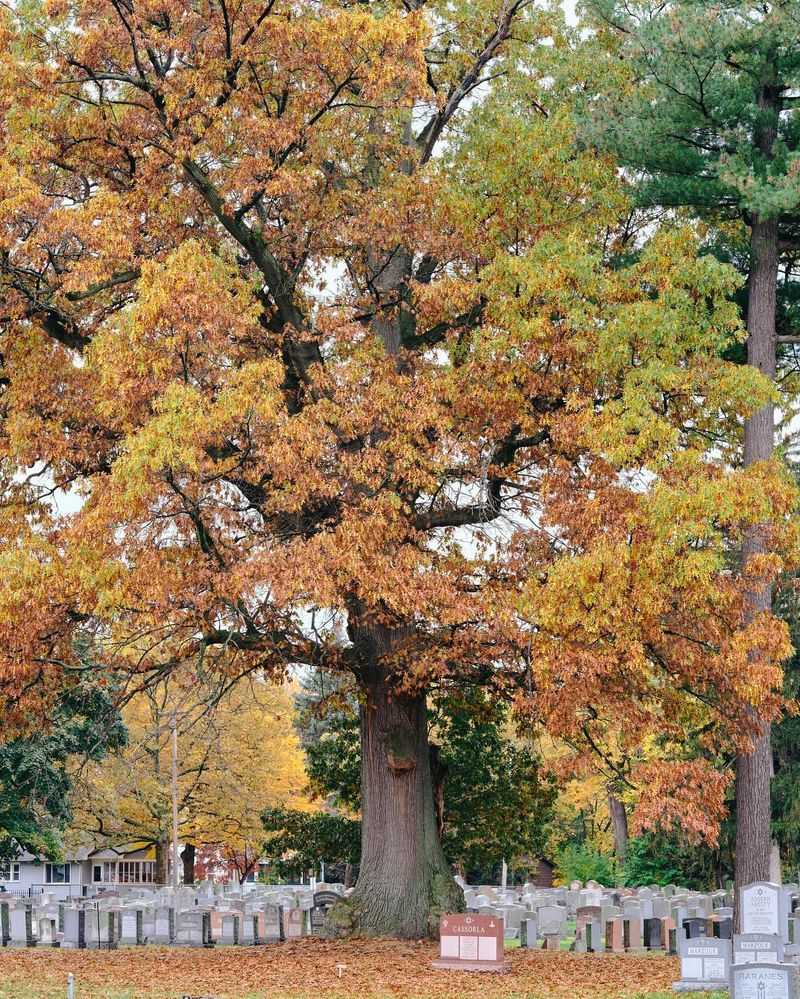
Oaks are the late sleepers of the forest, and they seem proud of it. While maples are finishing up, oaks are only warming up.
Mid to late fall is their moment. Color leans russet, bronze, and brown, with a few real surprises mixed in.
Scarlet oak earns its name with deep red and burgundy leaves. Northern red oak blends yellow, red, and brown across the same crown.
White oak can turn a rich wine-red, which catches people off guard. Swamp white oak adds fiery orange and yellow near wet ground.
Many oaks hold dried leaves through winter, a habit called marcescence. Papery brown leaves rattling in a January wind is a familiar sound.
White oaks are among the last to let go. Their sturdy branches keep leaves attached long after maples stand bare.
Wildlife value here is enormous. Acorns feed deer, turkeys, jays, and squirrels, and oak leaves support hundreds of caterpillar species.
Those caterpillars matter more than most people expect, since songbirds feed them to their chicks. A single oak can support a whole neighborhood of birds.
For late-season leaf peeping, oak ridges are your best bet. Upstate hillsides stay warm-toned well past the maple peak.
Planting one is a long-term gift. Choose a native species, give it space, and let fallen leaves stay put as free mulch.
Acorn crops swing wildly from year to year, so a quiet autumn does not signal trouble.
8. Beech Trees Finish The Season With Copper Shades
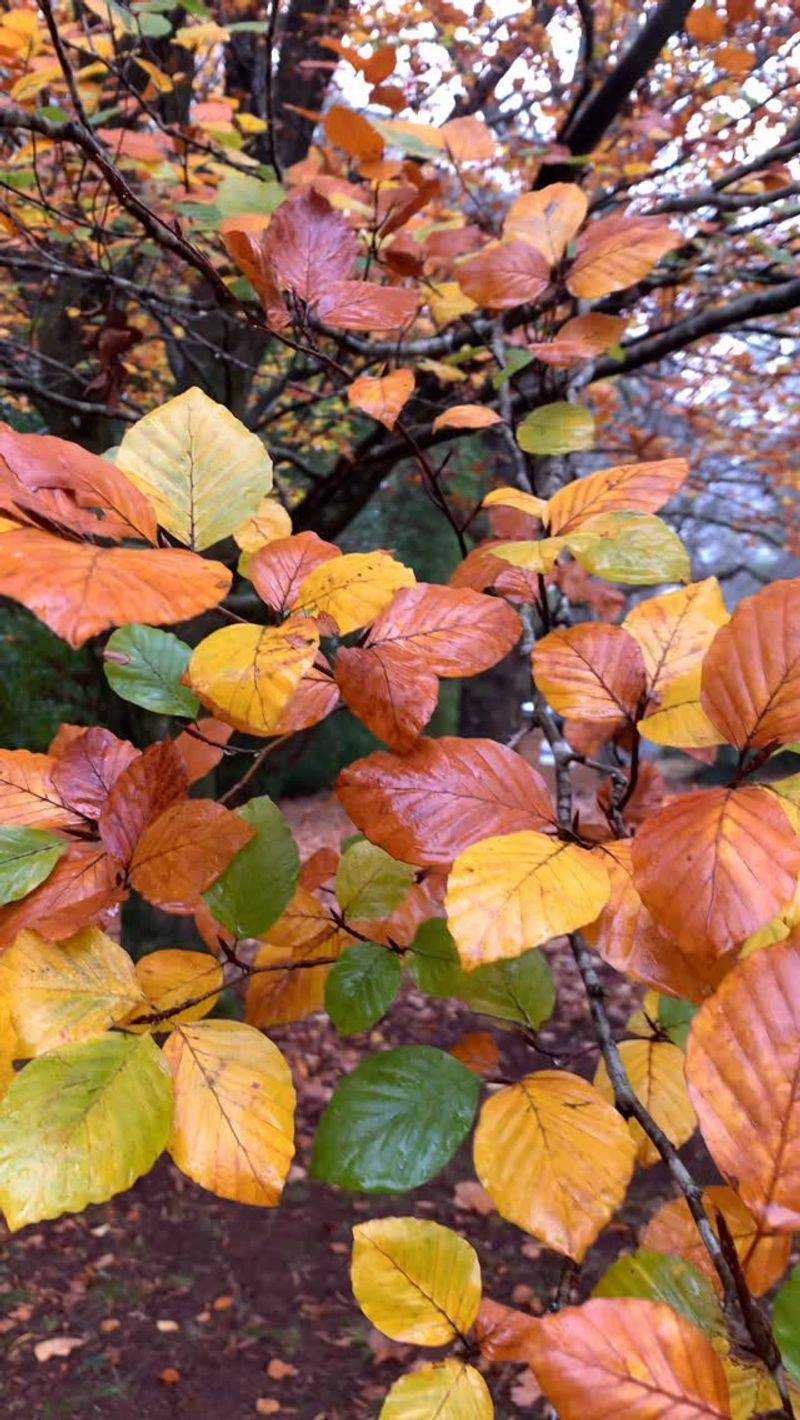
One of the final acts often belongs to American beech, and it goes out in copper. Long after other leaves have blown away, beech still glows.
Green shifts to golden yellow by mid-October, then deepens into rich brown by the end of the month. The change arrives gradually rather than all at once.
Those brown leaves fade to a pale, papery tan. Many stay attached through November and December, and some hang on into early spring.
Marcescence is the word for that leaf-holding habit, shared with several oaks. Beech simply takes the trick further than most.
Sunlight is what makes the effect magical. Backlit leaves look like translucent amber, turning a gray woodland into something warm and welcoming.
Researchers think the leftover leaves shield buds from browsing deer during winter. A mouthful of dry leaf is far less appealing than a tender bud.
Smooth, silvery-gray bark makes identification easy year round. Sadly it also attracts carved initials, which harm the tree, so admire instead of carving.
Northern hardwood forests in the Adirondacks are loaded with beech. Trail walks there in November still feel colorful thanks to all that coppery foliage.
Beech nuts feed bears, turkeys, and chipmunks in good seed years. Saplings often sprout from roots, forming little groves around a parent tree.
For a home landscape, give beech credit for shade tolerance and plenty of room. Low branches sweep the ground and create a natural hideout for kids.