This Colorado Native Doesn’t Look Like Any Praying Mantis You’ve Seen
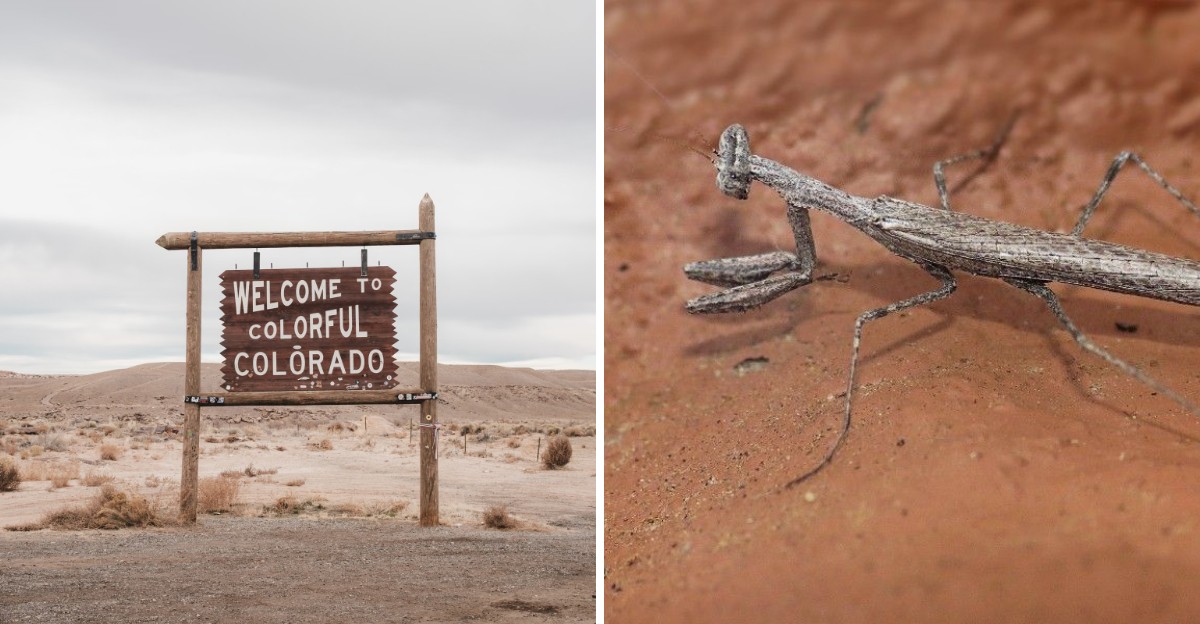
You catch a flicker of motion before your mind even reacts. Tiny legs move quicker than many beetles ever manage. Colorado’s short grass hides a specialist few people notice.
Afternoons on dry Front Range hillsides carry warm dust and drying grass. Watch the gravel closely and you might catch it moving. Legs fold upward, cocked like a boxer’s ready guard.
Gravel swallows its shape the instant it turns still. Your shoe could easily brush past without any real warning at all. Green garden mantises get credit that rightly belongs elsewhere.
Smaller native relatives ruled Colorado’s hills long before imports ever arrived. Nobody now expects such sharp instincts from something so small. Understanding this small specialist quietly changes how you now read familiar trails.
Speed, not size, decides who wins this hidden contest. Blink once and it disappears back into the pebbles. Once you spot it, you will keep spotting them.
A Pebble With Grabbing Arms
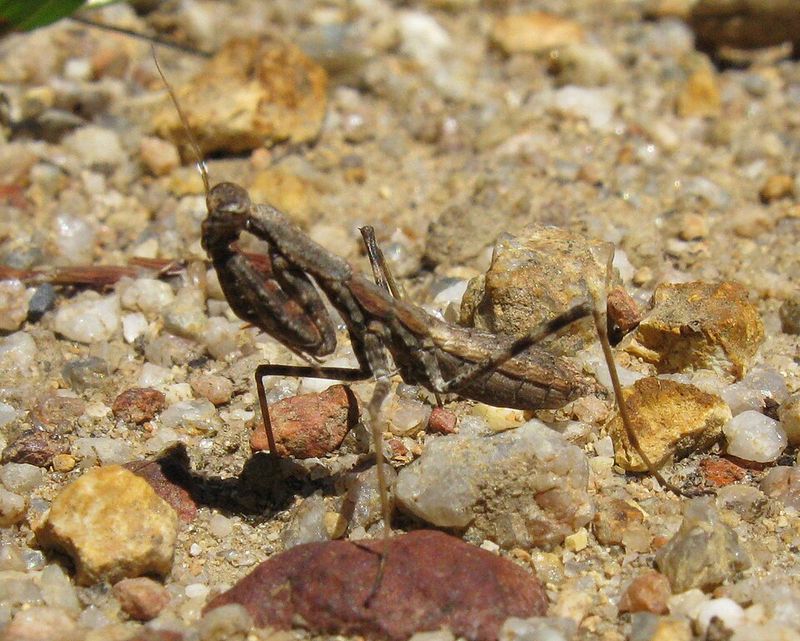
Picture a chunk of gravel that suddenly sprouts arms and takes off running. That is the honest first impression of a ground mantid on a Colorado footpath.
Litaneutria minor, sometimes called the agile ground mantid, runs from about an inch to an inch and a half long. Compare that to the four-inch Chinese mantis people photograph on their tomato cages, and the size gap feels almost comical.
Color runs from ash gray to dusty brown, often flecked with darker speckles. The pattern matches decomposed granite so well that hikers walk past dozens without noticing one.
The body shape throws people off too. Instead of the long, leaf-like frame of a garden mantis, this one carries a stubby abdomen and a compact thorax that sits low to the ground.
Its front legs still give the family secret away. Those raptorial forelegs fold up under the head with the same spiny hinge that makes mantids famous ambush hunters.
Females stay wingless or nearly so, which adds to the confusion. Without long wings covering the back, they read more like an oddly built cricket at a quick glance.
Once you know the silhouette, spotting gets easier. Scan bare dirt, gravel driveways, and the sunny edges of trails rather than the leafy shrubs where bigger mantids hang out.
A fun wrinkle for collectors of trivia: this species ranges from British Columbia’s Okanagan Valley down into Mexico, yet plenty of lifelong Coloradans have gone decades without recognizing one in their own yard.
Built For Sprinting, Not Stalking
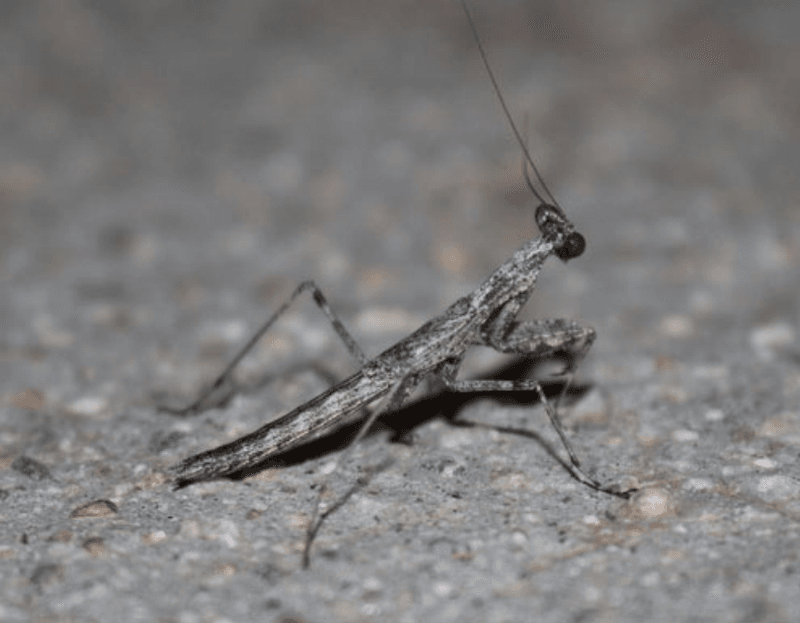
Garden mantids are famous for patience. They sway on a stem, wait, and strike when a bee wanders too close. Ground mantids took the opposite approach to lunch. They chase.
Watch one on open soil and the movement looks wrong for a mantis. Short legs churn, the body stays low, and the whole insect skitters in quick bursts with sudden freezes between them.
The running speed catches most observers off guard for something so small. Observers often compare the motion to a tiger beetle or a wolf spider rather than anything in the mantis family.
Your Colorado Garden Changes Every Week. Your Plan Should Too.
Gardening in Colorado changes quickly throughout the season. Every Friday you’ll receive a simple weekly plan showing exactly what to plant, prune, fertilize, harvest, and protect so you never miss the right timing.
That style fits the terrain perfectly. Colorado’s shortgrass prairie, sagebrush flats, and rocky foothills offer bare ground and scattered stems instead of dense leafy cover.
Prey down there includes small flies, leafhoppers, tiny grasshopper nymphs, ants, and the occasional spider. Nothing huge, but plenty of protein for an insect the size of a paperclip.
The freeze-and-dash rhythm serves double duty. Staying still hides the mantid from hungry birds and lizards, while the dash closes distance on prey before it can hop away.
Here is a practical tip for anyone hoping to watch one hunt. Sit still beside a warm patch of bare ground in late morning and let your eyes relax rather than darting around.
Motion gives them away. Once a ground mantid breaks cover, its stop-start scramble is unmistakable, and you will start noticing them on trails you have hiked for years.
Where In Colorado To Find Them

Habitat is the first clue, long before you ever spot the insect itself. Ground mantids favor dry, sunny, open country with plenty of exposed soil.
Eastern Colorado’s shortgrass prairie fits the bill beautifully. So do the sandy stretches around the Pawnee National Grassland, the Arkansas River valley, and the mesa country near Grand Junction.
Along the Front Range, look at the sunbaked edges of open space trails from Fort Collins south through Pueblo. Gravel pull-offs, prairie dog towns, and yucca flats all hold populations.
Elevation matters more than county lines. These mantids stick mainly to lower, warmer ground and thin out as you climb into cooler mountain forests.
Backyards count too. Xeriscaped gardens with mulch, flagstone, and native grasses can host them even inside city limits, which surprises homeowners who assumed their yard was too tidy for wildlife.
Timing helps as much as location. Nymphs hatch in spring, grow through summer, and reach adult size by late summer, so September is prime viewing season before cold nights arrive.
Midday heat pushes them into shade, while cool mornings slow them down. The sweet spot tends to be mid-morning or late afternoon when the ground is warm but not scorching.
Bring a phone camera and crouch low. Photographing something this small takes patience, and getting the lens close to soil level makes the difference between a blurry smudge and a portrait worth sharing with a local naturalist group.
Not The Mantis Your Neighbor Bought Online
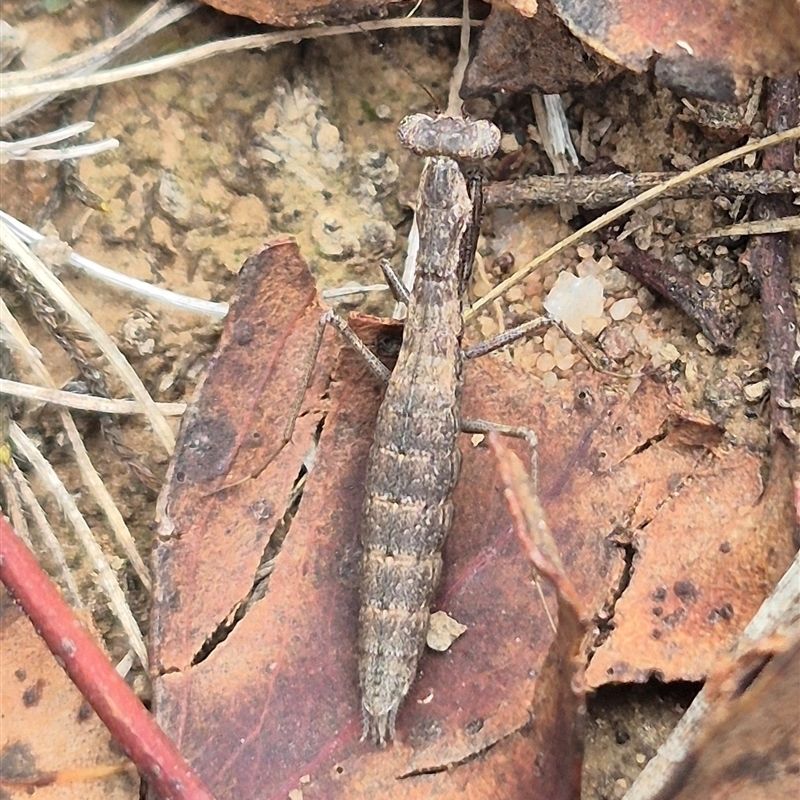
Garden centers sell foam-like egg cases every spring with promises of natural pest control. Those cases usually belong to the Chinese mantis, an import that arrived in North America in the late 1800s.
Ground mantids never came from anywhere. They are homegrown Colorado residents that evolved alongside the state’s grasshoppers and prairie plants.
Telling the two apart takes about two seconds once you know what to watch for. Size alone settles it, since the imported species can grow three to four times longer.
Color offers another cue. Chinese mantids lean green or tan with a pale stripe along the wing edge, while ground mantids wear gravel tones.
Behavior seals the case. One perches high on stems and flowers, and the other runs across open dirt like it is late for an appointment.
There is also the European mantis, another introduced species with a distinctive bullseye spot under each front leg. Colorado hosts that one in places as well.
Why care about the difference? Native insects fit into local food webs in ways that imports sometimes do not, and large introduced mantids have been documented eating pollinators and even hummingbirds elsewhere.
Releasing purchased egg cases can also crowd local species. Skipping the store-bought cases and planting native grasses instead gives homegrown hunters a better shot.
Worth remembering: Colorado has several mantid species total, and the smallest one has probably been patrolling your gravel driveway all summer without an invoice or a shipping label.
Egg Cases That Hide In Plain Sight
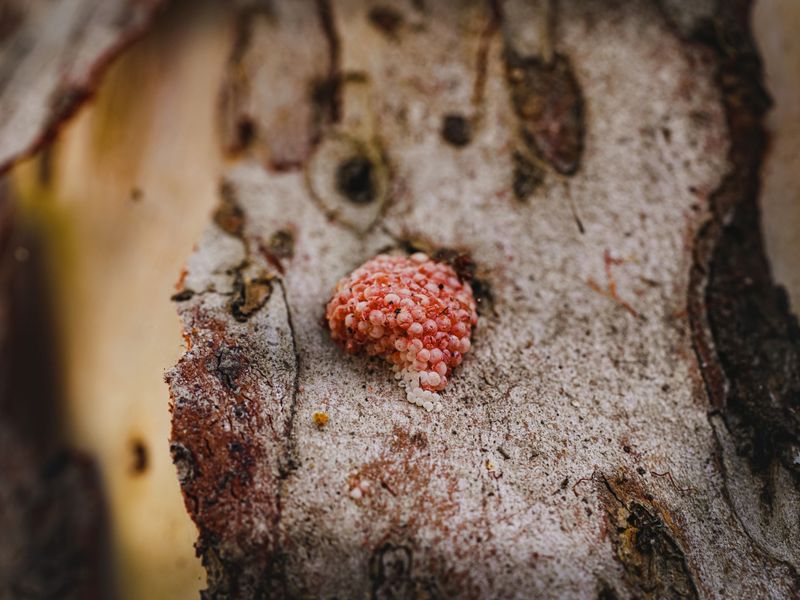
Come September, adult ground mantids have one major task on the calendar. Females start producing egg cases known as ootheca.
The structure starts as a foamy froth that hardens into a tough, papery shell. Inside, dozens of eggs wait out autumn frosts and winter winds.
Compared to the golf-ball-sized cases of imported mantids, these are tiny. Many measure well under an inch and look like a smear of dried mud or a bit of chewed gum.
Placement reflects the species’ ground-hugging habits. Females attach cases to the underside of rocks, to low twigs, on fence posts near soil, and against plant stems just above the dirt.
Camouflage does the rest. Gardeners cleaning up beds in fall often scrape these off without ever realizing what they tossed.
A simple habit change helps. Before hauling away rocks, stems, or old mulch in autumn, glance at the undersides for small hardened lumps and leave those spots undisturbed until spring.
Warm weather triggers hatching. Dozens of pinhead-sized nymphs emerge and immediately scatter, since siblings crowded together tend to view each other as competition.
Those nymphs look like walking grains of sand with attitude. They hunt aphids and gnats from day one, molting several times across the summer before reaching adult size.
Leaving a corner of the yard rough and unraked pays off more than any spray. Bare soil, flat stones, and native bunchgrasses give the next generation exactly the messy nursery it needs.
A Small Ally For Gardeners And Ranchers
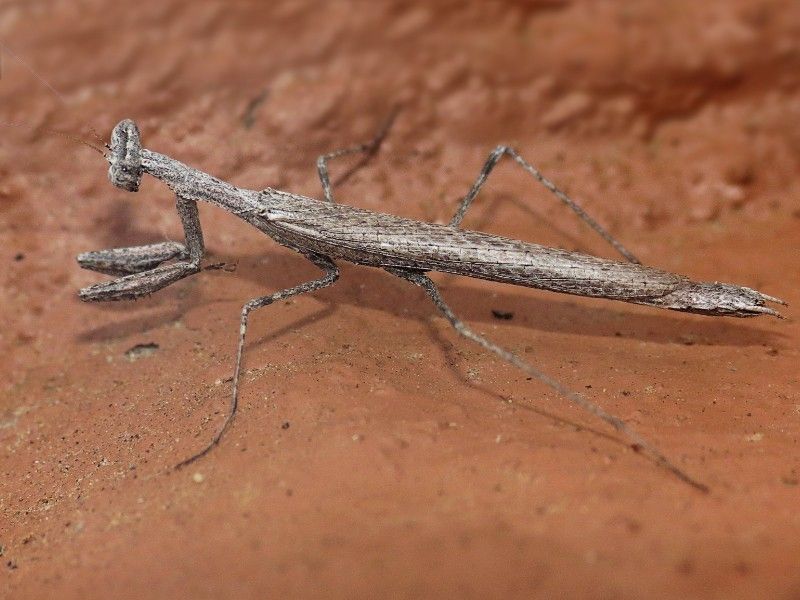
Ranchers in eastern Colorado know the sound of a grasshopper year. Dry summers can bring hoppers thick enough to strip a pasture edge.
Ground mantids will not solve an outbreak on their own. What they do offer is steady, unglamorous pressure on small insects across the same dry ground where pests breed.
Their menu overlaps nicely with garden nuisances. Leafhoppers, small flies, young grasshoppers, and assorted crawling insects all end up in those spiny forelegs.
Because they hunt at soil level, they fill a niche that ladybugs and lacewings mostly skip. Think of them as the ground floor of a building where other beneficial insects work the upper stories.
Supporting them costs almost nothing. Reduce broad-spectrum insecticide use, keep some bare sunny soil instead of wall-to-wall wood chips, and plant native grasses like blue grama or little bluestem.
Flagstone paths and rock borders help too, since warm stone gives cold-blooded hunters a place to soak up morning sun.
Handling them is generally safe. Those forelegs are built for gnats, not fingers, and a pinch from one barely registers.
Still, the kinder move is to watch and walk on. Photograph the encounter, note the date and place, and consider posting the observation to a community science app where researchers track native ranges.
Colorado’s wildlife conversation usually centers on elk and bighorn sheep. Sharing a gravel path with a one-inch native hunter is its own quiet kind of thrill.