A Nearly Invisible Biter Is Making Alabama Yard Work Miserable Right Now
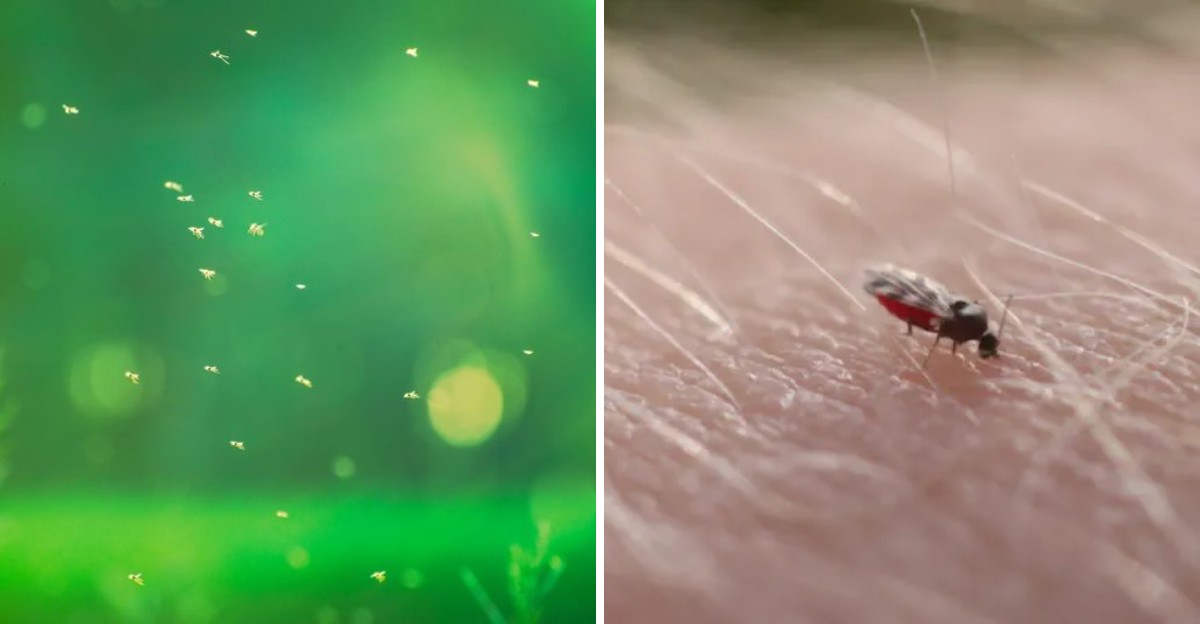
Ankles start tingling minutes after you kneel quietly near the damp mulch bed. Weeds seemed harmless until your skin suddenly reacted violently. Alabama humidity turns quiet evenings into surprisingly uncomfortable moments fast.
Damp mulch hides tiny pests waiting just for you. Standing water gives them a perfect breeding ground right nearby. Something small slips quietly past your eyes without warning.
Squinting reveals only a faint speck, barely visible. Welts rise across your skin by morning, red and swollen. Itching intensifies far faster than any mosquito reaction you recall clearly.
That speck causes irritation bigger than you expect. Your calm moment just became their ideal opportunity. Dusk across Alabama hides a surprisingly active and hungry pest population.
Marks like these do not fade quietly overnight. Relief starts only once you truly understand what is quietly affecting you. Here is what is targeting you after dusk, and why you cannot ignore it.
The Culprit Behind Those Mystery Welts
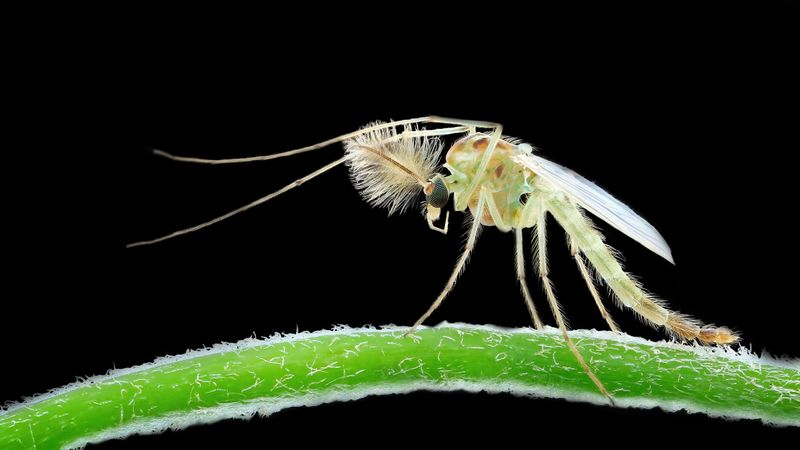
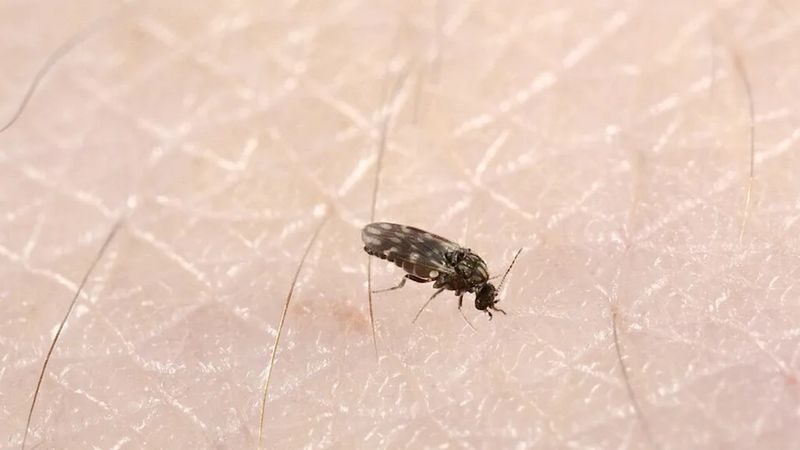
Picture an insect so small it can slip through a standard window screen without slowing down. That is a biting midge, better known across the Gulf South as a no-see-um.
Adults measure roughly one to three millimeters, about the size of a printed period or slightly larger. They belong to the family Ceratopogonidae, and Alabama hosts several species along the coast and inland near slow water.
The females do the biting. Like mosquitoes, they need a blood meal to develop eggs, so they seek out warm-blooded targets at dawn and dusk.
Their mouthparts work differently than a mosquito’s narrow needle. Instead of a clean puncture, they use tiny scissor-like blades to slice skin, then lap up the pooling blood.
That cutting action explains why the sting feels sharper than the bug’s size suggests. It also explains the delayed, angry itch that shows up hours later.
Many Alabama gardeners assume they are reacting to chiggers or fleas because the biter is invisible. The bite pattern usually tells a different story, clustering around ankles, wrists, hairlines, and the back of the neck.
Coastal areas tend to see heavier activity, but inland regions with muddy, slow-moving water are not exempt either. Farm ponds, creek banks, leaky irrigation lines, and soggy compost piles all qualify as prime real estate.
Knowing the actual culprit matters, because the sprays and habits that work on mosquitoes only partly help here. Once you name the problem, the fixes get a lot more targeted.
Why September Feels Like Their Peak Season
Late summer in Alabama shifts in a subtle but important way. The intense midday heat backs off just enough that people head outside again, right as midge populations hit a high point.
Warm soil, frequent afternoon storms, and shorter days create ideal breeding conditions. Larvae need moist organic muck, and September delivers plenty of it after months of rain and decaying plant matter.
Generation cycles speed up in warmth. A midge can go from egg to biting adult in a few weeks, so populations stack on top of each other rather than fading out.
Your Alabama Garden Changes Every Week. Your Plan Should Too.
Gardening in Alabama changes quickly throughout the season. Every Friday you’ll receive a simple weekly plan showing exactly what to plant, prune, fertilize, harvest, and protect so you never miss the right timing.
Tropical moisture matters too. Storm systems rolling in from the Gulf leave behind saturated ditches, clogged gutters, and puddles that linger for days in shady spots.
Meanwhile, homeowners are outside doing fall cleanup. Pruning shrubs, spreading fresh mulch, and cutting back perennials all happen in the exact hours midges hunt hardest.
Wind patterns play a role as well. September evenings often turn completely still, and these insects are weak fliers that get grounded by even a light breeze.
Calm air plus damp ground plus humans in shorts equals a rough combination. That is why the complaints spike now instead of in July.
The good news is that this window has an end. Cooler, drier air in late October and November knocks activity down sharply across the state.
Until then, treat September evenings as a peak-activity window. Adjusting when and how you work outdoors during these few weeks makes a noticeable difference in how many welts you collect.
How The Bite Actually Works On Your Skin
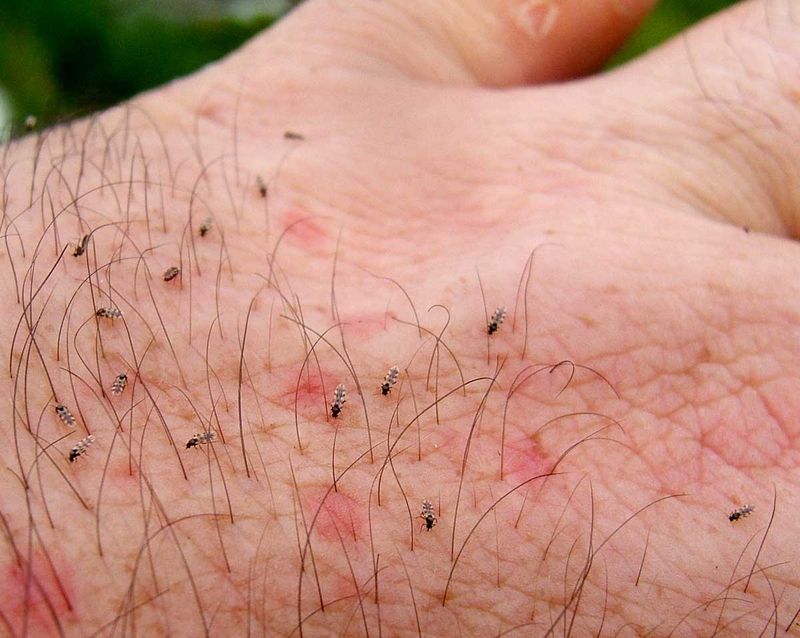
Ever wonder why something the size of a pepper flake leaves a mark that lasts a week? The answer is in the tools and the chemistry.
Instead of a slender straw, a female midge carries short, serrated mouthparts. She saws a small opening in the outer skin layer and feeds from the blood that collects there.
While feeding, she injects saliva loaded with anticoagulants. Those proteins keep blood flowing freely, and they are exactly what your immune system objects to.
Your body responds by releasing histamine at the site. Histamine causes the redness, swelling, and relentless itch that shows up several hours after the actual bite.
Reactions vary a lot from person to person. Some folks get a faint pink dot, while others develop firm bumps the size of a dime that stay tender for days.
Repeated exposure can make things worse before it makes them better. Some newcomers to the coast notice stronger reactions during their first couple of seasons.
Scratching is the real enemy. Broken skin invites bacteria, and a simple bite can turn into a sore that may require medical care.
Cold compresses help more than people expect. Ten minutes of ice calms the histamine response and dulls the urge to scratch.
Over-the-counter hydrocortisone cream, oral antihistamines, and calamine lotion all take the edge off. Some gardeners swear by a paste of baking soda and water applied right after coming inside.
If welts spread far beyond the bite site or you feel unwell, talk to a doctor rather than waiting it out.
Screens Alone Are Not Stopping Them
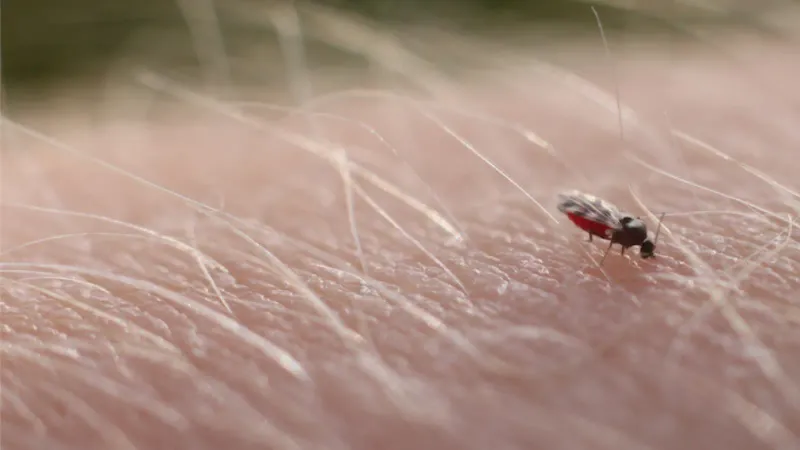
Here is the frustrating part for anyone with a screened porch. Standard screening uses a mesh around 18 by 16 openings per inch, and a no-see-um walks right through it.
The insects are narrow enough to squeeze between strands that stop mosquitoes cold. That is how you end up bitten while sitting in what feels like a sealed room.
The fix is finer mesh, sold specifically as no-see-um screening. It runs about 20 by 20 or tighter, and some products go up to 20 by 30.
Replacing a porch screen sounds like a weekend chore, and honestly it is. Homeowners who do it describe the change as noticeable almost right away.
Finer mesh does reduce airflow slightly. Adding a ceiling fan or a floor fan makes up the difference and adds a second layer of protection at the same time.
Check the frame edges too. Gaps around spline channels, torn corners, and loose door sweeps let insects in no matter how good the mesh is.
Door bottoms deserve special attention. A quarter-inch gap under a screen door is an open invitation on a still September evening.
Window units and attic vents matter as well. Fine mesh over vents keeps midges from drifting into the house through openings nobody thinks about.
Camping gear follows the same rule. Tent mesh labeled no-see-um proof exists for a reason, and regular mosquito netting will disappoint you near a Gulf Coast campsite. Small upgrade, big payoff, especially if you like your evenings outdoors.
Standing Water And Damp Muck Are The Nursery

Track the problem back to its source and you land in mud. Midge larvae develop in moist organic material rather than open water, which sets them apart from mosquitoes.
Saturated soil at a pond edge, rotting leaves in a gutter, and the sludge in a birdbath all qualify. Even a persistently damp spot under a dripping outdoor faucet can host them.
Walk your property with fresh eyes. Look for places where water sits for more than a couple of days after a storm.
Clogged gutters top the list for most homes. Leaves pile up, hold moisture, and create a perfect shelf of wet debris right above your head.
Low spots in the lawn come next. Filling depressions with soil or improving drainage removes breeding ground permanently instead of season by season.
Overwatering garden beds works against you. Deep, less frequent watering keeps plants healthier and gives the surface time to dry between sessions.
Check underneath potted plants too. Saucers holding stagnant water for weeks are small but productive breeding sites.
Leaky hose bibs, air conditioner condensate lines, and pool covers with pooled rainwater all deserve a look. Each one is easy to fix once you notice it.
Compost piles need turning. Aerating the pile speeds decomposition and disrupts the damp, undisturbed conditions larvae prefer.
Habitat reduction will not clear out every insect, since midges travel from neighboring properties. Still, cutting breeding sites on your own land lowers the local population noticeably within a few weeks.
Timing Your Yard Work Around Their Schedule
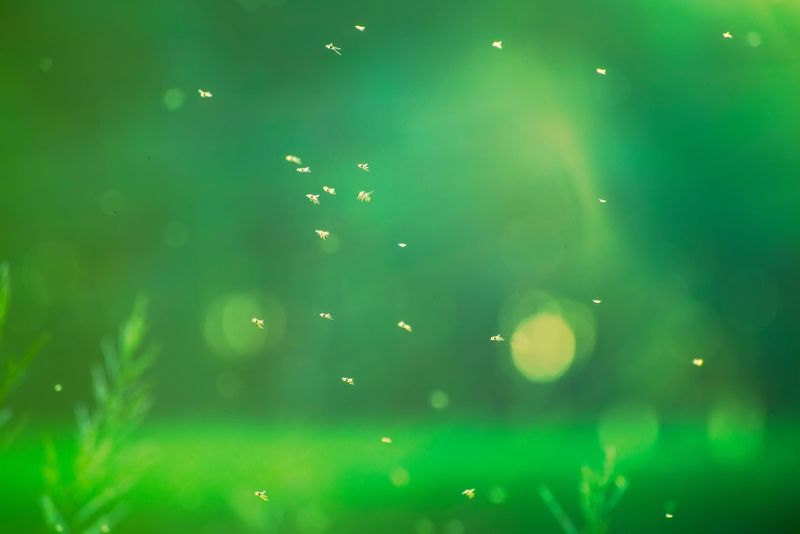
One of the cheapest defenses costs nothing at all. Shift your outdoor chores away from the hours these insects patrol.
Activity peaks in the two hours around sunrise and again in the two to three hours around sunset. Cloudy, humid, windless days can stretch that window considerably.
Midday in September is hot, no argument there. But a sweaty hour at noon beats an itchy week from a pleasant hour at dusk.
Wind is your friend. Anything above roughly five miles per hour grounds these weak fliers, so breezy afternoons are prime working time.
Watch the forecast for calm, muggy evenings after rain. Those are the nights to stay inside or move your project to the garage.
Shade matters too. Midges linger in shaded, sheltered pockets near shrubs, tree lines, and fence rows during daylight hours.
If you must prune along a wooded edge, do it when the sun is high and the air is moving. Save open lawn tasks for cooler parts of the day.
Outdoor gatherings deserve the same planning. Scheduling a cookout for two in the afternoon instead of seven in the evening changes the whole experience.
Keep a mental log of when you get bitten. Patterns show up fast, and your yard has its own microclimate quirks.
Timing will not solve the problem on its own. Paired with repellent and good screening, though, it removes a surprising share of the misery.