Webs Are Showing Up On Indiana Porches That Weren’t There Yesterday
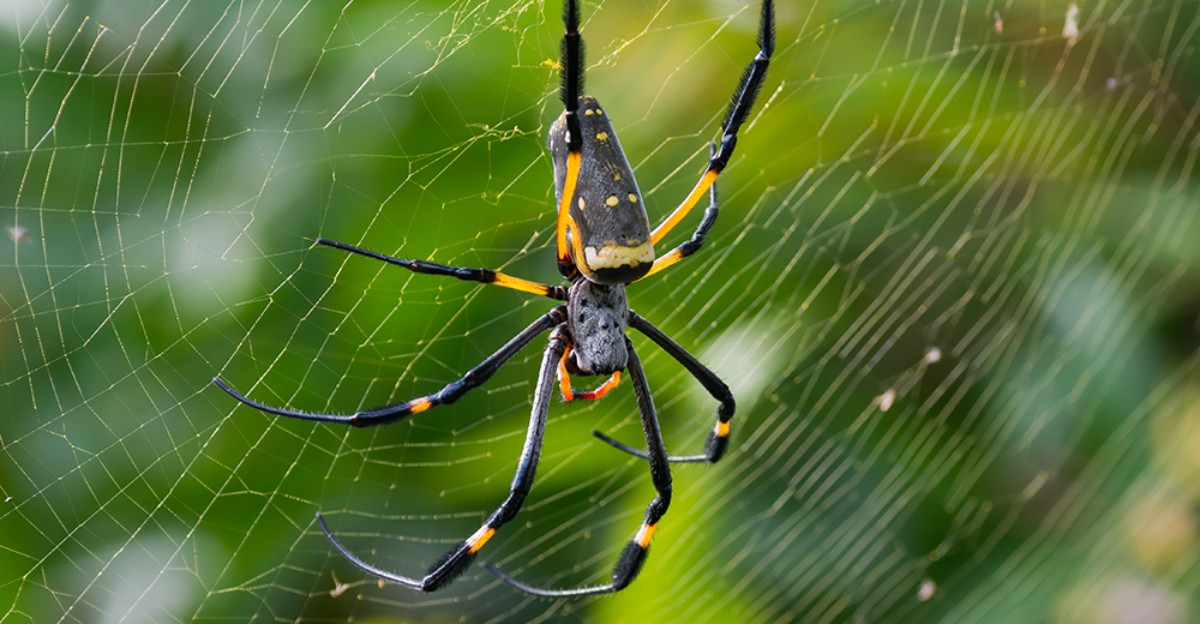
You step outside for the morning paper and walk face-first into something sticky, stretchy, and impossible to see. Yesterday that same doorway was nothing but empty air, and now it feels like a homemade trap.
All across Indiana, back porches and garden gates are wearing silk decorations that nobody hung up. Morning dew makes them glow like tiny hammocks strung between the tomato cages and the mailbox.
September mornings have a strange habit of revealing overnight construction projects that nobody in the house approved. The builders work in the dark, finish well before sunrise, and somehow forget to leave an invoice.
Most folks panic first and look closer second, which turns out to be exactly backwards. The truth is far less dramatic, though the neighbor watching you flail has already formed opinions.
The Overnight Architects Behind All That Fresh Silk
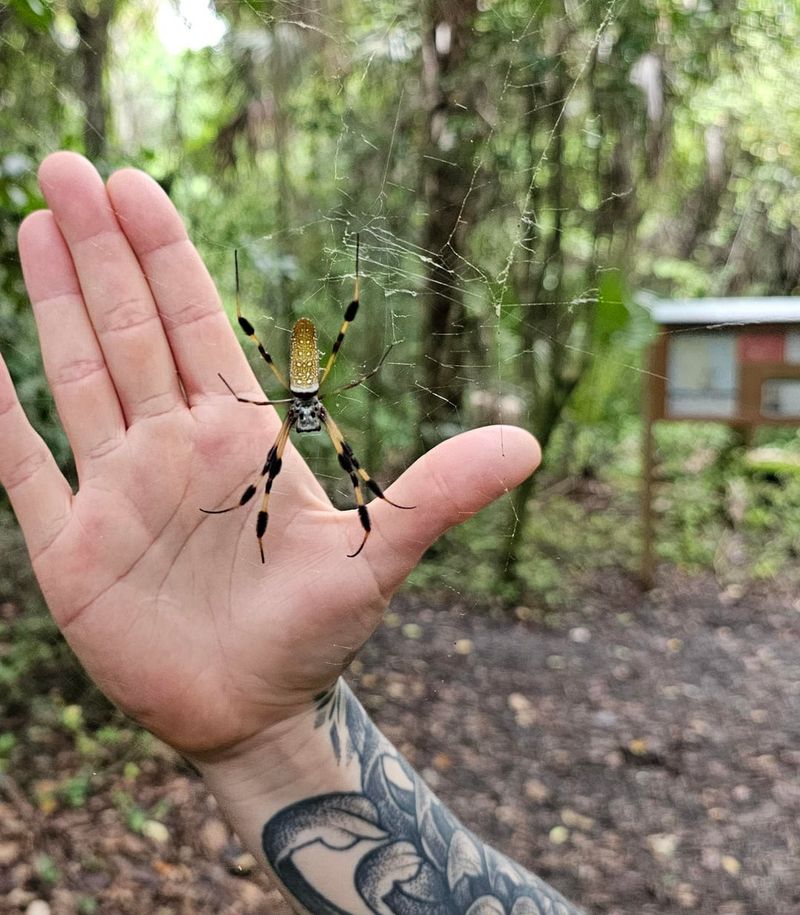
Blame the orb weaver, a spider that spins those tidy wheel-shaped webs between shrubs, railings, and porch posts. Indiana hosts several kinds, including the chunky yellow garden spider and the fat, freckled barn spider.
Each web starts with a single silk line the spider releases into the breeze until it catches. From that bridge, she builds spokes, then lays a spiral of sticky thread across the frame.
The whole build takes about thirty to sixty minutes, which explains the yesterday-nothing, today-everything effect. She works in darkness while you sleep, so the finished web greets you at breakfast.
Females grow much larger than males and do most of the spinning you notice. Their bodies swell with eggs in autumn, so late-season females look startlingly big.
Orb weavers carry venom meant for gnats, moths, and flies, not for people or pets. Their fangs are small, their temper is mild, and they would rather drop than fight.
Bites happen mainly when someone squeezes one against skin, and even then the sting fades fast. Most Hoosiers go a whole season without a single unpleasant encounter.
Identification is simple once you look at the web itself instead of the resident. A flat circle with neat spokes means orb weaver, not something that wanders indoors.
So the architect responsible for your sticky doorway is a seasonal guest with a short lease. She arrived quietly, built beautifully, and has no interest in your living room.
Late Summer Timing And The September Web Boom
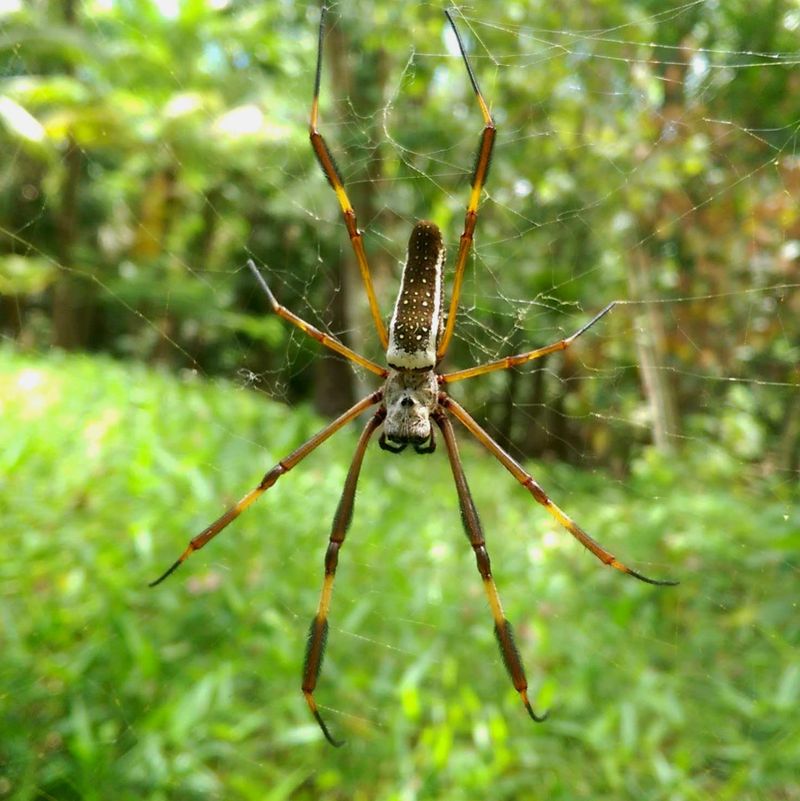
Those spiders hatched back in spring, no bigger than a grain of pepper. They spent the summer eating, molting, and growing while you mowed right past them.
By early September, they finally reach adult size, and adult size means large, obvious webs. The spiders were there in June, just too tiny for anyone to notice.
Cooler nights push insects toward warm siding and porch lights, creating a nightly buffet. Spiders follow the food, which is why your entryway suddenly looks like a silk gallery.
Autumn also kicks off mating season, so males wander and females fatten up for eggs. A hungry, egg-heavy female builds bigger webs and repairs them with real urgency.
Your Indiana Garden Changes Every Week. Your Plan Should Too.
Gardening in Indiana changes quickly throughout the season. Every Friday you’ll receive a simple weekly plan showing exactly what to plant, prune, fertilize, harvest, and protect so you never miss the right timing.
Morning dew deserves partial credit for the shock factor of a September yard. Water droplets cling to silk and turn invisible threads into glittering white hoops.
Webs you walked through for weeks without seeing suddenly become impossible to miss. Nothing changed overnight except the humidity and the angle of the sunrise.
Indiana’s first frost usually arrives between mid-October and early November, depending on your county. Cold weather ends the adults’ season, though their egg sacs wait patiently until spring.
So September is peak orb weaver theater, running roughly six weeks in most yards. Mark the calendar if you like, or just learn to duck before the door.
Rural properties near fields and creeks tend to see the show start slightly earlier. City lots with bright security lights often stretch it a little longer.
Homeowner Mistakes That Make The Mess Worse
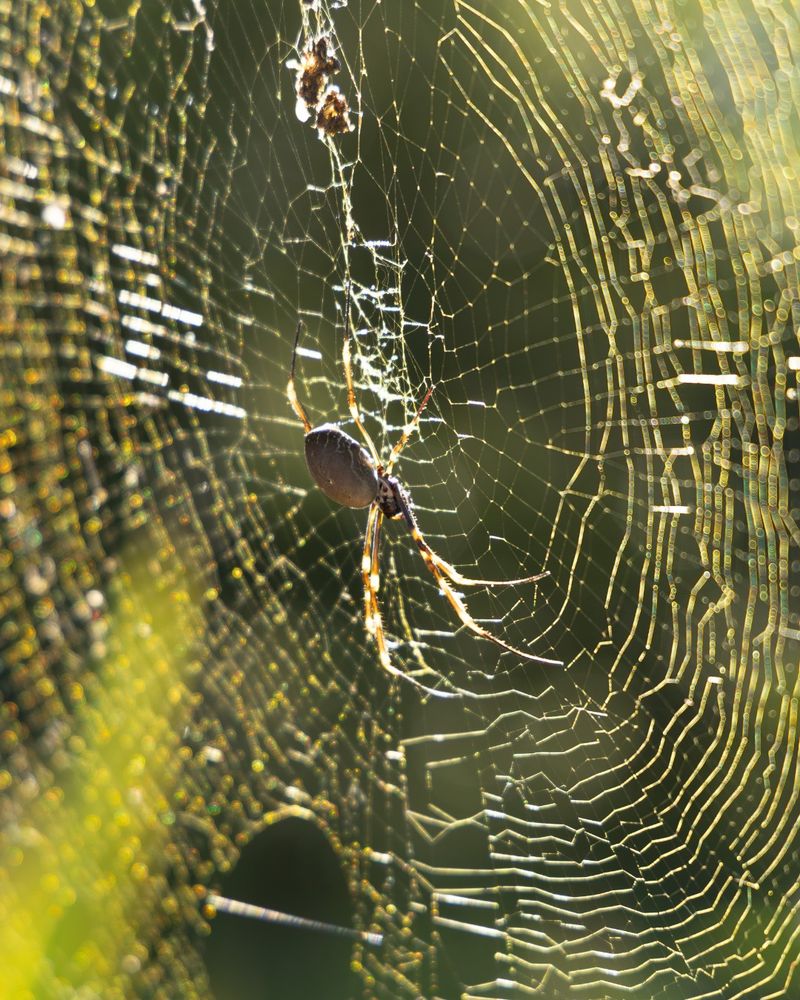
Reaching for a can of bug spray is the most common first reaction, and the least useful. Most outdoor sprays wash off in rain and barely touch a spider hanging in open air.
Fogging the whole yard removes the moths and beetles that keep webs occupied and out of sight. Fewer insects means hungry spiders relocate closer to your porch light, not farther away.
Another misstep involves knocking down a web and assuming the job is finished. The spider simply rebuilds in the same spot that night, often within an hour.
Some folks grab a lighter or torch, which is genuinely dangerous near siding, mulch, and gutters. House fires from web burning aren’t unheard of, and the spider usually walks away fine.
Glue traps scattered around the patio tend to catch toads, skinks, and curious chipmunks. Orb weavers rarely touch the ground, so those traps miss the intended target.
Swatting blindly at a web with bare hands is how most accidental bites actually occur. A calm broom handle keeps your fingers several feet away from an alarmed spider.
Ignoring the calendar is another quiet error worth fixing this fall. Clearing webs in July prevents very little, while October cleanups arrive after the party ends.
Perhaps the biggest mistake is treating a harmless garden resident like a household emergency. Panic leads to chemicals, ladders, and stories that grow taller with every retelling.
A broom, a porch light switch, and a little patience solve nearly everything here. Save the extreme measures for something that actually deserves it.
Safe Cleanup For Doorways, Porches, And Garden Paths
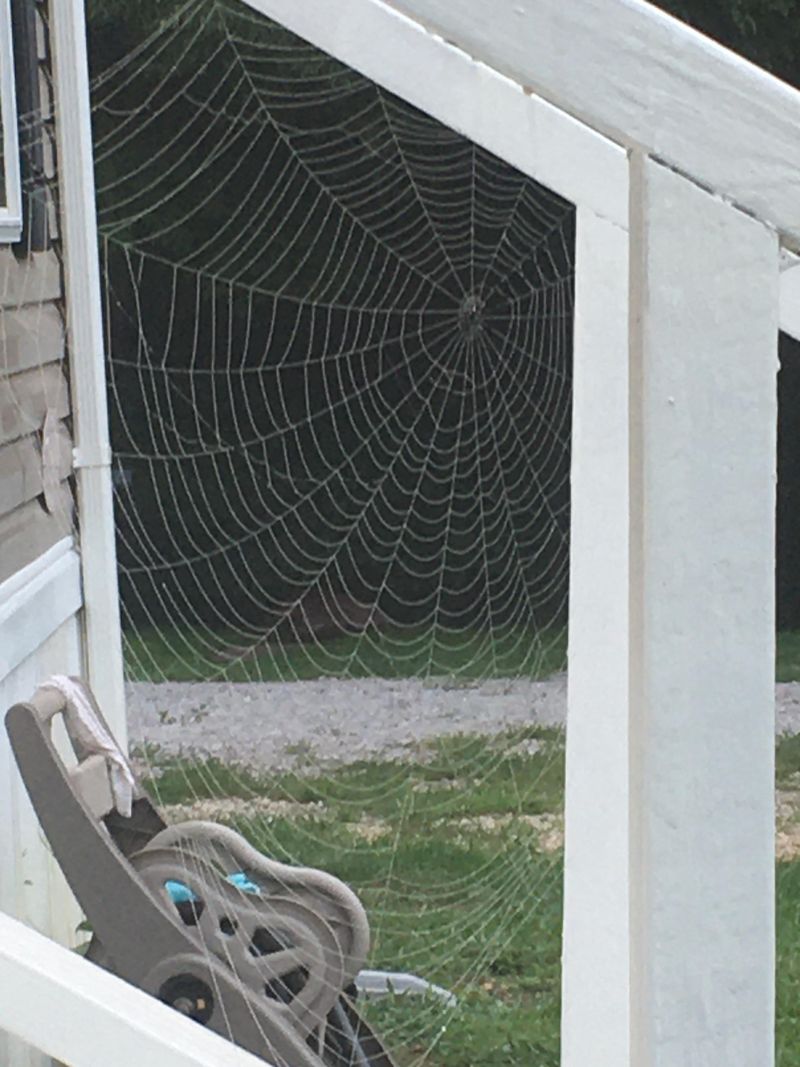
Cleanup works best in the morning, when the spider has already retreated to a hiding spot. Check the web center and nearby leaves before you swing anything at it.
A long-handled broom or a dry paint roller wraps silk neatly without flinging it around. Twirl the handle like spaghetti on a fork and the whole web collects in seconds.
For webs against brick or siding, a garden hose on a gentle setting works fine. Strong pressure just blasts silk into cracks where it sticks around for weeks.
Relocating a spider is easier than most people expect and takes about a minute. Coax her into a wide jar with a stick, then release her near a fence line.
Ten or fifteen feet of distance is usually enough to end the doorway problem. She will rebuild somewhere quieter, and your morning walk stays silk-free.
Vacuum the corners of covered porches where egg sacs and old silk collect. Empty the canister outside so nothing hitches a ride back into the house.
Gloves and long sleeves help if you are clearing thick webbing under a deck. Eye protection matters more than people think when dust and silk rain down.
Repeat cleanup every few days during peak season instead of once a month. Consistency trains spiders to pick calmer real estate away from your front steps.
Skip the chemicals near doors, herb beds, and anywhere pets nap in the sun. A broom costs less and leaves nothing behind but a clean railing.
The Quiet Payoff Of A Well-Placed Orb Weaver
Here is a statistic worth knowing before you grab the broom. One orb weaver can eat hundreds of insects across a single Indiana autumn.
Mosquitoes, gnats, flies, and moths make up most of the menu. Some of those moths lay eggs that become caterpillars chewing holes in your tomato leaves.
Gardeners in Indiana often notice cleaner cabbage and fewer bean beetles near an active web. Free pest control arrives without a subscription, a sprayer, or a single ingredient label.
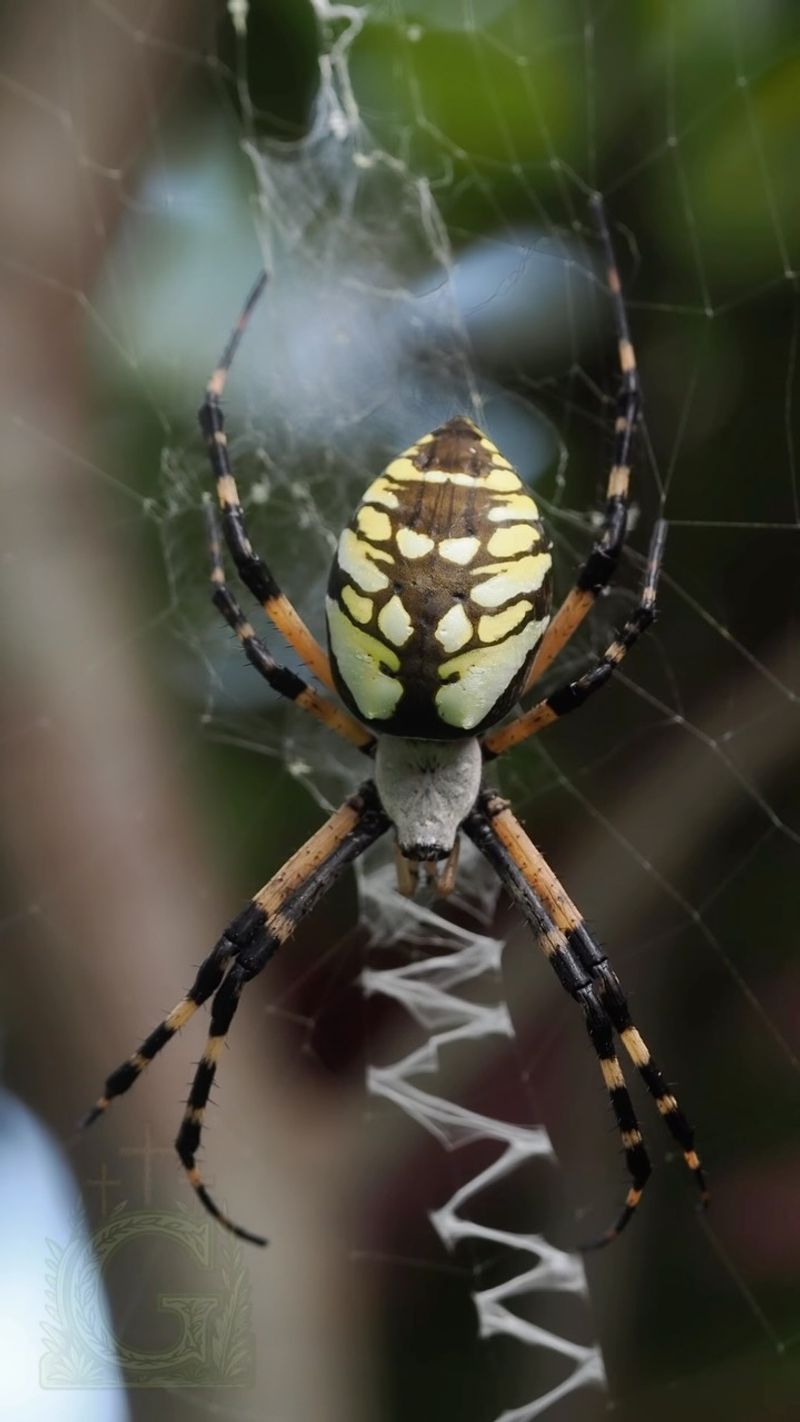
Yellow garden spiders build that famous zigzag stripe down the middle, called a stabilimentum. Scientists still argue about its purpose, though warning birds away is a leading theory.
Birds benefit too, since chickadees and wrens collect spider silk to bind their nests. Hummingbirds use it like glue, weaving it around lichen for stretchy little cups.
Silk is stronger than steel by weight, which sounds made up but checks out. Engineers have studied it for years while trying to copy the recipe.
A web near the porch light is essentially a volunteer bug zapper with no power cord. It runs silently, costs nothing, and recycles itself every morning.
Leaving one undisturbed in a side yard or garden corner costs you nothing. The spider handles insects you would rather not meet, then quietly finishes her season.
Kids tend to love watching a web get rebuilt if adults stay calm. Curiosity beats fear, and a flashlight after dark turns the backyard into a documentary.
Porch Lights, Clutter, And Fewer Webs Next Fall
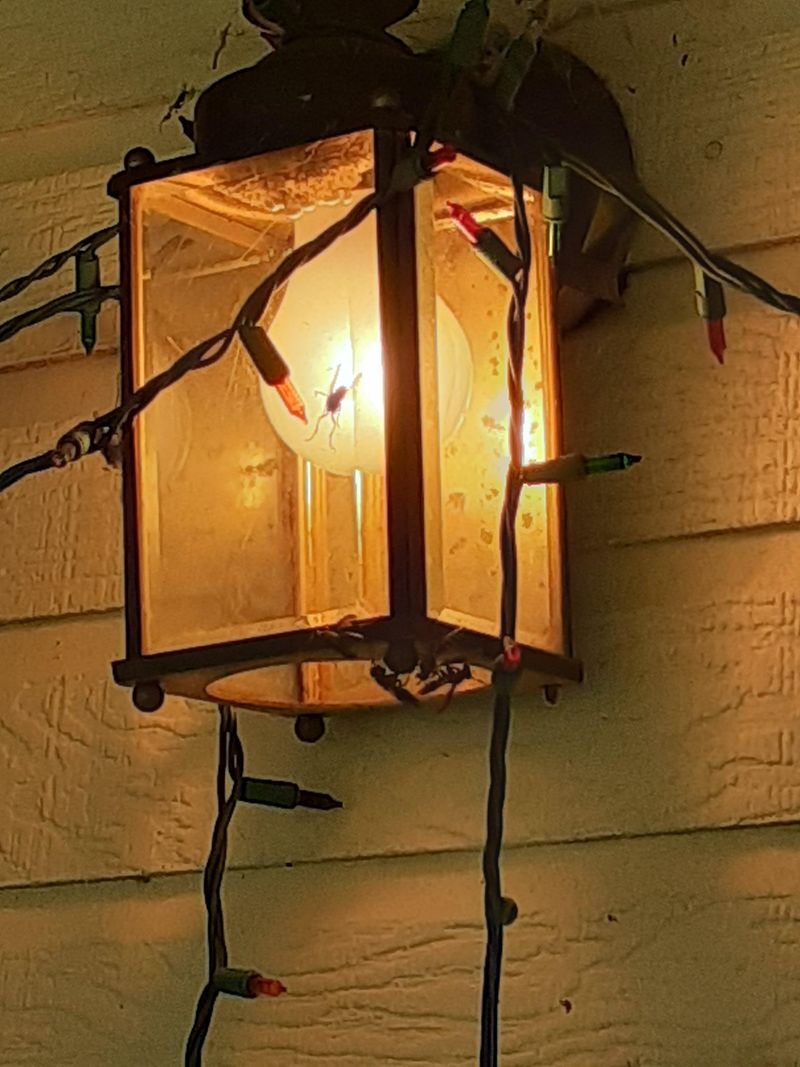
Prevention starts with the light bulb above your door, oddly enough. Bright white bulbs pull in clouds of insects, and insects bring spiders along behind them.
Switching to warm yellow or amber LEDs cuts the bug crowd dramatically. Fewer moths circling the entry means fewer reasons for a spider to set up shop.
Motion sensors help even more, since a light that stays off attracts nothing. Many Hoosiers notice a real drop in doorway webs once they switch.
Trim shrubs back several inches from siding so branches stop acting as web anchors. Orb weavers need two solid attachment points, and a gap removes half the equation.
Stacked firewood, unused flowerpots, and forgotten patio furniture create perfect daytime hiding spots. Moving that clutter away from the house pushes the whole population toward the fence.
Sweep eaves, window frames, and porch ceilings every couple of weeks through September and October. Removing egg sacs now means a smaller crowd hatching in your flower beds next May.
Each sac can hold hundreds of eggs, so a few minutes of sweeping pays off later. Look for papery tan or brown bundles tucked into sheltered corners.
Screens in good repair keep the occasional wandering male from strolling into the kitchen. Door sweeps handle the rest, along with any crickets thinking about the same route.
None of this makes a yard spider-free, and honestly that would be a loss. Aim for clear doorways instead, and let the rest of the property stay wild.