Is That A Root Or A Flower Spike? How Indiana Orchid Owners Can Tell
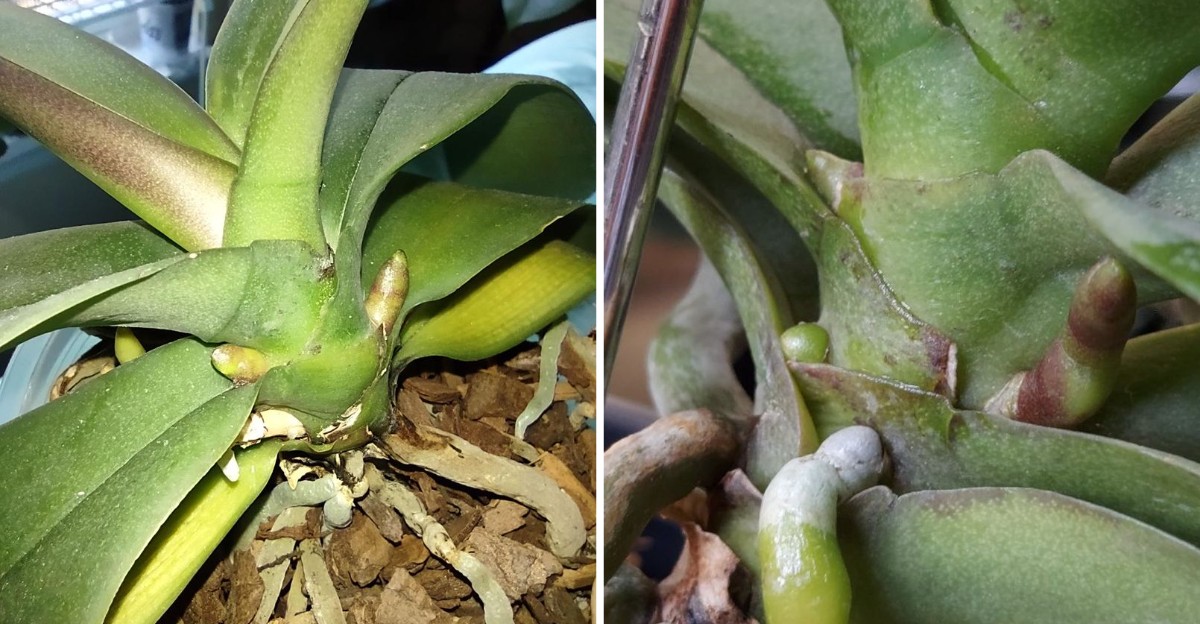
Picture a crisp October morning in Indiana when something new pokes out from your favorite houseplant. It looks green and curious, and your heart jumps with a mix of hope and worry.
Is it the start of a gorgeous bloom, or another wiggly arm reaching for the glass? Plenty of plant lovers have squinted at that tiny green nub for days like puzzled detectives.
A wrong guess can lead to clumsy staking, bent growth, or a snapped stem and loud groans. A right guess means you can give that growth what it needs as outdoor leaves turn gold.
Indiana homes in early fall bring cooler nights and softer light that can spark exciting changes indoors. Those changes are easier to enjoy when you spot the small clues hiding in plain sight.
The Tip Shape That Gives It Away
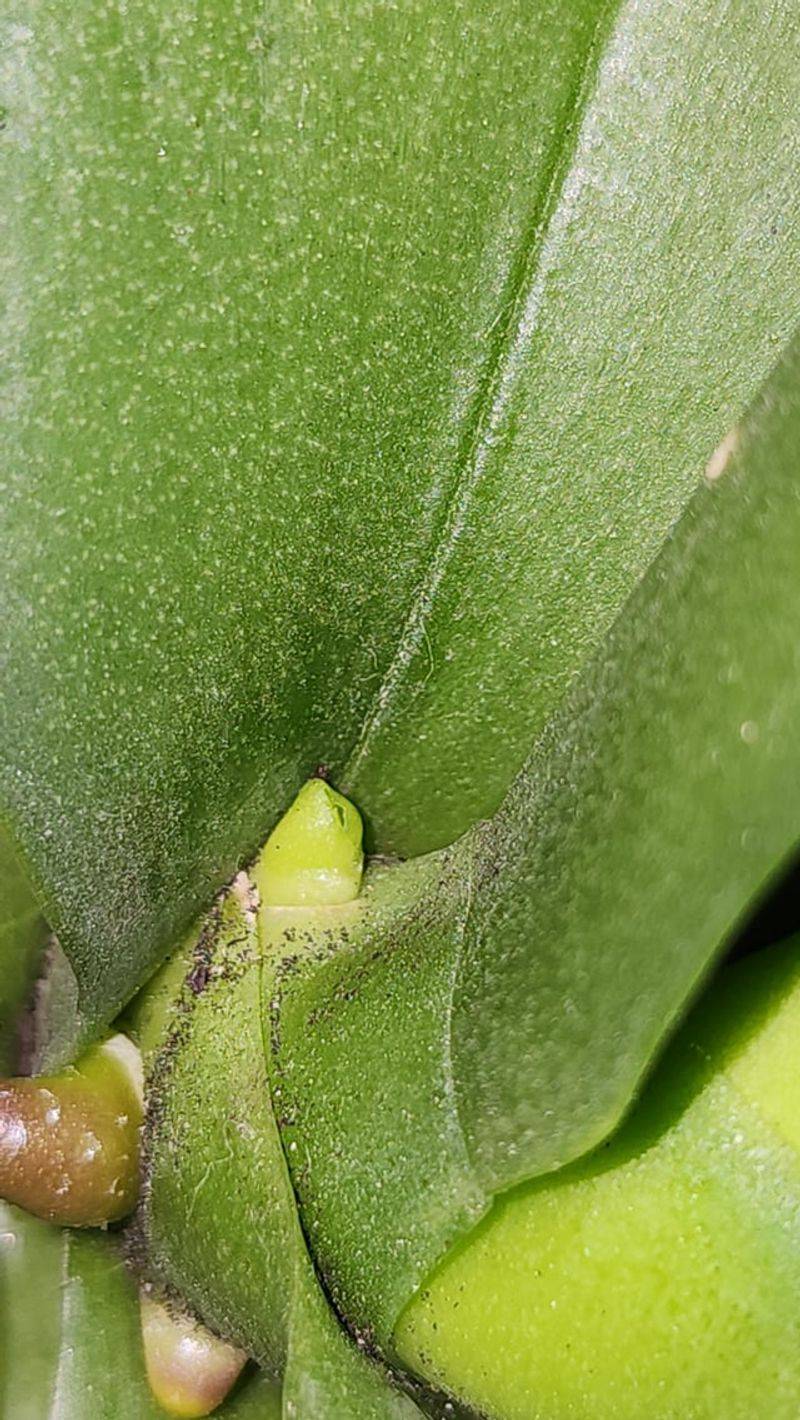
Run a fingertip near the new growth, and you will notice the tip tells most of the story. Roots and flower spikes might share a green color early on, but their ends look surprisingly different up close.
A root tip is usually round and smooth, a lot like the blunt end of a crayon. It often looks shiny and wet, and it may show a soft green or reddish cap.
A flower spike tip looks different, with a flattened, slightly pointed shape that many growers compare to a mitten. You might even spot a tiny thumb-like bump on one side, which makes the mitten idea easy to remember.
Spikes also tend to look a little less glossy at the tip than an active root, which often shines. That small difference in texture can help when the light is dim on a cloudy October afternoon.
Try not to squeeze or poke the tip while you check, because both growths bruise easily when young. A gentle look from a few angles usually gives you enough information without risking a broken end.
If the growth is still under an inch long, waiting a week can make the shape much clearer. Patience feels hard when you are excited, but a short pause often saves you from a wrong guess.
Many hobby growers snap a quick phone photo each day to compare the tip as it develops. Looking back through those pictures makes the mitten or crayon shape pop out like a clear answer.
The Spot On The Plant Where Each Growth Emerges
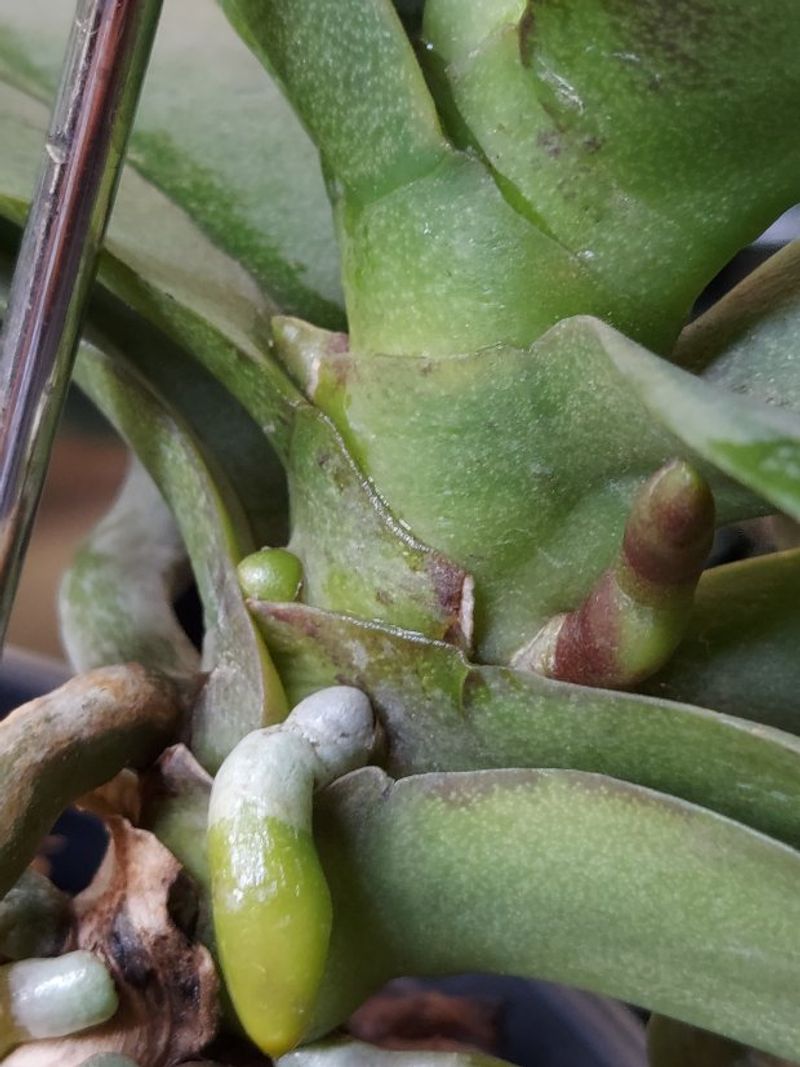
Think of your plant like a tiny house, where every new arrival comes through its own special door. Knowing which door opened can answer the root or spike question before the tip even has a shape.
Flower spikes usually grow from a node on the main stem, tucked just below the base of a leaf. They frequently appear between the lower leaves, poking out sideways through the leaf sheath.
Roots are less picky and can sprout almost anywhere along the lower stem, even right near the potting mix. Some push straight out from between leaves too, which is why location alone is not a perfect test.
Your Indiana Garden Changes Every Week. Your Plan Should Too.
Gardening in Indiana changes quickly throughout the season. Every Friday you’ll receive a simple weekly plan showing exactly what to plant, prune, fertilize, harvest, and protect so you never miss the right timing.
Direction offers another helpful hint, since roots frequently head downward or wander sideways like curious little explorers. Spikes usually angle upward fairly soon, reaching toward the brightest part of the room as they grow taller.
Many growers find it helpful to check the lower stem first, since that is where spikes show up most often on mature plants. That pattern is not a strict rule, but it gives you a smart place to look first.
Lift a lower leaf gently with one finger to peek underneath, since new spikes can tuck out of sight beneath the foliage. Take your time and avoid bending the leaf too far, because a cracked leaf base can cause damage.
Once you learn the usual spots, checking your plant becomes a fun weekly game instead of a puzzle. Early fall is a perfect time to practice, since spikes often start forming as nights grow cooler outside.
Tiny Scales Along The Stem That Settle The Question
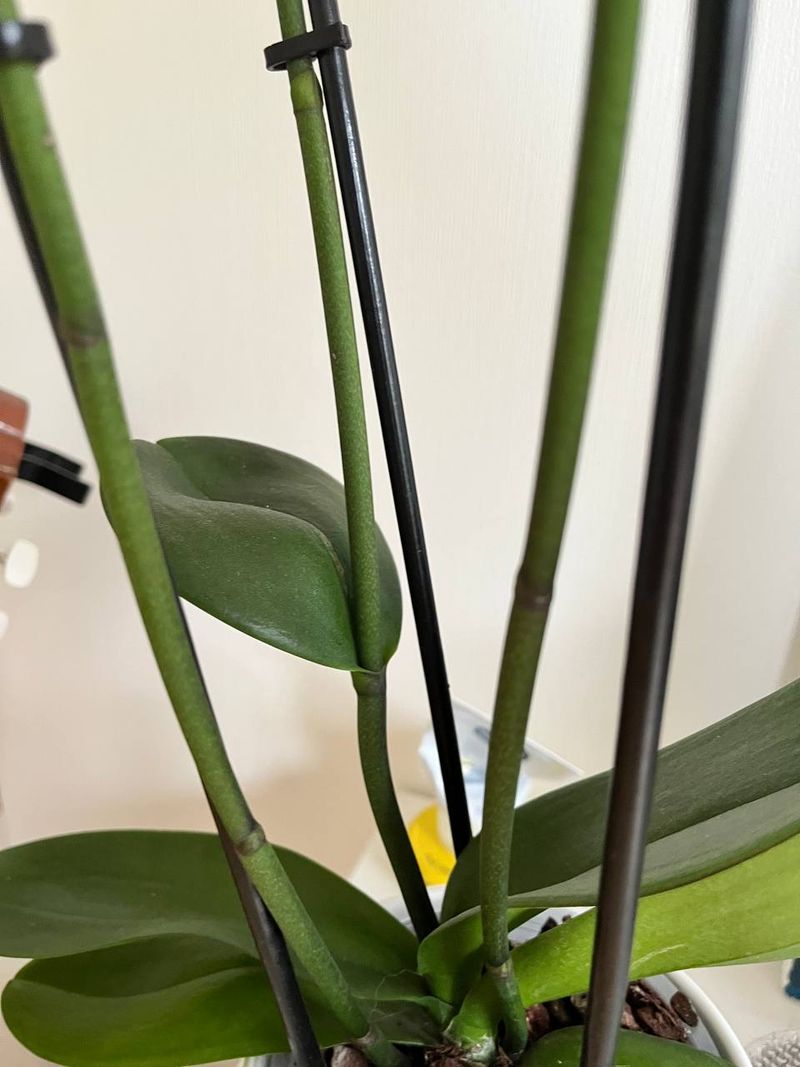
Nature sometimes leaves fine print, and on a flower spike that fine print comes as tiny papery scales. Growers call these little wrappers bracts, and they are one of the most reliable clues you can find.
Once a spike reaches an inch or two, look closely for small sheaths that hug the stem like sleeves. Each sheath marks a node, a spot where a flower branch or even a baby plant might form later.
Roots do not form these scales, so their surface looks smooth along most of its length. Instead, a healthy root wears a silvery coating called velamen, which soaks up water like a tiny sponge.
A cheap magnifying glass or your phone camera zoom can make those bracts much easier to see clearly. They often look slightly lighter or browner than the stem, almost like a thin layer of tissue paper.
Fun fact: those dormant nodes can sometimes wake up later and produce a second spike after the first blooms. That is why many growers trim an old spike just above a healthy node instead of at the base.
Spacing matters too, because bracts appear about an inch apart as the spike stretches toward the light. If you count two or three along the stem, a flower spike is the most likely answer.
Resist the urge to peel off any scales, since they cover the delicate nodes underneath. Leave them in place, and let them dry naturally as the spike matures and the buds swell.
Shade Differences Visible Under Indiana Window Light
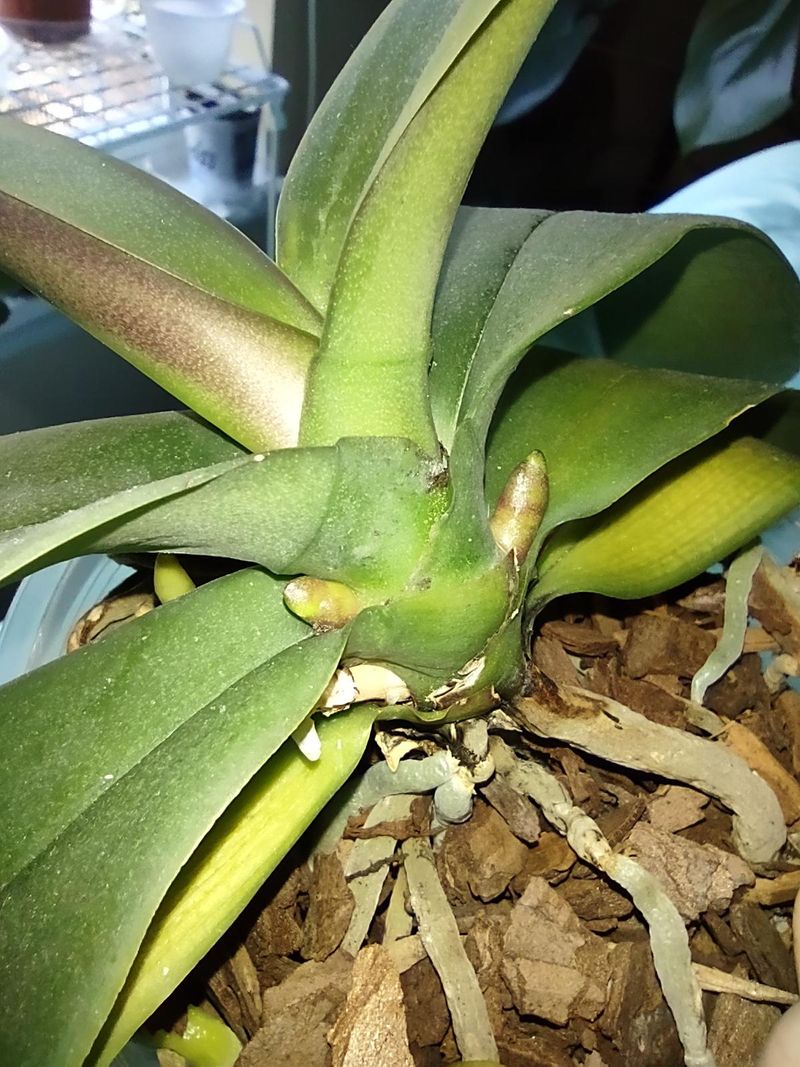
October sunlight in Indiana slants low and golden through the glass, and it shows off subtle colors beautifully. Set your plant near an east or south window for a few minutes, and compare the shades carefully.
A growing root usually has a bright green or reddish tip, followed by a band of silvery white. That silvery section turns greenish after watering, which is a fun trick for checking moisture as well.
A flower spike usually stays a fairly even shade of green along its length, without a silvery coating. Some varieties show purple or brownish tones on their spikes, so color alone can mislead.
Your leaves can offer a handy color reference. Roots rarely copy leaf color, so a silver and green combo points strongly toward a root forming.
Indoor lamps can fool your eyes, because warm bulbs add yellow tones and cool bulbs wash colors out. Natural daylight around midmorning gives the truest view, especially on a clear day before clouds roll in.
Cloudy Indiana weeks can make everything look dull, so try comparing colors against a plain white sheet of paper. That simple backdrop helps the silver of a root or the deep green of a spike stand out.
Color works best alongside the other clues, like tip shape and bracts, rather than as your only test. Put a few hints together, and your answer becomes much clearer than any single clue could offer alone.
The Lookalike Growth Many Owners Mistake For Both
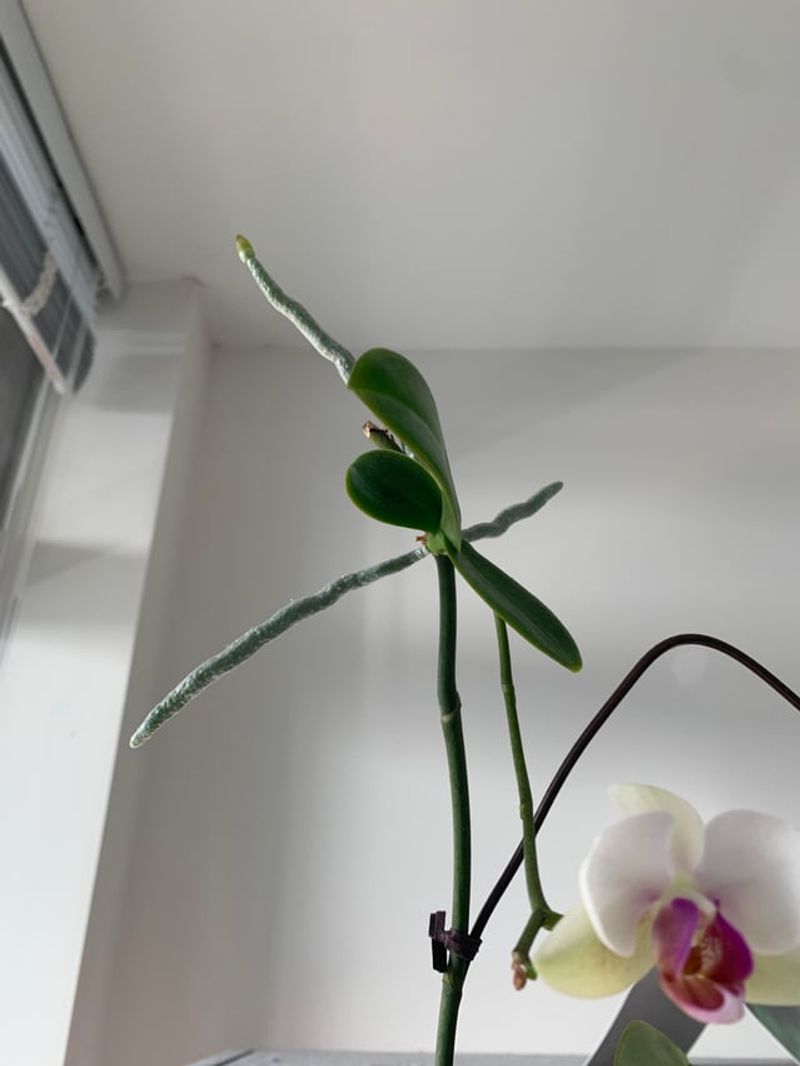
Sometimes the mystery growth turns out to be neither a root nor a spike, but a baby plant instead. Hawaiian growers named these little clones keikis, a word that means baby or child in the Hawaiian language.
A keiki often starts as a small green bump on a spike node, so it fools people twice. At first it may look like a branching spike, and later its roots make it look root-like too.
The giveaway arrives when tiny leaves unfold, flat and shiny, looking like a miniature copy of the parent. Roots and spikes do not produce true leaves, so leafy growth points straight to a keiki in progress.
Keikis can also sprout near the base of some plants, where they sometimes get mistaken for new roots. Watch for a pointed leaf tip folding open after a few weeks, which settles the question quite nicely.
Let a keiki stay attached until it grows at least three roots that reach about two inches long. Cutting too early can leave the baby struggling, since it still borrows food and water from its parent.
Many owners feel thrilled to find one, because a keiki means a free new plant to share later. Friends and neighbors often love receiving a homegrown baby plant as a thoughtful holiday gift this winter.
Keikis sometimes appear on plants under stress, so check roots and watering habits if several show up. A quick health check now can help your main plant stay strong through the long Indiana winter ahead.
Indoor Conditions That Keep A Young Spike Climbing
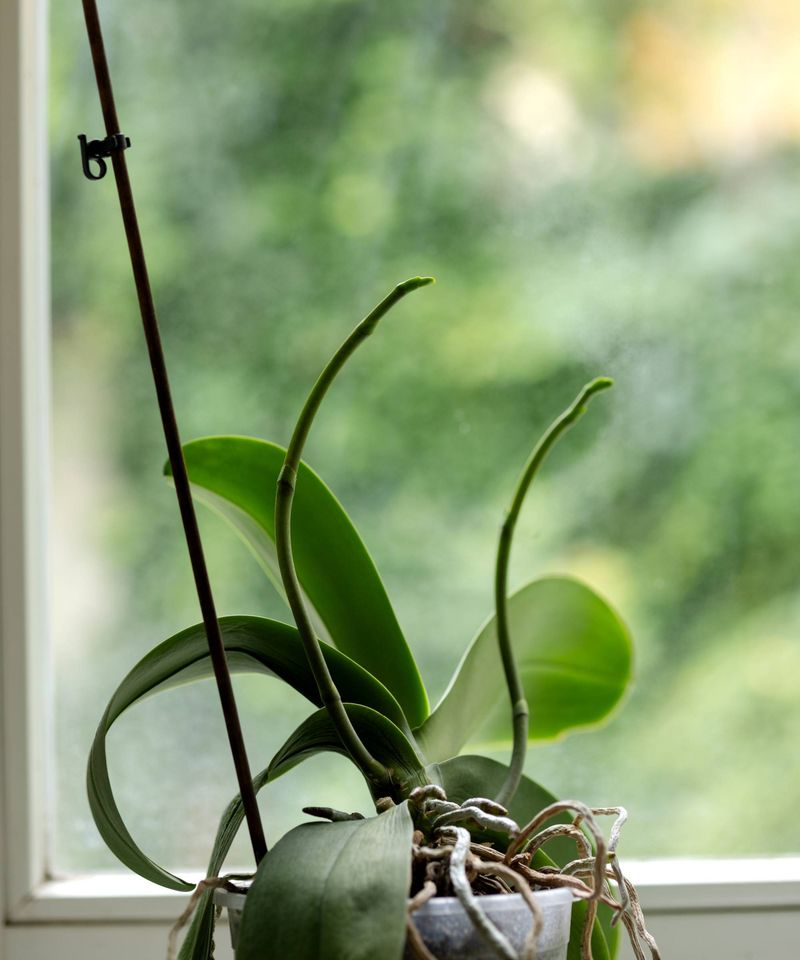
Congratulations, you spotted a real flower spike, and now the fun part of helping it climb begins. Early October in Indiana is ideal, because cooler nights naturally encourage many plants to push out new stems.
Aim for nighttime temperatures around 60 to 65 degrees, with daytime warmth in the low to middle 70s. Keep the pot away from heating vents, since blasts of dry air can make young buds shrivel quickly.
Bright, indirect light from an east window works wonderfully, giving the spike steady energy without scorching tender tissue. Try not to rotate the pot once the spike starts growing, or it may twist and bend awkwardly.
When the spike reaches five or six inches, slide a thin stake into the mix beside it carefully. Attach it loosely with a soft clip every few inches, adding new clips as the stem climbs higher.
Water when the roots look silvery and the pot feels light, which may be every week or so. Indoor heat dries air quickly in fall, so a small humidifier or pebble tray can help a lot.
A balanced orchid fertilizer mixed at half strength every other watering gives the spike a gentle nutrient boost. Flush the pot with plain water once a month to rinse away salt buildup that can burn roots.
Most spikes take roughly two to four months to open their first flowers, so your patience could pay off around midwinter. Picture fresh blossoms brightening a gray winter windowsill, and every careful step this fall will feel worthwhile.