The Full-Sun Arizona Shade Tree That Cools A Hot Patio Fast And Barely Drinks
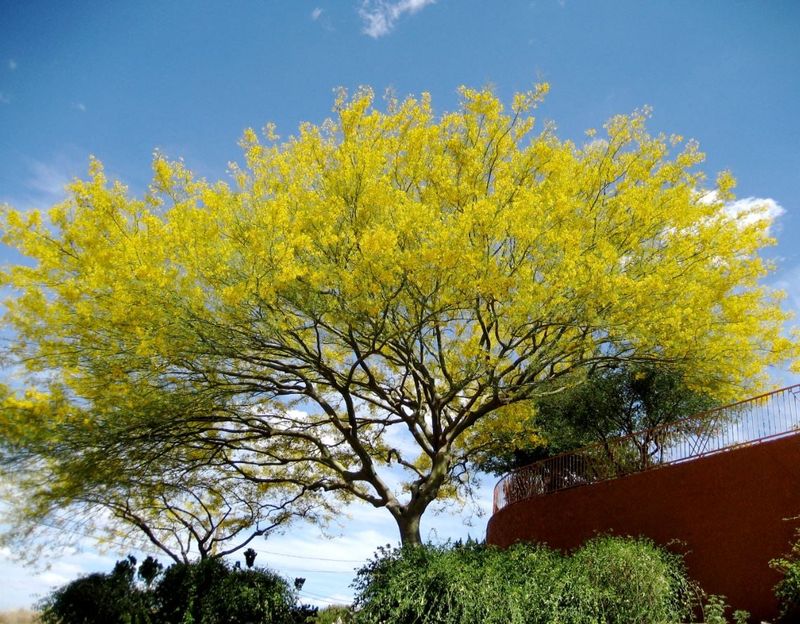
If your patio turns into an oven every summer, the right tree in the right spot can make a real difference. The thornless Desert Museum palo verde is a strong match for low-desert Arizona yards in the Phoenix and Tucson areas, offering filtered shade and lower water use once it settles in.
It grows quickly when irrigated, handles brutal full sun without complaint, and fits naturally into a water-wise landscape. Understanding what it can realistically do, and what it needs from you first, will help you decide if it belongs in your yard.
A suitable low-desert tree for filtered patio shade
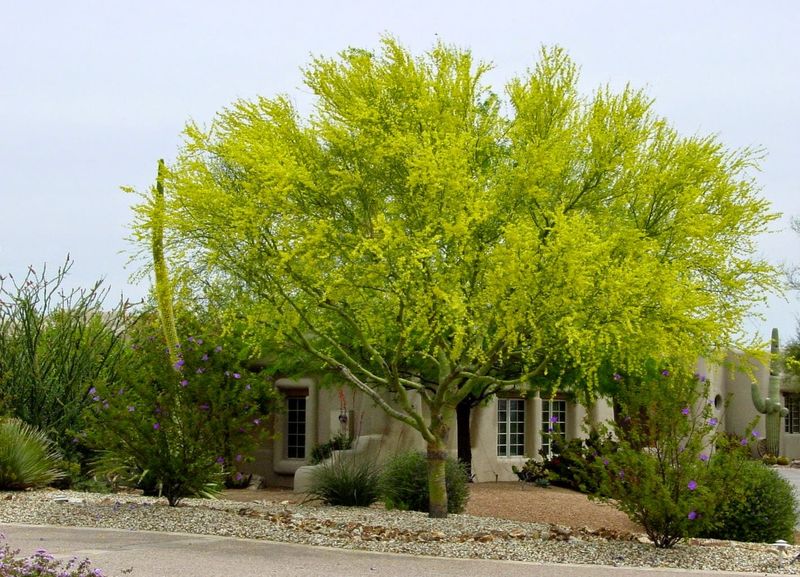
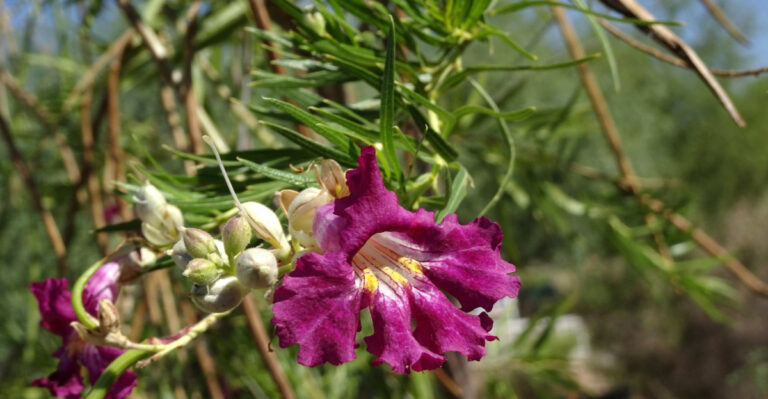
Few trees handle the low-desert Arizona climate as comfortably as the Desert Museum palo verde (Parkinsonia x ‘Desert Museum’). This thornless hybrid was developed from three palo verde species and brings together the best traits of each: upright growth, vivid green bark that keeps photosynthesizing even after leaves drop, a generous flush of yellow spring flowers, and no thorns along the branches that would make patio seating uncomfortable.
According to University of Arizona Cooperative Extension guidance on mesquite and palo verde trees, ‘Desert Museum’ is fast-growing with irrigation and highly drought tolerant once established, reaching roughly 21 to 25 feet in both height and width. The City of Phoenix also lists palo verde among its recommended low-water shade-tree options for residential landscapes.
Those are meaningful credentials for a yard that needs to stay functional through a 110-degree July.
The shade this tree produces is filtered, not dense. Its fine leaflets and open canopy let some sunlight through, which reduces direct solar exposure on a patio without blocking every ray.
That filtered quality is worth understanding before you plant, because it sets honest expectations. ‘Desert Museum’ is a suitable, well-supported choice for full-sun low-desert conditions, not a guaranteed replacement for a solid roof overhang.
What filtered shade can—and cannot—do for a hot patio
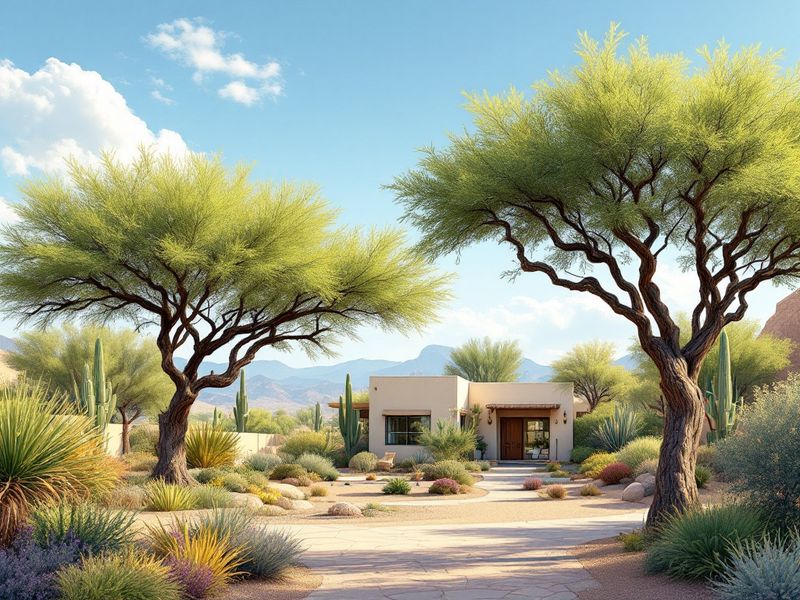
Shade from a palo verde works by intercepting direct sunlight before it hits the patio surface, your furniture, and you. Surfaces that stay out of direct sun absorb less heat, which makes them more comfortable to touch and sit on during the hottest part of the day.
University of Arizona Extension research on landscape shading notes that a dense shade canopy can block at least 80 percent of incoming solar radiation, while filtered canopies like those produced by palo verde allow more light to pass through.
That distinction matters. Palo verde shade reduces direct sun exposure noticeably, but it does not create the same deep, still shadow you get under a wide-canopied, densely foliated tree.
The actual comfort improvement on your patio will depend on how mature the canopy is, which direction the patio faces, how nearby walls and the house itself reflect or trap heat, local wind patterns, humidity, and what materials your patio surface is made from.
A young tree planted this fall will not deliver mature-canopy coverage next summer. Growth takes time even for a fast-growing species, and the canopy needs several seasons to spread enough to shade a meaningful portion of a patio.
Your Arizona Garden Changes Every Week. Your Plan Should Too.
Gardening in Arizona changes quickly throughout the season. Every Friday you’ll receive a simple weekly plan showing exactly what to plant, prune, fertilize, harvest, and protect so you never miss the right timing.
Plan for a gradual improvement in filtered shade over the first few years, not an immediate drop in outdoor temperature the moment the tree goes in the ground.
Measure for the mature tree, not the nursery container
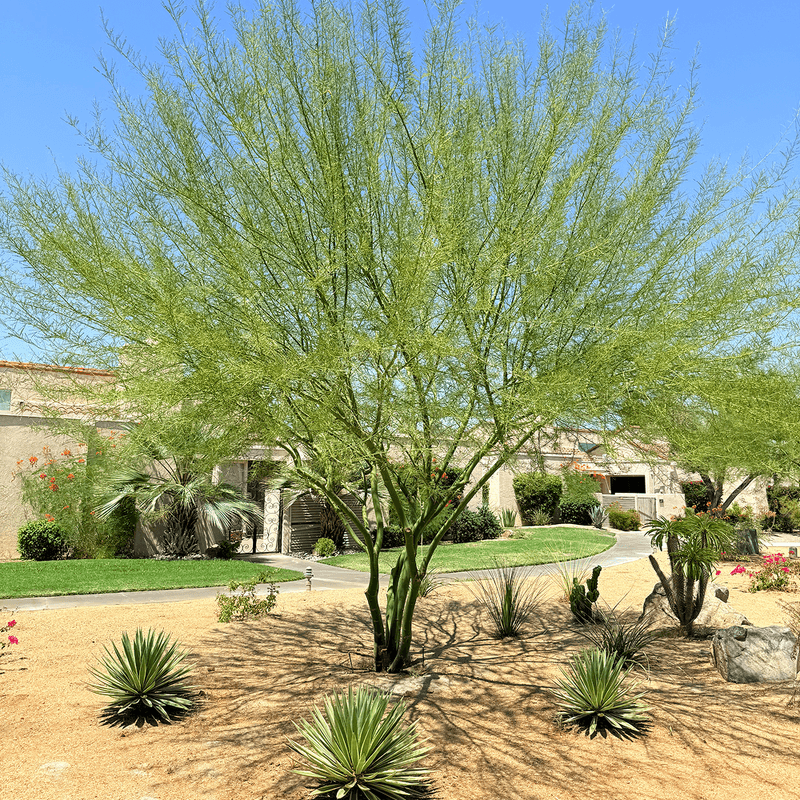
A five-gallon nursery tree looks manageable sitting on a cart at the garden center. Planted in the right spot, though, that same tree can reach 21 to 25 feet in both height and width at maturity, which is a very different proposition.
Before you dig a hole, measure your available space honestly and compare it against those dimensions.
University of Arizona Extension recommends placing a tree no closer to a building than roughly half its mature canopy width. For a Desert Museum palo verde with a potential spread of 21 to 25 feet, that starting point works out to about 10 to 12.5 feet from the nearest wall or foundation, subject to your specific site conditions, any canopy training you plan to do, and local recommendations.
That buffer protects both the structure and the tree’s root zone, and it gives the canopy room to develop its full filtered-shade coverage over your patio rather than being pruned back repeatedly to keep it off the eaves.
Utilities, overhead lines, walkways, and drainage patterns all factor into the placement decision as well. A canopy that eventually reaches 25 feet wide cannot share space comfortably with a power line running across the yard or a narrow planting strip between a fence and a wall.
Check for underground utilities before digging, confirm overhead clearance, and trace where runoff moves across your yard during monsoon storms. ‘Desert Museum’ is a strong patio tree when the site fits it, but its mature size means it is not a small-space solution for every cramped courtyard or tight patio edge.
Prepare the soil before you plant
Low-desert Arizona soil has a reputation for being unforgiving, and a lot of that reputation comes from caliche, the hardened calcium carbonate layer that forms just below the surface in many Phoenix and Tucson yards. University of Arizona Extension’s caliche quick guide explains that caliche can restrict root penetration, impede water movement downward, contribute to salt buildup around roots, and reduce a tree’s ability to anchor itself securely.
Before you plant, pour water into the hole and time how long it takes to drain. Slow drainage is a warning sign that deserves attention before a tree goes in.
If you hit a solid caliche layer, you have options. Breaking through it with a rented breaker bar or auger and removing the obstructing material can improve drainage significantly.
In some cases, drilling a narrow drainage chimney below the planting hole and filling it with coarse gravel gives water an exit path. Skipping this step and hoping the tree works around it is a gamble that often ends in a struggling or failing tree.
Planting depth is equally important and easier to get right. Keep the root flare, the point where the trunk widens at the base, visible above the soil line.
Set the top of the root ball level with or very slightly above the surrounding grade. Burying the trunk or mounding soil against the base invites crown rot and can shorten the tree’s life.
Fall planting, from October through November, or early spring gives roots time to spread before the most severe summer heat arrives, which is a meaningful head start in the low desert.
Plan for establishment water before expecting drought tolerance
Drought tolerance is one of the most appealing things about a Desert Museum palo verde, but that tolerance only kicks in after the tree has had time to push roots out into the surrounding soil. A newly planted tree is not drought tolerant yet.
Its root zone is limited to whatever came in the container, and until those roots spread, the tree depends entirely on you for water.
During establishment, water deeply and frequently enough to keep the root zone moist but not waterlogged. As the tree matures and roots extend outward, you can gradually stretch the interval between irrigations.
University of Arizona Extension guidance on drought and extreme heat notes that during the hottest part of summer, desert tree irrigation may be needed as often as every four to seven days depending on species, soil type, tree size, weather conditions, and how much rainfall has fallen recently. Winter intervals for established trees may extend to four to ten weeks.
Those are broad ranges, not a universal schedule, and your specific site will determine where you fall within them.
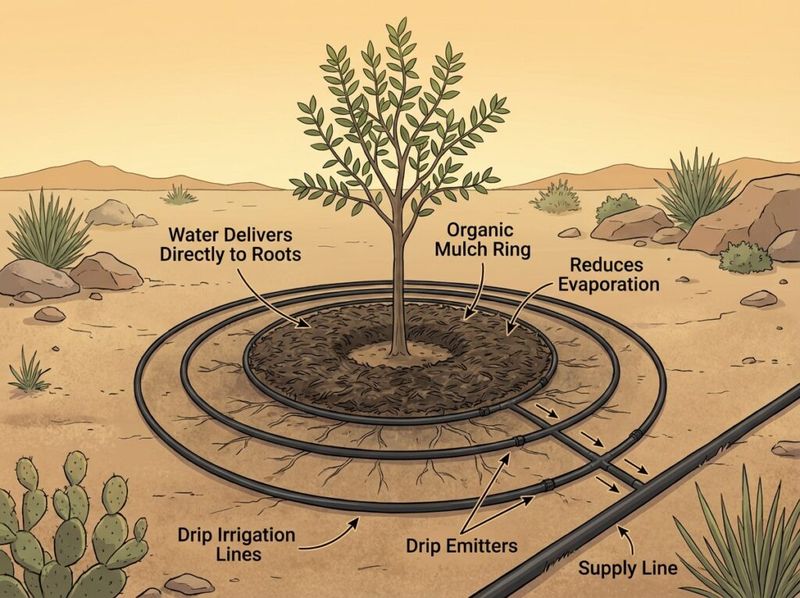
Where you water matters as much as how often. Place emitters or a soaker hose at or beyond the drip line, which is the outer edge of the canopy, rather than right against the trunk.
Irrigation should reach roughly two to three feet deep into the root zone. Shallow watering concentrated near the trunk encourages weak surface roots and can make the tree less stable over time.
Even a well-established palo verde may need supplemental water during a prolonged summer heat stretch or an unusually dry year, so stay attentive rather than assuming the tree can always fend for itself.
Use mulch and pruning to protect the tree
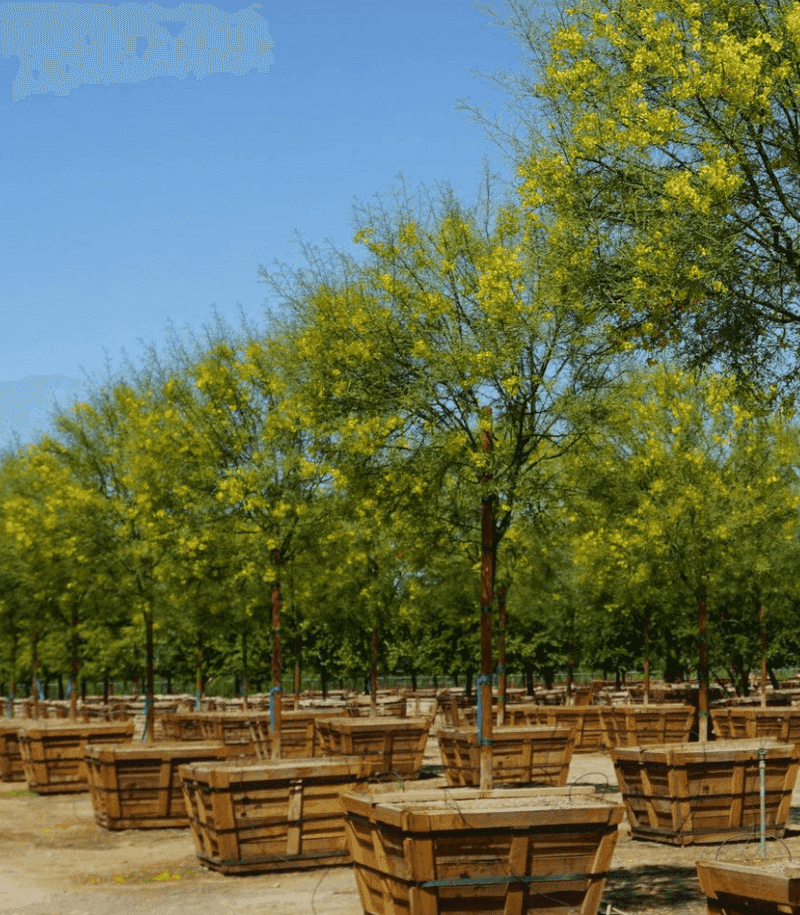
Spreading a three- to four-inch layer of organic mulch across the root zone is one of the simplest things you can do to help a newly planted palo verde survive its first summers. Mulch slows evaporation from the soil surface, which means the root zone stays moist longer between irrigations.
Keep the mulch pulled back a few inches from the trunk so the bark stays dry and air can circulate around the base. Mulch piled against the trunk holds moisture against the bark and can encourage rot over time.
Young trees also benefit from a structural inspection at planting and again during the first couple of growing seasons. Check for circling or girdling roots when you take the tree out of its container.
A root that wraps around the base of the trunk can eventually strangle the tree as both the root and trunk grow. Straighten or trim circling roots before the tree goes in the ground rather than hoping they self-correct later.
Once the tree is established, occasional pruning keeps it healthy and patio-compatible. Remove dead or crossing branches when you spot them.
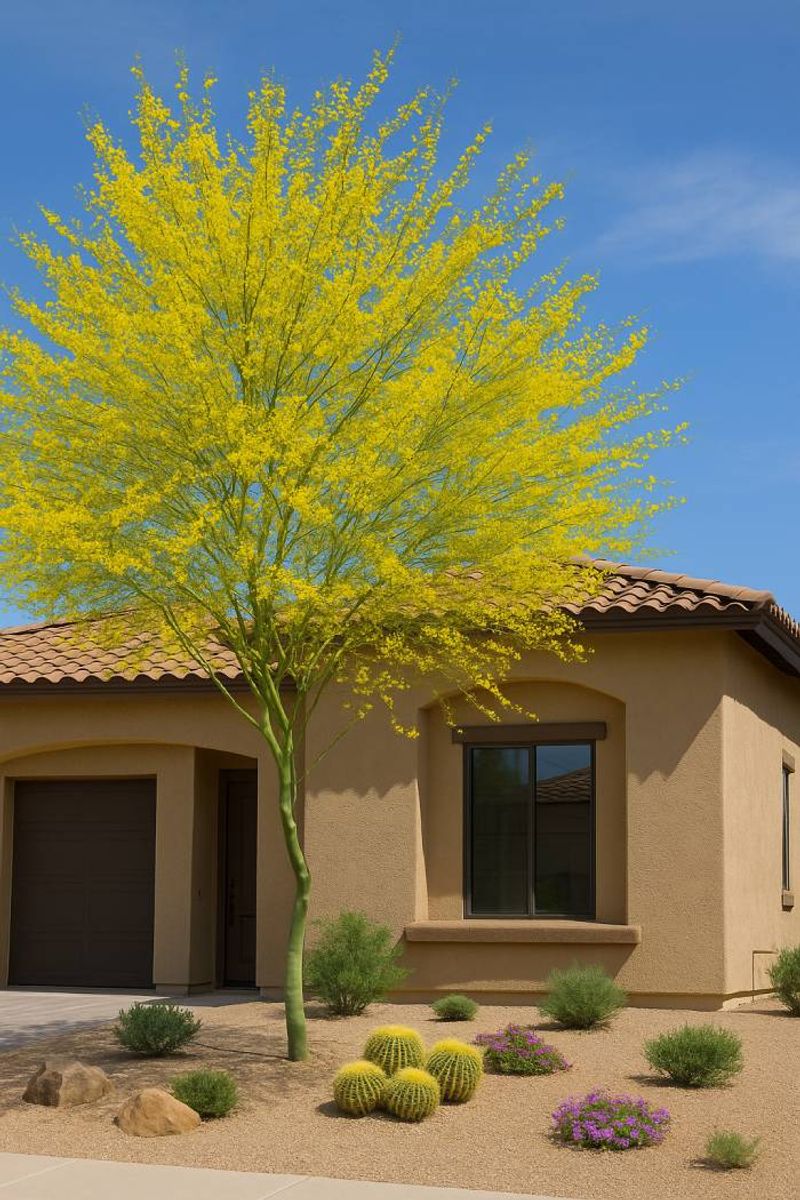
If mistletoe appears in the canopy, cut it out early before it spreads. Witches’ broom, a cluster of abnormal bushy growth caused by a pathogen, should also be pruned out when found. ‘Desert Museum’ produces yellow spring flowers that are visually striking but will drop, and some seed pods may follow.
Thornlessness makes this tree far more comfortable around a patio than thorny palo verde relatives, but it does not eliminate the need for periodic cleanup and structural attention.
Choose it when filtered relief fits your site
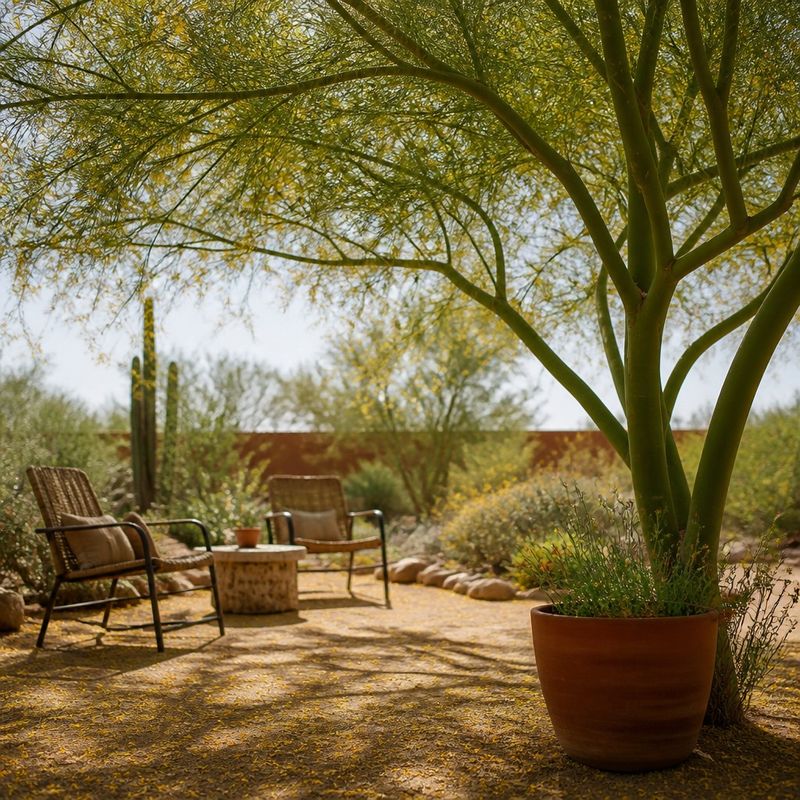
The Desert Museum palo verde earns a strong recommendation when the site genuinely fits it. Full sun, low-desert Arizona conditions (primarily the Phoenix and Tucson metro areas), workable drainage, enough room for a canopy and root zone approaching 21 to 25 feet across, and a homeowner ready to provide consistent establishment irrigation – those conditions together make this tree a practical, well-supported choice for reducing direct solar exposure on a patio.
Steer away from it when the space is cramped, when overhead lines or structures limit canopy development, or when dense shade is the primary goal. If your site sits at a higher elevation in Arizona, the low-desert guidance here may not transfer cleanly, since frost exposure, soil conditions, and irrigation needs shift with elevation and climate zone.
Filtered shade and lower water use after establishment are realistic outcomes; an immediate drop in patio air temperature or zero supplemental summer watering are not.
For the right low-desert yard, though, this tree delivers something genuinely useful: a fast-growing, thornless canopy that intercepts direct sun, supports pollinators during its spring flower display, and asks for less water than most shade trees once it finds its footing. Give it room, water it properly while it establishes, and it will return the favor for decades.
That is a reasonable trade in a climate that punishes the wrong plant in the wrong spot.