Tiny White Barrels Under Your Arizona Leaves: Possible Insect Eggs to Inspect Before You Act
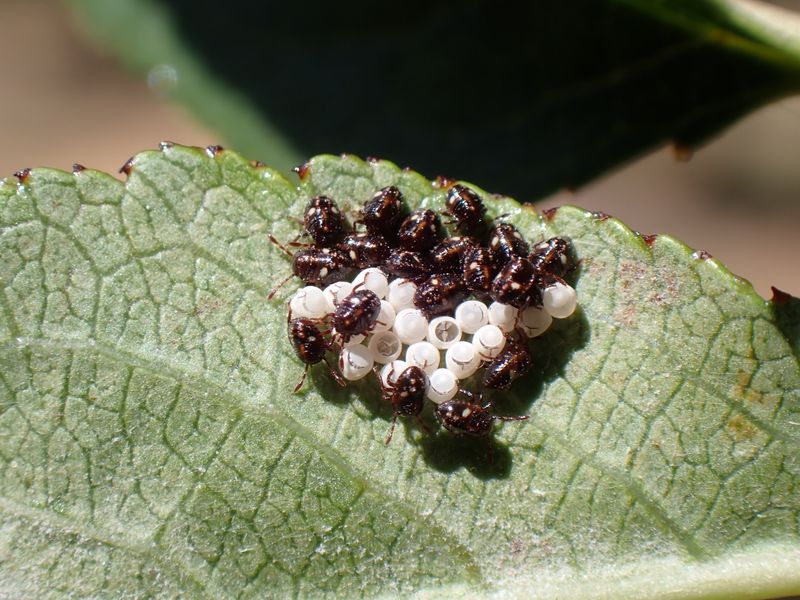
You flip over a leaf in your Arizona garden and find neat little rows of tiny barrel-shaped objects. They might be insect eggs, but they might also be something else entirely.
Guessing wrong can mean removing a helpful hunter or ignoring a real crop pest. A few careful looks can help you decide what to do.
A barrel shape is a clue, not an identification
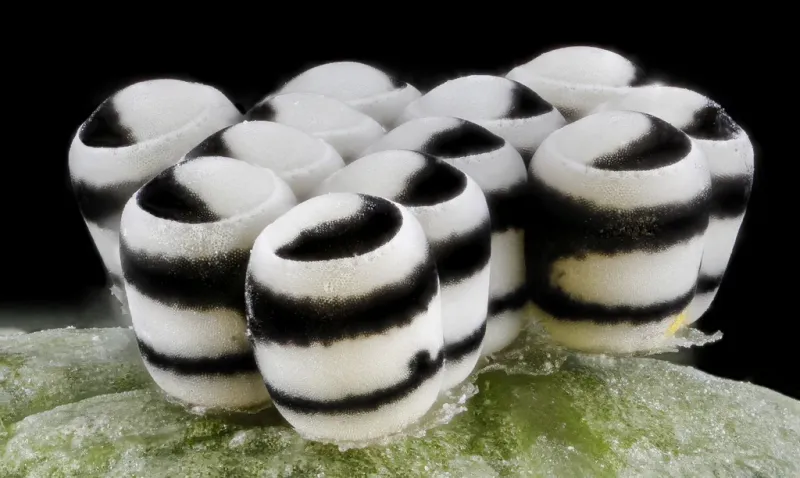
Barrel-shaped eggs turn up on more than one kind of insect, so shape alone leaves plenty of room for guessing. A phrase like tiny white barrels also does not prove that the objects are eggs at all, or that anything inside them is alive.
Two comparisons help most. Upright dark or amber eggs with pale caps, grouped on a leaf or stem, may point toward assassin bugs, including the leafhopper assassin bug, Zelus renardii.
This assassin bug profile describes those eggs as dark brown with white caps. Compact pale clusters, by contrast, may belong to a stink bug.
Even then, color and shape cannot tell you which species laid them. Some stink bugs feed on plants, and others hunt insects.
So the useful question is not whether to squash or leave them right now. It is what the eggs, the plant, and any damage can tell you first.
Dark eggs with pale caps may belong to assassin bugs
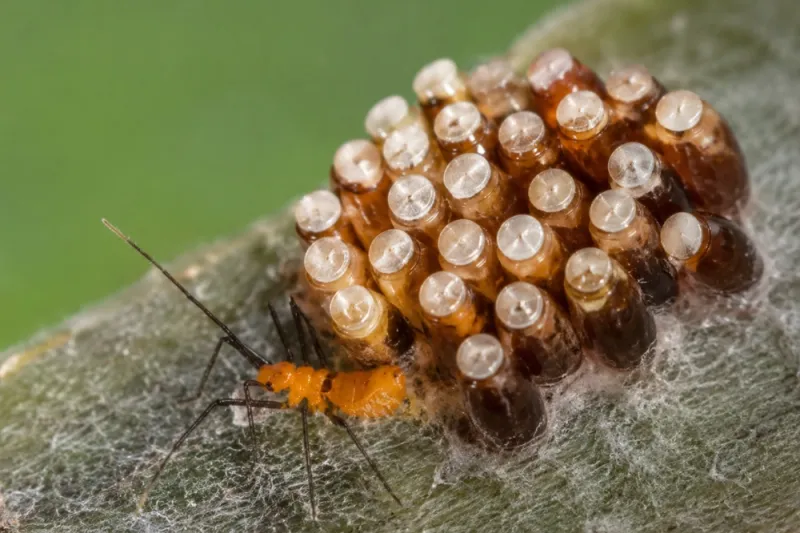
Picture a small group of upright eggs, dark brown or amber, each topped with a bright pale cap, glued to a leaf or stem. That look matches reports for the leafhopper assassin bug, Zelus renardii, a common garden hunter in the Southwest.
It is a possible match, not a guarantee, so compare the details before deciding.
If the eggs do fit, leaving them undisturbed is generally the better call. Assassin bugs prey on other insects, and gardens in Arizona list them among their beneficial insects.
A hatchling that survives can spend its life patrolling your plants.
Keep expectations realistic, though. Assassin bugs are generalist hunters, so they take whatever they can catch.
That can include bees, lacewings, and other helpers along with the pests you dislike. They are a useful part of a garden, but they are not a promise of pest control.
Pale clusters can be stink bug eggs, but color does not tell the whole story
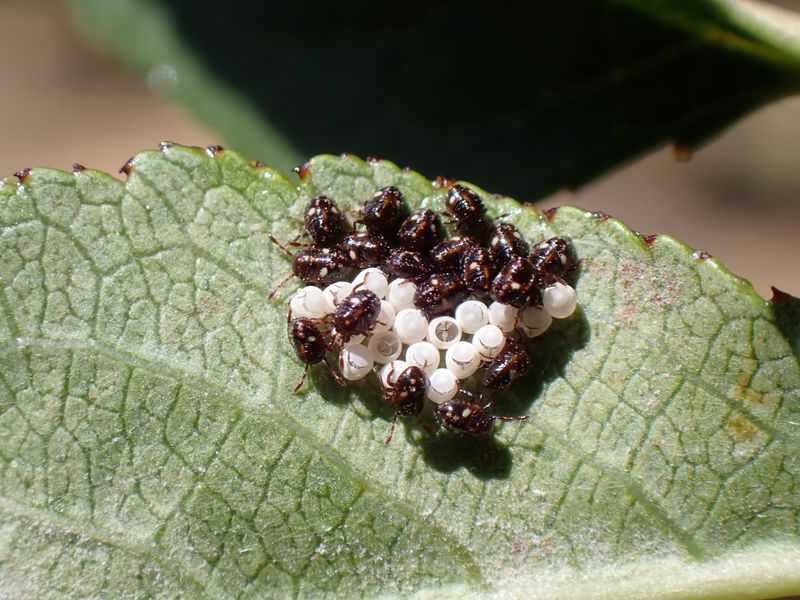
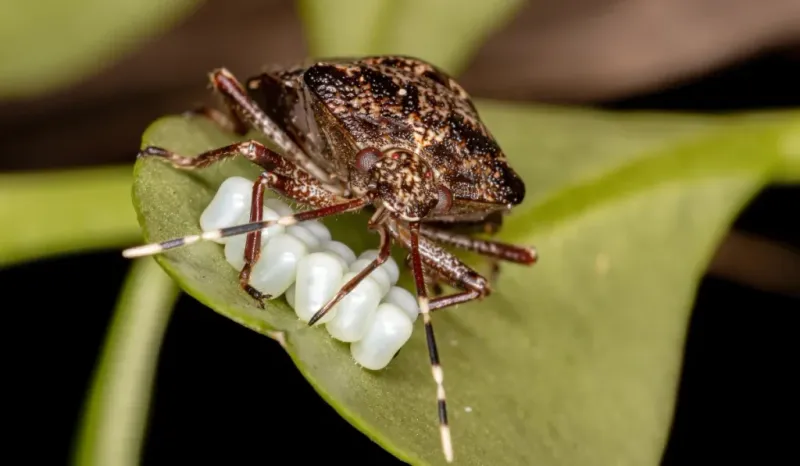
Some stink bugs lay uniformly pale white or green eggs in tight, tidy blocks, often on the underside of a leaf. If your find looks like that, stink bugs are a fair guess.
They are only a guess, though, because a family resemblance does not name the species.
Stink bugs do not all live the same way. Some feed on plant fruit and leaves, which can cause trouble in vegetable beds.
Others are predators that hunt caterpillars and beetle larvae, so a pale cluster is not automatically a threat.
One well-known pest example is the brown marmorated stink bug, which gardeners in some regions watch closely. Its presence in your yard is not something to assume from a photo of eggs.
Your Arizona Garden Changes Every Week. Your Plan Should Too.
Gardening in Arizona changes quickly throughout the season. Every Friday you’ll receive a simple weekly plan showing exactly what to plant, prune, fertilize, harvest, and protect so you never miss the right timing.
Egg color alone cannot separate a plant feeder from a helper, so look at the plant for bite marks, spotted fruit, or wilting before you decide that a pale cluster means danger.
Lacewing stalks and Bagrada bug eggs offer different clues
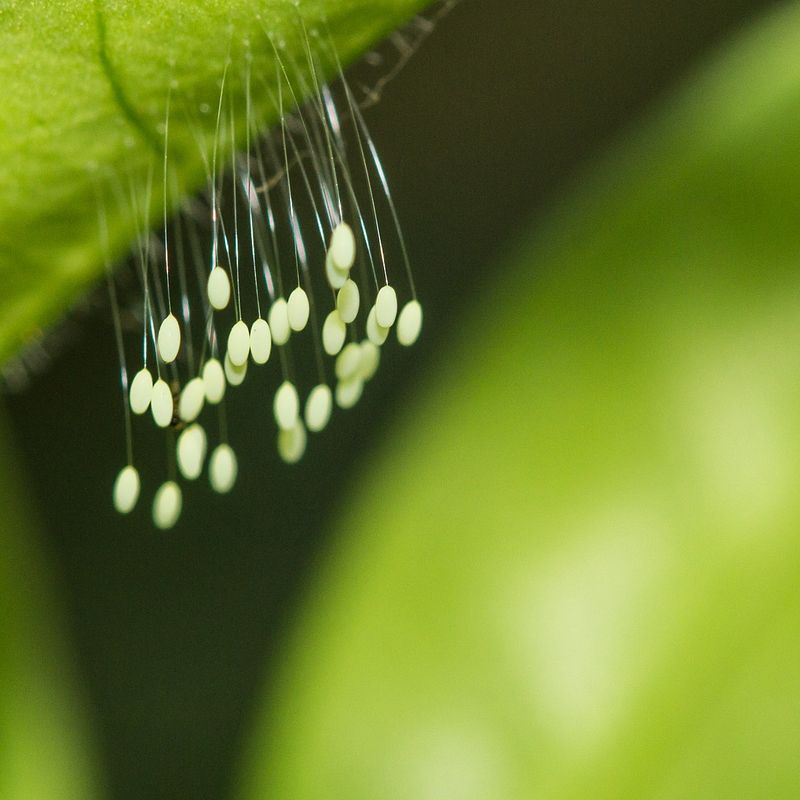
Two lookalikes are worth knowing. Green lacewing eggs are pale green and sit one at a time on thin, threadlike stalks, so a row of stalked ovals is a different picture from barrels packed side by side.
Lacewing larvae feed on aphids and other small insects.
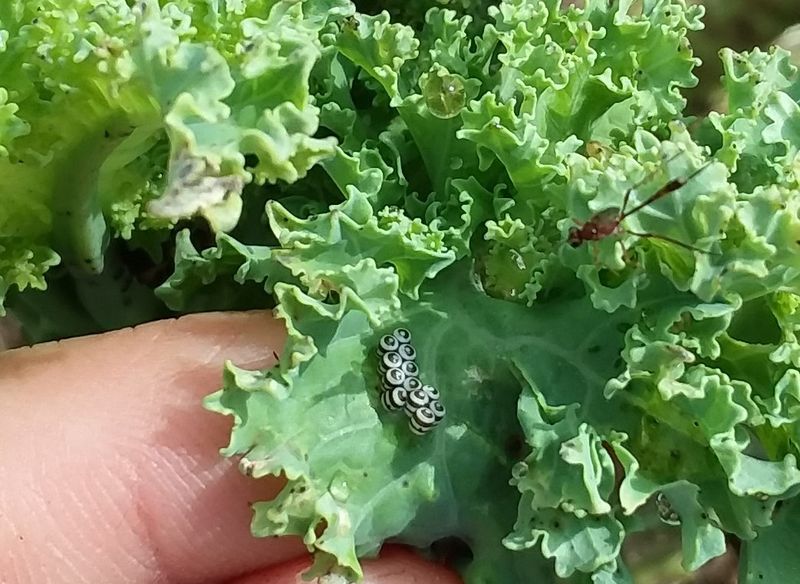
Bagrada bug eggs are the other Arizona lookalike. They may be laid singly or in small clusters on leaves, stems, or even soil, and they shift from white to orange-red as they age.
Bagrada bugs are linked to damage on mustard-family crops such as broccoli, kale, and radishes, plus some ornamentals.
Neither pattern proves anything on its own from a vague description. Treat them as clues that help you narrow the list.
Pair them with where the eggs sit and which plant they are on.
Check the plant and the pattern before you act
Slow, careful scouting beats a quick guess. Start with the eggs themselves and note whether they stand upright or lie side by side.
Look for pale caps, count roughly how many there are, and check what they are attached to, such as the leaf underside, stem, or soil.
Next, look at the plant. Name the host, then check for feeding symptoms like stippling, scarred fruit, tiny holes, or wilting shoots.
A mass on a plant with no damage tells a very different story from one on a crop that is clearly struggling.
Arizona guidance for home gardens says to identify the pest correctly and weigh the plant damage before choosing any treatment, as laid out in the home garden pest guidance. When the clues do not settle it, take a sharp, close photo and send it to your local extension office for identification help.
A few days of waiting costs little.
Leave likely predators and target only confirmed crop pests
Once you have looked closely, match your response to what you found. If the mass fits a likely assassin bug, leave it alone.
A hunter that grows up in your garden may take a share of the insects that bother your plants, even though it will not clear them all.
Physical removal is for a narrower case: a confirmed pest that is damaging a valued crop. Brown marmorated stink bug is one specific example, and its egg mass removal advice suggests taking egg masses off affected plants.
That advice belongs to that pest, not to every cluster you find.
Resist broad, just-in-case spraying. Insecticides can harm beneficial insects, and those helpers may return to a garden more slowly than pests do.
A spray meant for one problem can leave your yard with fewer allies and the same trouble. Targeted action on a confirmed culprit is gentler, cheaper, and easier to keep up through a hot Arizona summer.
When you are unsure, pause and identify safely
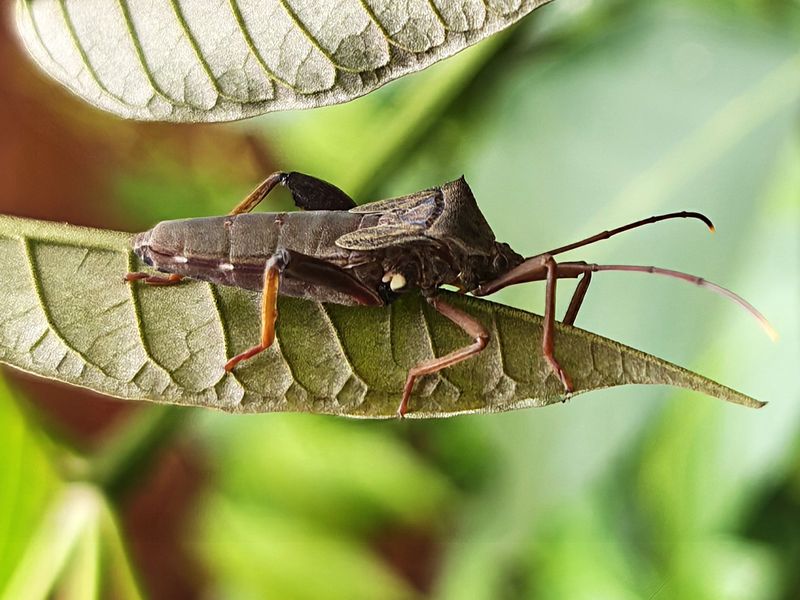
The word barrel will not settle this, and an adult assassin bug is not something to pick up for a closer look, since it can deliver a painful bite. Take a clear photo of the eggs, the plant, and any insects nearby, then ask for help through your local garden pest help page.
Inspect, identify, and only then decide.
Most mysteries in the garden can wait a few days. Eggs that nobody has named yet are usually safer left alone.