Earthworms Can Help Moist, Amended Soil in Some Arizona Yards – But They Cannot Rebuild Caliche
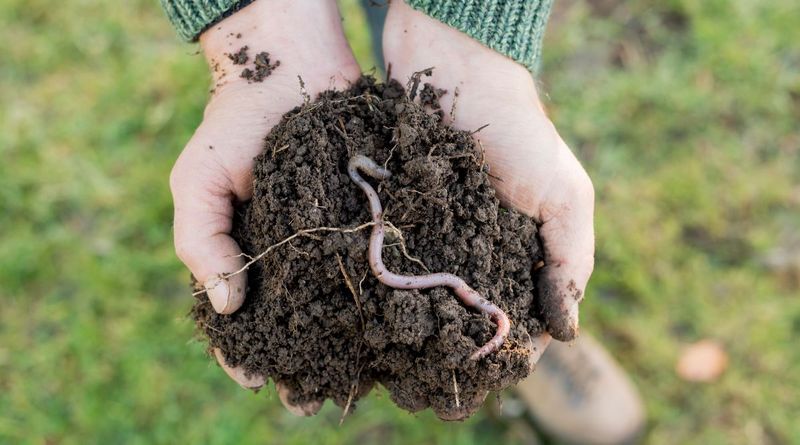
If you have ever turned over a patch of irrigated garden soil in your Phoenix or Tucson yard and spotted a worm, you have seen something genuinely useful at work. Earthworms process dead plant material, produce nutrient-rich castings, and open up small channels that help water move through the soil.
But their role in a low-desert yard is narrower than many homeowners expect, and understanding that difference can save you from wasted effort and money. This article explains what worms can and cannot do in Arizona soil, and what actually needs to happen first before biology can help at all.
Rock-Hard Soil Is Not Always Caliche
Not all hard soil in an Arizona yard is the same problem, and treating them the same way leads to real frustration. Ordinary compaction happens when foot traffic, heavy equipment, or rain packs soil particles together until water and roots struggle to penetrate.
Low organic matter is a related issue: Arizona desert soils naturally contain very little decomposed plant material because hot, dry conditions break it down almost as fast as it forms. Both of these problems can improve with roots, mulch, compost in the right spots, and biological activity over time.
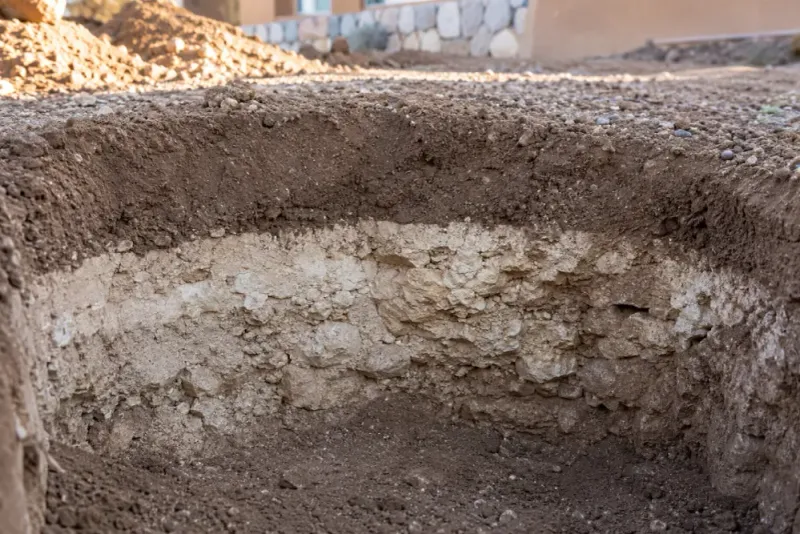
Caliche is a different animal entirely. A caliche layer forms when calcium carbonate, carried by water, accumulates and cements soil particles into a hard, pale mass that can range from a thin crust to a layer several feet thick.
University of Arizona guidance on caliche explains that this layer can block roots from reaching deeper soil, prevent water from draining away from the root zone, reduce the oxygen available to roots, and contribute to salt buildup because water cannot flush salts downward. High calcium carbonate also raises pH, which makes iron less available to plants that need it.
Earthworms are not a solution to a cemented caliche horizon. They may gradually support living, moist, organic-rich soil in suitable spots, but they cannot dissolve or mechanically break through a rock-hard mineral barrier.
Correcting the record on that point is the foundation of everything else in this article.
What Earthworms Actually Change in Suitable Soil
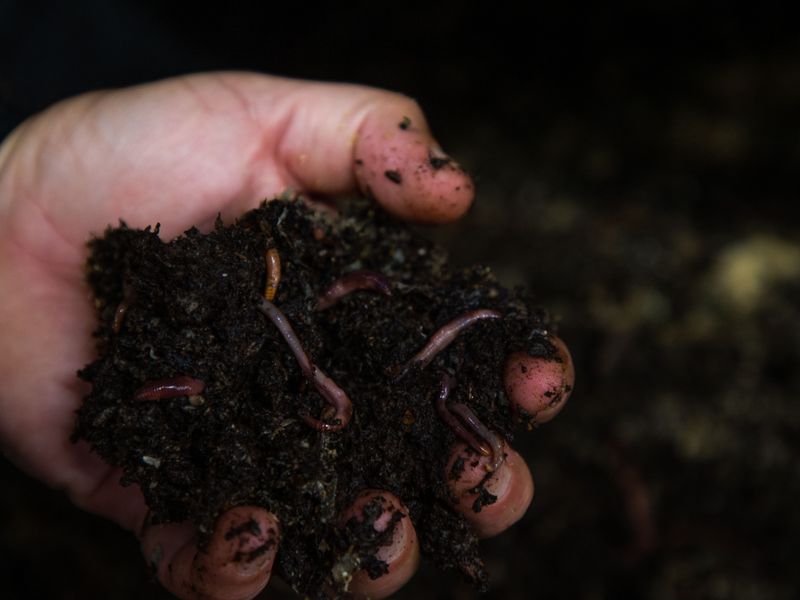
Where moisture and food are available, earthworms earn their reputation as useful soil workers. They consume dead plant material, fungi, and bacteria, and what they excrete, called castings, contains plant-available nutrients in forms that roots can take up relatively quickly.
As worms move through soil, they mix organic matter into mineral layers and leave behind small pores and channels that can improve the soil’s physical structure over time.
Those channels matter because they can increase both aeration and the rate at which water moves into and through the soil. A peer-reviewed study on earthworm effects and soil porosity found that worm activity can accelerate the turnover of soil pores under watering conditions, though the relationship between burrows and field-scale water movement is complex and does not generalize easily across all soil types and climates.
Every one of those benefits depends on conditions that are far from guaranteed in a low-desert yard. The improvements are gradual, not dramatic.
Your Arizona Garden Changes Every Week. Your Plan Should Too.
Gardening in Arizona changes quickly throughout the season. Every Friday you’ll receive a simple weekly plan showing exactly what to plant, prune, fertilize, harvest, and protect so you never miss the right timing.
They require a steady supply of organic matter, reliable moisture, and a worm population large enough to make a measurable difference. Worm species also matters: different species have different burrowing depths, feeding habits, and tolerances.
In a properly amended garden bed with consistent drip irrigation, worms may contribute meaningfully to soil health over a season. In dry, exposed native soil, those same conditions simply do not exist.
Arizona Gives Earthworms a Narrow Window
Earthworms breathe through their skin, which means they depend on moisture in the soil around them at all times. When soil dries out, their ability to absorb oxygen through their skin fails, and they either migrate deeper, move to a wetter zone, or die.
Arizona Cooperative Extension research on earthworms and compaction notes that worm populations in Arizona are concentrated near irrigated landscapes, waterways, and other moist, organic-rich habitats precisely because the rest of the low desert does not meet their basic survival requirements.
Summer heat compounds the problem. Soil surface temperatures in Phoenix and Tucson can climb well above 100 degrees Fahrenheit during June, July, and August.
Even if a yard receives regular irrigation, shallow soil heats up quickly, and worms will retreat or perish if they cannot find a cool, moist refuge. Food supply is the other limiting factor: worms need a steady source of dead plant material or other organic matter.
Native desert soil that has never been amended offers very little of either moisture or food.
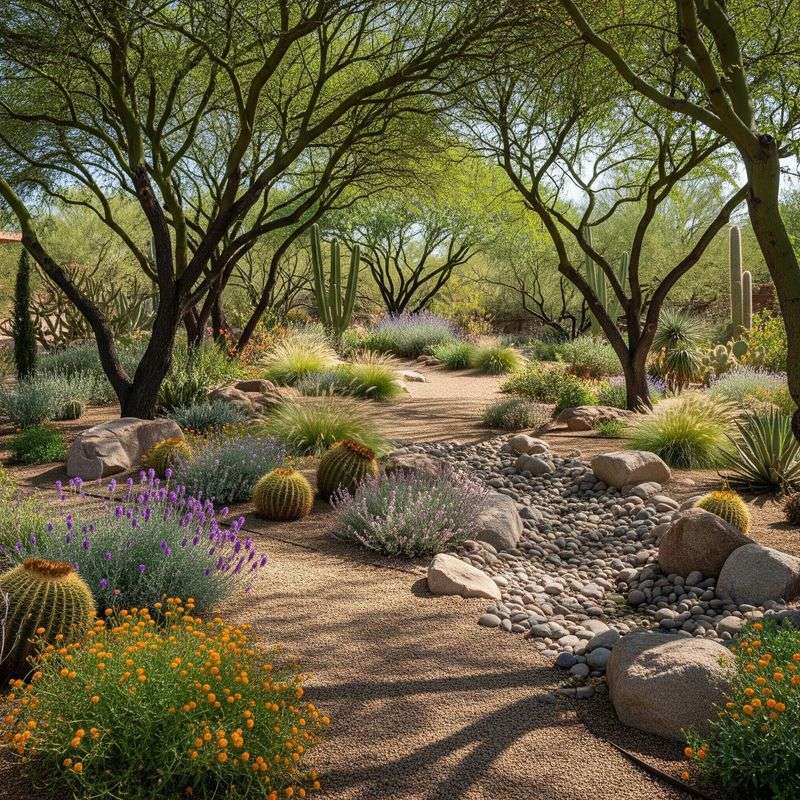
Realistic expectations matter here. Some protected planting zones in a low-desert yard, such as a shaded vegetable bed, a heavily mulched fruit tree basin, or a drip-irrigated flower border with compost worked in, may support small worm populations through cooler months.
Most exposed desert ground will not. A yard without visible earthworms is not necessarily unhealthy; native plants evolved in exactly that kind of lean, dry, low-biology soil.
Test the Water Path Before Relying on Biology
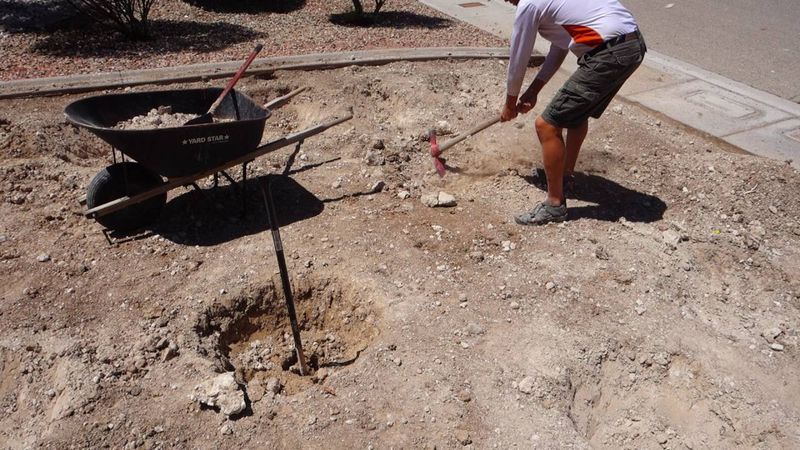
Before adding organic matter, mulch, or any other amendment to an Arizona planting site, the most important question is whether water can actually leave the root zone. A caliche layer sitting a foot or two below the surface creates what soil scientists call a perched water table: water fills the planting hole, hits the impermeable barrier, and has nowhere to go.
Roots sitting in that pool lose oxygen, and salts that would otherwise flush downward concentrate right where the plant is trying to grow.
Earthworms cannot fix that situation. Their burrows operate in the living soil above the caliche, not through it.
Adding more organic matter or increasing irrigation into a hole that does not drain makes the problem worse, not better.
The practical first step is a simple drainage test. Dig a hole to the depth where you plan to plant, fill it with water, and measure how much the water level drops over four hours.
University of Arizona caliche management guidance describes a drop of at least 4 inches in 4 hours as an indicator of adequate drainage for planting. If water barely moves, the caliche layer needs to be penetrated mechanically, a drainage channel needs to be opened through it, or the site needs to be redesigned with grading and drainage in mind before any plant goes in.
The right remedy depends on the depth of the layer, the size of the planting area, and how the site drains overall. No biological shortcut replaces that physical assessment.
Once drainage is confirmed as adequate, you can make informed decisions about amendments, mulch, and plant selection. Skipping the drainage test is the single most common mistake low-desert homeowners make when trying to improve a difficult planting site.
Add Organic Matter Only Where Plants Benefit
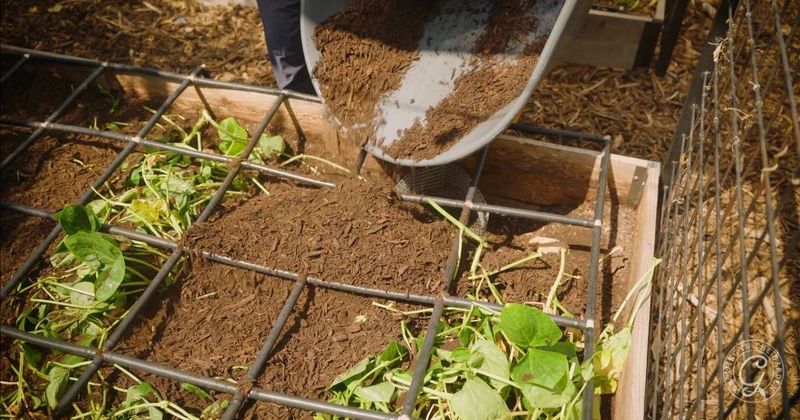
Finished compost can be a genuine asset in the right situation. Worked into the soil of a vegetable bed, a citrus tree basin, or a planting of non-native flowers that need consistent moisture, compost improves water-holding capacity, feeds soil organisms, and adds a slow-release source of nutrients.
The picture changes for native and desert-adapted plants. Palo verde, desert willow, agave, penstemon, and similar species evolved in lean, alkaline, fast-draining soil.
Amending their planting holes with rich compost can hold too much moisture around their roots, encourage salts to concentrate, and actually work against the drainage conditions they expect.
Surface mulch is a separate tool with a narrower job. A layer of organic mulch, such as wood chips or shredded bark, placed on the soil surface around plants can meaningfully reduce evaporation, moderate soil temperature, and feed surface soil organisms as it breaks down slowly.
What it cannot do is dissolve a caliche layer below or repair a drainage problem. Match the mulch depth and type to the plant: a 2- to 3-inch layer works well for garden beds, while native desert plants generally benefit from a thinner application or none at all around the crown.
Create a Protected Habitat for Local Soil Life
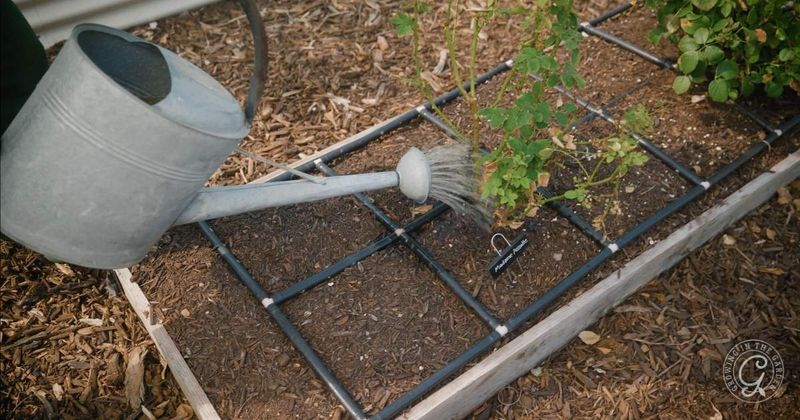
Supporting earthworms in an Arizona yard is less about introducing them and more about maintaining the narrow set of conditions they need to survive. The three essentials are reliable moisture, protection from heat, and a continuous supply of dead plant material or other organic matter for food.
Where those three things coexist, worms that are already present in the soil or that migrate in naturally will find a reason to stay.
A practical target zone might be a drip-irrigated citrus or fruit tree bed with a consistent layer of wood chip mulch on the surface. The mulch insulates the soil from peak heat, slows moisture loss between irrigation cycles, and breaks down gradually to feed surface-dwelling organisms.
A shaded vegetable garden with regular compost additions creates similar conditions. These are the spots in a low-desert yard where earthworm activity is most plausible and most useful.
The goal is not to engineer every square foot of the yard into worm habitat. Exposed native-soil areas planted with desert-adapted species do not need worms, and they do not need to be judged against a worm-count standard.
Soil health in a Sonoran Desert context looks different from soil health in a temperate garden. Keeping that distinction clear helps homeowners put effort where it actually pays off: building living, moist, organic-supported soil in the beds and zones where non-native or moisture-loving plants are growing, and leaving native planting areas to function on their own terms.
Keep Red Wigglers in a Managed Bin
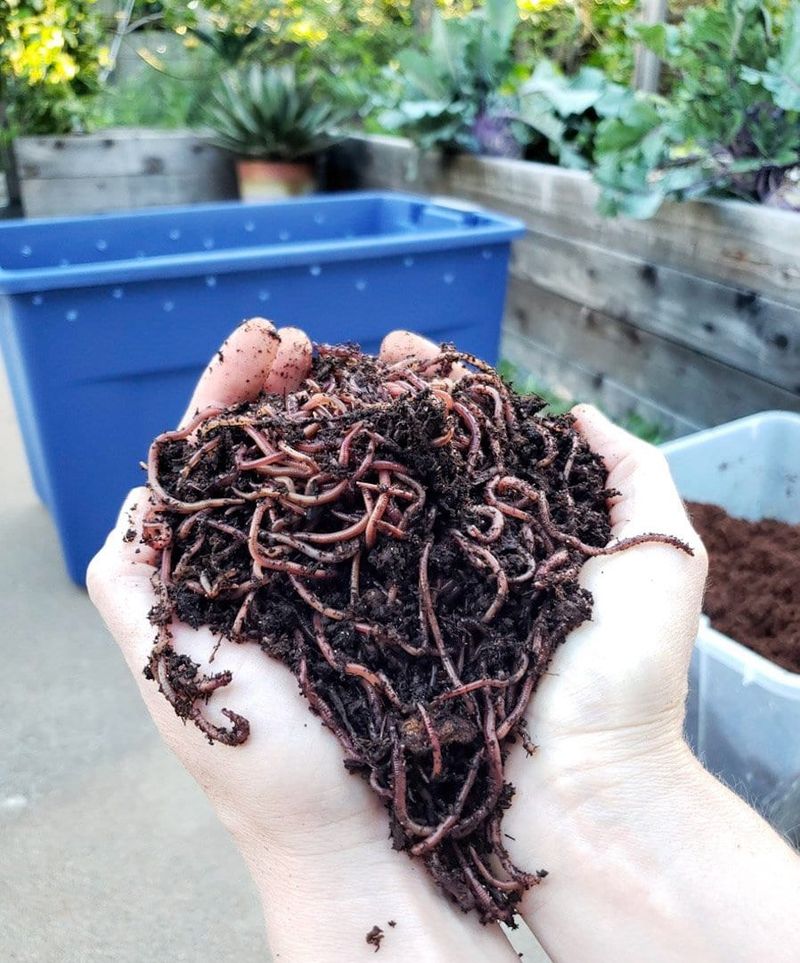
Red wigglers, the worms sold for composting, are not the same as the earthworms that burrow through garden soil. They are surface-dwelling decomposers that thrive in the rich, moist conditions of a compost pile or worm bin.
Releasing them into a yard does not give you a soil-rebuilding crew; it puts them in an environment they are not adapted to survive. University of New Hampshire Extension guidance makes the point clearly: worms generally appear where conditions already support them, and introducing purchased worms is not necessary or reliably beneficial for a garden.
If the goal is to produce worm castings for use in a garden bed, a managed vermicomposting bin is the right tool. Arizona Department of Environmental Quality vermicomposting guidance lists 60 to 80 degrees Fahrenheit as the ideal temperature range for red wigglers and warns that prolonged temperatures above 95 degrees can kill them.
In the low desert, that means an outdoor bin needs to be placed in deep shade, ideally against a north-facing wall or in a covered structure, and monitored closely from May through September. An unshaded bin sitting in a Phoenix backyard in July is not a composting system; it is a slow cooker.
A well-managed indoor or shaded outdoor bin can produce finished castings that you then apply to vegetable beds or other amended garden zones. That approach gives you control over quality and temperature, keeps the worms alive, and puts their output exactly where it will do the most good.
Prepare the Site, Then Let Worms Help
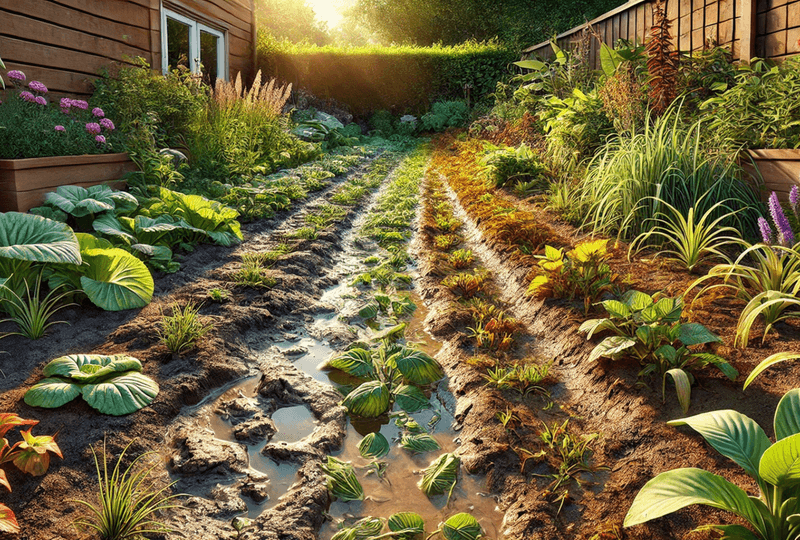
A practical sequence for improving an Arizona planting site starts with the physical reality underground, not with biology. Check for caliche by probing the soil at planting depth.
If you find a hard layer, test drainage before putting any plant in the ground. Penetrate or route around the caliche if the drainage test fails, and design the site so water can move through and away from the root zone.
Once drainage is confirmed, match your plant to the site. Native and desert-adapted species suited to alkaline, lean soil generally do not need amended planting holes.
Reserve finished compost and regular irrigation for vegetable beds, fruit trees, and non-native plants that genuinely benefit from improved moisture retention. Use surface mulch to conserve water and moderate soil temperature in those zones.
Earthworms can contribute to moist, organic-rich soil that has already been prepared correctly. They are not the starting point; they are one part of a living system that functions only after the physical barriers have been addressed and the right plants are in the right places.
A yard that drains well, carries appropriate plants, and holds moisture where it is needed gives soil life, including worms, a real chance to work. The underground crew shows up when you build the right conditions, not the other way around.