I keep buying clearance perennials I have no room for — here’s how I actually fit them into an Oregon bed
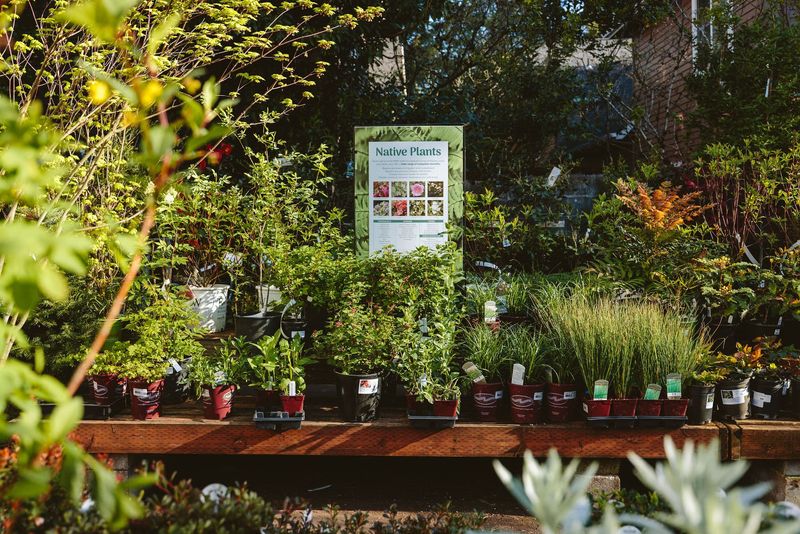
There is something deeply satisfying about rescuing a marked-down perennial from the nursery cart, even when you have absolutely nowhere to put it. Oregon gardeners know this feeling well, and the guilt that follows is just as familiar as the plant itself.
The good news is that with a little honest assessment, many of those bargain finds can earn a real place in your garden, and the ones that cannot can be handled without disaster.
Start with the Oregon you garden in
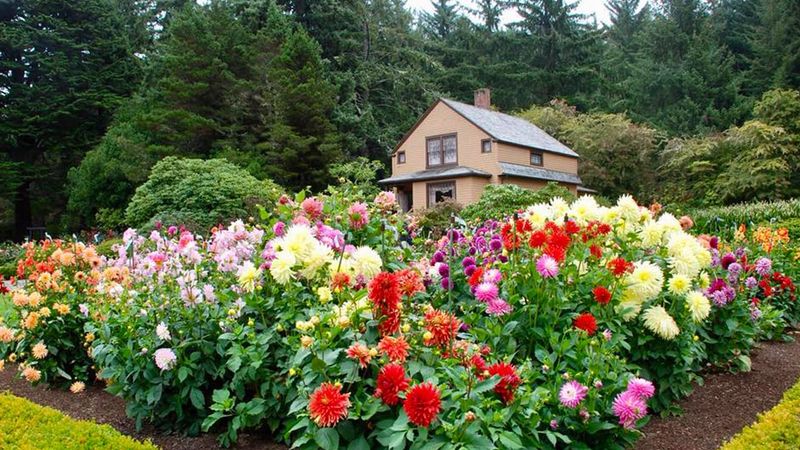
Oregon is not one gardening climate, and that fact matters more than almost anything else when you are standing in a nursery parking lot holding a clearance echinacea and wondering where it will go. West of the Cascades, most gardeners deal with cool, wet winters and warm, dry summers.
The Willamette Valley fits this pattern well, and so do the coastal and southern valleys, though each has its own quirks around fog, wind, and frost timing.
Cross the mountains and the picture changes considerably. Central and Eastern Oregon are generally colder in winter and significantly drier year-round.
A perennial that settles in beautifully in a Corvallis bed may struggle or fail east of Bend, even if both locations happen to fall within a similar USDA hardiness zone range. That is because the USDA Plant Hardiness Zone Map only reflects average annual extreme minimum winter temperatures.
It tells you nothing about summer drought, winter soil saturation, wind exposure, or the amount of direct sun a bed actually receives.
Wind and exposure deserve their own mention because they vary sharply by site, elevation, and local topography. A garden tucked against a south-facing slope in the Coast Range behaves very differently from an open hilltop plot near Redmond.
These are microclimate factors you have to read on the ground, not from a regional map.
The practical starting point is to name your actual gardening conditions before trying to solve a space problem. Ask whether your bed gets winter rain pooling, summer drought, hard freezes, or exposure to wind.
That honest accounting, rooted in Oregon’s regional growing conditions, is what tells you whether a clearance plant has a real future in your garden or whether it is headed for trouble before you even dig the hole.
Inspect the bargain before you bring it home
Clearance plants carry a discount for a reason, and that reason is not always innocent. Sometimes it is simply timing or overstock.
But sometimes a plant has been sitting too long, stressed by heat or drought, attacked by insects, or quietly harboring a disease that has not yet made itself obvious. Before any bargain perennial rides home in your car, it deserves a thorough look.
Start with the foliage. Yellowing, spotting, distorted leaves, sticky residue, or tiny moving specks all suggest something is wrong beyond ordinary stress.
Check the stems for lesions, soft spots, or unusual discoloration. Flip a few leaves and look at the undersides, where aphids, spider mites, and scale insects often hide.
Your Oregon Garden Changes Every Week. Your Plan Should Too.
Gardening in Oregon changes quickly throughout the season. Every Friday you’ll receive a simple weekly plan showing exactly what to plant, prune, fertilize, harvest, and protect so you never miss the right timing.
Then check the pot itself for weeds, including small seedlings that might be hitchhiking in the potting mix. Oregon guidance on safe plant propagation makes clear that plant material and attached soil can move pests, pathogens, and weed seeds directly into an established garden.
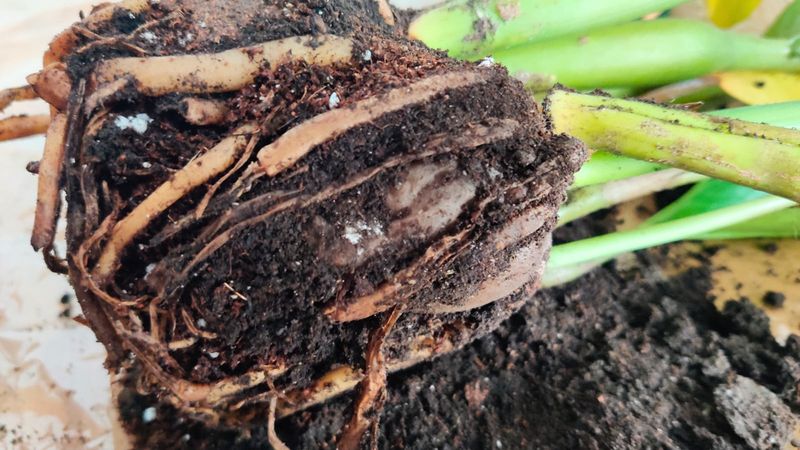
Tip the plant gently out of the pot if you can. Healthy roots are generally firm and light-colored.
Roots that are black, mushy, or smell sour suggest rot. Roots that are tightly circling the inside of the pot in a dense mass, or that have bent into a J-shape at the bottom, are worth paying attention to, though what you do about them depends entirely on the plant.
For woody perennials and shrubs, correcting severely circling or kinked roots before planting can matter for long-term stability. For smaller herbaceous perennials, aggressive root cutting is not a blanket fix and can injure the plant.
Follow species-specific guidance rather than applying one rule to every pot.
Labels that are missing, illegible, or vague present a different problem. An unidentified plant cannot be properly sited, and if you cannot confirm what it is, you also cannot confirm that it is not on Oregon’s noxious weed list.
A plant with unexplained decline, visible infestation, or an uncertain identity is sometimes better left on the rack than introduced to a bed you have spent years building.
Test the whole fit, not just the empty patch
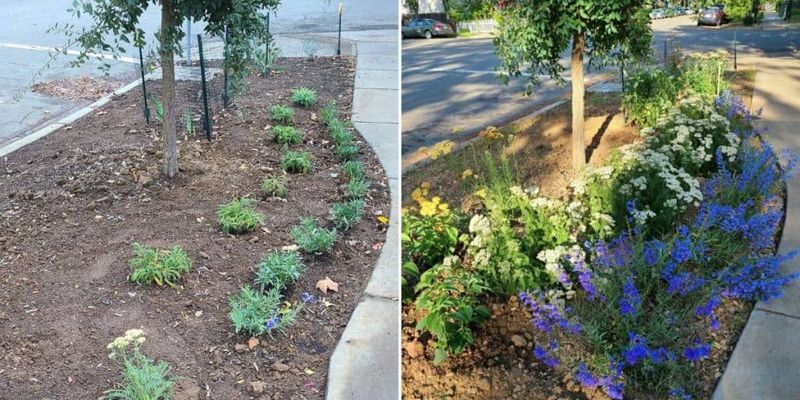
The empty patch between two established plants looks like an invitation. The nursery pot is small and the plant looks tidy, so the math seems simple.
The problem is that the pot size has almost nothing to do with how much space the plant will eventually need. A rudbeckia that fits in a one-gallon container today may spread two to three feet wide at maturity.
A grass that looks like a polite clump right now might reach four feet across within two seasons.
Checking the label before purchasing is not a formality. Oregon growing guidance emphasizes that correct spacing allows each plant to receive adequate light, water, and nutrients.
Crowding based on current pot size is not a reliable strategy, and it tends to create more work later when plants compete, lose airflow, or require emergency transplanting. Look for mature height and mature width on the tag or in a reliable reference, then estimate the eventual footprint and compare it honestly to the available space.
Light, drainage, and soil conditions need to be part of that same assessment. A plant that needs full sun will not perform in a bed that gets three hours of morning light.
A perennial that prefers well-drained soil will rot over a western Oregon winter if you place it where water pools. These are not secondary concerns to address after spacing.
They belong in the same first pass.
Planting depth is another variable that follows the species, not a universal rule. For many herbaceous perennials whose crown belongs at grade, setting the crown level with the soil surface is a reasonable general guide.
But that rule does not apply to bulbs, which have their own depth requirements, or to plants with different planting instructions. Bulb planting guidance is a good reminder that depth is species-specific, and the same care should extend to every plant you are placing in the ground.
When in doubt, follow the tag or look up the species rather than defaulting to a one-size rule.
Use layers to organize the bed, not to crowd it
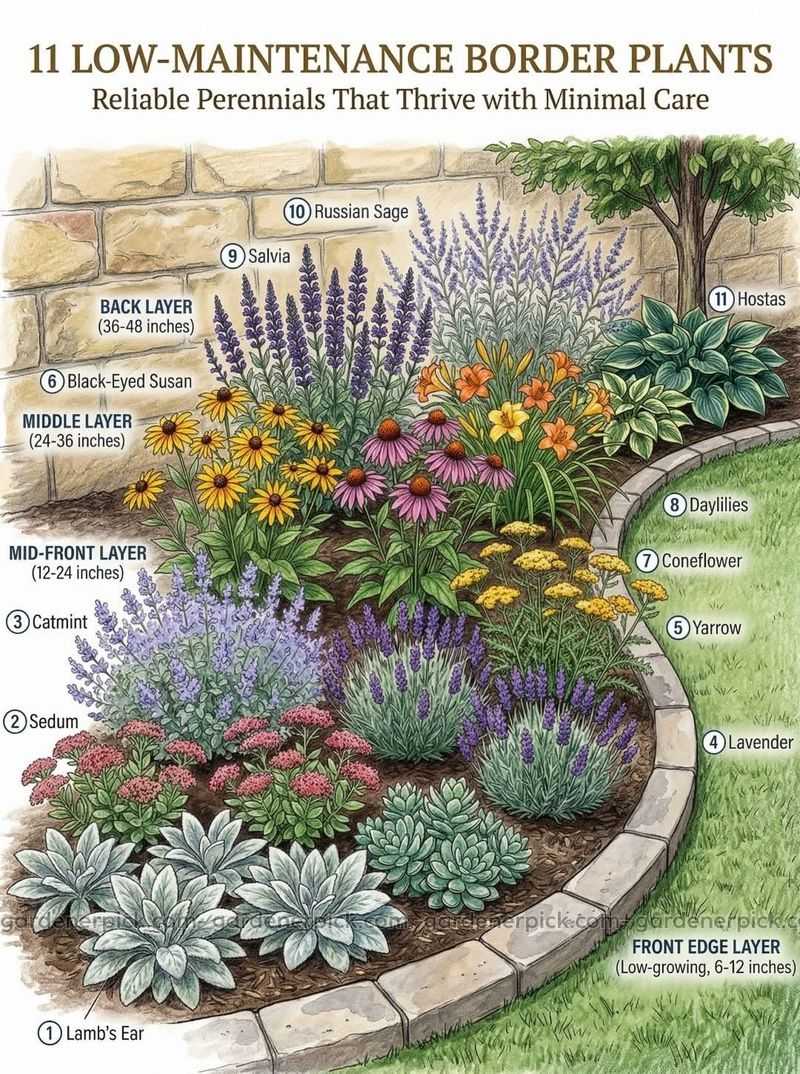
One of the most useful things you can do with a clearance plant that does not obviously fit anywhere is to think vertically. A bed that uses height deliberately, with taller plants toward the back, medium-growers through the middle, and low mounding or spreading plants at the front edge, creates visual structure without requiring every plant to compete at the same level.
This layering approach lets you fit more visual interest into a bed without actually shrinking anyone’s root space. A tall agastache or pentstemon at the back does not shade out a low-growing sedum at the front because they are occupying genuinely different vertical zones.
The sightlines improve and the bed looks intentional rather than stuffed. Oregon planting guidance supports the principle that good spacing and placement help each plant access light, water, and nutrients, and layering works with that principle rather than against it.
The important clarification is that layering is a design strategy, not a workaround for spacing rules. A plant that matures to three feet wide still needs three feet of root space, whether it is short or tall.
Placing it behind a shorter neighbor does not compress its eventual footprint. If the mature widths of two plants overlap, they will compete underground even if they look tidy above ground for the first season or two.
Use layering to find the right position for a plant that genuinely fits, not to justify placing one that does not. When a clearance find turns out to be a tall back-of-border candidate and you actually have an open back-of-border spot, that is a real solution.
When the only available spot is already spoken for at the root level, layering is not going to solve the problem, and the honest answer is a container, a holding pot, or a pass on the plant.
Build water and drainage zones before color combinations
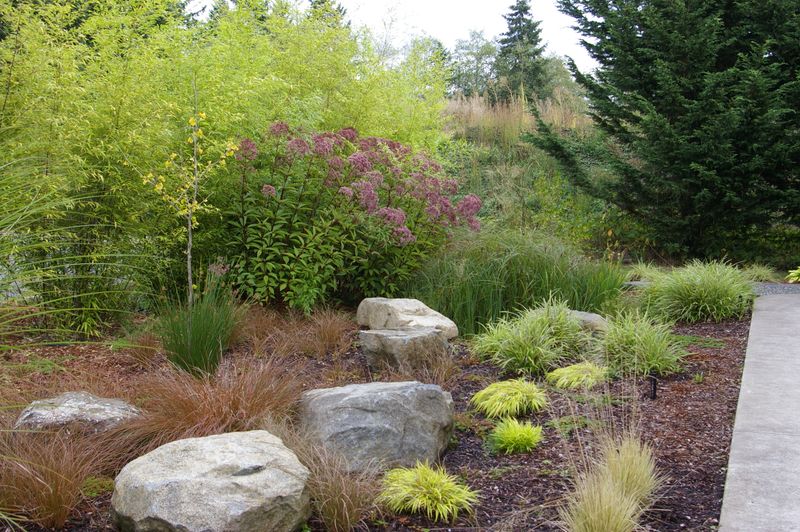
Color combinations are fun to plan, but water and drainage compatibility are what actually keep a bed alive through an Oregon summer and winter. Grouping plants with similar irrigation needs is one of the most practical things you can do before you put anything in the ground.
A drought-tolerant lavender sharing a bed zone with a thirsty astilbe creates a problem that no amount of careful watering fully solves. One will be overwatered or the other will be underwatered, and both will show it eventually.
Oregon summer heat and drought guidance recommends grouping plants by light, drainage, and irrigation needs so that each zone can be managed consistently. For established plants in western Oregon’s dry summers, deep and less-frequent watering is generally more effective than constant shallow watering, but the right interval depends on soil type, weather, the specific plant, and how long it has been in the ground.
Newly planted perennials, including clearance finds you just placed, need consistent moisture while their roots establish regardless of what the label says about eventual drought tolerance.
Drainage is a separate issue from watering frequency, and it matters enormously in western Oregon where winter rain can saturate soil for weeks. Many perennials that perform beautifully in a well-drained bed will rot at the crown if they sit in standing water from November through February.
Pacific Northwest water-wise planting guidance is clear that matching plants to their drainage conditions is fundamental, not optional. If a plant dislikes wet feet and your bed pools in winter, the right fix is a raised bed, a berm, or a different location, not a thicker layer of mulch.
Mulch deserves an honest description here. It can conserve soil moisture during dry weather, moderate soil temperature, and reduce weeds.
What it cannot do is repair poor drainage, compensate for an overcrowded root zone, or substitute for a compatible site. Water conservation guidance for Oregon yards supports mulch as a useful tool within a well-matched planting, not as a cover for a fundamentally unsuitable situation.
Some perennials are actually harmed by excessive winter moisture around the crown, so piling on mulch can make a drainage problem worse rather than better.
Use containers and temporary holding as deliberate overflow plans
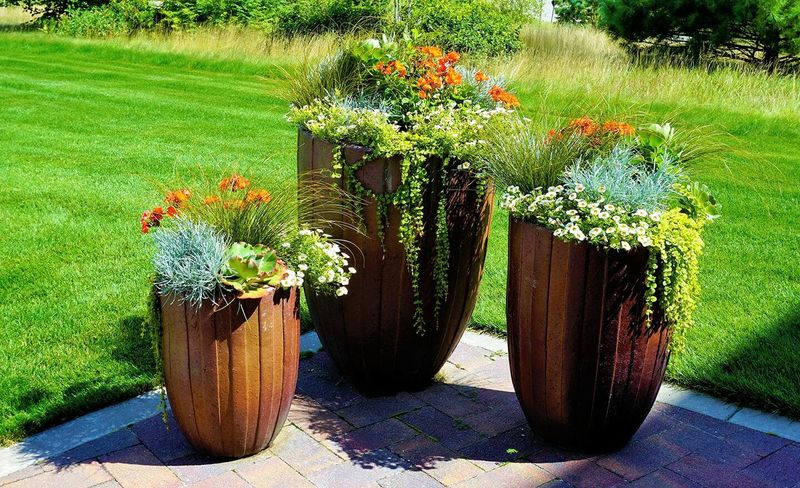
A container is not a consolation prize. For a clearance perennial that genuinely cannot fit in the current bed, a well-chosen pot is a real solution, provided you treat it like one rather than like a maintenance-free parking spot.
The container needs drainage holes. That is not negotiable.
A perennial sitting in a pot without drainage will rot just as reliably as one planted in a waterlogged bed. The pot also needs to be large enough to accommodate the plant’s mature root system, not just its current root ball.
Plants in containers dry out faster than plants in the ground, sometimes dramatically so during an Oregon summer. Container gardening guidance is direct on this point: containerized plants require more frequent monitoring and watering, especially in warm, dry weather.
A drought-tolerant label on the tag does not eliminate this need. Even a plant that handles dry conditions well in the ground will suffer in a small container during a July heat stretch if it is not checked regularly.
A temporary holding pot serves a different purpose. It buys you time to identify a plant properly, prepare a site, wait for better planting conditions, or simply decide whether the plant has a future in your garden at all.
Think of it as a pause rather than a solution. The plant is alive, it is not going into an unsuitable bed, and you have not committed to anything permanent.
That is a reasonable place to be, as long as you actually follow through on the decision rather than letting the pot become a permanent fixture by default.
Division is worth considering when a suitable species is already in the bed and showing signs it is ready. Oregon division guidance describes a dead center, thinning growth, reduced flowering, or an oversized clump as possible signals that a plant would benefit from being split.
Summer and fall bloomers are generally divided in spring; spring bloomers are usually divided after they flower or in fall. Division can create space and healthier plants, but it is species-specific and not a guaranteed method for making room in a crowded bed.
Choose the planting window for the plant and the place
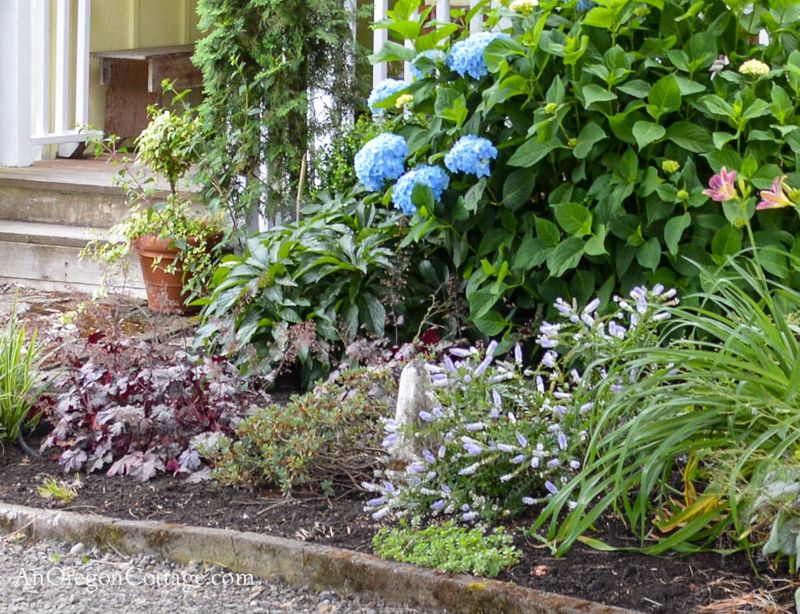
Planting timing is one of those things that sounds simple until you try to apply it across all of Oregon at once. There is no single best season that works for every plant in every part of the state, and treating fall planting as a universal rule is a mistake that can cost you plants, especially in colder inland locations.
For many perennials in western Oregon, fall through early spring is generally a favorable planting window. Cool temperatures and reliable rainfall give roots time to establish before the dry season arrives.
Oregon pollinator garden guidance reflects this tendency, noting that fall planting allows plants to settle in during the mild, wet months. The key word is tendency.
A tender or marginally hardy plant placed in the ground in late November in the Willamette Valley still carries some risk if a hard freeze arrives before roots have established.
In Central and Eastern Oregon, where winters are colder and less predictable, spring planting after the soil becomes workable and hard-freeze risk has passed is often the safer choice. New roots exposed to deep freezes before establishment can be damaged or killed, and the plant you paid almost nothing for at the clearance rack becomes an expensive lesson.
The USDA Plant Hardiness Zone Map gives you a starting point for winter cold, but local elevation, frost pocket patterns, and soil workability all require your own observation.
This is exactly where a temporary holding pot earns its place. If you buy a clearance perennial in August and the plant needs fall planting but your site is not ready, or if you are not sure whether the species is hardy enough for your location, holding it in a container through the season is a responsible choice.
Forcing a plant into the ground at the wrong time, in the wrong conditions, to solve a short-term storage problem rarely ends well for the plant or the bed.
Let the bed say no when the fit is wrong
Every clearance perennial deserves a fair assessment, and that assessment sometimes ends with a no. That is not failure. Responsible plant enthusiasm includes recognizing when a plant cannot fit without crowding an established bed, spreading a pest or pathogen, introducing a weed, or struggling through conditions it was never suited for.
Running through a repeatable sequence makes the decision easier and faster each time. First, inspect the plant for insects, disease, weeds in the pot, and root problems.
Confirm its identity, because an unknown plant cannot be properly sited and may appear on Oregon’s noxious weed list. Check mature size, then match the plant to light and drainage conditions in a real spot.
Assign it to a water zone that suits its needs. Choose a planting season appropriate for the species and your location.
Then select the outcome: a bed placement, a container, a holding pot, a division plan for a compatible existing plant, or an honest discard.
Safe propagation guidance is clear that moving questionable plant material, even to a friend’s garden, can spread problems. A plant with an uncertain identity, visible infestation, or unexplained decline is sometimes better composted or discarded than passed along.
That choice protects your garden and your neighbors’ gardens.
The practical answer to the title is not that every clearance perennial can be squeezed in somewhere. Oregon growing guidance and the logic of mature plant spacing both push in the same direction: fit a clearance perennial by matching it to real conditions, not by making every bargain occupy the original bed.
The gardeners who end up with the best beds are not the ones who said yes to every marked-down pot. They are the ones who learned to let the plant’s needs, and the bed’s honest limits, make the call.