What To Use Instead Of Sugar Water For California Hummingbirds (And What To Never Use)
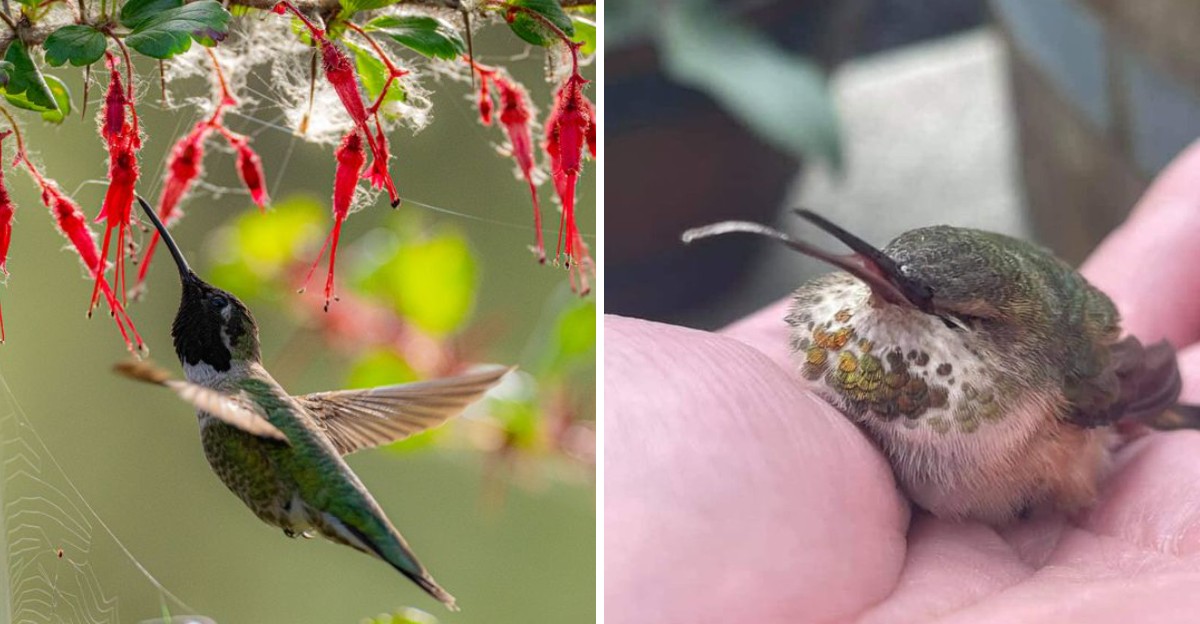
A Pasadena gardener carries her sugar water jug out to the patio feeder every single Saturday morning, same routine as always.
Two feet away sits a scraggly patch of native sage nobody bothers to notice. That patch quietly holds more nectar than her feeder will ever produce.
Here’s what almost nobody tells you about hummingbird feeding. The bottle on your patio might be the smallest part of the story.
Native plants do something a feeder simply cannot replicate. They feed birds in ways most backyard setups never even attempt.
There’s also a darker side to this topic, one most articles skip over politely. Certain kitchen ingredients that sound perfectly harmless can turn a feeder into a real hazard.
Eight things change the picture completely, four plants worth growing and four ingredients worth avoiding entirely.
Curious which pantry staple made the wrong list? Keep reading, because the answer might already be sitting in your cabinet.
1. Native Flowers Are The Real Best Source
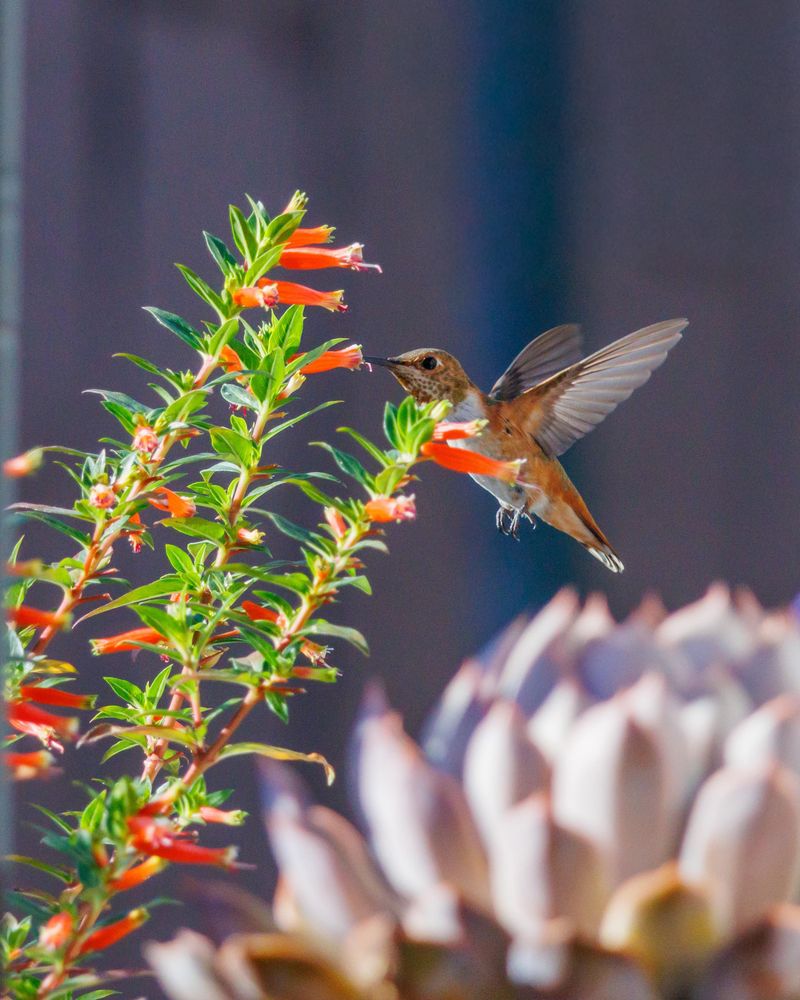
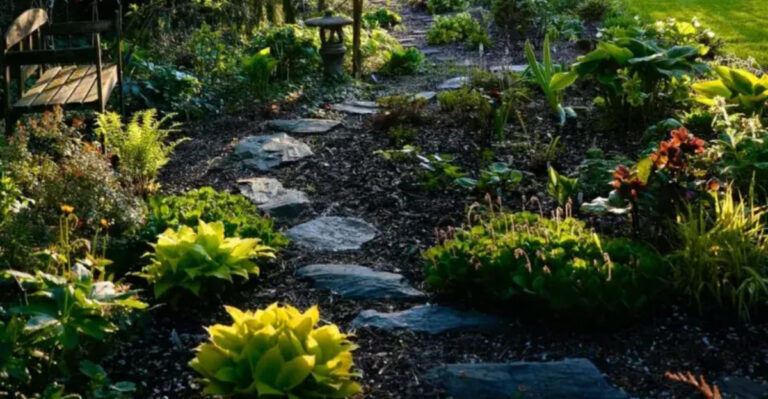
Ask most Californians what hummingbirds eat, and they’ll point straight at a plastic feeder. Audubon takes a different stance entirely, listing native flowering plants as the preferred nectar source.
Feeders work best as a supplement to what grows in the ground, not the other way around.
Flowers do more than hand out sweet liquid. They host tiny insects and spiders, which hummingbirds eat in large numbers for protein, something no feeder can ever offer.
Flowers also refill themselves naturally. They never ferment in the heat and never need a bottle brush at the sink.
California happens to be an excellent place for this whole approach. The state has a long bloom season, mild coastal winters, and a deep bench of native plants shaped over thousands of years.
A practical way to start involves planting in layers rather than one showy shrub alone. Aim for something blooming in late winter, something in spring, and something in late summer, so the buffet never fully closes.
Tubular flowers in red, orange, and pink tend to pull the most attention, though hummingbirds happily visit purple and white blooms too.
Keep the feeder around if you enjoy watching it. Just clean it often, and know the garden is doing the heavier lifting the whole time.
A yard with real plants supports birds even when you forget to refill anything for a week straight.
2. California Fuchsia Feeds Them Naturally
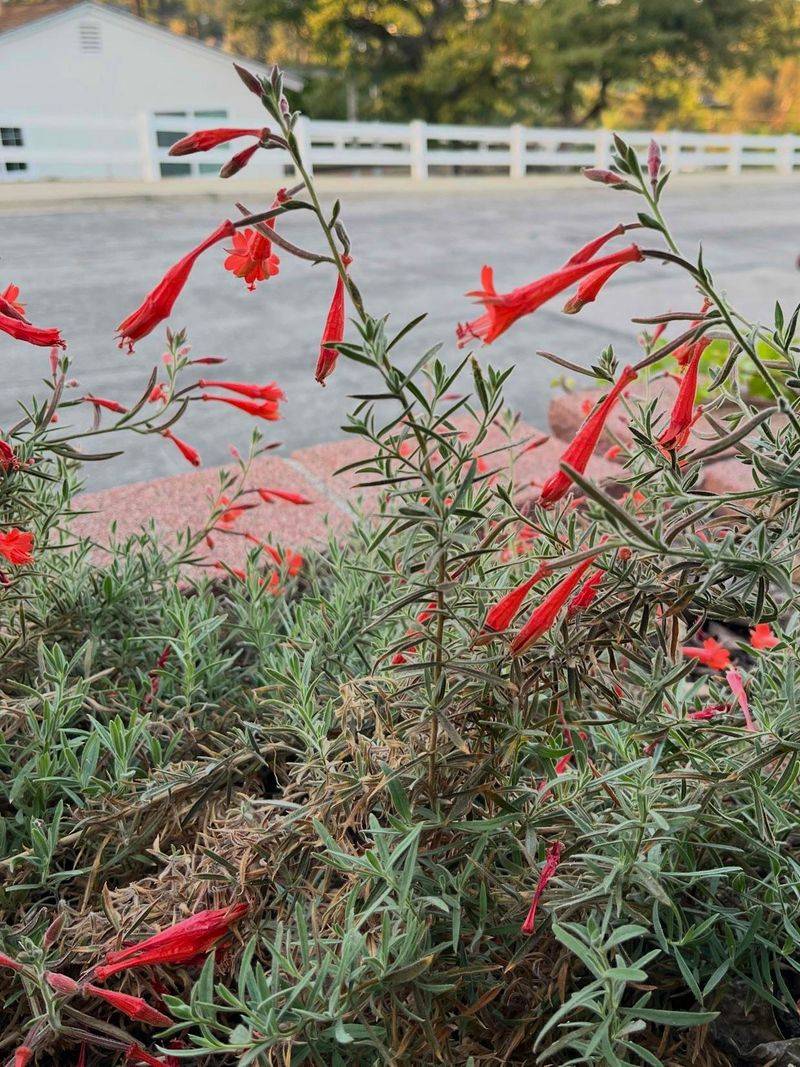
Few plants earn their keep in a dry California yard the way California fuchsia does. Epilobium canum explodes into scarlet trumpets in late summer, right when most of the garden has given up and gone crispy.
Timing is the whole trick here. August through October is a lean stretch for nectar across much of the state, overlapping with migration and the last broods of the season.
A shrub covered in tubular red flowers during that window becomes a genuine lifeline for passing birds.
Gardeners like it for selfish reasons too, honestly. It tolerates poor soil, wants very little summer water once established, and spreads by underground runners to fill bare slopes.
Your California Garden Changes Every Week. Your Plan Should Too.
Gardening in California changes quickly throughout the season. Every Friday you’ll receive a simple weekly plan showing exactly what to plant, prune, fertilize, harvest, and protect so you never miss the right timing.
Different forms exist across the state, from low groundcover types to upright shrubs closer to three feet tall, so a local nursery can point you to the one that fits your space.
Care stays refreshingly simple. Cut it back hard in winter after the flowers finish, skip the fertilizer, and let it do its own thing.
Overwatering causes more trouble for this plant than almost anything else, so resist the urge to baby it.
Plant it in full sun where you can see it from a window. The flowers glow bright enough that hummingbirds spot them from a distance, and you get a front-row seat to the aerial squabbles that follow all season.
3. Hummingbird Sage Draws Steady Visitors
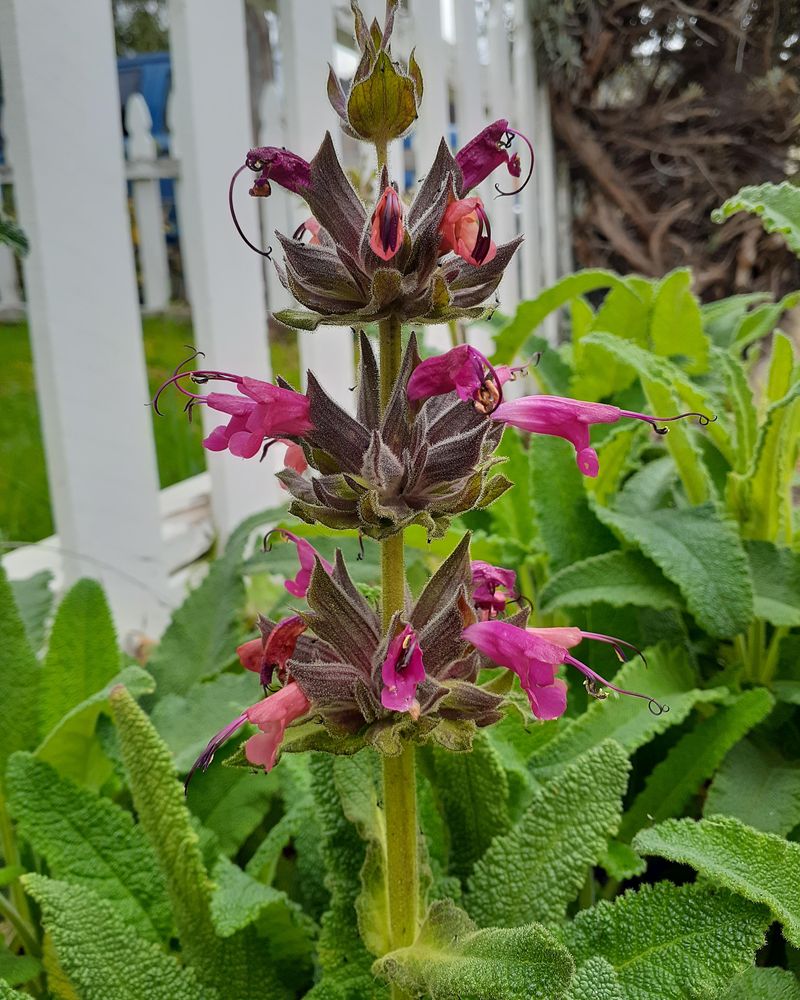
Brush past hummingbird sage, and your hand smells like fruit punch for the next ten minutes straight. Salvia spathacea earned that common name honestly.
It sends up tall spikes of magenta flowers arranged in neat whorls, and hummingbirds work them over methodically, one ring at a time.
Shade tolerance sets this one apart from most salvias. It grows happily under oaks and along the edges of woodland gardens, useful for those awkward, partly shaded corners where sun-loving natives sulk.
Bloom season generally runs through spring and can stretch later with a bit of water. That timing gives your yard nectar during nesting season, exactly when females are feeding fast-growing chicks.
It spreads slowly by rhizomes, forming a low mat of crinkled green leaves. A few plants eventually knit together into a real patch.
That patch is what turns occasional visitors into regulars who show up on schedule.
Native to coastal and inland California, it handles typical garden conditions well, though it appreciates a little summer moisture in hotter inland spots.
One bonus worth mentioning. The leaves have historically been used to brew a fragrant tea, which explains that unmistakable scent following you around the garden.
Pair it with fuchsia, and you cover spring and fall in one planting plan. Put it near a path you walk often, because the smell alone earns its spot.
4. Currant And Gooseberry Bloom Early Enough To Help
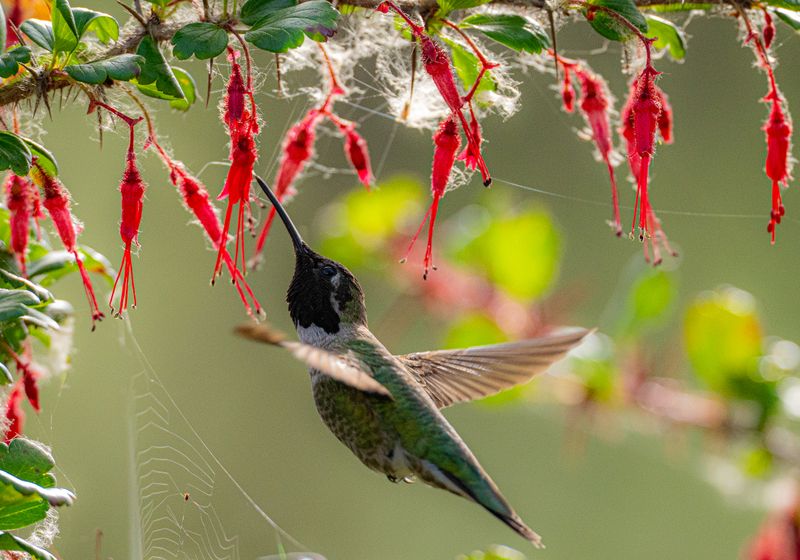
Anna’s hummingbirds famously nest in the coldest stretch of winter across much of California, sometimes as early as December. That raises an obvious question worth asking.
What is even blooming then?
Native currants and gooseberries, members of the genus Ribes, answer that question well. Chaparral currant, pink flowering currant, and fuchsia-flowered gooseberry push out dangling clusters of pink and red blossoms from late fall through early spring.
Early timing is the whole point here. When most gardens sit bare and feeders freeze or run empty, these shrubs stay open for business.
They support adult birds and nesting females during the hungriest stretch of the entire year.
Fuchsia-flowered gooseberry, Ribes speciosum, deserves special mention for its drooping red flowers that look like tiny lanterns. It carries thorns, so plant it where nobody brushes against it accidentally.
Most Ribes species prefer part shade and go partly dormant in summer, dropping leaves to conserve water. A bare-looking shrub in August counts as completely normal, not a crisis.
Berries follow the flowers later, feeding mockingbirds, towhees, and thrashers well into the season.
Choose the species suited to your county rather than grabbing whatever gets labeled currant at the store, since coastal and inland forms differ quite a bit.
5. Never Use Honey
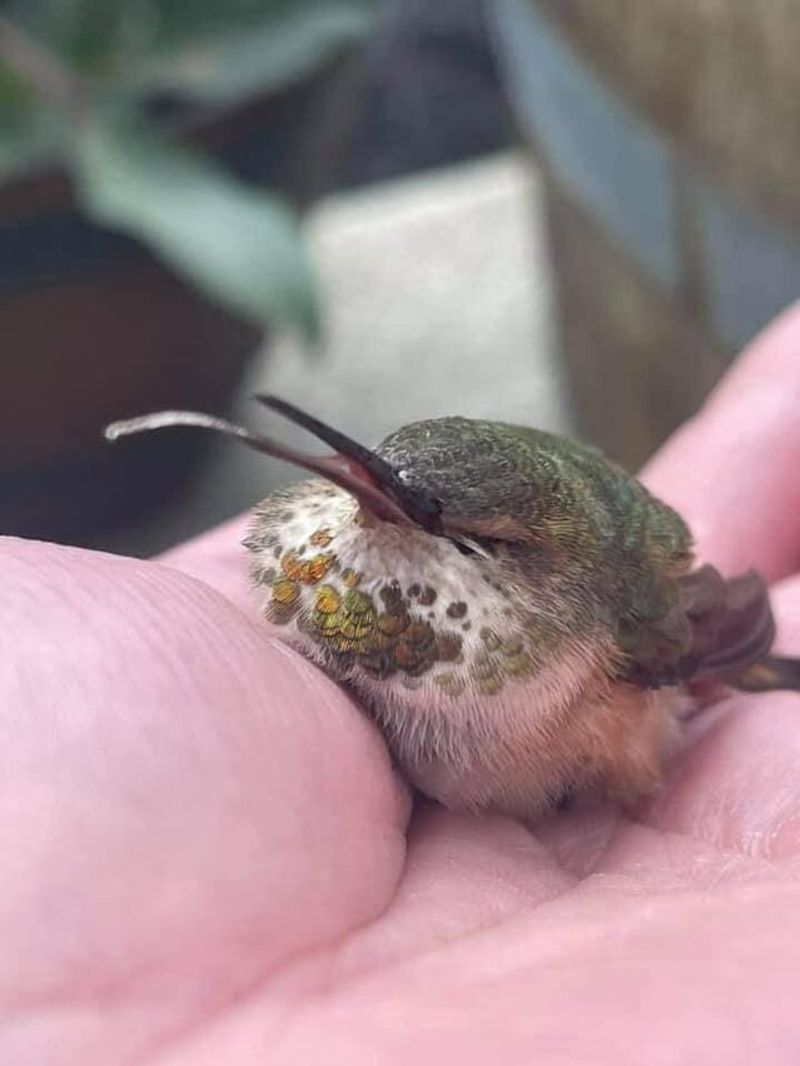
Honey feels like the wholesome choice at first glance. It’s natural, it’s sweet, and it comes from another pollinator, so surely hummingbirds would enjoy it too. Audubon says no, flatly and without qualification.
Two problems stack up fast here. First, honey diluted in water ferments much faster than a plain sugar solution, especially in California heat.
That turns a feeder into a soup of yeast and mold within a day or two, sometimes faster.
Second, and more serious, honey can carry Clostridium botulinum bacteria. Those are the same spores that make honey unsafe for human infants, and a warm feeder gives them an ideal place to multiply.
A hummingbird weighs about as much as a nickel. There is almost no margin for error when something harmful enters its system, and recovery odds are not good.
The same logic applies to maple syrup, agave nectar, fruit juice, and molasses. None of them match the simple sucrose solution that flower nectar naturally provides.
If you already filled a feeder with honey water, empty it out completely. Scrub the feeder thoroughly with hot water, rinse every part, and start fresh.
Plain white sugar dissolved in water at a one-to-four ratio is the only feeder recipe Audubon endorses. Simple really is safest here, every single time.
6. Skip Artificial Sweeteners
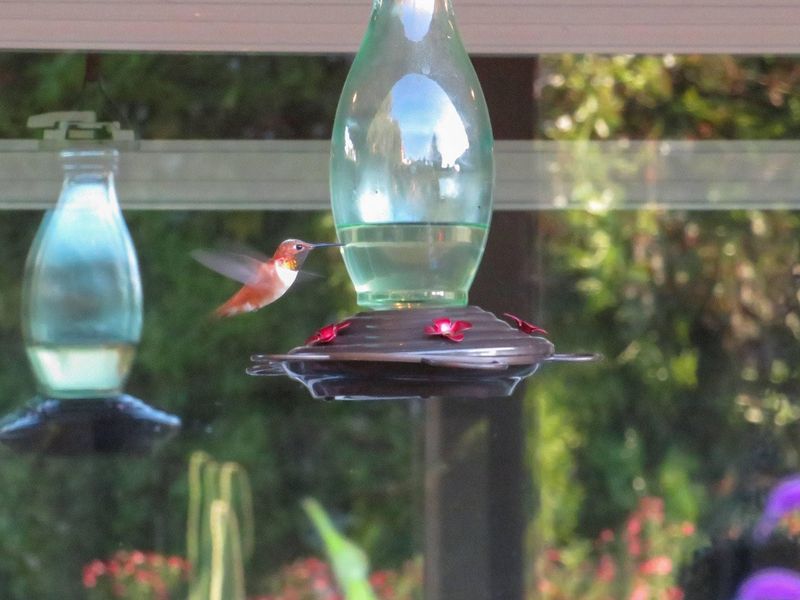
Someone always suggests it eventually. Why not use a zero-calorie sweetener and save a few cents on sugar? The answer comes down to one fact. Calories are the entire point of nectar.
Hummingbirds burn energy at an extraordinary rate, with hearts beating over a thousand times per minute during flight. They need actual fuel, constantly, throughout the entire day.
Artificial sweeteners taste sweet but deliver no usable energy whatsoever. A bird drinking them gets the sensation of a meal and none of the calories, meaning wasted trips it cannot really afford.
Audubon specifically warns against artificial sweeteners in hummingbird feeders. The same caution covers diet drinks, sugar-free syrups, and any powdered substitute sitting in your pantry right now.
There’s another angle worth considering too. Commercial nectar powders are not necessary either, since they often contain dyes and preservatives that add nothing a bird actually needs.
Refined white sugar, which is sucrose, closely resembles the sugar found in real flower nectar. That resemblance is exactly why it works and why substitutes fall short.
Stick with the ratio, one part white sugar to four parts water, no additives. It costs almost nothing and keeps in the refrigerator for about a week if you make a batch ahead of time.
7. Avoid Red Dye Entirely
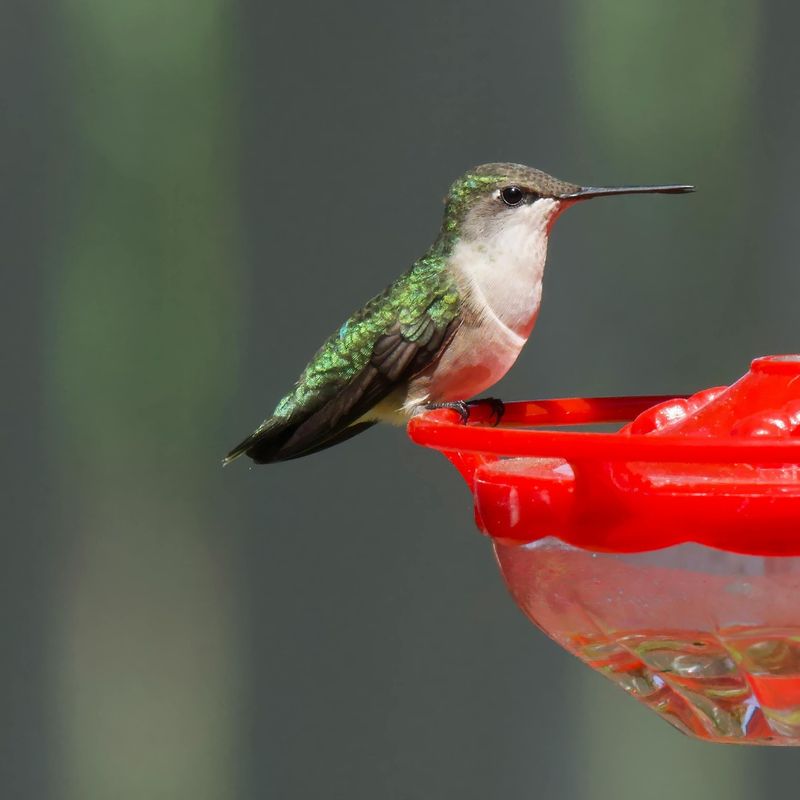
Walk down the bird aisle at any California hardware store, and you’ll spot bottles of ruby red nectar concentrate lined up. The color exists to catch your eye, not the bird’s.
Hummingbirds are drawn to red, absolutely no argument there. But the red they need is already built into most feeders through the design itself.
Red plastic ports, red bases, and red flower accents do the job without a single drop of dye ever entering the liquid.
Audubon advises against adding red dye, noting it’s unnecessary and its safety for hummingbirds has not been confirmed by anyone. That uncertainty alone is reason enough to skip it.
Consider how much liquid a hummingbird processes relative to its tiny body size. It may drink roughly its own weight in nectar daily, so any additive gets concentrated fast.
Clear sugar water carries a practical advantage too. You can spot cloudiness, floating debris, or mold immediately, which is much harder to catch through crimson liquid.
If you want extra visual appeal in the yard, hang a red ribbon near the feeder or plant something scarlet close by instead. The birds will find it either way, dye or not.
Mix your own, keep it colorless, and change it every two days in hot weather. Clean feeders beat anything sold in a bottle.
8. Steer Clear Of Raw Or Brown Sugar
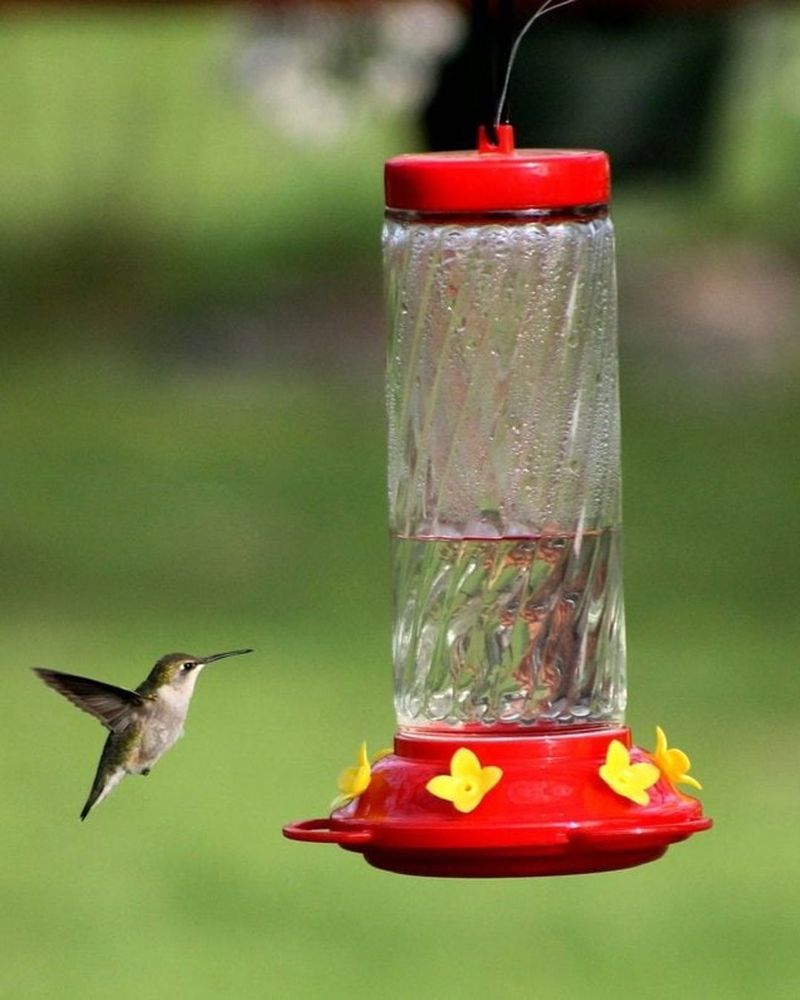
Here’s the surprise that trips up even the most thoughtful bird lovers. Raw, brown, turbinado, and organic sugars sound healthier, and for people they genuinely are. For hummingbirds, Audubon warns against every one of them.
The issue comes down to what gets left behind during processing. Less refined sugars retain molasses, and molasses carries iron along with other trace minerals.
Hummingbirds appear to have very limited ability to handle excess iron. Levels a human body shrugs off easily can build up fast in a bird weighing just a few grams, with serious results.
Refined white sugar, by contrast, has been stripped down to nearly pure sucrose. That purity is not a flaw here at all.
It’s precisely what makes white sugar the correct and only recommended choice for any feeder.
So the recipe stands exactly as before. One part plain white sugar, four parts water, stirred until fully dissolved. No honey, no sweetener packets, no dye, no brown sugar.
Also worth skipping are powdered sugar, which contains cornstarch, and coconut or date sugar, which fall into that same unrefined category.
Plant California fuchsia, hummingbird sage, and a native currant, then hang a clean feeder with that simple mix if you enjoy watching them up close.