How To Protect California Plants From Sudden Cold Nights
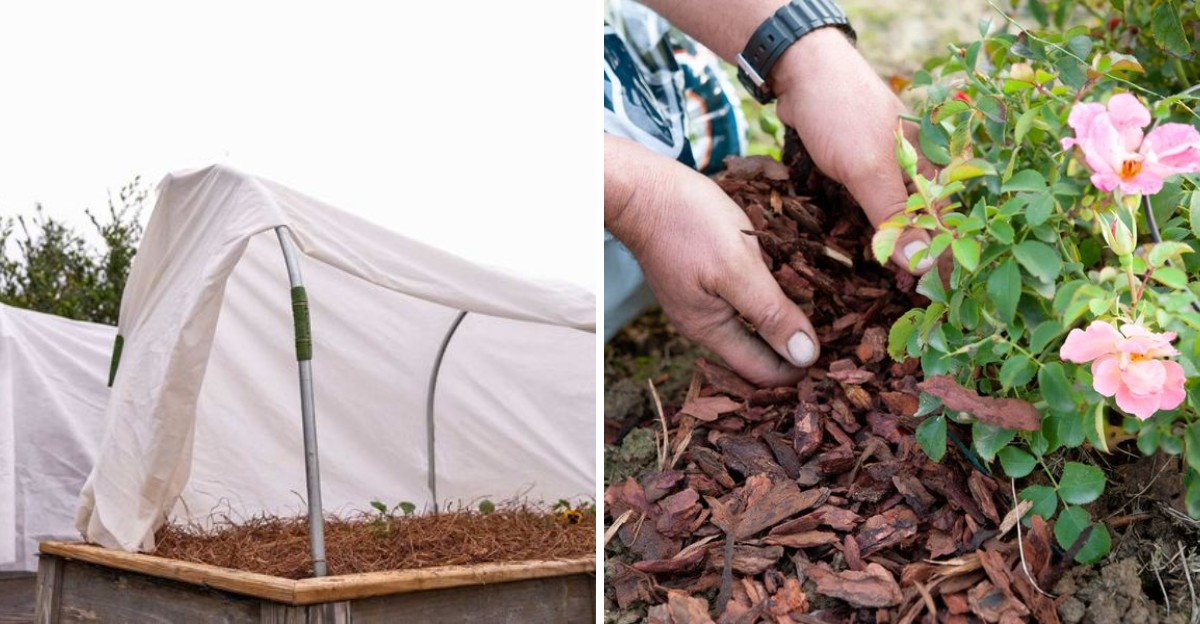
You spend the afternoon in a t-shirt, water the patio pots, crack a window before bed. By 5 a.m. the lawn looks silver, the thermometer reads 33, and your basil resembles cooked spinach.
That flip happens faster than most gardeners expect.
A warm day sliding into a surprisingly cold night is a California specialty, one that catches even experienced growers off guard year after year.
Here’s the part that actually matters, though. A single chilly night rarely harms an established landscape, and a handful of simple moves carry tender plants through it just fine.
Eight habits stand between a scary morning and real damage. None of them require fancy equipment or a greenhouse budget.
Curious what actually works when frost sneaks in overnight? The first fix starts with something as simple as checking your phone before bed.
1. Watch For Sudden Overnight Temperature Drops
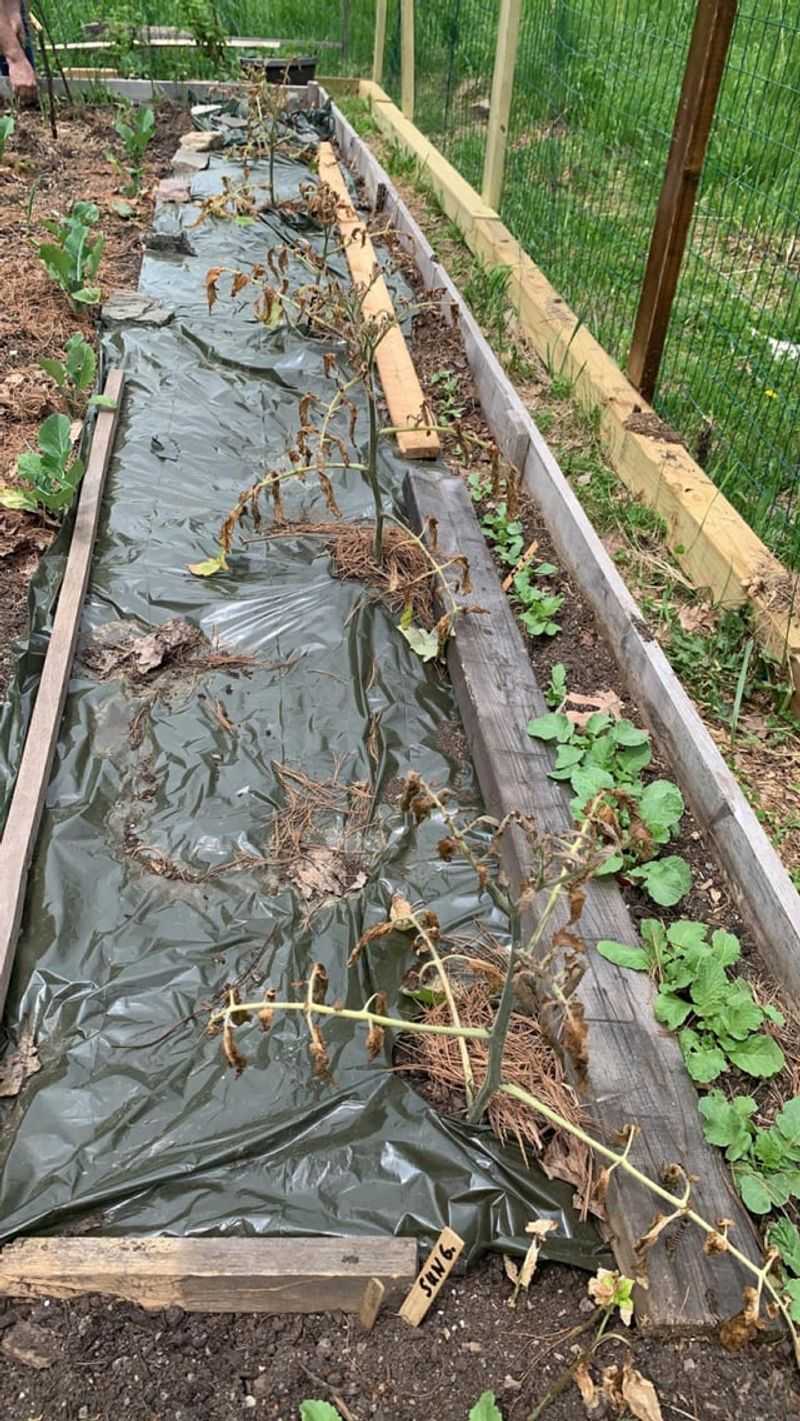
Clear skies, calm air, and dry inland winds tend to show up together on the evenings that turn surprisingly cold. This pattern is called radiation frost, when heat stored in the soil escapes straight up into a cloudless sky.
Clouds work like a blanket over your yard. Take them away, and the temperature can slide far below what the pleasant afternoon suggested.
Get in the habit of reading the overnight low instead of the daytime high. Plenty of California forecasts pair a 72 degree afternoon with a low near 34, and that gap is exactly where tender plants get caught off guard.
Hourly forecasts help even more here, since they show how many hours actually sit near freezing. Two hours at 33 degrees is a very different event than eight hours at 28.
Your own yard carries its own personality too. Cold air sinks, so a low corner, a shaded side yard, or an open lawn away from buildings can run several degrees colder than the reading at the nearest airport.
A basic outdoor thermometer parked near your most sensitive plants gives you real numbers rather than guesses. Keep it out of direct sun for accuracy.
Turning on frost advisory alerts is worth the thirty seconds it takes. An advisory usually means light, patchy frost, while a freeze warning signals something with more bite, and knowing the difference saves you from dragging out every sheet in the closet.
2. Cover Tender Plants Before Sunset
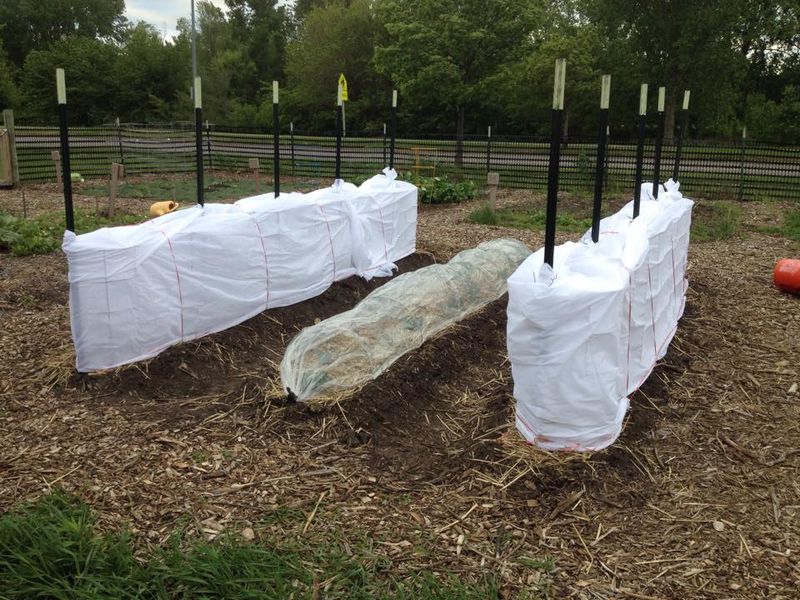
Timing beats fancy materials here every time. Covers trap heat the soil released during the day, so they only work if you put them on before that warmth escapes, ideally in late afternoon or right around sunset.
Wait until 10 p.m., and you’re basically tucking a blanket around something already cold.
Old bedsheets, burlap, lightweight row cover, or a purchased frost blanket all do the job well. What matters is that the cover reaches the ground on every side, since heat rising from the soil is the actual source of protection.
A cover draped like a lampshade, stopping halfway down, lets that warmth drift away uselessly. Tuck the edges down with bricks, rocks, or landscape staples instead.
Your California Garden Changes Every Week. Your Plan Should Too.
Gardening in California changes quickly throughout the season. Every Friday you’ll receive a simple weekly plan showing exactly what to plant, prune, fertilize, harvest, and protect so you never miss the right timing.
Keep fabric from pressing flat against leaves whenever you can manage it. Supporting covers on stakes, tomato cages, or hoops helps, since leaves touching cold cloth can still get frost-burned at those contact points.
Plastic sheeting is the weakest choice available. It conducts cold and cooks plants fast the next morning once the sun hits it.
Save the effort for plants that genuinely need it. Young citrus, bougainvillea, plumeria, avocado, succulents like jade in exposed pots, and warm-season vegetables still hanging on all qualify.
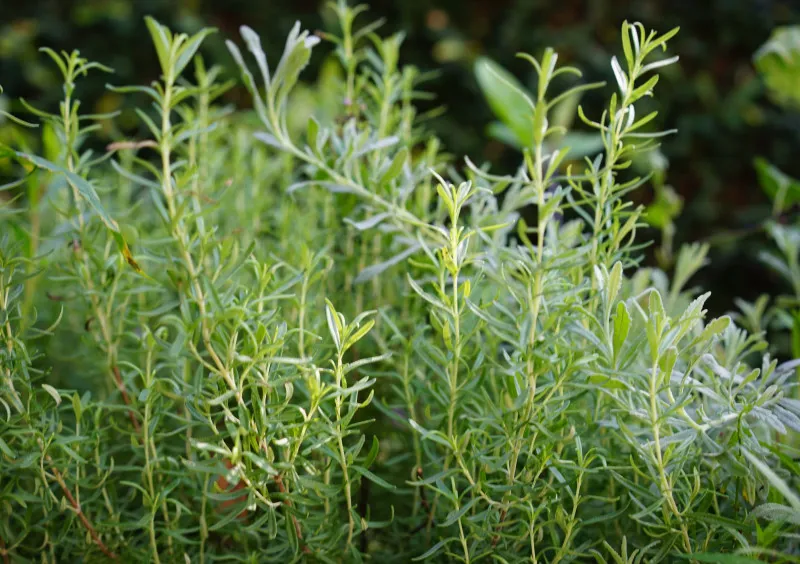
Rosemary, oaks, lavender, and other established California-adapted plants will shrug the night off without any help at all.
3. Water Soil Ahead Of A Cold Snap
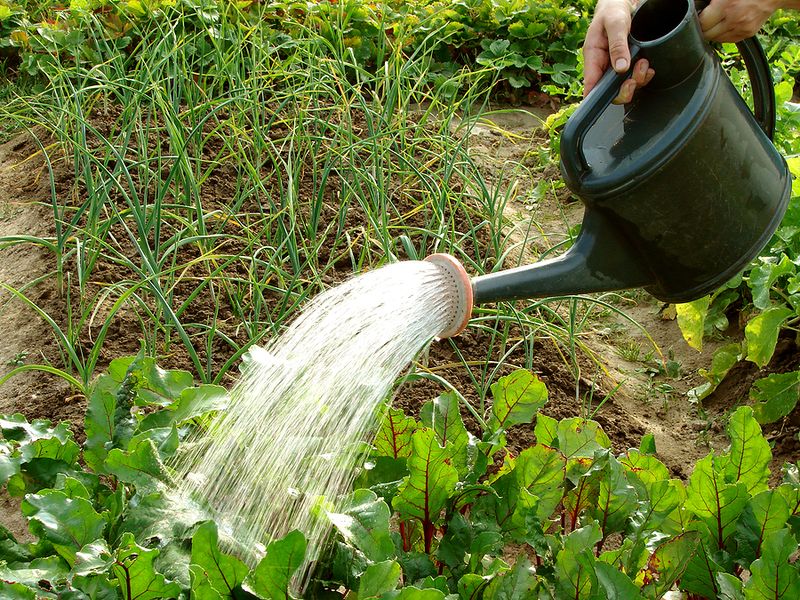
Here’s a trick that surprises most people the first time they hear it. Damp soil is warmer soil. Water holds heat better than dry, airy dirt, so moist ground soaks up warmth all afternoon and releases it slowly through the night.
Watering before a predicted frost works for exactly that reason.
Do the watering in the morning or early afternoon of the cold day, not after dark. That gives the sun several hours to heat that wet soil before temperatures start dropping.
Aim the hose at the root zone and the bare soil around the plant. Soaking the leaves themselves adds nothing useful to the equation.
Dry roots are also more vulnerable roots. Plants heading into a cold night already thirsty carry extra stress, and stressed tissue tends to show more damage than well-hydrated tissue does.
Container plants dry out fastest of all, since their roots sit surrounded by air on every side. Give pots a drink too, not just the beds.
Skip this step if the ground is already soggy from rain, or if you garden in heavy clay that drains slowly. Waterlogged roots create their own set of problems.
One more note worth knowing. The old advice about spraying plants with water all night comes from commercial orchards using continuous sprinklers, and it backfires badly in a home yard if the water stops partway through. Stick with the simple daytime soak instead.
4. Move Containers Closer To The House
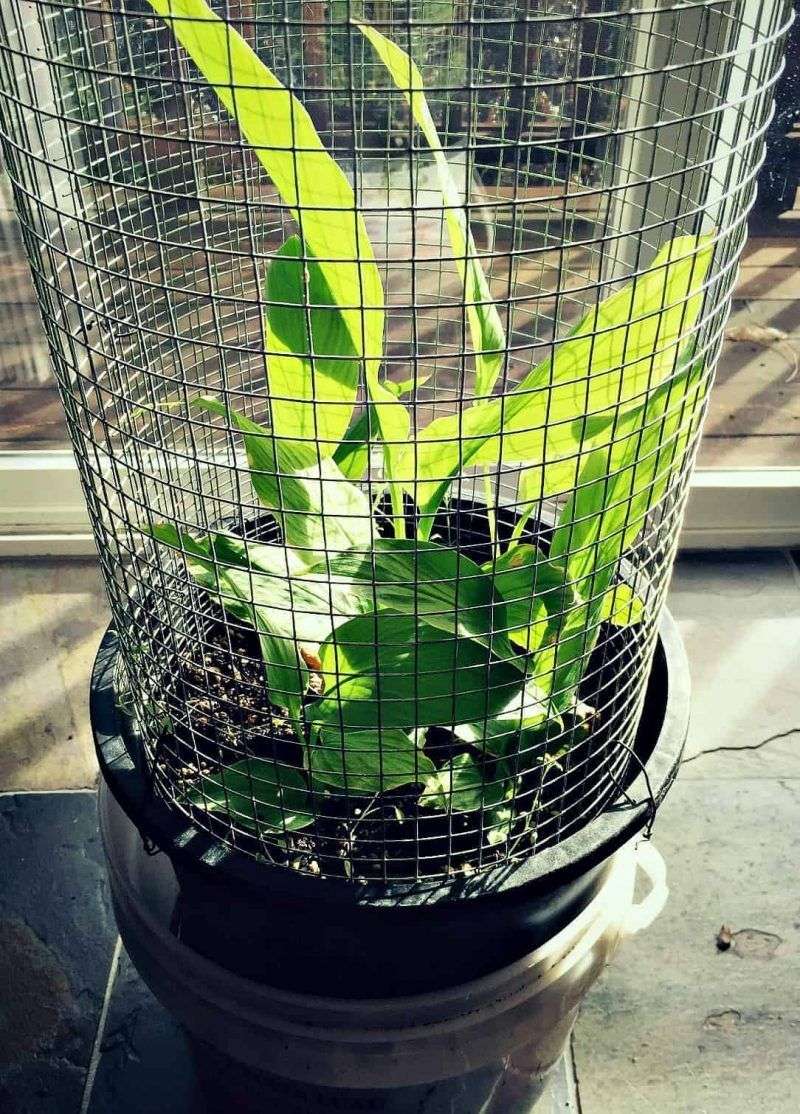
Pots are the drama queens of the cold-weather garden. Roots in the ground are buffered by a huge mass of earth, while roots in a plastic container sit separated from freezing air by half an inch of wall.
Soil temperature in a pot can drop nearly to air temperature overnight, something in-ground soil almost never does.
Luckily, containers have one enormous advantage. Legs, or at least handles. Sliding them next to the house puts them in a warmer pocket, since walls absorb heat during the day and radiate it back after sunset.
A south or west facing wall under a roof overhang is the prize spot in any yard. The overhang also blocks the open sky that lets heat escape upward.
Group pots together rather than scattering them around the patio. Clustered containers shelter each other, and the whole huddle cools more slowly than a lone pot standing in the middle of an open space.
Tuck the smallest and most tender ones into the center of the group for extra protection.
Really precious specimens, like a young plumeria or a tropical houseplant summering outdoors, can simply come inside a garage, shed, or entryway for the night. They do not need light for twelve hours straight.
Raising pots off cold concrete on pot feet or a scrap of wood helps a little too. Move everything back to its sunny spot the next day so nothing sulks from lack of light.
5. Avoid Pruning Right Before Cold Weather
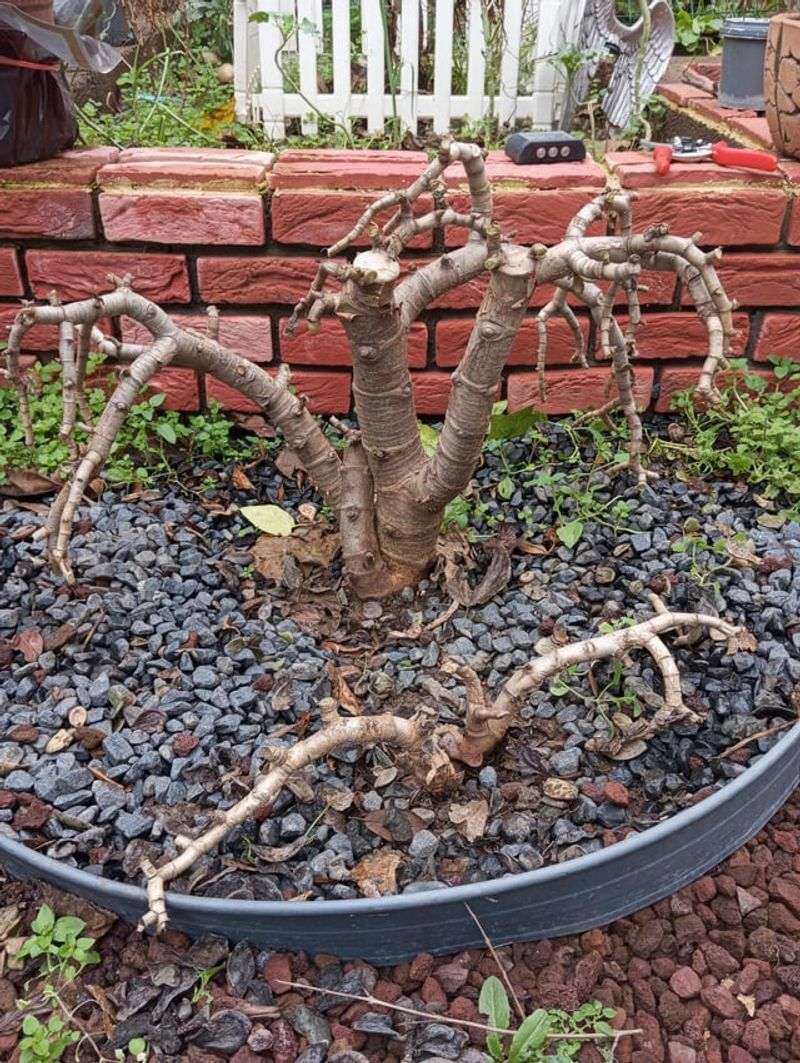
Pruning feels productive, which is exactly why gardeners reach for the shears on a nice fall weekend. Cutting back a shrub right before a cold night, though, works against you in two separate ways.
Fresh cuts are open wounds, and the tender new growth that pruning encourages happens to be the least cold-hardy tissue a plant can produce.
Plants slow down and harden off naturally as days shorten. Pruning interrupts that signal and tells the plant to push soft new shoots instead, and those shoots become the first things damaged when temperatures dip.
Waiting until the danger of frost has passed before pruning frost-sensitive plants is generally the smarter call.
There’s a bonus reason to leave weathered growth alone too. Leaves and stems nipped by an early cold night act as a shield for the healthier wood underneath, so cutting them off exposes tissue that was previously protected.
Rough-looking for a few weeks beats a real setback in February.
Hold off on heavy nitrogen fertilizer for the same reason, since it also drives soft growth at exactly the wrong time of year.
Wait until late winter or early spring, once the last frosty nights are behind you. Scratch a branch with your thumbnail to see if the tissue underneath is still green before deciding what to remove. Bougainvillea, citrus, hibiscus, and lantana in particular reward that patience.
6. Mulch Helps Insulate Sensitive Roots
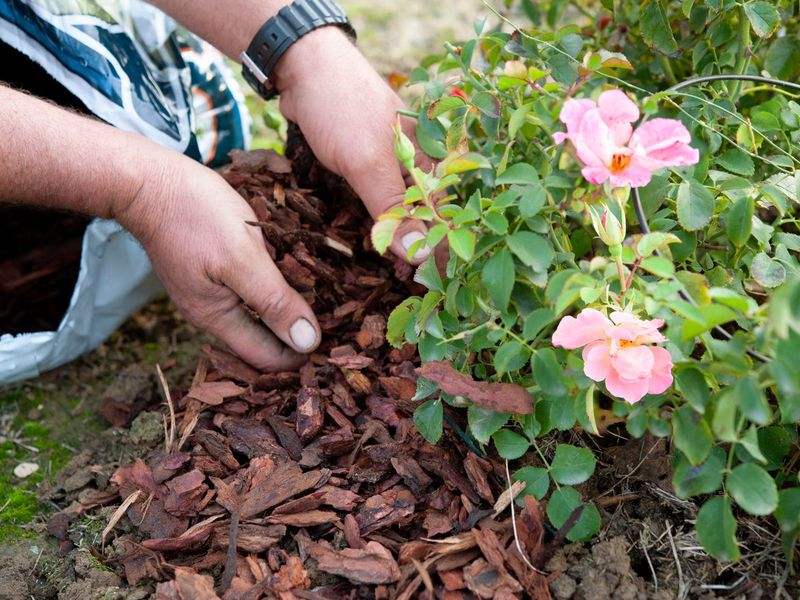
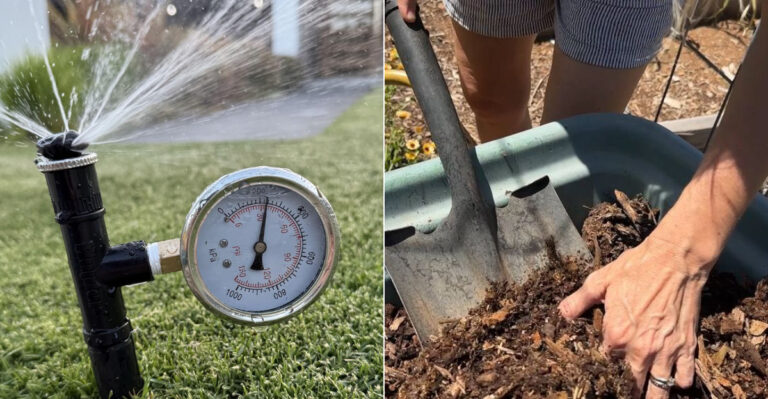
Think of mulch as a sweater for the soil. A three to four inch layer of wood chips, shredded bark, straw, or coarse compost slows the escape of heat from the ground and evens out temperature swings in the root zone.
Roots survive cold far better than leaves do, and protecting them means the plant can regrow even if the top gets nipped by frost.
Mulch earns its keep long after the cold passes too. It holds moisture, blocks weeds, and feeds soil life as it breaks down, making it one of the few garden chores that pays you back all year long.
Leave a gap of a few inches between mulch and the trunk or main stem. Piling material against bark traps moisture and invites rot and pests, a mistake you see in parking lot landscaping everywhere.
Spread it out to the drip line instead, where the feeder roots actually live and work.
There’s one California wrinkle worth knowing here. Bare, moist, firm soil absorbs and releases daytime heat more effectively than mulched soil, so orchardists often keep the ground clear under frost-sensitive trees.
For most home gardens, the root insulation and water savings are the better trade. But if you’re protecting a young citrus on a hard freeze night, pulling mulch back from directly under the canopy lets the soil radiate more warmth upward.
7. Remove Covers Once Morning Warms Up
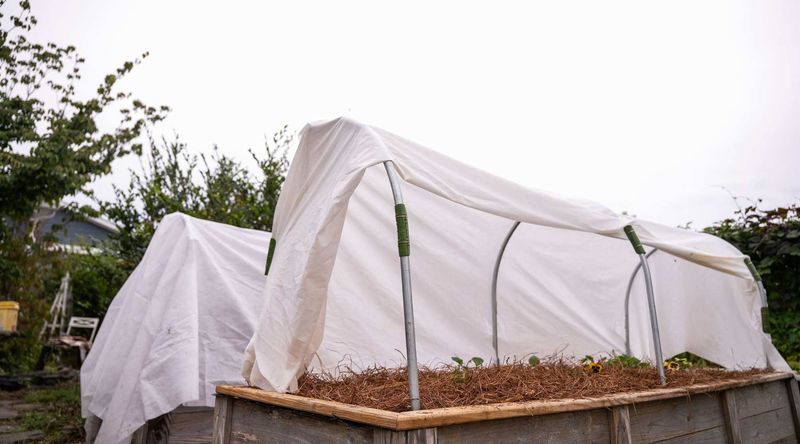
Covers left on too long cause more trouble than the cold night ever did. Once the sun hits a sheet or a plastic tarp, the air underneath heats up fast, and trapped humidity plus rising temperature can scorch leaves or invite fungal problems.
Plastic is the worst offender by far, turning into a small greenhouse within an hour of direct sun.
Pull covers off in mid to late morning, after the frost has melted and the air has climbed above freezing. Fold them and stash them somewhere dry so they’re ready for the next cold snap.
Resist the urge to hose off frosty leaves or snip damaged foliage right away. Plants often look worse at 7 a.m. than they really are underneath.
Give affected plants a few weeks before judging them too harshly. Most established California landscape plants handle an occasional brief cold night with nothing worse than a few crispy leaf tips, and new growth usually hides the damage by spring.
A single chilly evening is a nuisance, not a disaster. The plants worth fussing over are the tender ones: young citrus, tropicals, and warm-season vegetables still hanging on in the garden.
8. Group Plants By Cold Tolerance Before Winter Arrives
Most gardeners scramble plant by plant on a cold night, running from pot to pot with whatever cover is closest. A little planning earlier in fall saves that scramble entirely.
Walk the yard on a mild afternoon and sort plants into rough categories. Tough, established California natives and Mediterranean plants go in one mental pile. Tender tropicals, young citrus, and anything still in its first year go in another.
This sorting pays off the moment a frost advisory pops up on your phone. Instead of guessing which plants need attention, you already have a short list ready to act on.
Physical grouping helps just as much as mental sorting. Move tender container plants into a cluster near the house well before the first cold snap arrives, rather than scattered across the patio and yard.
Vulnerable in-ground plants benefit from a similar approach. Note their locations now, in good weather, so you’re not searching for the plumeria in the dark with a flashlight at 9 p.m.
Consider the yard’s own microclimates while you sort. A tender plant tucked near a south-facing wall already has some protection built in, while the same plant sitting in an open, low-lying corner needs far more help.
Keep frost cloth, stakes, and clips staged somewhere accessible, like a garage shelf or a bin by the back door. Digging through storage for supplies while temperatures drop wastes the exact window you need for effective covering.
This kind of prep takes an hour on a pleasant October weekend. It turns a stressful, last-minute cold night into a routine you’ve already rehearsed.