Plant This Native Desert Vine Once In Arizona And It Blooms For Decades Without Ever Being Moved
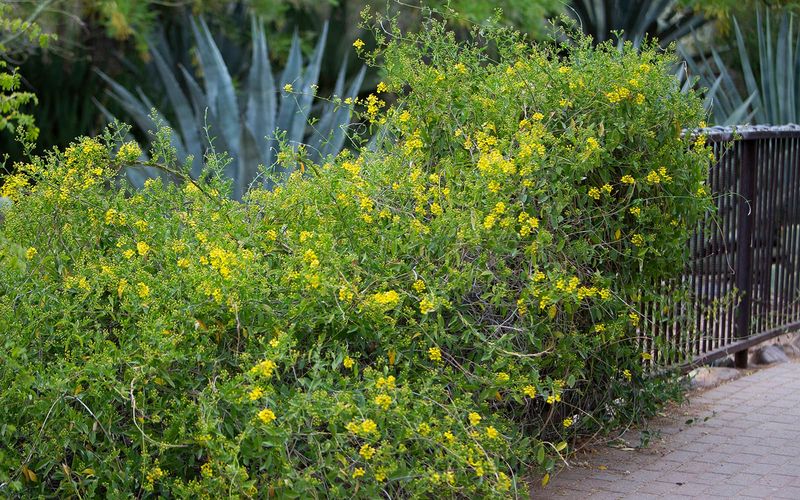
Yellow orchid vine is one of those plants that earns its place in a low-desert yard and then just keeps showing up, season after season, without needing to be replanted every year. Known botanically as Callaeum macropterum, it grows native to Arizona and Mexico, produces bright yellow flowers in late spring and summer, and uses relatively little water once it gets established.
The headline attached to this plant makes some promises worth examining before you dig a hole, because the real story is still a good one, just more honest about what to expect.
The durable Arizona vine behind the corrected headline
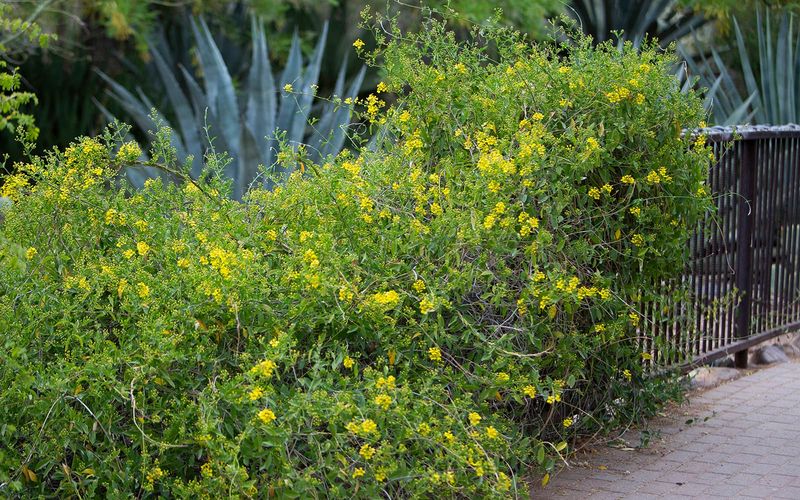
Yellow orchid vine goes by the botanical name Callaeum macropterum. Older nursery tags and regional references may list it as Mascagnia macroptera, so do not be surprised if you find both names on the same shelf.
Kew’s Plants of the World Online recognizes Callaeum macropterum as the accepted name, and the University of Arizona Campus Arboretum documents it as native to Arizona and Mexico, found naturally along rocky washes, hillsides, and sandy plains across the Sonoran Desert region.
As a woody perennial vine, it can reach roughly 16 to 20 feet or more when given adequate support, and it produces clusters of small yellow flowers that appear primarily in late spring and through the summer months. After flowering, it sets distinctive papery, winged seedpods that add texture even when the blooms are finished.
Here is where the headline needs a correction: no authoritative source establishes a verified decades-long flowering lifespan or guarantees the plant will never need moving. What the evidence does support is that an established yellow orchid vine can remain in a suitable low-desert site for years without annual replacement, which is a genuinely useful trait.
The recommendation applies most reliably to Phoenix, Tucson, and comparable low-desert conditions, not colder or higher-elevation Arizona locations where performance will differ.
Its roots are extensive, not a proven underground water vault
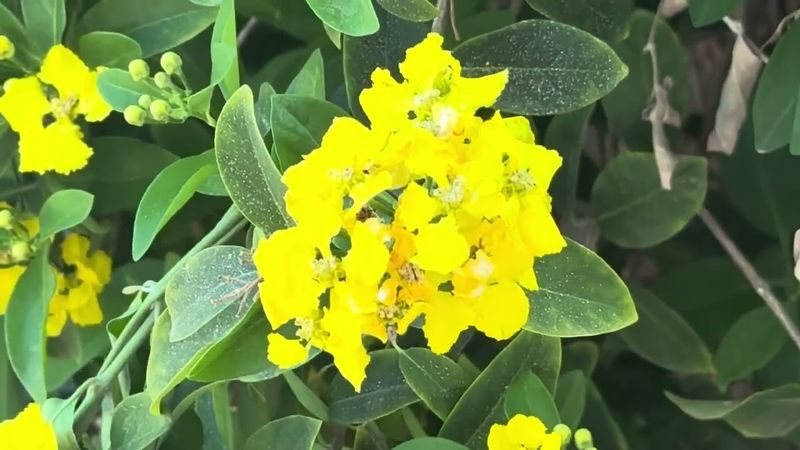
Some descriptions of this vine credit a deep underground root vault for its ability to survive Arizona summers with minimal water. That framing is not quite accurate.
The University of Arizona Campus Arboretum describes the root system as extensive, but notes that much of it is very shallow, which is a meaningful distinction when setting expectations about drought performance.
The vine’s long-term landscape potential comes from its woody perennial habit and its natural adaptation to low-desert conditions, not from a proven taproot drawing on hidden underground reserves. Attributing drought tolerance to a deep root structure that has not been documented that way sets up gardeners for confusion when an established plant still shows stress during a prolonged dry stretch or an unusually hot spell.
What the research does confirm is that established plants can handle relatively low irrigation in suitable sites, and the Arizona Department of Water Resources includes yellow orchid vine on its low-water-use plant list for the Phoenix Active Management Area. That low-water rating, though, applies after the vine has had time to settle in.
Your Arizona Garden Changes Every Week. Your Plan Should Too.
Gardening in Arizona changes quickly throughout the season. Every Friday you’ll receive a simple weekly plan showing exactly what to plant, prune, fertilize, harvest, and protect so you never miss the right timing.
A newly planted vine still needs regular irrigation while its roots expand into the surrounding soil, and cutting water too soon is one of the more common reasons desert-adapted plants fail in their first year. Resilience after establishment and the needs of a newly planted vine are two separate conversations.
Choose a site that can support years of growth
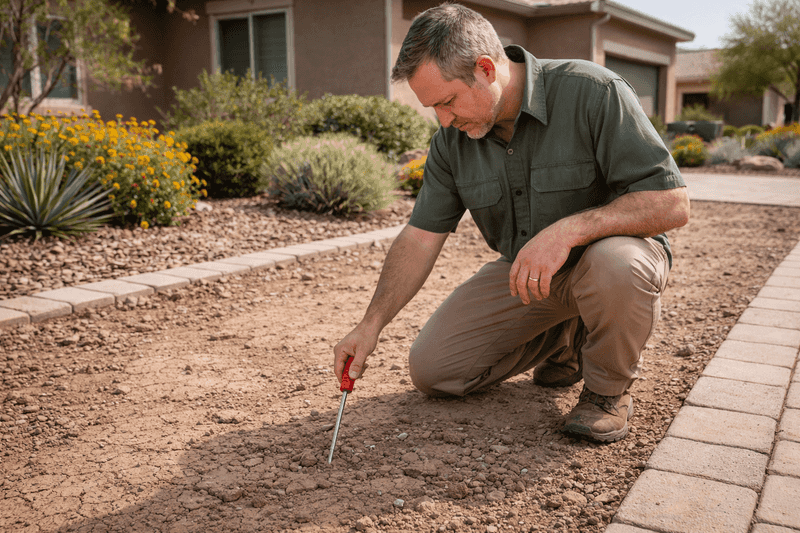
Mature yellow orchid vine can spread 16 to 20 feet in both height and width, and some specimens grow larger under favorable conditions. Before buying a plant, walk the intended spot and ask whether there is enough room for that footprint without the vine eventually crowding a walkway, blocking a window, or overwhelming a lightweight support structure.
The vine can climb a trellis or fence, but without something firm to grab, it will mound and sprawl at ground level instead. Either habit can work in the right space, but sprawling growth in a tight planting bed tends to create a maintenance problem rather than a landscape feature.
Southwest Desert Flora notes the vine’s robust twining habit, so whatever support you provide should be sturdy enough to hold significant weight over multiple growing seasons.
Soil drainage deserves attention before you commit to a location. Caliche, the hardened calcium carbonate layer common across low-desert Arizona, can restrict root expansion, reduce the movement of water and air through the soil, and contribute to salt buildup around the root zone, as outlined in UA Extension’s caliche quick guide.
The fix is not simply to add gravel or amendments to the planting hole. Check drainage first by filling the hole with water and watching how quickly it moves.
If water sits for hours, that site will likely cause problems regardless of what you add to it.
Phoenix and Tucson microclimates vary more than people expect. Reflected heat from a south-facing masonry wall, a low frost pocket near a wash, or an elevation difference of a few hundred feet can all affect whether this vine thrives or struggles.
Match the plant to the actual microclimate, not just the city name.
Establish the vine before reducing its irrigation
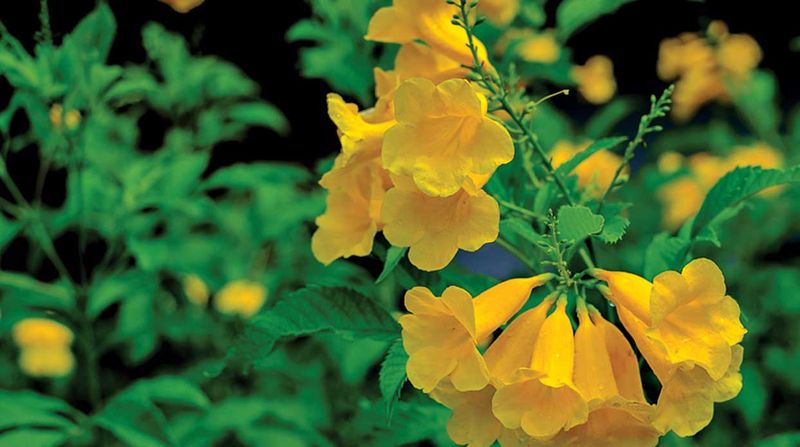
Fall, roughly October through November, and early spring are the planting windows that give yellow orchid vine the best odds in low-desert Arizona. Planting during those periods lets the vine put down roots while temperatures are manageable, so it is not immediately fighting triple-digit heat on top of transplant stress.
UA Extension’s container planting guidelines advise transplanting when temperatures are above freezing but not excessively hot and dry, which rules out the peak of a Phoenix summer for most gardeners.
After planting, water regularly. Low-water does not mean no-water from day one.
Small desert-adapted plants can take roughly a year to establish, and larger woody plants often need longer before their roots have spread far enough into surrounding soil to support the vine during dry or hot periods. Cutting back irrigation before that point risks losing the plant entirely, which defeats the goal of a long-lived landscape vine.
As establishment progresses, you can gradually extend the time between waterings. For established plants in suitable conditions, the Campus Arboretum has reported that one or two waterings per month may be enough, while more frequent summer irrigation can support heavier flowering.
Treat that as a starting point, not a calendar rule. Adjust based on how the plant looks, how hot and dry the stretch has been, whether monsoon rains have contributed, and how well your soil drains.
A vine showing wilted or yellowing leaves during summer heat is asking for water regardless of what the schedule says.
Give the vine support and expect seasonal flowers
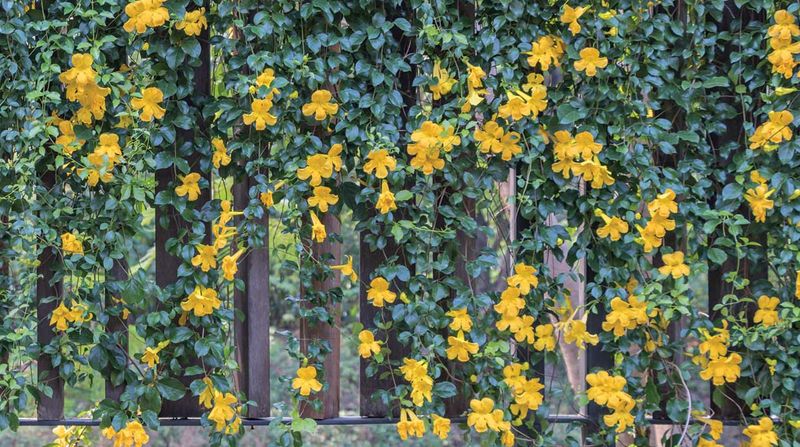
A sturdy trellis, arbor, or block wall fence transforms yellow orchid vine from a ground-level tangle into a vertical statement. Given something solid to climb, the vine can cover a 15 to 20 foot span and produce enough growth to shade a patio or screen an unattractive wall during the months when that coverage matters most in Arizona.
Yellow flowers appear primarily in late spring and through the summer. Flowering may become heavier after suitable spring or summer rains or with added summer irrigation, which lines up well with Arizona’s monsoon season when occasional deep watering can complement natural rainfall.
The winged seedpods that follow the flowers are distinctive, papery, and tan-colored, adding visual interest even after the yellow blooms have faded.
A few things worth keeping clear: flowering responds to seasonal cues and site conditions, not to the vine’s growth rate itself. Adding fertilizer or pushing aggressive new growth does not reliably trigger more blooms.
And while the vine has performed consistently in many established low-desert landscapes, no source documents a guaranteed flowering schedule across a set number of decades. What you can reasonably expect, on a suitable site with appropriate care, is seasonal yellow flowers during the warm months and a vine that returns year after year without needing to be replanted from scratch.
Frost and pruning limit its claim to permanence
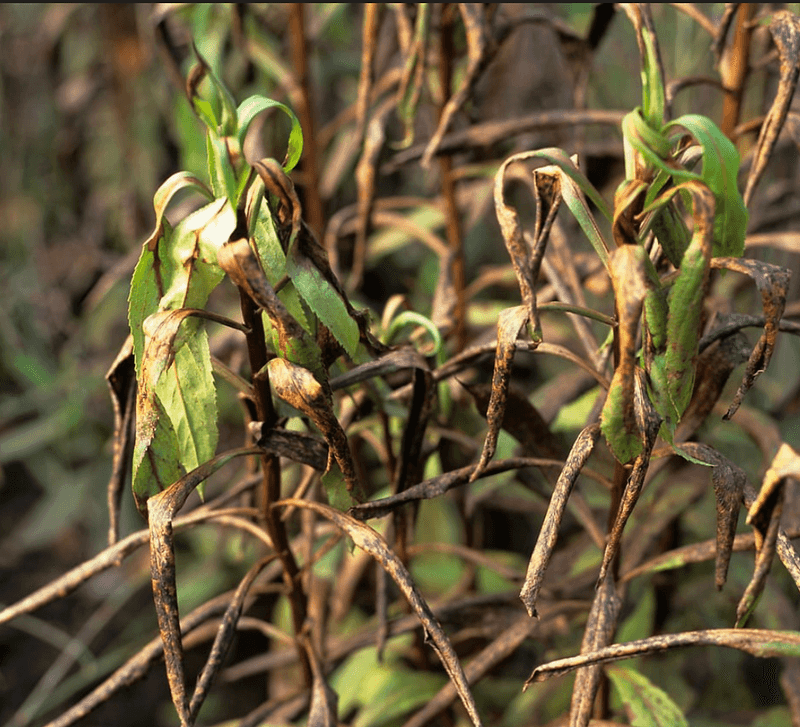
Frost is the most direct challenge to the idea that this vine never needs attention once planted. Twig damage can begin around 24 to 26 degrees Fahrenheit, and a hard freeze can strip foliage, kill stems back significantly, and leave the vine looking finished even when lower tissue is still alive.
UA Extension’s frost protection guidance makes clear that active foliage, flowers, buds, and stems are all vulnerable when temperatures drop that low.
The practical rule after a freeze is to wait. Cutting frost-damaged growth too early removes tissue that might still be protecting viable wood underneath, and it makes it harder to judge how far back the damage actually went.
Watch for new growth emerging from lower stems or the base in late winter or early spring, then prune back to just above those live points. Some vines recover well; others do not, and the outcome depends on how severe the freeze was, how long it lasted, and how exposed the specific planting location is.
Beyond frost, the vine needs regular shaping to stay compatible with its support structure. Woody stems can get heavy, and an unpruned vine can pull down a lightweight trellis or grow into areas where it causes problems.
Dead vegetation from winter or dry periods needs periodic cleanup. Calling this plant perennial is accurate.
Calling it maintenance-free is not. A mature vine may also eventually need relocation or removal because of construction, drainage changes, or outgrowing its original space, so the promise of never being moved should be understood as never needing annual replanting, which is a different and more honest claim.
Choose it for durable habitat, not guaranteed pest control
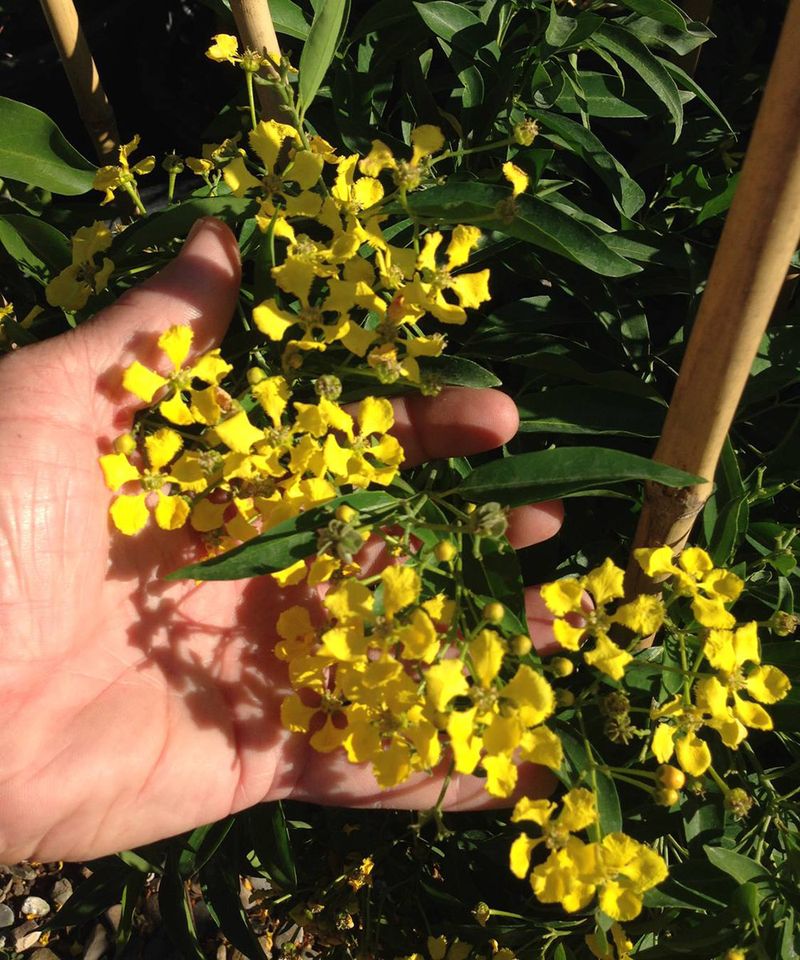
Yellow orchid vine earns a spot in a low-desert Arizona yard on the strength of what it reliably does: seasonal yellow flowers, a woody perennial habit that avoids annual replanting, and relatively low water use after establishment. Flowers in the Malpighiaceae family, which includes this vine, have oil glands that attract oil-collecting bees, making it a functional choice for a yard oriented toward native pollinators.
What it does not come with is a guarantee of broad pest reduction, verified decades of bloom, or a root system that works like a self-sustaining underground reservoir. Those claims go further than the evidence allows.
The vine also cannot be promised as pet-safe without a veterinary toxicology source confirming that status, and no such source was found in the research behind this article.
The decision rule is straightforward: plant yellow orchid vine when your site drains well, you have a support structure that can handle its mature size, and you are prepared to provide regular water during establishment plus occasional frost assessment and pruning care afterward. On the right site, with honest expectations, it is a genuinely durable native vine that fits the low-desert Arizona yard better than most alternatives.
That is a good enough reason to plant it without needing to oversell what it does.