Why Early Fall Matters So Much For Attracting Pollinators To Your Arizona Yard
October rolls around in the low desert around Phoenix and Tucson, and something shifts. The air cools just enough that working outside feels possible again, and that same moderation makes it one of the best times of year to put plants in the ground.
For homeowners who want a yard full of bees, butterflies, and other pollinators, fall is less about watching visitors arrive overnight and more about laying the groundwork for a habitat that keeps delivering through winter and into spring. Getting that groundwork right starts with understanding what fall can and cannot do for your yard.
Reframe Early Fall as a Habitat-Building Window
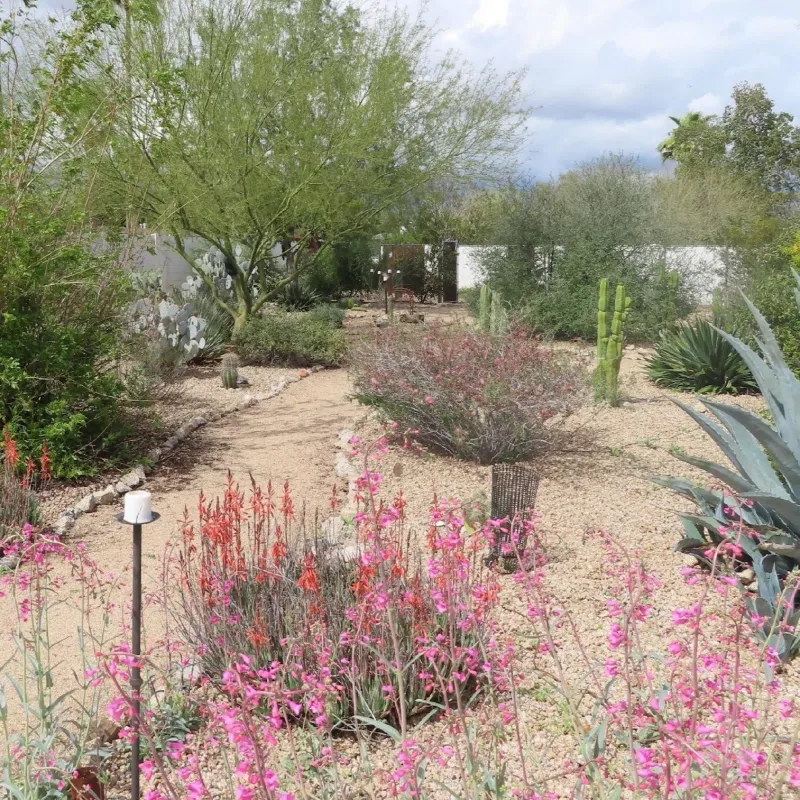
October and early November land at a sweet spot in the low-desert calendar around Phoenix and Tucson. Air temperatures ease back from summer extremes, but the soil holds enough warmth from months of heat to encourage new roots to grow and anchor themselves before cold weather arrives.
That combination is what makes fall planting genuinely useful here, not just a carry-over from gardening advice written for cooler climates.
The University of Arizona Cooperative Extension October guide for Pima County specifically recommends planting trees, shrubs, perennials, and cool-season flowers this month, and the November guide extends that window to include wildflower seeding and nursery-grown plants before the first frost. That is a meaningful stretch of time, not a single urgent deadline.
The window does not apply uniformly across all of Arizona. Elevation, sun exposure, and local microclimate shift planting conditions considerably.
A yard in central Phoenix behaves differently from one on the outskirts of Tucson or at a higher elevation, and different corners of the same yard can vary too. Fall here is best understood as a strategic preparation period, a chance to build habitat that supports pollinators now and gives plants time to settle in before the next brutal summer.
Fall Planting Prepares More Than It Attracts
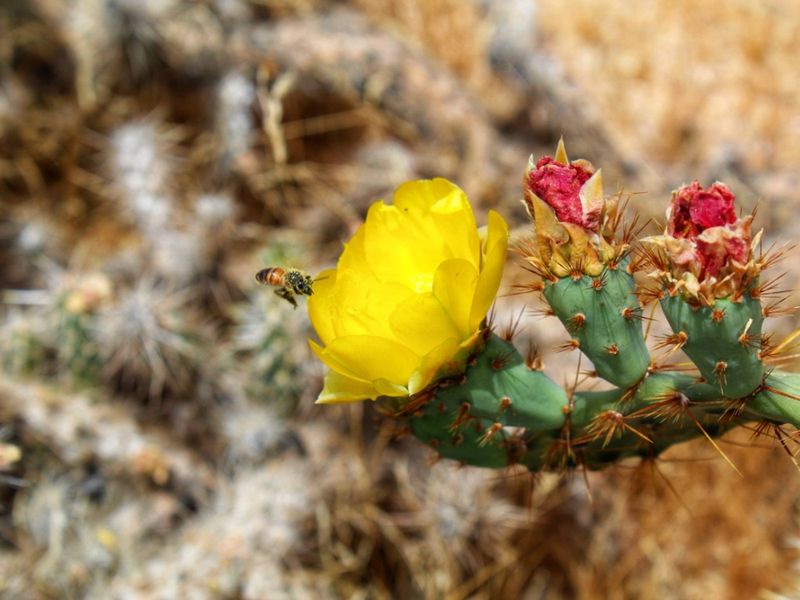
Putting a plant in the ground in October does not flip a switch that brings pollinators flooding in. What fall planting actually does is give roots time to spread through warm soil so the plant can support stronger growth and more reliable flowering later.
Many newly installed natives and desert-adapted perennials spend their first weeks focused almost entirely underground, and their blooms may not appear until winter or early spring.
That said, fall planting is not invisible to pollinators already active in your yard. According to the University of Arizona’s guide to plants for pollinators in the low desert, the goal is to provide plants blooming throughout the year, with the understanding that exact bloom times shift based on weather, elevation, and exposure.
A plant installed in October that flowers in January or March is still doing its job.
Visitation patterns depend on which pollinator species are present, what they need at that time of year, and how much existing habitat surrounds your yard. Some bees remain active through mild Arizona winters, while others have already overwintered.
Expecting a specific number of visitors by a fixed date sets up disappointment. Expecting a better-prepared yard by spring is a realistic and worthwhile goal, and that distinction shapes everything about how to approach fall planting.
Your Arizona Garden Changes Every Week. Your Plan Should Too.
Gardening in Arizona changes quickly throughout the season. Every Friday you’ll receive a simple weekly plan showing exactly what to plant, prune, fertilize, harvest, and protect so you never miss the right timing.
Plan for a Succession of Low-Desert Blooms
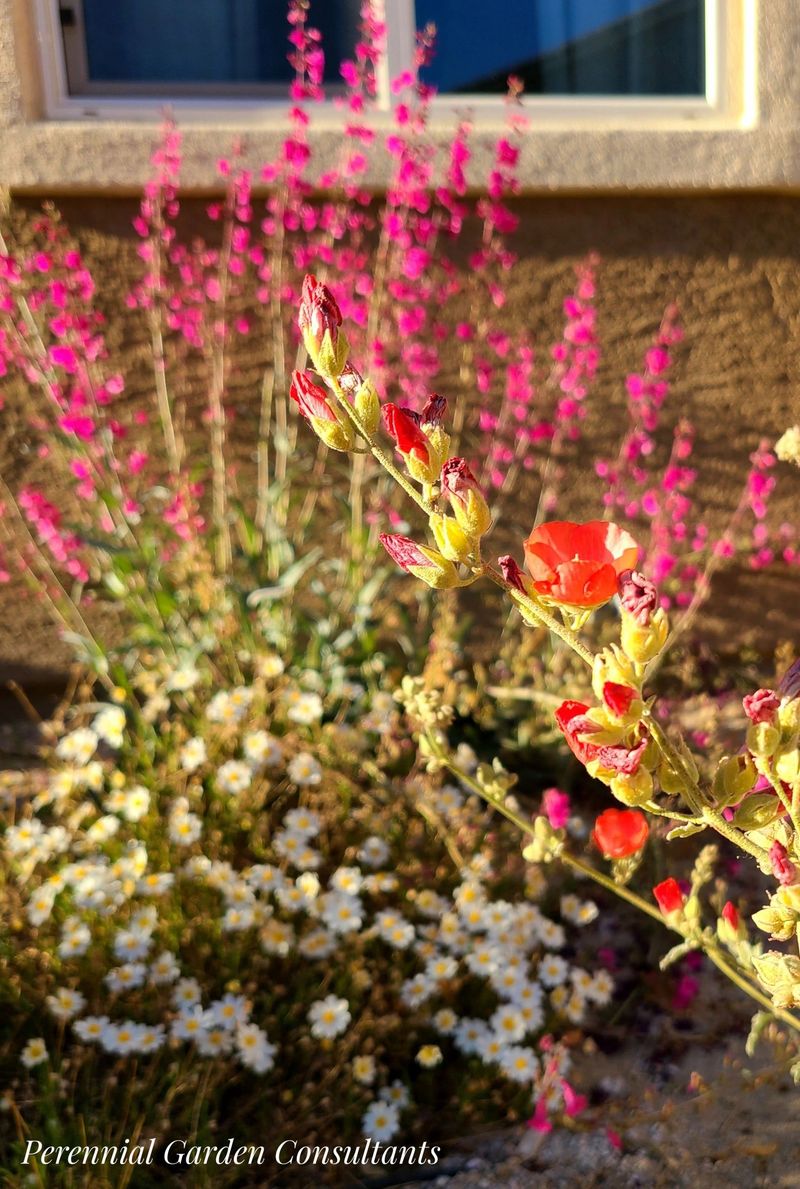
A single dramatic burst of fall color is satisfying to look at, but a yard built around one seasonal display leaves gaps when that display ends. Pollinators need floral resources across many months, and the fall planting window is the right moment to think about how your yard will sequence blooms from late autumn through winter and into spring and summer.
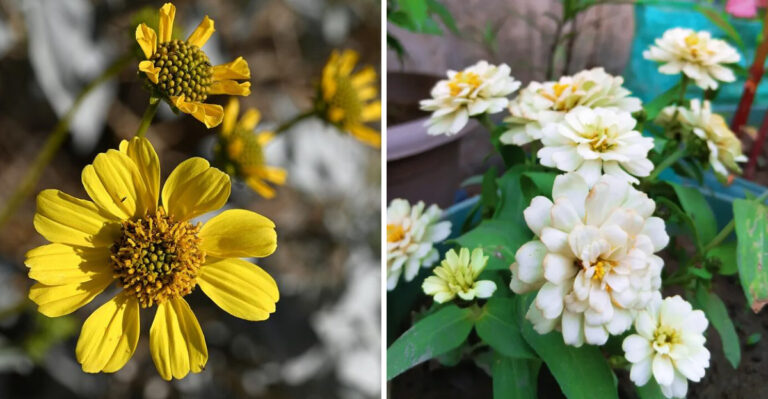
Regionally appropriate choices for October planting around Tucson and Phoenix include Angelita daisy, blackfoot daisy, desert mallow, penstemon, salvias, and verbena. The University of Arizona’s October guide also recommends cool-season flowers such as calendula for this month, while the November guide points to gaura, additional Angelita daisy plantings, and wildflower seeding for spring display.
Wildflower options suited to the low desert include California and Mexican poppies, desert marigold, desert bluebells, and cowpen daisy, though germination success depends on keeping the seed bed consistently moist until sprouting.
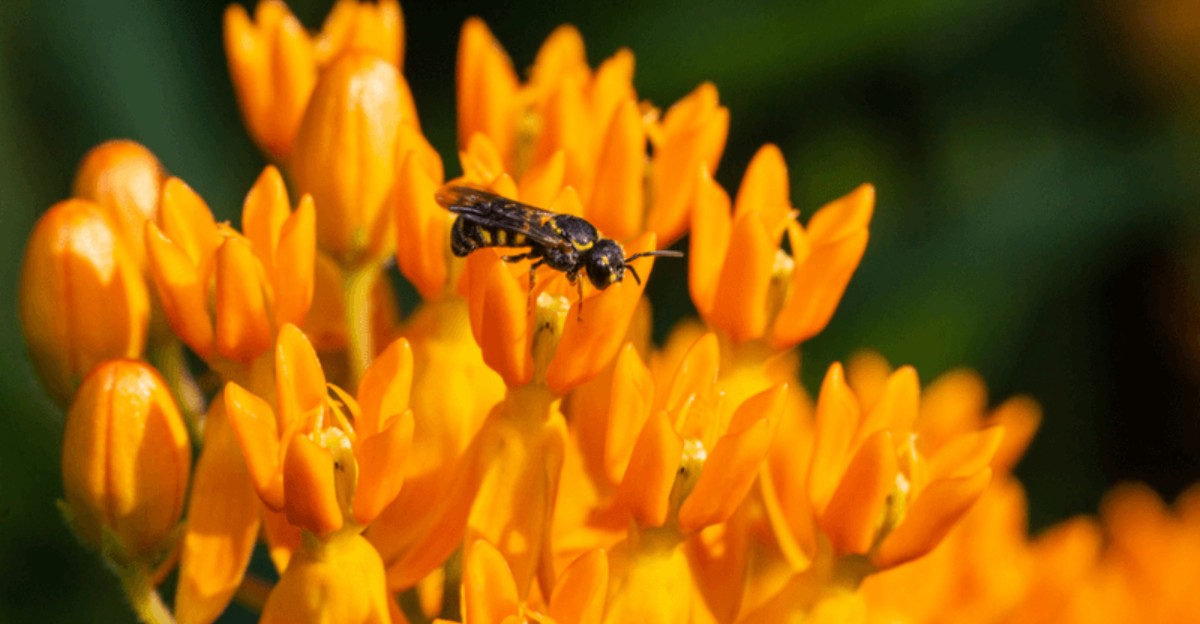
Beyond nectar sources, a complete succession plan considers larval host plants for butterflies and moths. Milkweed species native to the Sonoran region support monarchs, while other natives host a range of specialist pollinators.
Not every flowering plant serves every pollinator equally. Some species rely on particular plants for pollen or larval food, so a diverse mix of locally appropriate natives and desert-adapted plants is more useful than a monoculture of one crowd-pleasing bloomer.
Planning for variety across bloom times gives the yard staying power through every season.
Solve Drainage, Soil, Water, and Frost Problems First
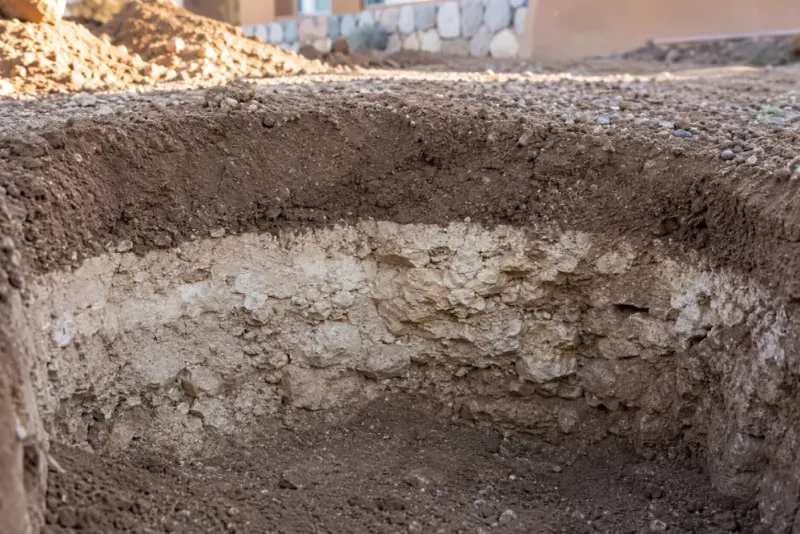
Before any plant goes into the ground, check how water moves through your soil. Dig a hole about 12 inches deep, fill it with water, and watch.
If water is still sitting there an hour later, you have a drainage problem that will stress or kill plants regardless of how well-suited they are to the desert. Restrictive caliche, a hardened calcium carbonate layer common in Arizona soils, is often the cause.
The University of Arizona recommends breaking through or removing caliche where practical before planting, and verifying that water can drain adequately. A chisel, rock bar, or rented equipment may be needed to punch through a dense layer.
Without that step, roots hit a ceiling, water pools above the hardpan, and plants struggle even during establishment. More detail on identifying and managing caliche is available through the University of Arizona’s guidance on managing caliche in the home yard.
Arizona soils are typically alkaline, and most desert-adapted plants are already matched to those conditions. Heavy compost or organic matter added to every planting hole is not necessary and can actually create a soil interface that disrupts drainage.
Match plants to what is already there rather than trying to rebuild the soil entirely. After planting, water regularly to support establishment, then gradually reduce watering frequency as roots develop and temperatures cool.
Low-water does not mean no water, especially in the first season. For November plantings, keep an eye on frost forecasts and have lightweight frost cloth ready, because temperatures can drop quickly and microclimates vary across a single yard.
Build Nesting Habitat Alongside Flowering Habitat
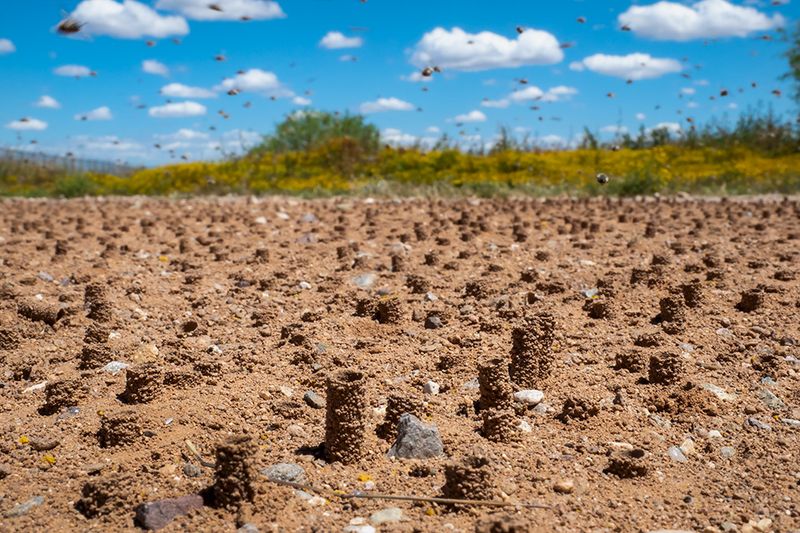
Flowers bring pollinators in, but nesting habitat keeps them around. Many people think of bees in terms of hives, but the majority of Arizona’s native bees are solitary, and they have very different housing needs.
The Sonoran Desert supports remarkable bee diversity, and providing for that range means thinking beyond nectar.
Ground-nesting bees need access to bare, undisturbed soil. About 70 percent of native bee species nest underground, and thick mulch, turf, or compacted paving can cut off their nesting sites entirely.
The Xerces Society recommends preserving a clearly designated patch of accessible bare soil in any pollinator garden, while using mulch in other areas for moisture retention and weed control. That balance matters: mulch helps plants establish and reduces water loss, but it should not blanket every inch of a planting bed.
Other bees use hollow stems, dead wood, or rock cavities. Fall cleanup decisions directly affect these species.
Rather than cutting everything back and clearing every corner, leave some perennial stems standing through fall and winter, retain patches of leaf litter where safe, and keep any dead wood that does not pose a hazard. The Xerces Society guidance on providing nest sites explains how these materials support nesting and overwintering habitat for a range of native bee species.
Butterflies and moths add another layer: their larvae may require specific host plants, so including a few natives known to support caterpillars broadens the habitat value of your yard considerably.
Protect Pollinators From Routine Pesticide Exposure
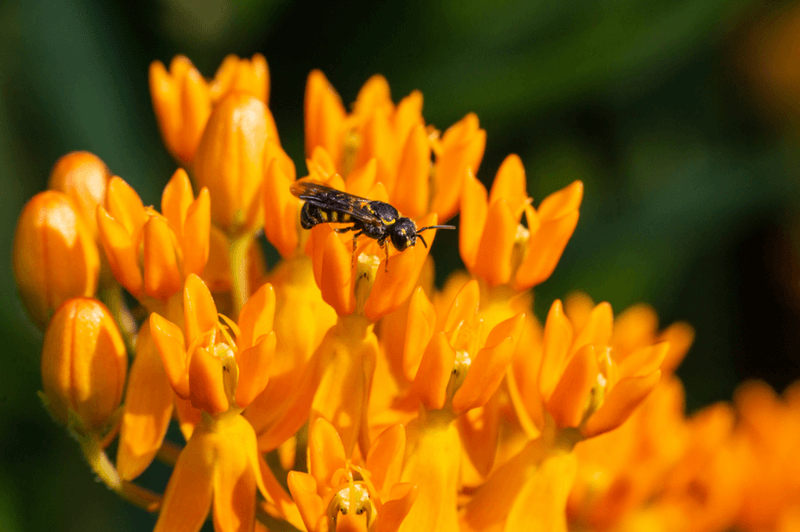
A yard planted with the best pollinator species can still fail to support bees and butterflies if pesticides are applied without care. Insecticides do not distinguish between the pest you are targeting and the beneficial insects visiting your flowers.
Broad-spectrum products can kill pollinators on contact, and systemic insecticides can persist in plant tissue, pollen, and nectar long after the spray has dried.
Before reaching for any product, identify what you are actually dealing with. Many insects that appear in a desert yard are not pests at all, and some are active predators of the insects that are.
If treatment becomes necessary, start with nonchemical controls: physical removal, barriers, or habitat changes that reduce pest pressure without chemical exposure. When a product is genuinely needed, choose the most targeted option available, follow the label precisely, and apply it in the early morning or evening when pollinators are less active.
Prevent drift onto blooming plants or nearby nesting areas.
Organic and botanical products are not automatically safe for pollinators. Pyrethrins, neem-based products, and other plant-derived insecticides can harm non-target insects depending on dose, timing, and how they are applied.
University of Arizona guidance on insecticides notes that broad-spectrum products can harm both pollinators and the beneficial predatory insects that provide natural pest control in a healthy yard. The yard is also not a reliable tool for eliminating scorpions, mosquitoes, or ticks through planting alone.
Habitat gardens support a range of beneficial insects, but specific pest-elimination outcomes depend on far more variables than plant selection.
Use October and November to Set Up the Year Ahead
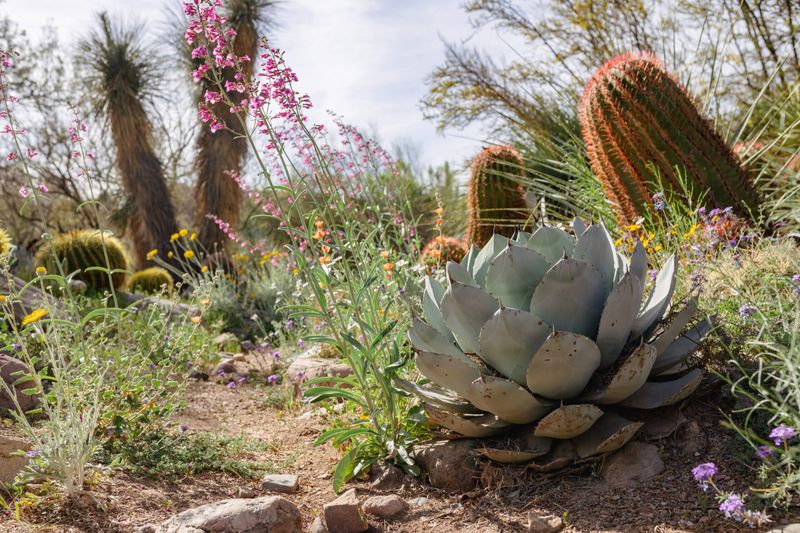
October and early November give low-desert homeowners around Phoenix and Tucson a practical runway for getting habitat plants established before winter. Start by checking drainage and addressing any caliche before the first plant goes in.
Choose perennials, cool-season flowers, or wildflower mixes suited to your elevation and exposure, and water consistently through the establishment period, reducing frequency gradually as temperatures drop and roots spread.
Preserve some bare soil for ground-nesting bees, leave a few perennial stems and patches of leaf litter where safe, and use mulch selectively rather than blanketing the entire bed. If frost is possible in your area by mid-November, have frost cloth ready and know which corners of your yard stay warmest.
Plan your plant selection around a sequence of bloom times rather than a single flush of fall color, drawing on the University of Arizona’s low-desert pollinator plant recommendations to cover late fall, winter, and spring gaps.
Early fall matters here because it sets up a year-round habitat rather than a one-season show. Plants established now are more likely to flower reliably through the cool season and hit the ground running when spring arrives.
That is the real payoff: a yard that keeps working for native bees, butterflies, and other pollinators long after October is a memory.