After 30 Years Growing Watermelons In Arizona, One Came Up With Bright Red Skin
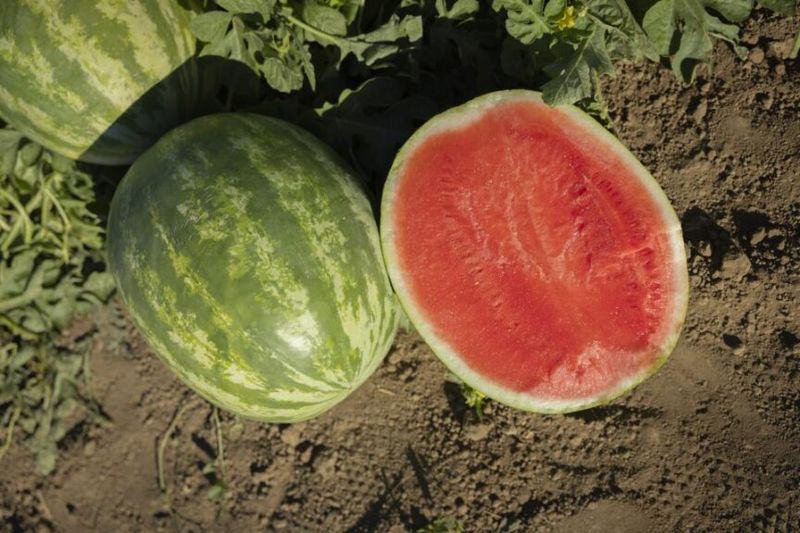
A backyard grower in Arizona reportedly cut open a watermelon after three decades of experience and found something unexpected: the outer skin was a striking, bright red rather than the familiar green or striped rind most gardeners know. The story is hard to ignore, but it raises more questions than it answers.
Was the rind truly red, or could something else explain the unusual look? Working through those questions carefully can teach any home grower a lot about how watermelons actually develop.
A reported red rind needs verification first
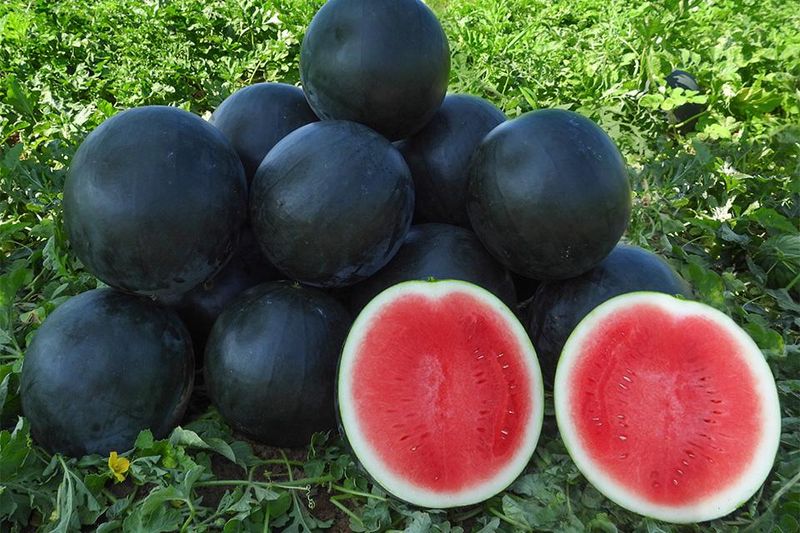
Before reaching for an explanation, the first step is to take the report at face value without treating it as a confirmed fact. A veteran grower in Arizona is said to have harvested a watermelon with bright-red outer skin after 30 years of growing the crop, and the fruit reportedly had normal red flesh inside.
Those are interesting details, but the specific grower, location, and fruit have not been independently documented in the research used to prepare this article. The central question is whether the melon truly had red exterior rind or whether the appearance could reflect something else entirely.
Several possibilities deserve consideration before moving to biology. The rind might have been stained by soil, compost, or another material.
A split or thin-walled area could allow red flesh to show through from underneath. A localized lesion, surface wound, or unusual decay pattern can also change the color of a small area dramatically.
A photograph of the cut interior alone cannot confirm that the exterior rind itself was red, because it captures only what the grower saw after the melon was already open.
Watermelons do show substantial diversity in rind color and pattern, as published watermelon breeding research documents. Rind color is genetically variable and is linked to pigment pathways that differ from those controlling flesh color.
That variation makes a genuinely red rind biologically plausible, but plausibility is not the same as proof. This article will explore the most reasonable explanations without delivering a diagnosis for a fruit that has not been verified.
Rind and flesh develop along different biological pathways
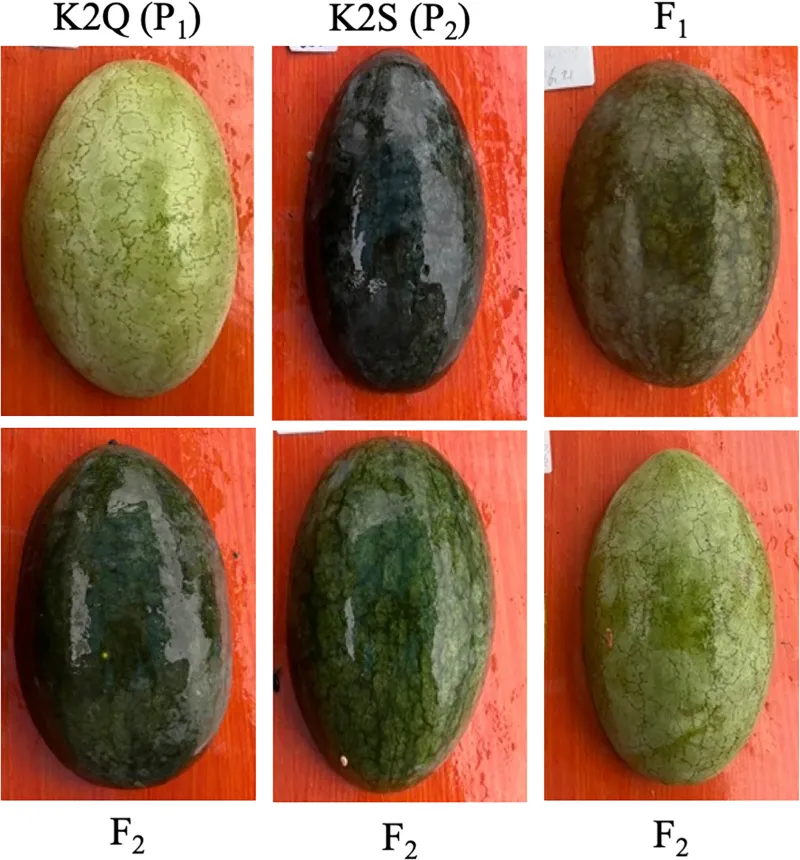
One of the most useful things to understand about watermelons is that the color of the outer rind and the color of the inner flesh are produced by completely separate biological processes. Rind appearance is shaped largely by chlorophyll, chloroplasts, and carotenoid compounds in the outer tissue, and research on watermelon rind pigmentation pathways shows that these pigments respond to their own genetic signals.
Flesh color, by contrast, is driven primarily by compounds such as lycopene and beta-carotene accumulating in the inner tissue as the fruit matures.
Because those pathways operate independently, a melon can have unusual outer coloring while still producing perfectly ordinary red flesh inside. The two traits are not locked together.
Commercial watermelons sold across the country pair red flesh with rinds that are dark green, light green, gray-green, striped, or even yellow, depending on the cultivar. That documented diversity means a red-fleshed melon with an atypical rind color is not inherently contradictory from a biological standpoint.
Your Arizona Garden Changes Every Week. Your Plan Should Too.
Gardening in Arizona changes quickly throughout the season. Every Friday you’ll receive a simple weekly plan showing exactly what to plant, prune, fertilize, harvest, and protect so you never miss the right timing.
What this means for the Arizona report is that normal red flesh does not tell us much about why the rind appeared red. The interior being ripe and red-colored is exactly what you would expect from a standard watermelon.
The rind color, if it was genuinely red, would need to be explained by a separate mechanism, whether that involves pigment expression, chlorophyll breakdown, or something else entirely. The flesh condition is not evidence for or against any particular rind explanation.
Several explanations remain possible
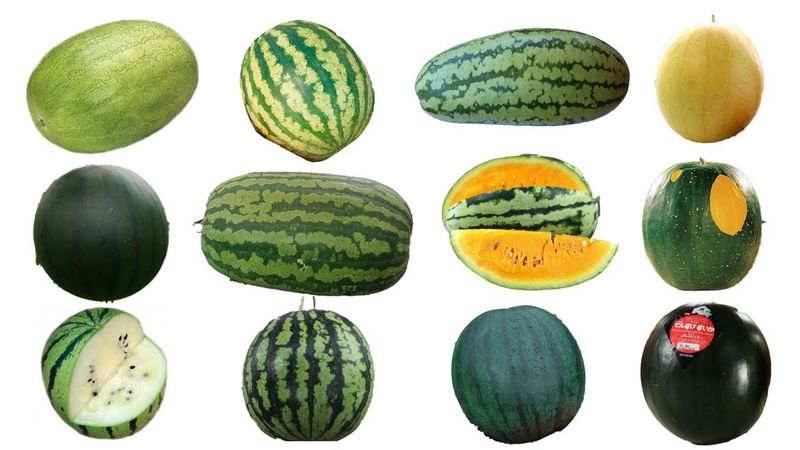
When a single fruit shows up with an unusual rind, there is no shortage of candidate explanations, and none of them can be confirmed or ruled out without more information. The four most reasonable possibilities are: an inherited cultivar-level rind trait, a genetic or somatic change affecting one plant or fruit, a developmental variation during that particular fruit’s growth, and an observation or identification error.
Each fits the reported facts to some degree, and that overlap is exactly why more documentation is needed before drawing a conclusion.
An inherited cultivar trait would mean the plant was always going to produce red-skinned fruit, either because it came from an obscure named variety or because a genetic characteristic segregated in an unexpected direction. Watermelon breeding studies confirm that rind traits, including color and pattern, can be inherited and can vary across plants even within the same planting.
If several fruits on the same plant shared the unusual rind, that pattern would make a heritable explanation more plausible. If only one fruit differed while the rest looked normal, somatic change, developmental variation, or misidentification would all remain reasonable alternatives.
A smooth, uniform red color across the whole rind fits a cultivar-level trait somewhat better than surface injury or disease would, because physical damage and lesions tend to appear in patches rather than covering the fruit evenly. That is an inference worth noting, not a firm rule.
Sunscald, for comparison, generally shows up as light gray, white, bronze, or brown damaged areas on exposed fruit where foliage is sparse. A uniformly bright-red rind does not match the typical sunscald pattern, though that observation alone cannot eliminate every environmental possibility.
Document the fruit before cutting it
Any grower who finds an unusual melon has a narrow window to gather information that cannot be recovered after the fruit is cut. Before touching the knife, photograph the entire exterior from multiple angles: top, bottom, sides, stem end, and blossom end.
Capture the ground spot where the fruit rested on the soil, note the vine condition nearby, and take a wide shot showing any neighboring fruit on the same plant. If the other melons look completely normal, that contrast is itself a useful data point.
Pay close attention to whether the unusual color is smooth and even or patchy and localized. A uniform color covering the whole surface behaves differently as evidence than a discolored patch near a crack, a bruise, or a spot where the rind is thin.
Record the pattern in photographs before handling changes anything. Also note whether the area feels firm or soft, whether there is any odor, and whether the rind appears intact or damaged.
After cutting, write down the flesh color, texture, seed color and development, and any unusual odor. Save the seed packet if the plant came from purchased seed, or note whether it was a volunteer, a hybrid, an heirloom, or grown from saved seed.
These records can help distinguish a repeated plant-wide trait from a one-off oddity, though they cannot by themselves prove a mutation or identify a cultivar. Seed history combined with whole-fruit photographs gives any future investigation something concrete to work with, rather than a memory of a striking moment.
Grow-outs can test inheritance without proving a cause
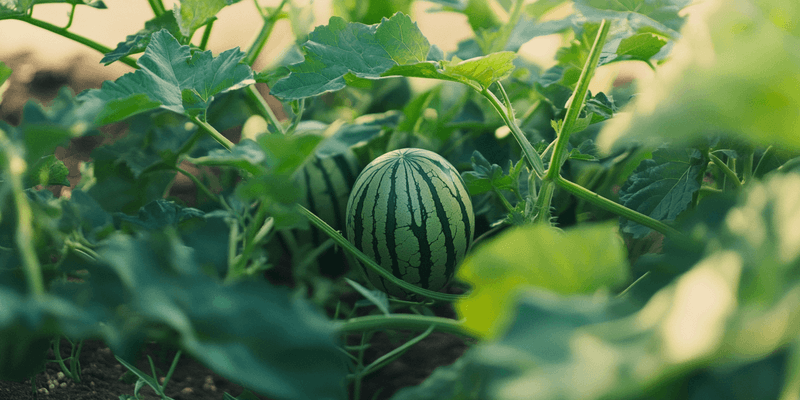
Saving seeds from the unusual melon and planting them the following season is the most practical next step available to a home grower. A grow-out cannot prove what caused the original fruit’s appearance, but it can tell you whether a related trait shows up again.
If several plants from the saved seeds produce red-skinned fruit, that pattern supports a heritable explanation more strongly than a single observation ever could. Repeated expression across multiple plants and fruits is the kind of evidence that moves the story from an intriguing report toward something more testable.
A failed recurrence, though, does not settle the original question. If the saved seeds produce only ordinary-looking melons, the cause could have been a one-fruit developmental variation, a somatic change that did not pass into the seed, or simply an environmental factor that was present that season and not the next.
None of those outcomes definitively explain what happened the first time. The grow-out adds information without providing a complete answer on its own.
Genetic testing is sometimes raised as a way to confirm a mutation or identify a cultivar, and it can be genuinely useful when the right samples, appropriate comparisons, and expert interpretation are available. For a home grower, that level of analysis is not typically accessible without connecting with a university extension program or plant breeding specialist.
A grow-out is the more realistic starting point. Whether the trait recurs or not, keeping careful records across seasons builds a body of observation that is far more useful than a single dramatic harvest memory.
Red skin does not establish ripeness
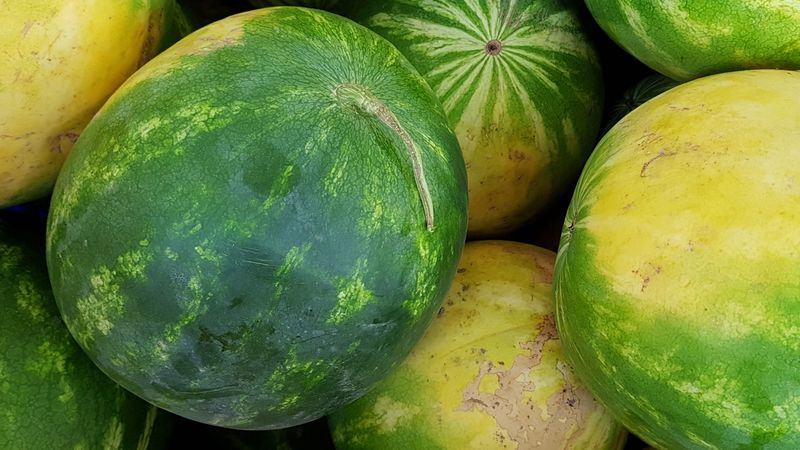
Rind color, whether typical green or an unusual red, cannot tell you whether a watermelon is ready to harvest. Ripeness is variety-dependent, and the outer color of a ripe melon varies widely across cultivars.
Treating a red rind as proof of perfect ripeness would be like treating any other rind color as a harvest signal without checking additional signs. The appearance of the skin is simply not a reliable standalone indicator.
A more dependable approach combines several signals at once. USDA watermelon maturity guidance points to the ground spot turning yellow or creamy as one of the more consistent external clues.
A tendril near the fruit that has dried and turned brown is another useful sign. The fruit should also look filled out rather than elongated or narrow, and some varieties develop a duller sheen on the rind as they approach maturity.
No single indicator is definitive on its own.
The thumping method is widely known but not consistently reliable across all varieties and conditions. More critically, extension guidance on melon harvesting makes clear that watermelon does not continue to sweeten after it is picked.
Arizona growers should leave fruit on the vine until multiple maturity signs line up, because harvesting early cannot be corrected after the fact. The interior flesh color and flavor, checked after cutting, provide the final word on whether the timing was right, and those assessments apply to any watermelon regardless of what the rind looks like from the outside.
Regional Arizona conditions add context, not a diagnosis
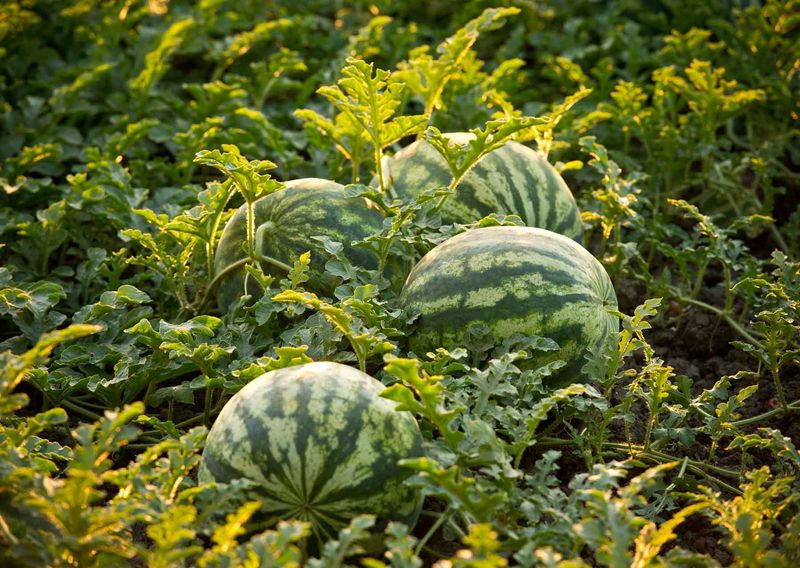
Arizona’s climate presents real challenges for watermelon growers, particularly in the low-desert regions around Phoenix. Triple-digit summer temperatures and low humidity increase the water demand on plants significantly.
University of Arizona gardening guidance describes watermelon as relatively deep-rooted compared with many vegetables and recommends adjusting irrigation based on soil type, weather conditions, plant size, and the irrigation method in use, rather than following a fixed schedule that applies everywhere.
Heat and water stress can affect fruit development in various ways, including changes to rind texture, cracking, and internal quality. What the available evidence does not show is that Arizona’s climate causes a uniform bright-red rind phenotype.
That connection would require specific documentation linking temperature or drought stress to red rind pigmentation, and no such finding appears in the sources reviewed here. Treating the desert heat as the explanation for the unusual rind would be speculation rather than evidence-based reasoning.
Planting windows and crop timing also vary considerably across the state. In Maricopa County, watermelon is generally a 90-to-120-day crop, with a primary seed-starting window running roughly from May 1 through June 1, according to the Maricopa County vegetable planting calendar.
Those dates do not apply statewide. Elevation, local weather patterns, variety selection, and soil conditions all shift the timing for growers in other parts of Arizona.
Any advice drawn from low-desert guidance should be labeled as such rather than applied broadly.
An unusual appearance still requires a routine safety check

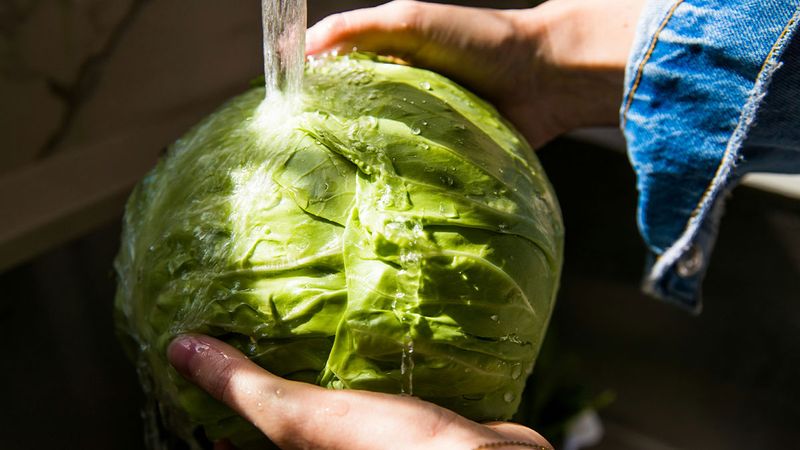
An eye-catching rind color can make a melon feel like a specimen to preserve and admire, but the food-safety steps that apply to any home-grown fruit still apply here. Before cutting, wash and scrub the entire exterior under running water.
Produce safety guidance recommends this step because surface bacteria and soil can transfer from the rind to the flesh during cutting, even when the fruit looks clean on the outside.
Avoid cutting into any melon that shows extensive cracking, visible decay, or a damaged rind. Breaks in the rind create an entry point for contaminants that can reach the interior.
A fruit that looks unusual on the outside requires the same inspection as any other: check for soft spots, discoloration near the stem or blossom end, and any areas where the skin has broken down. Unusual color alone does not indicate safety or danger.
If the melon has mold anywhere on the surface, a foul or fermented smell, sliminess, or soft decay that extends into the flesh, do not eat it. USDA food safety guidance on molds advises discarding soft, high-moisture produce that shows mold rather than attempting to trim the affected area, because mold and associated toxins can penetrate further into soft fruit than the visible surface suggests.
A striking red rind does not change that calculus. Safety is assessed by condition, not color.
The observation is intriguing, but the cause remains open
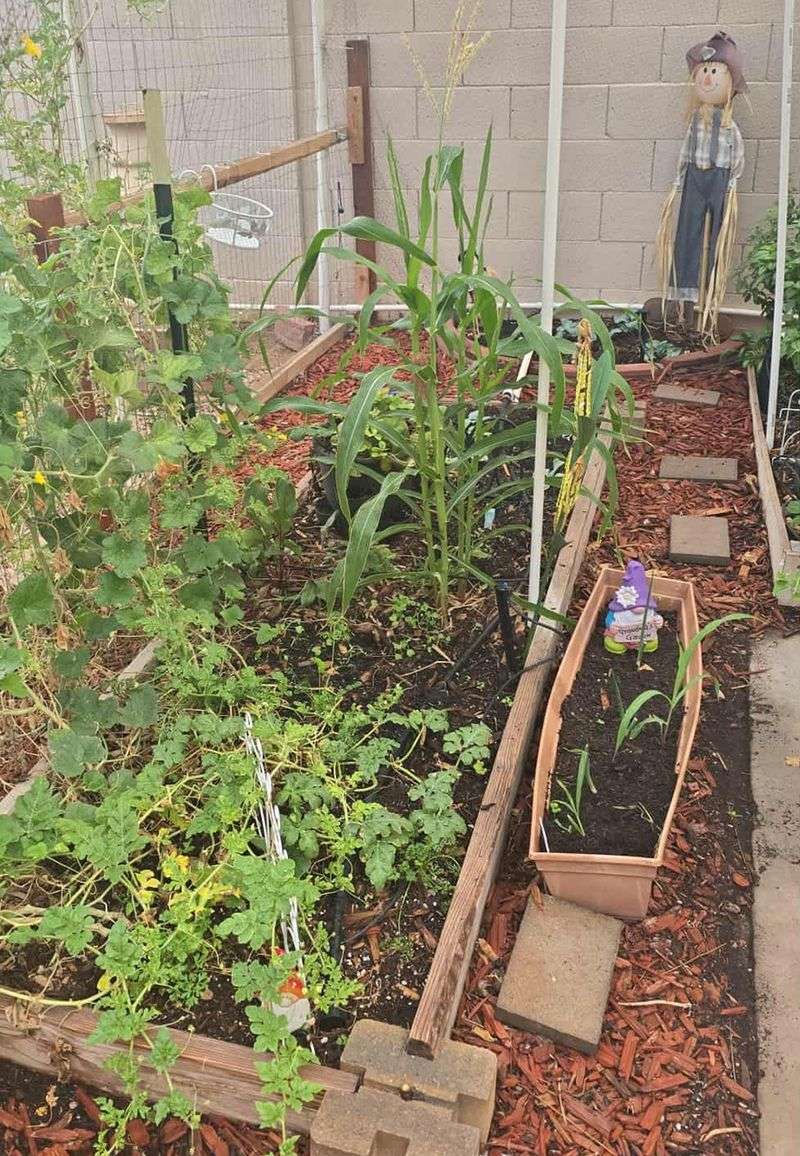
After working through the biology, the documentation steps, and the regional context, the honest answer is that the cause of the reported red rind remains unresolved. A genuinely red exterior could reflect an inherited cultivar trait, an obscure named variety, a somatic or developmental change in one fruit, or a misidentification.
The research on watermelon genetic diversity confirms that rind color is variable and heritable, as detailed in published watermelon breeding literature, but that general finding does not identify what happened to this specific fruit in Arizona.
The melon is best described as an unusual reported appearance rather than as evidence of a mutation, a new variety, or a climate-driven transformation. Calling it any of those things would require evidence that does not currently exist for this particular fruit.
What would move the story forward is a set of verified whole-fruit photographs showing the exterior clearly, a documented seed source, records of whether other fruits on the same plant looked similar, and ideally a careful grow-out over at least one additional season.
Appropriately designed genetic analysis could add another layer of evidence, but only with the right samples and expert interpretation. For now, the most accurate and useful way to describe the discovery is to say that an unusual rind color was observed, the cause has not been confirmed, and the observation is worth investigating further with patience and good records.
Thirty years of growing experience is exactly the kind of background that makes careful, season-by-season follow-up possible.