Slip A Mesh Bag Over Your Ripening Arizona Figs And It Can Help Keep Birds Off Individual Fruits
Birds can strip a ripening fig right off your tree before you ever get a taste. In Arizona’s low desert, where fig trees often produce two crops a year, that window between a nearly ripe fruit and a bird-damaged one can be surprisingly short.
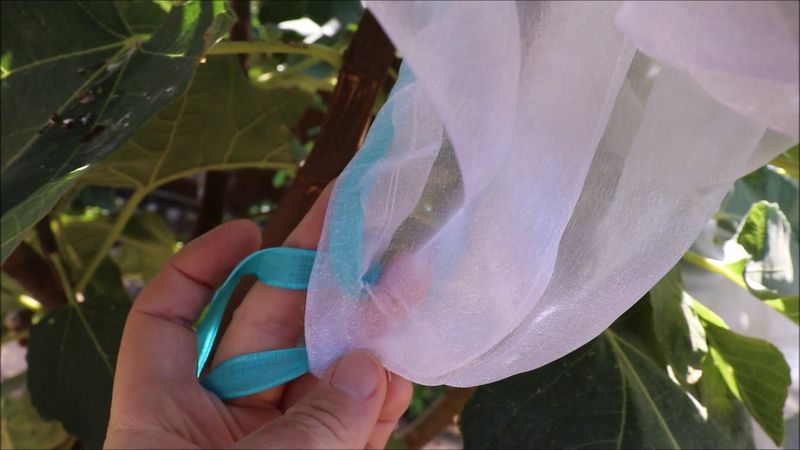
Slipping a breathable mesh bag over individual figs before they fully ripen is one way to reduce bird access, especially if you have a young or compact tree with just a handful of fruits to protect. The method takes some attention and regular checking, but it can be a practical small-scale option for Phoenix and Tucson gardeners who want to get more of their own harvest.
Ripening figs attract birds before harvest
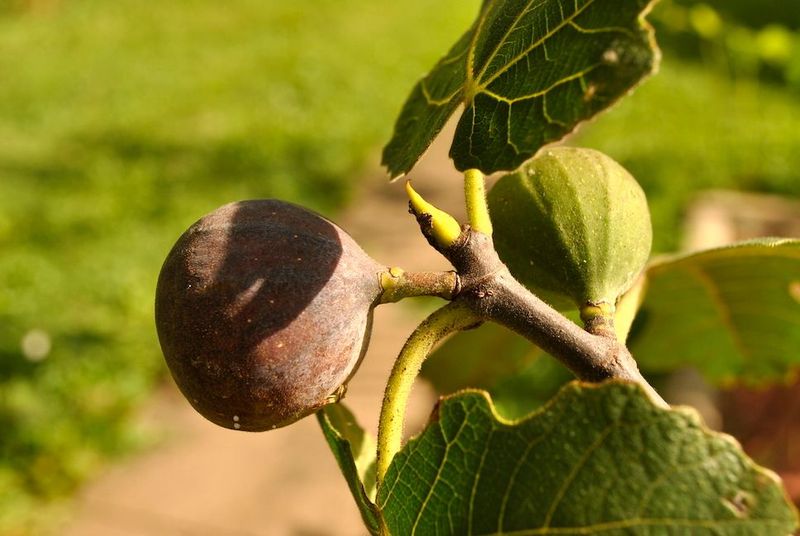
Figs do not spend much time in that perfect almost-ripe window before birds notice them. As fruit softens and shifts color, it becomes far more attractive to birds, and damage can happen fast in the low desert where temperatures push fruit through its final ripening stage quickly.
According to the University of Arizona Cooperative Extension’s guide on growing common figs in the low desert, birds are recognized pests of ripening figs, and the Extension specifically recommends either netting the tree or bagging individual fruit before it ripens. That timing detail matters: protection needs to go on before the fruit is fully ripe, not after birds have already found it.
Low-desert fig trees commonly produce two crops. The first arrives around late June, and a second follows in late summer or early fall, often August or September.
That means Arizona growers should monitor both crops separately rather than assuming one set-and-forget date covers the season. The goal of any cover or bag is to reduce bird access during that short, vulnerable ripening period, not to leave fruit hanging indefinitely past its peak.
A breathable bag protects one accessible fig
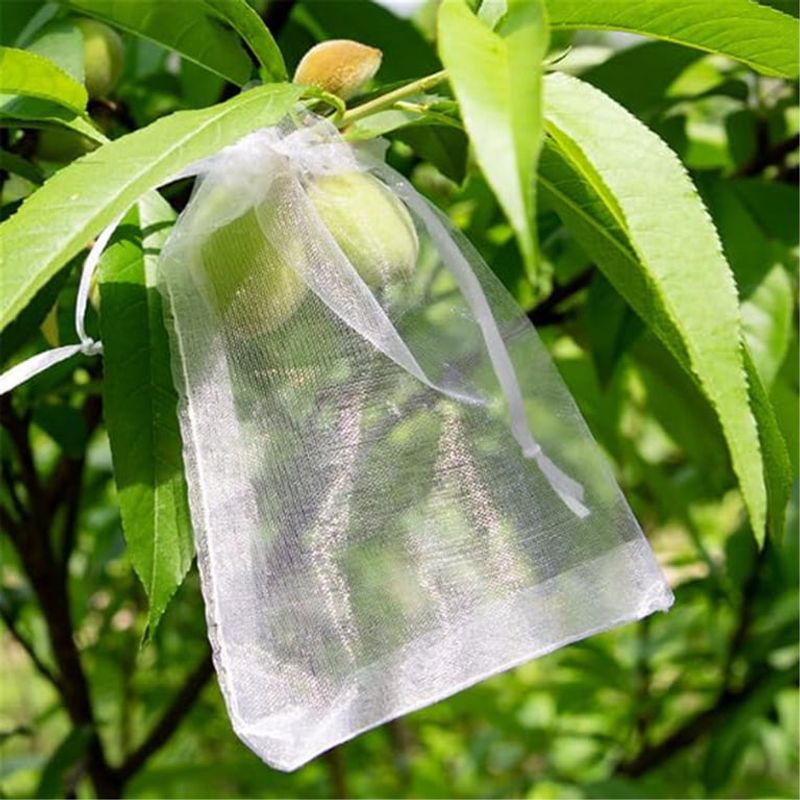
Individual mesh bagging works best when you have a manageable number of figs within easy reach. A young or compact tree is the practical sweet spot: you can actually get to each fruit, inspect it, and place a cover without a ladder or a lot of effort.
On a mature tree that can reach 10 to 30 feet, covering every fig becomes a much bigger task.
The University of Arizona Cooperative Extension recommends bagging individual fruit as one option for protecting figs from birds. The approach described here adapts that guidance to a breathable household mesh bag placed over a single fig. That adaptation is reasonable, but it is worth being clear about what the evidence actually covers: the Extension supports the general idea of bagging fruit before ripening, and that is the foundation this method rests on.
No published research was found that specifically tests every type of household mesh bag, weave, or closure material on Arizona figs.
The practical implication is that a breathable mesh bag can reduce bird access to the one fruit it encloses, and only that fruit. Any fig left uncovered stays fully exposed.
Choosing which figs to bag means prioritizing the ones you can reach and monitor easily, rather than trying to cover everything on the tree at once.
Your Arizona Garden Changes Every Week. Your Plan Should Too.
Gardening in Arizona changes quickly throughout the season. Every Friday you’ll receive a simple weekly plan showing exactly what to plant, prune, fertilize, harvest, and protect so you never miss the right timing.
Install the cover before the fig fully ripens
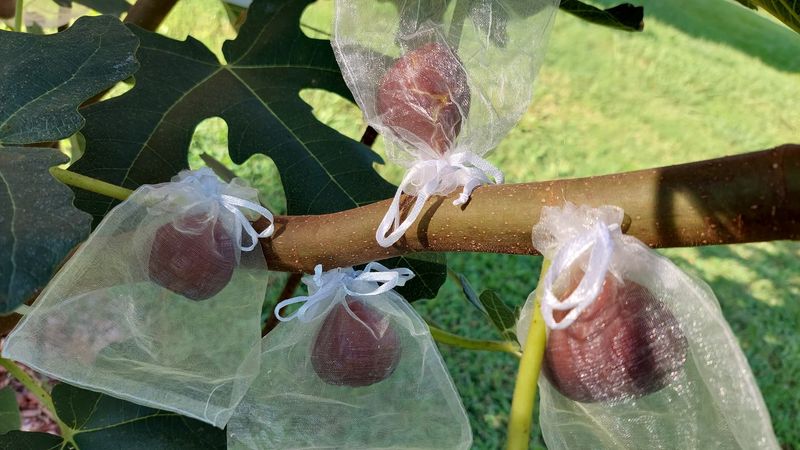
Timing the installation correctly makes a real difference. The cover should go on while the fig is still approaching ripeness, not after it has already softened fully.
Birds tend to move in once figs start to show color and give slightly to the touch, so getting the bag on before that stage reduces the chance that birds find the fruit first.
Before closing the bag, take a close look at the fruit and the area around it. Check that no insects are already resting on or inside the fig, because trapping them under the cover defeats the purpose and can speed up fruit deterioration.
Once you are satisfied the fruit is clean, slip the breathable mesh over the entire fig so no part of the fruit is left exposed. Pull the opening snugly around the stem or the supporting branch and close it firmly, eliminating any gap wide enough for a bird to reach through.
Sealed plastic bags are not a good substitute in Arizona’s heat. Research on fruit bagging shows that sealed coverings can retain moisture and alter the microclimate around the fruit, and extension guidance on fruit bagging warns that clear plastic can contribute to disease problems.
A breathable mesh lets air move around the fruit without sealing in humidity, which matters especially during the hot, humid monsoon period when Arizona figs are ripening.
Inspect the bag as the fruit softens
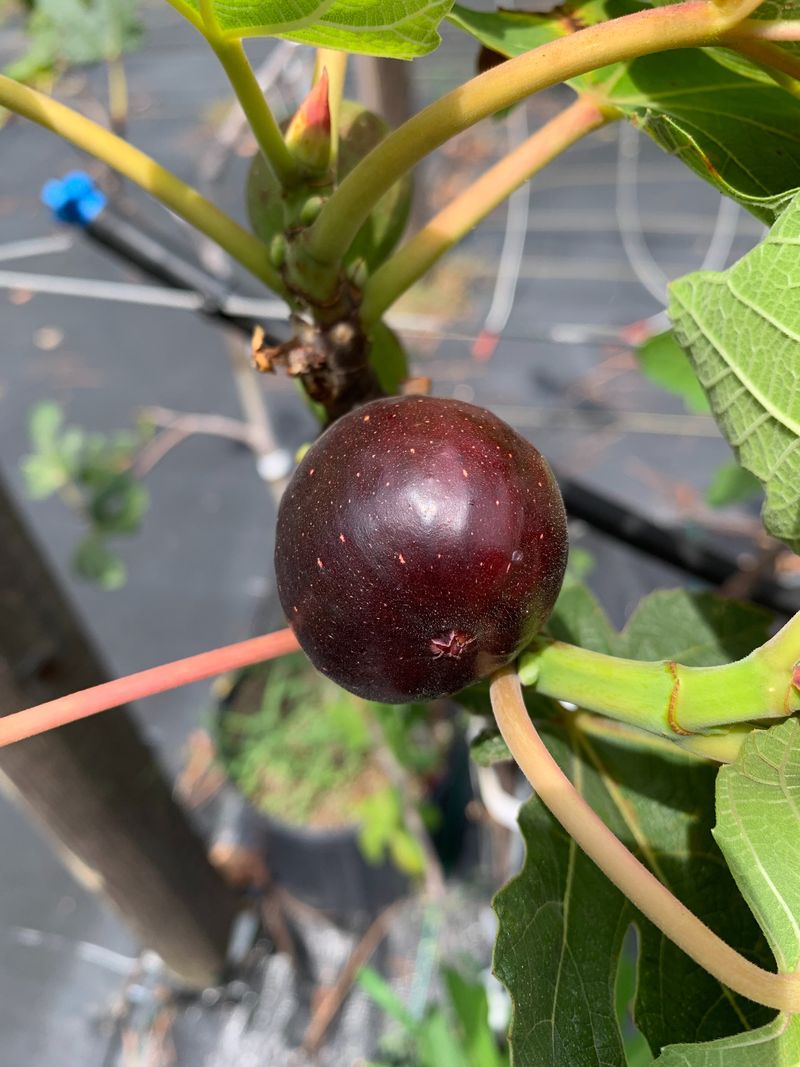
Putting the bag on is only the first step. Once the cover is in place, regular inspection becomes part of the routine, especially during the active ripening period when figs can move from nearly ready to fully mature in a matter of days under Arizona summer heat.
Watch for four main ripeness signals: a color shift toward brown, purple, or yellow depending on the variety; the fruit beginning to droop or hang lower on the branch; increased softness when you press it gently through the mesh; and easier separation from the stem when you apply light pressure. According to UC Master Gardener guidance on figs, figs do not continue to ripen normally after they are picked, so harvesting at the right moment matters more than it does with some other fruits.
Remove the bag and harvest as soon as the fig reaches full maturity. Do not leave ripe fruit hanging in the bag hoping to extend its shelf life on the tree.
Any fig that splits, shows damage, or begins to deteriorate should come off the tree promptly. Split figs can attract insects quickly and create conditions that affect neighboring fruit.
Removing problem fruit as soon as you spot it during your inspections keeps the situation from getting worse inside or around the bag.
Choose whole-tree netting for a larger crop
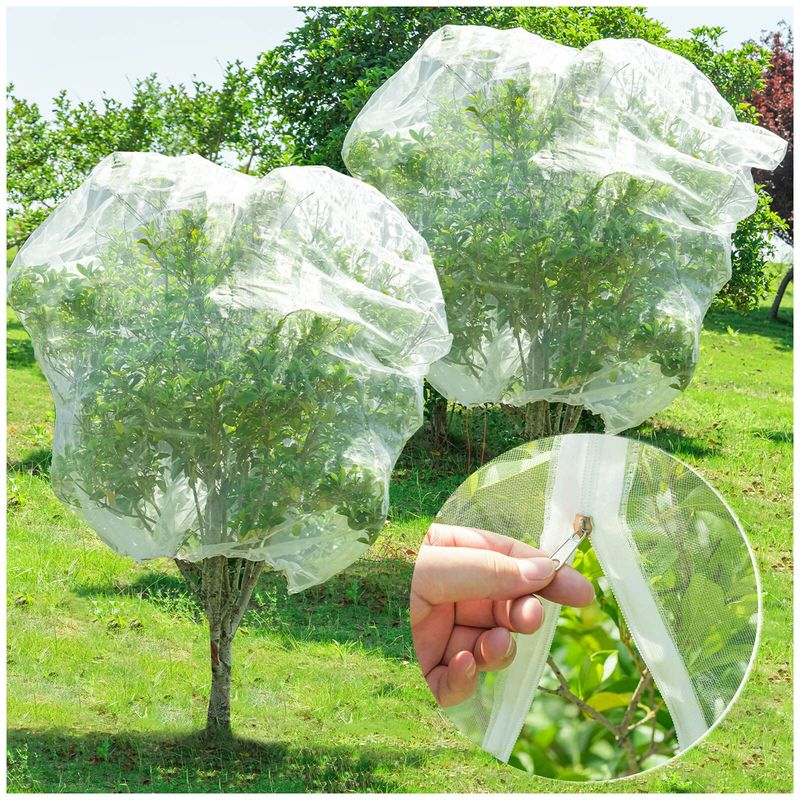
At some point, individual bagging stops being practical. A young tree with a dozen accessible figs is a reasonable candidate for the one-bag-per-fruit approach.
A mature fig tree that has grown 15 or 20 feet tall with fruit scattered across hundreds of branches at different ripening stages is a different situation entirely, and trying to bag each fig individually on a tree that size would take more time and material than most homeowners want to spend.
For larger trees or heavier crops, whole-tree netting is the more established option. UC Integrated Pest Management identifies netting as particularly effective for small orchards and isolated trees, and that applies well to the kind of single backyard fig tree common in Phoenix and Tucson yards.
The netting needs to be supported on a frame or structure rather than draped loosely over branches, because birds can reach fruit through netting that rests directly against the canopy edges.
Securing the netting around the bottom and sides is equally important. Gaps at the base or along the edges let birds walk or fly underneath, which eliminates most of the benefit.
Installation takes time and some planning, and the netting needs to stay in place and stay intact throughout the ripening period. Whole-tree netting has stronger published support as a bird-control method than individual household bags, but it is not a quick or effortless setup, particularly on a large or irregularly shaped tree.
The cover blocks birds, not every fig problem
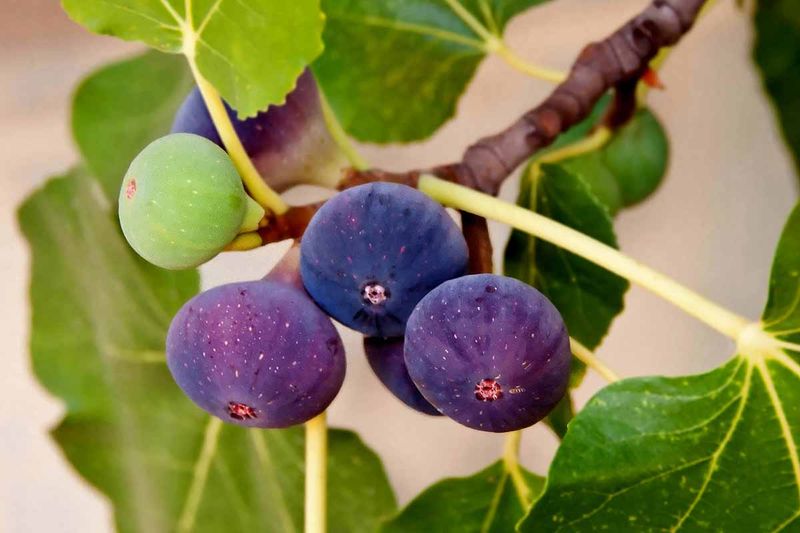
A mesh bag placed over a single fig does one specific job: it creates a physical barrier between the fruit and birds. Everything else that can go wrong with an Arizona fig is still entirely possible, and it helps to know what those other problems look like so you are not adding more bags when a different fix is needed.
Green fig beetles are a notable example. These large, metallic green beetles are drawn to soft, ripe figs and can damage fruit quickly.
Arizona Extension publications on green fig beetle management make clear that ordinary bird netting is not fine enough to exclude these insects, and the same logic applies to a mesh bag designed to stop birds. Fruit flies, ants, and other small insects can also reach fruit through mesh openings that are more than adequate for blocking a bird.
Fruit that splits, rots, shows sun injury, or deteriorates due to heat stress or inconsistent irrigation is not a bird-access problem, and a tighter bag will not correct it. Arizona’s low-desert summers are hard on figs, and adequate, consistent irrigation affects fruit size and quality in ways that no cover can substitute for.
Before assuming a damaged fig needs better exclusion, look at whether the injury pattern suggests insect feeding, weather stress, or water irregularity instead. Identifying the actual cause leads to a more useful response than adding more layers of mesh.
Secure every cover to protect wildlife
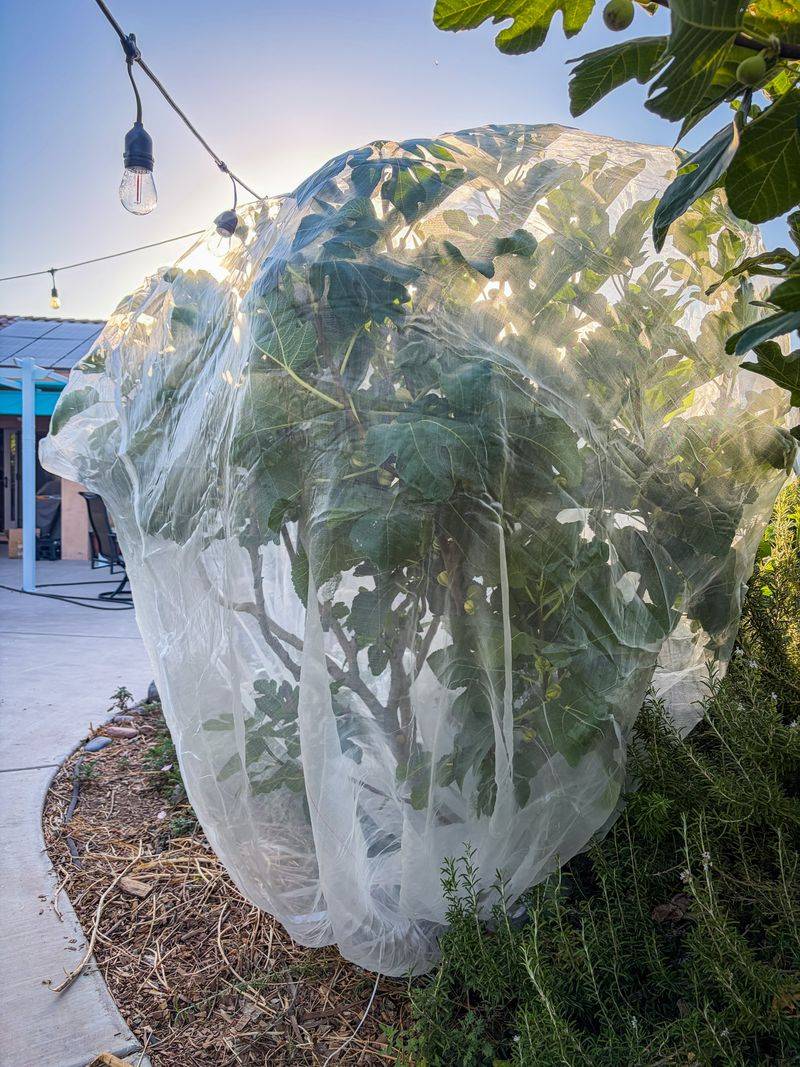
Loose or poorly secured netting creates a hazard that goes beyond fruit protection. Flexible mesh and netting can trap birds and other wildlife when it is not installed carefully, and that risk applies to bags left with dangling drawstrings, torn sections, or openings wide enough for a bird to push through and then become stuck.
U.S. Fish and Wildlife Service guidance on avoiding harm to birds notes that flexible nylon or polypropylene netting can entrap and injure birds when it is not properly managed.
That guidance supports a practical set of habits: close every bag snugly with no loose loops, replace any bag with torn mesh before using it on fruit, and check each covered fig regularly during the ripening period rather than leaving bags unattended for days at a time.
After harvest, remove all bags from the tree. There is no benefit to leaving mesh on empty stems, and any material left hanging can still catch wildlife after the fruit is gone.
These precautions come from general wildlife-entanglement guidance rather than a study specifically testing fig bags, and not every mesh product carries the same level of risk. The point is to treat the cover as something that needs active management throughout its use, not a one-time installation that can be forgotten until the next inspection.
Use the bag to reduce access, not to guarantee a perfect harvest
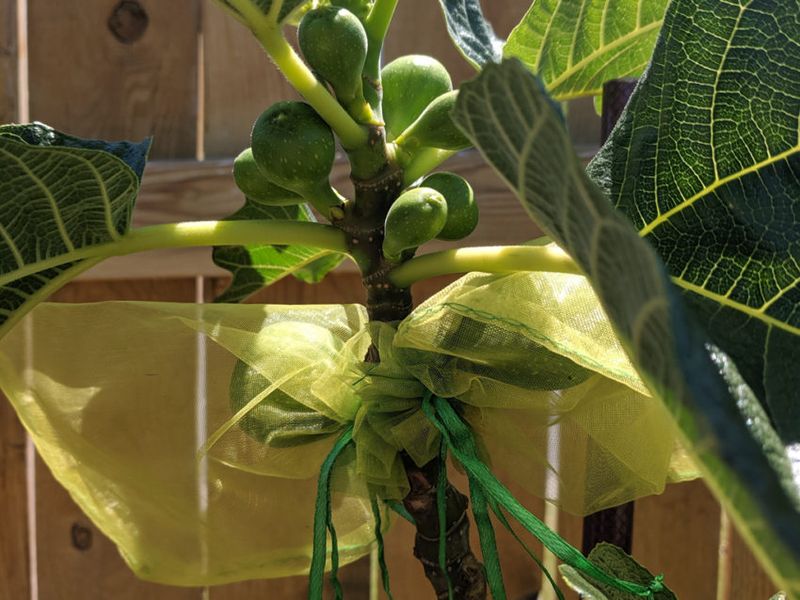
On a small Arizona fig tree, a breathable mesh bag placed over an individual fruit before it fully ripens can reduce the chance that a bird gets to it first. That is the honest scope of what the method offers.
It protects the fruit it encloses, it requires a snug closure and regular inspection, and it needs to come off as soon as the fig is ready to pick.
The bag does not cover the rest of the tree, does not address green fig beetles or other insects, and does not correct any of the fruit-quality issues that Arizona’s heat, alkaline soils, and summer irrigation demands can create. Birds may still reach exposed figs, and a poorly closed bag may not stop a determined bird from finding a gap.
Managing expectations from the start helps you use the method where it actually fits rather than relying on it for problems it was never designed to solve.
For a few accessible figs on a compact tree, the approach is a reasonable adaptation of published Arizona Extension guidance to bag fruit before ripening. For a larger crop or a mature tree, whole-tree netting backed by stronger published evidence is worth considering instead.
The best harvest comes from combining the right protection method with consistent tree care, timely picking, and prompt removal of any fruit that has already been damaged. A mesh bag is one useful tool in that process, not the whole solution.