Why North Carolina Mulch Keeps Washing Away In Fall No Matter How Thick You Spread It
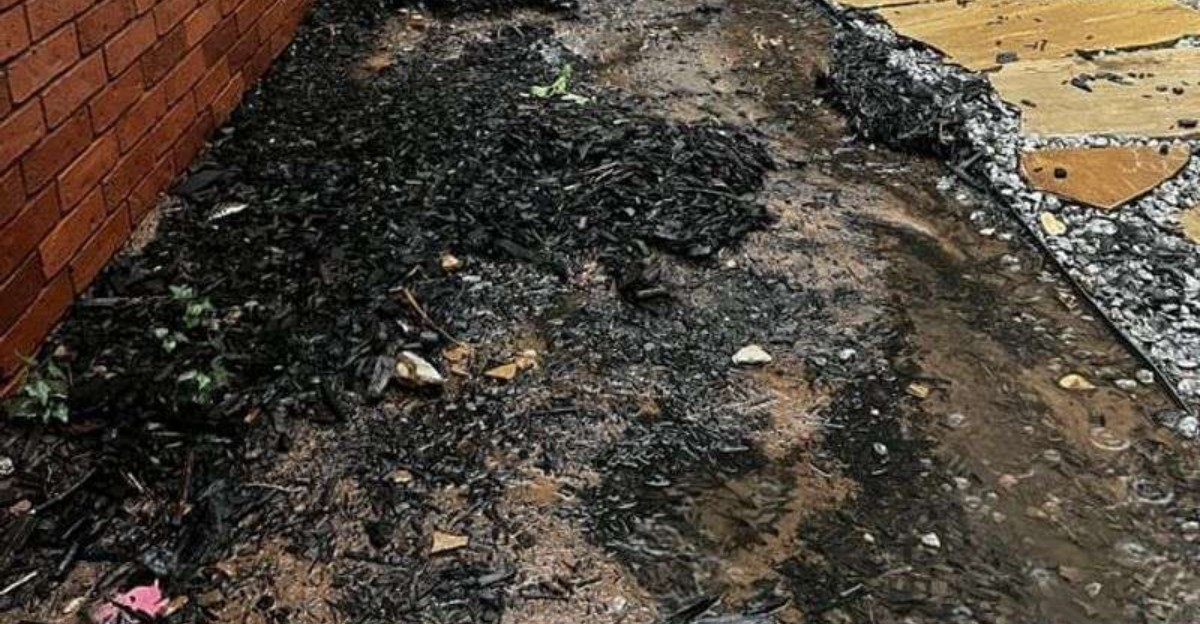
Mulch seems to disappear faster than expected in many North Carolina gardens each fall, even when it’s applied generously, and the real cause often has less to do with quantity and more to do with technique.
Heavy fall rains combined with sloped or poorly graded beds can carry lighter mulch materials away regardless of how thick the initial layer was.
The type of mulch used also plays a significant role, since finer, lighter materials wash away far more easily than denser, heavier options better suited to handling water flow.
Bed edging, or the lack of it, can further influence how much mulch simply flows off into surrounding lawn or walkways during a downpour.
Understanding these underlying factors helps explain why more mulch alone often isn’t the real fix for this frustrating fall problem.
1. Heavy Rain Can Simply Carry Mulch Downhill

Fall storms in North Carolina can dump a surprising amount of water in a short time. When rain falls faster than the ground can soak it up, the extra water runs across the surface instead of sinking in.
That moving water acts like a tiny river. On a flat bed it might just pool for a moment, but on any kind of slope it picks up speed and grabs loose bits of mulch along the way. The steeper the ground, the stronger the pull.
Mulch is light, especially when it first goes down and has not settled yet. Loose pieces float on top of the runoff and travel to the lowest spot, which is often the sidewalk, driveway, or the edge of the lawn.
You may notice the mulch always collects in the same corner or against the same border. That low point is telling you exactly where the water is heading during every storm.
Spreading a thicker layer will not stop this. If anything, a big loose pile gives the water more material to carry off. The problem is the flow of water, not the amount of mulch.
A smart first step is to watch your beds during the next rain. Grab a raincoat and see where the water enters, where it speeds up, and where it leaves. Once you know the path, you can start slowing it down.
Understanding that downhill pull is the key to keeping your beds looking neat all season long.
2. Downspouts Can Concentrate Too Much Water
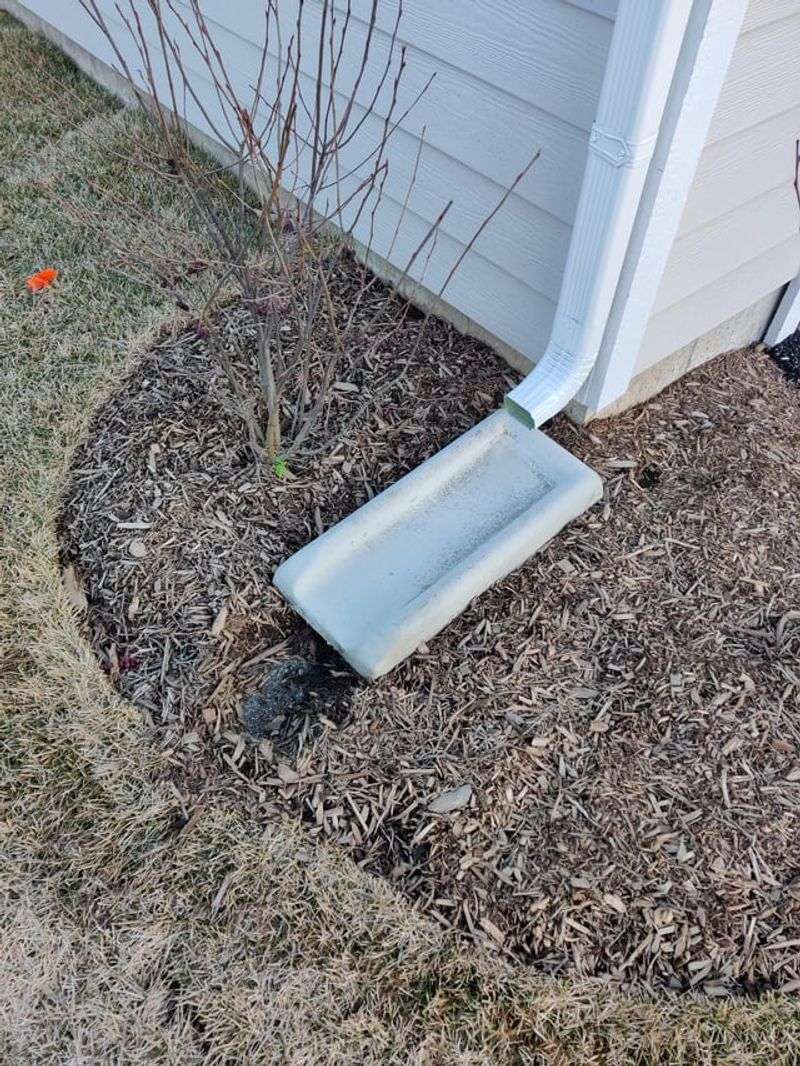
Your roof is bigger than you might think, and every drop of rain that lands on it has to go somewhere. Downspouts gather all that water and shoot it out in one concentrated blast.
When a downspout empties right next to a mulched bed, it creates a firehose effect. Instead of gentle rain spread across the whole yard, you get a powerful stream hitting one small spot. Even the heaviest mulch cannot stand up to that kind of force.
You can usually spot the trouble by looking for a bare patch or a small trench near the bottom of the spout. That is where the rushing water lands and pushes everything aside.
Your North Carolina Garden Changes Every Week. Your Plan Should Too.
Gardening in North Carolina changes quickly throughout the season. Every Friday you’ll receive a simple weekly plan showing exactly what to plant, prune, fertilize, harvest, and protect so you never miss the right timing.
Piling more mulch there is like bailing water out of a leaky boat without patching the hole. The water source keeps winning every single storm, so the mulch never gets a chance to stay put.
The better fix is to deal with the water itself. Adding a downspout extension can carry the flow several feet away from the bed and out to the lawn or a drainage area. A splash block or a buried drain pipe works too.
Some gardeners route the water into a rain barrel, which cuts the flow and gives them free water for dry days later. Others send it toward a gravel bed that spreads the water out gently.
Once you tame the downspout, you will be amazed how much longer your mulch stays exactly where you spread it.
3. Compacted Soil Makes Runoff Worse
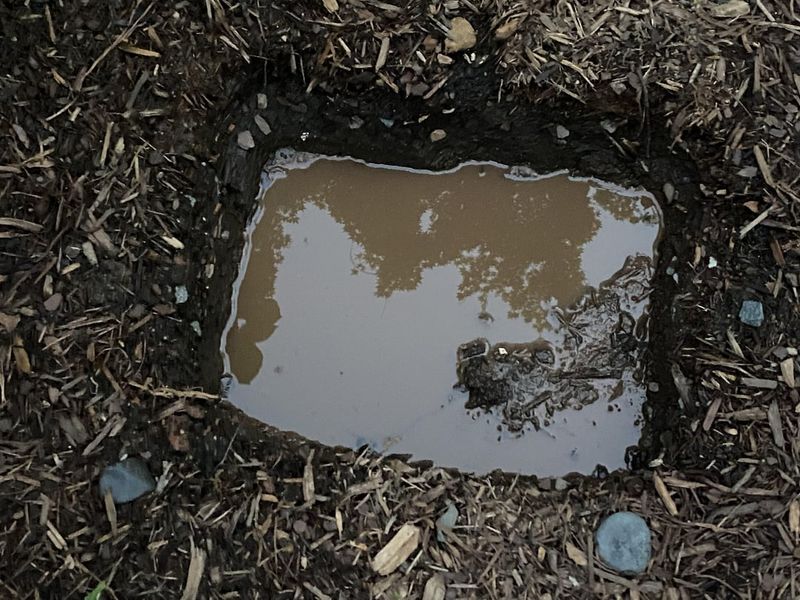
Much of North Carolina sits on heavy clay soil, and clay loves to pack down tight. When soil gets hard and squeezed together, water has almost nowhere to go.
Think of a dry sponge versus a solid brick. A loose, healthy soil drinks rain like a sponge, while compacted ground turns it away like a brick. That rejected water then slides across the top, taking your mulch with it.
Foot traffic, heavy equipment, and years of rain pounding bare spots all press the soil down over time. New homes are especially prone to this because builders often drive machines across the yard.
Compacted soil also holds less air, which means plant roots struggle and the ground stays wet on the surface long after a storm. All that standing water becomes moving water the moment the bed has any tilt to it.
You can test your soil by pushing a screwdriver into it. If it stops quickly and feels rock hard, compaction is likely part of your washout problem.
Loosening the ground helps a lot. Working in compost, chopped leaves, or other organic matter opens up the soil so it can absorb rain again. Earthworms and roots slowly do the rest once they have something to feed on.
Aerating the lawn nearby and avoiding walking on wet beds also keeps the soil from packing back down.
When water can finally sink in instead of running off, your mulch stops taking that downhill ride and settles peacefully into place.
4. Thick Mulch Does Not Fix Poor Drainage
It feels logical to fight washouts by adding more mulch, but that plan often backfires. A deeper layer does not change where the water goes, and it can actually make things worse.
Poor drainage means water enters the bed faster than it can leave. That is a plumbing problem, not a mulch problem. No amount of extra bark chips will teach the water a new direction.
A thick, loose pile also gives runoff more loose material to sweep away. Instead of a thin layer that settles and grips the soil, you have a fluffy mountain that floats off in chunks.
Too much mulch brings other headaches as well. It can smother plant roots, hold moisture against stems, and create a crusty top layer that water simply slides across without soaking in.
You might notice that even after adding bag after bag, the same low spots stay bare while the same corners fill up with drifted mulch. That pattern is proof the water flow is in charge, not the depth of the layer.
Most beds only need about two to three inches of mulch. That is enough to hold moisture, block weeds, and protect roots without becoming easy cargo for runoff.
Before buying more mulch, look at how the land is shaped. Fixing the grade so water drains away, or adding a proper drainage path, solves the real issue.
Once the water has a good route, a modest layer of mulch will do its job beautifully and stop disappearing every time clouds roll in.
5. Shredded Mulch Usually Holds Together Better
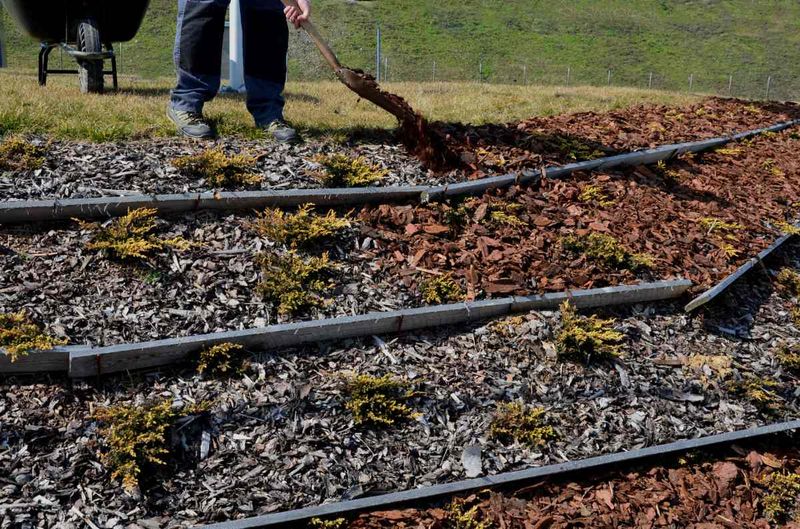
Not all mulch behaves the same when the rain starts. The type you choose makes a real difference in whether it stays or floats off.
Shredded hardwood mulch has long, stringy pieces that tangle together like a woven mat. Those interlocking strands grip each other and the soil, so water has a much harder time lifting them.
Compare that to big wood nuggets or light bark chips. They are round, smooth, and buoyant, which means they bob on top of runoff and roll downhill with ease. Pine straw can also drift, though it mats down better than nuggets.
On a slope, this difference really shows. A bed of shredded mulch might barely budge in a storm while the same slope covered in nuggets ends up scattered across the yard.
Fresher shredded mulch tends to knit together even more after a couple of rains, forming a slightly crusty surface that resists movement. That is one time a little crust actually helps you.
When you shop, run your hands through the mulch. If the pieces feel light and slide apart easily, they will probably wash off a slope. If they cling and tangle, they are a safer bet.
Double-shredded hardwood is a favorite among North Carolina gardeners dealing with hilly beds for exactly this reason. It costs about the same as other options but stays put far longer.
Matching your mulch to your slope is a simple switch that saves you from raking runaway pieces back into place after every fall downpour.
6. Use Edging On Sloped Beds
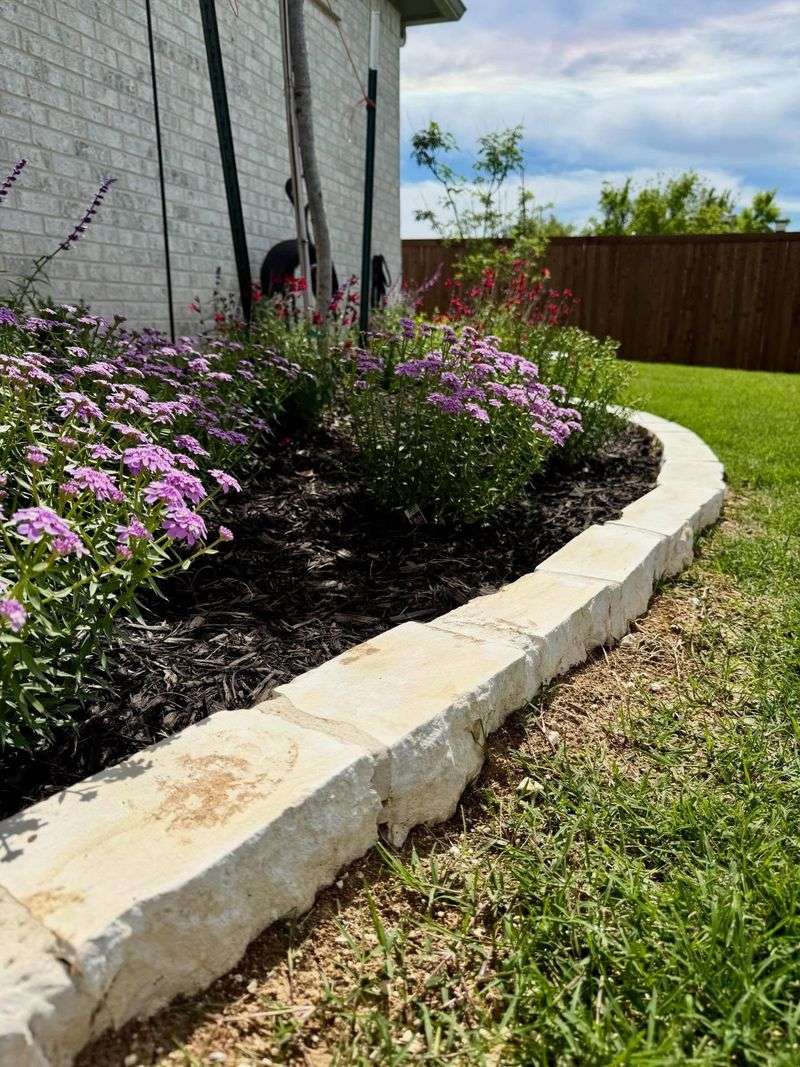
Sometimes the mulch just needs a wall to lean against. Edging gives your bed a clear border that catches loose pieces before they escape onto the lawn or driveway.
On sloped ground, a low retaining border along the downhill side works wonders. It acts like a little dam, holding both mulch and soil in place while still letting water pass through slowly.
You have plenty of choices here. Metal or plastic landscape edging tucks neatly along the edge, while stacked stones or bricks add a natural look that blends with the yard. Even a shallow trench can help direct water.
Larger flat stones placed right where water tends to rush in can break up the flow. The water hits the stone, slows down, and loses much of its power to carry mulch away.
Edging works best when it is set firmly into the ground. A wobbly border that sits on top will just get pushed aside by the same runoff you are trying to stop.
Keep in mind that edging alone is not a cure if the water source is huge. It pairs best with the other fixes, like redirecting a downspout or improving drainage.
For many gardeners, though, a solid border is the finishing touch that keeps everything tidy. It defines the space, adds a clean look, and quietly does the work of holding your hard-earned mulch inside the bed where it belongs, storm after storm.
7. Slow The Water Before It Reaches The Bed
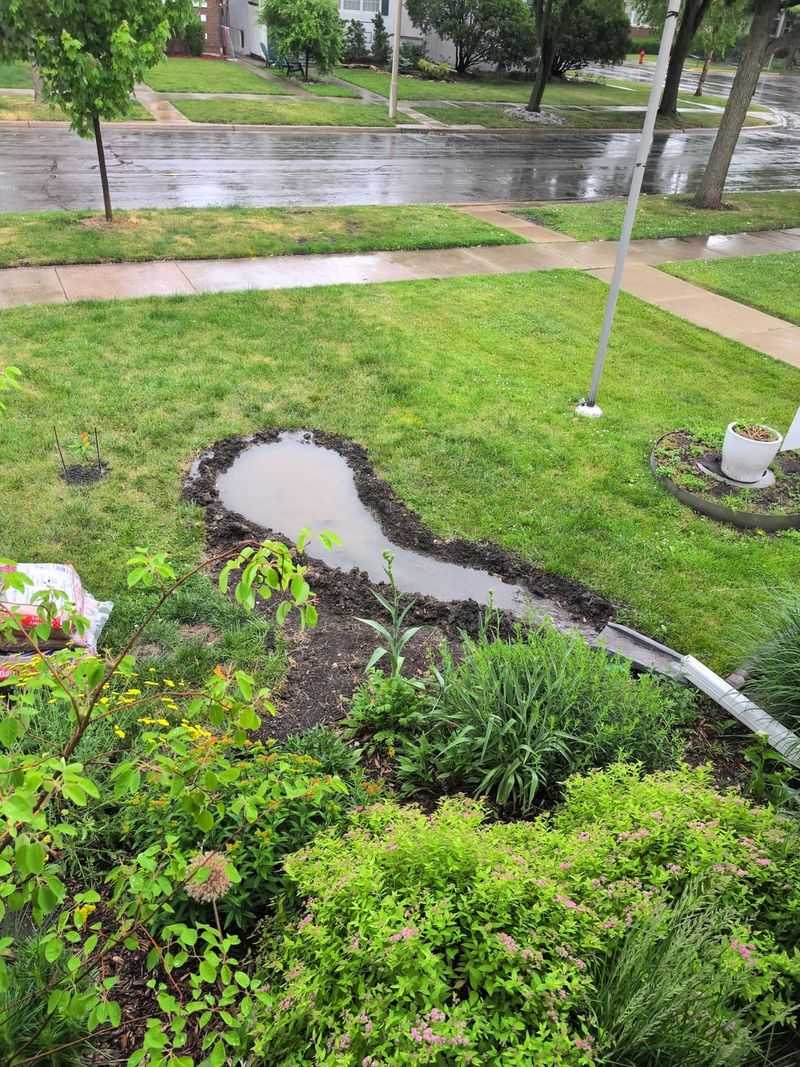
Fast water causes most washouts, so the trick is to take away its speed before it ever touches your mulch. Slow water is gentle water, and gentle water leaves mulch alone.
One easy approach is to reshape the land slightly so runoff spreads out instead of racing in a narrow path. A wide, shallow channel called a swale can guide water around your bed rather than straight through it.
Groundcover plants are another great helper. Their roots and leaves break the force of falling rain and slow the flow across the surface, almost like tiny speed bumps for water.
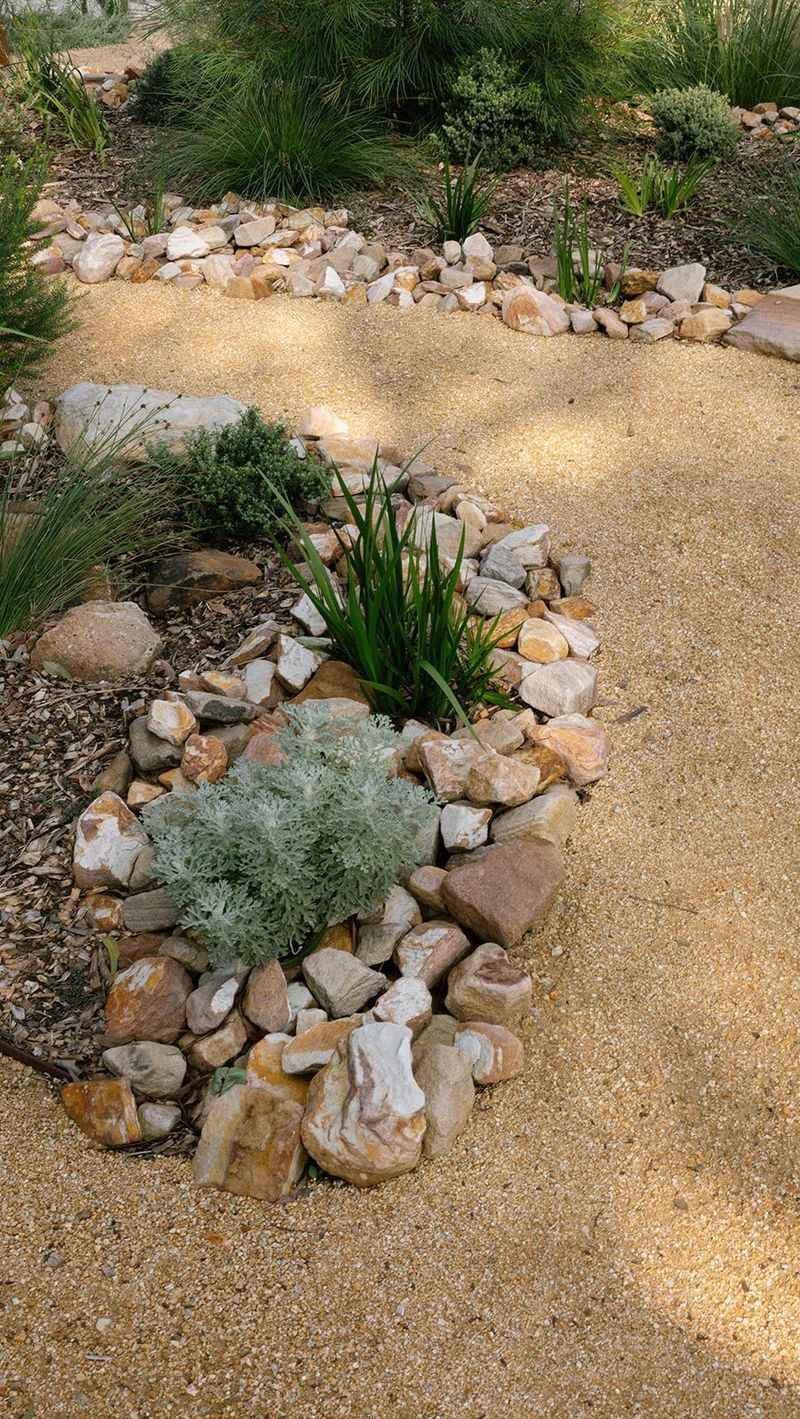
Gravel or river rock placed in the water’s path spreads the flow and lets it soak in bit by bit. This works especially well at the top of a sloped bed where runoff first arrives.
A rain garden takes the idea even further. It is a low, planted dip that collects storm water and holds it while it slowly sinks into the ground, keeping it far away from your mulch.
You do not have to build anything fancy to start. Even a small line of stones or a strip of thick grass above the bed can calm the water down noticeably.
The goal is simple. When water arrives softly instead of charging in, your mulch has no reason to move.
Watch how the rain travels through your yard, then place your slowdown features right where the water speeds up. That small bit of planning pays off all fall long.
8. Fix The Water Flow Before Adding More Mulch
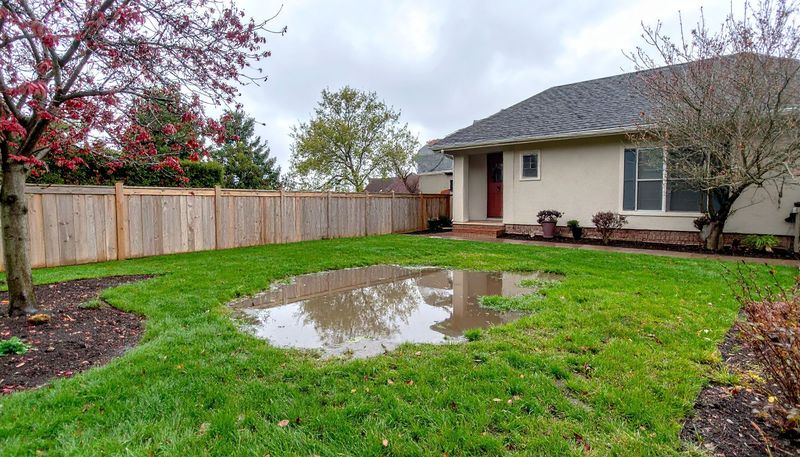
Before you buy another bag, become a water detective. The lasting solution is figuring out where storm water comes from and where it goes, not simply replacing what washed off.
Start during the next good rain. Head outside and watch the whole journey, from the roof and driveway down through your beds and out to the low points. That path is the story of every washout you have had.
Look for clues even on dry days. Drifted mulch, small trenches, bare patches, and lines of debris all mark where water has been moving with force.
Once you know the source, you can match the right fix to the problem. A gushing downspout needs an extension, a hard slope needs slowing features, and packed soil needs loosening with compost.
Fixing the flow first saves real money over time. Gardeners who skip this step end up buying mulch again and again, spending far more than a one-time drainage repair would cost.
It also protects your plants. The same runoff that carries mulch away can wash out seeds, expose roots, and strip nutrients from the soil.
Think of mulch as the final layer, the icing on the cake. It works best when the ground beneath it is stable and the water has a calm, planned route to follow.
Handle the water first, and everything else falls into place. Your mulch stays put, your beds look sharp, and your fall weekends get freed up for enjoying the garden instead of raking it back together.