The Front Yard Trees North Carolina Homeowners Plant Instead Of Crape Myrtle For Color Every Season
You pull into your driveway on a July evening, the cicadas going strong, and there it is again. Another crape myrtle, topped into knobby stubs, looking like every third yard on your street. Crape myrtles are fine, but they give you one good show in summer and not much else, and half the neighborhood has the same one. North Carolina gives you far better options, trees that hand you spring flowers, summer shade, fall fire, and winter interest without the copycat look.
Here are eight front yard trees that earn their spot every single season.
1. Eastern Redbud
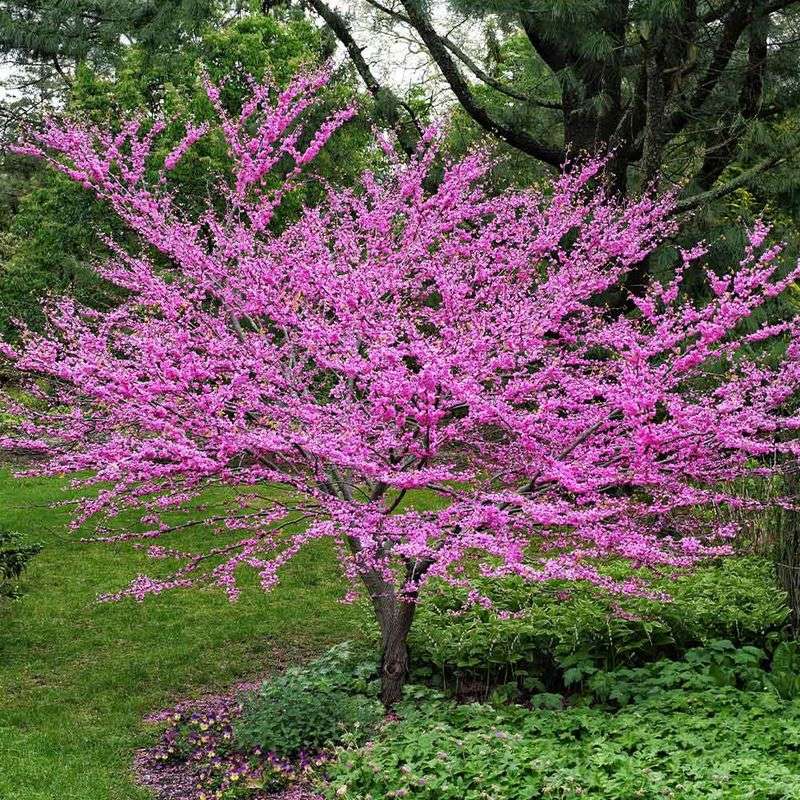
Late March in the Piedmont, when everything else still looks bare and brown, one small tree suddenly glows purple-pink along every branch. That is the Eastern redbud (Cercis canadensis), a North Carolina native that flowers before its leaves even show up.
Here is the part people miss. Those blooms pop straight out of the bark and old branches, a trick botanists call cauliflory. So the whole tree looks dusted in color, not just the tips. After the flowers fade, big heart-shaped leaves take over for cool green shade all summer, then turn buttery yellow in fall.
Redbuds stay small, usually 20 to 30 feet tall, which makes them a genuinely smart pick for a front yard where you do not want to block the house. Plant one about 15 feet from the foundation in spring or fall, in a spot that gets morning sun and a little afternoon shade in our hotter zones. Our red clay is fine as long as water does not pool around the roots.
Bonus for the yard-as-ecosystem crowd, redbud is an early nectar source for native bees waking up hungry. NC State Extension lists it as one of the better small natives for Piedmont landscapes. Your neighbors will ask what it is every March, actually, and you get to sound like you planned it all along.
2. Flowering Dogwood
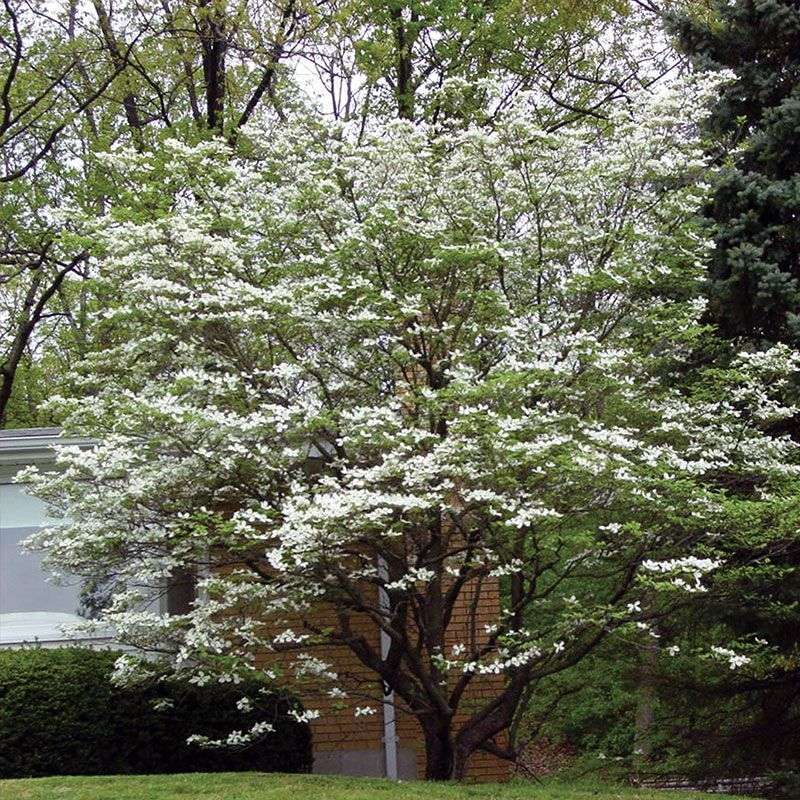
Ask most folks in North Carolina to name a tree and the dogwood comes up fast. It is our state tree for a reason, and it does something crape myrtle never will, it works four seasons hard.
Flowering dogwood (Cornus florida) opens in April with those wide white or pink blooms floating in the understory like they are showing off. Come fall, the leaves turn deep red and burgundy, and clusters of glossy red berries hang on into winter. Birds go after those berries, so you get cardinals and robins working the branches while the color lasts.
Growing one well means giving it a break from our worst afternoon sun. Dogwoods evolved under bigger forest trees, so plant yours where it gets dappled light or morning sun, about 20 feet from the house, in soil you have loosened and mixed with compost. They top out around 15 to 25 feet.
One honest note. Dogwood anthracnose, a fungal disease, hit wild trees hard in the mountains, so good airflow and not crowding the tree matters. Disease-resistant varieties exist, and NC State Extension can point you to them. Space it right and keep the roots mulched but not smothered, and you get spring flowers, summer shade, fall fire, and winter berries from one modest tree.
Your North Carolina Garden Changes Every Week. Your Plan Should Too.
Gardening in North Carolina changes quickly throughout the season. Every Friday you’ll receive a simple weekly plan showing exactly what to plant, prune, fertilize, harvest, and protect so you never miss the right timing.
That is a lot of yard for one hole in the ground.
3. Serviceberry
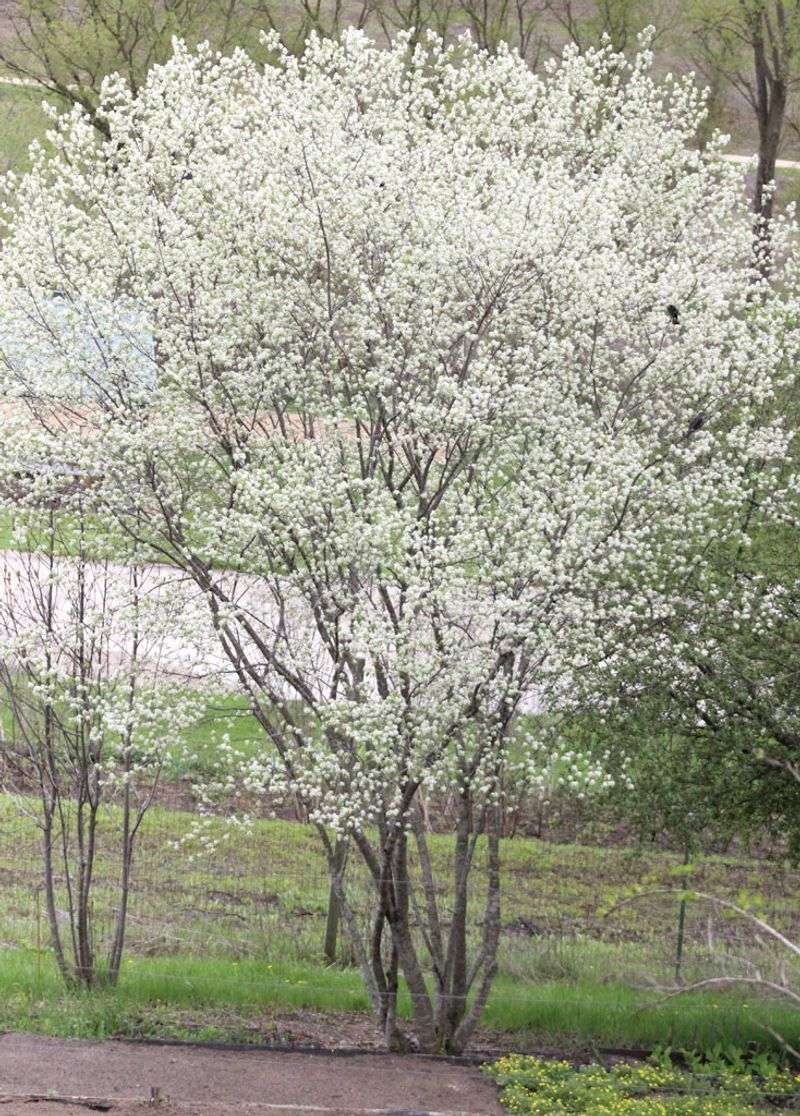
Most people have never planted a serviceberry, and that is a shame, because it might be the hardest-working little tree on this list. Serviceberry (Amelanchier arborea) hands you something in nearly every month of the year.
Spring starts with clouds of white star-shaped flowers, some of the earliest in the yard. By June those flowers become small purple berries that taste like a mix of blueberry and almond, and yes, you can eat them if the birds leave you any. They rarely do. Cedar waxwings and mockingbirds treat a serviceberry like a buffet.
Then fall arrives and the leaves blaze orange and red, and in winter the smooth silver-gray bark gives the yard structure when everything else has dropped. So you get flowers, fruit, fall color, and pretty bark, from a tree that usually stays 15 to 25 feet.
Plant one in spring, about 12 to 15 feet from the walkway, in full sun to part shade. It handles our Piedmont clay and even damp spots better than most, which is handy after those June through November storms dump water where you do not want it. Water it deeply once a week the first summer while it settles in.
For anyone building a yard that feeds wildlife, this tree is quietly one of the best moves you can make.
4. Red Maple
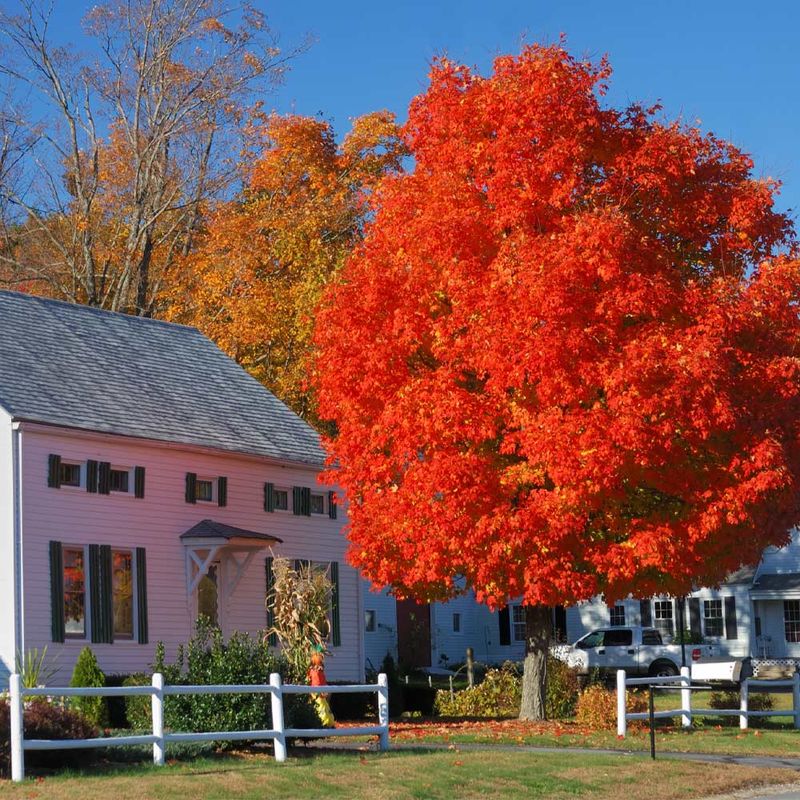
Drive any North Carolina road in late October and the roadsides light up scarlet. A lot of that is red maple (Acer rubrum), a native that puts on the most reliable fall show of any tree you can plant here.
The name is not just about autumn. In February and March, red maples flower with tiny red buds and blooms that give the bare canopy a reddish haze, one of the first signs winter is loosening its grip. Then summer brings dense shade, and fall closes with color that ranges from bright orange to deep crimson depending on the tree.
Size is the trade-off to think about. Red maples grow fast and get big, often 40 to 60 feet, so give one real room. Plant it at least 25 feet from the house and away from your water and sewer lines, since the roots run wide and shallow in our clay.
Fall planting works best here, giving roots time before summer heat returns. Water deeply the first year and mulch a wide ring, keeping mulch off the trunk itself.
The payoff shows up on your power bill. A big maple shading the south or west side of the house can cut summer cooling costs, which matters during those muggy stretches when the AC never seems to catch up. Shade, spring color, and October fire, all from a tree that genuinely thrives in North Carolina soil.
5. Kousa Dogwood
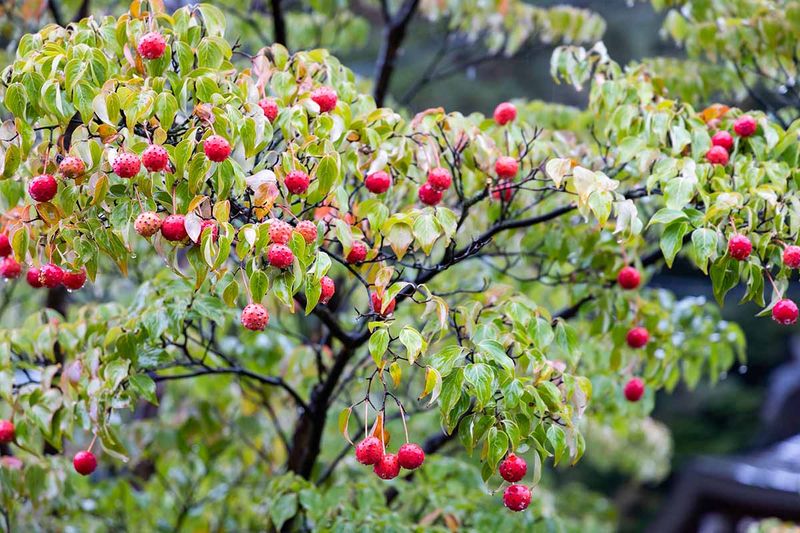
Say you love dogwoods but worry about the disease problems in our native ones. There is a cousin that dodges most of that trouble, the Kousa dogwood (Cornus kousa), and it blooms right when the native ones are winding down.
Kousa flowers in late May and into June, a few weeks later than flowering dogwood, so you can plant both and stretch your spring show. The blooms are pointed white stars that sit on top of the leaves, so the whole canopy looks frosted. Then comes the oddball part. Late summer brings round, raspberry-red fruit that dangles like little ornaments, and yes, it is edible.
Fall turns the leaves reddish purple, and winter reveals mottled, patchy bark that peels to show tan and gray underneath, genuinely pretty when the branches are bare.
The big selling point is toughness. Kousa shrugs off dogwood anthracnose far better than the native, and it takes more sun, which suits a bright Piedmont front yard. Plant it about 15 feet out, in well-drained soil with compost worked in, spring or fall. It stays around 20 to 30 feet.
Not a native, so it does not feed wildlife the way serviceberry does, and that is a fair trade-off to weigh. But for four seasons of interest with far fewer headaches, this is the dogwood many North Carolina gardeners reach for when the classic one keeps struggling.
6. American Fringe Tree
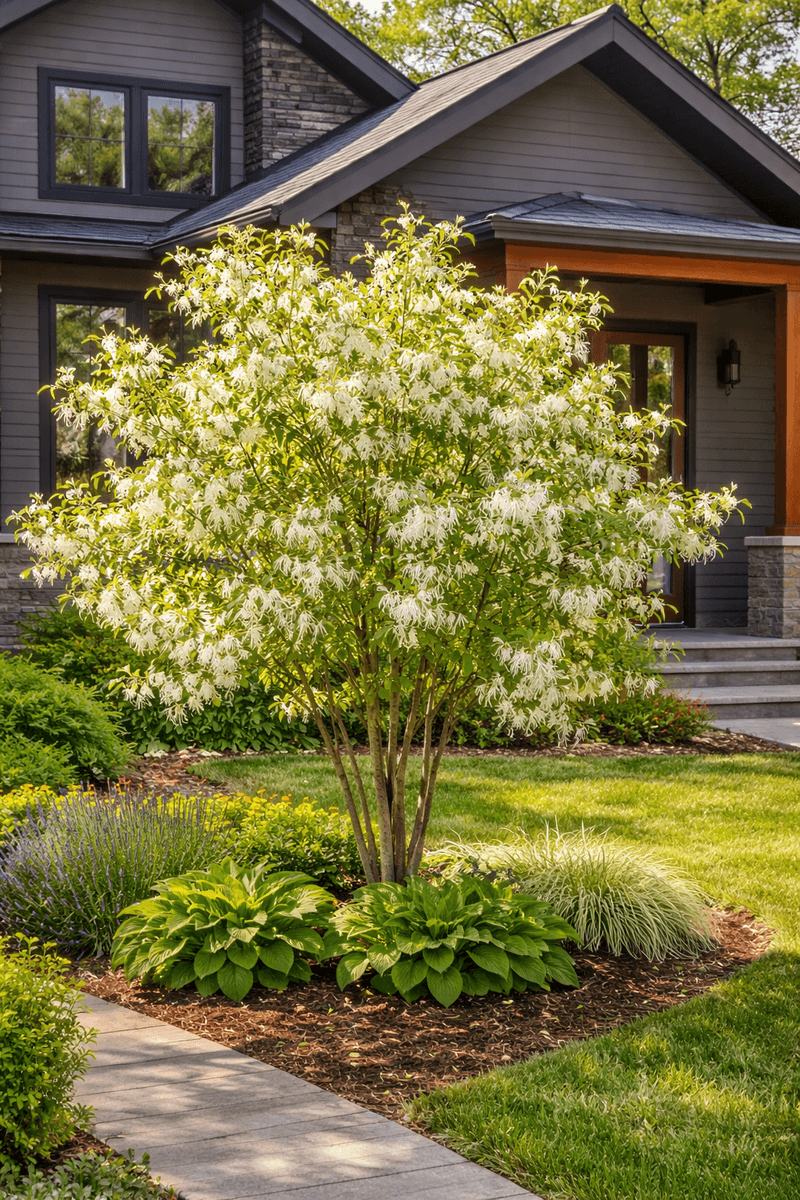
Every June, a few lucky yards in the Sandhills and Piedmont look like they got hit with a light snow in summer. That is the American fringe tree (Chionanthus virginicus), and once you see one blooming you never forget it.
The flowers hang in loose, fringy white clusters that sway in the breeze and smell faintly sweet, drifting across the porch on a warm evening. Almost nobody grows this native, which is exactly why it turns heads. It flowers in late spring, after the dogwoods and redbuds have finished, keeping fresh color coming.
Come fall the leaves shift to bright yellow, and on female trees dark blue fruit shows up that birds strip fast. It stays small, usually 12 to 20 feet, so it fits tight front yards and never threatens the roofline.
Plant one in full sun to part shade, about 12 feet from the walkway, in spring or fall. It is easygoing about our clay and tolerates the pollution and heat near driveways and streets, which many fussier trees will not.
Here is the quiet win. Fringe tree resists most pests and asks almost nothing of you once established, water it deeply the first summer and mostly leave it be. For a low-maintenance native that blooms when little else does, it deserves way more front yards than it gets.
7. Sourwood
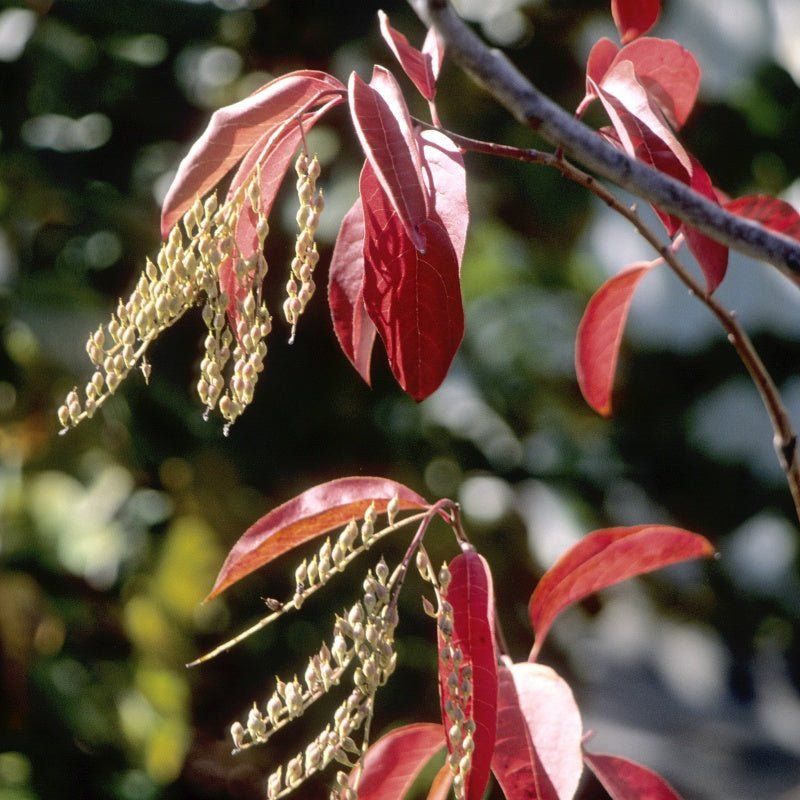
Beekeepers in the North Carolina mountains will tell you about sourwood honey with something close to reverence. The tree behind that honey, sourwood (Oxydendrum arboreum), is a native beauty that belongs in more front yards down in the Piedmont too.
Midsummer, when most trees have gone quiet, sourwood sends out long, drooping sprays of tiny white bell flowers, right around July when your yard could use fresh color. Bees swarm them. Then the show keeps going, because those flowers dry into pale seed stalks that hang on and look like a second bloom.
Fall is where sourwood earns legend status. The leaves turn one of the deepest, most brilliant reds of any tree in the state, an almost wine-colored crimson that stops traffic.
It grows slowly and stays modest, around 20 to 30 feet, with an irregular, graceful shape that never looks boxy. Plant it in full sun for the best flowering and color, about 15 feet from the house, in acidic, well-drained soil. Our clay works if it drains, so avoid soggy low spots.
One catch worth knowing. Sourwood does not love being crowded or transplanted rough, so buy a young container tree and give it space. Slow to start, but the summer flowers, the pollinator traffic, and that fall red make it genuinely one of the finest native trees North Carolina offers.
8. Southern Magnolia
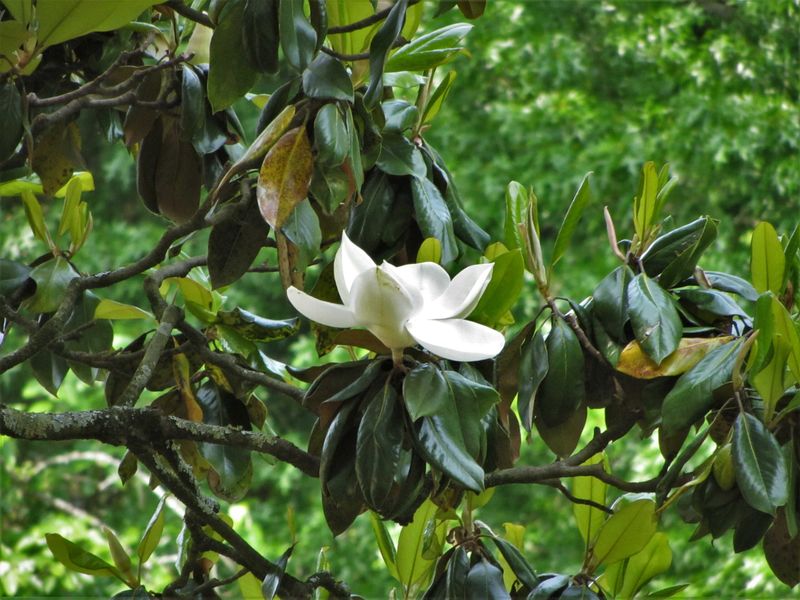
Some trees announce that a house has roots, and the Southern magnolia (Magnolia grandiflora) is at the top of that list across North Carolina. While the others on this list drop their leaves, this one stays green all twelve months, which changes the whole feel of a winter yard.
Those glossy, leathery leaves hold their deep green through January cold snaps, giving your front yard structure and privacy when everything around it is bare. Then late spring and early summer bring the flowers, huge creamy-white blooms the size of a dinner plate, with a lemony scent that carries clear across the yard on a still evening.
After the flowers, cone-like seed pods open to reveal bright red seeds that songbirds pick clean. So you get year-round green, dramatic summer flowers, and winter wildlife value from one tree.
Size and mess are the honest catches. Standard magnolias get large, 40 to 60 feet, and they drop leaves and pods that you will rake. For smaller yards, look for compact varieties like Little Gem, which tops out closer to 20 feet.
Plant in full sun to part shade, well away from the house given the mature size, in spring or fall. It handles both Piedmont clay and sandy Coastal Plain soil, which is why you see it thriving from Charlotte to the coast. For evergreen presence that carries a yard through the gray months, nothing else quite matches it.