The One Thing You Must Do To North Carolina Hollies Before September Ends
Hollies have a reputation for being nearly maintenance-free, which is exactly why one important September task gets skipped more often than it should.
These evergreens are quietly shifting their focus toward root development and winter hardiness right now, even though nothing about their appearance seems to be changing.
A gardener who treats September like any other summer month, watering and feeding the same way, can leave hollies less prepared for the stress of winter cold and wind than they need to be.
Because hollies hold their leaves year-round, they continue losing moisture through winter in a way deciduous shrubs don’t, making this fall transition especially important to get right.
A small adjustment now can be the difference between hollies that sail through winter and ones that show stress by spring.
1. Stop Major Pruning In Early Fall
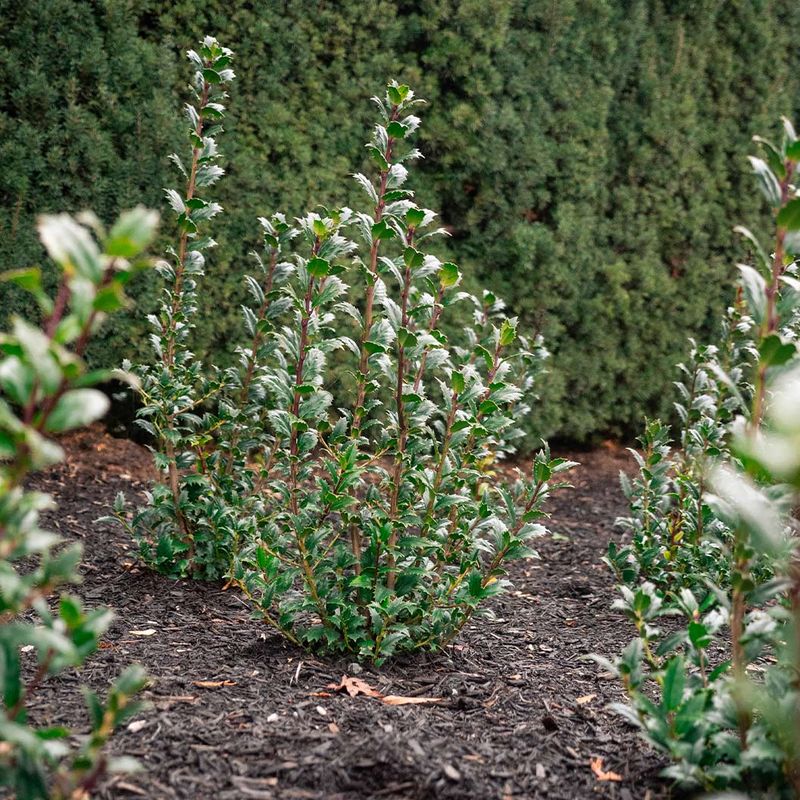
Think of a holly as a sleepy kid at bedtime. If you flip on the lights and hand it a snack, it wakes right back up.
Heavy pruning in early fall works the same way, because cutting branches sends a wake-up signal that tells the plant to push out fresh shoots.
That fresh growth is soft, thin, and full of water. It needs weeks of steady weather to toughen into firm wood.
In North Carolina, the first frost can arrive in the mountains as early as October and in the Piedmont by late October or early November, so shoots that sprout in September or later often run out of time.
When cold snaps hit tender leaves and stems, the damage shows up as brown, crispy tips and scorched patches. The plant then spends energy in spring repairing that harm instead of growing strong and full.
A few burned tips will not ruin a sturdy holly, but repeated injury year after year can leave it thin and stressed.
So what counts as major pruning? Think of cutting back large branches, shearing the whole shrub into a new shape, or removing more than a small share of its leaves. Those jobs can wait.
Small fixes are still fine. Snipping off a broken branch, trimming a stem that blocks a walkway, or clipping a few sprigs for decoration will not cause trouble.
Mark your calendar with a simple reminder to put the hedge trimmers away by early September. The rule costs nothing, takes no extra effort, and protects a shrub that can grow in your yard for decades.
Your hollies will thank you with healthy, glossy leaves when spring rolls around.
2. Let New Growth Harden Naturally
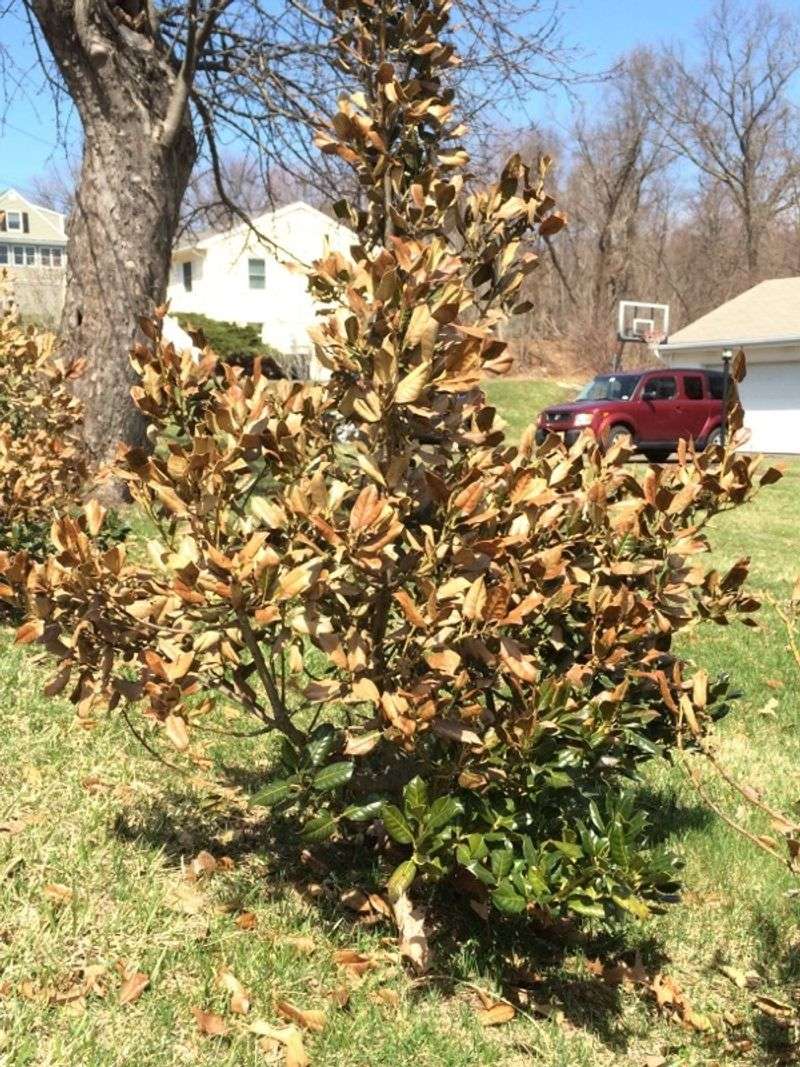
Nature has its own built-in timer, and hollies follow it closely. As September moves along, the days get shorter and the nights turn cooler.
Those two changes act like a signal telling woody plants to slow down and get ready for winter.
Gardeners call this process hardening off, or acclimation. During it, the plant moves water out of its cells, stores sugars, and thickens its cell walls.
Those changes work a bit like antifreeze, helping stems and leaves handle freezing temperatures without major harm.
Your North Carolina Garden Changes Every Week. Your Plan Should Too.
Gardening in North Carolina changes quickly throughout the season. Every Friday you’ll receive a simple weekly plan showing exactly what to plant, prune, fertilize, harvest, and protect so you never miss the right timing.
Here is the tricky part. Anything that sparks a new flush of soft growth can interrupt that process.
Heavy pruning, extra fertilizer, and even too much water all send mixed messages, and the plant may try to grow when it should be resting.
Think of it like a runner cooling down after a race. If someone yells ‘go’ again halfway through the cooldown, the runner ends up tired and sore.
Hollies react in a similar way, since new shoots pull energy away from the older wood that needs to toughen up.
The best approach is often the laziest one. Let your hollies follow the seasons at their own pace, and resist the urge to fuss over them with lots of treatments.
Simple care, like watering during dry spells and keeping the area tidy, is plenty. Fun fact: American holly, a native tree found from the mountains to the coast of North Carolina, has adapted over thousands of years to local weather and seasonal shifts.
Given the chance, your shrubs will prepare themselves beautifully, with no special tricks required.
3. Do Not Give A Late Nitrogen Push
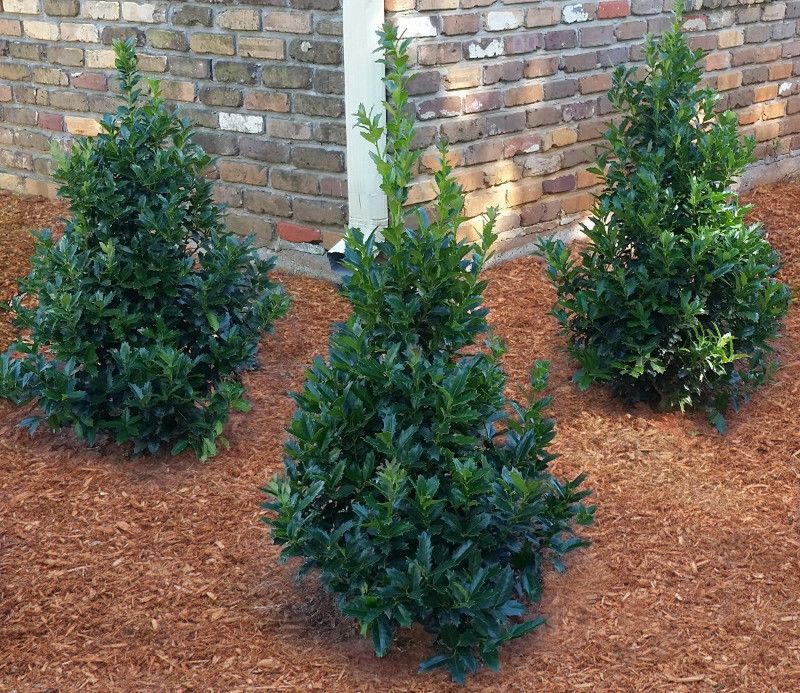
Fertilizer feels like a gift, but timing turns it into either a treat or a troublemaker. Nitrogen is the nutrient that fuels leafy green growth, which is great in spring.
In late summer and fall, though, that same boost can cause a burst of soft shoots right when your holly should be winding down.
Many bags at the garden center are packed with nitrogen, and it is easy to sprinkle some around just out of habit. Unfortunately, routine feeding often does more harm than good.
Extra nutrients the plant cannot use may also wash away into streams and lakes after heavy rain.
So how do you know if your holly actually needs food? The smartest move is a soil test.
In North Carolina, the Department of Agriculture and Consumer Services offers soil testing that is free for most of the year, with a small fee during the busy peak season in winter.
A soil test report tells you your soil’s pH and which nutrients are low. Hollies generally prefer slightly acidic soil, and the report will suggest what, if anything, to add.
Sometimes the answer is nothing at all, which saves money and effort. Pay attention to the plant, too. Yellowing leaves can point to a nutrient issue, but they can also come from poor drainage or soil pH that is off, so guessing is risky.
If your holly does need feeding, plan it for late winter or early spring, when fresh growth is welcome. Until then, keep the fertilizer bag closed and let the shrub rest.
4. Check Soil Moisture During Dry Weather
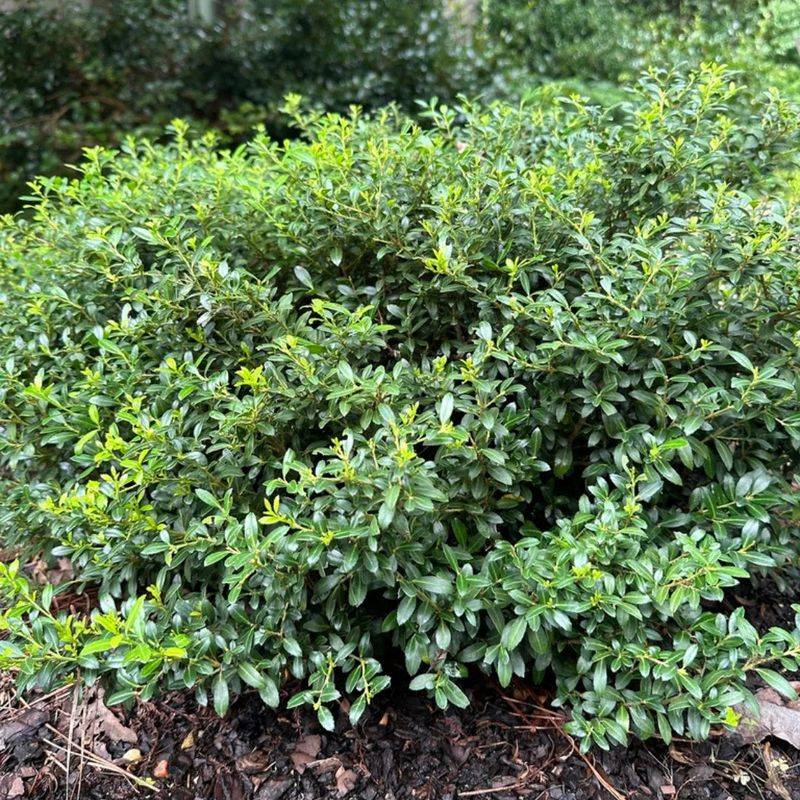
September in North Carolina can be surprisingly dry. After the summer storms fade, weeks can pass without a good soaking rain, and hollies quietly feel the stress.
Evergreens like hollies keep their leaves all winter. Those leaves continue to lose water on sunny, windy days, even when the ground is cold.
A shrub that enters winter already thirsty has fewer reserves to handle that steady loss, which can lead to browned or scorched leaves by late winter.
Checking moisture is easier than you might think. Push a finger or a small trowel about two to three inches into the soil near the drip line, which is the area under the outer edge of the branches.
If it feels dry at that depth, it is time to water. Deep, slow watering works best. A soaker hose or a garden hose left on a slow trickle lets water sink down to the roots rather than running off the surface.
Most established shrubs do well with about an inch of water per week from rain and irrigation combined.
Balance matters, though. Soggy soil can be just as harmful as parched soil, so skip watering if the ground still feels damp.
Newly planted hollies need the closest attention, since their roots have not spread far yet.
A cheap rain gauge stuck in the yard can help you keep track of how much rain actually falls. Pair that with a quick finger test once a week, and you’ll have a simple routine that keeps your hollies ready for whatever winter brings.
5. Keep The Root Zone Well Drained
Soggy feet make for unhappy hollies. Most types grow best in soil that holds some moisture but lets extra water drain away.
When water sits around the roots for days, the tiny root hairs cannot get the oxygen they need.
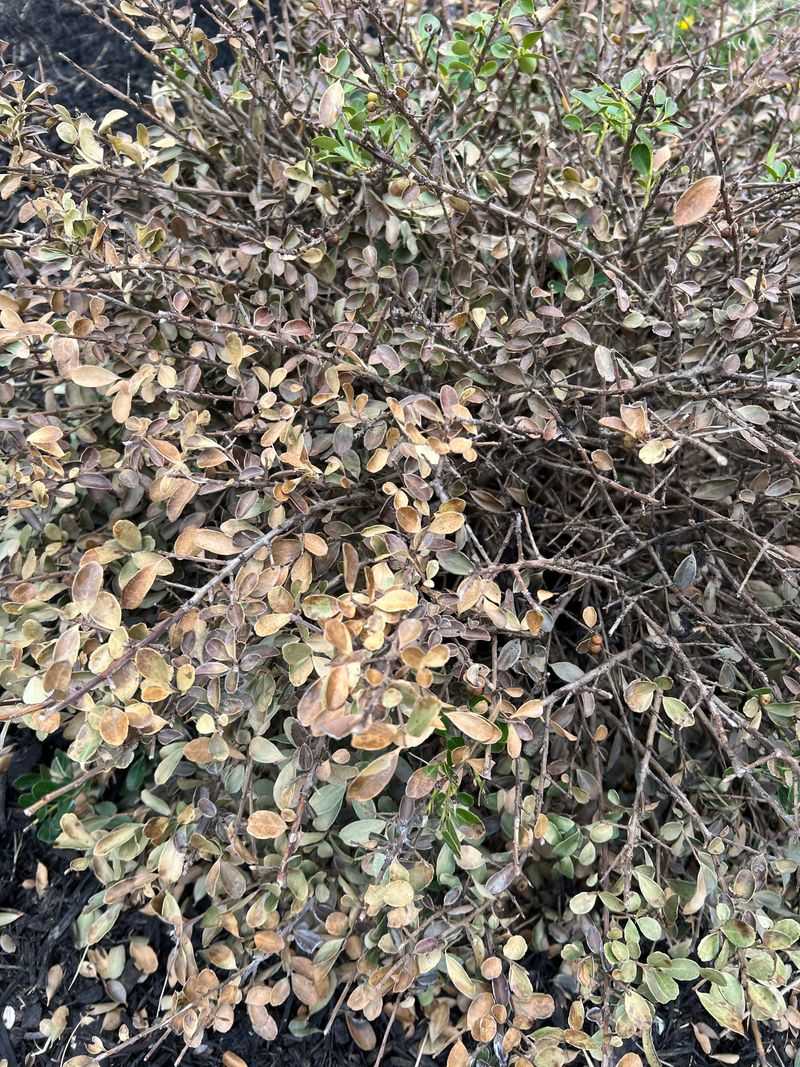
That airless, wet soil also creates a perfect home for harmful organisms. Root rot caused by water molds such as Phytophthora is a well-known problem, and Japanese hollies (Ilex crenata) are especially sensitive to it.
Signs include yellowing, wilting, and branches that thin out even when the soil feels wet.
North Carolina’s famous red clay makes this issue common. Clay holds water tightly, so a planting hole dug in heavy clay can act like a bathtub that fills up after every storm.
How can you tell if drainage is poor? Try a simple test: dig a hole about a foot deep, fill it with water, let it drain, then fill it again. If the water takes many hours to disappear, the spot drains slowly.
For struggling plants, start with small fixes. Redirect downspouts away from shrub beds, avoid overwatering, and keep irrigation systems from running on rainy days.
For future plantings, raised beds or setting the top of the root ball a little above the soil line can help a lot.
If you love the look of Japanese holly but have wet clay, consider tougher choices. Yaupon holly, a North Carolina native, handles both wet and dry sites well. Inkberry holly is another native that tolerates damp soil.
6. Protect The Root Zone With Mulch
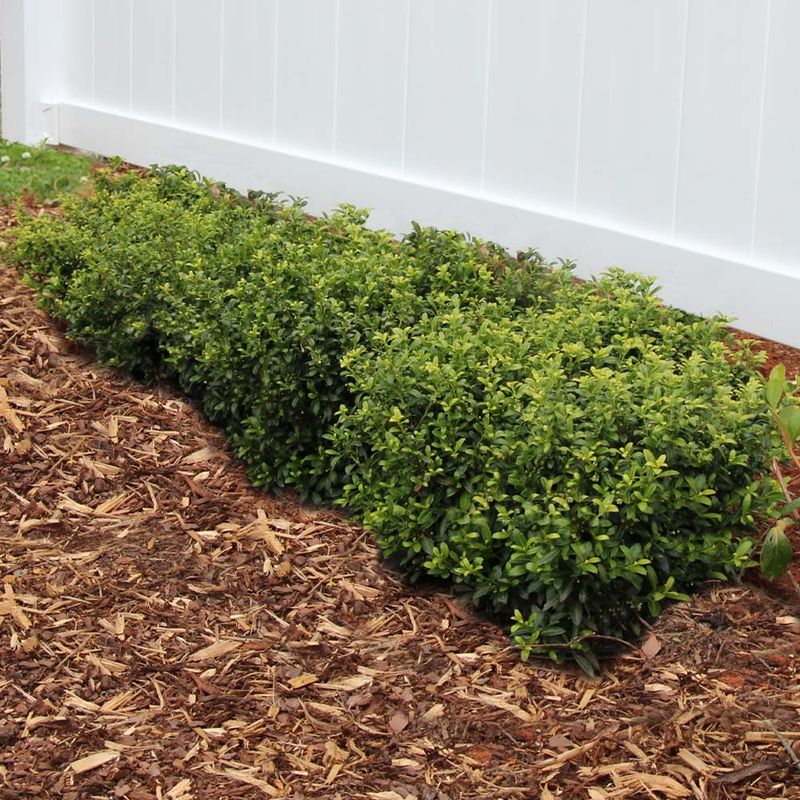
A good blanket of mulch is like a cozy quilt for your holly’s roots. It keeps the soil from drying out quickly, and it softens sudden swings in temperature between warm afternoons and chilly nights.
Organic mulches work best. Shredded hardwood, pine bark, and pine straw are all easy to find in North Carolina, and pine straw is a longtime Southern favorite.
As these materials slowly break down, they add organic matter to the soil and help support healthy soil life.
Depth matters more than most people realize. A layer about two to three inches thick is plenty. Go much deeper, and the mulch can hold too much moisture or block air from reaching the roots.
Spread it wide instead of tall. Aim to cover the ground out toward the drip line, since that is where many of the feeding roots grow.
Now for the most common mistake: the mulch volcano. You have probably seen trees and shrubs with a big cone of mulch piled against their trunks. That extra mulch traps moisture against the bark, which can invite rot, pests, and disease.
Instead, pull mulch back a few inches from the stems, leaving a small ring of bare soil around the base. Picture a donut rather than a volcano, and you’ll get it right every time.
Early fall is a smart time to refresh thin spots. Rake old mulch loosely first to break up any matted layers, then top off only where needed. A fresh layer also makes beds look neat and finished heading into the cooler months.
7. Preserve Fruit For Wildlife
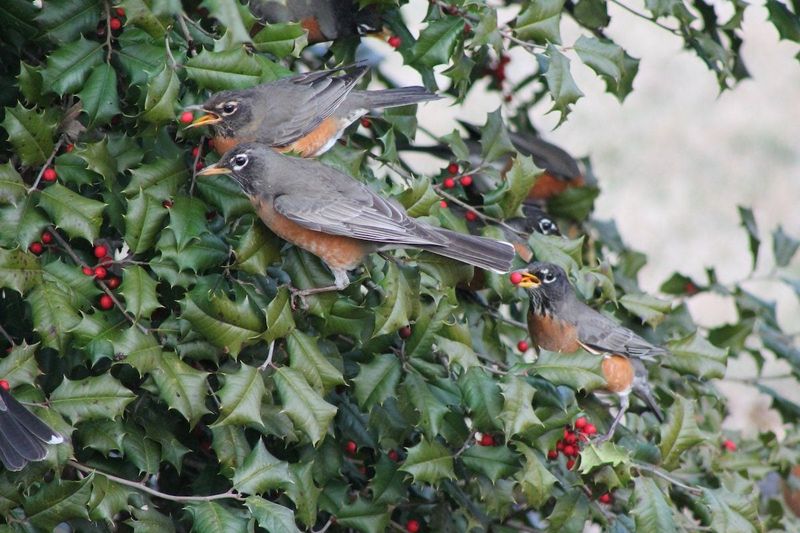
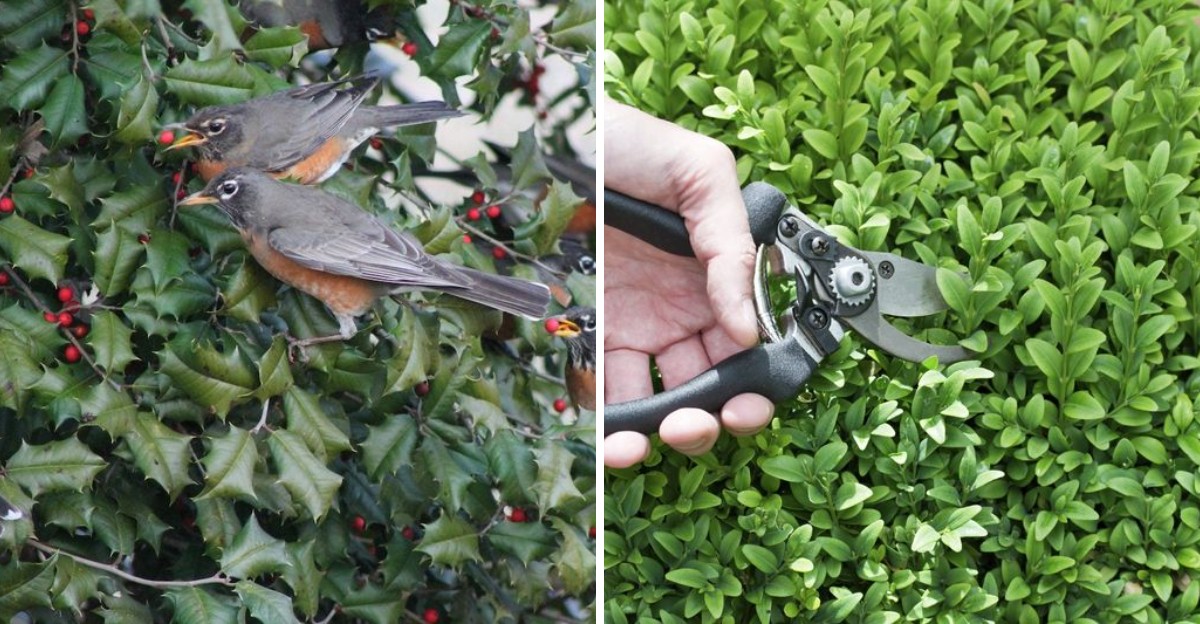
Bright red berries against glossy green leaves are the reason many people plant hollies in the first place. Those berries do more than look pretty.
They are a real winter food source for birds such as cedar waxwings, eastern bluebirds, northern mockingbirds, and American robins.
Many hollies, including American holly, have separate male and female plants. Female plants need compatible male pollen nearby to produce abundant berries.
Without a partner, she may stay berry-free no matter how healthy she looks.
By September, the berries are already set and ripening on the branches. Cutting back those stems now removes the very fruit that would brighten your yard and feed wildlife in winter. Every snip of a fruit-covered branch means fewer snacks for hungry birds later.
Holly berries often soften after several frosts, which may be one reason many birds eat them later in the winter when other food runs low. Flocks of robins and waxwings can strip a shrub in a single afternoon, and watching that feeding frenzy from a window is pure fun.
Keep in mind that holly berries are not safe for people or pets to eat, so teach kids to look and not taste.
To help wildlife, leave berry-covered branches alone this fall. If you want a few sprigs for holiday decorating in December, clip them sparingly and spread the cuts around the plant so no single area looks bare.
Your feathered visitors will reward you with plenty of color and song.
8. Save Major Shaping For The Appropriate Season
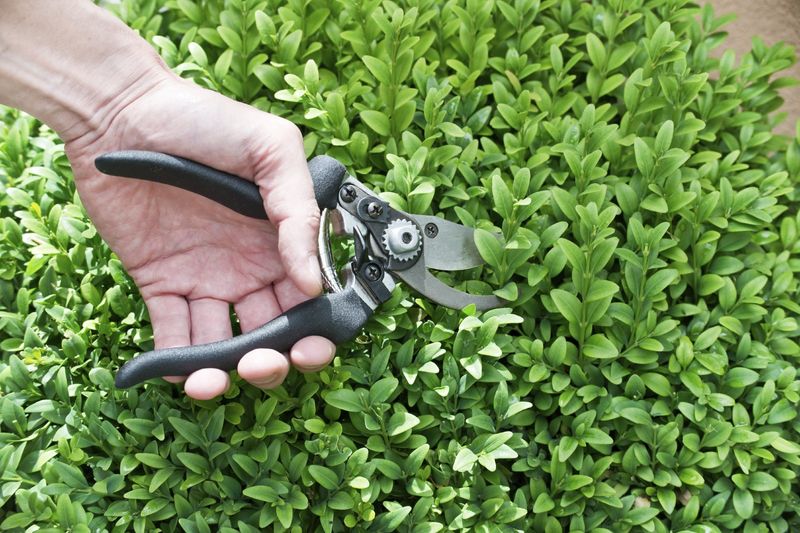
Every holly owner eventually faces the overgrown shrub that swallows a window or spills across the sidewalk. The temptation to grab the saw and fix it right away is strong. Patience pays off, though, because the calendar matters as much as the cutting.
Late winter to early spring, just before new growth begins, is generally the best window for big pruning jobs. In most of North Carolina, that means roughly February through March.
At that point, the plant is about to wake up with a burst of energy, so it can quickly heal cuts and fill in bare spots.
Some hollies handle hard pruning surprisingly well. Many Chinese hollies, yaupons, and American hollies can regrow after being cut back sharply, which is called rejuvenation pruning.
Japanese hollies are less forgiving and may respond better to a gentler approach over time.
A careful plan helps. Rather than chopping everything at once, many gardeners remove about one-third of the oldest, thickest branches each year for three years.
That method keeps the shrub looking decent while fresh stems grow in from below. Sharp, clean tools make a real difference. Bypass pruners handle small stems, loppers take on medium branches, and a pruning saw works for the thick ones.
Make cuts just above a bud or side branch so the plant can recover neatly.
Use the months between now and then to plan. Snap a photo of the shrub, sketch the shape you want, and note which branches should go. When late winter arrives, you’ll be ready to shape your holly with confidence.