The Moonflower On Your Arizona Patio Opens For One Night And Lights A Runway For Desert Moths
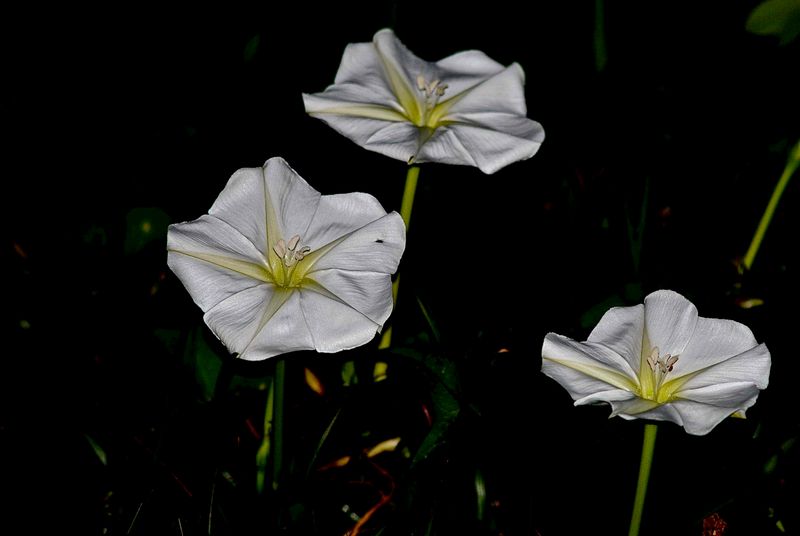
On a warm Arizona evening, a large white flower can unfurl on your patio vine in just minutes, filling the air with sweet fragrance before the sun fully sets. That flower is a moonflower bloom from the vine Ipomoea alba, and its one-night lifespan is exactly what makes it so striking.
Each individual bloom opens at dusk, glows through the night, and wilts by the next morning, while the vine quietly prepares new buds for the nights ahead. Growing this vine in the Phoenix or Tucson area takes some real effort, but the nighttime payoff is unlike anything a daytime flower can offer.
Each bloom vanishes by morning
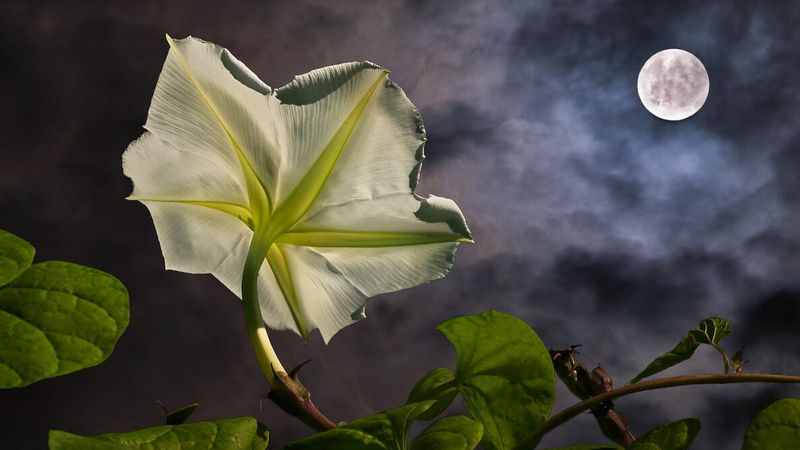
Moonflower, known by its scientific name Ipomoea alba, is a vigorous twining vine with large, white, trumpet-shaped flowers that can reach several inches across. NC State Extension’s plant profile for Ipomoea alba lists it under the common names moonflower, moonvine, and tropical white morning glory, and notes that it belongs to the morning-glory family.
That last detail matters, because the common name “moonflower” can be attached to several different plants, and shoppers who skip the scientific name may end up with something else entirely.
What sets this species apart is the speed and timing of its blooms. Indiana University’s Plants in Motion documentation shows individual flowers opening rapidly around dusk, often within minutes in warm weather, then remaining open through the night before closing or wilting the following day.
A single flower lives one night. The vine, however, is not a one-night wonder: a healthy plant can push out fresh buds on successive evenings, creating a rolling succession of one-night blooms across the warm season.
Calling it a plant that “blooms for one night” misses that distinction. The lifespan of each flower is one night; the lifespan of the vine’s flowering season can stretch across months.
Readers shopping for seed should also know that “moonflower” and “morning glory” are both ambiguous common names that can refer to multiple IpomoeaDatura species and, in some cases, get confused with , a genuinely toxic genus with similar-looking white blooms. Confirming the scientific name on the seed packet is the only way to be certain of what you are planting.
Why the white trumpet stands out after dark
When the sun drops below a Phoenix horizon and the patio light dims, a white flower does something that a red or orange flower simply cannot: it holds contrast against the darkening background. Pale petals reflect available light more efficiently than saturated colors, which means a white bloom can remain visually detectable to a night-flying insect long after the sky turns deep blue.
Think of the flower as a pale lantern rather than a lit runway, because that metaphor is closer to what the science actually shows.
The floral traits of Ipomoea alba line up with a cluster of features that researchers associate with hawkmoth pollination: night anthesis, white coloration, a long tubular corolla, and a strong fragrance released after dark. Research on nocturnal hawkmoth behavior found that these moths can use both visual and olfactory information when locating flowers, and that ambient light levels influence which sense they lean on more heavily.
Your Arizona Garden Changes Every Week. Your Plan Should Too.
Gardening in Arizona changes quickly throughout the season. Every Friday you’ll receive a simple weekly plan showing exactly what to plant, prune, fertilize, harvest, and protect so you never miss the right timing.
A study on hawkmoth sensory use found that ambient illumination shapes how nocturnal hawkmoths balance visual and olfactory flower-finding cues, suggesting that a bright white bloom matters most on darker nights.
None of this proves that an Arizona patio moonflower will attract a moth on any given night. The “runway” image is a vivid way to picture the flower’s high visibility in dim conditions, not a documented species-specific function of I. alba in the Sonoran Desert.
What it does mean is that the flower’s white color is not accidental: it is a trait shaped over evolutionary time to be seen after dark, and that visibility may improve the odds of a moth finding it.
Fragrance offers a cue, not a chemical trail
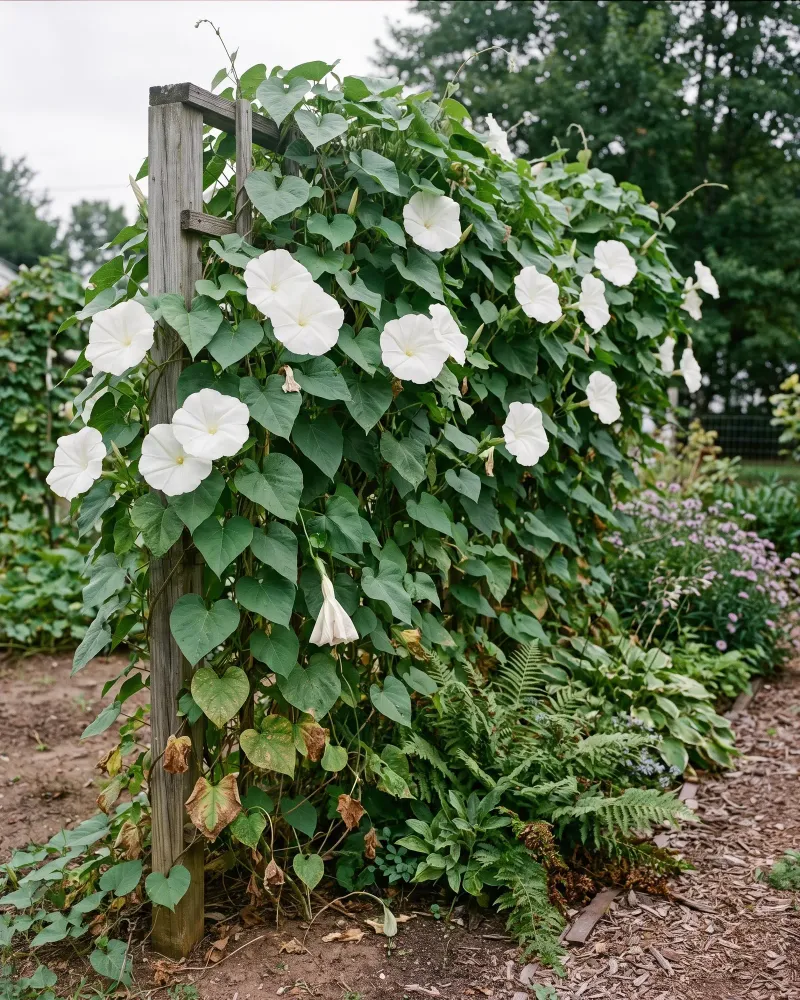
Step outside near a blooming moonflower vine after dark and the scent reaches you before you can clearly see the flower. That fragrance is real, and for nocturnal pollinators it can serve as a directional cue that helps them locate a bloom from a short distance.
Floral volatiles released at night by moth-pollinated plants are a well-documented part of pollination biology, and research on the chemical ecology of moth-pollinated flowers confirms that scent compounds play a meaningful role in guiding nocturnal visitors toward a flower.
Where the story needs a correction is in the idea of a “chemical trail” laid down across a patio like a scent runway. Floral fragrance disperses into the surrounding air as a plume shaped by wind direction, temperature, humidity, and nearby vegetation.
A moth moving upwind can orient toward a scent source, but that process depends heavily on local conditions rather than on the flower producing a guaranteed, directional signal. Research on floral volatile compounds and moth-pollinated plants, including work cited in a study on secretory structures in night-blooming Convolvulaceae relatives, supports scent as a pollinator cue without claiming that any single species reliably summons a particular desert moth.
On a still Arizona summer night, the fragrance from an Ipomoea alba bloom may linger close to the vine. On a breezy evening, it disperses quickly and unpredictably.
A moth in the neighborhood may catch that scent and investigate, or it may not. The flower does its part by producing the cue; whether a moth picks it up depends on factors that no gardener fully controls.
What a patio moth visit can realistically mean
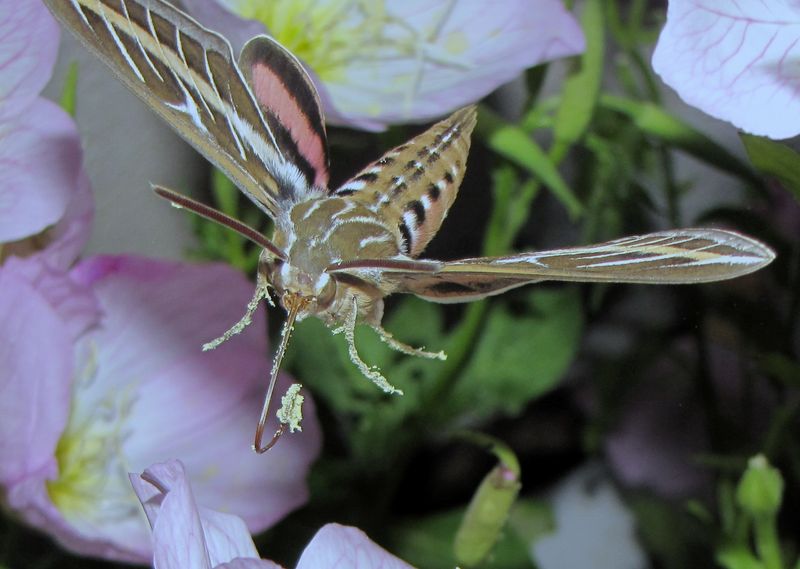
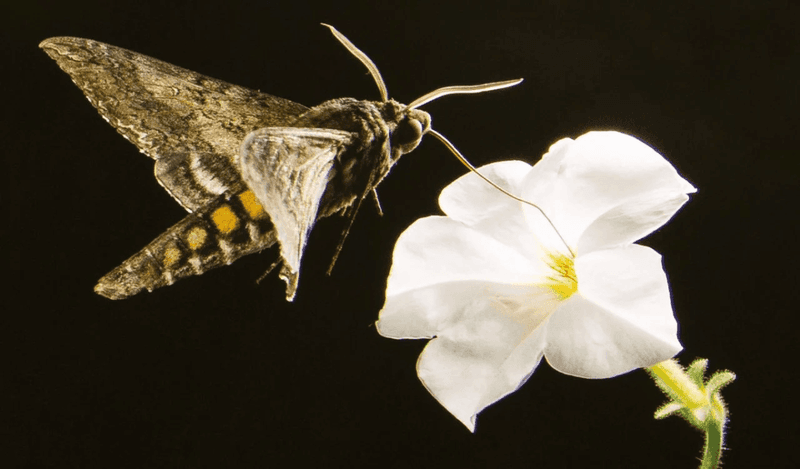
Seeing a large moth hover at a moonflower bloom on a warm Arizona night is genuinely exciting, and the flower’s architecture makes that encounter possible rather than accidental. The long tubular corolla of Ipomoea alba fits the extended proboscis of a hawkmoth or sphinx moth, and the nectar positioned at the base of that tube is accessible to a moth in a way that a short-tongued bee visiting the same flower cannot easily match.
That physical match is meaningful: it means the flower can provide a real nectar resource for the right visitor.
Pollination research across IpomoeaIpomoea species shows that many are primarily visited by one functional pollinator group, though not always exclusively. A study on floral integration and pollination specialization in found variation in how tightly different species are tied to a single pollinator type, which means “hawkmoth-pollinated” is a tendency rather than a locked relationship.
Whether a moth actually shows up at a given patio vine depends on season, nighttime temperature, wind, light pollution from nearby streets, the availability of competing flowers in the neighborhood, and whether local moth species are present and active.
Light pollution is worth singling out because Phoenix and Tucson patios are rarely fully dark. Artificial light at night can disrupt moth navigation and reduce the number of nocturnal insects active near a garden.
A moonflower on a brightly lit patio faces a harder task than one in a darker corner of the yard. Moth visits are a realistic possibility for an Arizona gardener, not a promise.
The flower creates the conditions for a visit; the rest depends on what is flying nearby on any given night. And no moonflower vine, however fragrant, functions as pest control for mosquitoes, scorpions, or other household pests.
Arizona heat and frost change the growing equation
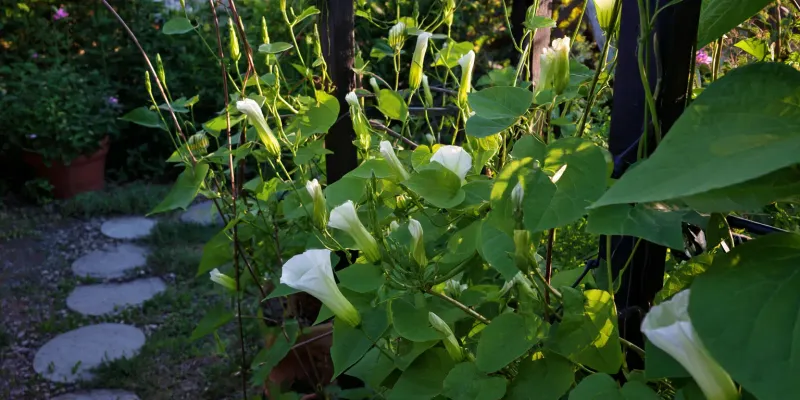
Ipomoea alba is a tender subtropical vine, not a native Arizona plant and not a drought-tolerant desert species. Treating it like a saguaro or a palo verde is a recipe for a dead vine.
It needs regular water, especially when grown in a container, and it performs best with full sun and good air circulation rather than the punishing reflected heat that bounces off a west-facing stucco wall at 4 p.m. in July.
Low-desert Arizona presents two competing challenges for this plant. Summers in the Phoenix and Tucson metros are intensely hot, with average high temperatures that regularly exceed 105 degrees Fahrenheit, and University of Arizona Cooperative Extension climate guidance for the low desert notes that even frost-tender plants can survive in protected microclimates while still facing killing freezes in winter.
That means the vine needs warm-season timing on one end and frost protection on the other. Rather than following a planting calendar borrowed from a cooler region, watch your local overnight lows and hold off on planting until frost risk has passed, then plan to protect or remove the vine before temperatures drop toward freezing in late fall.
Container growing is common on Arizona patios and works well for this vine, but containers heat up and dry out faster than in-ground soil. University of Arizona Extension’s container gardening guidance for the Southwest desert recommends large containers with good drainage, consistent moisture, and positioning that avoids the most intense reflected afternoon heat.
A large pot against a shaded east-facing wall, with a sturdy trellis, arbor, or fence for the vine to climb, gives the plant a fighting chance. A small pot against a hot west wall will exhaust the roots before the vine has a chance to bloom.
Confirm the species before you buy
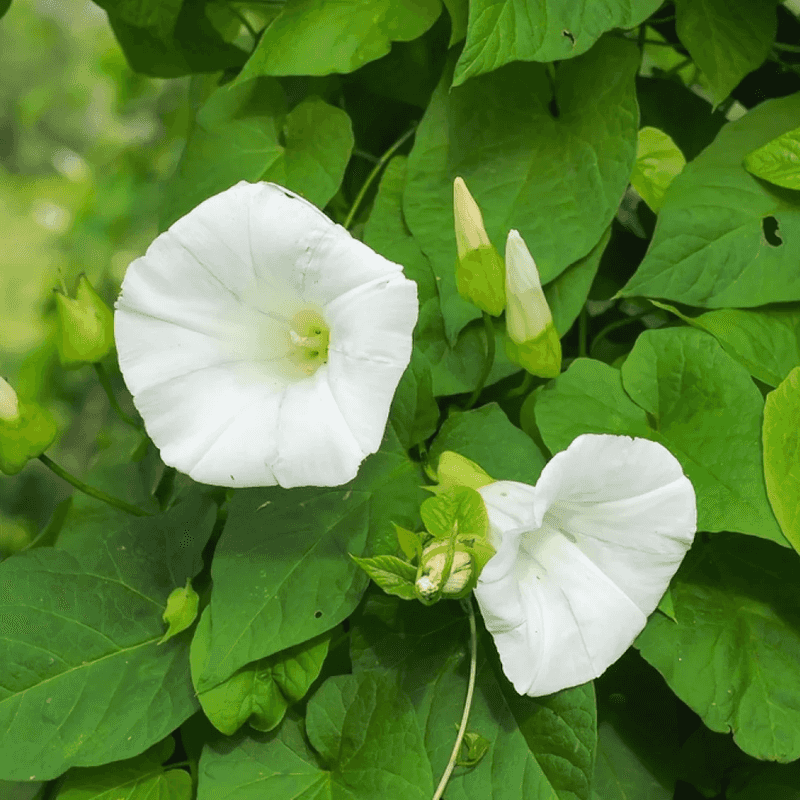
The word “moonflower” on a seed packet tells you almost nothing useful on its own. That common name gets applied to several different IpomoeaDatura species and occasionally to plants in the genus , which produces white trumpet-shaped flowers that superficially resemble moonflower blooms but carries a much more serious toxicity profile.
Before buying, look for the scientific name Ipomoea alba printed on the packet, not just a common name.
Arizona gardeners also need to check current state regulations before planting any morning-glory type vine. The Arizona Department of Agriculture noxious weed list includes several IpomoeaI. purpureaI. tricolorI. hederaceaI. trilobaI. x leucantha species as regulated plants, among them , , , , and .
The sources reviewed here do not place I. albaIpomoea noctifloraI. alba on that list, but the Arizona prohibited noxious weed seed document lists “moonflower” under rather than , which is exactly why common names cause problems. Verify the exact species and check current requirements with the Arizona Department of Agriculture before purchasing or planting.
Seed safety is the other checkpoint that cannot be skipped. NC State Extension classifies Ipomoea alba as having low-severity poisonous characteristics, with indole alkaloids identified as the toxic principle in the seeds.
Keep seeds stored away from children and pets, and do not allow anyone to eat them. A CDC report on a suspected moonflower intoxication case is sometimes cited in connection with this plant, though that report used the common name and the exact species involved was not definitively confirmed, so the symptom details from that case should not be assumed to apply specifically to I. alba.
The practical takeaway is the same regardless: seeds from plants in this family are not food, and they should be treated accordingly.
Decide whether the nighttime display fits your patio
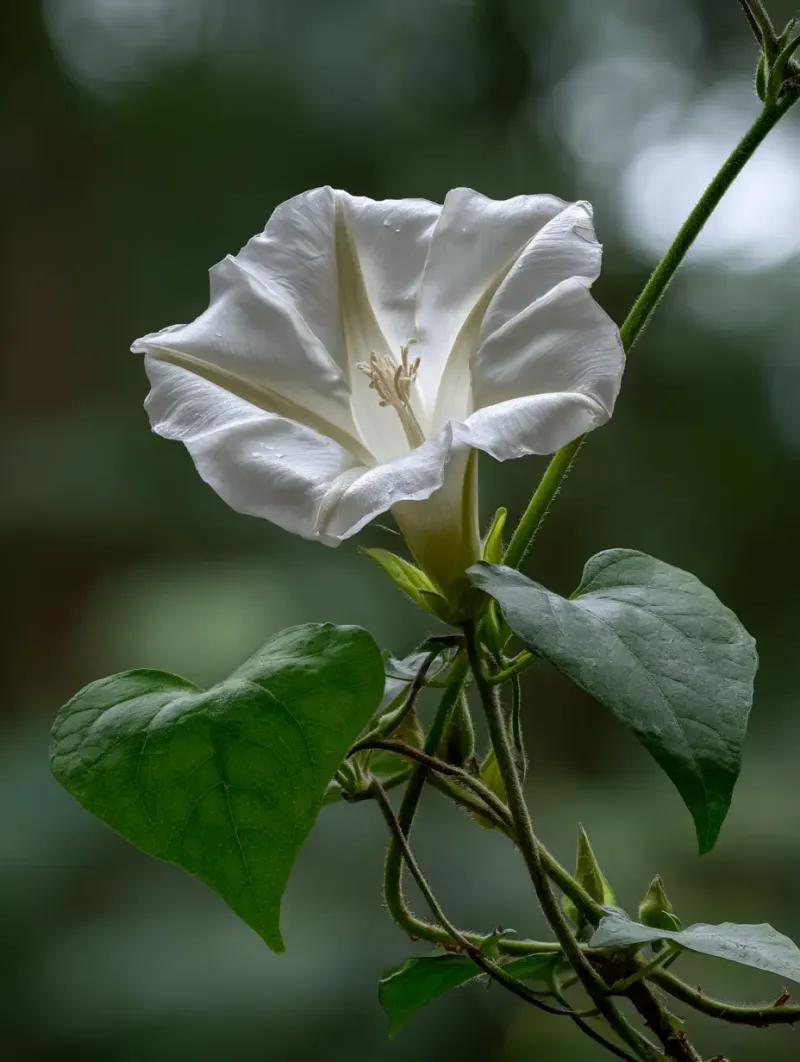
A moonflower vine rewards gardeners who go in with clear expectations. If you want a dramatic, fragrant warm-season vine that creates a succession of one-night blooms and may occasionally draw a large moth to your patio, Ipomoea alba can deliver that experience.
The visual payoff is real: those wide white trumpets opening rapidly at dusk, glowing through the night, and wilting by morning create a nighttime garden moment that few other plants match.
The commitment is also real. This vine needs a sturdy support structure, consistent watering, a large well-draining container, protection from reflected afternoon heat, and frost management timed to your local conditions rather than a generic calendar.
It will not conserve water the way a native desert plant does, and it will not serve as a pest deterrent for scorpions, mosquitoes, or any other household nuisance. Moth visits are a possibility tied to local conditions, not a feature you can count on every night.
What the plant offers, honestly stated, is a nighttime nectar resource that suits the body plan of hawkmoths and a visually conspicuous white bloom that can be detected in low light, giving any moth already in the area a reasonable target to investigate. Each individual flower lives one night, then gives way to the next bud.
Over a warm Arizona season, that succession of one-night blooms adds up to something genuinely worth watching from a patio chair after dark.