The Fall-Blooming Texas Vine That Makes Every Fence And Pergola Smell Amazing
Most Texas vines earn their place through visual impact alone. They cover structures and fill in fence lines with a density that takes years to achieve with slower growing alternatives.
But there is one fall-blooming Texas vine that adds something to a fence or pergola that most vines simply cannot. It fills the air around it with fragrance.
Not subtly either. On a warm fall evening, the scent this native vine releases as it blooms is the kind that makes people stop mid-conversation and ask what they’re smelling.
It drapes over structures with a natural elegance and blooms at exactly the moment when most other vines have finished their season. Here’s the fall-blooming Texas vine worth planting on every fence and pergola in the state.
The Native Fall-Blooming Vine That Smells Amazing
This native vine is virgin’s bower, and it has been decorating wild places here long before anyone built a fence.
Its scientific name is Clematis virginiana. The vine grows naturally across much of eastern North America. You can find it from Quebec all the way down to Florida, and west into eastern Texas.
So why should Texas gardeners care? Many people plant a look-alike called sweet autumn clematis. That vine comes from Asia, and it has escaped into the wild in many states.
Sweet autumn clematis can crowd out local plants in woods and along roadsides. Virgin’s bower gives you nearly the same look without those problems. Choosing it is a small way to protect the land around you.
Native plants also fit right in with local wildlife. Bugs, birds, and other critters already know how to use them. When you grow a plant that belongs here, you invite a whole little neighborhood into your yard.
Here is a fun bit of history. The name virgin’s bower is very old, and people once used it for other clematis plants in Europe too. A bower is a shady, leafy shelter, which is exactly what this vine creates over an arbor.
Shopping for one takes a little care. Check the plant tag for the name Clematis virginiana, not Clematis terniflora. The two vines look almost like twins.
Native plant nurseries and local plant sales are great places to find the real thing. Ask the staff if you are unsure.
Clouds Of Sweet-Scented White Flowers
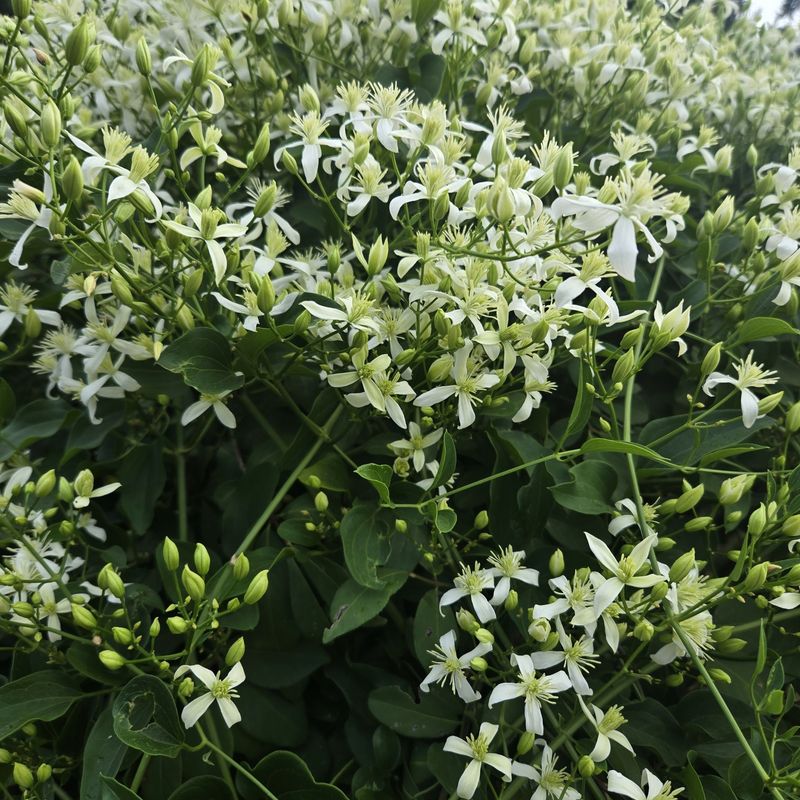
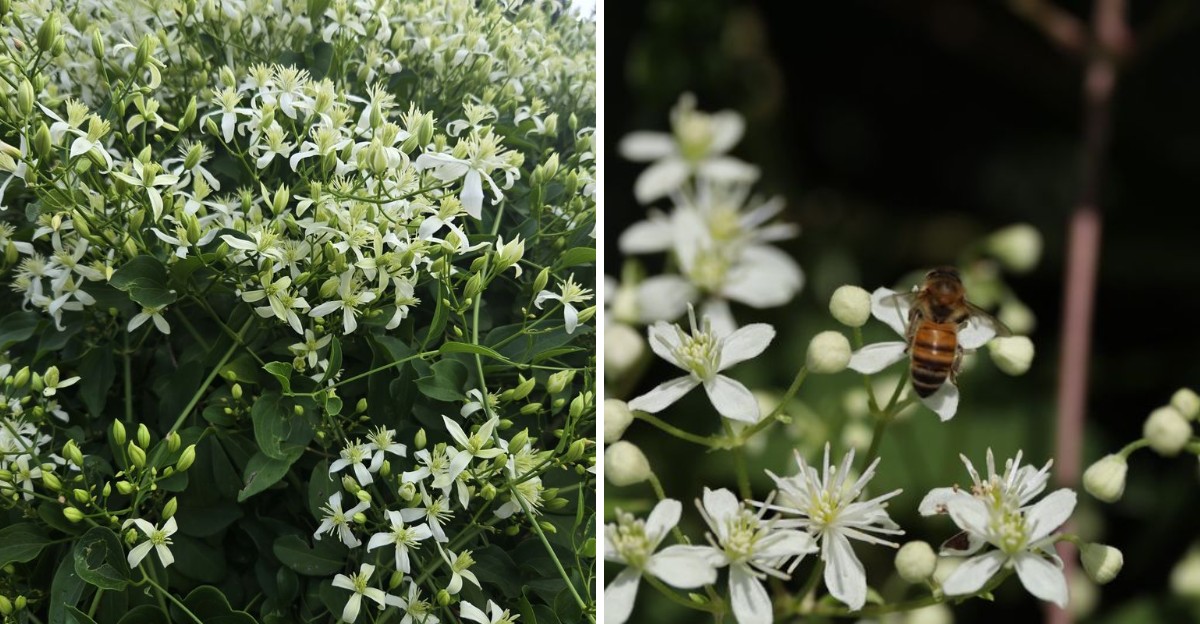
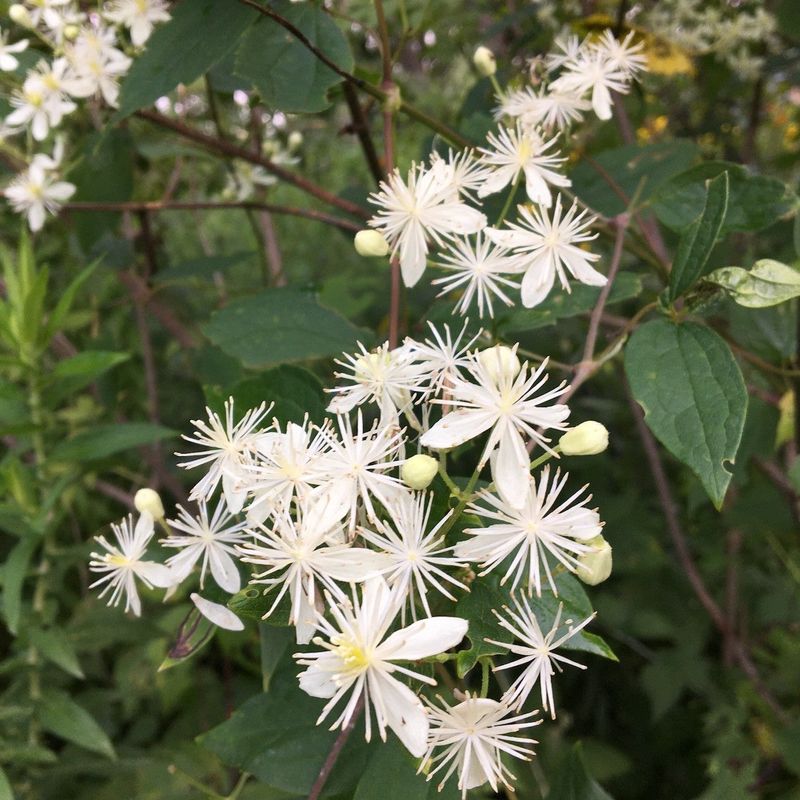
From late summer into fall, virgin’s bower covers itself in so many flowers that the leaves almost vanish. It looks like a snowdrift landed on your fence in September.
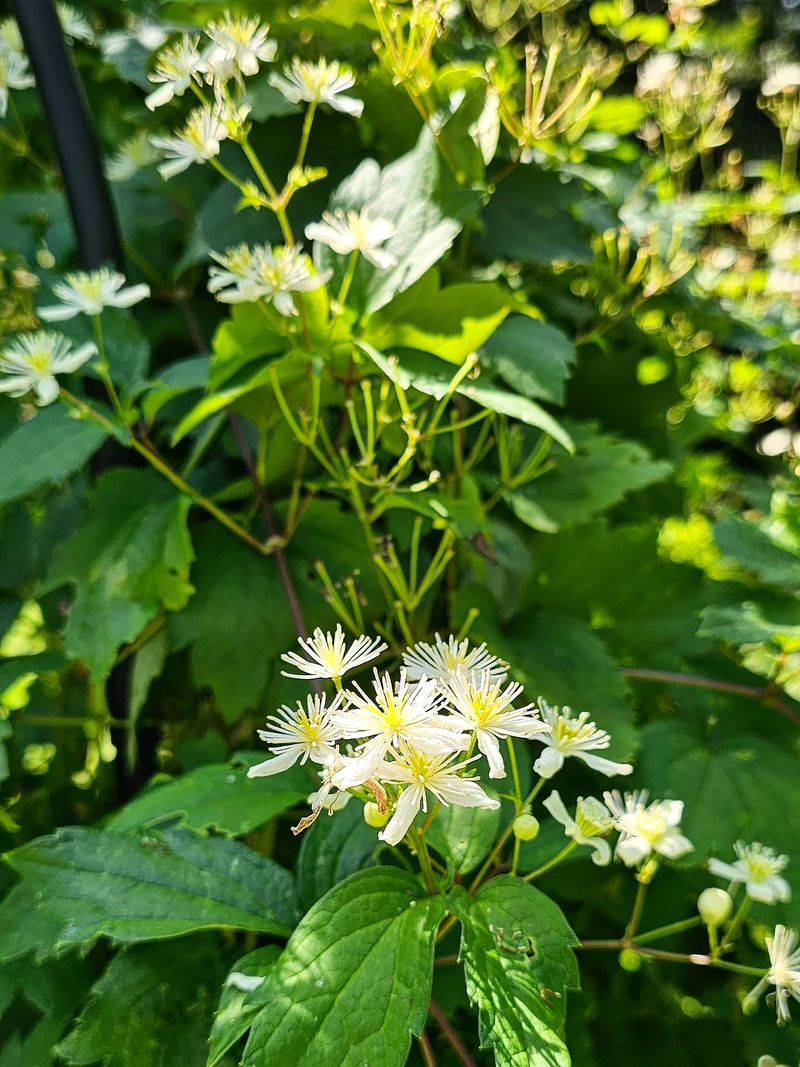
Each bloom is small, only about an inch across. Every flower has four pure white petal-like parts called sepals, plus a fuzzy center. Hundreds of them open together, so the effect is huge.
Then there is the smell. The flowers give off a sweet, soft perfume that drifts through the air on warm evenings. Sitting under a covered pergola while it blooms feels a bit like being inside a candle shop.
Now for a surprise. The scent of virgin’s bower is milder than the scent of its Asian cousin, sweet autumn clematis. Some growers actually use that gentler fragrance as a clue to tell the two plants apart.
Your Texas Garden Changes Every Week. Your Plan Should Too.
Gardening in Texas changes quickly throughout the season. Every Friday you’ll receive a simple weekly plan showing exactly what to plant, prune, fertilize, harvest, and protect so you never miss the right timing.
There are a few other clues too. Sweet autumn clematis usually has smooth leaf edges, while virgin’s bower often has toothed, jagged edges on its leaflets. Virgin’s bower also tends to bloom a little earlier in the season.
Want to enjoy the fragrance the most? Plant the vine near a spot where you like to relax, such as a porch, patio, or garden bench. Breezes will carry the scent right to you.
Timing matters as well. Many summer flowers are fading by August and September, so this vine fills a gap when gardens start to look tired.
It gives you one last burst of beauty before cooler weather arrives. Cut a few stems for a vase if you like. The blooms add a light, airy touch to fall bouquets.
Made For Fences, Arbors, And Pergolas
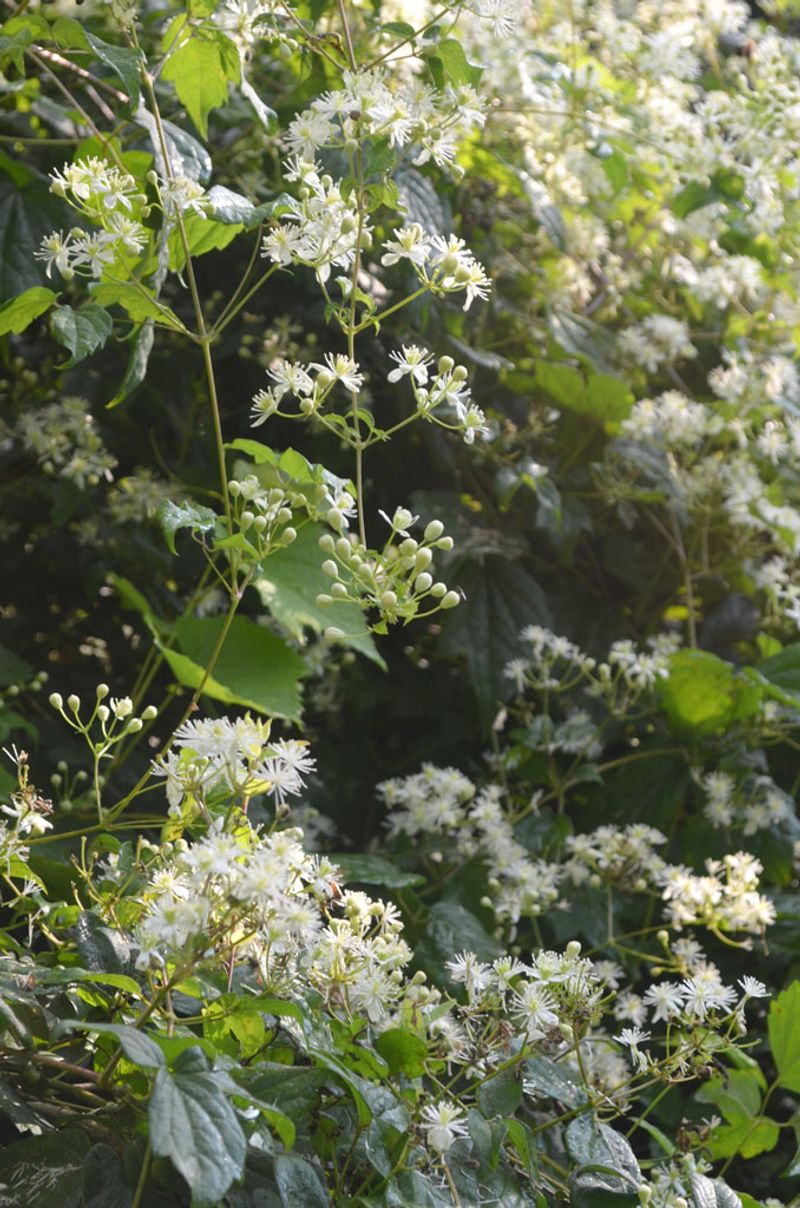
Got a plain chain-link fence that looks a little boring? Virgin’s bower can turn it into a living green wall in just one season. Few vines work faster.
Here is how it climbs. The plant has no tendrils, which are the curly threads some vines use to grab things. Instead, it wraps its twisting leaf stems around anything thin enough to hold.
That means it loves wire, string, lattice, and narrow wooden slats. Thick posts and flat walls are harder for it to grip.
If your support is wide, add some garden twine or wire mesh so the leaf stems have something to hug.
Speed is where this vine really shows off. With a good support, it can climb up to 20 feet in a single year. That makes it a smart pick if you want quick shade over a pergola or privacy along a fence.
What happens with no support at all? The vine simply sprawls across the ground. It forms a thick, leafy groundcover that can hide bare spots or cover a slope.
For arbors and pergolas, plant the vine near a corner post. Gently guide the young stems toward the structure with soft ties. After a few weeks, the plant will take over and climb on its own.
Give it room to roam. A sturdy structure is a must, because a full-grown vine gets heavy when it is loaded with leaves and flowers. Flimsy trellises can bend or snap under the weight.
Mailbox posts, old tree stumps, and garden obelisks also make fun supports. Wrap them with a little wire first. Soon you will have a fragrant focal point that neighbors will ask about.
A Magnet For Pollinators And Birds
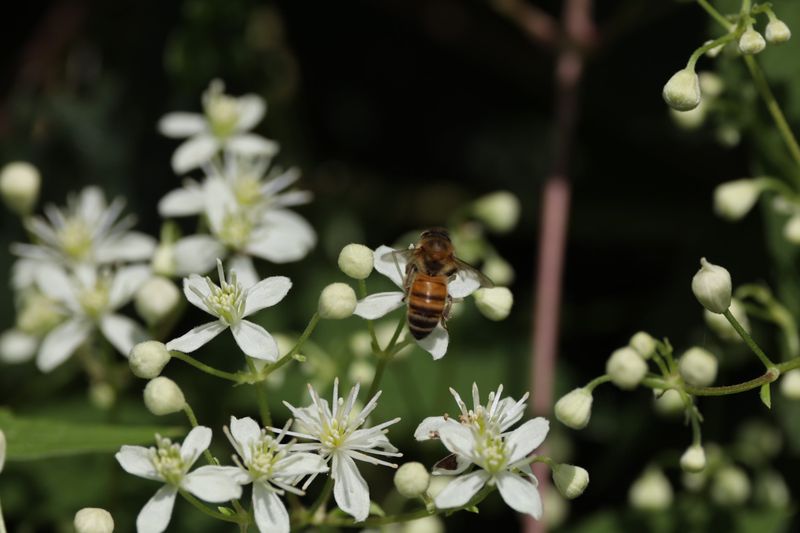
Stand near a blooming virgin’s bower on a sunny afternoon, and you will hear it before you see it. The whole vine hums with bees. Butterflies float from flower to flower like they are shopping at a busy market.
The flowers are packed with nectar and pollen. Bees, butterflies, and even hummingbirds stop by for a snack. In fall, when fewer flowers are open, that food source becomes extra valuable.
Did you know virgin’s bower plants are usually either male or female? Male plants make lots of pollen, while female plants make the seeds. Both types still offer plenty for pollinators to enjoy.
Once the petals drop, the show keeps going. Female plants form feathery, silvery seed heads that look like tiny puffs of smoke. Many gardeners think they are almost as pretty as the flowers.
Those fluffy seed heads earned the plant another nickname, old man’s beard. They catch the low autumn sunlight and seem to glow. They can hang on the vine well into winter.
Birds love this part. Migrating and wintering birds eat the seeds when other food runs short. Goldfinches even pull off the soft, downy fluff and use it to line their nests.
Want more wildlife in your yard? Pair the vine with other native plants like goldenrod, asters, and coral honeysuckle. Together they create a buffet that runs from spring through fall.
Try to skip bug sprays near the vine. Chemicals can harm the same bees and butterflies you are hoping to attract. A few chewed leaves are a small price for a yard full of life.
Grab a chair and watch for a while. You might be surprised how many visitors show up.
Easy Growing Conditions
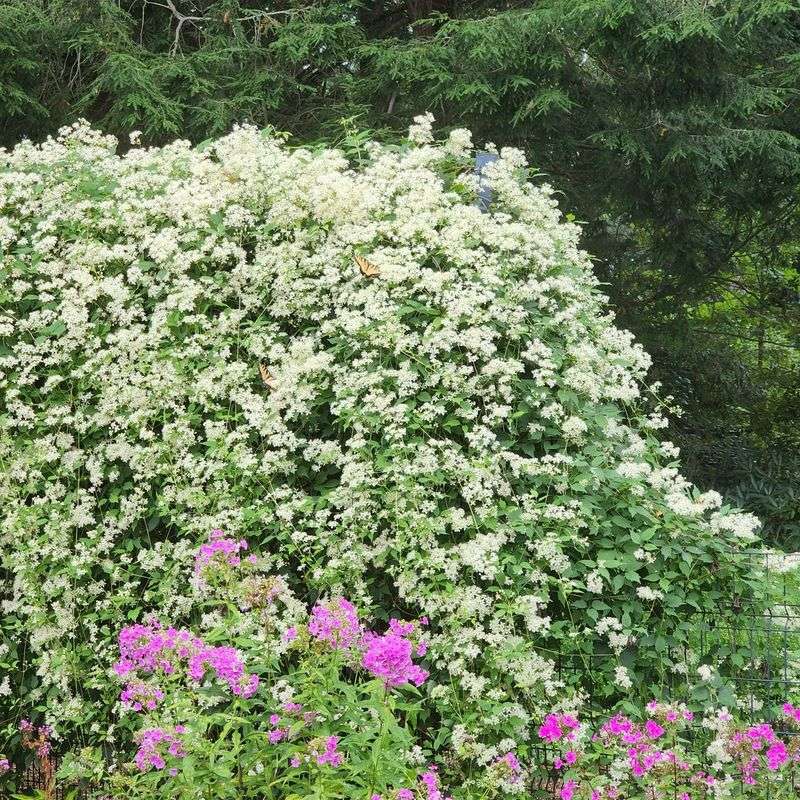
Good news for busy gardeners: virgin’s bower is not picky. It has spent thousands of years growing wild without anyone fussing over it. With a few basics, it will likely thrive in your yard too.
Start with light. The vine grows well in full sun, but it also handles part shade. A spot with morning sun and some afternoon shade is often perfect in hot Texas summers.
Next, think about soil. Virgin’s bower prefers ground that stays a bit moist. Rich soil with some compost mixed in will help it get off to a strong start.
Water young plants regularly during their first year. Deep soaking once or twice a week works better than a quick sprinkle every day. Deep watering helps roots grow down where the soil stays cooler.
After it settles in, the vine gets tougher. Established plants can handle seasonal dry spells, which is handy during a Texas August. Still, an extra drink during long droughts will keep it looking its best.
East Texas gardeners have a real advantage. In the wild, this vine grows along streams, woodland edges, and old fencerows across that region. Those spots have the moist soil and filtered light it loves.
Try to copy those natural places at home. A fence line near some trees or a shady corner by a downspout can be ideal. A layer of mulch around the base helps hold in moisture and keeps roots cool.
Gardeners in drier parts of Texas can still grow it. Just pick a spot with some shade and plan to water more often. Low areas where rain collects are another good choice.
Simple Care And What To Watch For
Pruning shears ready? Late winter is the best time to give virgin’s bower a fresh start. Because it blooms on new growth each year, you can cut it back hard without losing any flowers.
Trim the whole vine down to about a foot above the ground in late winter or early spring. It may look harsh, but the plant bounces back fast. By late summer, it will be climbing and blooming again.
Hard pruning also keeps the vine neat. Without it, old stems can pile up into a messy tangle. Clearing them out lets fresh, healthy growth take their place.
Now for the honest part. Virgin’s bower can spread a bit too eagerly. It drops lots of seeds and sends up new shoots, called suckers, from its roots.
Keep an eye out for surprise seedlings in nearby beds. Pull them while they are small, when the roots come up easily. Mowing or trimming around the base can also stop suckers from wandering too far.
Safety matters too. The leaves are poisonous to people if eaten, and they can upset pets as well. The sap may also bother sensitive skin.
Plant the vine away from play areas, sandboxes, and spots where dogs like to chew. A tall fence along the back of the yard is often a safer choice than a low trellis by the patio. Wear gloves when pruning, and wash your hands afterward.
Teach kids that this plant is for looking and smelling, not tasting. A simple rule like that goes a long way. Many garden favorites, including some common houseplants, carry the same kind of warning.