The Full Sun Southern Arizona Climber That May Bring Butterflies to a Blank Wall
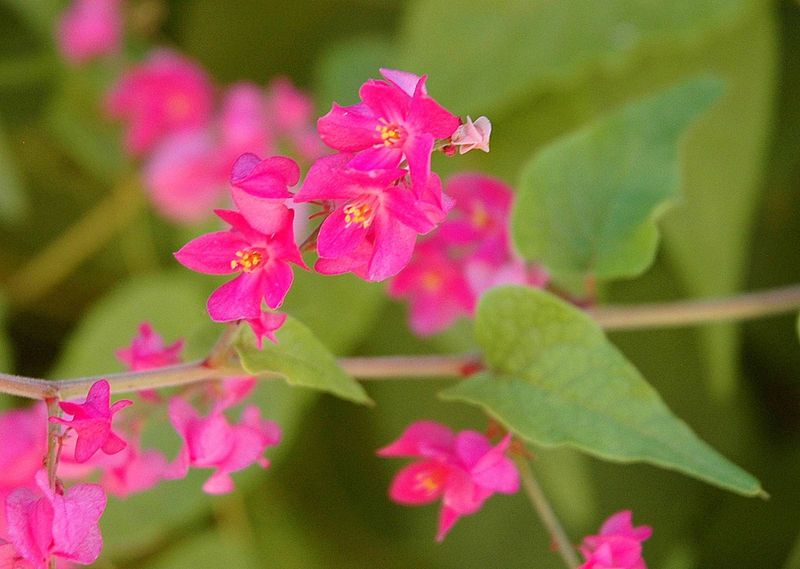
A bare, sun-blasted wall in southern Arizona can feel like a lost cause, but Queen’s wreath vine has a way of changing that fast. Known botanically as Antigonon leptopus, this heat-loving climber can cover a fence or trellis with dense clusters of pink flowers through the hottest months of the year.
Butterflies may stop by those blooms, though how reliably they show up locally is an open question. What is certain is that this vine can turn a blank wall into a lush, flowering screen if you give it the right setup from the start.
Queen’s wreath can screen a hot, sunny wall in southern Arizona
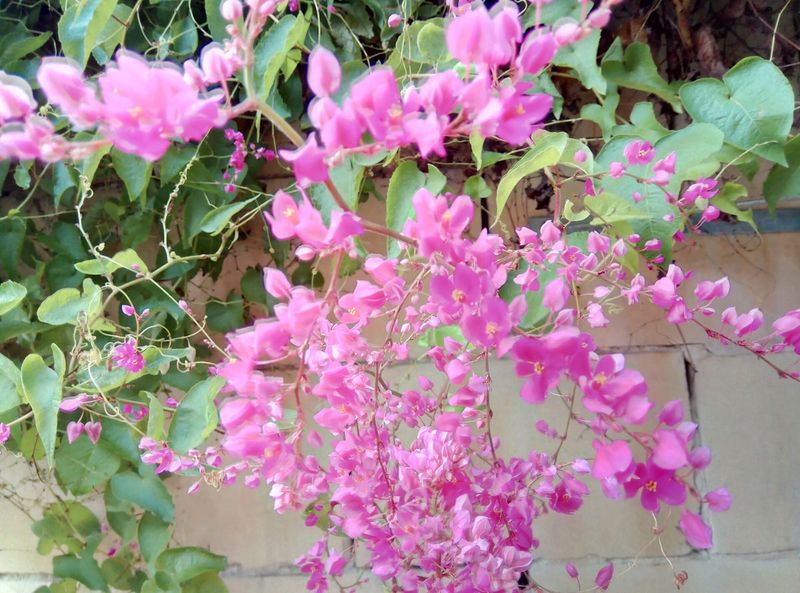
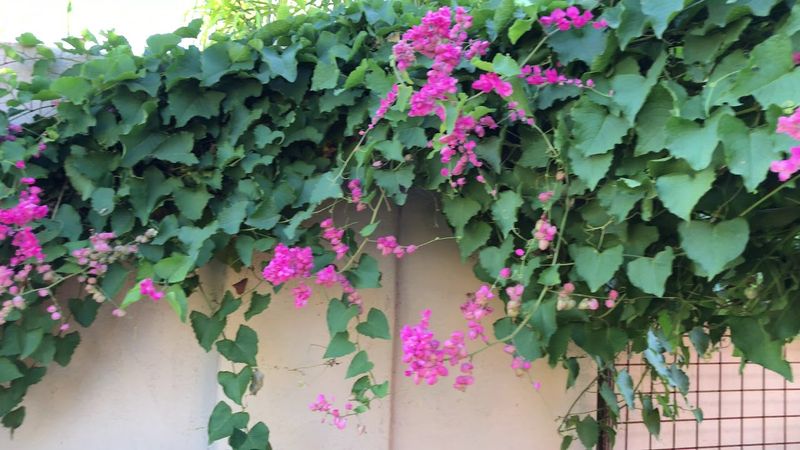
Few vines handle the combination of blazing sun and triple-digit heat the way Queen’s wreath does. University of Arizona’s landscape vine guide for southern Arizona describes Antigonon leptopus as suited to full sun and high heat, capable of growing densely enough to cover a fence, trellis, arbor, or wall.
For a homeowner staring at a blank south- or west-facing wall, that combination of speed and density is hard to beat.
One thing to be clear about from the start: Queen’s wreath is native to Mexico, including the Sonoran region just south of the border. It is not an Arizona native, even though it thrives here and has been grown in low-desert landscapes for decades.
That distinction matters when you are thinking about long-term habitat value or regional plant sourcing.
If a native vine is a priority, fringed twinevine (Funastrum cynanchoides) is worth knowing about. It is a true Arizona native with a more naturalistic growth habit, climbing over shrubs and reaching around ten feet.
It will not produce the same fast, dense wall coverage as Queen’s wreath, but it fits a different kind of garden goal.
Butterflies may visit, but local attraction is unproven
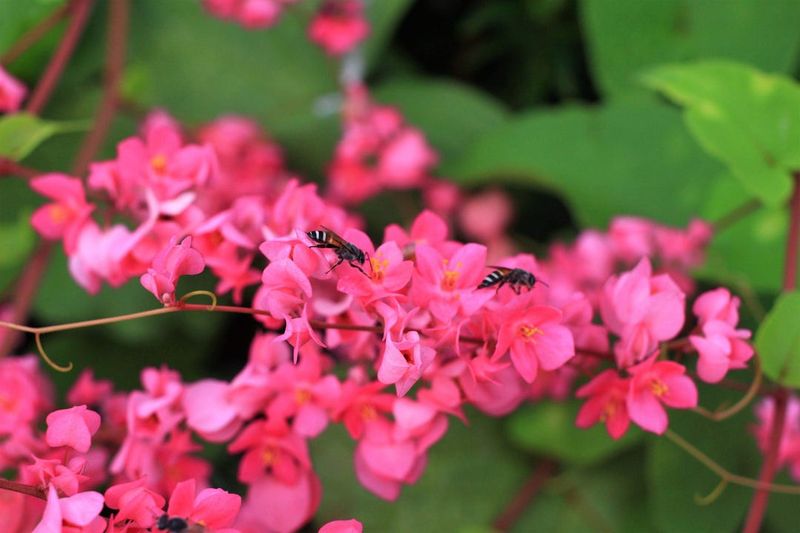
The butterfly angle is real but limited, and it is worth understanding exactly what the evidence shows. A pollination study on Antigonon leptopus recorded butterflies among the insects visiting the flowers, alongside bees, wasps, flies, and thrips.
Bees were the most important pollinators in that study. The research did not take place in Arizona, and it does not tell us how many butterflies visit Queen’s wreath in southern Arizona yards or how often.
So the honest framing is this: if butterflies are already moving through your neighborhood, they may stop at the flowers. Planting Queen’s wreath for the screen and treating any butterfly visits as a welcome bonus is a more realistic expectation than counting on a steady stream of them.
There is also a naming mix-up worth clearing up. Another vine called butterfly vine, known botanically as Callaeum macropterum, gets its common name from seed pods shaped like butterfly wings.
The University of Arizona campus arboretum notes this characteristic for that species. Those winged pods are not evidence that the plant draws butterflies, and Callaeum macropterum is a completely different vine from Queen’s wreath.
If a nursery label says “butterfly vine,” check the botanical name before assuming it is the same plant.
Your Arizona Garden Changes Every Week. Your Plan Should Too.
Gardening in Arizona changes quickly throughout the season. Every Friday you’ll receive a simple weekly plan showing exactly what to plant, prune, fertilize, harvest, and protect so you never miss the right timing.
Choose a sturdy support and leave room for growth
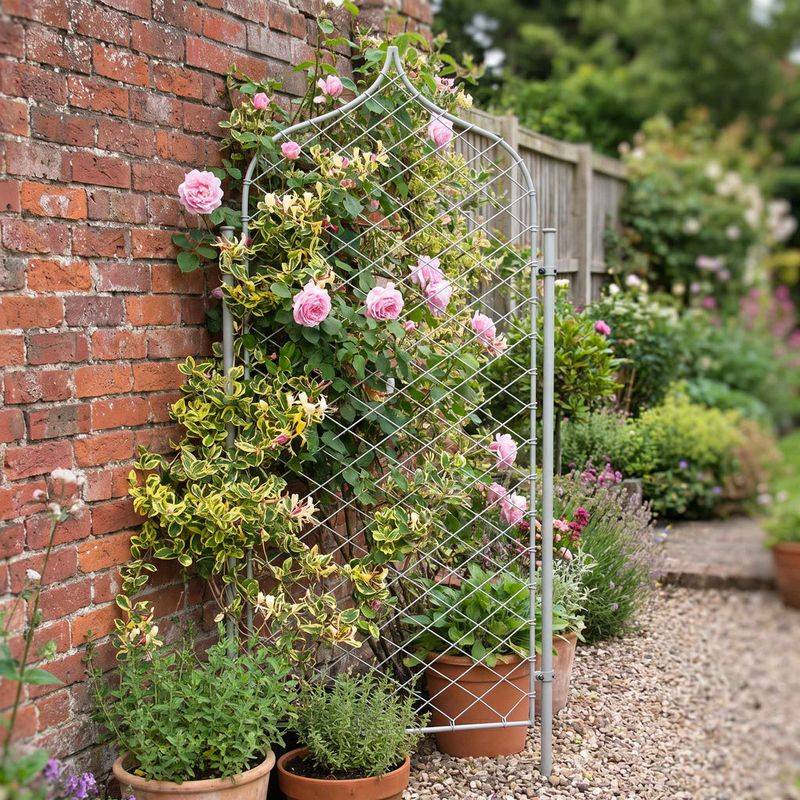
Planning the support structure before the vine goes in the ground saves a lot of frustration later. Queen’s wreath grows vigorously and produces dense foliage that catches wind and adds real weight to whatever it climbs.
A lightweight plastic trellis or a loosely mounted frame will not hold up over time. A wall-mounted metal trellis, a welded wire panel secured to solid posts, a sturdy wood arbor, or a chain-link fence are all reasonable options.
The vine uses tendrils to grab and pull itself upward, so the support needs something it can actually grip. Smooth surfaces without horizontal bars or mesh will slow it down.
Building a structure with enough surface area for the vine to spread across gives you a fuller screen faster.
Growth habit is the other thing to plan for. Queen’s wreath is described as aggressive in regional vine guidance, and it also produces underground tubers that help it regenerate after cold snaps or heavy pruning.
That resilience is useful in the desert, but it also means the vine will keep pushing outward if you do not stay on top of it. Leaving at least eight to ten feet of horizontal run along a wall, and keeping gutters, roof edges, and neighboring plants out of reach, makes the ongoing management much more manageable.
Plant in a gentler season before summer heat
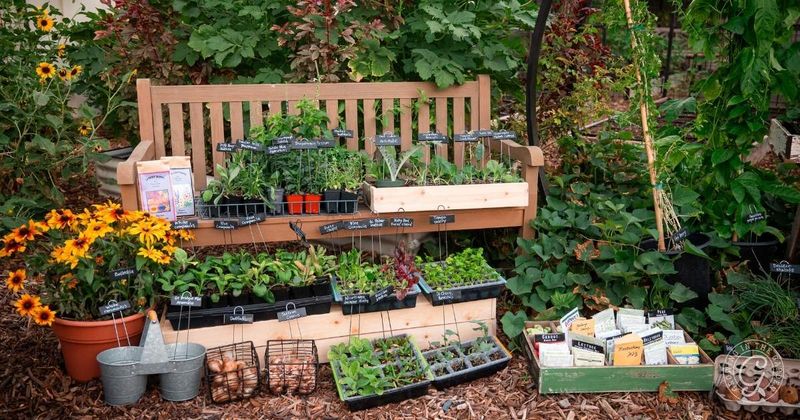
Timing a new planting around the low desert’s brutal summer is one of the most practical things you can do for any landscape plant. Fall is the preferred window for much of southern Arizona.
Soil temperatures are still warm enough to encourage root growth, air temperatures are dropping, and the plant has months to settle in before it faces its first full summer. A Pima County gardening guide recommends getting trees and shrubs in the ground early in October to take advantage of that window.
Early spring is the other reasonable option, though it gives a shorter runway before heat arrives. A vine planted in February or March has a few weeks to establish roots before temperatures start climbing in April and May.
Watering discipline matters more with a spring planting because the margin for error is narrower.
Planting in summer is a high-risk move in the low desert. Even heat-adapted plants can struggle to establish when air temperatures stay above 100 degrees and soil temperatures run even higher.
Getting Queen’s wreath in the ground during a gentler season does not guarantee a smooth establishment, but it removes one of the biggest obstacles right from the start.
Check caliche and drainage before planting
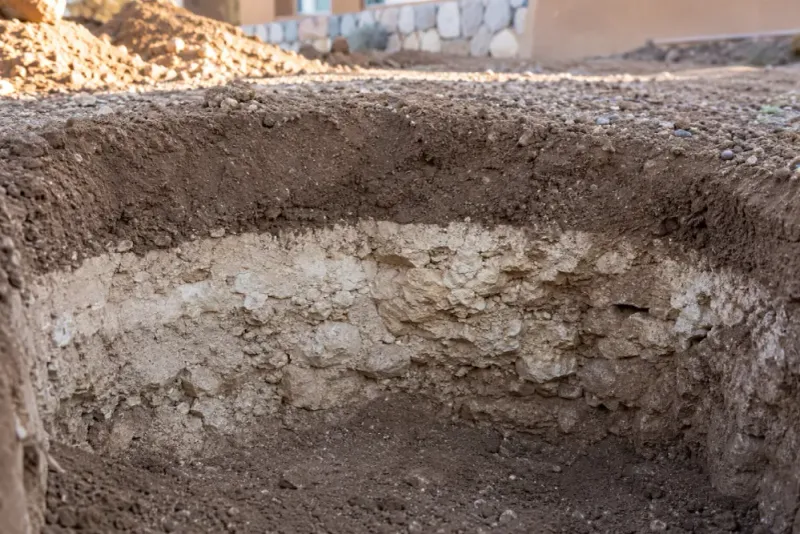
Southern Arizona soils frequently hide a layer of caliche, a hardened calcium carbonate deposit that can stop roots cold and trap water above it like a bowl. Before putting Queen’s wreath in the ground near a wall, it is worth digging down a foot or two to see what is actually there.
A thin, crumbly caliche layer is less of a problem than a thick, cemented one.
Regional guidance on caliche management advises breaking through the layer with a digging bar or renting a jackhammer for dense deposits, then verifying that water actually drains through before planting. A simple test is to fill the hole with water and watch how fast it disappears.
If it is still sitting there an hour later, drainage is a problem that needs to be solved before the vine goes in.
Planting into a poorly drained spot sets the vine up for root problems even if everything else goes right. Queen’s wreath needs moisture to establish, but sitting water around the root zone is a different situation entirely.
Taking thirty minutes to assess the soil before planting can prevent a lot of trouble down the road.
Water deeply at first, then adjust to site conditions
Queen’s wreath is often described as a low-water plant, but that framing can mislead. Regional vine guidance classifies its water use as low-to-medium or medium, which means it needs real irrigation, especially in the low desert’s heat.
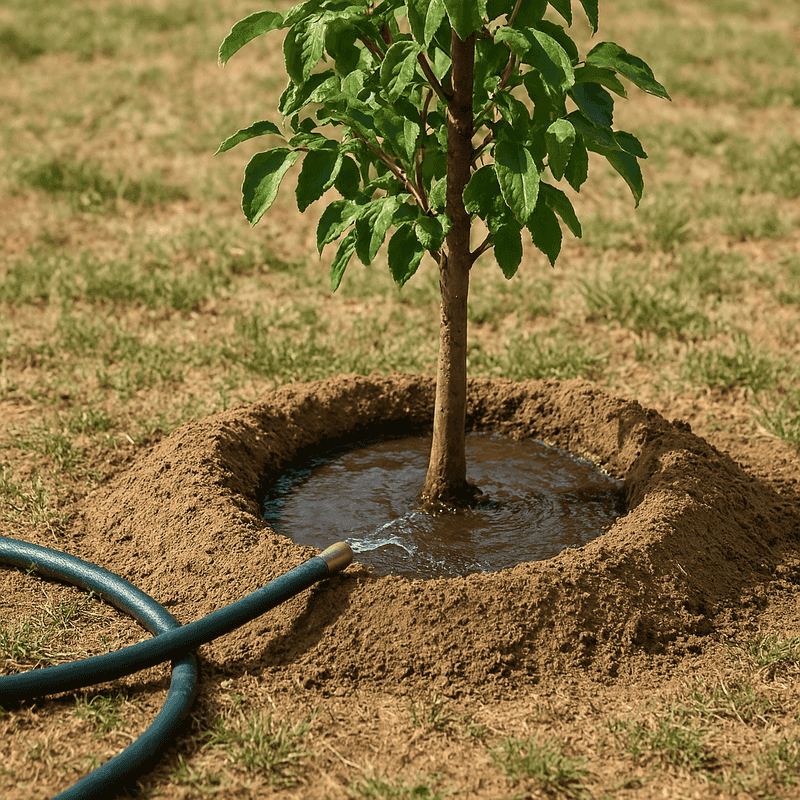
During the first growing season, deep, infrequent watering encourages roots to push down into cooler soil rather than staying shallow near the surface.
Deep watering means running a drip emitter or soaker hose long enough that moisture reaches twelve inches or more below the surface. Frequent light watering does the opposite, keeping roots near the surface where they are more vulnerable to heat and dry spells.
Getting the establishment phase right pays off in a vine that handles summer stress better in subsequent years.
Once the vine is established, irrigation frequency depends on your specific site. Sandy soil drains fast and may need more frequent watering than heavier soil with better moisture retention.
A spot that catches afternoon shade, even briefly, will dry out more slowly than one in unbroken sun. Watching the vine for early stress signs, like wilting early in the morning before temperatures peak, is a more reliable guide than following a fixed calendar schedule regardless of conditions.
Plan for cold-weather dieback and seasonal pruning
Queen’s wreath handles heat with ease, but cold is a different story. A hard freeze can take the top growth all the way back, leaving behind bare stems and dried foliage.
The underground tubers usually survive, and the vine will push out new growth once temperatures warm in spring. Seeing a bare trellis in February is not necessarily cause for concern, but it does mean you should plan for a dieback-and-regrowth cycle rather than expecting the vine to look good year-round.
Late winter is the practical time for annual pruning, after the risk of hard freezes has passed but before the vine puts energy into new growth. Cutting the vine back at this point removes dried material, reduces fire risk near structures, and gives you a chance to redirect growth before it gets ahead of you.
A Pinal County Extension newsletter on Queen’s wreath recommends removing dried growth near structures as part of routine annual care.
Pruning is also how you keep a vigorous vine from overwhelming its support or creeping into places you did not intend. Gutters, roof overhangs, and neighboring shrubs are common targets.
Getting into the habit of checking the vine’s reach once or twice a season, and cutting back any runners heading the wrong direction, keeps the screen manageable without requiring a major annual rescue effort.
Choose it for the screen; treat butterfly visits as a bonus
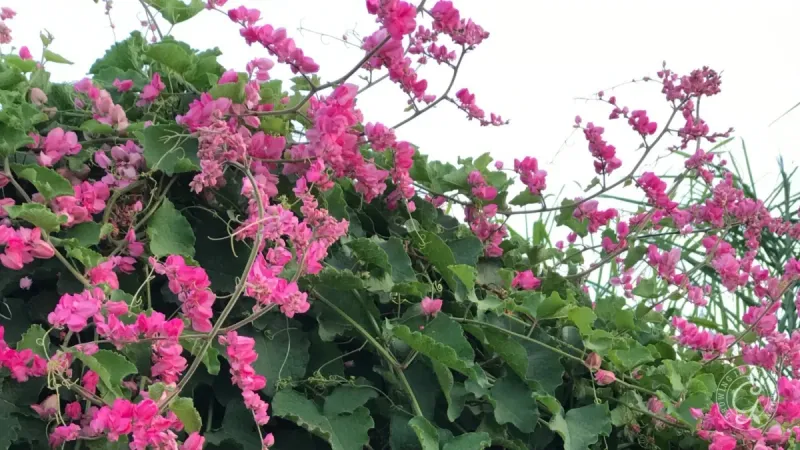
Queen’s wreath makes the most sense for homeowners who need a fast, dense flowering screen on a sunny wall and are prepared to give it sturdy support, consistent establishment watering, and a yearly pruning session. Those are the conditions where it performs reliably.
Butterfly visits may happen, and they are a genuine pleasure when they do, but they are not something you can count on as a regular payoff.
For anyone drawn to a native option, fringed twinevine is still worth considering for a naturalistic corner of the yard, with the understanding that it grows at a smaller scale and will not fill a long wall the way Queen’s wreath can. The two plants serve different purposes, and knowing that upfront helps match the right vine to the right spot.
A wall that goes from bare to blooming is its own reward. Any butterfly that shows up is just extra.