The Full Shade Oregon Native That Fills Under a Douglas Fir Where Nothing Else Grows
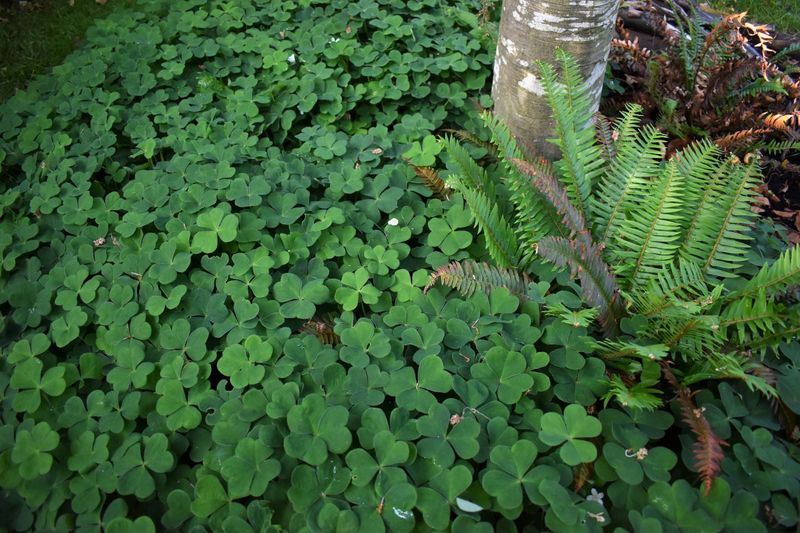
That bare, needle-covered patch beneath your Douglas fir can feel like a gardening puzzle with no good answer. Oregon oxalis is a native groundcover that genuinely thrives in deep shade, spreading low across the forest floor in some western Oregon woodlands.
Whether it will work in your specific spot depends on one factor most gardeners overlook: summer moisture. Read on to find out how to read your site and pick the right plant for what is actually growing there.
Oregon oxalis suits moist shade, not every fir’s shadow
Oregon oxalis is a low-growing, rhizomatous perennial that hugs the ground and spreads gradually by underground stems. Its heart-shaped, clover-like leaves form a soft layer that can become surprisingly dense in the right conditions.
In moist western Oregon forests, including some conifer understories, OSU’s forest-ecology guide documents cover reaching up to 75% in certain stands, which gives you a real sense of its potential in a suitable habitat.
That number is worth holding onto carefully, though. It describes what this plant can do on a forest floor where moisture, organic matter, and soil conditions line up in its favor, not what it will automatically do beneath your particular backyard fir.
A Douglas fir’s canopy intercepts rain, and the dense root network below can pull moisture away quickly during Oregon’s dry summers.
Oregon oxalis is described as characteristic of very moist to wet sites, according to that same OSU resource. The OSU Extension recommended native plant list echoes this, placing it in the moist-shade category.
So the honest starting point is this: oxalis is a genuinely useful native groundcover for shaded spots that stay reasonably moist through summer, but it is not a guaranteed fix for every dry, root-filled shadow a fir casts.
Think of it as a promising candidate rather than a sure thing. When the moisture is there, it can quietly spread into a pleasing carpet.
When the soil dries out hard by July, it will struggle regardless of how deep the shade runs.
Read the site beyond its shade
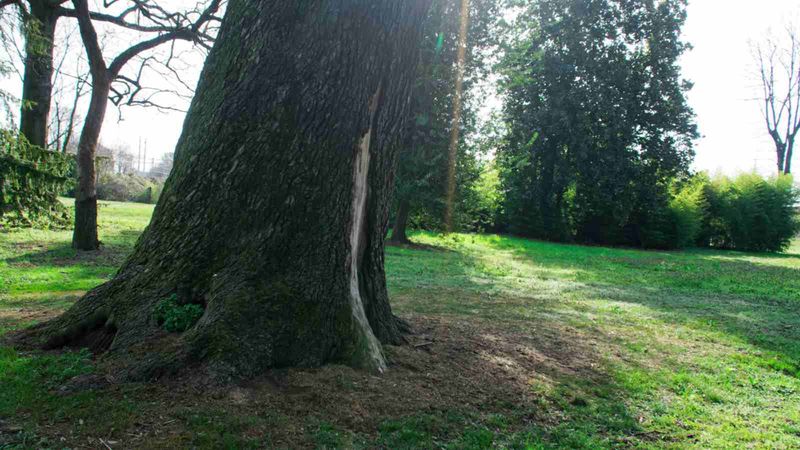
Shade gets most of the attention when gardeners size up a spot beneath a Douglas fir, but light is only half the picture. The question that actually determines which plants will survive there is whether the soil stays reasonably moist through summer or dries out hard once the rains stop.
Those two conditions, moist shade and dry shade, look almost identical in June but call for completely different plant choices.
A simple check tells you a lot. Push a finger two inches into the soil in late July or early August, after several weeks without rain.
If it feels cool and slightly damp, you have a moist-shade situation and Oregon oxalis becomes a realistic option. If the soil crumbles and feels powdery, you are dealing with dry shade, and a different plant will serve you better.
OSU Extension’s guide to gardening with Oregon native plants west of the Cascades emphasizes matching plants to actual site conditions rather than planting by general category, and that principle matters more under a mature tree than almost anywhere else in the garden.
Your Oregon Garden Changes Every Week. Your Plan Should Too.
Gardening in Oregon changes quickly throughout the season. Every Friday you’ll receive a simple weekly plan showing exactly what to plant, prune, fertilize, harvest, and protect so you never miss the right timing.
West-of-Cascades gardeners have an advantage here: the maritime climate brings reliable winter rain that recharges soil, and many native plants are adapted to that rhythm. East of the Cascades, in Oregon’s high desert, conditions are fundamentally different, and the guidance for western Oregon does not carry over cleanly to those colder, drier zones.
One more thing worth checking: how compacted is the soil? Years of foot traffic or heavy needle accumulation can create a surface that sheds water rather than absorbing it, making even a naturally moist site behave like a dry one.
Knowing what you are actually working with is the real first step.
Choose other plants by their growing conditions
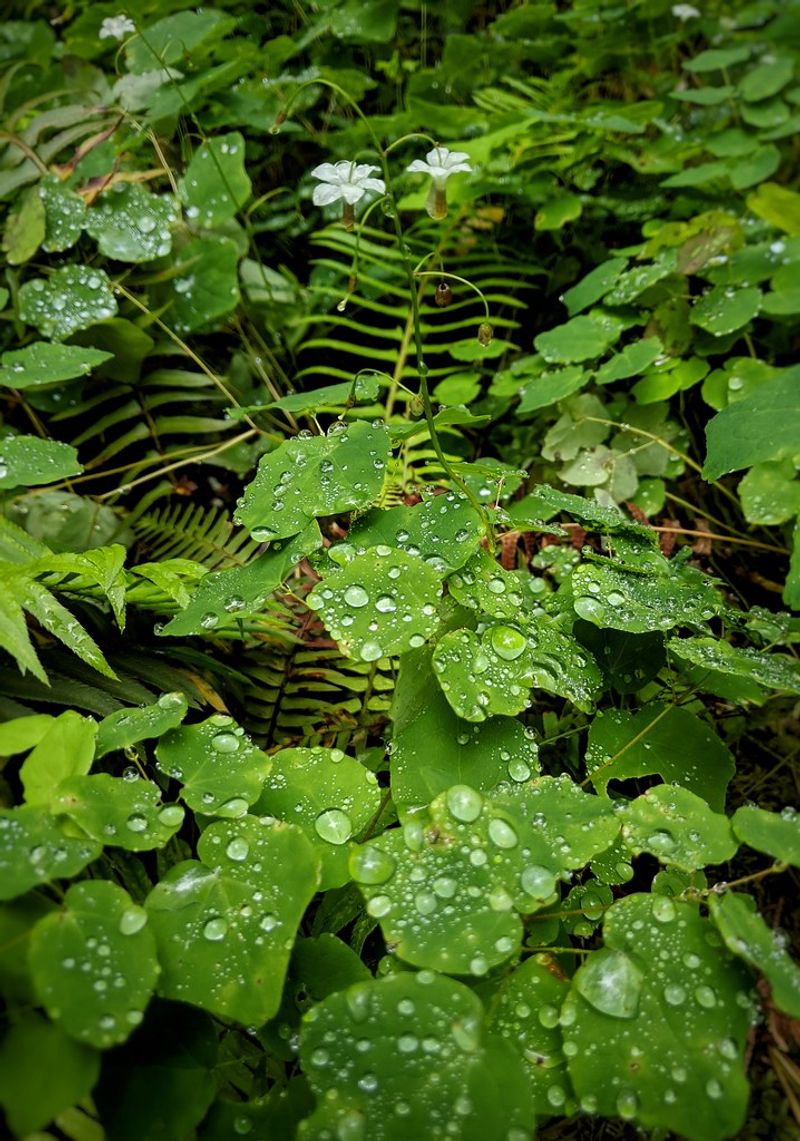
Once you know whether your spot is moist or dry, the plant list gets much easier to navigate. Two other Oregon natives come up regularly for shaded spots beneath conifers, and each one fits a specific set of conditions rather than both of them.
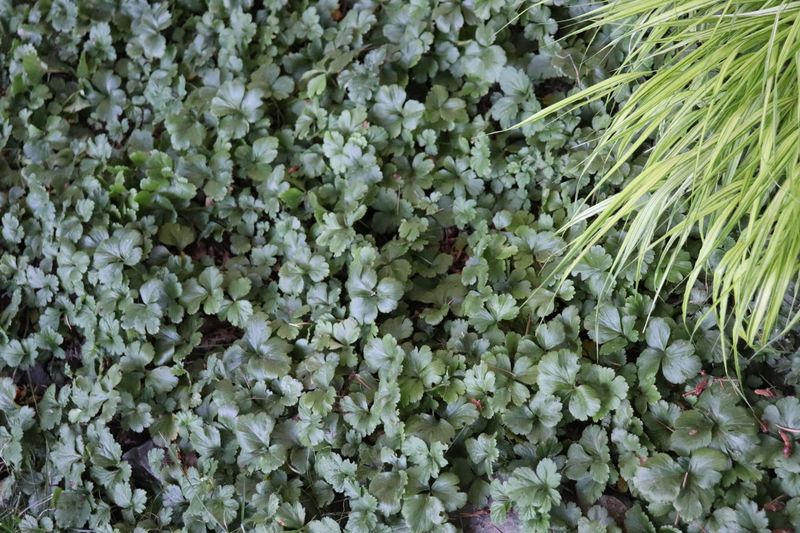
Inside-out flower, known botanically as Vancouveria hexandra, is a rhizomatous native perennial that spreads by underground runners similarly to Oregon oxalis. OSU’s landscape plant database describes it as best suited to cool, moist conditions with rich, organic soil.
Its small white flowers nod delicately above airy, compound foliage, and it can gradually fill in a shaded bed where moisture is available. If your site qualifies as moist shade, inside-out flower is worth considering alongside Oregon oxalis rather than as a replacement for it.
Sword fern is a different story altogether. The OSU Extension native plant list notes that sword fern tolerates dry shade, which makes it one of the more reliable choices for the drier version of the under-fir problem.
Its evergreen fronds stay handsome through winter and provide real structure. The trade-off is size: sword fern matures at roughly 3 to 5 feet tall, so it functions as a substantial evergreen layer or accent plant rather than a low, spreading carpet.
A single clump looks intentional; a row of them along a shaded path can feel genuinely lush.
Neither plant will succeed on every site, and neither one eliminates the need to match your choice to actual conditions. Moist shade points toward oxalis or inside-out flower; dry shade points toward sword fern.
Picking by moisture is simpler and more reliable than picking by shade depth alone.
Protect the fir while planting
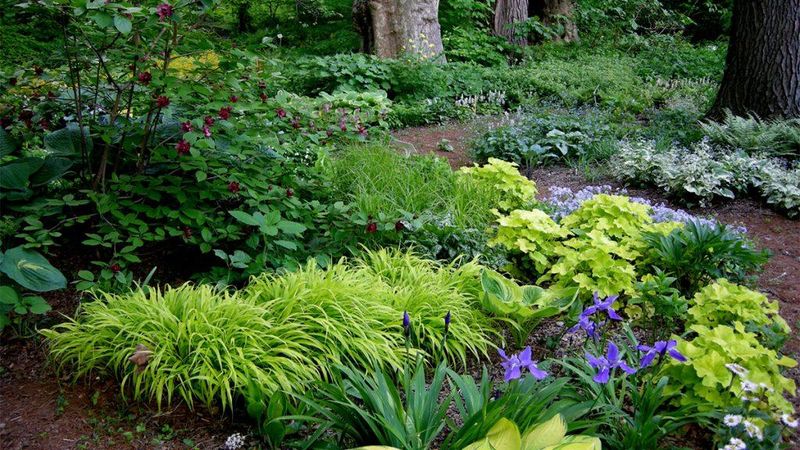
A mature Douglas fir is an asset worth protecting, and the area beneath its canopy deserves careful handling when you introduce new plants. The tree’s feeder roots spread wide and relatively shallow, often extending well beyond the drip line, and those roots are sensitive to changes in their environment.
Two of the most common planting-bed preparations, compacting the soil with foot traffic or heavy equipment and adding a thick layer of fill soil over the root zone, can cause real harm. OSU Extension’s guide on protecting trees during construction and development explains that added soil and soil compaction within a tree’s critical root zone can restrict oxygen and water movement to the roots, sometimes causing slow decline that takes years to become visible.
The same principles apply to planting projects, not just construction.
A gentler approach keeps the tree healthy and still gets plants in the ground. Work in small pockets rather than turning over large sections of soil.
Use a narrow trowel or hand tool to open a planting hole just large enough for the root ball, then settle the plant in without disturbing surrounding roots any more than necessary. Avoid piling soil or mulch against the trunk; keep any mulch a few inches back from the bark.
If the soil under your fir is heavily compacted already, a thin layer of compost worked lightly into the top inch or two can improve planting conditions without threatening deeper roots. The goal is to give your new plants a reasonable start while leaving the fir’s root environment as undisturbed as possible.
The tree was there first, and the groundcover works best when the tree stays healthy above it.
Give new natives time and establishment water
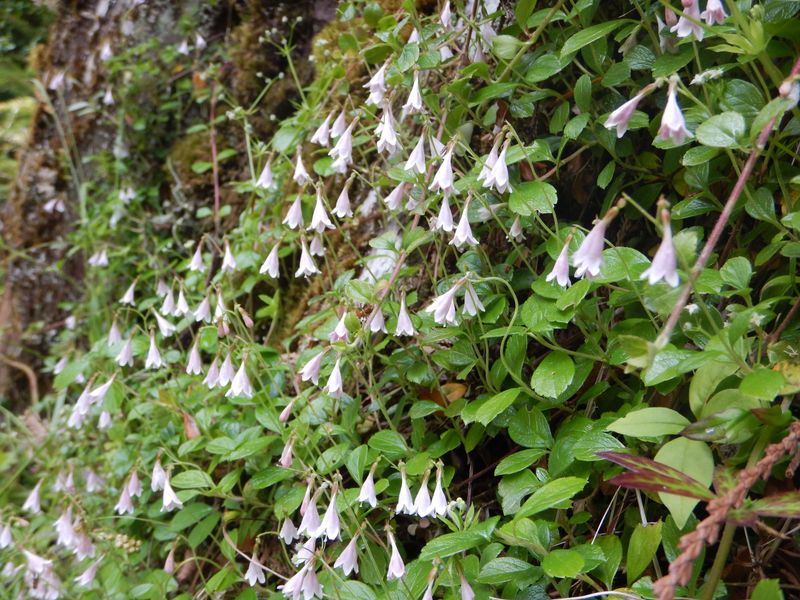
Oregon native plants are genuinely well adapted to the west-side climate, but “native” does not mean they can look after themselves from the day you plant them. A plant moved from a nursery pot into your garden has to rebuild its root system in unfamiliar soil, and that process takes time regardless of how well the species fits the region.
OSU Extension’s native plant gardening guide recommends planting during the wet season, ideally fall through early spring, so roots have months of natural rainfall to settle in before summer arrives. That timing genuinely helps, but it does not replace follow-up care once the rains stop.
Some woodland and wetland natives are particularly sensitive to summer drought, and even species adapted to dry conditions need support during their first summer or two.
OSU Extension’s water-wise native plant guide suggests that establishment can take two to three years, with supplemental irrigation reduced gradually as plants show signs of thriving. In practice, that means checking soil moisture weekly during dry spells in the first couple of summers, watering deeply when the soil is dry two inches down, and watching for wilting or leaf curl as early signs of stress.
Under a Douglas fir, the canopy intercepts rain and the roots compete for whatever moisture reaches the soil. New groundcover plants may need more attention there than they would in an open bed.
A slow, deep watering once or twice a week during the driest months keeps young plants alive while they build the root depth to handle summer on their own. Patience here pays off: a plant that survives two full summers is usually well on its way to becoming self-sufficient.
Let moisture guide the final choice
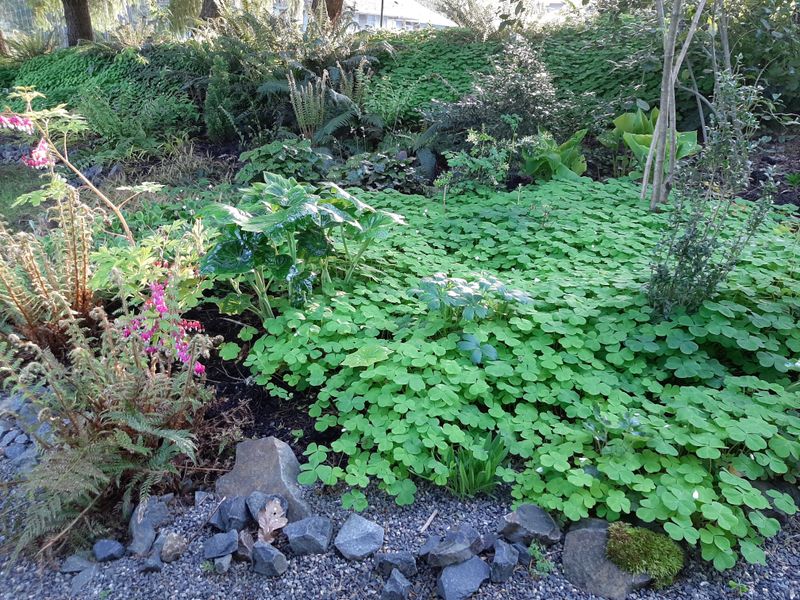
The simplest decision rule for planting beneath a Douglas fir comes down to one question: does this spot stay moist through summer, or does it dry out? Oregon oxalis and inside-out flower belong in the moist-shade column.
Sword fern belongs in the dry-shade column. Matching plant to moisture, rather than plant to shade depth, is what separates a planting that gradually fills in from one that quietly fails by August.
According to the OSU Extension recommended native plant list, each of these species has a preferred moisture range, and those ranges are not interchangeable. Expecting one plant to cover every bare patch regardless of conditions sets up disappointment.
Choosing by actual site conditions, as OSU Extension’s native plant guide consistently recommends, sets up a garden that can genuinely thrive.
Spread will follow at its own pace, shaped by your soil, your summer moisture, and how well the plants establish in their first couple of years. A realistic expectation is gradual, uneven coverage rather than a tidy carpet on a schedule.
The bare patch under your fir may never disappear entirely, and that is fine. What grows there successfully is always more satisfying than what was promised to grow there.