If Your Oregon Squash Leaves Are Turning Yellow, Remove These Now
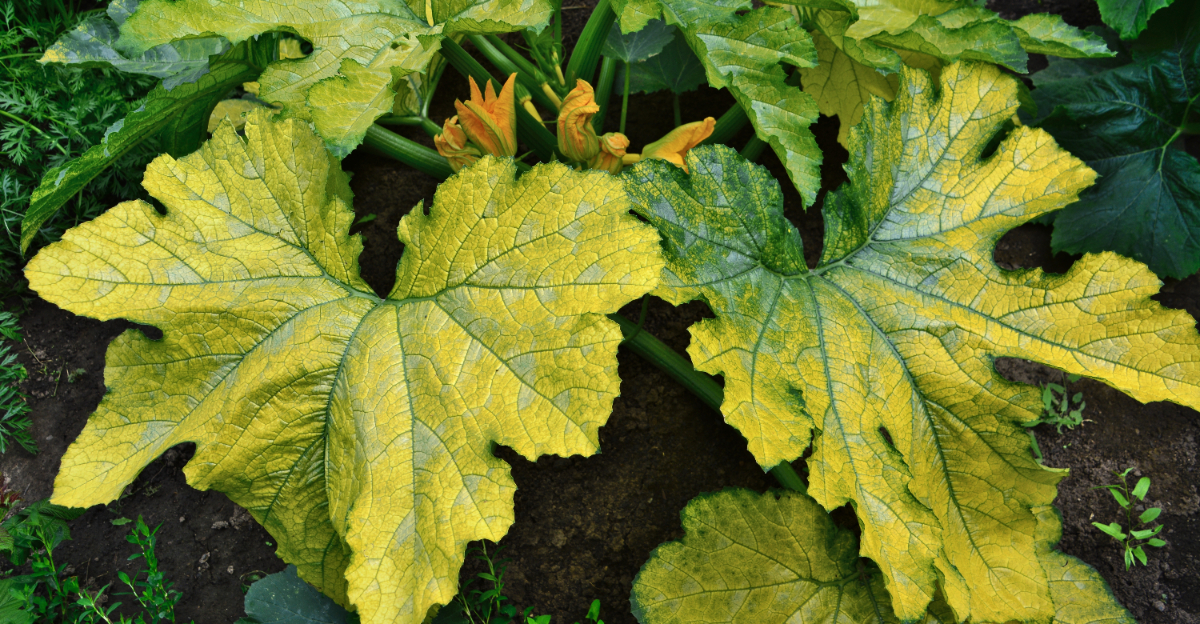
Yellowing squash leaves can make a healthy-looking plant seem like it is suddenly heading downhill.
The change often starts quietly, with one or two leaves fading before the problem becomes much harder to ignore.
Late summer adds another layer because older growth naturally begins to show its age while heat, moisture swings, and crowded vines can make the plant look rougher than it really is. The tricky part is deciding what should stay and what needs to go.
Removing the wrong growth can weaken the plant, but leaving certain problem areas in place can make recovery harder.
A quick inspection now can help separate harmless seasonal decline from something that deserves attention.
If your squash patch is starting to look tired, this is a good moment to figure out which leaves or growth are no longer helping the plant.
1. Cutting Off The Worst Yellow Leaves First
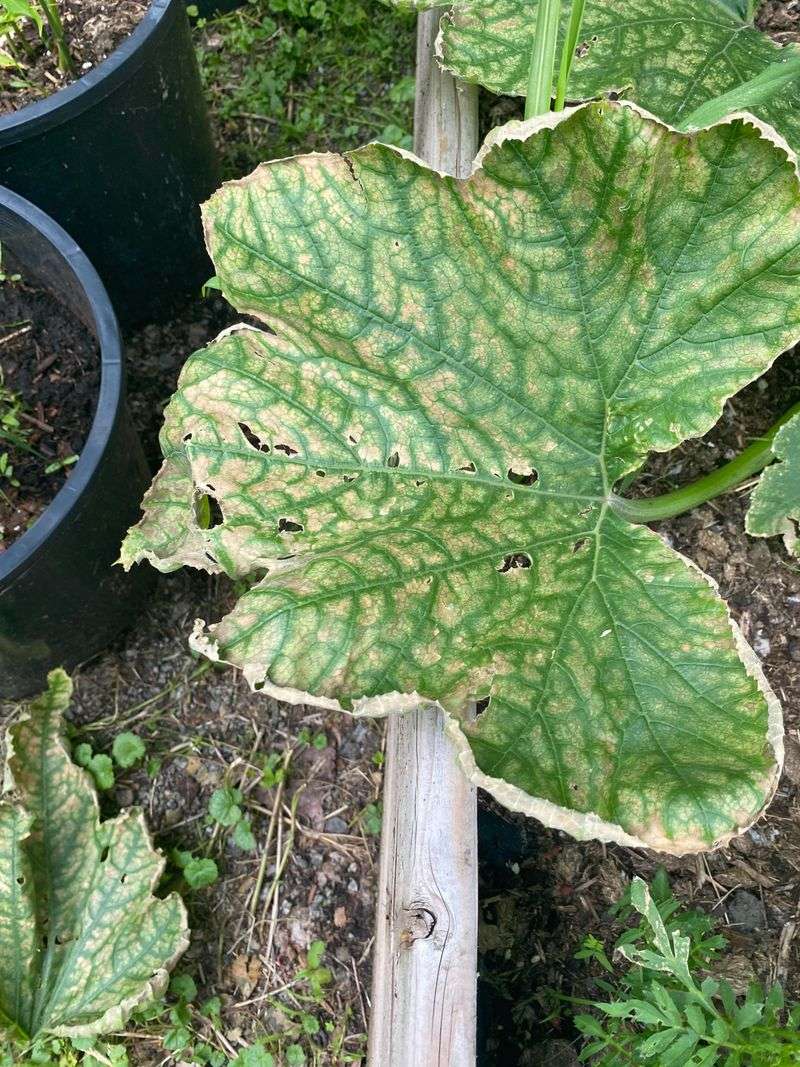
When you walk out to your squash patch and see a leaf that has gone almost completely yellow, that one needs to come off right away. Fully yellow leaves are no longer doing any work for the plant.
They stopped making food through photosynthesis, and now they are just sitting there wasting space and energy.
Start by looking for the leaves that look the worst. These are usually older leaves found near the base of the plant or along the lower part of the vine.
They tend to yellow first because the plant naturally pulls nutrients away from older growth and sends them up to newer leaves and fruits.
Use a clean pair of garden scissors or pruning shears. Never rip or tear a leaf off with your hands because that can damage the stem and open the plant up to disease.
Cut the leaf stem close to the main vine but leave a small stub so you do not accidentally wound the plant.
After cutting, toss those yellow leaves into a trash bag, not your compost pile. Diseased or stressed leaves can carry problems that survive composting and come back to haunt your garden next season.
Keeping your cuts clean and your tools sanitized between plants also helps stop any spread. Getting rid of the worst yellowed leaves first gives the rest of the plant a real fighting chance to bounce back strong.
2. Removing Leaves That Are Already Mostly Gone
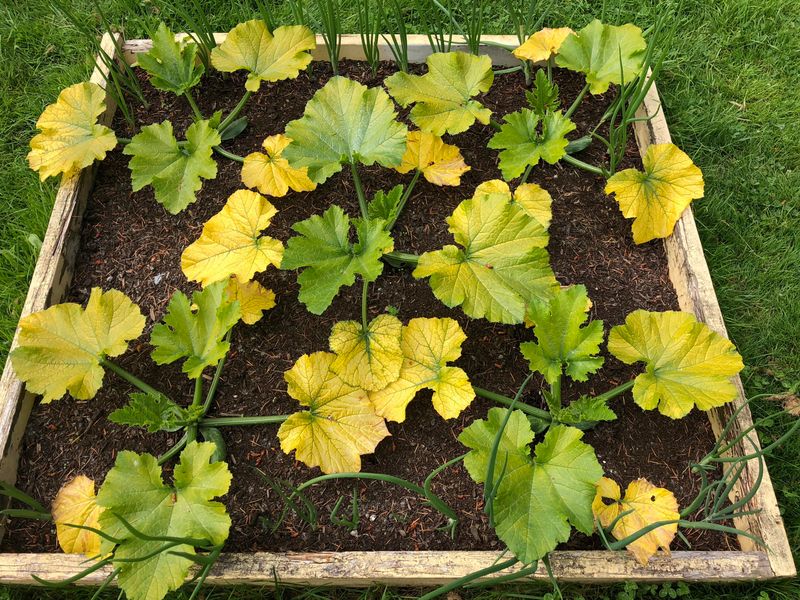
Some leaves do not go fully yellow all at once. Instead, they get patchy, with most of the leaf fading out while just a small green section hangs on near the stem.
Those leaves are on their way out, and holding onto them does your plant no favors.
A leaf that is more than halfway yellow or brown is not contributing much anymore. Photosynthesis happens in the green parts of the leaf.
When most of that green is gone, the leaf is basically retired. Keeping it attached just gives pests and fungi a cozy place to settle in.
Partially gone leaves also trap moisture against the vine. In a wet Pacific Northwest climate, that extra dampness can lead to mold and rot faster than you might expect.
Your Oregon Garden Changes Every Week. Your Plan Should Too.
Gardening in Oregon changes quickly throughout the season. Every Friday you’ll receive a simple weekly plan showing exactly what to plant, prune, fertilize, harvest, and protect so you never miss the right timing.
Removing these half-gone leaves opens things up and lets air move more freely around your plants.
Check your plants every few days during peak growing season. Squash can put out new growth quickly, and leaves can decline just as fast.
Building a habit of regular checks means you catch these borderline leaves before they become a bigger problem. Pull them off the same way you would a fully yellow leaf, cutting cleanly with sanitized scissors.
Bag them up and remove them from your garden area completely. A little consistency goes a long way in keeping your squash patch looking healthy and producing well all season long.
3. Snipping Anything Showing Spots Or Disease
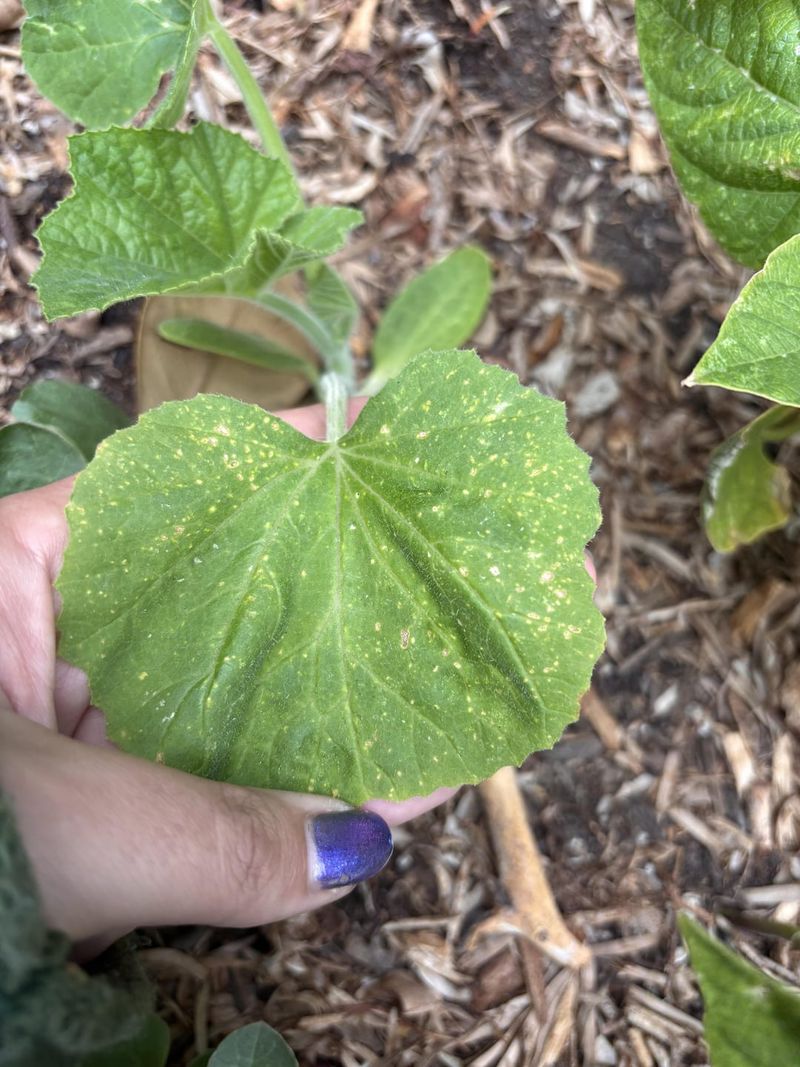
Spots on squash leaves are a serious red flag. They can mean powdery mildew, bacterial leaf spot, or other fungal problems that spread fast.
If you see circular brown patches, white powdery coatings, or dark water-soaked spots, do not wait to act.
Powdery mildew is one of the most common issues squash growers deal with, especially in areas with cool nights and warm days. It looks like someone dusted white flour across the leaf surface.
Once it shows up, it spreads quickly from leaf to leaf and can take over a plant within days if left unchecked.
Snip off any leaf that shows spots right away, even if the rest of the leaf still looks green. The infection is already inside the leaf tissue, and keeping it on the plant just gives it more time to spread spores to neighboring leaves.
After cutting, place the leaf directly into a sealed bag before moving through the rest of your garden.
Clean your scissors with rubbing alcohol or a diluted bleach solution between each cut. This simple step stops you from accidentally carrying disease from one leaf to the next.
Some Oregon gardeners also choose to treat remaining healthy leaves with an organic fungicide spray after removing diseased growth.
Staying on top of spotted leaves is one of the most effective ways to protect your squash crop and keep problems from spiraling out of control during the growing season.
4. Clearing Withered Foliage From Under The Vines
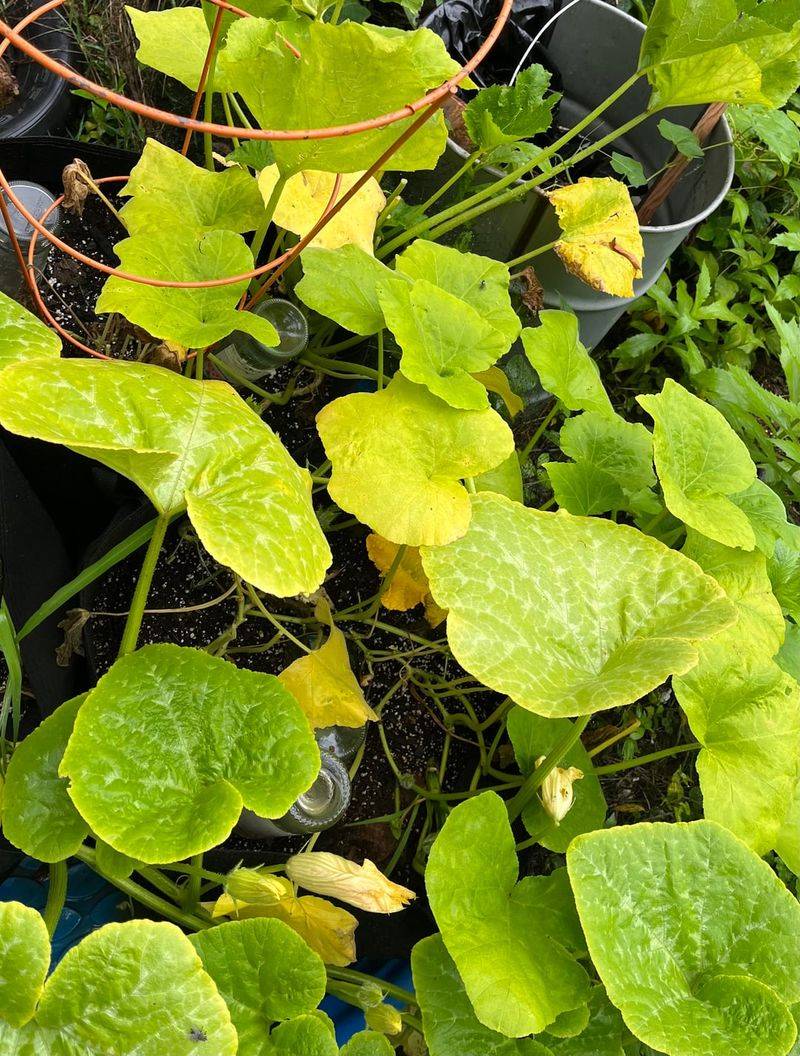
Withered leaves that fall off and collect under your squash vines are more than just an eyesore. They become a breeding ground for pests and a welcome mat for fungal disease.
Clearing that layer of withered foliage from the ground is just as important as removing bad leaves from the plant itself.
Squash vines spread out wide, and their broad leaves create a lot of shade close to the soil. When old leaves drop and pile up underneath, moisture gets trapped and air stops moving.
That damp, dark environment is exactly what slugs, fungus gnats, and soil-borne pathogens love most.
Get down low and look under your vines regularly. You might be surprised how much debris collects there, especially after a rainy stretch.
Use gloved hands or a small rake to gently pull withered material out from under the sprawling stems without disturbing the roots.
Once you have cleared the debris, consider laying down a thin layer of fresh straw mulch. Straw helps regulate soil moisture while still allowing airflow near the base of the plant.
It also creates a cleaner barrier between the soil and your fruit, which can reduce rot on the bottom of developing squash.
In Oregon gardens where rain is frequent, keeping the base of your plants clean and clear makes a noticeable difference in how well your squash performs from midsummer all the way through harvest time.
5. Taking Off Leaves That Are Blocking Airflow
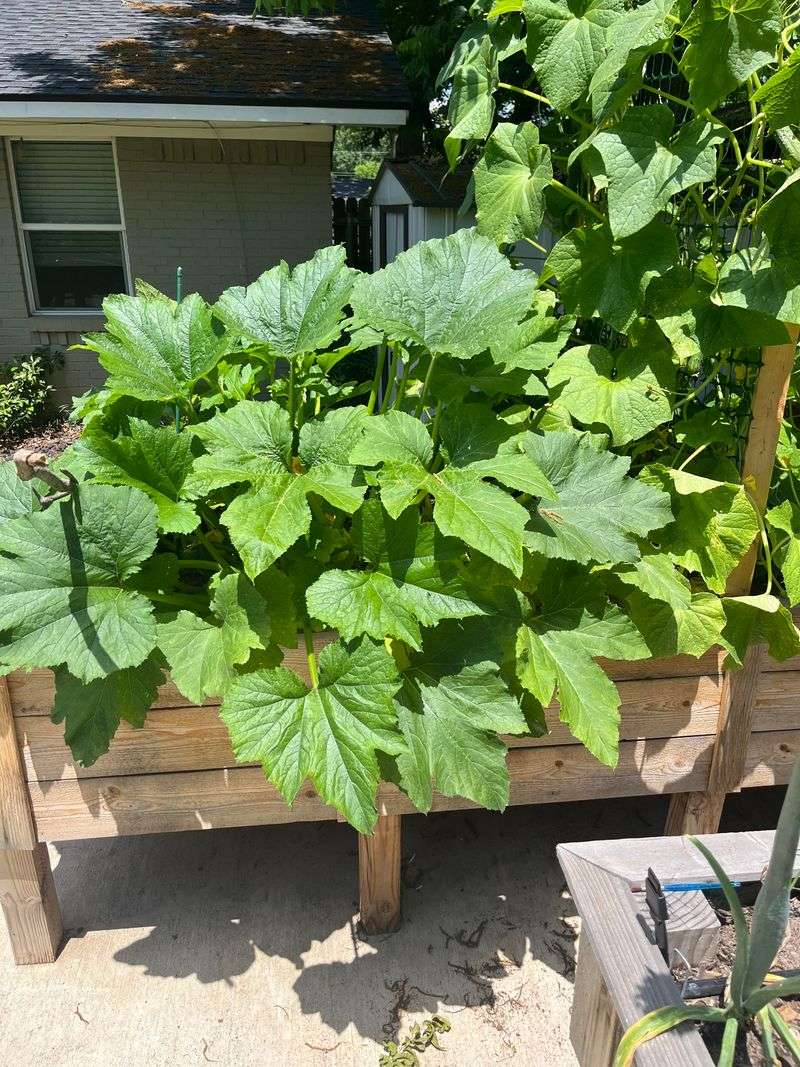
Even healthy-looking leaves can cause problems when there are too many of them packed together.
Squash plants are known for producing massive leaves, and when those leaves overlap and crowd each other, air cannot flow through the plant properly.
Poor airflow is one of the main reasons disease spreads so fast in squash.
Good air circulation helps leaves dry out faster after rain or morning dew. When leaves stay wet for long periods, fungal spores find it much easier to take hold and grow.
Thinning out crowded areas of your plant creates better conditions for the leaves that remain to stay healthy longer.
Look for leaves that are growing inward or pressing flat against other leaves. Those are the ones most likely to trap moisture and restrict airflow.
You do not need to go overboard, just remove enough to create visible gaps between leaves when you look at the plant from above.
Focus especially on the center of the plant where vines cross over each other. That dense middle section is often the first place disease shows up because it stays damp the longest.
Removing a few well-placed leaves there can open up the whole plant. After you are done, step back and take a look from different angles.
The goal is a plant that looks a little more open and breathable, not bare. A well-aired squash plant is a much happier and more productive one throughout the entire growing season.
6. Leaving Healthy Green Leaves Completely Alone
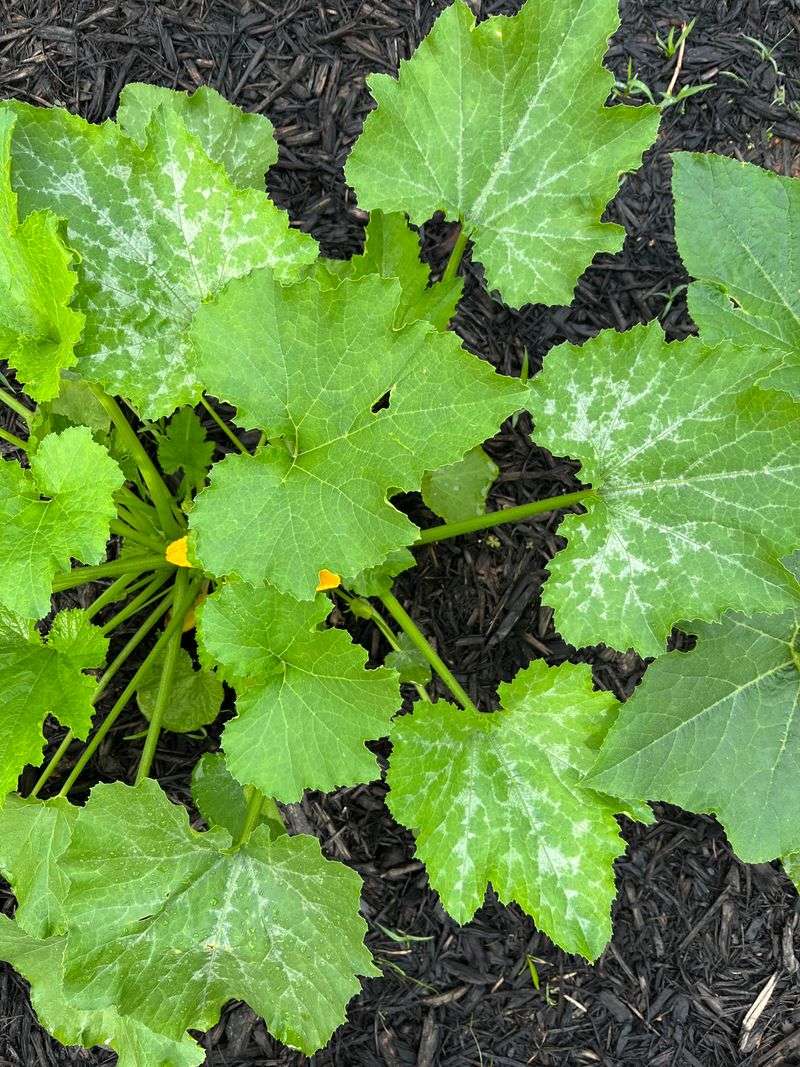
Not every leaf on a yellowing squash plant needs to come off. Healthy green leaves are doing real, important work every single day.
They absorb sunlight and turn it into energy that feeds the entire plant, including the fruits you are hoping to harvest. Removing too many of them at once can stress the plant badly.
A common mistake Oregon gardeners make is getting a little too enthusiastic with the scissors. After spotting a few bad leaves, it can be tempting to do a big cleanup all at once.
But stripping too many leaves at the same time shocks the plant and slows its recovery significantly.
A good general rule is to never remove more than one-third of a plant’s leaves at any one time. Give the plant a few days to adjust before going back in for another round of cleanup.
That pacing helps the plant stay strong while you gradually remove what needs to go.
Healthy leaves are easy to identify. They are firm, fully green, and free of spots, yellowing, or wilting.
If you press gently on a healthy leaf, it should feel solid and slightly waxy, not soft or papery. When you are going through your plant and deciding what to cut, let the green ones be your guide for what the plant should look like overall.
Protecting those healthy leaves is the best thing you can do to support your squash through a stressful period and help it keep producing all season long.
7. Checking Undersides Before Tossing Anything
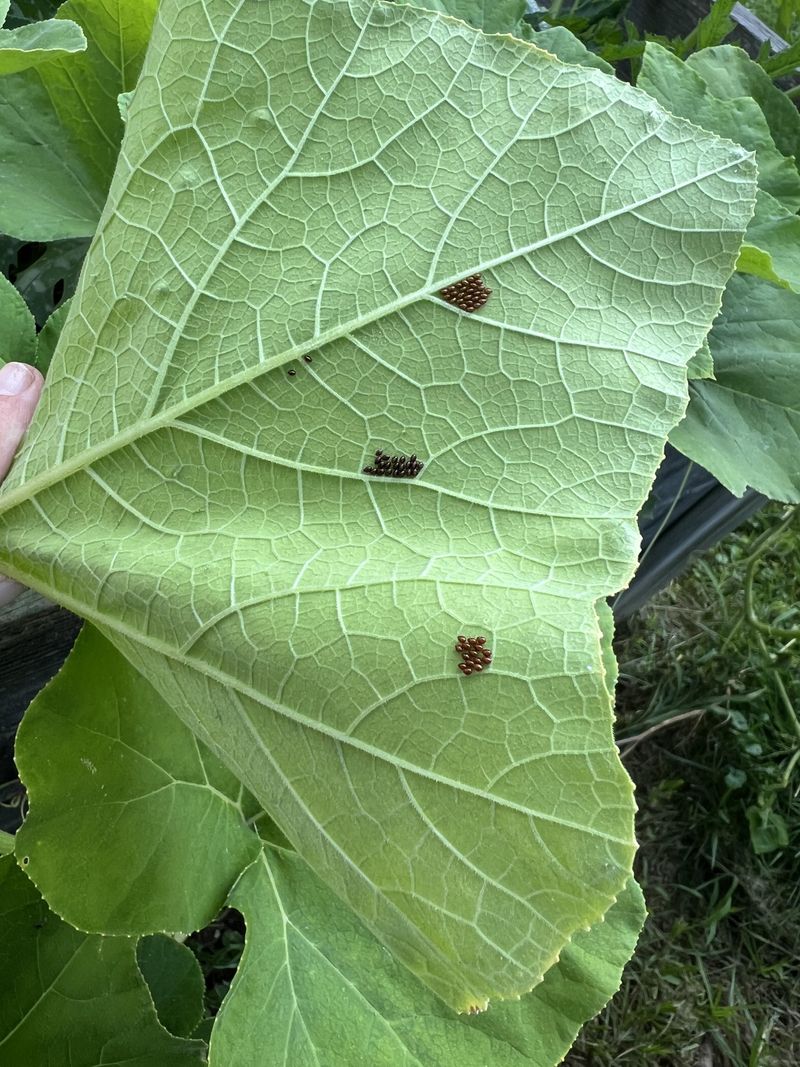
Before you remove any leaf and toss it aside, flip it over and look at the bottom. The underside of a squash leaf is one of the most important places to check in your whole garden.
Pests like squash bugs, spider mites, and aphids love to hide there because it offers shade and protection.
Squash bugs in particular are sneaky. They lay their small, bronze-colored eggs in tight clusters on the undersides of leaves.
If you pull a leaf off and toss it on the ground without checking, those eggs can hatch and the bugs can crawl right back onto your plants. Always check before you toss.
Spider mites are another common culprit that shows up on the underside of squash leaves. They are tiny, sometimes barely visible to the naked eye, but they leave behind fine webbing and cause the leaf surface to look dusty or stippled.
Catching them early makes a huge difference in how much damage they do.
When you find eggs or live pests on a leaf, drop it straight into a sealed bag. Do not shake the leaf or set it down near your garden.
Some gardeners fill a bucket with soapy water and dip the leaf in before bagging it to make sure nothing survives the trip to the trash.
This extra step takes only a few seconds but protects the rest of your squash plants in a major way.
Make underside checks a regular habit throughout Oregon growing season.