How To Choose The Right Trellis For Climbing Plants In California
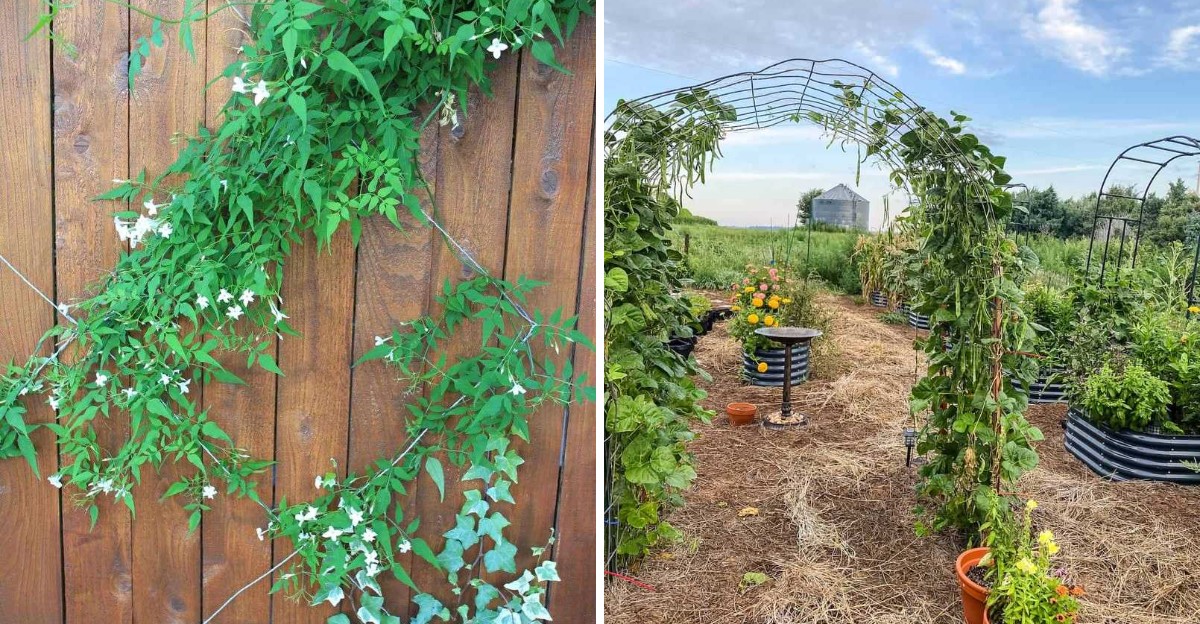
A neighbor planted a tiny passion vine next to a cute wooden fan trellis last spring, and by August the whole thing was leaning sideways.
Cracked, buried under a green tangle nobody expected.
The vine did nothing wrong here. It simply outgrew a support that never matched how it climbs or how heavy it would eventually get.
Something about picking the right trellis turns out to matter far more than most gardeners assume when they’re standing in a nursery aisle grabbing whatever looks nicest.
Curious what actually separates a trellis that lasts decades from one that collapses in a single season? The answer starts with a question most shoppers never think to ask.
Match The Trellis To The Vine’s Climbing Style
Walk through any California nursery and you’ll spot trellises shaped like fans, arches, obelisks, and ladders. Plenty of shoppers grab the prettiest one and hope for the best.
A smarter move is to read the plant tag first and ask one simple question: how does this vine actually climb?
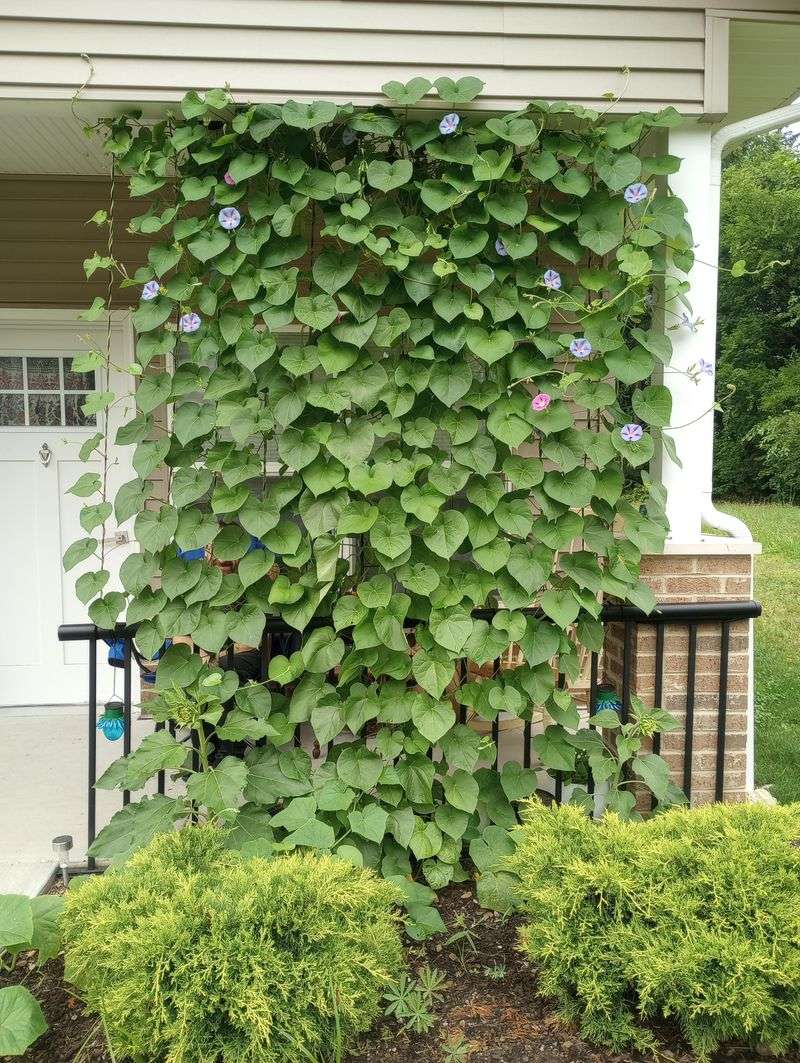
Climbing plants do not all hold on the same way. Twining vines, like morning glory and pole beans, spiral their whole stems around a support.
Tendril climbers, like sweet peas, passion vine, and grapes, send out thin, curly threads that grab anything slender nearby.
Then come the scramblers and leaners. Climbing roses and bougainvillea do not really cling at all, so you must tie their long canes to the structure yourself.
A fourth group climbs with clinging rootlets or sticky pads, such as English ivy and Boston ivy. Those usually need no trellis and can harm wood or stucco, so many gardeners keep them off houses.
Once you know the climbing style, shopping gets much easier. You can skip designs your plant cannot use and focus on ones that fit its grip.
Next, think about weight. A light annual vine and a woody vine that lives for decades need very different kinds of support.
Looks still matter, of course. Just let function lead the way, and beauty can follow close behind.
Twining Vines Need Something To Wrap Around
A pole bean seedling waving its tip in slow circles almost looks like it’s feeling around in the dark for something.
That motion has a purpose. The growing tip is searching for something to coil around, and once it finds a good target, the whole stem wraps upward in a steady spiral.
Twiners include pole beans, morning glory, star jasmine, Carolina jessamine, honeysuckle, and wisteria.
Their trick only works if the support is narrow enough for the stem to circle. A wide flat board or a thick fence post often leaves them flopping around, confused and unsupported.
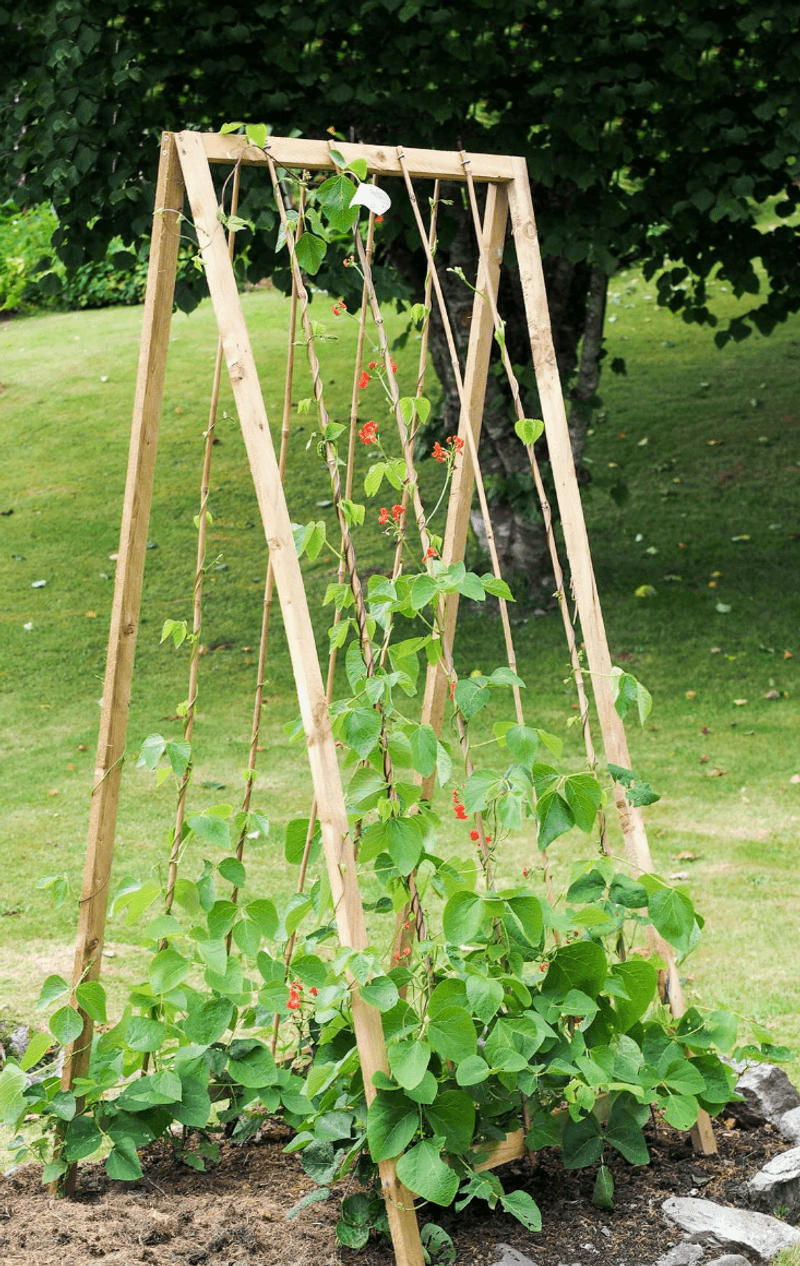
Good choices are vertical poles, bamboo stakes, sturdy garden twine, rope, or narrow metal rods.
Many gardeners run strings from a top bar down to the soil, and beans happily climb each one. A teepee made from three or four poles works nicely in a small raised bed.
Here’s a fun detail worth knowing. Most twiners wrap in one direction only, and some species spiral the opposite way.
Your California Garden Changes Every Week. Your Plan Should Too.
Gardening in California changes quickly throughout the season. Every Friday you’ll receive a simple weekly plan showing exactly what to plant, prune, fertilize, harvest, and protect so you never miss the right timing.
If you try to wind a stem backward by hand, it may unwind itself later.
Vertical supports matter more than horizontal ones for these plants. A twining stem climbs up, not sideways, so a trellis with mostly crossbars gives it fewer chances to grab on.
Give young stems a gentle nudge toward the support in the first week. After that, nature usually takes over.
Tendril Climbers Prefer Thin Supports
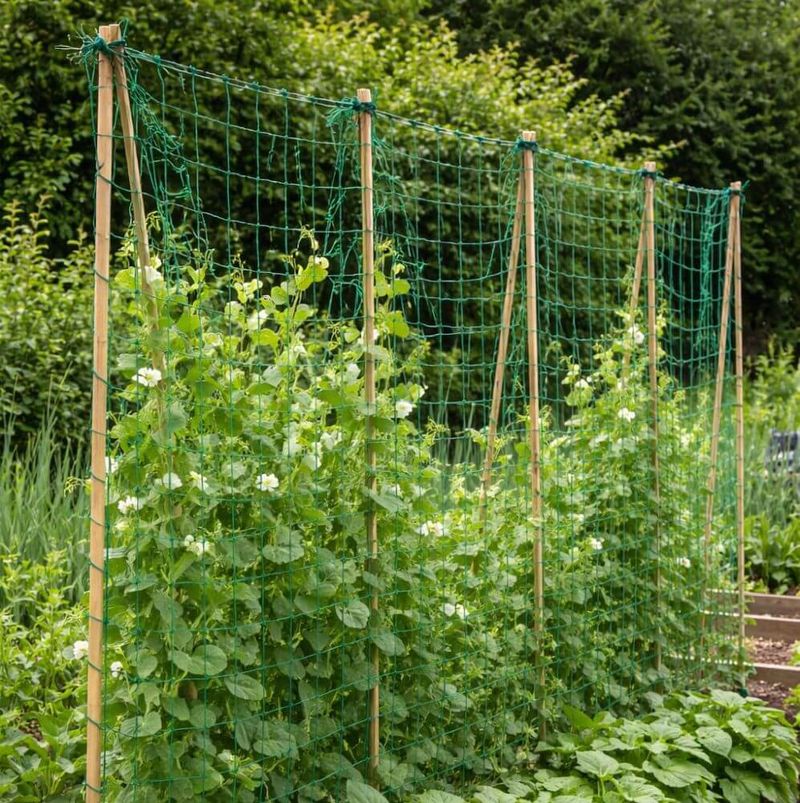
Tendrils are like tiny green fingers that curl the moment they touch something. Brush one gently with your fingertip, and over time, it may start to bend.
Sweet peas, garden peas, cucumbers, passion vine, and grapes all climb with these clever little coils.
The catch is size. Tendrils are short and thin, so they can only wrap around supports that are also thin.
A chunky wooden lattice slat is often too wide, and the tendrils just slide off or wave in the breeze.
Wire mesh, plastic garden netting, cattle panels, and stretched wire or string work far better. Netting or wire is often suggested for peas and cucumbers because tendrils grab it easily.
Openings of a few inches let you reach through to pick your harvest, too.
What if you already own a wide wooden trellis you love? No need to toss it. Staple some thin wire or run garden twine across the slats, and suddenly your tendril climbers have something to hold.
Keep in mind that grapes and passion vines get much heavier than peas. For those, the thin grabbing points should be attached to a strong frame.
In breezy coastal spots like Half Moon Bay or San Diego, snug the netting tight. Loose mesh flaps in the wind and can shake young tendrils loose before they lock on.
Heavy Vines Demand Serious Structural Strength
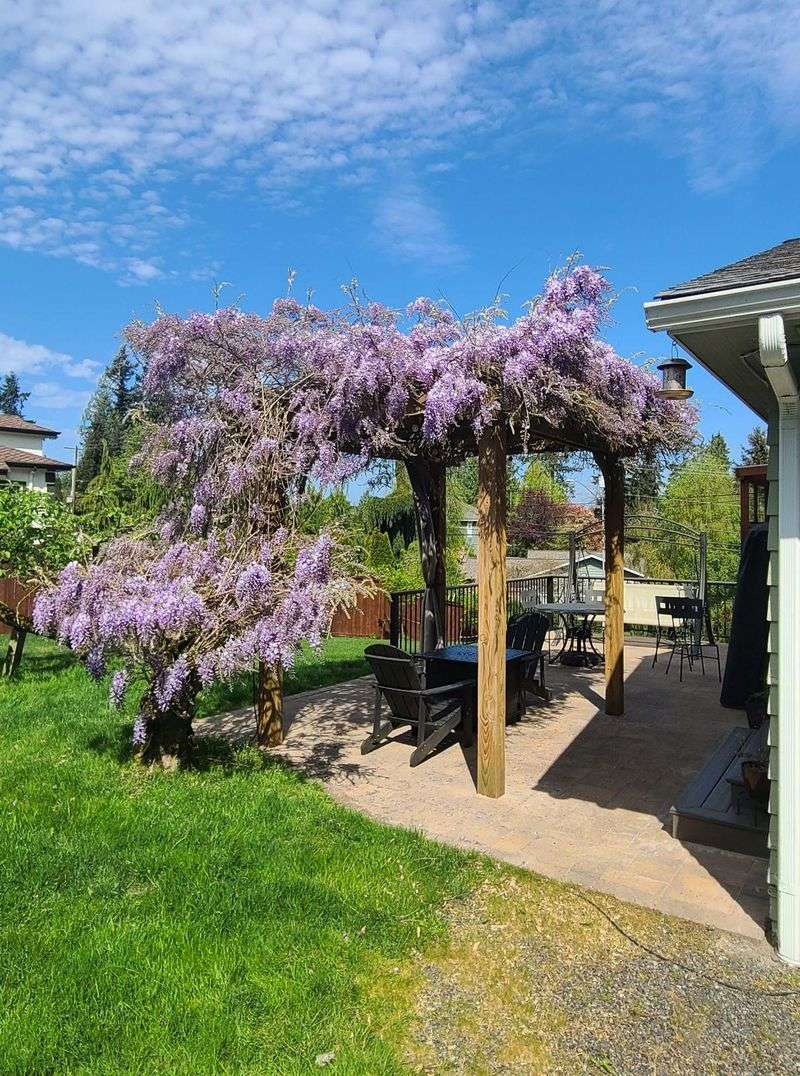
Ask any longtime gardener about wisteria, and you might hear a horror story. A sagging arbor, a crushed gutter, or a pergola pulled right off its posts.
These vines look delicate in bloom, but mature trunks can grow as thick as a small tree.
Grapes, wisteria, trumpet vine, and large climbing roses become heavy, woody plants over the years. Rain adds even more weight to all those leaves and branches.
A decorative lattice panel from the garden center simply cannot carry that load for long.
For these plants, think construction, not decoration. Arbors and pergolas should use thick lumber or metal posts, with sturdy end posts and tightly stretched wire for grapes specifically.
Posts are usually set deep in the ground, often in concrete, so they will not lean.
Anchoring matters just as much as material. A strong frame that is not secured well can still tip over in a winter storm, especially when the soil gets soggy.
Avoid attaching heavy vines directly to your house siding or gutters. Twining wisteria can squeeze and pry apart boards, rails, and downspouts as its stems thicken.
A quick reality check helps here. If a plant is sold as a vine that can live for decades, assume it will someday weigh far more than you expect.
Build or buy for that future, and you’ll avoid expensive repairs later.
Wood Suits Light Ornamental Climbers Well
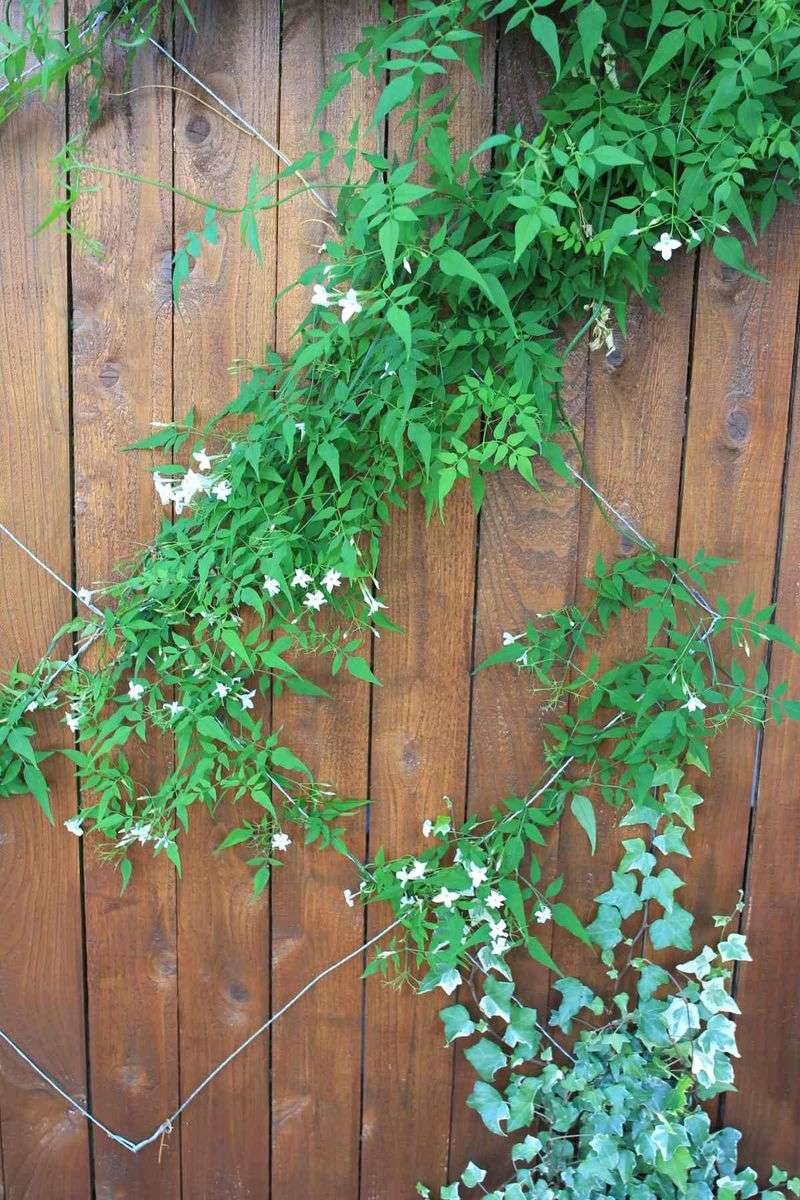
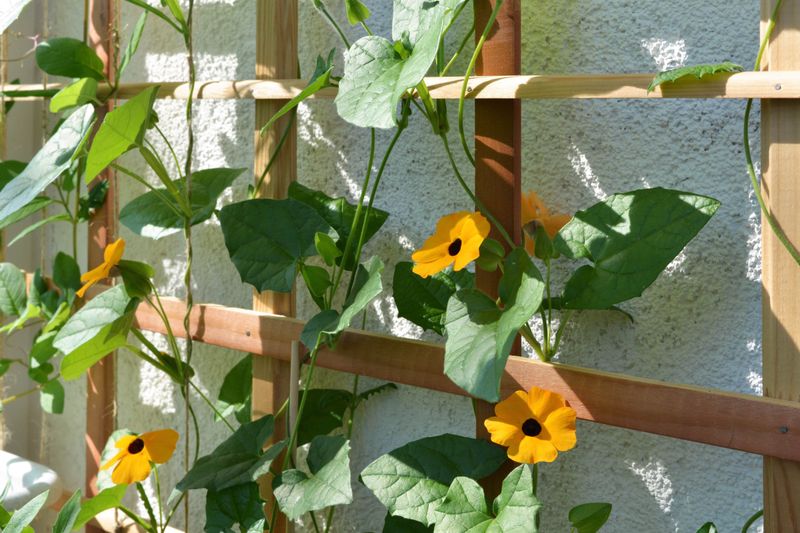
There is something cozy about a cedar trellis glowing against a warm stucco wall. Wood feels natural, blends into cottage and Spanish-style gardens, and is easy to cut or build yourself on a Saturday.
For lighter climbers, wood often does the job just fine.
Clematis, sweet peas, black-eyed Susan vine, annual morning glory, and small climbing roses rarely get heavy enough to overwhelm a well-made wooden frame.
Choose the right kind of wood.
Cedar and redwood naturally resist rot better than many other types, which helps in rainy Northern California winters. Pine and other softwoods break down faster unless they’re treated or sealed.
Keep the part touching soil in mind, since moisture there causes rot first.
Setting wooden legs on gravel, into metal post anchors, or slightly above the ground can add years of life.
Remember the grip issue, too. Wide wooden slats may be too thick for tendrils, so add twine or thin wire if you’re growing peas or clematis.
Clematis actually climbs with twisting leaf stalks, which need slender supports to wrap.
Leave a small gap between a wooden trellis and your wall. A few inches of space lets air flow, helps leaves dry faster, and gives you room for painting or repairs.
Expect to refinish or replace wood trellises every several years. For a light, seasonal vine, that tradeoff is usually well worth the charm.
Metal Holds Up Under Bigger, Older Vines
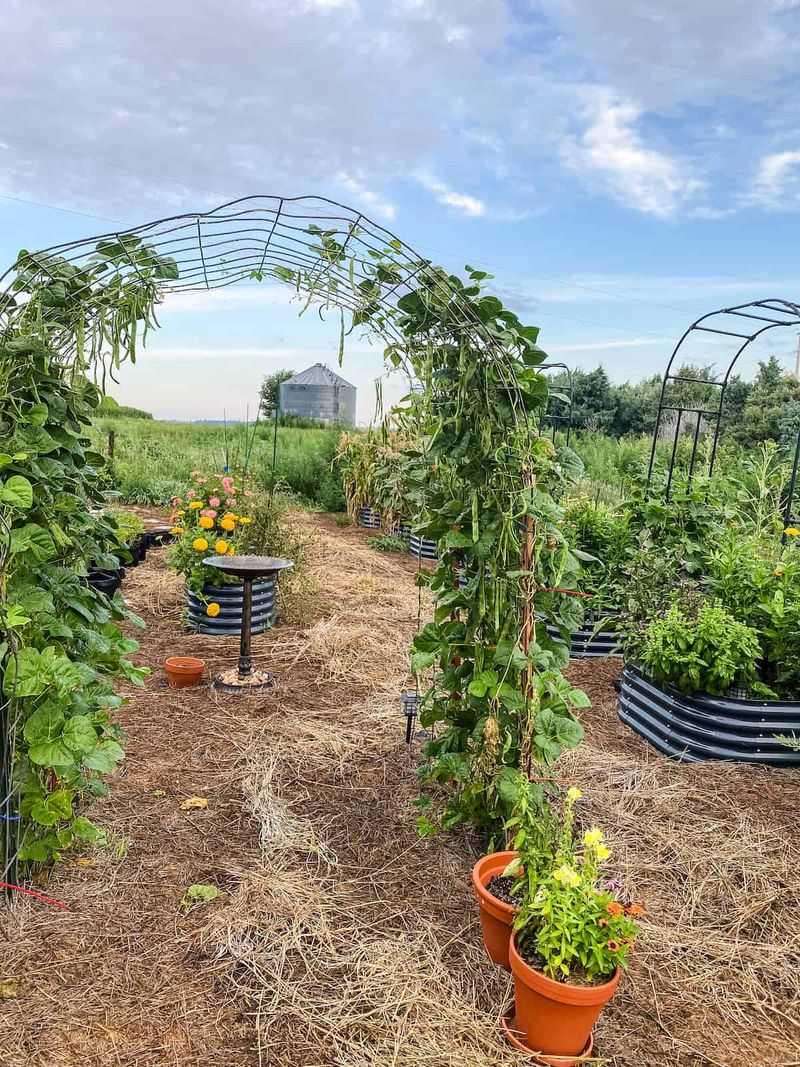
Steel does not rot, termites do not chew it, and it shrugs off decades of hot Central Valley summers without complaint.
When a vine is meant to stay put for ten or twenty years, metal starts looking like a smart investment.
Large climbing roses, mature grapes, trumpet vine, bougainvillea, and wisteria all benefit from metal support.
Welded steel arches, galvanized pipe frames, heavy wrought iron, and cattle panels on steel posts can handle serious weight without bending.
Not all metal is equal, though. Thin decorative iron trellises sold for patios may look strong but can buckle under a big vine.
Look for thick gauge wire, solid welds, and posts that go deep into the ground.
Galvanized or powder-coated finishes resist rust, which matters near the salty coast. Plain steel can work in dry inland areas, and some people even like the rusty look it develops.
One question comes up often: does metal get too hot in the sun? Dark metal can warm up in desert and inland heat.
Many gardeners say plants do fine once leaves shade the frame, but this can vary, so watch tender new stems closely during heat waves.
Metal also pairs nicely with wire for tendril climbers. A sturdy steel frame with thin wire strung across gives grapes both the strength they need and the slender spots their tendrils love to grab.
Plan For Mature Size Not Just Today
That tiny four-inch pot on the nursery bench is a little bit sneaky. Inside might be a vine that reaches twenty or thirty feet, covers a whole pergola, and weighs more than you do.
What you buy today is only the beginning of the story.
Before choosing any trellis, look up the plant’s mature height, spread, and lifespan. Local extension programs and nurseries are great places to find realistic numbers for your region.
Annual vines like sweet peas and beans live one season, so a light, temporary support works well.
Perennial and woody vines keep growing year after year and need a structure sized for their adult form, not their baby stage.
Think about height and access too. A trellis that is too short forces the vine to pile up in a messy heap at the top.
Leave room to reach in for pruning, since regular pruning matters for vines like wisteria and grapes.
A simple test helps. Imagine the trellis fully covered and soaked after a winter rainstorm, then ask whether it would still stand straight. If the answer is maybe, go stronger.
Matching climbing style, material, and mature weight takes a few extra minutes of planning. The payoff is a healthy vine and a trellis that lasts.